

Introduction
A positive mindset is the ability to approach challenges, setbacks, and everyday situations with constructive thinking and realistic optimism. For beginners, developing a positive mindset is less about ignoring problems and more about training the mind to focus on solutions, opportunities, and personal growth.
Many people struggle with negative thought patterns, self-doubt, and emotional setbacks. However, with consistent practice, positive thinking techniques and mindset habits can improve resilience, motivation, emotional well-being, and long-term success.
Quick Summary
- A positive mindset helps you respond to challenges with optimism and resilience.
- Positive thinking can improve motivation, stress management, and overall well-being.
- Mindset change happens through consistent habits, not temporary motivation.
- Beginners can develop positive thinking through daily exercises, self-awareness, and practical routines.
- Long-term improvement comes from combining positive thinking with consistent action.
What Is a Positive Mindset?
A positive mindset is a way of thinking that focuses on opportunities, solutions, learning, and growth rather than limitations and defeat. It does not mean pretending problems do not exist. Instead, it means responding to challenges with a constructive perspective.
The difference between positivity and unrealistic optimism is important. Unrealistic optimism ignores risks and difficulties, while a positive mindset acknowledges reality and looks for practical ways to move forward.
Positive thoughts are thoughts that encourage productive action, emotional balance, and personal growth. Examples include:
- “I can learn from this mistake.”
- “This challenge is difficult, but manageable.”
- “Progress is possible with consistent effort.”
Thinking positive is a learned skill. Just like physical fitness improves through practice, positive thinking develops through repeated mental habits.
Positive thinking examples in everyday life include viewing criticism as feedback, seeing setbacks as temporary, and focusing on what can be controlled instead of what cannot.
Positive thinking focuses on possibilities rather than limitations. Positive people acknowledge problems while seeking solutions. A positive mindset influences decisions, emotions, and behaviors. Thoughts shape actions, and actions reinforce beliefs.
Why Having a Positive Mindset Is Important
Understanding why having a positive mindset is important begins with recognizing how thoughts affect behavior and outcomes. Positivity in life influences how people manage stress, handle setbacks, pursue goals, and maintain relationships.
The positivity of life is often shaped not only by external circumstances but also by how individuals interpret and respond to those circumstances. The benefits of positive thinking extend across emotional well-being, productivity, and long-term personal development.
10 Benefits of Positive Thinking
- Reduced stress levels
- Greater resilience during adversity
- Better emotional regulation
- Improved relationships
- Increased confidence
- Higher productivity
- Better decision-making
- Stronger self-discipline
- Improved physical well-being
- Greater life satisfaction
20 Benefits of Positive Thinking in Daily Life
- Better communication
- Increased persistence
- Improved problem-solving
- More optimism during setbacks
- Stronger growth mindset
- Better focus
- Greater patience
- Improved adaptability
- Increased creativity
- Better teamwork
- Stronger emotional awareness
- More effective goal setting
- Reduced overthinking
- Healthier coping mechanisms
- Greater self-confidence
- Improved stress management
- Increased accountability
- Better conflict resolution
- More consistent habits
- Greater long-term motivation
How Thoughts Influence Emotions and Behavior
Thoughts influence emotions, and emotions influence behavior. This relationship plays a major role in mindset development.
The process often follows this pattern:
Thoughts → Emotions → Behaviors → Habits → Identity
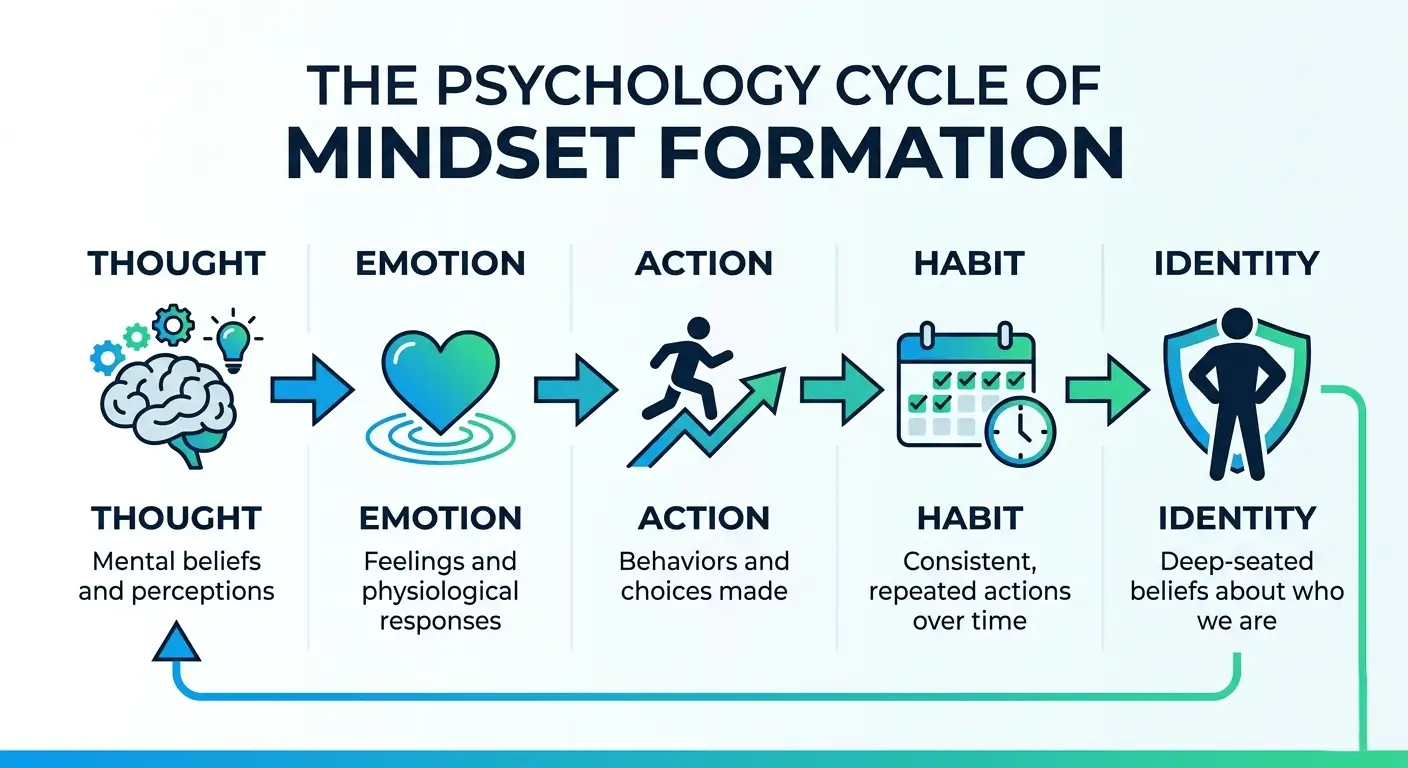
For example, a person who repeatedly thinks, “I always fail,” may feel discouraged. That discouragement can lead to avoidance behaviors, which eventually reinforce beliefs about failure.
Negative thinking becomes habitual because repeated thoughts strengthen cognitive patterns. Over time, these patterns become automatic.
Self-fulfilling prophecies occur when expectations influence actions and ultimately create outcomes that support existing beliefs. Positive cognitive patterns can create constructive behaviors, while negative patterns often reinforce limitations.
Why Beginners Struggle to Develop a Positive Mindset
Many beginners struggle because negative thinking patterns often develop over years of repetition.
Common challenges include:
- Negative self-talk
- Fear of failure
- Overthinking
- Past disappointments
- Environmental influences
- Persistent negative thoughts when depressed
Common Mental Barriers
- Perfectionism
- Comparison with others
- Learned pessimism
- Low self-esteem
- Lack of self-awareness
These barriers can make positive thinking feel unnatural at first. However, awareness is the first step toward changing them.
How to Have a Positive Mindset as a Beginner
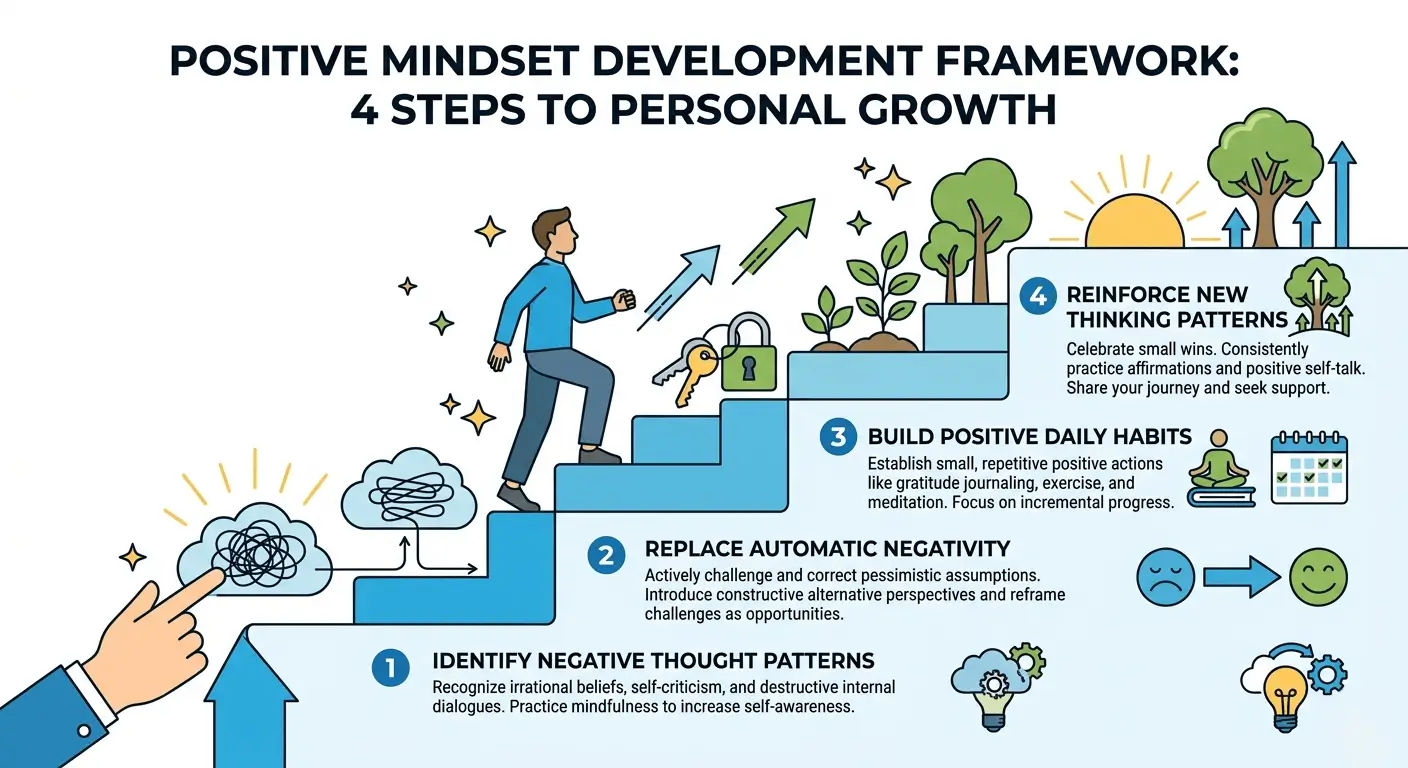
Learning how to have a positive mindset requires intentional practice and consistency.
Identify Negative Thought Patterns
Start by recognizing recurring beliefs and emotional triggers.
Helpful practices include:
- Tracking self-talk
- Journaling recurring thoughts
- Identifying situations that trigger negativity
Replace Automatic Negativity
Challenge assumptions and question negative interpretations.
Ask:
- Is this thought accurate?
- What evidence supports it?
- Is there another perspective?
Focus on controllable factors rather than uncontrollable outcomes.
Build Positive Daily Habits
Since positive thinking develops through repetition, understanding how to build good habits in 30 days can help reinforce new mental patterns and create lasting change.
Effective habits include:
- Gratitude practice
- Reflection journaling
- Positive self-talk
- Mindfulness exercises
- Goal review
Reinforce New Thinking Patterns
Mindset change depends on consistency over perfection.
Focus on:
- Small wins
- Daily repetition
- Gradual progress
- Long-term consistency
3 Great Positive Thinking Techniques That Actually Work
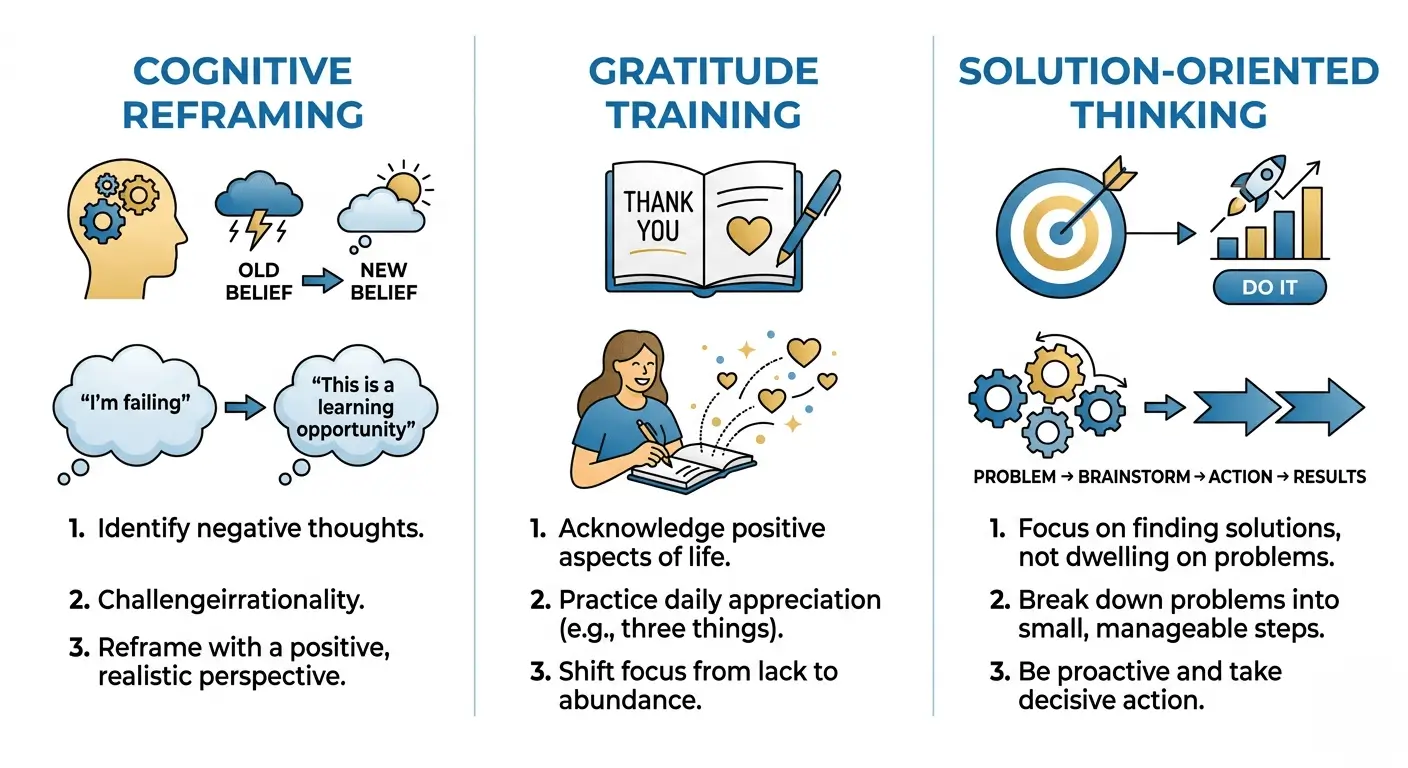
Technique 1: Cognitive Reframing
Cognitive reframing involves changing how situations are interpreted.
Instead of saying:
“I failed.”
Try:
“I learned something that will help me improve.”
This technique helps create more constructive emotional responses.
Technique 2: Gratitude Training
Gratitude changes attention patterns by directing focus toward positive experiences and available resources.
Daily implementation:
- Write three things you appreciate.
- Reflect on positive experiences.
- Acknowledge progress regularly.
Technique 3: Solution-Oriented Thinking
Solution-oriented thinking focuses attention on actions rather than problems.
Ask:
- What can I do now?
- What is the next step?
- What is within my control?
This approach improves decision-making and reduces helplessness.
Positive Thinking Exercises for Daily Practice
Many people search for 100 positive thinking exercises because there are numerous ways to strengthen mindset habits.
Suggested Exercise Categories
- Gratitude exercises
- Reflection prompts
- Affirmation practices
- Visualization exercises
- Strength identification
- Success journaling
- Self-compassion exercises
Beginner Routine Example
Morning
- Gratitude list
- Daily intention
Afternoon
- Thought awareness check
Evening
- Reflection journal
- Daily wins review
Positive Mindset Examples in Real Life
Scenario 1: Handling Failure
| Negative Mindset | Positive Mindset |
|---|---|
| “I failed.” | “I learned something useful.” |
| “I should quit.” | “I can improve next time.” |
Scenario 2: Workplace Challenges
| Problem-Focused Thinking | Solution-Focused Thinking |
| Focuses on obstacles | Focuses on actions |
| Creates frustration | Encourages progress |
Scenario 3: Personal Growth Goals
| Fixed Mindset | Growth Mindset |
| Avoids challenges | Embraces learning |
| Sees ability as fixed | Sees skills as improvable |
Motivation vs Discipline for Building a Positive Mindset
Think positive motivation can help initiate change, but discipline sustains it.
While motivation can help you get started, long-term mindset change depends on consistent action and systems. Learning how to build discipline without motivation can make positive thinking habits much easier to maintain.
| Motivation | Discipline |
| Emotion-driven | Habit-driven |
| Temporary | Sustainable |
| Depends on feelings | Depends on systems |
| Useful for starting | Essential for continuing |
Key Takeaway
Positive mindset growth depends more on discipline than motivation.
Consistency vs Intensity in Positive Thinking
Many people quit mindset practices because they rely on short bursts of effort.
| Consistency | Intensity |
| Small daily actions | Large occasional efforts |
| Easier to maintain | Harder to sustain |
| Builds habits | Creates burnout risk |
| Produces lasting results | Produces short-term results |
Consistency creates sustainable change.
How to Think Positive When Depressed or Emotionally Struggling
Positive thinking is not suppressing emotions.
Difficult emotions should be acknowledged rather than ignored. Emotional acceptance often improves resilience and psychological flexibility.
Practical strategies include:
- Focus on small achievable wins
- Reduce all-or-nothing thinking
- Seek social support
- Practice self-compassion
- Create manageable daily routines
Mindset tools can support emotional well-being, but they are not substitutes for professional mental health care.
Why Positive Thinking Can Be Harmful When Misunderstood
Myth 1 — Positive Thinking Means Ignoring Problems
Reality: Problems still require action and solutions.
Myth 2 — Positive People Never Feel Negative Emotions
Reality: Emotional acceptance strengthens resilience.
Myth 3 — Positive Thinking Alone Creates Success
Reality: Action and consistency create results.
What Actually Works
- Realistic optimism
- Self-awareness
- Emotional regulation
- Constructive action
Building a Positive Mindset Through Daily Systems
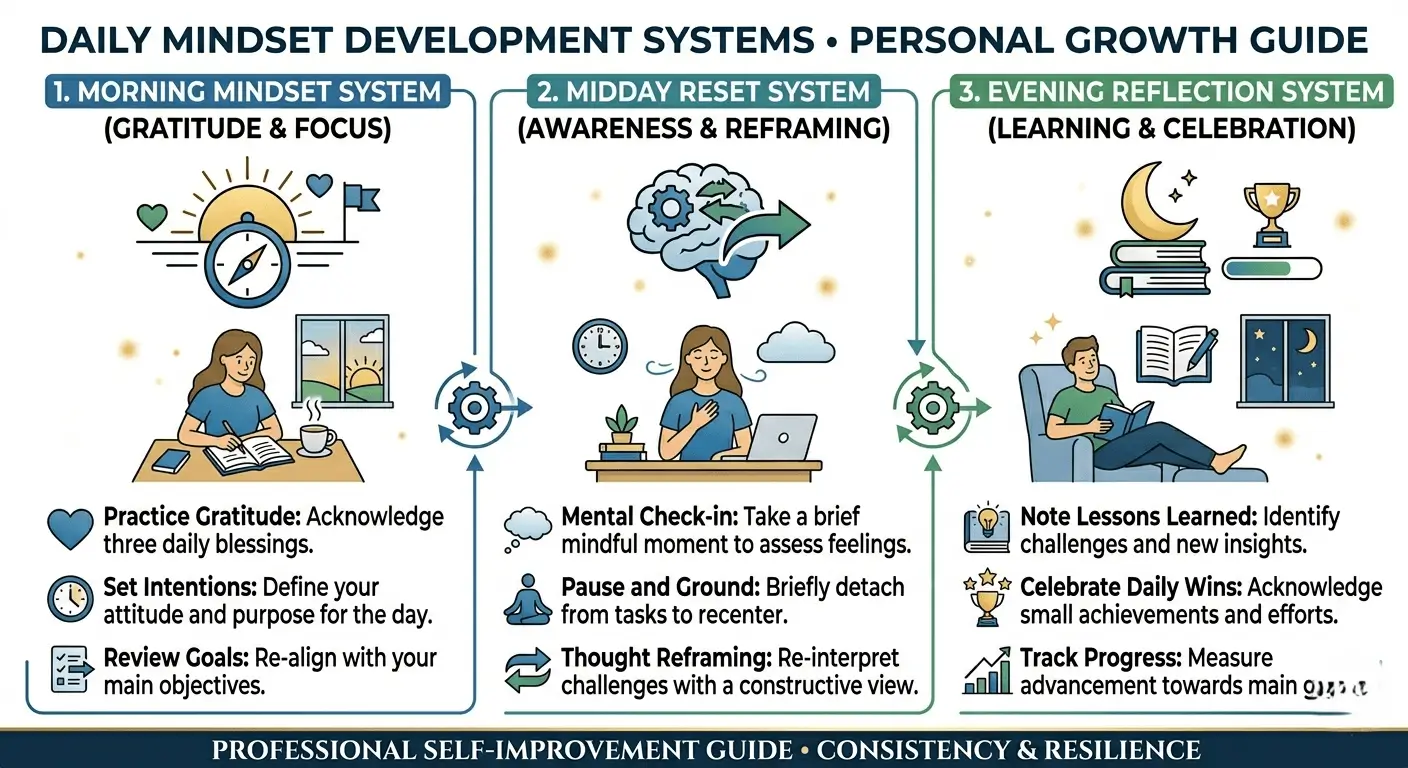
Learning how to develop positive mindset in life requires systems rather than occasional effort.
Morning Mindset System
- Gratitude practice
- Intention setting
- Goal review
Midday Reset System
- Mental check-in
- Reframing exercise
Evening Reflection System
- Lessons learned
- Daily wins
- Progress tracking
These systems help maintain a positive mindset throughout the day.
Common Mistakes That Prevent Positive Thinking
| Mistake | Why It Happens | Solution |
| Expecting instant results | Impatience | Focus on gradual change |
| Forced positivity | Emotional avoidance | Practice realistic optimism |
| Inconsistent habits | Lack of systems | Create routines |
| Negative self-talk | Learned patterns | Reframe thoughts |
| Comparing yourself to others | External validation | Focus on personal progress |
What Will Actually Improve Your Life Over Time
Many people ask, “Will life get better?”
Life improves when:
- Thinking changes
- Habits change
- Actions change
- Identity changes
Small improvements compound over time. Better thoughts encourage better actions. Better actions create stronger habits. Stronger habits shape identity, and identity influences long-term outcomes.
The compound effect of mindset and behavior can create meaningful improvements over months and years.
Conclusion
Developing a positive mindset is not about pretending everything is perfect. It is about training yourself to think more constructively, respond more effectively to challenges, and build habits that support long-term growth.
For beginners, the most effective approach is to combine positive thinking techniques with consistent daily actions. Small improvements in thoughts, habits, and behaviors compound over time, creating greater resilience, confidence, and overall well-being.
The goal is not constant positivity—it is developing a mindset that helps you navigate life with greater clarity, adaptability, and optimism.
FAQs
What is the fastest way to develop a positive mindset?
The fastest approach is becoming aware of negative thought patterns and consistently replacing them with more constructive and realistic perspectives.
Why do I struggle to think positively?
Negative thinking often develops from repeated experiences, self-doubt, stress, and learned mental habits that become automatic over time.
How do I stay positive when life feels difficult?
Focus on controllable actions, maintain supportive routines, seek social connection, and break challenges into smaller manageable steps.
Can positive thinking improve mental health?
Positive thinking can support emotional well-being and resilience, but it works best alongside healthy habits, support systems, and professional help when needed.
What is the difference between positive thinking and toxic positivity?
Positive thinking acknowledges challenges while seeking solutions. Toxic positivity ignores or suppresses legitimate emotions and difficulties.
How long does it take to build a positive mindset?
Most people notice changes within weeks of consistent practice, but lasting mindset shifts typically develop over months of repeated habits and behaviors.
Is motivation enough to maintain a positive mindset?
No. Motivation helps initiate change, but discipline, routines, and consistent habits are what sustain a positive mindset over the long term.









10 Responses