
Introduction
How to build discipline without motivation means developing the ability to take consistent action even when there is no emotional drive or inspiration. Instead of relying on temporary motivation, behavior is guided by systems, habits, and identity-based routines that make action automatic rather than emotional.
This approach removes dependence on mood and replaces it with structure. Over time, disciplined behavior becomes less about effort and more about repetition and environmental cues that trigger action automatically. This is why behavioral psychology emphasizes systems over emotional willpower for long-term success.
Quick Summary
- Discipline without motivation relies on systems, not emotions
- Motivation is unstable, while habits create consistency
- Identity-based behavior strengthens long-term discipline
- Environment design reduces reliance on willpower
- Repetition makes disciplined actions automatic
Why Motivation Fails and Discipline Works Instead
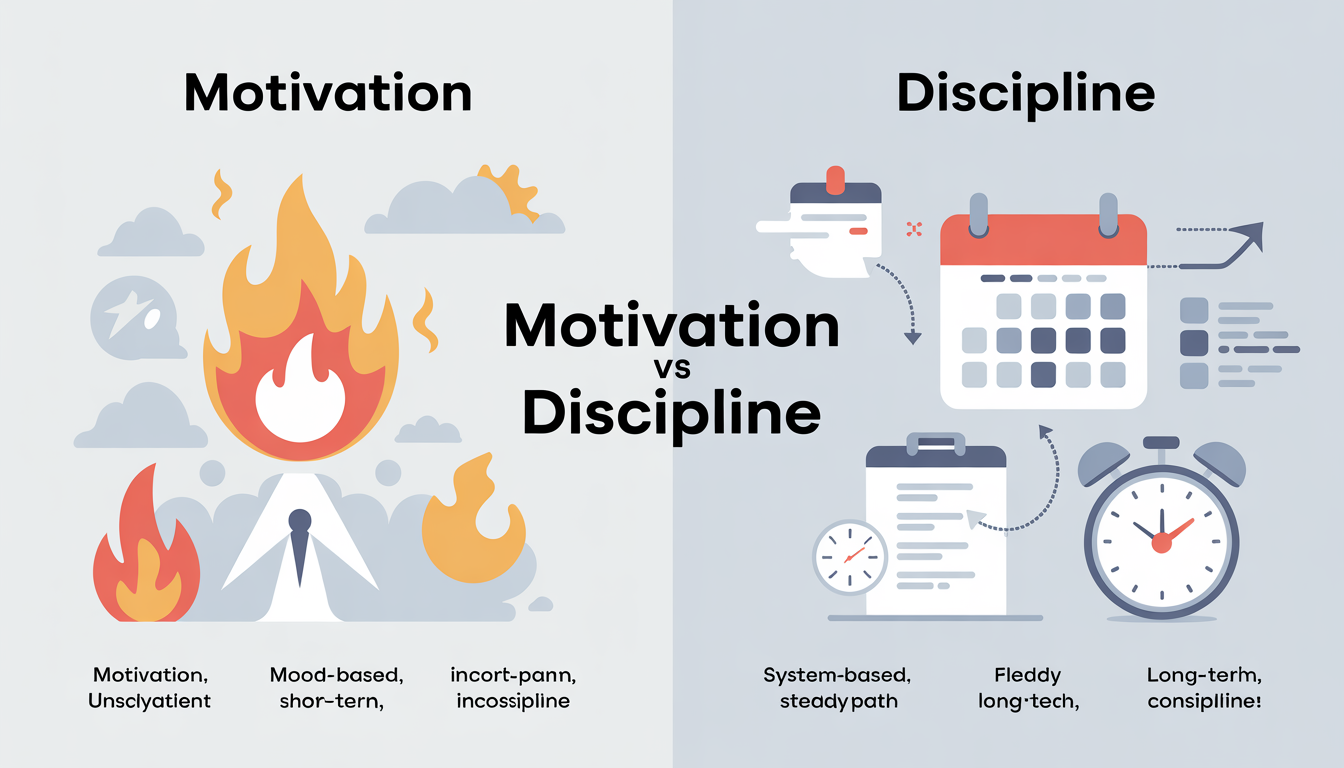
Motivation is inconsistent because it depends on emotional and environmental factors. Discipline works because it removes emotional decision-making from action.
Discipline becomes easier when you stop depending on emotional states and instead focus on what you can control, such as routines, environment, and daily actions.
Why motivation fails:
- It fluctuates based on mood and energy
- It disappears during difficulty or stress
- It is driven by short-term excitement
- It leads to procrastination when discomfort appears
Why discipline works:
- It relies on structured systems
- It reduces decision fatigue
- It builds identity consistency (“I am disciplined”)
- It supports long-term execution regardless of mood
Core Shift: From Motivation-Based to System-Based Behavior
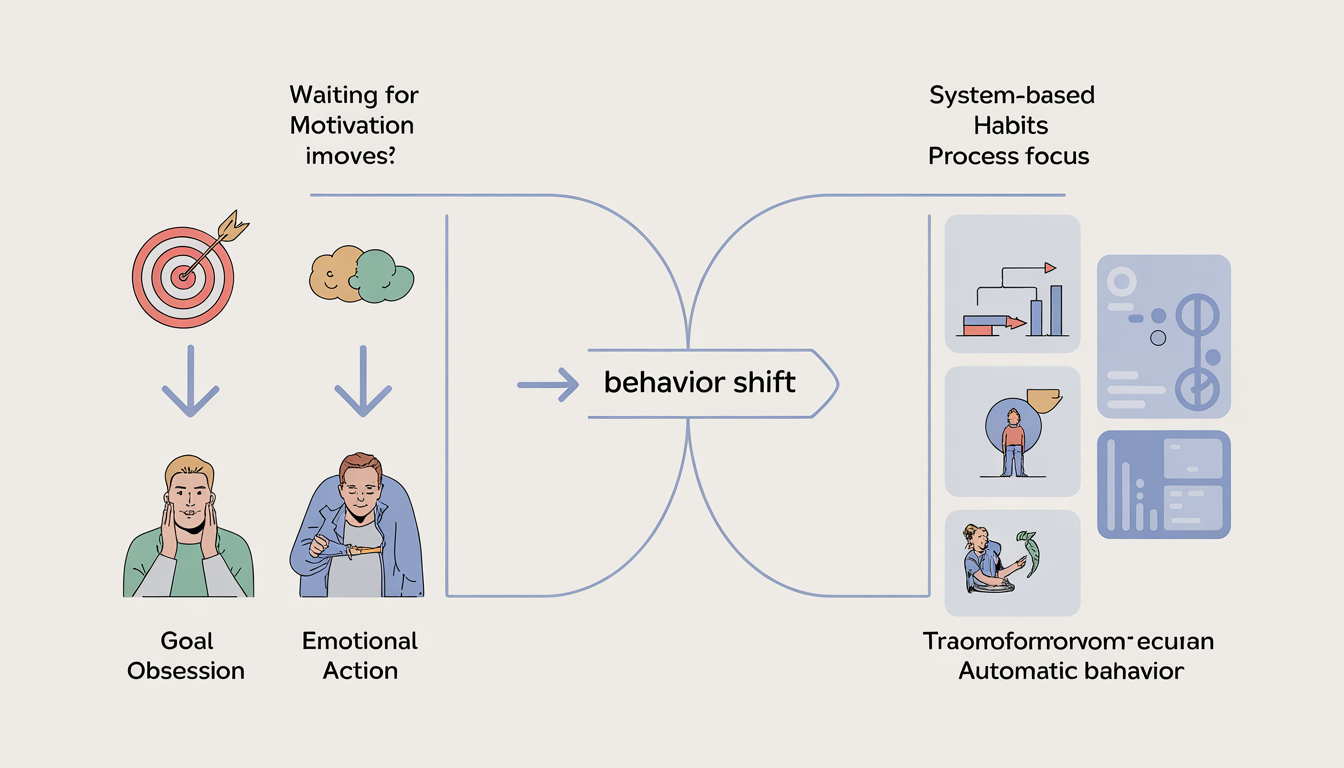
The core transformation in discipline is replacing emotional triggers with structured routines.
Key shifts:
- Waiting for motivation → Starting automatically
- Goal obsession → Process focus
- Emotional action → Habit-based action
This shift aligns with behavioral science principles like cue-routine-reward loops, where actions become automatic responses to triggers instead of emotional decisions.
How to Build Self-Discipline (Core Framework)
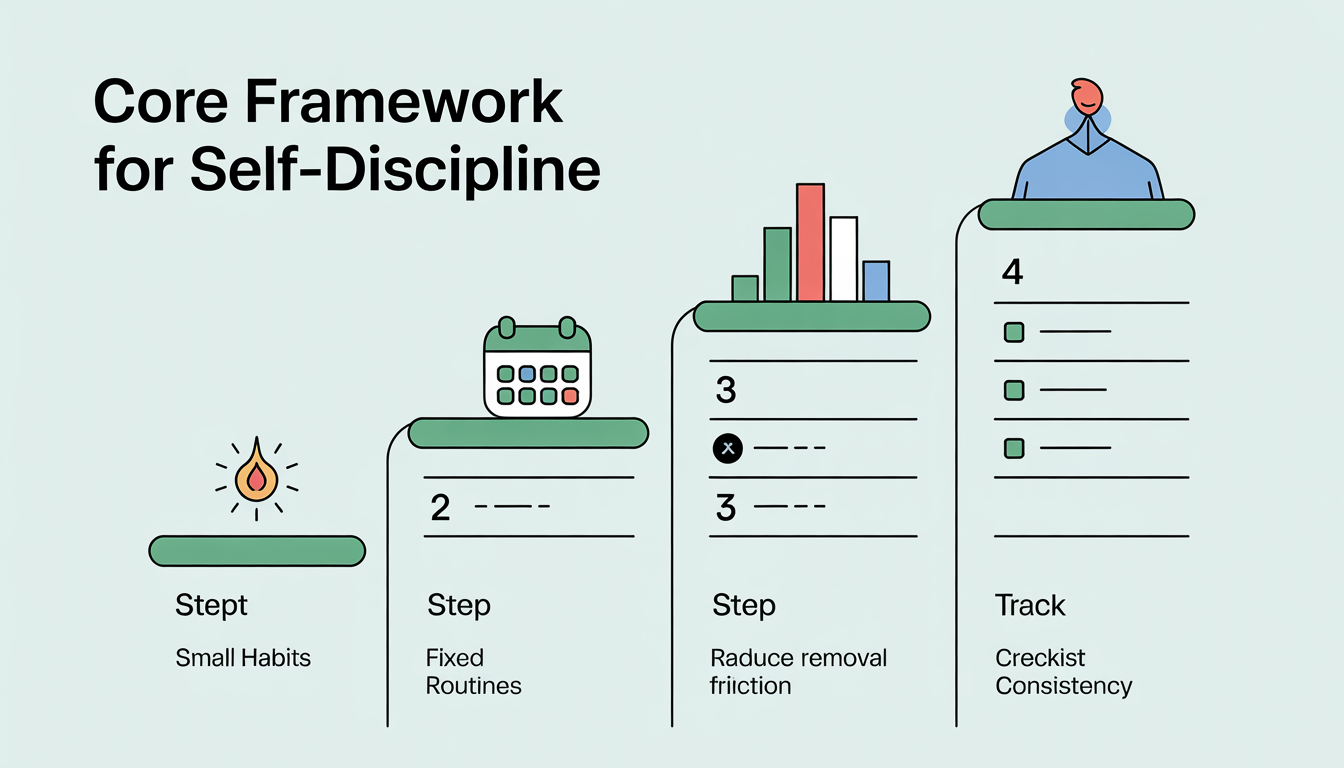
Self-discipline is developed through repeated exposure to small actions that strengthen behavioral control.
Core principles:
- Start with small non-negotiable habits
- Use fixed routines instead of emotional decisions
- Reduce friction for positive habits
- Increase friction for negative habits
- Track consistency instead of perfection
Why it works:
Repetition strengthens neural pathways, making disciplined actions easier and more automatic over time.
Self-Discipline Exercises for Daily Training
These exercises train the brain to act without relying on motivation.
- 5-minute rule: Start tasks for only 5 minutes
- Cold-start action: Begin without preparation rituals
- Delayed gratification: Postpone small rewards
- Habit stacking: Attach new habits to existing routines
- Daily discomfort task: Perform one uncomfortable action daily
These methods reduce resistance and improve action tolerance.
How to Stay Consistent in Daily Life
Consistency depends on reducing daily decision-making.
Building fixed routines and reducing decision fatigue is one of the most effective ways to get your life in order and maintain long-term consistency.
Effective strategies:
- Fixed daily schedule with repeated actions
- Pre-decided tasks to remove in-the-moment choices
- “Never miss twice” rule for habits
- Use checklists instead of memory
- Focus on systems, not outcomes
Mental and Behavioral Factors Behind Discipline
Discipline is strongly influenced by identity and cognitive control systems.
Reflective tools like journaling prompts for self growth can help identify emotional triggers, self-sabotaging patterns, and consistency barriers.
Key drivers:
- Identity reinforcement (“I am disciplined”)
- Dopamine regulation through delayed rewards
- Stress tolerance during discomfort
- Reduced decision fatigue through automation
Common barriers:
- Perfectionism leading to delay
- Overthinking instead of acting
- Emotional dependence on motivation
Common Problems and Solutions
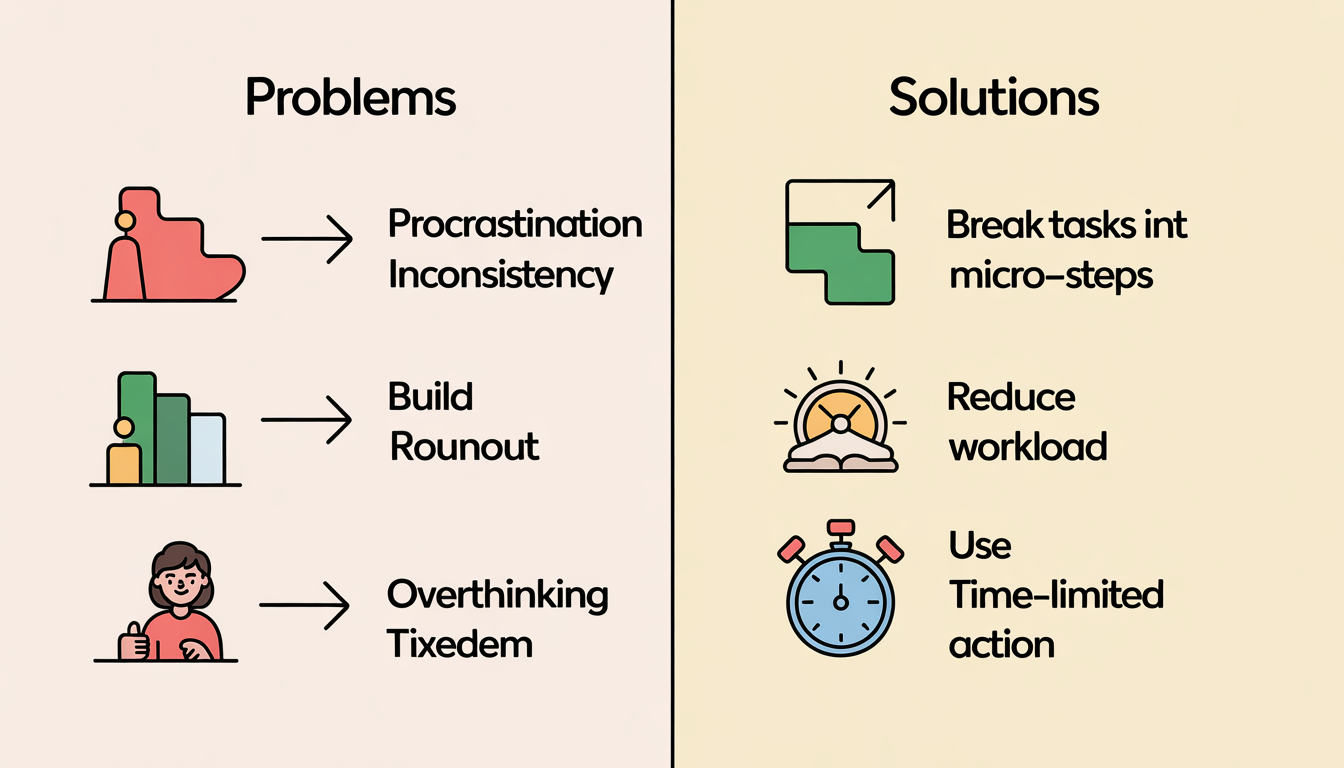
| Problem | Cause | Solution |
|---|---|---|
| Procrastination | Task feels overwhelming | Break into micro-steps |
| Inconsistency | No system in place | Build fixed routines |
| Burnout | Overuse of willpower | Reduce workload and recover |
| Overthinking | Fear or perfectionism | Start with timed action |
Science Behind Automatic Discipline
Behavioral science shows that repeated actions in stable environments form habit loops. Over time, the brain shifts behavior from conscious effort to automatic response, reducing the need for motivation.
This explains why consistent routines eventually feel easier—the brain optimizes repeated behavior into energy-efficient patterns.
Practical Real-Life Applications
Beginner level:
- Start with 5-minute tasks
- Focus on building consistency before intensity
Advanced level:
- Use structured daily systems
- Optimize routines for performance and efficiency
Conclusion
Learning how to build discipline without motivation requires shifting from emotional reliance to structured systems. Motivation is temporary and unreliable, but discipline is built through repetition, identity formation, and environmental design. Once behavior becomes automatic, consistency no longer depends on emotional state, but on systems that run in the background.
FAQs
1. Why do I struggle with consistency even when motivated?
Because motivation is temporary and does not create structured systems for long-term behavior.
2. How do I stay disciplined when I feel lazy?
Start with a very small action like 2–5 minutes to bypass resistance and build momentum.
3. Can discipline be learned or is it natural?
Discipline is learned through repetition, habits, and structured systems.
4. What is the fastest way to build self-discipline?
Start small, repeat daily, and never miss twice.
5. Why do I lose discipline after a few days?
Because the system depends on motivation instead of consistent structure and routine design.









13 Responses