
Introduction
The best non-slip slippers for elderly are designed to reduce fall risk, improve balance support, and provide safe indoor mobility for older adults. As people age, changes in balance, muscle strength, and reflex speed increase the risk of slipping, especially on smooth surfaces like tiles and wood floors. Choosing the right slippers is not only about comfort but also about preventing injuries and supporting independence at home. Proper footwear plays a direct role in reducing falls, which are one of the leading causes of injury among seniors.
Quick Summary
- Non-slip slippers reduce fall risk through grip and stability support
- Proper footwear improves balance and indoor walking confidence
- Key features include anti-slip soles, support, and secure fit
- Balance-focused designs reduce fear of movement in seniors
- Indoor slippers function as a safety tool, not just comfort wear
Why Elderly People Need Non-Slip Slippers
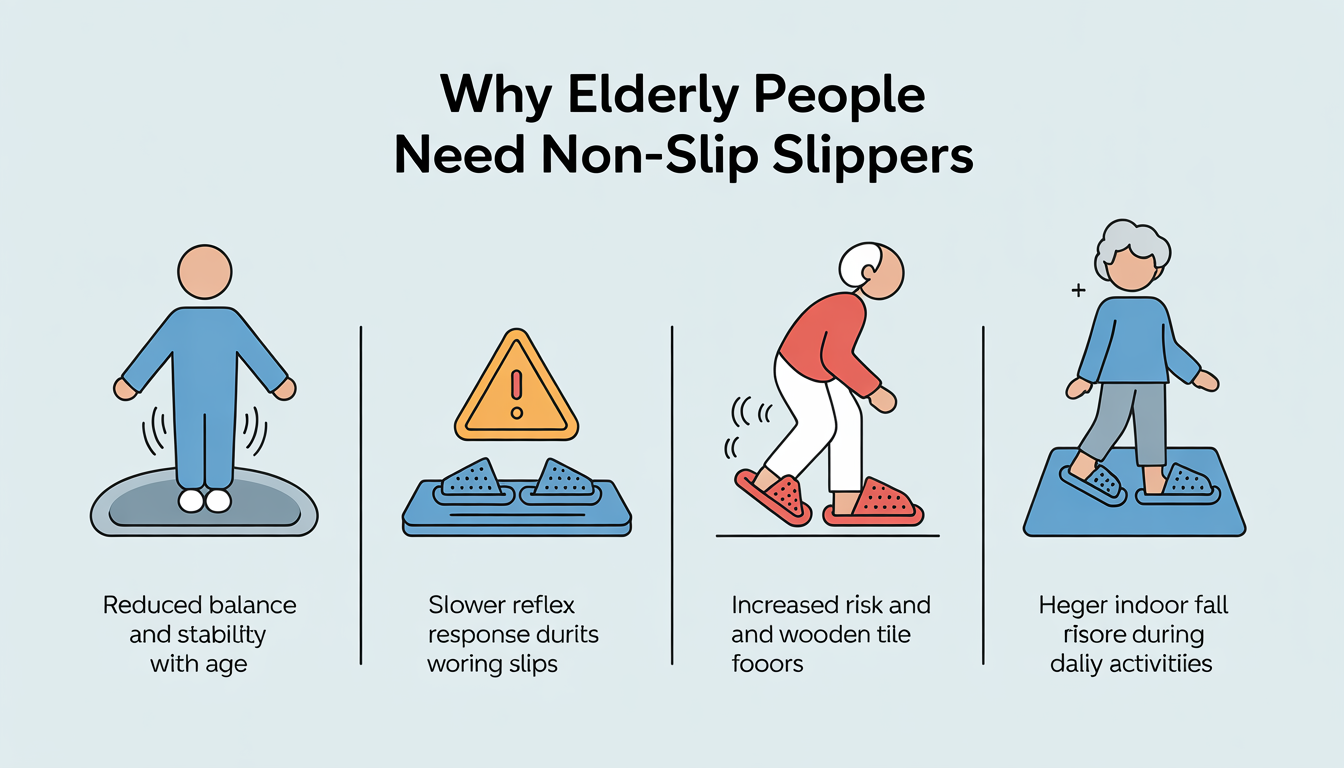
Aging leads to reduced muscle strength, slower reflexes, and weaker balance control. These changes make everyday walking more risky, especially on smooth indoor floors. Many falls happen during simple activities like walking to the kitchen or bathroom.
Building awareness about safety and movement habits also supports broader self-improvement concepts like how to live your best life, and long-term personal stability.
Barefoot walking or loose slippers increase instability. That is why non slip slippers for elderly women and men are essential for daily safety.
Key risk factors:
- Reduced foot and ankle strength
- Slower reaction to slipping
- Smooth or wet indoor surfaces
- Poor footwear grip or loose fit
Key Features of the Best Non-Slip Slippers for Elderly
The best orthopedic slippers for elderly are designed to improve safety and reduce strain on joints.
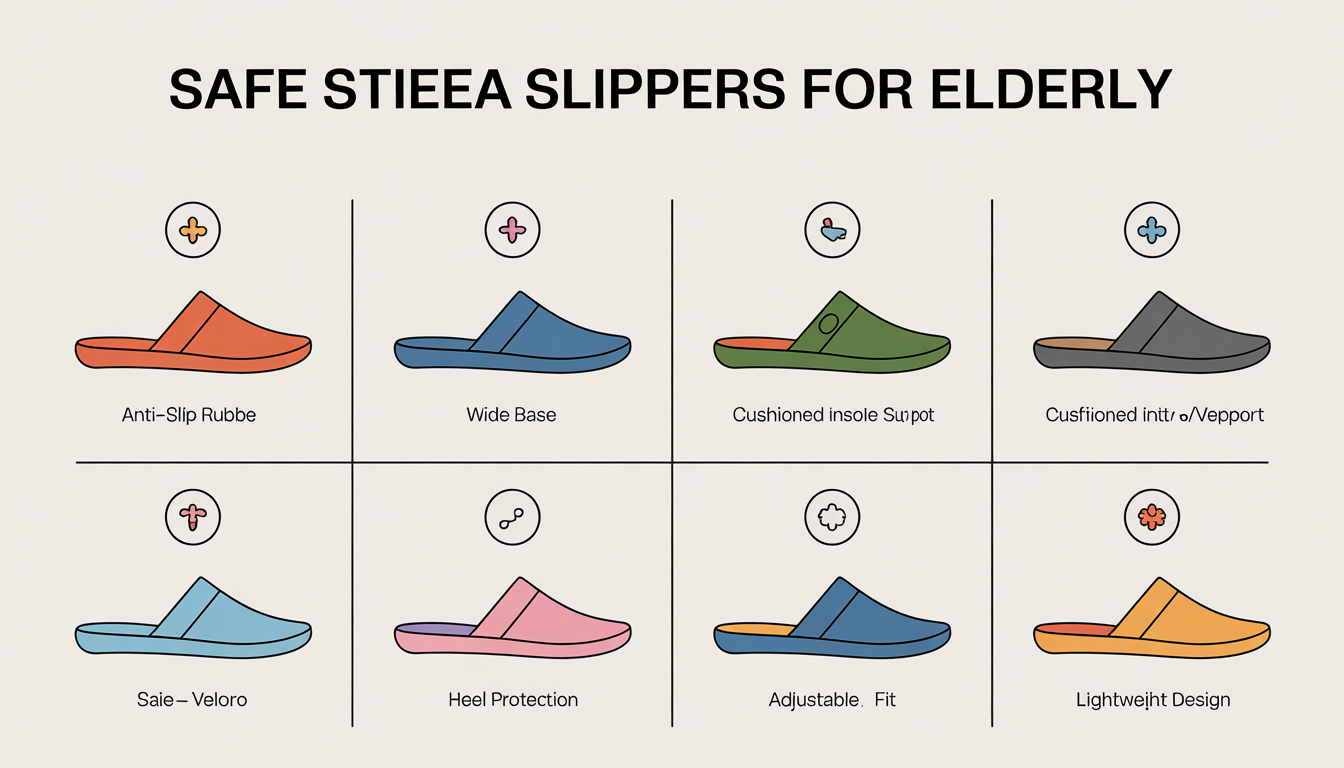
Essential features:
- Anti-slip rubber soles for traction
- Wide base for better balance
- Cushioned insoles for joint comfort
- Firm heel support for stability
- Adjustable straps or Velcro closure
- Lightweight design for easier movement
These features work together to reduce slipping and improve walking confidence indoors.
Best Slippers for Elderly with Balance Problems
For seniors with balance issues, slippers must act as stability support.
Important design elements:
- Structured soles to prevent side rolling
- Firm heel cups for alignment support
- Shock absorption for joint protection
- Closed-back design to reduce foot movement
These best slippers for elderly with balance problems help reduce fear of falling, which often limits mobility and physical activity.
Differences Between Men’s and Women’s Elderly Slippers
Non slip slippers for elderly women / ladies:
- Softer cushioning for comfort
- Lightweight materials
- Wider toe space for swelling
Non slip slippers for elderly men:
- Stronger arch support
- More rigid soles for stability
- Durable structure for long use
Both focus on safety, grip, and indoor protection.
Easy-to-Wear Slippers and Independence
Many seniors struggle with bending or fastening footwear. Easy to put on slippers for elderly improve independence and reduce caregiver dependency.
Key features:
- Slip-on design
- Velcro straps for adjustment
- Elastic openings for swollen feet
- No-lace structure
This encourages consistent use and prevents barefoot walking indoors.
Slippers for Different Home Environments
Different home areas carry different slip risks:
- Bathrooms: highest risk due to water
- Kitchens: spills and smooth tiles
- Bedrooms: nighttime movement risks
This makes best non slip bathroom slippers for elderly especially important for safety in wet conditions.
Comfort vs Safety: Finding the Right Balance
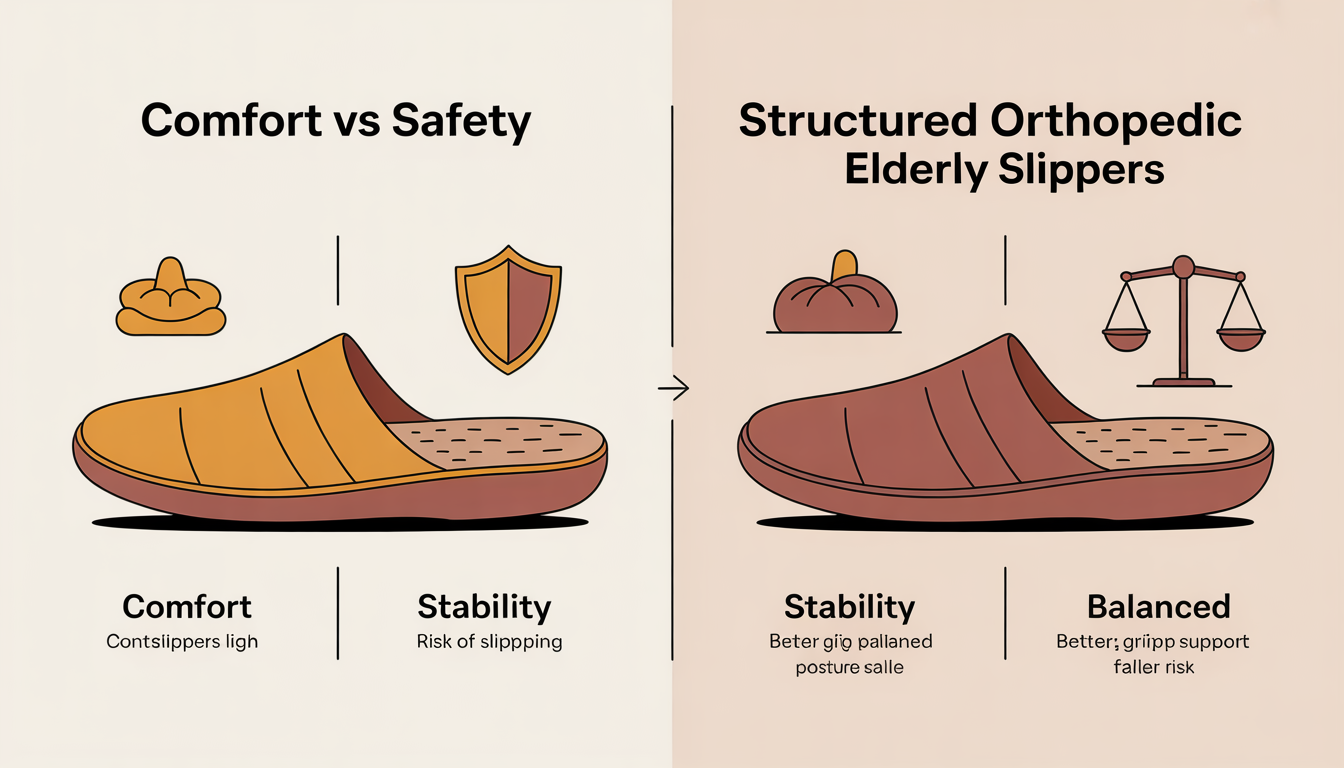
Comfort and safety must work together. Overly soft slippers may feel good but reduce stability.
Comparison:
- Soft slippers → comfortable but unstable
- Structured slippers → stable but firm
- Balanced slippers → ideal for daily use
The safest option maintains grip and support without sacrificing comfort.
Table: Slipper Features vs Safety Outcomes
| Feature | Safety Benefit | Impact on Daily Life |
|---|---|---|
| Anti-slip sole | Prevents slipping | Reduces fall risk |
| Firm heel support | Improves stability | Better walking control |
| Wide base | Enhances balance | Prevents side tipping |
| Lightweight design | Reduces fatigue | Encourages regular use |
| Adjustable fit | Secures foot position | Improves confidence |
Common Problems and Solutions
- Inconsistent use
Cause: habit of walking barefoot
Solution: place slippers in visible areas - Poor fit
Cause: swelling or wrong size
Solution: use adjustable or wide-fit slippers - Fear of falling
Cause: previous slip experience
Solution: structured orthopedic slippers - Ignoring slipper condition
Cause: unaware of wear and tear
Solution: replace worn-out soles regularly
Psychological and Behavioral Factors
Footwear habits are influenced by behavior and mindset. Many elderly people resist switching footwear due to habit or discomfort.
However:
- Proper slippers increase confidence
- Confidence improves movement
- Movement strengthens balance
This creates a positive cycle of mobility and independence.
This behavioral loop is closely related to habits discussed in how to build discipline without motivation how to journal for self-growth, and structured living approaches like daily routine for self improvement student
What Actually Works vs Common Myths
Myth: Soft slippers are always safe
Reality: Excess softness reduces stability
Myth: Falls only happen outdoors
Reality: Most falls happen indoors
Myth: All non-slip soles are equal
Reality: Grip quality varies widely
Myth: Slippers are optional
Reality: They are essential safety equipment
Conclusion
The best non-slip slippers for elderly are essential safety tools that reduce fall risk and improve independence. Features like anti-slip soles, structured support, and secure fit help seniors walk confidently at home. Choosing the right slippers directly improves safety, mobility, and long-term quality of life.
FAQs
Why do elderly people need non-slip slippers at home?
Because aging reduces balance and reflex speed, increasing fall risk on smooth indoor surfaces.
What makes slippers safer for elderly people?
Anti-slip soles, firm support, and secure fit improve stability and reduce slipping.
How do I choose slippers for elderly with balance problems?
Choose structured soles, heel support, and stable orthopedic design.
Are soft slippers better for seniors?
Not always. Too much softness can reduce grip and stability.
What are the safest slippers for elderly men and women?
Those with anti-slip soles, firm structure, and secure fit.
How often should slippers be replaced?
Every 6–12 months or when grip wears down.
Why do elderly people still fall with slippers?
Because worn-out or poorly designed slippers fail to provide proper traction and support.










One Response