

Introduction
Mindset fitness refers to the mental attitudes, beliefs, and habits that support consistent physical activity and long-term well-being. It is the psychological foundation that determines whether an exercise habit lasts for years or fades after a few weeks. Research in behavioral psychology consistently shows that long-term exercise success depends less on willpower alone and more on habit formation, goal setting, and resilience. Mindset fitness extends beyond individual workouts, shaping motivation, self-discipline, and the healthy decision-making that supports a sustainable, active lifestyle. Understanding this connection between psychology and physical training helps explain why some people stay consistent while others struggle despite good intentions.
Quick Summary
- A strong fitness mindset helps people stay consistent even when motivation changes.
- Developing healthy habits and realistic goals improves long-term fitness success.
- Mental resilience plays an important role in overcoming setbacks and maintaining progress.
- Mindset fitness combines physical training with positive thinking, discipline, and sustainable lifestyle choices.
What Is Mindset Fitness?
Mindset fitness is the practice of training psychological habits — such as motivation, discipline, and resilience — alongside physical exercise to support long-term consistency. It is considered a foundation of successful fitness because physical results depend on repeated behavior over time, and behavior is driven by beliefs and habits rather than short-term willpower.
Physical fitness measures the body’s strength, endurance, and overall performance. Mental fitness, by contrast, measures the internal skills — focus, patience, self-talk, and emotional regulation — that make consistent physical effort possible. A healthy mindset bridges these two areas, allowing physical training to become sustainable rather than something that depends entirely on fluctuating motivation. Mental resilience, in particular, allows a person to keep training through setbacks, plateaus, and life disruptions without abandoning their routine.
Why a Fitness Mindset Is Important
A fitness mindset matters because it directly influences whether healthy behaviors become permanent habits or temporary efforts. Without it, even well-designed workout programs tend to break down under stress, low motivation, or inconsistent scheduling.
Building Long-Term Exercise Habits
Consistency, not motivation, is the primary driver of long-term exercise adherence. Behavioral psychology shows that habits formed through repeated daily routines require less conscious effort over time. When exercise becomes part of a structured routine rather than a decision made each day, it becomes far easier to maintain.
Improving Motivation and Self-Discipline
Motivation can be internal (driven by personal values and enjoyment) or external (driven by outside rewards or pressure). Internal motivation tends to produce more durable fitness habits. Self-discipline and accountability help bridge the gap on days when motivation is low, keeping goal commitment intact.
Supporting Physical and Mental Well-Being
A strong fitness mindset supports stress management, builds confidence, and strengthens emotional resilience. These benefits reinforce a broader healthy lifestyle, creating a positive cycle between mental and physical well-being.
Key Characteristics of a Strong Fitness Mindset
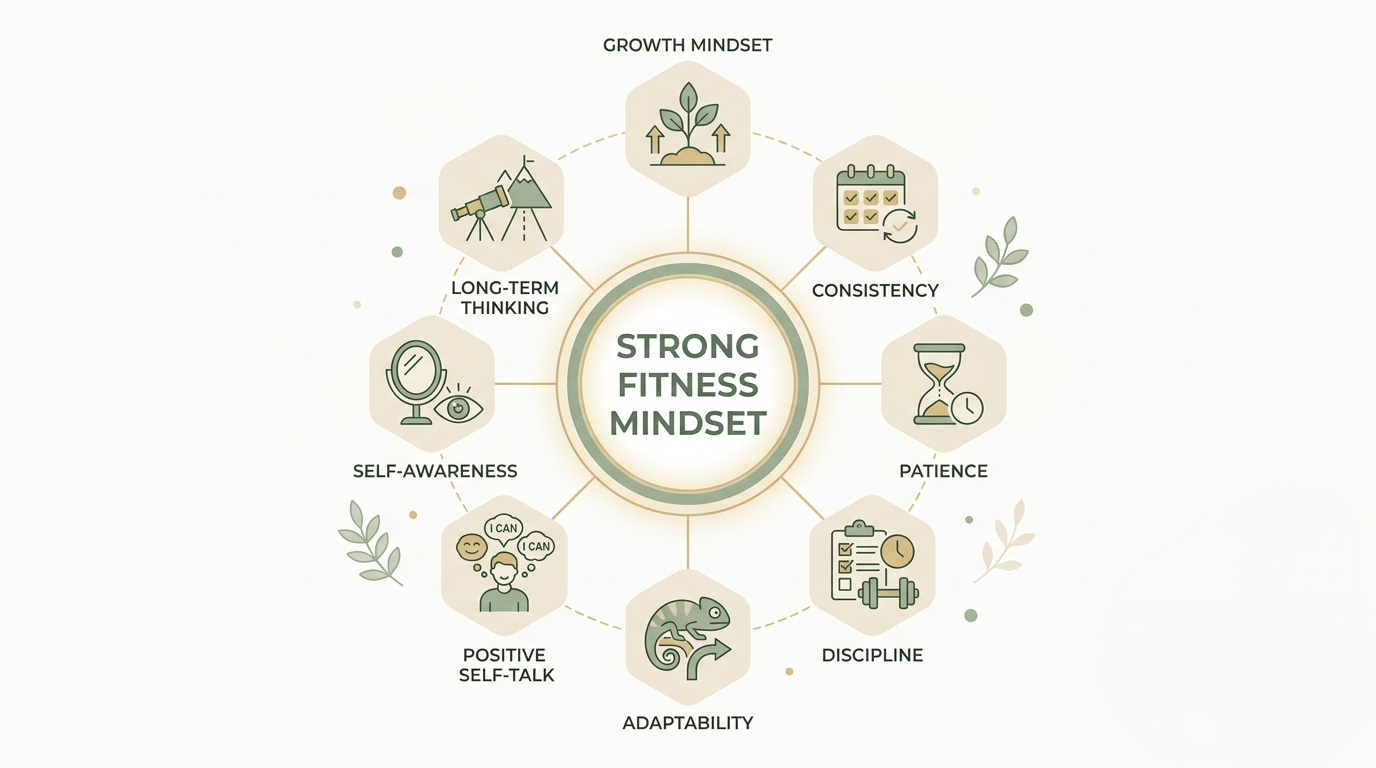
People with a strong fitness mindset typically share several traits:
- A growth mindset that views ability as something developed through effort
- Consistency in showing up regardless of daily motivation levels
- Patience with gradual, realistic progress
- Discipline to follow through on commitments
- Adaptability when plans need to change
- Positive self-talk instead of harsh self-criticism
- Self-awareness of personal triggers and patterns
- Long-term thinking that prioritizes sustainability over quick results
These characteristics show up in daily habits, healthy routines, positive behaviors, and a recovery mindset that treats rest as part of progress rather than a setback. A growth mindset — the belief that ability improves through effort — is one of the strongest predictors of fitness consistency. Learn more about why growth mindset is important for long-term personal development
How to Develop a Mindset Fitness Routine
Set Clear and Realistic Goals
SMART goals — specific, measurable, achievable, relevant, and time-bound — provide clarity and direction. Process goals (such as “exercise four times per week”) tend to support consistency better than outcome goals alone (such as “lose 20 pounds”), since they focus on controllable actions.
Build Sustainable Daily Habits
Habit stacking, which links a new habit to an existing routine, makes new behaviors easier to maintain. Small, consistent actions — such as a 10-minute walk — build momentum more reliably than infrequent, intense efforts. Small, consistent actions — such as a 10-minute walk — build momentum more reliably than infrequent, intense efforts. For a structured approach, our guide on how to build good habits in 30 days breaks this process down step by step.
Track Progress Effectively
Journaling, fitness logs, and simple progress measurements create accountability and make gradual improvements visible, which reinforces motivation over time.
Learn From Setbacks
Viewing failure as feedback rather than evidence of inadequacy allows for strategy adjustments instead of abandonment. This reframing is central to building long-term resilience.
Common Barriers to Developing a Fitness Mindset
Several factors commonly interfere with building a strong fitness mindset:
- Lack of motivation
- Unrealistic expectations
- Fear of failure
- Time constraints
- Stress
- Negative self-talk
- Comparison with others
- Inconsistent routines
Recognizing these barriers is the first step toward addressing them directly rather than letting them derail progress.
How to Overcome Mental Obstacles in Fitness
Managing Low Motivation
Taking action before motivation arrives — rather than waiting to feel ready — is one of the most effective strategies for building consistency. Structured routines reduce reliance on daily motivation altogether. Taking action before motivation arrives — rather than waiting to feel ready — is one of the most effective strategies for building consistency. If motivation continues to feel unreliable, learning how to build discipline without motivation can help you create structure that doesn’t depend on how you feel each day.
Dealing With Plateaus
Plateaus are a normal part of progress cycles. Patience and periodic program adjustments help move past stalled results without triggering discouragement or burnout.
Building Confidence Through Small Wins
Incremental improvement, reinforced through recognition of small wins, builds the confidence needed to sustain effort over the long term.
Mindset Fitness vs Physical Fitness
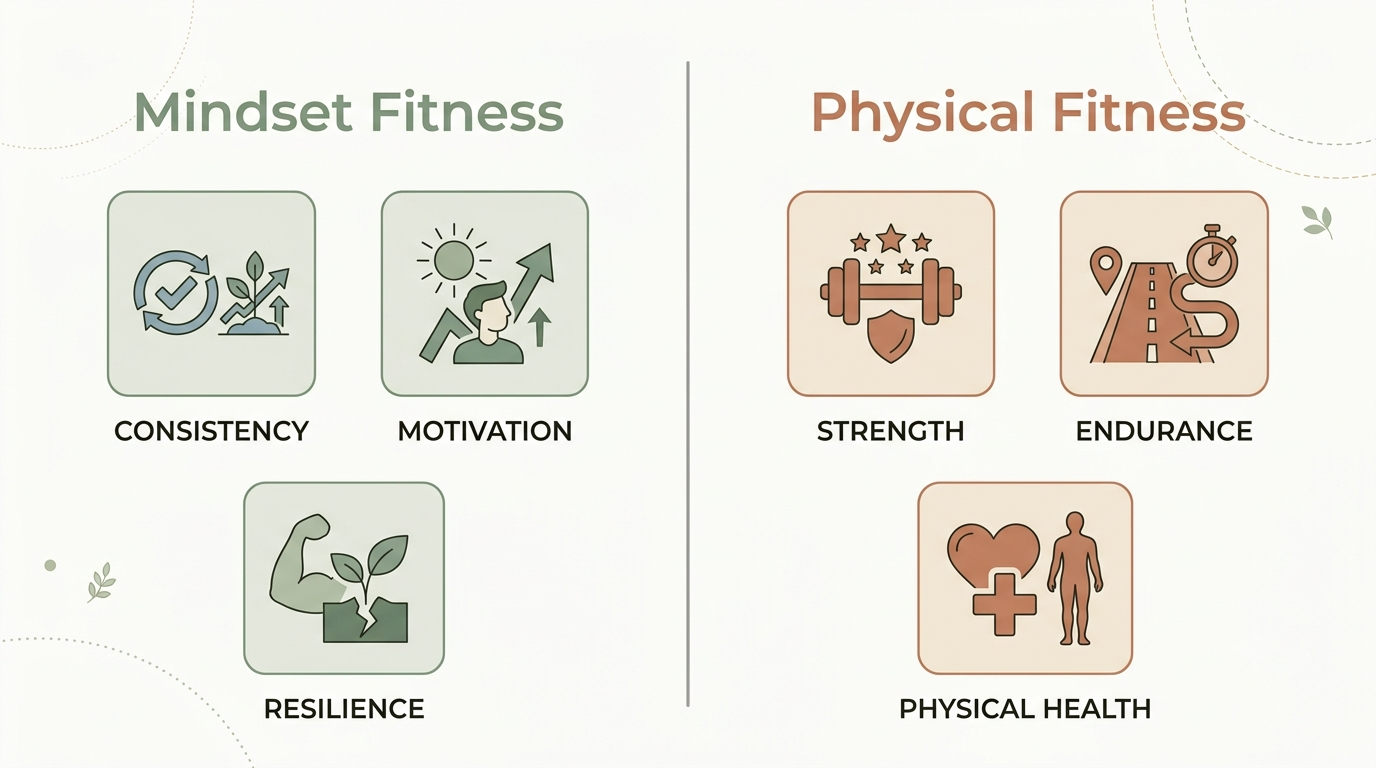
| Mindset Fitness | Physical Fitness |
|---|---|
| Focuses on mental habits | Focuses on body performance |
| Builds consistency | Builds strength and endurance |
| Supports motivation | Improves physical capability |
| Encourages resilience | Enhances physical health |
Mindset fitness and physical fitness are complementary rather than competing concepts. Physical training produces measurable results, but mindset fitness determines whether that training continues long enough to produce lasting change. A common misconception is that mental and physical fitness are separate pursuits; in practice, sustainable fitness requires both working together.
Practical Daily Habits That Strengthen a Fitness Mindset
Simple daily habits reinforce a strong fitness mindset over time:
- Morning planning to set intentions for the day
- Exercise scheduling to remove daily decision-making
- Healthy sleep to support recovery and focus
- Nutrition awareness to fuel consistent performance
- Mindfulness practices to reduce stress
- Reflection on daily progress and challenges
- Regular progress reviews to stay aligned with goals
- Recovery practices to prevent burnout and injury
Beginner Mistakes When Developing a Fitness Mindset
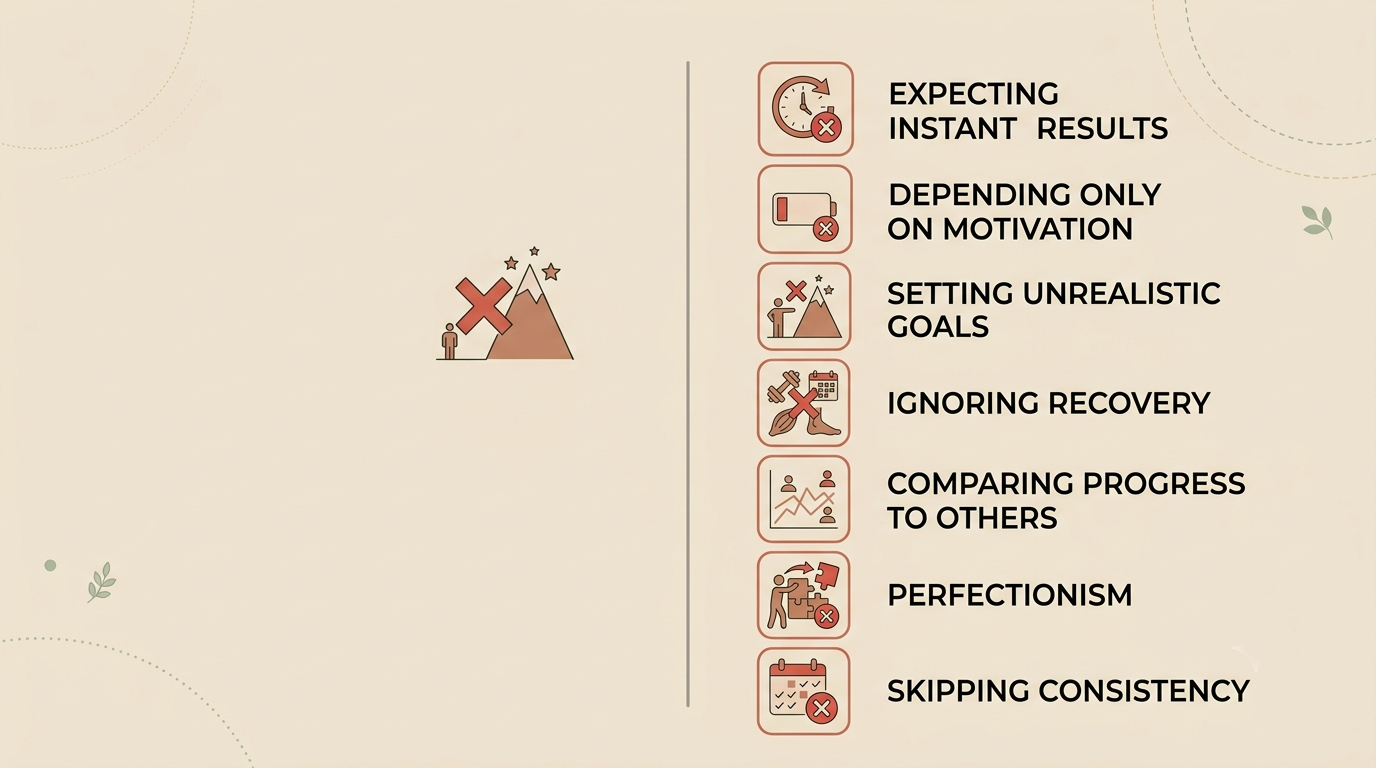
Beginners often encounter predictable mindset challenges:
- Expecting instant results: This happens because early motivation is high; the fix is setting realistic timelines based on typical progress patterns.
- Depending only on motivation: Motivation naturally fluctuates; building structured routines prevents progress from stalling.
- Setting unrealistic goals: Overly ambitious goals often lead to early burnout; smaller, incremental goals sustain momentum.
- Ignoring recovery: Skipping rest can cause fatigue and injury; scheduling recovery prevents setbacks.
- Comparing progress to others: This undermines confidence; tracking personal progress instead keeps focus productive.
- Perfectionism: All-or-nothing thinking often causes people to quit after a single missed session; flexible standards prevent this pattern.
- Skipping consistency: Irregular effort slows results; predictable routines produce more reliable progress.
Different Approaches to Building a Fitness Mindset
Several approaches can support mindset fitness, depending on personality and lifestyle:
- Goal-oriented approach: Best suited to individuals motivated by measurable milestones.
- Habit-based approach: Works well for those who prefer structure and routine over goal-chasing.
- Performance-focused mindset: Suited to competitive individuals focused on measurable output.
- Wellness-focused mindset: Fits those prioritizing overall health over performance metrics.
- Mindfulness-based fitness: Appeals to individuals seeking a calmer, present-focused approach to training.
Difficulty & Time Investment
Mindset fitness is accessible to beginners but deepens with consistent practice. Beginner difficulty typically involves establishing basic routines and managing early motivation dips. Intermediate progression focuses on refining habits and building resilience against setbacks. Advanced refinement involves fine-tuning long-term strategies and adapting to changing life circumstances. Time commitment varies by individual, but even 10–20 minutes of daily reflection or habit tracking can meaningfully strengthen a fitness mindset. Lifestyle factors and individual differences, such as stress levels and prior experience with habit formation, influence how quickly this process develops.
Results Timeline
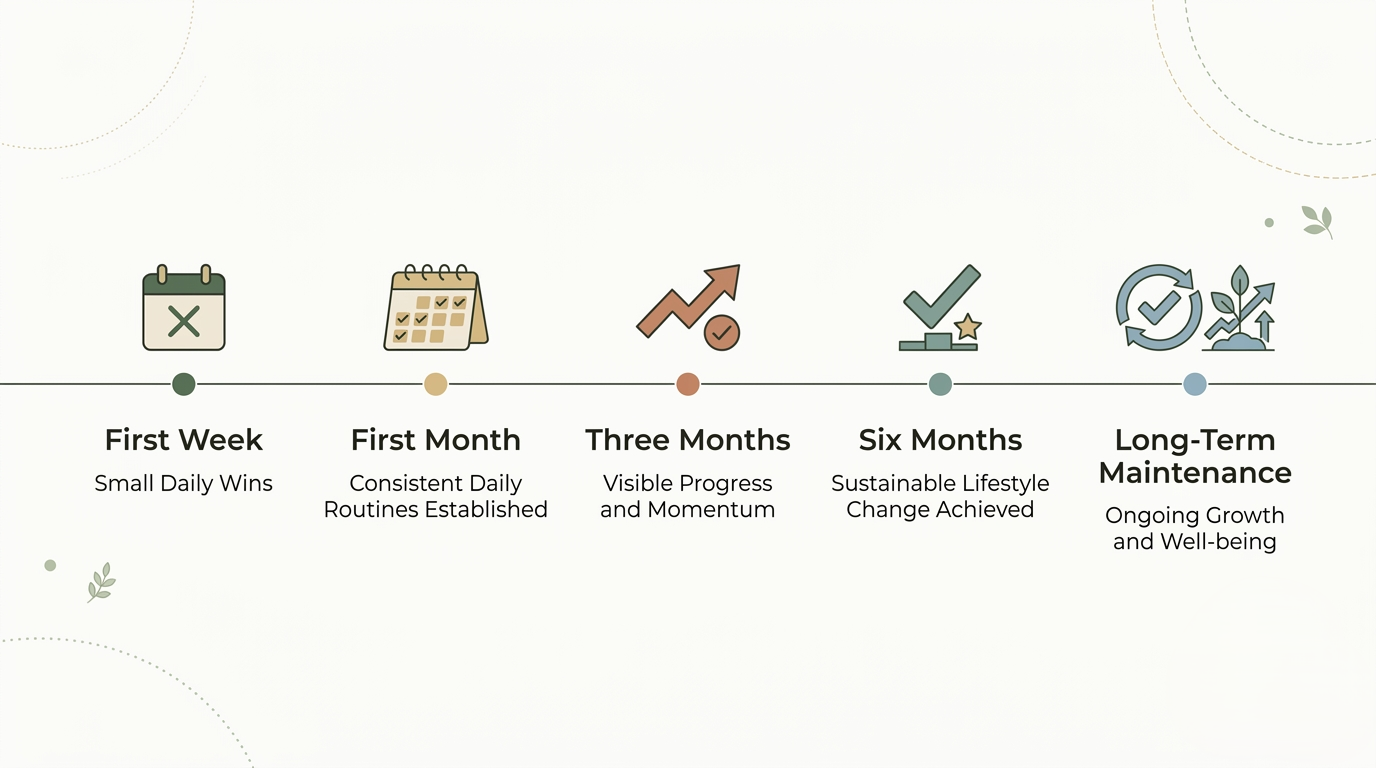
Mindset fitness typically develops gradually rather than overnight:
- First week: Initial awareness of habits and motivation patterns begins to form.
- First month: Routines start to feel more automatic, though motivation may still fluctuate.
- Three months: Consistency becomes noticeably easier, and setbacks are handled with more resilience.
- Six months: Mental habits are largely established, supporting steady physical progress.
- Long-term maintenance: A strong fitness mindset becomes a stable part of identity and daily life.
Progress pace is influenced by individual consistency, external stressors, and how well routines are integrated into daily life.
Practice Guide for Building a Strong Fitness Mindset
Building a strong fitness mindset benefits from a structured practice approach:
- Daily routines: Anchor exercise and reflection to consistent times of day.
- Weekly planning: Review goals and adjust routines based on the previous week.
- Motivation strategies: Use reminders of personal values and long-term reasons for training.
- Accountability methods: Partner with friends, coaches, or communities for support.
- Journaling: Record progress, setbacks, and emotional patterns related to training.
- Habit tracking: Use logs or apps to visualize consistency over time.
- Environment design: Arrange surroundings — such as visible workout gear — to reduce friction.
- Long-term sustainability: Prioritize routines that fit realistically into daily life rather than short-term intensity.
In our experience helping readers build better habits, the individuals who succeed long-term are rarely the most motivated at the start — they are the ones who build the most sustainable systems.
Frequently Overlooked Factors That Influence Mindset Fitness
Several supporting factors are often underestimated in mindset fitness discussions:
- Sleep quality
- Nutrition
- Stress levels
- Social support
- Work-life balance
- Recovery
- Environment
- Personal beliefs about ability and change
Your Daily Thrive recommends addressing these supporting factors alongside training habits, since neglecting them often undermines otherwise well-structured fitness routines. As of 2026, many behavioral science approaches to fitness increasingly emphasize these environmental and psychological factors alongside traditional exercise programming.
Conclusion
Mindset fitness is the psychological foundation that determines whether physical training becomes a lasting habit or a short-term effort. It combines consistency, resilience, realistic goal setting, and sustainable daily habits to support long-term success. Rather than chasing perfection, readers benefit most from focusing on steady, sustainable progress built through small, repeatable actions. A strong fitness mindset does not eliminate setbacks — it provides the resilience and structure needed to keep moving forward through them.
Frequently Asked Questions
What does mindset fitness mean?
Mindset fitness refers to the mental attitudes, habits, and beliefs that support consistent physical activity, including motivation, discipline, and resilience.
Why is mindset important for achieving fitness goals?
Mindset determines whether healthy behaviors become lasting habits, since consistency depends more on psychological patterns than short-term willpower.
How can beginners develop a stronger fitness mindset?
Beginners can build a stronger fitness mindset by setting realistic goals, creating structured routines, and tracking progress consistently over time.
Can mindset improve workout consistency?
Yes, a strong mindset improves workout consistency by reducing reliance on daily motivation and replacing it with structured, sustainable habits.
What habits help build long-term fitness motivation?
Habit stacking, progress tracking, realistic goal setting, and regular reflection are effective habits for sustaining long-term fitness motivation.
How long does it take to develop a fitness mindset?
A fitness mindset typically begins forming within the first month of consistent practice, with noticeable resilience and consistency developing over three to six months.
What is the difference between motivation and discipline in fitness?
Motivation is the emotional drive to act, while discipline is the ability to follow through on commitments even when motivation is low.










One Response