
Introduction
A growth mindset is the belief that abilities, intelligence, and character can be developed through effort, learning, and persistence. Pioneered by psychologist Carol Dweck, this framework has reshaped how educators, leaders, and individuals approach challenges. Reading is one of the most accessible ways to internalize this mindset — it exposes you to new perspectives, models of resilience, and frameworks for continuous improvement. This article covers the best books to read for growth mindset, including both nonfiction and fiction titles, organized by goal, life stage, and reader type to help you find exactly what you need.
Quick Summary
- A growth mindset can be strengthened through books that encourage learning, resilience, and continuous improvement.
- Both nonfiction and fiction can help reshape beliefs, decision-making, and problem-solving skills.
- The best growth mindset books vary depending on age, goals, career, and learning preferences.
- Applying lessons consistently is more important than simply reading more books.
- Selecting books matched to your current challenge accelerates mindset development faster than reading broadly.
What Is a Growth Mindset and Why Does It Matter?
A growth mindset is the conviction that intelligence and talent are not fixed traits — they are starting points that expand with dedication and hard work. Developed by Stanford psychologist Carol Dweck through decades of research, the concept explains why some people recover from setbacks while others are paralyzed by them. Mindset affects learning speed, career advancement, the quality of personal relationships, and long-term emotional resilience. People who operate from a growth orientation tend to seek feedback, embrace difficulty, and persist through failure — all behaviors that compound into meaningful life outcomes over time.To understand the full impact this shift in thinking can have on your life, read our in-depth guide on why is growth mindset important.
Growth Mindset vs. Fixed Mindset

The core difference between these two orientations lies in how a person interprets challenge, effort, and failure.
| Dimension | Growth Mindset | Fixed Mindset |
|---|---|---|
| Core Belief | Abilities can be developed through effort | Abilities are innate and unchangeable |
| Learning Style | Seeks challenge; views effort as the path to mastery | Avoids difficult tasks to protect self-image |
| Response to Failure | Treats failure as feedback and a learning opportunity | Views failure as evidence of permanent limitation |
| Long-Term Development | Continuous improvement; compounds over years | Plateaus early; relies on natural talent |
Understanding this distinction matters because it reveals why mindset — not raw ability — often determines who achieves lasting success.
How Reading Helps Develop a Growth Mindset

Reading accelerates mindset development by engaging the brain in active cognitive restructuring. When you encounter a well-articulated idea that challenges an existing belief, your neural pathways literally reorganize around that new information — a process supported by research in neuroplasticity. Passive reading provides exposure; active reading with reflection drives behavioral change.
Key ways reading builds a growth mindset:
- Expands perspective — Exposure to diverse experiences and worldviews loosens rigid thinking patterns.
- Improves self-awareness — Psychological frameworks in books help readers identify their own limiting beliefs.
- Encourages lifelong learning — Reading models the behavior of continuous intellectual curiosity.
- Builds resilience — Stories of people overcoming adversity normalize struggle as part of growth.
- Develops critical thinking — Analyzing arguments and evidence in books sharpens reasoning skills.
In our experience helping readers build better habits at Your Daily Thrive, those who pair reading with journaling and reflection report significantly deeper mindset shifts than those who consume books passively.
Qualities to Look for in Books That Build a Growth Mindset
Not every book labeled “motivational” will produce genuine mindset change. Effective growth mindset books share several characteristics that separate them from surface-level self-help content.
- Evidence-based ideas — Grounded in psychology, neuroscience, or behavioral science rather than anecdote alone.
- Practical exercises — Includes actionable steps readers can implement immediately, not just concepts to admire.
- Real-life case studies — Demonstrates principles through specific, credible examples rather than vague inspiration.
- Habit-building techniques — Teaches how to install behaviors that sustain mindset change over time.
- Reflection prompts — Encourages the reader to apply concepts to their own life, deepening integration.
- Actionable frameworks — Provides repeatable mental models that work across different life domains.
As of mid-2026, behavioral science increasingly emphasizes that systems and environment design matter as much as motivation — so prioritize books that address how to change, not just why you should.
Best Books to Read for Growth Mindset
The following curated selections cover the full spectrum of mindset development — from foundational theory to practical application and narrative-driven inspiration.If you want a broader overview beyond this list, explore our full roundup of the best mindset books across every category of personal development.
Classic Growth Mindset Books
These foundational titles are the starting point for anyone serious about mindset development. They remain the most widely cited growth mindset books across educational, corporate, and personal development contexts.
- Mindset: The New Psychology of Success by Carol S. Dweck — The definitive text on the subject. Dweck introduces the fixed vs. growth mindset framework and applies it to parenting, education, business, and relationships. Essential reading for anyone new to the concept.
- Grit: The Power of Passion and Perseverance by Angela Duckworth — Argues that sustained effort over time (grit) predicts success more reliably than talent. Packed with research from West Point, the National Spelling Bee, and corporate environments.
- The Growth Mindset Coach by Annie Brock & Heather Hundley — Originally written for educators but highly effective for anyone who wants a structured, activity-based approach to implementing growth mindset principles.
These books to read for growth mindset form the intellectual backbone of the field and are referenced extensively in academic and corporate training programs worldwide.
Books on Mindset and Success
These books on mindset and success connect psychological orientation with measurable achievement across leadership, entrepreneurship, and performance.
- Atomic Habits by James Clear — Demonstrates how tiny behavioral shifts compound into significant outcomes. The framework of identity-based habits directly reinforces a growth orientation by teaching readers to focus on who they are becoming, not just what they want to achieve.
- The Obstacle Is the Way by Ryan Holiday — Draws on Stoic philosophy to show how constraints and setbacks can be reframed as advantages. Highly applicable to professional and personal adversity.
- Outliers by Malcolm Gladwell — Explores the environmental and situational factors behind extraordinary achievement, challenging the myth of pure innate talent and reinforcing the role of opportunity, practice, and persistence.
Books for Personal Growth and Self-Improvement
These books to read for growth focus on the daily architecture of a developing mind — covering habits, emotional discipline, confidence, and resilience.
- The 7 Habits of Highly Effective People by Stephen R. Covey — A comprehensive framework for proactive living, goal alignment, and continuous renewal. Deeply compatible with growth mindset principles.
- Daring Greatly by Brené Brown — Addresses the vulnerability required to pursue growth honestly. Brown’s research on shame and worthiness directly confronts the fixed mindset fear of being exposed as inadequate.
- Can’t Hurt Me by David Goggins — A raw account of transforming severe limitations into extraordinary physical and mental performance. One of the most visceral books to read for mindset and resilience.
- The Compound Effect by Darren Hardy — Focuses on the power of small, consistent choices made daily over time — a core principle of growth-oriented thinking.
Fiction Books That Encourage a Growth Mindset
Fiction develops empathy, expands moral imagination, and models adaptive responses to adversity — all of which reinforce a growth orientation without feeling like assigned reading.
- To Kill a Mockingbird by Harper Lee — Atticus Finch models principled persistence in the face of systemic failure, demonstrating that integrity and effort matter even when outcomes are uncertain.
- The Alchemist by Paulo Coelho — A narrative about following a personal calling despite fear and setback. Widely used in personal development contexts for its accessible portrayal of perseverance and self-belief.
- Educated by Tara Westover — A memoir that reads like literary fiction. Westover’s journey from a survivalist compound to Cambridge University is one of the most powerful real-world accounts of mindset transformation in print.
- The Martian by Andy Weir — A scientist stranded on Mars systematically solves each survival problem using curiosity, creativity, and persistence — a sustained fictional illustration of growth mindset in action.
Fiction books to read for growth mindset are especially effective for readers who find nonfiction too prescriptive or who want to absorb principles through narrative immersion.
Growth Mindset Books for Adults
Adults face mindset challenges distinct from those of students or young people. Career stagnation, parenting pressures, leadership responsibilities, and the temptation to stop learning after formal education all require targeted reading.
- Career development — Range by David Epstein argues that breadth of experience — not narrow specialization — often produces the most adaptive and successful professionals. Essential for adults questioning whether it’s too late to change direction.
- Parenting — NurtureShock by Po Bronson & Ashley Merryman presents counterintuitive research on how modern parenting practices sometimes undermine growth mindset development in children — critical reading for parents who want to model and teach the right beliefs.
- Leadership — Leaders Eat Last by Simon Sinek examines how trust, safety, and purpose-driven leadership create environments where growth becomes a cultural norm rather than an individual aspiration.
- Entrepreneurship — The Lean Startup by Eric Ries applies growth mindset principles directly to business creation, teaching founders to treat every iteration as an experiment rather than a failure.
- Lifelong learning — A Mind for Numbers by Barbara Oakley is aimed at anyone who has told themselves they are “not a math person” — or not a “learning person.” It directly addresses fixed mindset beliefs through practical neuroscience.
Growth mindset books for adults are most effective when selected based on the specific domain where stagnation is felt most acutely.
Growth Mindset Books for Different Goals
Career and Professional Development
For those focused on mindset books for business and professional growth:
- Mindset (Dweck) — Apply the growth framework directly to performance reviews, promotions, and workplace learning.
- The Hard Thing About Hard Things by Ben Horowitz — Offers honest, unromanticized guidance on navigating professional adversity at a leadership level.
- Deep Work by Cal Newport — Argues that the ability to focus intensely is both increasingly rare and valuable — a skill built through deliberate practice, not talent.
Confidence and Resilience
- The Confidence Code by Katty Kay & Claire Shipman — Research-backed examination of how confidence is built through action and risk-taking, not self-affirmation.
- Option B by Sheryl Sandberg & Adam Grant — A guide to building resilience in the aftermath of loss and adversity, grounded in psychological research on post-traumatic growth.
Productivity and Habit Formation
- Atomic Habits by James Clear — The clearest practical system available for building habits aligned with a growth identity.
- Getting Things Done by David Allen — A trusted framework for managing cognitive load so mental energy can be directed toward growth rather than task anxiety.
Leadership and Decision-Making
- Thinking, Fast and Slow by Daniel Kahneman — Explores the two cognitive systems that drive decisions, revealing where fixed-mindset thinking enters through cognitive bias.
- Principles by Ray Dalio — Documents a systematic, evidence-based approach to decision-making and continuous improvement within high-performance organizations.
How to Choose the Right Growth Mindset Book
Choosing the wrong book at the wrong moment leads to passive consumption rather than genuine development. Use these criteria to narrow your selection:
- Current challenge — Match the book to the specific domain where you feel most stuck: relationships, career, learning, or emotional regulation.
- Reading level and format — Some readers absorb dense psychological research well; others need narrative-driven content. Be honest about which format you will actually finish.
- Goals: practical vs. theoretical — If you want to understand why mindset works, start with Dweck. If you want how to change behavior, start with Clear or Hardy.
- Time commitment — A 400-page leadership book requires a different level of commitment than a focused 200-page habit guide. Align your reading ambition with available time.
- Beginner vs. advanced — First-time personal development readers benefit most from foundational texts before moving to specialized or advanced frameworks.
Your Daily Thrive recommends starting with one book in the category most relevant to your current life circumstance, completing it fully, and implementing one lesson before beginning the next title.
Comparison of Different Types of Growth Mindset Books
| Type | Best For | Strengths | Limitations |
|---|---|---|---|
| Psychology Books | Understanding the science behind mindset | Research depth; credibility; conceptual clarity | Can feel abstract without personal application |
| Habit Books | Building behavioral change systems | Highly actionable; system-focused; practical | May underemphasize emotional and identity dimensions |
| Biography / Memoir | Inspiration through real-world examples | Emotionally engaging; illustrates principles in context | Less structured; fewer transferable frameworks |
| Business Books | Career and organizational mindset application | Domain-specific; results-oriented | Can oversimplify psychological complexity |
| Fiction | Developing empathy, resilience, and perspective | Engaging; emotionally resonant; teaches through story | Principles must be extracted consciously by the reader |
Beginner Mistakes When Reading Personal Development Books

Even motivated readers undermine their own progress through predictable patterns. Recognizing these errors early saves months of wasted effort.
- Reading without implementation — Finishing a book without practicing a single idea produces almost no lasting change. Insight without action fades within days.
- Consuming too many books simultaneously — Reading five personal development books at once fragments focus and prevents deep integration of any single framework.
- Looking for instant transformation — Expecting immediate results from a book leads to disappointment and abandonment. Mindset change operates on a timeline of weeks to months, not hours.
- Ignoring reflection — Moving from page to page without pausing to connect ideas to personal experience reduces a powerful tool to passive entertainment.
- Never revisiting important ideas — The most valuable frameworks require repetition to internalize. Re-reading key chapters or reviewing notes monthly significantly deepens retention.
Prevention: Commit to finishing one book before starting another. Set aside 10 minutes after each reading session to write one practical takeaway.
How to Apply Lessons from Growth Mindset Books
Reading creates awareness. Application creates change. Use this implementation framework after each book:
- Take notes — Write key ideas in your own words as you read. Paraphrasing forces cognitive engagement.
- Highlight key ideas — Mark passages that feel challenging or personally relevant, not just passages you agree with.
- Practice one lesson weekly — Extract one concrete behavior from each chapter and commit to practicing it for seven days.
- Journal progress — Record what changed, what resisted, and what questions emerged. Journaling is one of the highest-leverage tools for accelerating mindset growth.
- Review monthly — Return to your notes and highlights after 30 days. What has shifted? What still needs work?
- Discuss ideas with others — Teaching or discussing a concept with another person is the most reliable method for deepening understanding and retention.
- Journal progress — Record what changed, what resisted, and what questions emerged. Learn exactly how to do this in our guide on how to journal for self improvement.
Common Challenges When Building a Growth Mindset
Losing Motivation
Motivation naturally fluctuates — it is an emotion, not a character trait. Fixed mindset thinking interprets motivation loss as evidence that growth isn’t possible. Growth mindset thinking recognizes it as a normal signal that systems and environment need adjustment. To recover: reduce the daily reading commitment to a manageable minimum, reconnect with a meaningful goal, and eliminate friction from the practice (keep books visible, reading time protected).
Fear of Failure
The fear of being exposed as inadequate is the most consistent barrier to growth mindset development. It manifests as procrastination, avoidance of challenging material, and resistance to feedback. Psychologically, this reflects what Dweck calls “performance goals” (appearing capable) overriding “learning goals” (becoming capable). The antidote is deliberate, low-stakes exposure to failure — starting with small challenges where the cost of failure is minimal.
Lack of Consistency
Inconsistent practice is the most common reason mindset development stalls. Sporadic reading produces sporadic insight. The solution is habit-stacking: attaching reading to an existing daily routine (morning coffee, lunch break, or pre-sleep wind-down) rather than relying on motivation. Even 15 minutes daily produces more compounding benefit than a three-hour weekend session.
Information Overload
Consuming too much self-improvement content simultaneously creates paralysis. When every book offers a different “best” approach, decision fatigue sets in and nothing gets implemented. Limit your active reading to one personal development book at a time, apply its core principle for at least three weeks, and only then move on.
Difficulty & Time Investment
Building a growth mindset through reading is accessible to beginners but requires consistent effort to produce real results.
- Effort level — Low to moderate. The reading itself is not difficult; the challenge is consistent implementation.
- Daily time commitment — 15 to 30 minutes of focused reading per day is sufficient for meaningful progress. Advanced readers aiming to complete 12+ books per year will need 45–60 minutes daily.
- Beginner-friendly variations — Start with shorter books (under 250 pages), audiobooks for commute time, or chapter-by-chapter reading with reflection breaks.
- Factors affecting learning speed — Prior exposure to psychology or personal development, current stress levels, sleep quality, and the relevance of the book’s topic to immediate life circumstances all influence how quickly ideas integrate.
- Active vs. passive reading — Active reading (notes, highlights, reflection, discussion) produces 3 to 5 times the behavioral benefit of passive reading, according to research on deliberate learning and retention.
Results Timeline
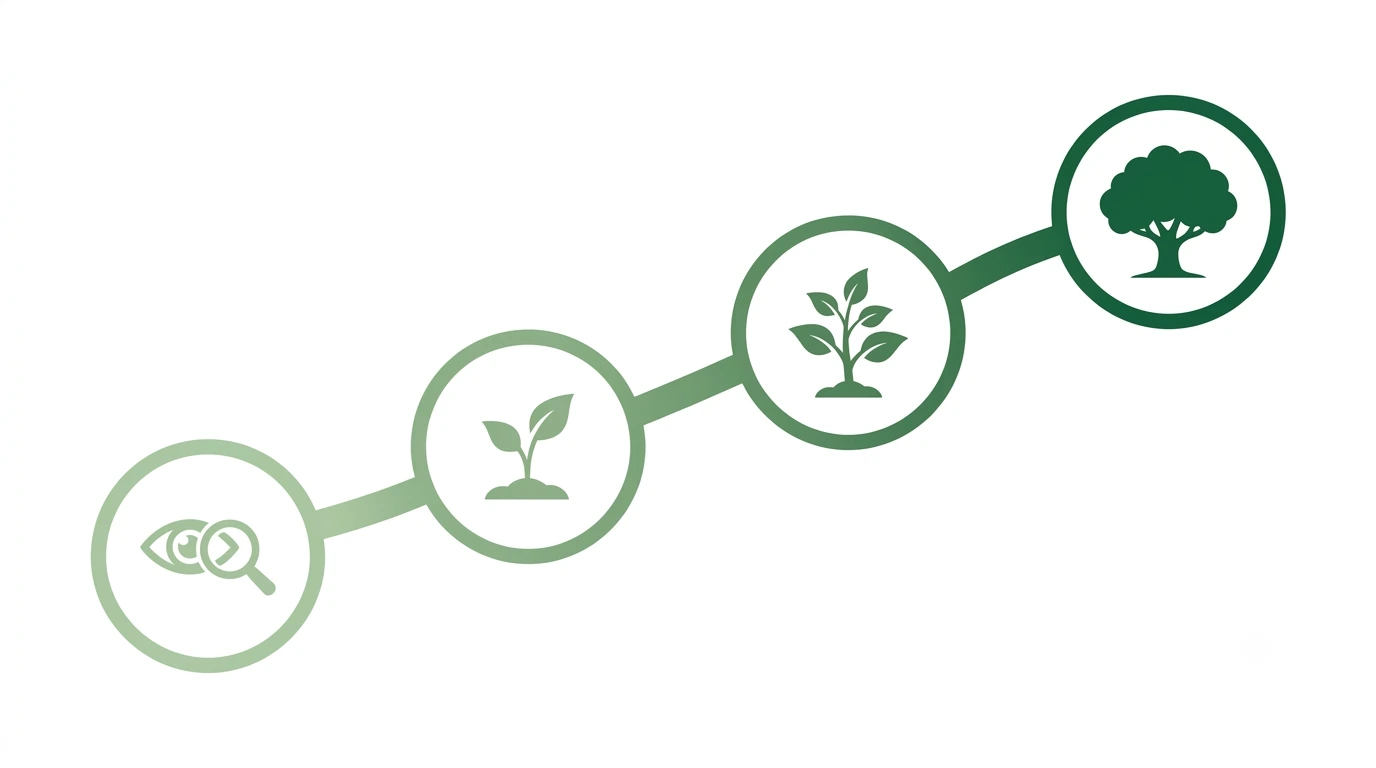
Realistic expectations prevent early abandonment and maintain motivation through the slower phases of mindset development.
- First week — Increased awareness of fixed mindset patterns in daily thinking. Most readers notice where they resist challenge or avoid feedback.
- First month — Behavioral experiments begin. Readers start testing new approaches in low-stakes situations and observing the results.
- Three months — Consistent practice produces measurable shifts in response to failure, feedback, and learning challenges. Others may begin noticing the change before the reader does.
- Long-term (6–12 months) — Identity-level change. Growth mindset thinking becomes the default orientation rather than a deliberate effort. This is where compounding begins.
Factors that accelerate progress include journaling, accountability partnerships, applying concepts to real challenges, and revisiting foundational books periodically. Factors that delay progress include stress overload, social environments that reward fixed mindset behaviors, and reading without implementation.
Practice Guide for Developing a Growth Mindset Through Reading
A structured practice produces better results than ad-hoc reading. Use this framework to build a sustainable routine.
- Daily reading routine — Set a consistent 15–30 minute reading block at the same time each day. Morning reading benefits from quiet focus; evening reading benefits from natural wind-down.
- Weekly reflection — Spend 10–15 minutes each week reviewing what you read and identifying one behavior to adjust or experiment with in the coming week.
- Journaling — Keep a dedicated growth journal. After each session, write one insight, one challenge it raises, and one action it suggests.
- Goal setting — Set a quarterly reading goal (3–4 books per quarter) rather than an annual one. Shorter cycles allow for adjustment based on what’s working.
- Habit tracking — Use a simple habit tracker to record daily reading. Visual streaks create momentum and make skipped days visible before they become patterns.
- Accountability methods — Share your reading list with a friend, join a book club, or post progress publicly. Social accountability significantly improves consistency.
- Adapting for busy schedules — On high-demand days, 5 minutes of re-reading previous notes counts as practice. Maintain the habit even when the volume drops.
- Long-term sustainability — Rotate between challenging, dense books and lighter, more accessible reads. Sustained reading requires variety to prevent burnout.
Frequently Overlooked Factors That Influence Mindset Growth
Most personal development content focuses on habits and motivation. These less-discussed factors have an equally significant impact on mindset development.
- Environment — Physical and social surroundings shape thinking more than most people realize. An environment full of fixed mindset cues (competitive comparisons, punishment for failure) undermines reading-based growth work.
- Social influences — The five people you spend the most time with significantly influence your mindset. Relationships that normalize growth, curiosity, and honest feedback accelerate development; relationships built on judgment and status protection slow it.
- Sleep — Memory consolidation — including the integration of new beliefs and frameworks — occurs primarily during sleep. Chronic sleep deprivation directly impairs the neurological processes that make mindset change possible.
- Stress — High cortisol levels activate threat-response brain regions that reinforce fixed, self-protective thinking. Managing stress is not separate from mindset development — it is a prerequisite for it.
- Feedback quality — Growth mindset is reinforced by specific, process-focused feedback (“you worked through that systematically”) rather than outcome-focused praise (“you’re so smart”). Seeking and creating feedback-rich environments accelerates development.
- Consistency over intensity — Regular, modest effort produces more durable mindset change than occasional intense effort. This mirrors findings in behavioral science on habit formation and long-term learning.
- Identity change — Lasting mindset growth requires updating self-concept, not just behavior. Books that engage identity — “I am someone who learns from failure” — produce deeper change than those focused solely on technique.
- Lifelong learning orientation — Treating learning as perpetually incomplete, rather than aiming for a destination of “having a growth mindset,” sustains the behavior indefinitely.
Growth Mindset Reading Recommendations by Life Stage
Different life stages present different mindset challenges. Matching books to circumstances increases relevance and application.
- Students — Mindset by Dweck; Make It Stick by Brown, Roediger & McDaniel. Focus: learning how to learn, reframing academic struggle.
- Young professionals (20s–early 30s) — Atomic Habits by Clear; Range by Epstein. Focus: building identity, developing skills across domains, navigating early career uncertainty.
- Managers — Radical Candor by Kim Scott; Leaders Eat Last by Sinek. Focus: creating growth environments for others, giving and receiving honest feedback.
- Entrepreneurs — The Hard Thing About Hard Things by Horowitz; The Lean Startup by Ries. Focus: high-stakes resilience, iteration under pressure, identity through adversity.
- Parents — NurtureShock by Bronson & Merryman; The Whole-Brain Child by Daniel Siegel & Tina Payne Bryson. Focus: modeling and teaching growth mindset to children without undermining it.
- Lifelong learners (50+) — Educated by Westover; A Mind for Numbers by Oakley. Focus: dismantling the belief that learning capacity declines with age; reigniting curiosity.
Conclusion
The best books to read for growth mindset are not the most popular ones — they are the ones most relevant to where you are right now. Foundational texts like Dweck’s Mindset establish the framework; habit books like Atomic Habits provide the behavioral architecture; biographies and fiction make the principles emotionally real. What unites all effective growth mindset reading is the requirement for deliberate application. A book left unimplemented changes nothing. The most important decision is not which book to read — it is committing to consistently practicing what each book teaches. Build the habit of learning, not the habit of consuming. That distinction is where genuine mindset growth begins.
Frequently Asked Questions
What are the best books to read for growth mindset?
The most widely recommended books for growth mindset are Mindset by Carol Dweck, Atomic Habits by James Clear, Grit by Angela Duckworth, and The Obstacle Is the Way by Ryan Holiday. These titles cover the psychology of growth mindset, habit formation, perseverance, and resilience — the four pillars of lasting mindset development.
Which books help develop a stronger mindset?
Books that develop a stronger mindset combine psychological insight with practical frameworks. Mindset by Dweck explains the science. Can’t Hurt Me by David Goggins illustrates extreme application. Daring Greatly by Brené Brown addresses the emotional barriers. Together, these three provide psychological understanding, behavioral modeling, and emotional depth.
Are fiction books useful for building a growth mindset?
Yes. Fiction builds empathy, adaptability, and resilience through narrative immersion. Readers who follow characters through adversity, moral complexity, and transformation internalize growth-oriented responses to challenge. Books like Educated by Tara Westover and The Alchemist by Paulo Coelho are particularly effective for developing a growth orientation through story.
How many growth mindset books should I read each year?
Quality of engagement matters more than quantity. Reading and fully implementing 6 to 12 books per year — one or two per month — produces better results than rushing through 30 titles without application. For most adults, one book per month with consistent journaling and reflection is the optimal pace.
What should beginners read first to develop a growth mindset?
Beginners should start with Mindset by Carol Dweck. It provides the conceptual foundation for all subsequent growth mindset reading. After completing it, Atomic Habits by James Clear is the ideal second book, as it provides a practical behavioral system for implementing what Mindset teaches.
Can reading mindset books improve career success?
Research on deliberate practice, neuroplasticity, and behavioral change consistently supports the relationship between growth mindset and professional outcomes. Mindset books improve career success by increasing resilience to setbacks, improving response to feedback, and building learning-oriented approaches to skill development — all of which are associated with higher performance and leadership effectiveness.
How do I apply lessons from growth mindset books in daily life?
Apply one lesson at a time. After each reading session, identify one actionable behavior from what you read and practice it for at least one week before moving on. Keep a reading journal to track insights and results. Discuss ideas with others, revisit key chapters monthly, and connect each lesson to a real current challenge in your work or personal life.










One Response