
Introduction
Great mindset books are among the most practical tools available for reshaping how you think, respond, and grow. A mindset is the set of beliefs and assumptions you hold about yourself and the world — and those beliefs directly influence your habits, decisions, and long-term outcomes. Reading books focused on mindset development gives you structured, evidence-backed frameworks for building resilience, confidence, discipline, and success. Whether you are working on personal goals or professional growth, the right book can accelerate your progress by giving language and structure to the change you want to create.
Quick Summary
- Great mindset books help reshape thinking patterns that influence habits, decisions, and long-term success.
- Different books focus on different goals, including confidence, resilience, productivity, leadership, and personal growth.
- Choosing the right mindset book depends on your current challenges, experience level, and learning style.
- Consistent application of lessons matters more than simply reading more books.
- The psychology behind mindset — including neuroplasticity and cognitive patterns — shows that real change is both possible and measurable.
What Are Mindset Books?
What Is a Mindset?
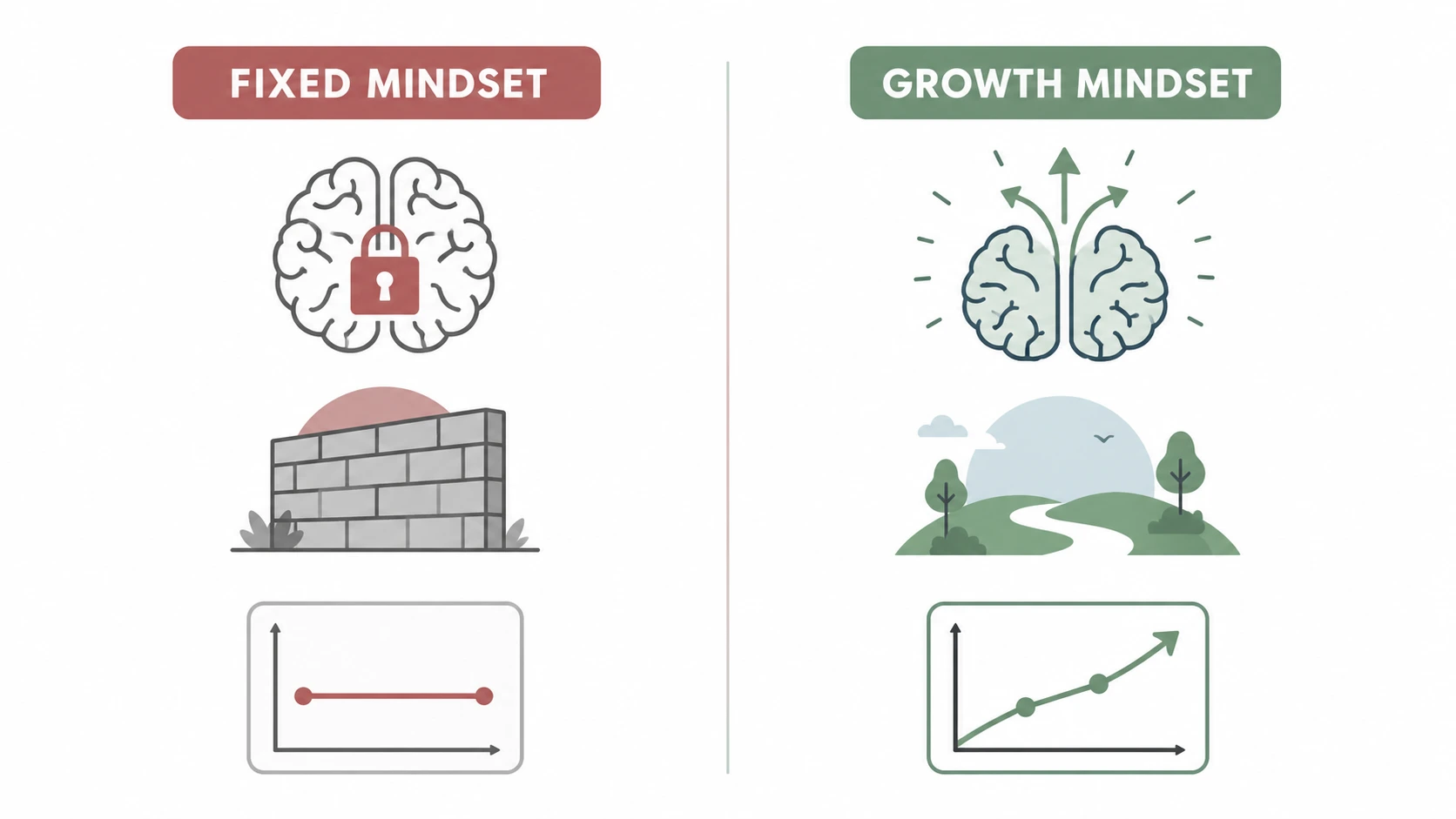
A mindset is the collection of beliefs, assumptions, and mental frameworks through which a person interprets and responds to the world. Psychologist Carol Dweck’s foundational research introduced the distinction between a fixed mindset — the belief that abilities and intelligence are static — and a growth mindset — the belief that skills and intelligence can be developed through effort and learning. This distinction forms the psychological foundation for nearly all modern mindset development work. How you explain setbacks to yourself, how you respond to feedback, and how persistent you remain under pressure are all shaped by your underlying mindset.
How Mindset Books Help Personal Growth
Mindset books create change through several well-documented psychological mechanisms:
- Behavior change: By challenging limiting beliefs, these books interrupt automatic, unhelpful patterns and replace them with more intentional responses.
- Habit formation: Many mindset books introduce systems for building habits aligned with long-term goals, drawing from behavioral science and repetition research.
- Confidence building: Consistent exposure to evidence-based confidence frameworks reduces self-doubt and increases willingness to take action.
- Resilience and emotional regulation: Readers gain practical tools for processing adversity without prolonged emotional disruption.
- Decision-making: A stronger mindset improves clarity, reduces fear-based choices, and helps readers act in alignment with their values.
Why Reading Great Mindset Books Matters
Reading great mindset books is one of the most accessible and cost-effective ways to invest in long-term personal and professional development. Unlike passive consumption of information, mindset books require active engagement with ideas that directly challenge and expand how you think.
The benefits extend across every area of life:
- Personal development: Builds self-awareness and intentionality in daily choices.
- Career growth: Strengthens problem-solving, resilience, and leadership capacity.
- Relationships: Improves communication, empathy, and emotional regulation.
- Leadership: Develops the mental frameworks needed to motivate and guide others effectively.
- Learning ability: A growth mindset increases openness to feedback and accelerates skill development.
- Problem solving: Trains the mind to reframe obstacles as opportunities rather than threats.
- Long-term success: Consistent mental development compounds over time, producing durable results.
Key benefits of reading mindset books regularly include:
- Better self-awareness
- Stronger resilience
- Improved confidence
- Better goal achievement
- Increased adaptability
- Healthier thinking patterns
Characteristics of Great Mindset Books
Not every self-help book qualifies as a great mindset book. The best books share a set of distinguishing qualities that set them apart from superficial motivational content.
Evidence-based ideas: Great mindset books ground their principles in psychology, behavioral science, or neuroscience. They reference research rather than relying purely on anecdote.
Practical exercises: The best books include exercises, reflection prompts, or frameworks that readers can apply immediately. Information without application produces little lasting change.
Real-world examples: Relatable case studies and examples help readers see how concepts apply to situations they actually face.
Actionable advice: Great mindset books translate principles into specific, repeatable actions — not vague suggestions.
Long-term relevance: Timeless books address fundamental human psychology rather than trends. Books like Mindset by Carol Dweck and The 7 Habits of Highly Effective People remain relevant decades after publication.
Clear writing style: Complex psychological ideas are presented in accessible, direct language. Clarity is a sign of intellectual honesty and reader respect.
Top Great Mindset Books Worth Reading
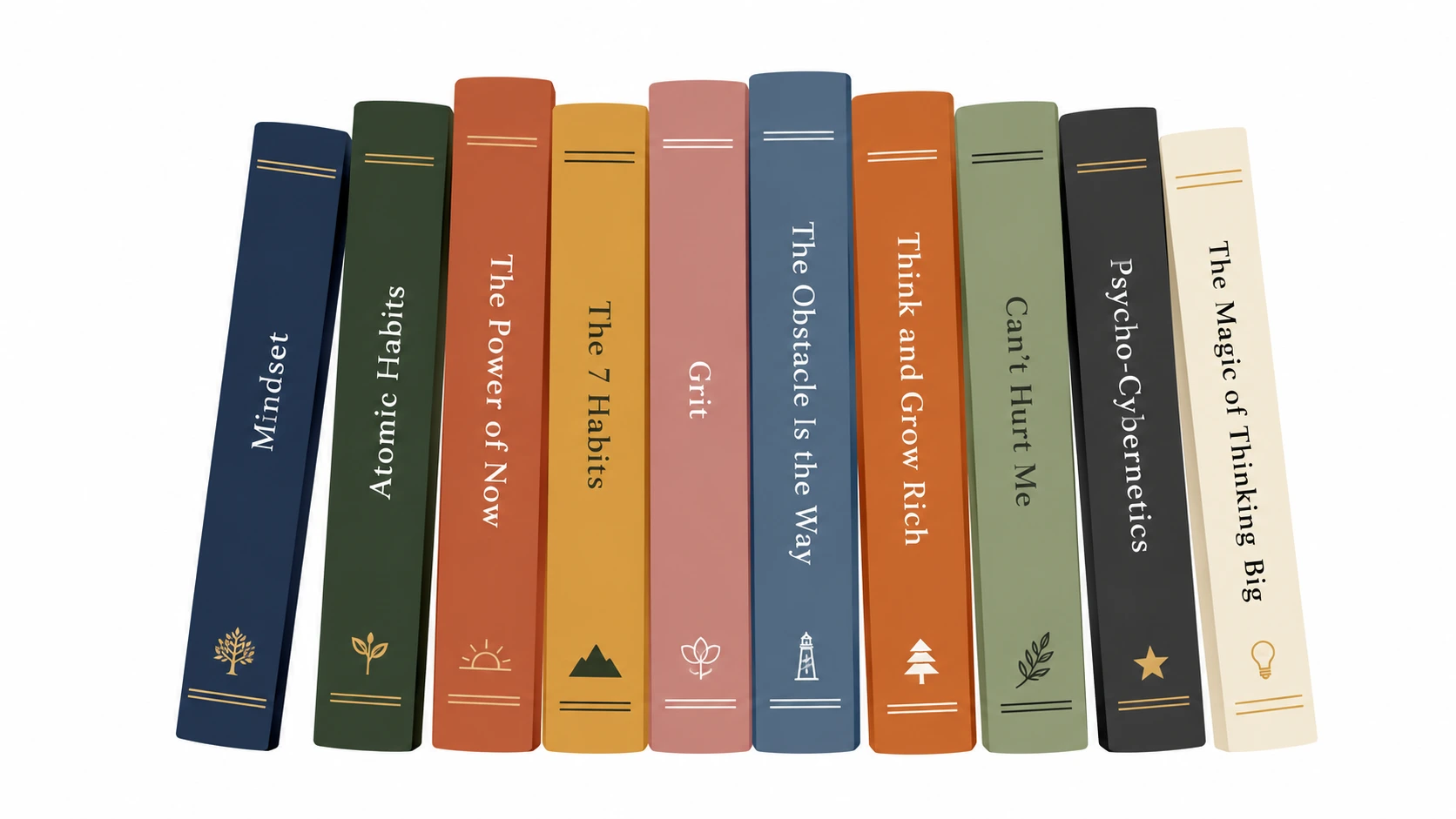
The following books represent the most widely recommended and impactful titles across mindset, success, productivity, and personal growth. As of 2025, these remain the benchmark titles recommended by coaches, psychologists, and personal development professionals.
| Book | Primary Focus | Best For | Difficulty | Key Takeaway |
|---|---|---|---|---|
| Mindset – Carol Dweck | Growth vs. fixed mindset | Everyone | Beginner | Your beliefs about ability shape your potential |
| Atomic Habits – James Clear | Habit formation | Goal-setters | Beginner | Small consistent actions produce massive results |
| The Power of Now – Eckhart Tolle | Present-moment awareness | Overthinkers | Intermediate | Most suffering comes from living in past or future |
| The 7 Habits of Highly Effective People – Stephen Covey | Personal effectiveness | Professionals & leaders | Intermediate | Effectiveness is built on principle-centered living |
| Grit – Angela Duckworth | Perseverance & passion | Achievers & students | Beginner | Sustained effort over time matters more than talent |
| The Obstacle Is the Way – Ryan Holiday | Stoic resilience | People facing adversity | Intermediate | Resistance and difficulty are the path, not a detour |
| Think and Grow Rich – Napoleon Hill | Success mindset | Entrepreneurs | Beginner | Desire, faith, and persistence drive achievement |
| Can’t Hurt Me – David Goggins | Mental toughness | High performers | Intermediate | Most people operate at a fraction of their capacity |
| Psycho-Cybernetics – Maxwell Maltz | Self-image psychology | Confidence-builders | Intermediate | Self-image is the foundation of all personal change |
| The Magic of Thinking Big – David Schwartz | Confidence & ambition | Professionals | Beginner | The size of your thinking determines the size of your results |
Choosing the Best Mindset Book for Your Goals
Books for Success
The best books on mindset and success combine motivational principles with practical frameworks. Think and Grow Rich by Napoleon Hill remains the most widely cited book on the success mindset, offering a step-by-step framework for developing desire, focus, and persistence. The 7 Habits of Highly Effective People provides a principle-based system applicable to both personal and professional success. Atomic Habits bridges the gap between mindset and execution, showing exactly how small behaviors produce large outcomes. For books on mindset and success that also address leadership and long-term strategy, Grit by Angela Duckworth is essential reading.
Books for Confidence
The best books on mindset and confidence address self-image, self-talk, and the psychological roots of self-doubt. Psycho-Cybernetics by Maxwell Maltz is one of the most influential confidence-focused books ever written, built on the premise that changing your self-image changes your behavior and results. The Magic of Thinking Big challenges readers to raise their standards and stop letting fear govern their decisions. For readers building confidence in social and professional settings, these two titles provide the strongest combined foundation.
Books for Personal Growth
Books for a better mindset and broader personal growth often take a more holistic approach. The Power of Now addresses the mental patterns — overthinking, rumination, anxiety — that block sustainable growth. Mindset by Carol Dweck is the definitive starting point for anyone who wants to understand how beliefs limit or expand their development. Atomic Habits connects personal growth directly to daily systems, making abstract goals actionable.
Books for Adults
Great mindset books for adults need to address the real complexities of adult life — competing responsibilities, career pressures, relationship demands, and shifting priorities. Growth mindset books for adults tend to be more nuanced than motivational titles aimed at younger audiences. The 7 Habits and Grit both speak directly to adult challenges. Can’t Hurt Me is particularly effective for adults who feel stuck or complacent, offering an extreme but instructive example of mental reprogramming under pressure.
Growth Mindset vs Success Mindset vs Confidence Mindset
These three mindset types are related but distinct. Understanding the differences helps readers choose the right books and frameworks for their specific situation.
| Mindset Type | Main Goal | Core Skills | Best Reader |
|---|---|---|---|
| Growth Mindset | Continuous learning and improvement | Openness, resilience, adaptability | Students, learners, anyone facing change |
| Success Mindset | Achieving specific outcomes and goals | Focus, persistence, strategic thinking | Entrepreneurs, career-oriented professionals |
| Confidence Mindset | Trusting yourself and taking action | Self-image, self-talk, emotional regulation | People overcoming self-doubt or fear |
Similarities: All three mindsets involve self-awareness, intentionality, and a belief that change is possible. They all require consistent practice to develop.
Differences: A growth mindset emphasizes learning over outcomes. A success mindset is outcome-focused and strategic. A confidence mindset centers on internal self-perception rather than external achievement.
When each is most useful: A growth mindset is most valuable when facing new challenges or skill development. A success mindset drives performance in goal-oriented environments. A confidence mindset is most critical before taking action — starting a business, speaking publicly, or entering new social or professional situations.
How they complement one another: The most effective approach integrates all three. Growth mindset keeps you learning; success mindset keeps you strategic; confidence mindset keeps you moving. Many of the greatest mindset books — like Grit and Atomic Habits — naturally draw from all three.
Psychology Behind Mindset Development
The science behind mindset development explains why reading alone is insufficient — and why the right books, applied consistently, produce measurable change.
Cognitive patterns are the habitual ways the brain processes information. Negative cognitive patterns — catastrophizing, all-or-nothing thinking, self-blame — operate automatically until deliberately interrupted and replaced. Great mindset books provide frameworks for identifying and restructuring these patterns.
Beliefs function as filters through which all experiences are interpreted. A limiting belief (“I am not smart enough”) will cause a person to discount evidence that contradicts it. Mindset books work by presenting compelling alternative frameworks that challenge and eventually displace limiting beliefs.
Neuroplasticity is the brain’s ability to form new neural connections throughout life. Repetition of new thoughts, behaviors, and responses physically changes brain structure over time. This is the biological foundation for why consistent mindset practice works.
Motivation is not a fixed trait — it is a state influenced by beliefs, environment, and momentum. Psychology mindset books that address intrinsic vs. extrinsic motivation help readers build more durable, self-sustaining drive.
Habits are neurological loops — cue, routine, reward — that the brain automates to conserve energy. Mindset books like Atomic Habits work directly with this framework to make behavior change practical and systematic.
Emotional resilience is the capacity to experience adversity without being overwhelmed by it. Books grounded in stoic philosophy — like The Obstacle Is the Way — and research-backed emotional regulation frameworks provide concrete tools for building resilience over time.
Fiction vs Non-Fiction Mindset Books
Non-Fiction Mindset Books
Non-fiction mindset books deliver direct, structured frameworks, research-backed ideas, and practical exercises. They are the most efficient format for readers who want clear, applicable guidance. Titles like Mindset, Atomic Habits, Grit, and The 7 Habits are all non-fiction and represent the core of any serious personal development reading list. Non-fiction mindset books are best when you have a specific challenge or goal and want evidence-based tools.
Fiction That Builds a Stronger Mindset
Fiction mindset books work differently — through story, character, and narrative. Stories create emotional engagement that makes ideas memorable and personally meaningful. Classic novels like The Alchemist by Paulo Coelho, Siddhartha by Hermann Hesse, and Man’s Search for Meaning by Viktor Frankl (which blends memoir and philosophy) all reshape beliefs about purpose, resilience, and human potential. Research in cognitive psychology shows that narrative-based learning can be as effective as direct instruction for belief change, because stories are experienced rather than just processed intellectually. Fiction mindset books are particularly useful for readers who resist direct self-help framing or who want to explore ideas more gradually.
Mindset Books for Different Life Situations
The best mindset book for you depends on where you are in life, not just what you want to achieve.
Students benefit most from books that address learning capacity, confidence, and resilience under pressure. Mindset by Carol Dweck is the most important book for students at any level, directly addressing the beliefs that determine academic performance and learning ability.
Professionals navigating career growth, workplace dynamics, or leadership transitions will find the most value in The 7 Habits of Highly Effective People and Grit. Both address the sustained mental qualities required for long-term professional success.
Entrepreneurs face unique psychological challenges — fear of failure, uncertainty, self-doubt, and the pressure of high-stakes decision-making. Think and Grow Rich, The Obstacle Is the Way, and Can’t Hurt Me are the most relevant mindset books for business and entrepreneurship.
Parents benefit from mindset books that improve patience, emotional regulation, and long-term perspective. Mindset is particularly valuable for parents because it directly addresses how to raise children with a growth orientation.
Leaders need books that build both self-awareness and the ability to inspire others. The 7 Habits and Grit are strong starting points. Great books for mindset coaches include Psycho-Cybernetics, Mindset, and Atomic Habits — all of which provide frameworks that translate directly into coaching practice.
Women navigating personal and professional growth will find particular value in books that address confidence and self-belief, such as The Magic of Thinking Big and Psycho-Cybernetics. Woman-focused mindset books also include Presence by Amy Cuddy, which addresses body language, confidence, and self-perception in high-stakes situations.
Lifelong learners can use mindset books as a continuous source of frameworks, challenges, and perspectives. A regular reading practice — even one book per month — builds compounding intellectual and psychological capital over time.
Common Mistakes When Reading Mindset Books
Most readers underutilize the books they read. In our experience helping readers build better habits, the gap between insight and application is the most common point of failure in personal development.
Reading without implementation: The most frequent mistake. Consuming ideas without applying them produces no lasting change. Every book you finish should result in at least one behavioral commitment.
Consuming too many books: More books do not equal more growth. Reading five books on the same topic without mastering any of them is less useful than reading one book deeply and applying it fully.
Expecting instant change: Mindset development is a gradual process. Expecting dramatic transformation after one book leads to discouragement and abandonment of the practice.
Ignoring reflection: Reading without reflection is passive. Journaling, discussing ideas with others, or reviewing notes significantly increases the depth of learning and retention.
Not applying lessons consistently: A single week of new behavior rarely produces lasting change. Consistency over 60–90 days is typically required for new patterns to become automatic.
Practical solutions:
- Commit to one key practice from each book before starting the next.
- Use a reading journal to capture insights and track commitments.
- Schedule weekly reflection time to review what you have read and what you have applied.
- Pair reading with accountability — a friend, coach, or community.
How to Apply Lessons From Mindset Books
Turning book insights into real behavioral change requires a deliberate system. Your Daily Thrive recommends the following approach:Use a reading journal to capture insights and track commitments — or use journaling prompts for self growth to deepen your reflection after each chapter.
- Take notes as you read — capture the ideas that challenge or resonate most strongly.
- Highlight key ideas and return to them after finishing the book.
- Practice one lesson weekly — choose a single concept from each chapter and apply it during the following week before moving on.
- Create habit trackers to monitor consistency with new behaviors.
- Reflect regularly — spend 10–15 minutes weekly reviewing your progress and noting obstacles.
- Review progress monthly — compare where you are now to where you were 30 days ago to track real-world change.
Difficulty & Time Investment
Mindset books vary in complexity and time commitment depending on the reader’s background and experience.
Beginner readers will find titles like Atomic Habits, The Magic of Thinking Big, and Mindset accessible and immediately applicable. These books use clear language, relatable examples, and direct frameworks that require no prior knowledge of psychology or philosophy.
Intermediate readers who have already developed basic self-awareness and reading habits will find more depth in The 7 Habits, The Obstacle Is the Way, and Grit. These titles demand more reflection and a longer integration period.
Average reading time for most mindset books is 4–8 hours, which translates to 1–3 weeks of consistent reading at a moderate pace. However, applying the concepts in each book takes significantly longer — typically 30–90 days of deliberate practice per book.
Building sustainable learning habits means treating reading as a long-term practice rather than a project with an end date. Readers who integrate 20–30 minutes of daily reading into their routine consistently outperform those who read in bursts.
Results Timeline
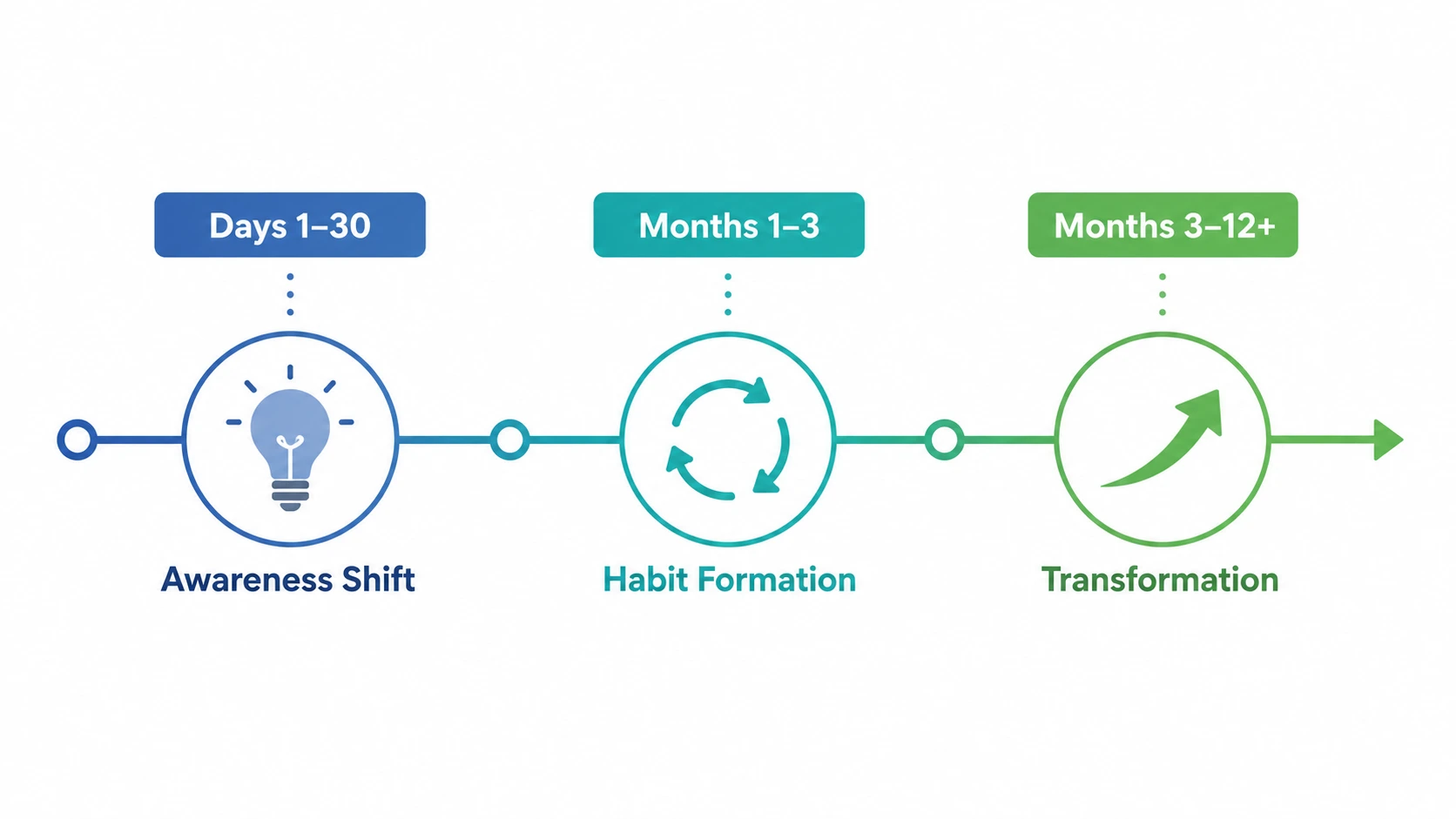
Mindset development follows a predictable pattern, though the pace varies by individual, consistency, and the depth of change being pursued.
Short-term mindset shifts (Days 1–30): Initial reading produces awareness shifts — new language for existing patterns, recognition of limiting beliefs, and increased motivation. These early insights are valuable but fragile without consistent reinforcement.
Medium-term habit changes (Months 1–3): With consistent application, new behaviors begin to replace old ones. The brain’s habit loops begin to adapt. Decision-making becomes more intentional, and emotional reactivity starts to decrease.
Long-term behavioral transformation (Months 3–12+): Sustained practice produces durable change in behavior, self-perception, and outcomes. By this stage, the mindset work has begun to compound — each improvement supporting the next.
Factors influencing progress:
- Consistency of practice (daily beats weekly)
- Quality of reflection (journaling accelerates insight)
- Environmental support (relationships and spaces that reinforce growth)
- Starting point (those with more entrenched limiting beliefs may need longer)
- Depth of application (reading and applying one book thoroughly beats reading five superficially)
Practice Guide for Developing a Better Mindset
Building a great mindset is not a passive process. It requires structured daily and weekly practices. Here is how to have a great mindset through consistent, evidence-based effort:
Daily reading routine: Dedicate 20–30 minutes each morning or evening to reading. Morning reading sets a growth-oriented frame for the day. Evening reading supports reflection and integration.
Weekly reflection: Spend 15–20 minutes each week reviewing what you have read, what you have practiced, and what has changed. Writing brief notes in a journal accelerates this process.
Journaling: Written reflection is more powerful than mental review alone. Record your reactions to ideas, the obstacles you face, and the progress you notice. Over time, your journal becomes a record of real psychological change.
Goal tracking: Connect mindset work to specific, measurable goals. Vague aspirations produce vague results. Clear targets create momentum and make progress visible.
Accountability: Share your reading and practice commitments with someone who will follow up. Accountability increases follow-through rates significantly, according to research in behavioral psychology.
Habit stacking: Attach mindset practices to existing habits. Reading after morning coffee, journaling before sleep, or reviewing notes during a lunch break uses established routines as anchors for new behaviors.
Motivation during setbacks: Setbacks are inevitable. The key is not to avoid them but to interpret them correctly. A growth mindset reframes setbacks as information rather than evidence of failure. Returning to key passages from your most impactful books during difficult periods reinforces this reframe.
Long-term consistency: Mindset development never fully ends — it evolves with your circumstances and goals. As of mid-2025, leading personal development practitioners increasingly emphasize ongoing practice over one-time breakthroughs. Consistent, modest effort sustained over years produces more lasting results than intense but brief periods of engagement.
Beginner Questions Answered
How many mindset books should you read? Quality of application matters more than quantity. Reading and fully applying one book produces more change than reading ten books without implementation. A sustainable pace for most readers is 1–2 books per month.
Which book should beginners start with? Mindset by Carol Dweck is the most universally recommended starting point because it provides the foundational psychological framework that makes every other mindset book more useful.
Can reading alone improve mindset? Reading creates awareness but not change by itself. Consistent application of what you read is what produces real mindset shifts. Reading is the starting point, not the finish line.
Should you reread important books? Yes. Rereading great mindset books at different life stages reveals new layers of meaning. The 7 Habits and Atomic Habits, for example, land differently at 25, 35, and 45 because your circumstances and challenges have changed.
How do mindset books differ from motivational books? Motivational books primarily produce emotional arousal — temporary enthusiasm. Great mindset books provide frameworks, evidence, and practices that produce lasting behavioral change. Motivation fades; mindset, when properly developed, compounds.
Commonly Overlooked Factors That Influence Mindset
Most mindset books focus on thinking and behavior — but several environmental and biological factors significantly influence how easy or difficult mindset development is. These are frequently missing from competing articles on the subject.
Environment: Your physical and social environment shapes your default thinking patterns more than most people recognize. A disordered, unstimulating environment undermines growth. Curating your space to reflect your values supports mindset work.
Sleep: Cognitive function, emotional regulation, and decision-making all degrade significantly with insufficient sleep. No mindset practice fully compensates for chronic sleep deprivation.
Stress: Chronic stress narrows thinking, reduces creativity, and triggers survival-oriented cognitive patterns that are incompatible with growth. Managing stress is not a luxury — it is a prerequisite for effective mindset development.
Relationships: The people you spend the most time with powerfully influence your beliefs, standards, and behaviors. Relationships that reinforce limiting beliefs undermine even the most disciplined mindset practice.
Financial pressure: Economic stress activates scarcity thinking — a documented cognitive state in which long-term planning, creativity, and learning capacity are all compromised. Addressing financial stability is a legitimate part of mindset development.
Social influences: Media consumption, social comparison, and cultural narratives all shape default thinking patterns. Deliberate curation of social and media inputs is an underappreciated mindset practice.
Consistency over motivation: Motivation is unreliable. Consistent systems — regardless of how you feel on a given day — produce more durable results than motivation-dependent approaches.
Personal values: Mindset work aligned with your genuine values sustains itself. Mindset work that contradicts or ignores your values produces internal conflict and eventually collapses.
Life stage: The mindset challenges of a 22-year-old entering the workforce differ from those of a 45-year-old navigating a career transition or a 60-year-old facing retirement. Choosing books that speak to your current life stage increases relevance and application.
Conclusion
Great mindset books remain among the most valuable tools available for building a life defined by resilience, confidence, and sustained success. The evidence is clear: structured exposure to evidence-based psychological frameworks, combined with consistent application, produces measurable changes in behavior, decision-making, and outcomes.
Choosing the right book starts with honest self-assessment. If you are early in your mindset journey, Mindset by Carol Dweck provides the foundational framework. If you need systems for behavior change, Atomic Habits is the most practical starting point. If resilience under pressure is your priority, The Obstacle Is the Way or Can’t Hurt Me will challenge and expand your capacity. If success and leadership are your focus, The 7 Habits of Highly Effective People and Grit provide the depth and rigor that endure beyond motivational peaks.
The most important principle across all great mindset books is this: consistent application of lessons creates lasting change. Reading is the starting point. Practice is where the transformation actually happens.
Frequently Asked Questions
What is the best mindset book for beginners?
Mindset by Carol Dweck is the best starting point for most beginners. It introduces the foundational distinction between fixed and growth mindsets using clear language, research-backed evidence, and practical examples. It provides the psychological framework that makes every other mindset book more useful and immediately applicable.
Which mindset books focus on success?
The best mindset books for success include Think and Grow Rich by Napoleon Hill, The 7 Habits of Highly Effective People by Stephen Covey, Grit by Angela Duckworth, and Atomic Habits by James Clear. Each approaches success through a different lens — desire and persistence, principle-based living, long-term effort, and daily systems — giving readers multiple frameworks to apply.
What are the best books for building confidence?
The most impactful books for building confidence are Psycho-Cybernetics by Maxwell Maltz and The Magic of Thinking Big by David Schwartz. Psycho-Cybernetics addresses the self-image psychology underlying confidence, while The Magic of Thinking Big challenges readers to raise their ambitions and take bolder action. Both are evidence-informed and have remained influential for decades.
Can mindset books really change the way you think?
Yes — but only with consistent application. Neuroplasticity research confirms that repeated exposure to new ideas and deliberate practice of new behaviors creates lasting changes in brain structure and function. Reading alone produces awareness; behavioral application produces change. Readers who journal, reflect, and practice the frameworks in great mindset books over 60–90 days report measurable shifts in thinking and decision-making.
How many mindset books should I read each year?
Most readers benefit more from reading 6–12 books per year deeply than from consuming 30–50 superficially. A pace of one book every four to six weeks allows enough time to read, reflect, and apply each book’s key lessons before moving on. Depth of application consistently outperforms breadth of consumption in personal development research.
Are growth mindset books different from self-help books?
Growth mindset books are a subset of self-help literature that specifically focus on the relationship between beliefs and performance. General self-help books may cover topics like productivity, relationships, finance, or wellness without directly addressing the psychological belief systems that drive behavior. Growth mindset books — like Mindset, Grit, and The Power of Now — emphasize the internal mental frameworks that determine how you respond to challenges, setbacks, and opportunities.
Should I read classic or modern mindset books first?
Both have value, but classics provide the most durable foundations. Books like Think and Grow Rich (1937), Psycho-Cybernetics (1960), and The 7 Habits of Highly Effective People (1989) have stood the test of time precisely because they address fundamental human psychology. Modern books like Atomic Habits (2018) and Can’t Hurt Me (2018) build on these foundations with contemporary research and updated frameworks. A strong reading list integrates both.










One Response