

Introduction
Positive affirmations to change your mindset are intentional statements designed to reshape patterns of thinking, improve self-talk, and reinforce healthier beliefs. A positive affirmation works by directing attention toward desired qualities, behaviors, and goals, helping people develop greater awareness of their thoughts. While affirmations are not a replacement for action, they can support personal growth when combined with consistent habits, reflection, and realistic goal setting. This guide explains how affirmations work, how to use them effectively, and how they connect with concepts such as growth mindset, self-confidence, resilience, and positive thinking.
By Your Daily Thrive | Self-Improvement & Personal Growth Expert
Quick Summary
- Positive affirmations are repeated statements that encourage constructive thoughts, beliefs, and behaviors.
- Effective affirmations are realistic, personally meaningful, and connected to intentional action.
- Growth mindset affirmations can support resilience by encouraging learning, improvement, and adaptability.
- Consistent practice is more important than simply repeating statements without reflection or behavior change.
What Are Positive Affirmations and How Do They Influence Mindset?
Positive affirmations are short, intentional statements that reinforce desired thoughts, beliefs, or personal qualities. They are commonly used as a self-development practice to influence self-talk, confidence, motivation, and emotional awareness.
A positive affirmation is usually written or spoken in a clear, present-focused way, such as “I am capable of learning from challenges” or “I can improve through consistent effort.” The purpose is not to ignore difficulties but to create a healthier mental framework for responding to them.
Affirmations for positive thinking are often used because thoughts influence how people interpret experiences. When someone repeatedly focuses on constructive beliefs, they may become more aware of opportunities, solutions, and behaviors that align with those beliefs.
Your Daily Thrive recommends viewing affirmations as a mental training tool rather than a quick solution. In practice, many readers find that affirmations become more useful when paired with journaling, goal setting, habit tracking, or daily reflection.
The Psychology Behind Affirmations and Self-Talk
The effectiveness of affirmations is connected to established psychological concepts involving self-perception, cognitive patterns, and behavior change.
Self-talk refers to the internal dialogue people use when interpreting events. This dialogue can influence emotions, motivation, and decisions. For example, a person who views mistakes as evidence of failure may avoid challenges, while someone using a growth-oriented perspective may see mistakes as opportunities to learn.
Affirmations may support mindset development by encouraging people to:
- Notice negative thinking patterns
- Replace unhelpful beliefs with more balanced perspectives
- Strengthen awareness of personal values
- Reinforce desired behaviors
Behavioral science also highlights the importance of repetition and consistency when creating new habits. Similar to other forms of practice, repeated mental focus can help strengthen awareness of specific ideas over time.
However, affirmations are most effective when they feel personally relevant. Statements that strongly conflict with a person’s current beliefs may feel unrealistic and create resistance instead of motivation.
Positive Affirmations vs Positive Thinking: What Is the Difference?
Positive affirmations and positive thinking are related but different concepts. Affirmations are specific statements used intentionally, while positive thinking is a broader approach to interpreting situations with optimism and constructive problem-solving. People who are beginning their personal development journey may also benefit from learning practical positive mindset tips for beginners that complement affirmation practices.
| Concept | Purpose | Example |
| Positive affirmations | Reinforce chosen beliefs through repeated statements | “I am improving through consistent practice.” |
| Positive thinking | Develop an optimistic perspective toward situations | “I can find a solution to this challenge.” |
| Self-talk | Internal communication that shapes reactions | “This mistake can teach me something useful.” |
Both approaches can support emotional resilience, but affirmations provide a structured method for practicing intentional thoughts.
How Positive Affirmations to Change Your Mindset Work
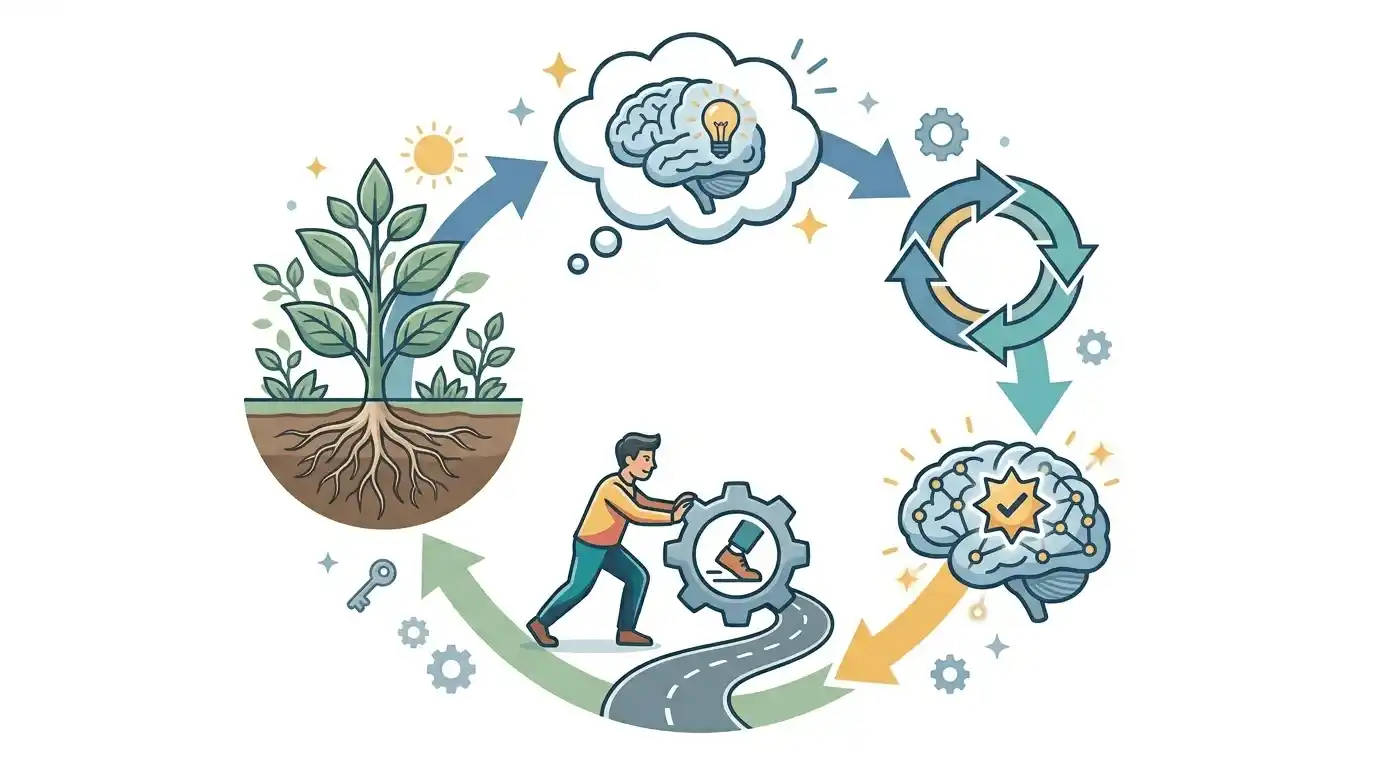
Positive affirmations to change your mindset work by directing attention toward specific beliefs and behaviors that support personal growth. They are most effective when combined with emotional awareness, realistic expectations, and consistent action.
The process usually involves several elements:
- Repetition: Regularly reviewing an affirmation helps keep a desired idea visible.
- Meaning: Statements connected to personal goals are easier to engage with.
- Emotion: Connecting words with genuine feelings can increase personal relevance.
- Action: Behavior must support the belief being reinforced.
For example, saying “I am becoming more confident” can be strengthened by taking small actions that build confidence, such as practicing a skill, communicating clearly, or completing meaningful tasks.
Research in psychology, including work related to cognitive restructuring and self-affirmation theory, suggests that how people interpret themselves and their experiences can influence motivation and decision-making. Affirmations should therefore be used as a complement to practical behavior change.
How Affirmations Support a Growth Mindset

Growth mindset affirmations are statements designed to reinforce the belief that abilities can develop through effort, learning, and persistence. The concept of a growth mindset is associated with psychologist Carol Dweck, whose research explored how beliefs about ability influence motivation and responses to challenges. Readers interested in applying this concept can explore these growth mindset affirmations to develop resilience, persistence, and a stronger learning-focused perspective.
The concept of a growth mindset is associated with psychologist Carol Dweck, whose research explored how beliefs about ability influence motivation and responses to challenges.
Examples of growth mindset affirmations include:
- “I can improve through practice and patience.”
- “Challenges help me discover new abilities.”
- “Progress matters more than perfection.”
- “Mistakes provide information that helps me grow.”
These affirmations support a shift from fixed thinking toward improvement-focused thinking. Understanding why a growth mindset is important can help explain why beliefs about learning, effort, and improvement influence long-term personal development.
A person with a growth mindset may approach difficulty by asking:
- What can I learn from this situation?
- What skill can I develop next?
- What small action can move me forward?
Why Some Affirmations Feel More Effective Than Others
Not all affirmations have the same impact. Some statements feel more meaningful because they match a person’s goals, values, and current stage of growth.
Effective affirmations usually have these characteristics:
- They are specific rather than vague.
- They focus on growth rather than unrealistic perfection.
- They reflect personal priorities.
- They encourage action.
For example, “I will become successful overnight” may feel unrealistic, while “I am building skills and habits that support my success” creates a more practical mindset.
As of 2026, many personal development approaches emphasize evidence-based habit formation, realistic goal setting, and identity-based behavior change rather than relying only on motivational statements.
Types of Positive Affirmations for Different Mindset Goals
Positive affirmations can be adapted for different personal development goals, including confidence, success, emotional resilience, self-care, and daily motivation. Choosing the right type depends on the specific mindset or behavior a person wants to strengthen.
Daily Positive Affirmations for Building Better Mental Habits
Daily positive affirmations are repeated statements used to create consistent mental habits. They can help people intentionally focus on qualities they want to develop.
Examples include:
- “I choose thoughts that support my growth.”
- “I approach today with focus and purpose.”
- “I can handle challenges one step at a time.”
Powerful daily affirmations are most useful when they become part of an existing routine rather than a separate activity that is difficult to maintain.
Common ways to practice them include:
- Reading affirmations after waking up
- Writing them in a journal
- Reviewing them before important tasks
- Reflecting on progress at the end of the day
Positive Affirmations to Change Your Mindset
Types of Positive Affirmations for Different Mindset Goals
Morning Affirmations for Positive Energy and Focus
Morning affirmations are statements used at the beginning of the day to create intentional focus and encourage a constructive mindset. Many people use morning routines because the first thoughts and behaviors of the day can influence attention, motivation, and daily priorities.
Morning affirmations for positive energy may focus on:
- Confidence before facing challenges
- Gratitude and appreciation
- Mental clarity
- Purposeful action
- Emotional balance
Examples include:
- “I approach today with confidence and curiosity.”
- “I have the ability to handle today’s challenges.”
- “I focus on what I can control and improve.”
- “I create opportunities through consistent effort.”
Positive morning affirmations to start the day are not about creating unrealistic expectations. Instead, they help establish an intentional mindset before daily responsibilities begin.
Growth Mindset Affirmations for Learning and Resilience
Growth mindset affirmations encourage the belief that abilities, skills, and understanding can improve through practice and learning.
These affirmations are especially useful when facing:
- New challenges
- Career development
- Learning opportunities
- Personal changes
- Setbacks
Examples include:
- “Every challenge gives me an opportunity to learn.”
- “My abilities improve with practice.”
- “I can develop new skills through consistent effort.”
- “Progress is created through small actions.”
Affirmations for positive change work best when they support real behavior. A person who repeats a growth-focused statement while actively practicing a skill is more likely to connect the affirmation with personal progress.
Positive Affirmations for Success and Achievement
Success affirmations focus on developing confidence, discipline, and goal-oriented thinking. They can help people maintain motivation by keeping important goals visible.
Positive affirmations for success may support:
- Goal setting
- Persistence
- Confidence
- Focus
- Professional development
Examples include:
- “I take consistent steps toward my goals.”
- “I have the ability to learn what I need for success.”
- “My daily actions create long-term progress.”
- “I remain focused even when progress takes time.”
Success affirmations should be paired with practical strategies such as planning, skill development, and accountability. A statement alone does not create achievement, but it can reinforce the mindset needed for productive action.
Self-Care and Self-Confidence Affirmations
Self-affirmation practices can support awareness of personal strengths, values, and emotional needs. Self-care affirmations often focus on self-respect, balance, and healthy internal communication.
Examples include:
- “I respect my needs and take care of myself.”
- “I deserve patience while I continue growing.”
- “I acknowledge my progress and effort.”
- “I can treat myself with kindness.”
Your Daily Thrive recommends connecting self-affirmations with practical self-care behaviors, such as maintaining healthy routines, setting boundaries, and making time for recovery.
100 Positive Affirmations to Change Your Mindset
The following 100 affirmations are organized by mindset goal to make them easier to apply. Effective affirmations should be adapted to personal circumstances so they feel meaningful and realistic.
Affirmations for Positive Thinking
- I choose thoughts that support my growth.
- I focus on possibilities instead of limitations.
- I can find something valuable in every experience.
- I approach challenges with patience.
- I am capable of creating positive change.
- I appreciate the progress I make each day.
- I choose a mindset that supports my goals.
- I allow myself to learn and improve.
- I notice opportunities around me.
- I can respond thoughtfully to challenges.
- I believe improvement is possible.
- I focus on solutions instead of problems.
- I create a positive environment through my choices.
- I recognize the good things in my life.
- I have the ability to adapt and grow.
- I release thoughts that no longer help me.
- I choose confidence over unnecessary worry.
- I am open to new possibilities.
- I can create meaningful progress.
- I trust my ability to continue learning.
Growth Mindset Affirmations
- I improve through practice and dedication.
- Mistakes help me discover better approaches.
- Challenges strengthen my abilities.
- I can learn skills that seem difficult today.
- Progress is more important than perfection.
- I embrace opportunities to grow.
- I become stronger through experience.
- I can develop new habits with consistency.
- I am capable of overcoming obstacles.
- My effort contributes to my success.
- I learn something valuable every day.
- I can change through intentional action.
- I welcome feedback that helps me improve.
- I continue moving forward despite setbacks.
- I am becoming a better version of myself.
- I have the ability to develop resilience.
- I approach uncertainty with curiosity.
- I improve by taking small steps.
- I believe my potential can expand.
- I continue growing throughout life.
Success and Motivation Affirmations
- I take meaningful action toward my goals.
- I stay committed to my priorities.
- I create success through consistent habits.
- I am capable of achieving important goals.
- I manage my time with intention.
- I develop skills that support my future.
- I stay focused on what matters most.
- I complete tasks with confidence.
- I believe my actions create results.
- I build success one step at a time.
- I remain motivated through challenges.
- I can achieve progress through discipline.
- I trust my ability to improve.
- I make decisions that support my goals.
- I create opportunities through effort.
- I continue working toward meaningful outcomes.
- I learn from every experience.
- I maintain focus during difficult moments.
- I believe consistent action creates change.
- I recognize my achievements and progress.
Self-Care and Confidence Affirmations
- I value myself and my personal growth.
- I deserve patience and understanding.
- I listen to my emotional needs.
- I respect my personal boundaries.
- I treat myself with kindness.
- I recognize my strengths.
- I accept myself while continuing to improve.
- I give myself permission to rest.
- I create balance in my daily life.
- I prioritize habits that support my well-being.
- I trust myself to make thoughtful choices.
- I appreciate who I am becoming.
- I have valuable qualities to share.
- I deserve healthy relationships and experiences.
- I communicate with confidence.
- I believe my voice matters.
- I handle challenges with self-compassion.
- I make choices that support my well-being.
- I respect my personal journey.
- I continue building confidence through action.
Resilience and Life Change Affirmations
- I can handle difficult situations.
- I recover from setbacks with patience.
- I have the strength to continue forward.
- I adapt to changes with flexibility.
- I create positive changes through daily choices.
- I learn from challenges instead of fearing them.
- I remain calm during uncertainty.
- I trust my ability to find solutions.
- I can overcome temporary difficulties.
- I continue moving toward growth.
- I have the courage to try again.
- I release fear that prevents progress.
- I create a meaningful future through my actions.
- I stay committed to personal improvement.
- I recognize challenges as learning experiences.
- I develop resilience through practice.
- I can create new patterns of thinking.
- I choose growth over comfort.
- I believe change is possible.
- I continue becoming the person I want to be.
How to Use Positive Affirmations Effectively in Daily Life
Positive affirmations are most effective when they are practiced consistently and connected to real-life behaviors. Repeating statements without reflection or action is unlikely to create lasting mindset changes.
A practical approach involves choosing a small number of meaningful affirmations and integrating them into existing routines.
Best Practices for Creating Personal Affirmations
Effective affirmations usually follow several principles:
- Use clear and simple language.
- Focus on growth rather than perfection.
- Connect statements with personal values.
- Use present-focused wording.
- Choose affirmations that encourage action.
For example:
Less effective:
- “I will never experience failure.”
More practical:
- “I can learn from setbacks and continue improving.”
The second statement acknowledges reality while encouraging resilience.
Ways to Practice Affirmations Consistently

Common methods include:
- Writing affirmations in a daily journal
- Reading them during a morning routine
- Pairing them with goal planning
- Using reflection after completing tasks
- Reviewing progress weekly
In our experience helping readers build better habits, consistency is often the biggest challenge. Many people begin with strong motivation but stop because they create routines that are too complicated. Combining affirmations with reflection exercises, such as journaling prompts for self growth, can make the practice more meaningful by helping people track thoughts, emotions, and progress.
A sustainable approach is usually:
- Choose three to five meaningful affirmations.
- Practice them at the same time each day.
- Connect them with a specific behavior.
- Review whether they still match your goals.
Common Mistakes When Using Affirmations and How to Fix Them
Mistake: Using Affirmations Without Taking Action
Affirmations support mindset, but they do not replace practical effort. A person cannot achieve a goal only by repeating statements; actions, skills, and decisions remain necessary. Turning positive beliefs into consistent behaviors requires habit formation. Learning how to build good habits in 30 days can help create routines that support long-term mindset changes.
A better approach is combining affirmations with:
- Goal setting
- Habit development
- Learning activities
- Problem-solving
For example, someone using a success affirmation should also create a plan, practice relevant skills, and track progress.
Mistake: Choosing Statements That Feel Unrealistic
Affirmations that feel completely disconnected from reality may create internal resistance.
Instead of using extreme statements, create statements focused on progress.
Example:
Unrealistic:
- “I am instantly confident in every situation.”
Growth-focused:
- “I am developing confidence through practice and experience.”
Mistake: Expecting Immediate Results
Mindset changes usually happen gradually. Affirmations may support awareness and motivation, but lasting change typically requires repeated practice over time.
Factors affecting progress include:
- Personal beliefs
- Existing habits
- Environment
- Consistency
- Emotional state
Positive Affirmations to Change Your Mindset
Do Positive Affirmations Work for Everyone?
Positive affirmations can be helpful for many people, but their effectiveness depends on personal preferences, beliefs, circumstances, and how they are practiced. They are most useful as a supportive mindset tool rather than a standalone solution for emotional or behavioral challenges.
Affirmations work differently for each person because people have different thought patterns, goals, and experiences. Some individuals benefit from repeating encouraging statements, while others may respond better to journaling, visualization, goal setting, or behavioral strategies.
A balanced approach recognizes that affirmations can support:
- Greater self-awareness
- More constructive self-talk
- Goal-focused thinking
- Emotional resilience
- Motivation for positive habits
However, affirmations should complement practical actions and evidence-based approaches to personal development.
Do Affirmations Work for Autistic People?
Affirmations may work for autistic people, but their usefulness depends on individual communication preferences, personal needs, and how the statements are structured.
Some autistic individuals may find affirmations helpful when they are:
- Clear and specific
- Connected to personal values
- Focused on practical strengths
- Written in language that feels natural
For example, instead of a broad statement like “Everything is perfect,” a more practical affirmation may be:
- “I can use my strengths to handle today’s challenges.”
The key consideration is personalization. A statement should feel meaningful rather than forced.
Do Affirmations Work for OCD?
Affirmations may have different effects for people with obsessive-compulsive disorder (OCD). While positive self-statements can support confidence and self-compassion, they should not become repetitive behaviors used to reduce anxiety in a compulsive way.
For individuals experiencing OCD symptoms, helpful approaches often focus on:
- Understanding thought patterns
- Developing healthy responses to uncertainty
- Using evidence-based strategies recommended by qualified professionals
Affirmations may be supportive when they encourage acceptance, resilience, and self-kindness, but they should not replace appropriate mental health care.
What About Affirmations for Specific Life Challenges?
Affirmations are often adapted for different situations, including:
- Career transitions
- Personal confidence
- Stress management
- Major life changes
- Developing healthier habits
The most effective affirmations usually focus on abilities and actions rather than guaranteeing specific outcomes.
For example:
Instead of:
- “Nothing difficult will happen.”
A more useful statement may be:
- “I have the ability to handle challenges as they arise.”
Positive Affirmations Compared With Other Mindset Techniques
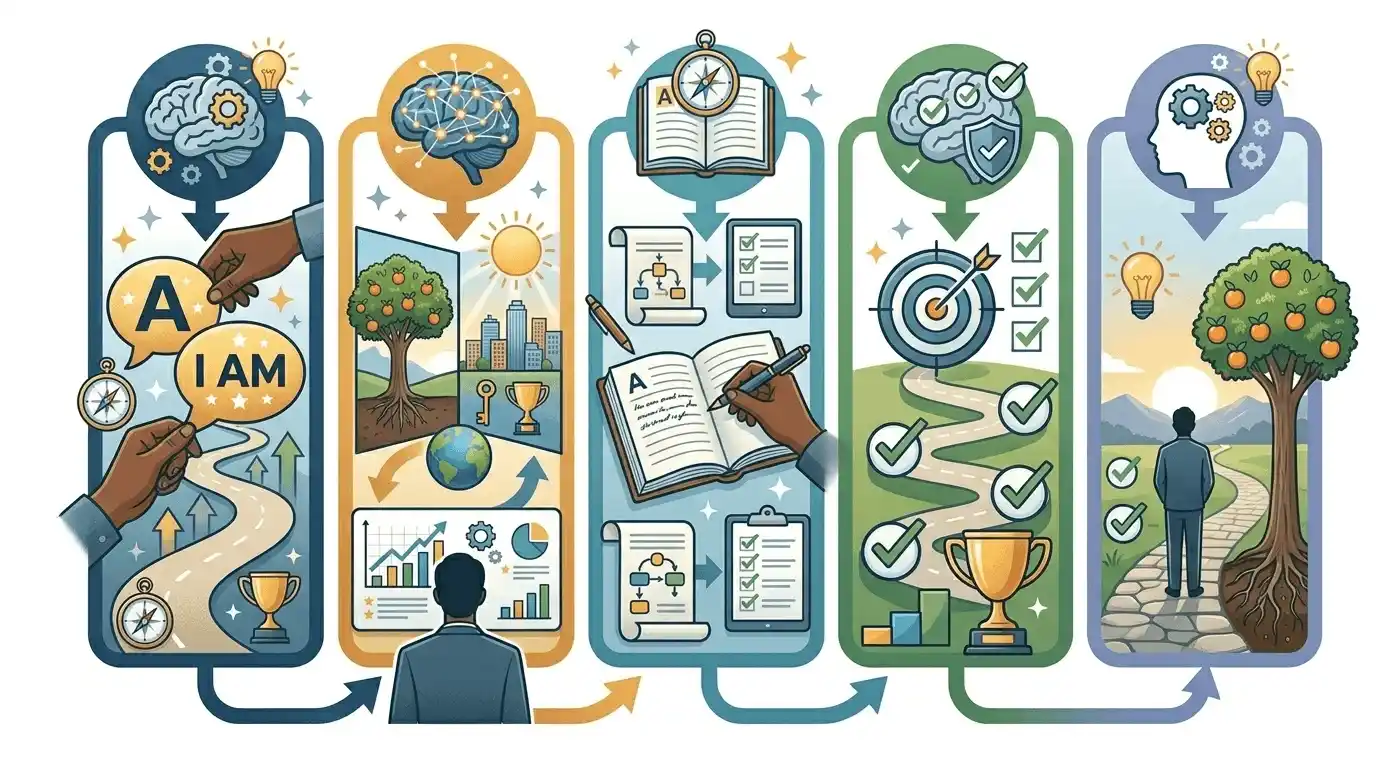
Positive affirmations are one of several approaches used for mindset development. Comparing them with other techniques helps clarify when each method may be most useful. Affirmations are one part of a larger personal growth process. Exploring different personal development activities can help individuals find additional methods for improving self-awareness, confidence, and emotional resilience.
| Technique | Main Focus | Best Used For |
| Positive affirmations | Reinforcing intentional beliefs and self-talk | Building confidence and mindset awareness |
| Visualization | Creating mental images of desired outcomes | Preparing for goals and performance situations |
| Journaling | Exploring thoughts and emotions | Self-reflection and identifying patterns |
| Goal setting | Creating clear objectives and action plans | Turning intentions into measurable progress |
| Meditation | Improving awareness and emotional regulation | Developing focus and reducing mental reactivity |
Positive Affirmations vs Visualization
Positive affirmations focus on verbal statements, while visualization focuses on creating mental images of desired experiences.
For example:
Affirmation:
- “I am becoming more confident through practice.”
Visualization:
- Imagining yourself confidently completing a presentation or achieving a goal.
Using both techniques together may help connect beliefs with mental preparation.
Positive Affirmations vs Goal Setting
Goal setting defines what someone wants to achieve, while affirmations support the mindset needed to continue working toward that goal.
A complete approach may include:
- A specific goal
- A realistic action plan
- Supporting affirmations
- Progress tracking
For example:
Goal:
- Improve communication skills.
Affirmation:
- “I improve my communication through practice and feedback.”
Action:
- Practicing conversations and seeking opportunities to improve.
Difficulty, Time Investment, and Results Timeline
How Long Does It Take for Affirmations to Change Your Mindset?
The time required for affirmations to influence mindset varies from person to person. Some people notice increased awareness or motivation quickly, while deeper changes in beliefs and habits usually develop gradually through repeated practice.
Progress depends on factors such as:
- Consistency of practice
- Personal relevance of affirmations
- Existing thought patterns
- Supporting behaviors
- Environmental influences
A realistic timeline may look like:
- Early stage: Increased awareness of thoughts and self-talk
- Intermediate stage: Improved ability to redirect unhelpful thinking patterns
- Long-term stage: Stronger alignment between beliefs, habits, and actions
Affirmations are most effective when they become part of a broader personal growth system.
Beginner vs Advanced Affirmation Practices
Beginner Approach
Beginners can start with:
- Three to five meaningful affirmations
- A short daily practice
- Simple statements connected to current goals
Example:
Morning:
- Read affirmations for two minutes.
- Reflect on one action that supports the statement.
Advanced Approach
More experienced users may combine affirmations with:
- Habit tracking
- Journaling
- Visualization
- Personal goal reviews
- Identity-based habit development
Advanced practice focuses less on repetition alone and more on connecting beliefs with consistent behavior.
Practice Guide: Building Affirmations Into a Sustainable Routine
A sustainable affirmation practice depends on consistency, realistic expectations, and integration with daily habits.
Creating a Daily or Weekly Affirmation Routine
A practical routine may include:
Daily practice:
- Read affirmations in the morning.
- Repeat selected statements during moments of stress.
- Reflect on progress before the end of the day.
Weekly practice:
- Review whether affirmations still match current goals.
- Update statements based on personal growth.
- Identify areas where new habits are needed.
Mindset and Motivation Requirements
Successful affirmation practice requires:
- Patience
- Self-awareness
- Willingness to adjust
- Commitment to action
A common challenge is losing motivation when immediate results are not visible. This can be prevented by measuring progress through behaviors rather than emotions alone.
Instead of asking:
“Do I feel completely different?”
Ask:
“Am I responding to challenges differently?”
Tools, Tracking, and Accountability Methods
Useful tools include:
- Journals
- Habit trackers
- Calendar reminders
- Reflection notes
- Goal planning systems
Tracking helps identify patterns and maintain consistency.
For example, someone using growth mindset affirmations may record:
- A challenge they faced
- How they responded
- What they learned
This turns affirmations into a practical reflection process.
Common Obstacles to Consistency
People often stop affirmation practices because:
- The routine feels too complicated.
- Statements no longer feel relevant.
- They expect instant transformation.
- They repeat words without connecting them to actions.
Solutions include:
- Keeping the practice simple
- Updating affirmations regularly
- Linking affirmations with existing habits
- Focusing on gradual improvement
Conclusion: How Positive Affirmations Can Support a Better Mindset
Positive affirmations to change your mindset are a practical tool for developing healthier self-talk, strengthening personal beliefs, and supporting long-term growth. When used effectively, affirmations can help people focus on progress, resilience, confidence, and intentional action.
The most effective approach combines meaningful statements with behavioral change. Repeating an affirmation is only one part of the process; applying the belief through daily choices, habits, and consistent effort creates deeper transformation.
Whether someone uses growth mindset affirmations, positive mindset affirmations, or daily positive affirmations, the goal is the same: developing a more constructive relationship with thoughts and challenges.
The key takeaway is that affirmations work best when they are realistic, personal, and connected to action. A stronger mindset is built through repeated practice, reflection, and continuous improvement.
Frequently Asked Questions About Positive Affirmations to Change Your Mindset
What are positive affirmations for a positive mindset?
Positive affirmations for a positive mindset are intentional statements designed to encourage constructive thoughts, confidence, and emotional resilience. They help people focus attention on desired beliefs and behaviors.
How do positive affirmations change your mindset?
Positive affirmations may influence mindset by encouraging intentional self-talk, increasing awareness of thought patterns, and reinforcing beliefs connected to personal goals. Their impact is strongest when combined with consistent action.
How often should you repeat positive affirmations?
The frequency of affirmation practice depends on personal preference, but many people benefit from repeating meaningful affirmations daily. Consistency and personal connection are generally more important than repeating statements excessively.
What are some examples of powerful daily affirmations?
Examples of powerful daily affirmations include:
- “I can improve through consistent effort.”
- “I handle challenges with patience and resilience.”
- “My actions today support my future goals.”
- “I continue learning and growing every day.”
Can affirmations help with confidence and personal growth?
Affirmations can support confidence and personal growth by encouraging positive self-talk and reinforcing growth-oriented beliefs. They are most effective when paired with real experiences, skill development, and purposeful action.
What makes an affirmation effective?
An effective affirmation is clear, meaningful, realistic, and connected to personal goals. Statements that feel believable and encourage action are often easier to maintain than unrealistic claims.










2 Responses