

Introduction
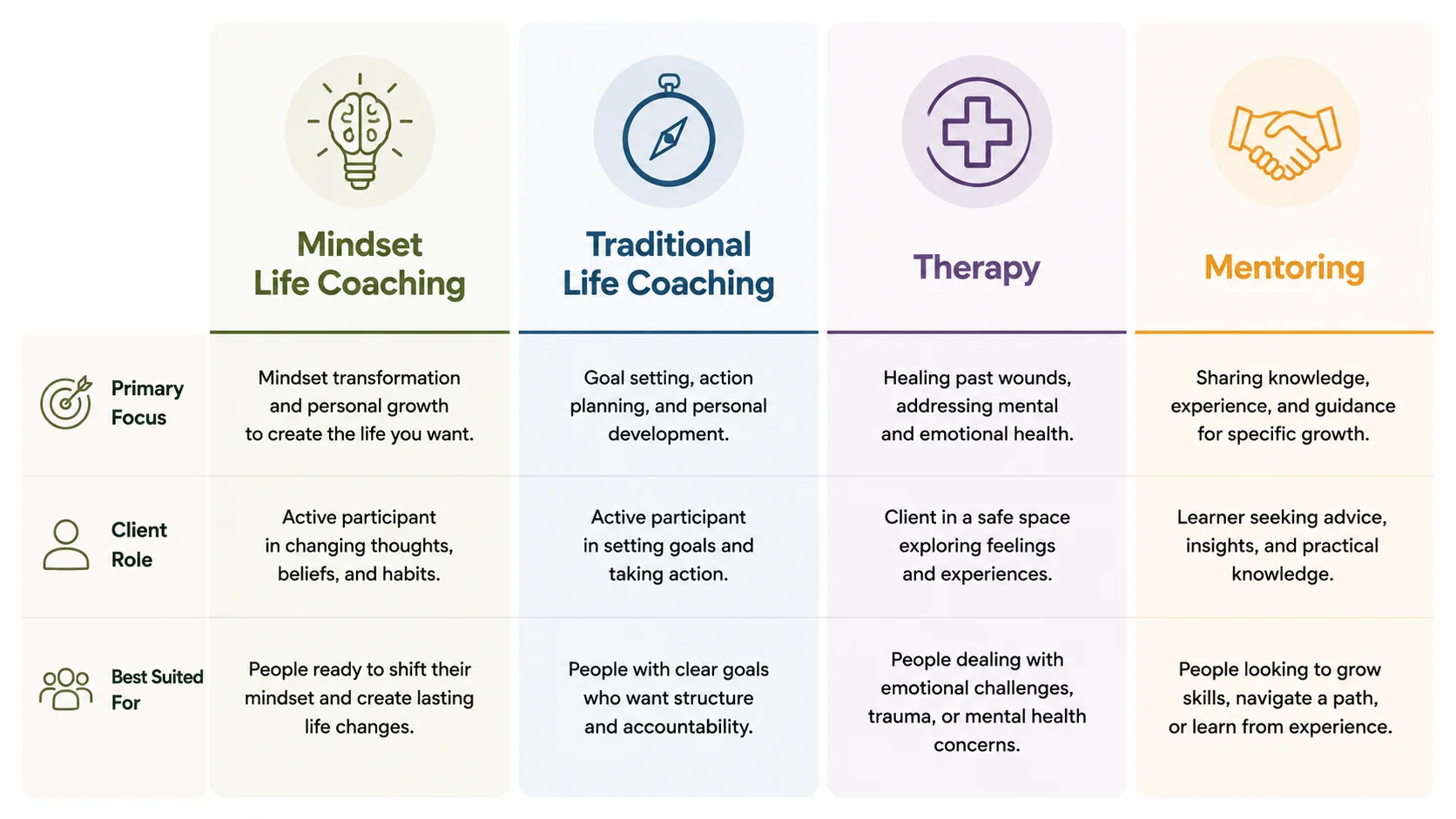
Mindset life coaching is a coaching approach that helps people identify and change limiting thought patterns, beliefs, and behaviors in order to reach personal or professional goals. Unlike therapy, which addresses mental health conditions, or mentoring, which relies on shared experience in a specific field, mindset coaching focuses on how a person thinks and the actions that follow from that thinking. It differs from traditional life coaching by concentrating specifically on internal beliefs rather than broad life logistics, and from consulting, which typically provides direct expert advice rather than guided self-discovery. This guide is written for anyone evaluating whether mindset coaching fits their goals, and explains what the process involves, what results to expect, and how to choose a qualified coach.
Quick Summary
- Mindset life coaching helps people develop productive thinking patterns that support personal growth and decision-making.
- Coaches use structured conversations, reflection, goal-setting, and accountability rather than giving direct advice.
- Results depend on consistent practice, realistic expectations, and the individual’s willingness to apply new habits.
- Choosing a qualified coach involves evaluating experience, coaching style, certifications, and client fit rather than credentials alone.
What Is Mindset Life Coaching?
Definition and Core Purpose
Mindset life coaching is a structured coaching practice focused on helping clients recognize and reshape the beliefs and thought patterns that influence their behavior. A coaching mindset, in this context, refers to an orientation toward growth, curiosity, and self-responsibility rather than fixed judgments about ability or circumstance. Mindset and behavior are closely linked: beliefs shape emotional responses, and emotional responses shape the actions a person takes or avoids. Mindset coaching works at this intersection, helping clients notice unhelpful thought patterns before they translate into stalled progress. This process is closely tied to learning [how to change your thoughts] in ways that support, rather than undermine, personal goals
How a Coaching Mindset Works
A coaching mindset draws heavily on the distinction between a growth mindset, where abilities are seen as developable, and a fixed mindset, where abilities are seen as static. Mindset coaches help clients build self-awareness, take ownership through accountability, and develop resilience in the face of setbacks. Core elements include: Understanding why growth mindset is important helps explain why this concept sits at the core of most mindset coaching frameworks.
- Growth mindset — viewing challenges as opportunities to develop skill
- Goal setting — translating vague intentions into specific, measurable actions
- Behavioral change — replacing unproductive habits with intentional ones
- Self-awareness — recognizing thought patterns as they occur
- Cognitive reframing — interpreting situations from a more constructive perspective
What Do Mindset Coaches Do?
Common Responsibilities of a Mindset Coach
Mindset coaches help clients identify limiting beliefs and replace them with perspectives that support forward movement. Rather than prescribing solutions, they guide clients through the process of finding their own. Typical responsibilities include:
- Goal clarification
- Accountability between sessions
- Confidence building
- Habit development
- Support with decision-making
Coaching Techniques Commonly Used
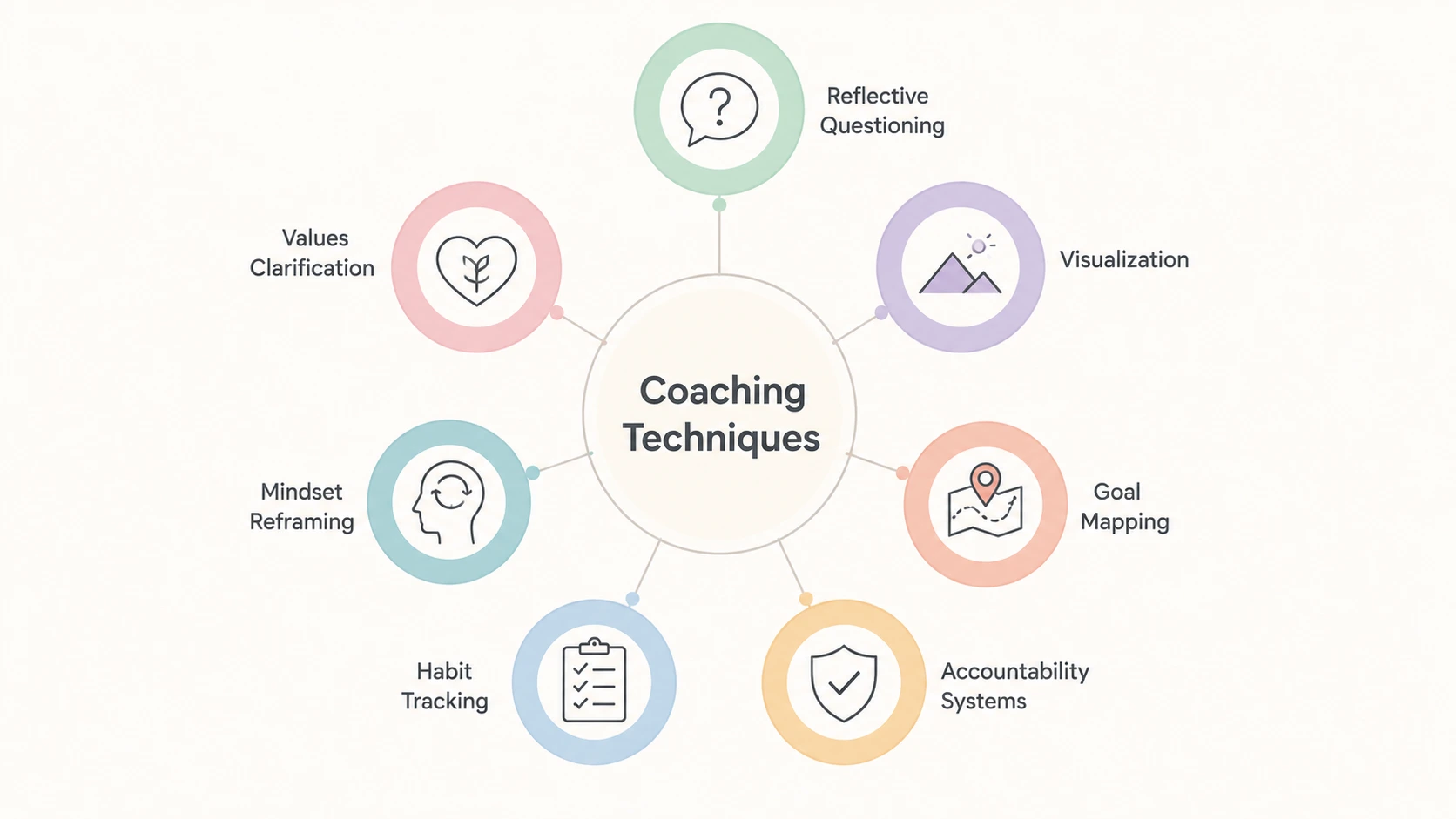
Coaches draw on a range of techniques depending on the client’s goals and preferred style of working. Common methods include:
- Visualization exercises
- Powerful, open-ended questioning
- Structured reflection exercises
- Journaling prompts
- Values clarification exercises
- Action planning
- Progress tracking between sessions
Who Can Benefit from Mindset Life Coaching?
Personal Development Goals
Mindset coaching commonly supports individuals working on confidence, motivation, stress management, career growth, relationship patterns, or life transitions such as divorce, relocation, or retirement. In our experience helping readers build better habits, the clients who benefit most are those with a specific area of friction they want to address, rather than a vague wish for general improvement.
Professional and Business Applications
In professional settings, mindset coaching is often used by entrepreneurs managing uncertainty, managers developing leadership presence, students navigating academic pressure, professionals pursuing promotion, and career changers adjusting to a new field. It is generally not appropriate as a substitute for clinical mental health treatment, technical skills training, or crisis intervention — in those cases, a therapist, trainer, or emergency resource is the more appropriate option.
How Mindset Life Coaching Works
The Typical Coaching Process
Most mindset coaching engagements follow a consistent structure:
- Initial assessment — clarifying the client’s current situation and goals
- Goal setting — defining specific, measurable outcomes
- Identifying limiting beliefs — surfacing thought patterns that block progress
- Action planning — translating insight into concrete next steps
- Regular coaching sessions — typically weekly or biweekly
- Progress review — assessing what is working and adjusting course
- Long-term maintenance — sustaining new habits after formal coaching ends
Online vs In-Person Coaching
| Factor | Online Coaching | In-Person Coaching |
|---|---|---|
| Flexibility | High — sessions can be scheduled around time zones and travel | Lower — requires matching location and availability |
| Cost | Often lower due to no travel or office overhead | Can be higher due to facility and travel costs |
| Accessibility | Widely accessible, including online appointments for mindset life coaching regardless of location | Limited to coaches within a reasonable travel distance |
| Communication | Video or phone-based, effective for most conversations | Face-to-face, may better support certain nonverbal cues |
| Accountability | Digital check-ins, apps, and messaging support consistency | In-person structure can reinforce commitment for some clients |
| Session formats | Video calls, phone calls, chat-based coaching | Office visits, in-person workshops |
Mindset Life Coaching vs Other Forms of Coaching
Mindset Coaching vs Life Coaching
Life coaching typically addresses a broad range of life areas — career, relationships, health, and finances — while mindset coaching narrows in specifically on thought patterns and beliefs that influence behavior across those areas.
Mindset Coaching vs Therapy
Therapy is delivered by licensed mental health professionals and is designed to diagnose and treat mental health conditions. Mindset coaching is not a clinical service and does not diagnose or treat mental illness; it is intended for clients who are functioning well but want to improve how they think and act.
Mindset Coaching vs Business Coaching
Business coaching centers on operational and strategic goals within a company, such as revenue growth or team management. Mindset coaching can support a business owner’s thinking, but it does not replace strategic or financial expertise.
| Comparison | Primary Focus | Methods | Best Suited For |
|---|---|---|---|
| Mindset Coaching | Beliefs and thought patterns | Reflection, reframing, accountability | Anyone seeking internal change |
| Life Coaching | Broad life goals | Goal-setting across life domains | Clients wanting general direction |
| Therapy | Mental health treatment | Clinical, diagnostic methods | Clients with mental health needs |
| Business Coaching | Business performance | Strategy, metrics, operations | Entrepreneurs and executives |
Skills and Qualities of an Effective Mindset Coach
Essential Coaching Skills
Effective mindset coaches typically demonstrate active listening, emotional intelligence, clear communication, empathy, strategic questioning, and the ability to hold clients accountable without judgment.
Signs of a Good Client-Coach Fit
A strong fit usually involves a compatible coaching style, shared expectations about session structure and pace, aligned communication preferences, clear ethical boundaries, and a coach who maintains appropriate professional limits.
Certifications and Professional Development
Are Certifications Required?
Mindset life coaching certification is not legally required in most regions, since coaching is largely unregulated compared to licensed professions like therapy. However, voluntary certifications, continuing education, and documented practical experience are widely used as indicators of a coach’s training and commitment to the field.
What to Look for in a Qualified Coach
Useful indicators include training through an accredited coaching program, relevant experience, verifiable client testimonials, a clearly articulated coaching philosophy, and any specialization relevant to the client’s specific goals.
How to Evaluate a Mindset Life Coach
Reading Reviews Critically
Mindset life coaching reviews can reveal patterns in communication style, reliability, and client outcomes, but they can also reflect selection bias, since satisfied clients are more likely to leave feedback. It’s useful to ask direct questions during a consultation and treat reviews as one data point rather than the deciding factor.
Questions to Ask Before Hiring a Coach
- What is your coaching experience and background?
- What methods and frameworks do you use?
- How are sessions structured, and how long do they run?
- How is progress tracked over time?
- What ethical guidelines or boundaries do you follow?
- What communication is expected between sessions?
Factors That Influence Coaching Costs
What Affects Pricing?
Mindset life coaching cost varies based on several factors rather than a fixed rate.
| Factor | Effect on Cost |
|---|---|
| Coach experience | More experienced coaches often charge more |
| Session length | Longer sessions typically cost more per meeting |
| Credentials | Certified coaches may charge premium rates |
| Coaching format | Group coaching is generally less expensive than one-on-one |
| Program duration | Multi-month packages may offer a lower per-session rate |
| Geographic location | Rates can vary by regional cost of living |
Benefits and Limitations of Mindset Life Coaching
Potential Benefits
- Greater confidence
- Better decision-making
- Improved resilience
- Stronger habits
- Increased motivation
- Progress toward defined goals
Limitations and Realistic Expectations
Mindset coaching is not therapy and is not designed to treat mental health conditions. Progress varies by individual, requires active participation rather than passive attendance, and can be affected by external factors such as work demands, health, or major life changes that fall outside the coach’s control.
Common Mistakes People Make When Starting Mindset Coaching
Unrealistic Expectations
Some clients expect immediate transformation. Mindset change is typically gradual, and setting realistic milestones helps sustain motivation.
Inconsistent Practice
Skipping reflection exercises or action items between sessions slows progress. Consistent, smaller efforts tend to outperform sporadic intense ones.
Choosing a Coach Based Only on Marketing
Polished branding does not guarantee coaching quality. Evaluating experience and methodology during a consultation is a more reliable indicator of fit.
Avoiding Honest Self-Reflection
Coaching requires candid self-assessment. Clients who avoid uncomfortable truths about their own patterns tend to see slower results. Working with a coach who creates a nonjudgmental space can help address this over time.
Practical Tips for Getting the Most from Mindset Life Coaching
- Prepare specific goals before each session
- Complete action items between sessions
- Keep a coaching journal to track insights
- Measure progress at regular intervals
- Stay open to feedback, even when it’s uncomfortable
- Adjust goals as circumstances change
Difficulty & Time Investment
Mindset coaching is generally beginner-friendly, since it does not require prior coaching experience or specialized skills. Typical time commitment includes a weekly or biweekly session plus daily or weekly reflection practices, often 15–30 minutes per day. Beginners may find early self-awareness work more mentally demanding than the time investment suggests, while more advanced clients may focus on refining established habits. Individual factors such as available time, current stress levels, and prior exposure to self-reflection practices all influence how demanding the process feels.
Results Timeline
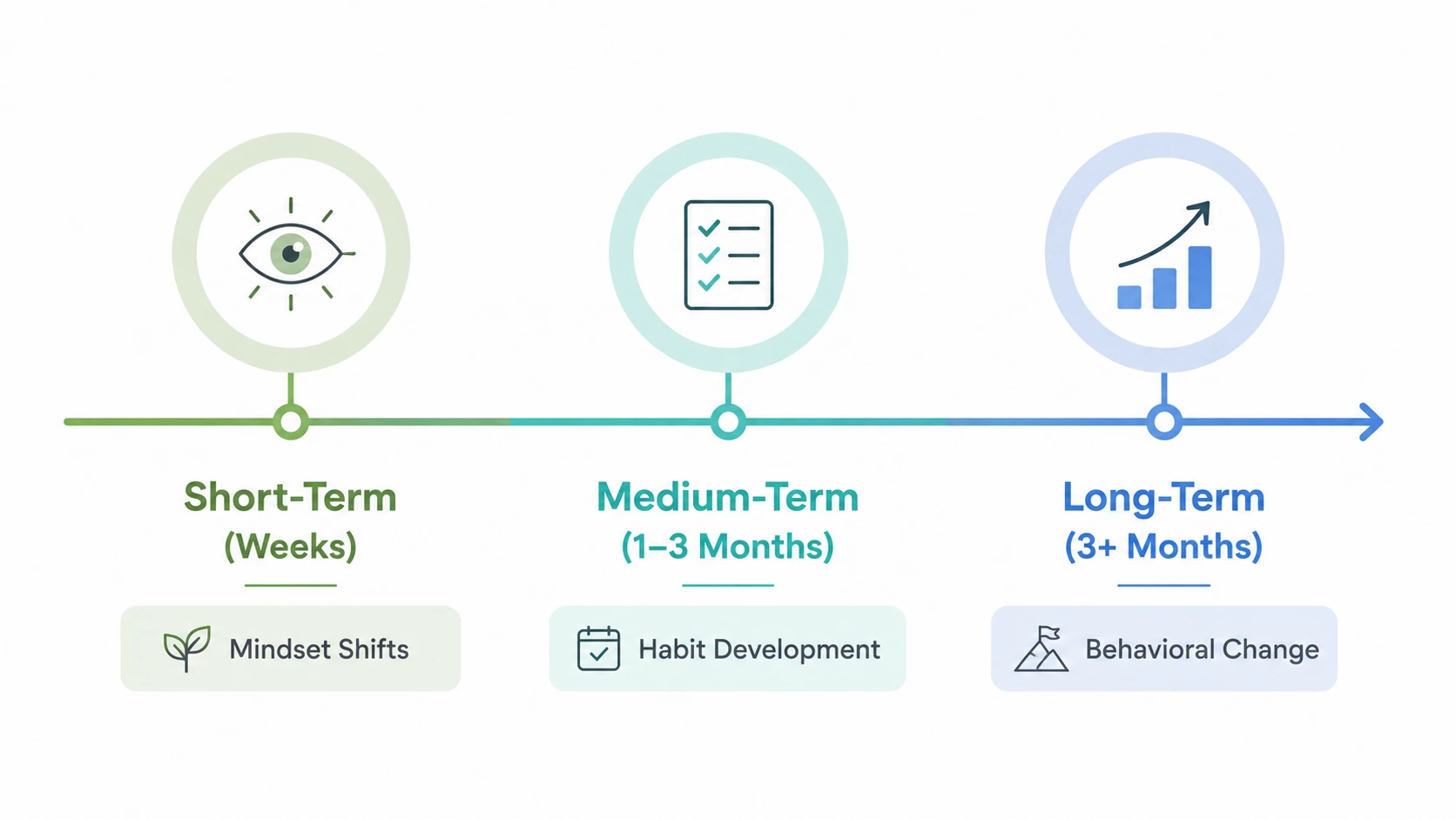
Early improvements, such as increased self-awareness or clarity about goals, often emerge within the first few weeks. Medium-term development, including new habits and more consistent decision-making, typically develops over one to three months of regular practice. Long-term mindset changes — durable shifts in how a person interprets setbacks or approaches challenges — generally take several months or longer to solidify. As of 2026, coaches increasingly emphasize consistency over intensity, since steady, moderate effort tends to produce more lasting change than occasional high-intensity sessions.
Practice Guide
Daily Practices
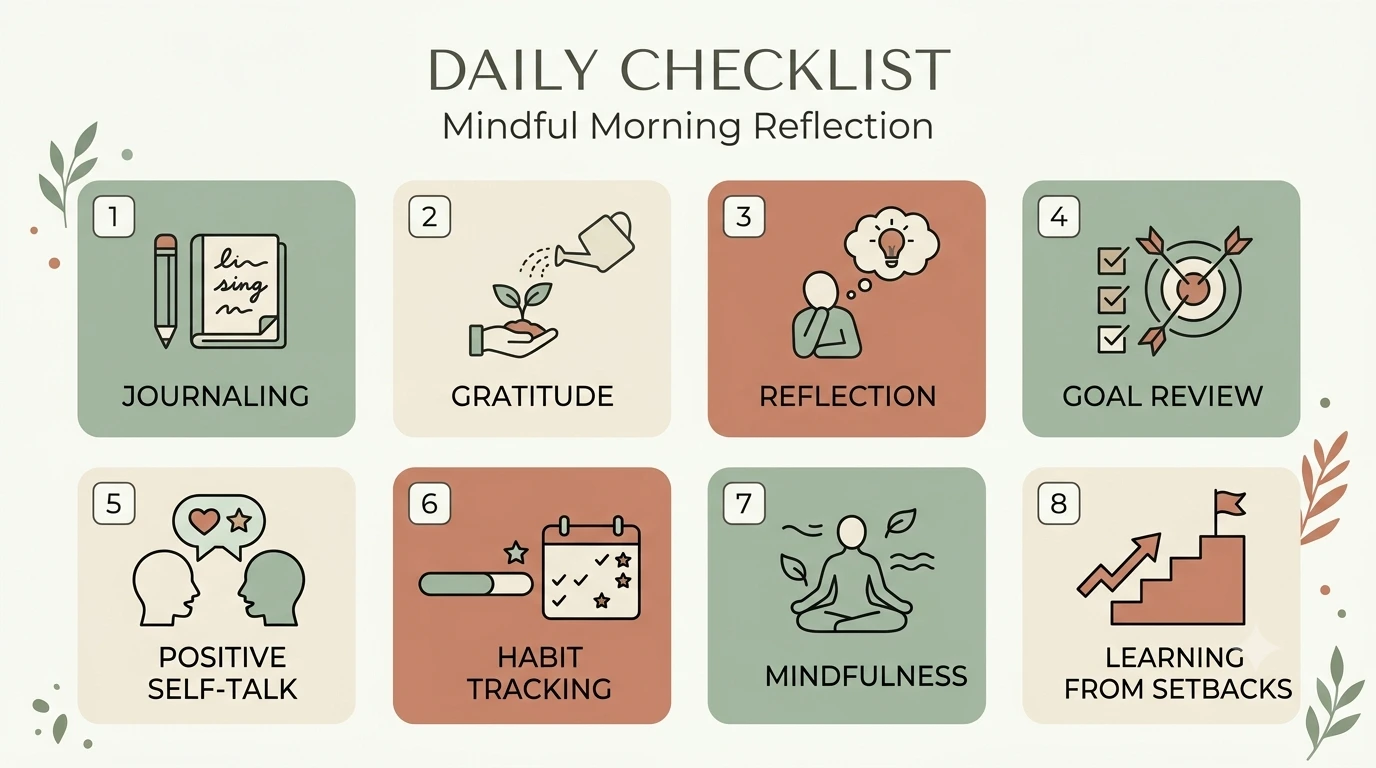
- Reflection on the day’s decisions and reactions
- Journaling thoughts and observations
- Affirmations, used thoughtfully rather than as a substitute for action
- Reviewing progress toward stated goals
- Tracking key habits
Weekly Practices
- Attending coaching sessions
- Evaluating progress against goals
- Planning the next set of actions
- Accountability check-ins, whether with a coach or a personal system
Maintaining Long-Term Progress
Sustaining mindset changes after formal coaching ends typically requires adapting routines to changing circumstances and having a plan for responding to setbacks rather than treating them as failures. Your Daily Thrive recommends revisiting goals periodically, since needs and priorities shift over time.
Related Resources for Continued Learning
Books and Educational Resources
Readers interested in deepening their understanding of mindset concepts often turn to established personal development literature, sometimes referred to informally as mindset builder or mindset master resources, covering topics like growth mindset theory and behavior change. Educational resources can reinforce concepts introduced in coaching sessions, but they are best used as a complement to coaching rather than a replacement for it, since coaching provides personalized feedback that books cannot.
Career Path: Becoming a Mindset Coach
Skills Needed
Aspiring coaches typically need strong listening skills, emotional intelligence, communication ability, and a solid understanding of behavioral change principles.
Education and Training
Training options range from formal accredited coaching programs to independent study combined with supervised practice. There is no single required academic path.
Career Opportunities
Mindset coaches may work independently, within coaching organizations, inside corporate wellness programs, or alongside other professional services such as HR consulting.
Income Influencing Factors
How much mindset coaches make varies considerably based on specialization, years of experience, business model (individual clients versus corporate contracts), geographic location, and the size of an established client base. There is no fixed industry-wide income figure, since independent coaches set their own rates and availability.
Conclusion
Mindset life coaching is a structured approach to identifying and changing the thought patterns and beliefs that shape behavior, distinct from therapy, mentoring, and general life coaching in both scope and method. It typically works best for individuals who are functioning well but want to build confidence, resilience, and more effective decision-making through guided reflection and accountability. Results depend on consistency, realistic expectations, and active participation rather than passive attendance. Choosing a coach should be based on experience, methodology, and personal fit rather than certifications or marketing alone. Approached as an ongoing practice rather than a one-time fix, mindset coaching can support meaningful, lasting personal and professional growth.
Frequently Asked Questions
What is mindset life coaching?
Mindset life coaching is a coaching approach that helps people identify and change limiting beliefs and thought patterns in order to support personal or professional goals.
What does a mindset coach actually do?
A mindset coach helps clients clarify goals, identify limiting beliefs, build confidence, and stay accountable through structured conversations rather than giving direct advice.
How is mindset coaching different from therapy?
Mindset coaching is a non-clinical practice focused on thought patterns and goals, while therapy is a licensed clinical service that diagnoses and treats mental health conditions.
Do mindset coaches need certification?
Certification is not legally required in most regions, but accredited training and continuing education are commonly used to indicate a coach’s qualifications.
How long does mindset coaching usually take to show results?
Early self-awareness often develops within a few weeks, while durable mindset changes typically take several months of consistent practice.
Is online mindset life coaching effective?
Online coaching can be as effective as in-person coaching for most clients, offering greater flexibility and accessibility through online appointments and video-based sessions.
Who benefits most from mindset life coaching?
People seeking to improve confidence, decision-making, resilience, or habits in personal or professional areas of life tend to benefit most, provided they are not seeking treatment for a mental health condition.
How do I choose the right mindset coach?
Evaluate a coach’s experience, methodology, communication style, and client fit through a consultation session rather than relying solely on certifications or marketing claims.