
Introduction
Micro trauma refers to repeated small emotional or psychological experiences that gradually affect mental health, behavior, and emotional regulation over time. The micro trauma meaning in behavioral psychology focuses on subtle but recurring stressors such as criticism, emotional neglect, rejection, pressure, or invalidation. Unlike major traumatic events, micro trauma is often cumulative and easy to dismiss because each individual experience may appear “small.”
However, repeated exposure to emotional stress can condition the nervous system, shape self-esteem, influence coping habits, and increase emotional exhaustion. Understanding micro trauma psychology matters because unresolved emotional patterns can affect relationships, productivity, discipline, stress tolerance, and long-term well-being. Greater emotional awareness helps people recognize harmful conditioning before it becomes chronic burnout or emotional dysregulation.
Quick Summary
- Micro trauma refers to repeated small emotional or psychological stressors that gradually impact mental health and behavior.
- Unlike major trauma, micro trauma often develops through ongoing experiences such as criticism, rejection, pressure, or emotional neglect.
- Over time, unresolved micro traumas can contribute to anxiety, emotional exhaustion, low self-worth, and unhealthy coping patterns.
- Awareness, emotional processing, supportive habits, and consistent self-regulation strategies can reduce long-term effects.
- Behavioral psychology shows that repeated emotional experiences shape thought patterns, habits, and stress responses.
What Is Micro Trauma?
Micro Trauma Definition in Psychology
Micro trauma definition psychology describes small but repeated emotional injuries that gradually shape emotional responses, self-perception, and nervous system behavior. What is a microtrauma? In practical terms, it is an ongoing experience that repeatedly creates emotional stress, even if the event itself seems minor.
Micro trauma psychology explains that the brain does not only react to large traumatic events. Repeated emotional experiences also influence emotional conditioning through neuroplasticity and stress adaptation. Constant criticism, emotional invalidation, chronic pressure, or repeated rejection can slowly train the nervous system to expect stress or emotional danger.
The word “small” does not mean the emotional impact is insignificant. A repeated low-level emotional wound can eventually create major psychological strain because cumulative stress affects emotional regulation over time.
Why Micro Trauma Often Goes Unnoticed
Micro trauma often goes unnoticed because many people normalize stress and emotional discomfort. Environments focused on productivity, performance, or survival may teach individuals to suppress emotions instead of processing them.
Common reasons people overlook micro trauma include:
- Believing their experiences are “not serious enough”
- Comparing themselves to people with more visible trauma
- Staying in chronic survival mode
- Viewing emotional suppression as strength
- Adapting to unhealthy environments over time
Repeated emotional stress can gradually become psychologically invisible because the nervous system adjusts to constant pressure. This emotional conditioning often reduces self-awareness and makes unhealthy patterns feel normal.
Micro Trauma vs Major Trauma
Macro vs Micro Trauma
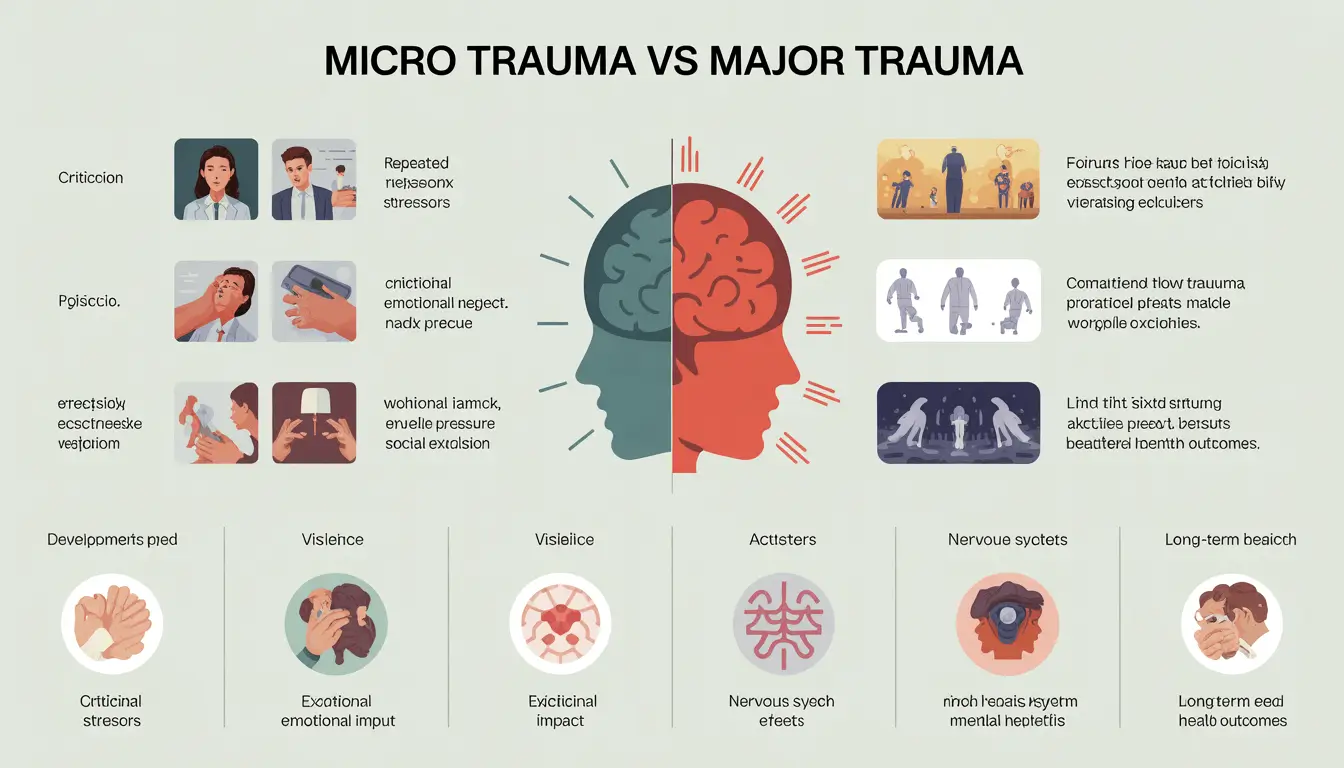
Macro vs micro trauma involves the difference between sudden high-intensity trauma and repeated low-level emotional stress. Major trauma usually comes from a single severe event such as abuse, violence, disasters, or accidents. Micro repetitive trauma develops gradually through repeated emotional experiences.
Micro vs macro trauma is often misunderstood because people associate trauma only with extreme events. However, frequency can sometimes become as psychologically harmful as intensity.
Why Small Emotional Wounds Can Still Have Serious Effects
Small emotional wounds can still create serious long-term effects because chronic stress accumulates in the nervous system. Repetitive micro trauma keeps emotional stress responses activated over time, which can increase emotional exhaustion, anxiety, burnout, and emotional sensitivity.
Repeated emotional injuries also shape learned behavior patterns. For example:
- Constant criticism may create perfectionism
- Emotional neglect may lead to people-pleasing
- Repeated rejection may increase social anxiety
- Chronic pressure may reinforce overworking habits
Comparison Block — Micro Trauma vs Major Trauma
| Factor | Micro Trauma | Major Trauma |
|---|---|---|
| Development | Gradual and repetitive | Sudden and intense |
| Visibility | Often overlooked | Usually obvious |
| Emotional Impact | Cumulative stress | Immediate distress |
| Examples | Constant criticism, rejection | Abuse, accidents, disasters |
| Long-Term Effects | Anxiety, burnout, low confidence | PTSD, severe emotional dysregulation |
Many people dismiss their emotional pain because they believe they “did not have it bad enough.” Behavioral psychology shows that repeated emotional stress still shapes mental health outcomes, regardless of whether the stress appears dramatic externally.
Common Examples of Micro Trauma in Everyday Life
Relationship-Based Micro Traumas
Relationship-based micro traumas often involve repeated emotional invalidation or inconsistency.
Examples include:
- Constant criticism
- Silent treatment
- Emotional dismissal
- Inconsistent affection
- Lack of emotional support
Over time, these patterns can increase emotional insecurity and hypervigilance.
Workplace and Productivity-Related Micro Traumas
Workplace stress can create chronic emotional strain when pressure becomes constant rather than temporary.
Common examples include:
- Burnout culture
- Fear-driven productivity
- Public embarrassment
- Unrealistic expectations
- Chronic performance pressure
These experiences may gradually condition people to associate self-worth with productivity.
Childhood and Family Examples
Childhood emotional experiences strongly influence emotional conditioning and identity formation.
Examples include:
- Emotional neglect
- Excessive expectations
- Comparison with siblings
- Lack of emotional safety
- Conditional approval
Repeated emotional stress during development can shape long-term coping patterns and attachment behavior.
Social and Identity-Related Experiences
Social experiences can also create cumulative emotional stress.
Examples include:
- Exclusion
- Repeated rejection
- Social humiliation
- Bias-related stress
- Microaggression trauma
Repeated exposure to social invalidation can increase anxiety, emotional defensiveness, and chronic stress sensitivity.
Bullet Breakdown — Real-Life Micro Trauma Examples
- Being constantly interrupted
- Feeling emotionally dismissed
- Growing up without emotional validation
- Fear of making mistakes
- Repeated criticism disguised as “motivation”
- Constant pressure to perform
Repeated experiences reinforce negative thought patterns because the brain gradually interprets emotional stress as normal or expected.
How Micro Trauma Affects Mental Health
Emotional Effects
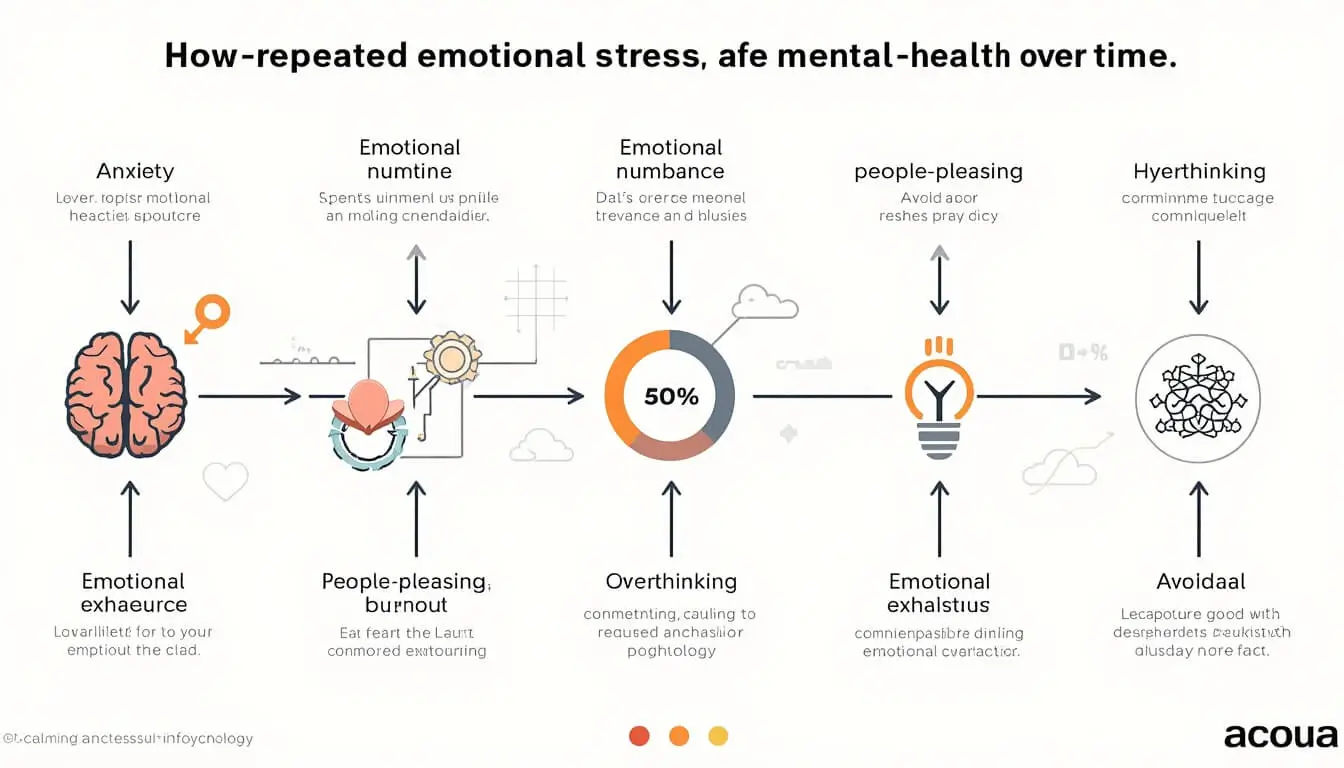
Micro trauma mental health effects often develop gradually.
Common emotional effects include:
- Anxiety
- Emotional numbness
- Shame
- Irritability
- Hypervigilance
Chronic emotional stress can reduce emotional resilience and increase emotional exhaustion.
Behavioral Effects
Repeated emotional stress often changes behavioral patterns.
Common behavioral responses include:
- People-pleasing
- Perfectionism
- Avoidance
- Overworking
- Self-sabotage
Many trauma responses initially develop as emotional protection strategies.
Cognitive Effects
Micro trauma can also influence thinking patterns.
Examples include:
- Negative self-talk
- Overthinking
- Fear of failure
- Difficulty trusting others
- Catastrophic thinking
Table — Symptoms and Possible Behavioral Outcomes
| Micro Trauma Pattern | Possible Mental Health Effect |
|---|---|
| Constant criticism | Low self-esteem |
| Emotional neglect | Attachment insecurity |
| Chronic pressure | Burnout |
| Repeated rejection | Social anxiety |
| Invalidated emotions | Emotional suppression |
Behavioral psychology shows that repeated emotional experiences create strong associations between situations, emotions, and behaviors. These patterns can become automatic habits if left unaddressed.
Why People Struggle to Recognize Their Own Micro Trauma
Survival Mode and Emotional Minimization
People in survival mode often prioritize functioning over emotional awareness. Many develop an “others have it worse” mindset that minimizes their own emotional experiences.
Many people stay trapped in emotional overwhelm because they constantly react to external pressure instead of learning to focus on what you can control, including emotional boundaries, recovery habits, and stress regulation.
Learned emotional suppression can eventually disconnect people from their own stress signals.
High Functioning Does Not Mean Healthy
High-functioning individuals may still experience hidden burnout, emotional exhaustion, or chronic anxiety. Productivity can sometimes mask unresolved emotional strain.
Emotional masking often appears as:
- Constant busyness
- Overachievement
- Emotional detachment
- Difficulty resting
- Fear of slowing down
Productivity Culture and Emotional Neglect
Modern productivity culture can reinforce toxic self-improvement cycles where self-worth becomes dependent on achievement.
Performance-based identity often increases:
- Chronic stress
- Fear of failure
- Emotional neglect
- Perfectionism
- Burnout risk
Behavioral psychology explains that repeated reward systems based only on performance can weaken emotional self-awareness and emotional regulation.
The Science Behind Repeated Emotional Stress
How Chronic Stress Changes the Nervous System
Repeated emotional stress activates the fight-or-flight system for extended periods. Chronic activation may dysregulate stress hormones and increase emotional fatigue.
Long-term stress can contribute to:
- Emotional exhaustion
- Increased anxiety
- Sleep disruption
- Reduced stress tolerance
- Nervous system hyperactivation
Neuroplasticity and Emotional Conditioning
Neuroplasticity allows repeated experiences to shape emotional and behavioral patterns. Habit loops form when emotional triggers repeatedly produce the same coping responses.
For example:
- Rejection may reinforce avoidance
- Criticism may strengthen perfectionism
- Emotional neglect may increase validation seeking
Repeated emotional experiences gradually become conditioned emotional responses.
The Link Between Micro Trauma and Burnout
Micro trauma and burnout are closely connected because cumulative emotional load reduces psychological recovery capacity.
When stress recovery becomes inconsistent, people may experience:
- Motivation decline
- Emotional numbness
- Cognitive fatigue
- Irritability
- Reduced resilience
Long-term emotional adaptation can eventually normalize unhealthy stress levels.
Common Coping Mechanisms That Develop From Micro Trauma
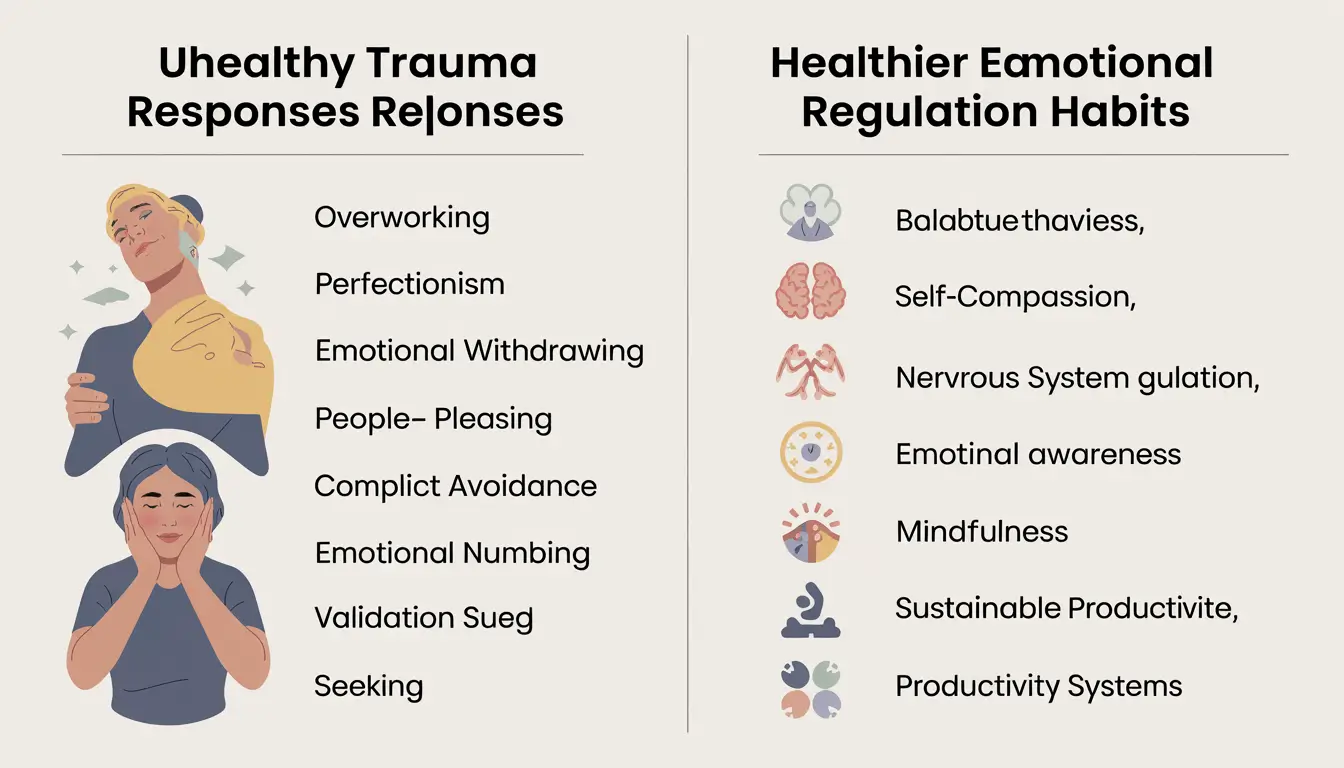
Avoidance and Emotional Withdrawal
Avoidance helps reduce immediate emotional discomfort but may increase long-term emotional isolation.
Perfectionism and Overachievement
Perfectionism often develops as an attempt to prevent criticism, rejection, or emotional failure.
People-Pleasing and Validation Seeking
People-pleasing can become a survival strategy when approval feels connected to emotional safety.
Emotional Numbing and Distraction
Distraction behaviors temporarily reduce emotional discomfort but may delay emotional processing.
Bullet Breakdown — Signs Your Habits May Be Trauma Responses
- Constantly apologizing
- Fear of disappointing others
- Difficulty resting without guilt
- Overworking to feel valuable
- Avoiding conflict at all costs
These coping mechanisms initially feel helpful because they reduce emotional discomfort in the short term.
How to Heal From Micro Trauma
Building Emotional Awareness
Emotional awareness improves recognition of emotional patterns and stress triggers.
Structured reflection practices such as learning how to journal for self-growth can improve emotional awareness, pattern recognition, and long-term emotional regulation.
Helpful practices include:
- Journaling
- Pattern recognition
- Naming emotions accurately
- Emotional reflection
- Self-observation
Regulating the Nervous System
Nervous system regulation supports emotional recovery and stress resilience.
Helpful strategies include:
- Sleep
- Exercise
- Breathwork
- Mindfulness
- Stress recovery routines
Consistent recovery habits improve emotional regulation over time.
Rebuilding Self-Trust
Self-trust develops through consistent emotional accountability rather than perfection.
Important practices include:
- Boundary setting
- Self-compassion
- Consistency over perfection
- Emotional honesty
- Gradual habit change
Replacing Survival Habits With Healthy Systems
Identity-based habits create more sustainable emotional recovery than motivation alone.
Healthy systems may include:
- Sustainable routines
- Emotional check-ins
- Structured recovery habits
- Balanced productivity systems
- Consistent self-care
Step-by-Step Habit Integration Framework
- Identify emotional triggers
- Recognize repeated patterns
- Reduce self-judgment
- Build emotional regulation habits
- Practice small consistent changes
- Reinforce healthier responses
Sustainable improvement usually comes from repetition and nervous system safety rather than extreme self-improvement efforts.
Motivation vs Discipline in Emotional Healing
Comparison Block — Motivation vs Discipline
| Motivation | Discipline |
|---|---|
| Emotion-driven | System-driven |
| Temporary | Sustainable |
| Depends on mood | Built through repetition |
| Inconsistent during stress | More reliable long-term |
Why Consistency Matters More Than Intensity
Consistency matters more than intensity because emotional recovery requires nervous system stability. Extreme self-improvement often creates additional pressure that increases burnout risk.
Long-term healing improves through:
- Small repeatable habits
- Sustainable pacing
- Recovery-focused systems
- Emotional flexibility
- Realistic expectations
Behavioral psychology consistently shows that stable routines outperform emotionally intense but inconsistent efforts.
Common Mistakes People Make When Addressing Micro Trauma
Ignoring Small Emotional Pain
Ignoring repeated emotional stress often increases long-term emotional dysregulation.
Expecting Fast Emotional Healing
Emotional conditioning develops gradually, so emotional recovery also requires time and repetition.
Confusing Productivity With Recovery
Constant productivity may distract from emotional pain without actually resolving it.
Overconsuming Self-Help Without Action
Learning without implementation often creates temporary motivation without behavioral change.
Table — Mistakes vs Better Approaches
| Common Mistake | Healthier Alternative |
|---|---|
| Suppressing emotions | Emotional processing |
| Seeking perfection | Building consistency |
| Waiting for motivation | Creating systems |
| Constant self-criticism | Practicing self-awareness |
Long-term recovery requires realistic expectations and sustainable emotional habits.
What Actually Helps Long-Term Emotional Recovery
Sustainable Habits vs Temporary Motivation
Long-term emotional recovery depends more on consistent systems than emotional intensity.
Long-term healing often aligns with the best ways to achieve personal growth, including emotional consistency, identity-based habits, self-awareness, and supportive routines.
Emotional Safety and Support Systems
Supportive relationships and emotionally safe environments improve nervous system regulation and emotional resilience.
Identity-Based Change
Identity-based habits reinforce long-term behavioral change because actions become connected to self-perception rather than temporary motivation.
Self-Compassion and Psychological Flexibility
Psychological flexibility improves emotional adaptation by reducing rigid perfectionism and self-criticism.
Real-Life Scenario Section
Beginner Example
Someone experiencing burnout from constant self-pressure may begin by reducing unrealistic expectations, improving sleep routines, journaling emotional triggers, and practicing consistent recovery habits.
Advanced Example
Someone rebuilding emotional boundaries after years of people-pleasing may gradually practice emotional honesty, reduce validation-seeking behavior, establish healthier routines, and reinforce self-trust through consistent boundaries.
Long-term improvement usually comes from gradual behavioral adjustment rather than dramatic emotional transformation.
Conclusion
Micro trauma can significantly affect emotional health even when experiences appear small or socially invisible. Repeated emotional stress gradually shapes habits, emotional regulation, thought patterns, self-esteem, and nervous system responses.
Behavioral psychology shows that chronic emotional experiences influence long-term mental health through emotional conditioning and repeated stress adaptation. Over time, unresolved micro trauma may contribute to burnout, anxiety, perfectionism, emotional suppression, and unhealthy coping systems.
Awareness, emotional regulation, supportive routines, self-compassion, and sustainable habits can improve long-term emotional resilience. Healing usually happens gradually through consistency, emotional honesty, and healthier behavioral systems rather than quick emotional fixes.
FAQ Section
What is micro trauma in psychology?
Micro trauma in psychology refers to repeated small emotional or psychological stressors that gradually affect emotional regulation, behavior, and mental health over time.
Can small emotional experiences really cause trauma?
Yes. Repeated emotional stress can condition the nervous system and influence thought patterns, coping habits, self-esteem, and emotional resilience.
What are common examples of micro trauma?
Common micro trauma examples include emotional invalidation, repeated criticism, chronic pressure, rejection, emotional neglect, exclusion, and fear-driven productivity environments.
How does micro trauma affect mental health over time?
Micro trauma can contribute to anxiety, burnout, emotional exhaustion, hypervigilance, low self-worth, emotional suppression, and unhealthy coping patterns.
Why do I struggle with consistency after emotional stress?
Emotional stress reduces mental energy, nervous system stability, and emotional regulation capacity. Chronic stress may also reinforce avoidance and self-sabotage patterns.
Can micro trauma lead to anxiety or burnout?
Yes. Repeated emotional stress can overload the nervous system and increase chronic anxiety, emotional fatigue, and burnout risk over time.
What is the difference between micro trauma and major trauma?
Major trauma is usually sudden and intense, while micro trauma develops gradually through repeated low-level emotional stress and cumulative emotional conditioning.
How do I heal from repeated emotional stress?
Healing often involves emotional awareness, nervous system regulation, supportive routines, consistent self-care habits, self-compassion, and behavioral pattern recognition.
Why do people ignore their own emotional pain?
Many people minimize emotional experiences because of survival mode, social comparison, productivity culture, emotional suppression, or fear of appearing weak.
Can productivity habits become trauma responses?
Yes. Overworking, perfectionism, and constant achievement-seeking can sometimes develop as emotional protection strategies connected to fear, validation seeking, or emotional insecurity.










One Response