
Introduction
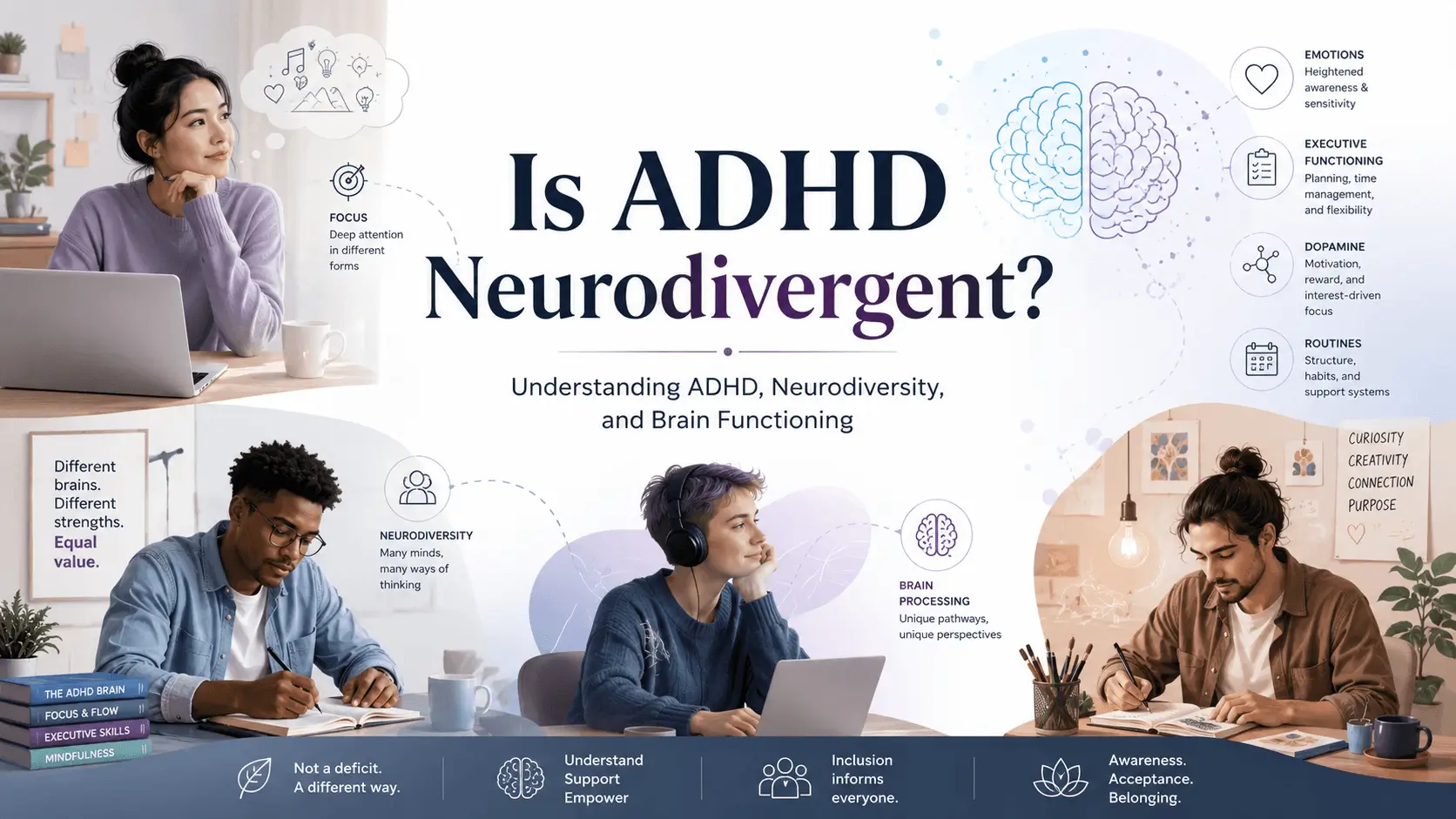
ADHD is widely considered a neurodivergent condition because it affects how the brain regulates attention, motivation, emotions, and executive functioning. If you have ADHD, are you neurodivergent? In most medical, educational, and neurodiversity discussions, the answer is yes. ADHD changes how the brain processes information, manages focus, and responds to stimulation compared to neurotypical patterns.
Many people are confused by terms like neurodivergent, neurodiverse, neurotypical, and neurodevelopmental disorder because these words are often used interchangeably online. Public awareness around ADHD has also increased due to adult diagnosis trends, workplace conversations, and identity-based discussions on social media. Understanding these terms clearly helps reduce misinformation, shame, and unrealistic expectations around ADHD and brain functioning.
Quick Summary
- ADHD is widely recognized as a neurodivergent condition because it affects how the brain processes attention, motivation, and regulation.
- Neurodivergent refers to brains that function differently from what society considers “typical.”
- ADHD is also classified medically as a neurodevelopmental condition.
- Being neurodivergent does not automatically mean someone is incapable, broken, or mentally ill.
- ADHD often affects executive functioning, emotional regulation, consistency, and dopamine-driven motivation.
What Does Neurodivergent Mean?
Neurodivergent Definition in Simple Language
Neurodivergent means a person’s brain functions differently from what society considers neurologically typical. The neurodivergence definition includes differences in cognition, learning, emotional regulation, sensory processing, attention, and communication styles.
In simple language, neurodivergent define means the brain processes information differently rather than incorrectly. ADHD neurodivergent meaning usually refers to differences in attention regulation, motivation systems, and executive functioning.
Neurodivergence ADHD discussions often focus on:
- Different thinking patterns
- Nonlinear focus and productivity
- Emotional intensity
- Sensory sensitivity
- Executive functioning challenges
When people ask “what’s neurodivergent mean,” they are usually trying to understand whether neurological differences are considered part of normal human variation. The concept of neurodiversity suggests that many cognitive differences naturally exist across populations.
Neurodivergent vs Neurotypical
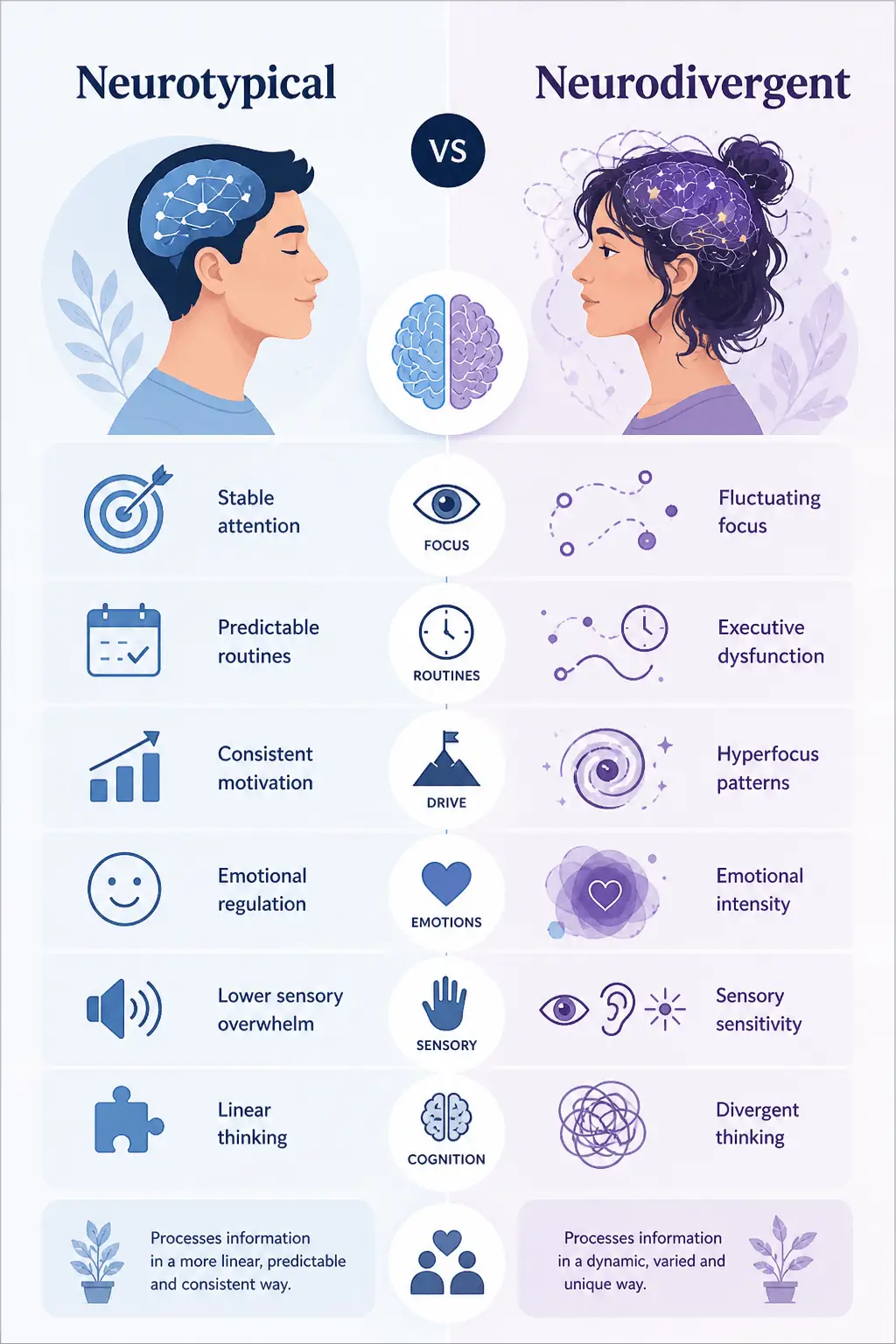
Neurotypical refers to people whose cognitive processing aligns more closely with socially expected patterns of attention, communication, emotional regulation, and behavior.
Neurodivergent people may process focus, emotions, sensory input, and routines differently. This does not automatically mean dysfunction or inability.
Neurotypical Processing Patterns
- More stable focus regulation
- Easier task prioritization
- Predictable routine maintenance
- Lower sensory overwhelm
- More consistent motivation patterns
Neurodivergent Processing Patterns
- Fluctuating attention regulation
- Executive dysfunction challenges
- Emotional intensity or overwhelm
- Sensory sensitivity
- Hyperfocus and motivation variability
Strengths and Challenges in Both
| Processing Style | Potential Strengths | Potential Challenges |
|---|---|---|
| Neurotypical | Predictability, consistency | Lower cognitive flexibility |
| Neurodivergent | Creativity, innovation, hyperfocus | Burnout, overwhelm, inconsistency |
People often ask whether ADHD is neurodivergent or neurotypical. ADHD is considered neurodivergent because the brain regulates attention, impulse control, and dopamine differently from neurotypical patterns. Neurodiversity and ADHD discussions focus on understanding those differences rather than framing them as personal failures.
Is ADHD Considered Neurodivergent?
Why ADHD Fits Under Neurodivergence
Yes, ADHD is considered neurodivergent because it affects executive functioning, attention regulation, emotional processing, impulsivity, and motivation systems.
ADHD changes how the brain responds to stimulation and rewards. Many ADHD behaviors are connected to dopamine regulation differences and executive functioning difficulties rather than laziness or lack of intelligence.
ADHD Brain Function Differences
- Difficulty regulating attention consistently
- Impulsive decision-making patterns
- Emotional intensity and frustration sensitivity
- Time blindness and organizational struggles
- Strong novelty-seeking behavior
People asking “does ADHD make you neurodivergent” or “is having ADHD neurodivergent” are usually trying to understand whether ADHD reflects a neurological difference. In modern neurodiversity discussions, ADHD is widely categorized as neurodivergent.
Adult ADHD is also neurodivergent. Many adults spend years masking symptoms before receiving a diagnosis.
Common ADHD Challenges
- Differences in focus and attention
- Motivation and reward sensitivity
- Emotional regulation challenges
- Time blindness and organization struggles
ADHD as a Neurodevelopmental Condition
ADHD is both neurodivergent and neurodevelopmental, but these terms are not identical.
A neurodevelopmental condition affects how the brain develops and functions from early life. Neurodivergent is a broader term describing cognitive functioning differences from typical neurological patterns.
Neurodivergent vs Mental Illness vs Neurodevelopmental Condition
| Concept | Meaning | Example | Main Focus |
|---|---|---|---|
| Neurodivergent | Brain functions differently from typical patterns | ADHD, autism, dyslexia | Cognitive differences |
| Neurodevelopmental Condition | Brain development differences beginning early in life | ADHD, autism | Development and functioning |
| Mental Illness | Mental health condition affecting mood/thoughts | Depression, anxiety | Emotional/psychological distress |
People often ask whether ADHD is neurodivergent or mental illness. ADHD is primarily classified as a neurodevelopmental condition rather than a mental illness.
Questions like “is ADHD neurodivergent or disability” depend on context. ADHD can become disabling when symptoms significantly impair work, relationships, education, or daily functioning.
What ADHD Neurodivergence Looks Like in Real Life
Common ADHD Neurodivergent Traits
ADHD neurodivergent symptoms can appear differently depending on age, environment, coping skills, and ADHD presentation type.
Common ADHD Traits
- Hyperfocus
- Difficulty starting tasks
- Emotional overwhelm
- Forgetfulness
- Sensory sensitivity
- Racing thoughts
- Inconsistent motivation
- Difficulty with routines
- Creative problem-solving
Neurodivergent ADHD adults often experience internal mental exhaustion that others cannot easily see. Inattentive ADHD is also neurodivergent even without visible hyperactivity.
Why People With ADHD Often Struggle With Consistency
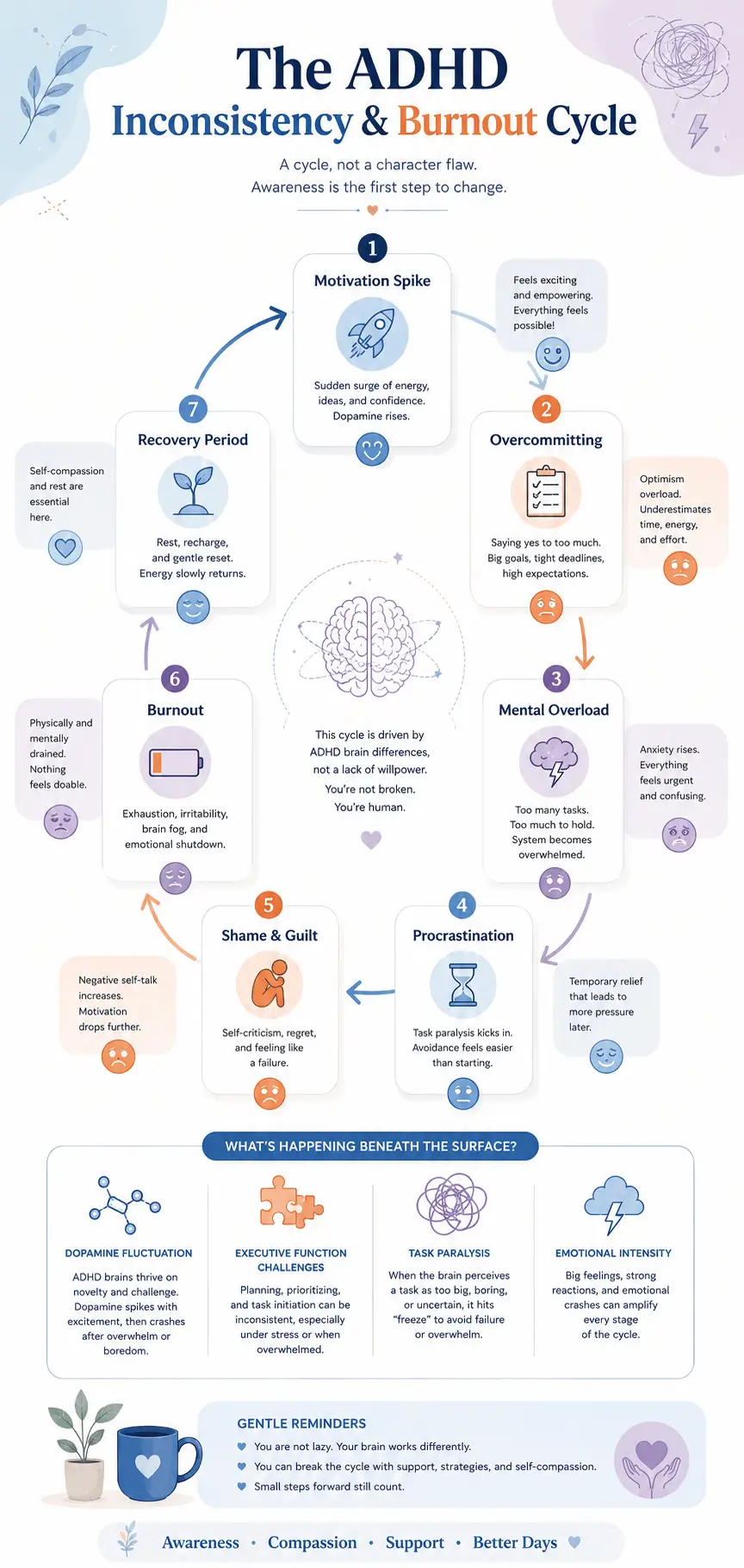
People with ADHD often struggle with consistency because executive dysfunction affects planning, task initiation, emotional regulation, and follow-through.
The ADHD brain is strongly influenced by dopamine-driven motivation. Tasks that feel repetitive, unstimulating, or emotionally overwhelming may become extremely difficult to begin even when the person understands their importance.
Human Behavior Factors
- Shame from repeated unfinished goals
- Fear of failure after past struggles
- Emotional exhaustion from masking symptoms
- Overcommitting during motivation spikes
Many people with ADHD cycle between intense productivity bursts and burnout periods.
Problem-Solution Coverage
| Problem | Why It Happens | What Helps |
|---|---|---|
| Procrastination | Low dopamine stimulation | Smaller task initiation |
| Inconsistency | Motivation fluctuation | Structured systems |
| Burnout | Overcompensation and masking | Recovery planning |
| Overthinking | Mental overload | External organization tools |
Intelligence does not remove ADHD difficulties. Many highly capable people with ADHD still struggle with execution, consistency, and emotional regulation.
ADHD and Neurodiversity Explained
Neurodiversity vs Neurodivergence
Neurodiversity refers to the natural variation across all human brains. Neurodivergent refers to an individual whose neurological functioning differs from socially typical expectations.
Simple Difference
- Neurodiversity = diversity across brains collectively
- Neurodivergent = one person with a different cognitive profile
Neurodiversity and ADHD discussions focus on understanding neurological variation rather than forcing all brains into identical productivity and behavioral standards.
People sometimes ask “is ADHD neurodiversity” or “is ADHD neurodiverse.” ADHD contributes to neurodiversity because it represents one form of neurological variation.
Why Language Around ADHD Matters
Language shapes identity, self-esteem, stigma, and access to support.
Some people prefer identity-based language such as:
- Neurodivergent
- Disabled
- ADHD brain
- Neurodevelopmental condition
Others prefer more medical or neutral terminology.
Social media discussions often oversimplify ADHD experiences, which creates confusion around diagnosis, self-identification, and functioning differences.
Real-Life Scenarios
Newly Diagnosed Adult With ADHD
Many adults reinterpret years of inconsistency, burnout, emotional overwhelm, and unfinished goals after understanding ADHD.
Child Struggling in School
Children with ADHD may appear distracted or unmotivated when they are actually struggling with executive functioning demands.
Workplace Misunderstandings
Employees with ADHD may perform inconsistently despite high intelligence and creativity.
Burnout From Masking Neurodivergent Traits
Constantly forcing neurotypical productivity patterns can lead to chronic stress and emotional exhaustion.
Is ADHD the Same as Autism or OCD?
ADHD vs Autism
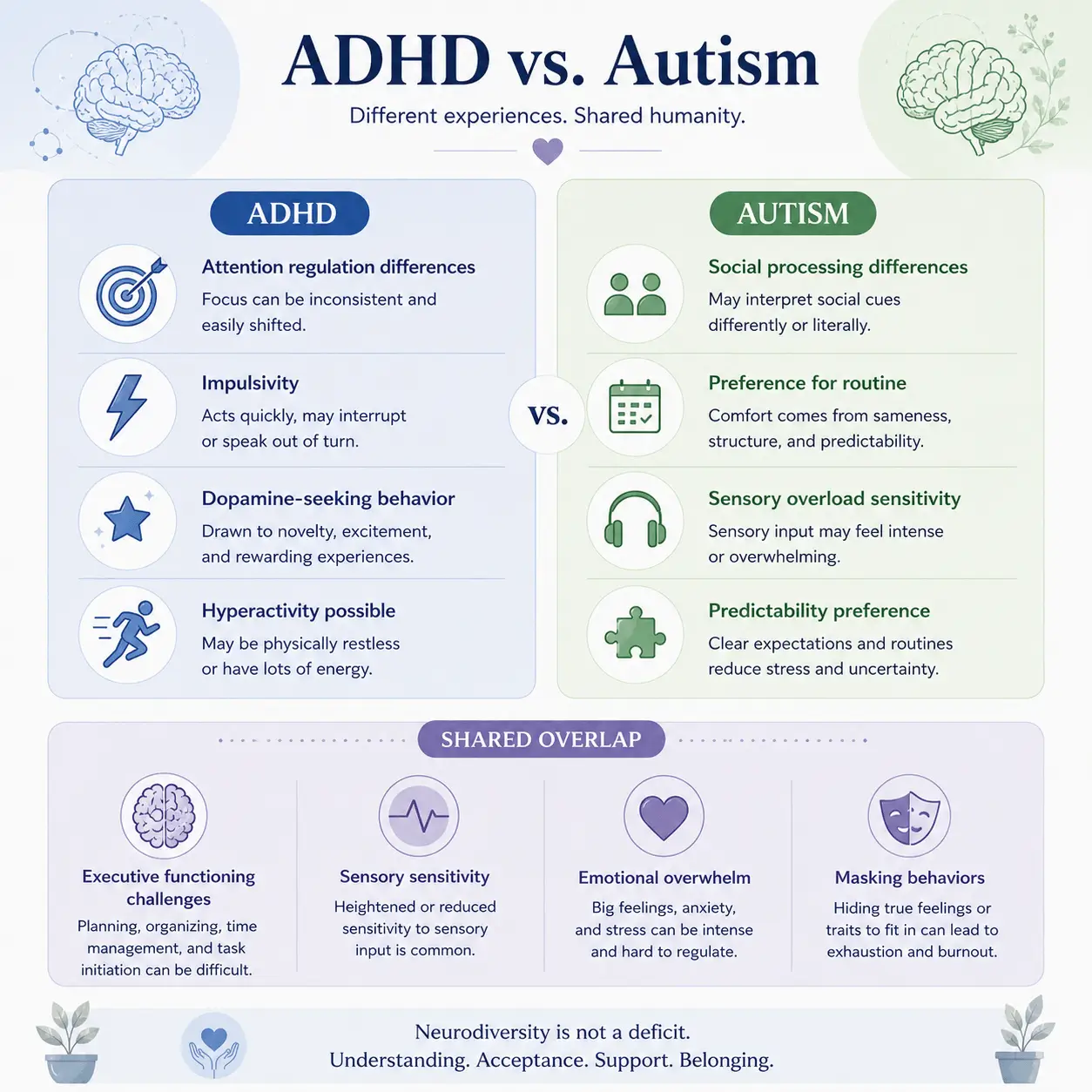
ADHD and autism are both neurodivergent conditions, but they affect brain functioning differently.
| ADHD | Autism |
|---|---|
| Attention regulation differences | Social and sensory processing differences |
| Impulsivity common | Routine preference common |
| Dopamine-seeking behavior | Predictability and structure preference |
| Hyperactivity may occur | Sensory overload more prominent |
Autism is neurodivergent, and many people have both autism and ADHD simultaneously.
ADHD and OCD Differences
ADHD and OCD can overlap in symptoms such as focus difficulties, executive dysfunction, and intrusive thoughts, but the underlying mechanisms differ.
Common Overlaps
- Mental overwhelm
- Difficulty focusing
- Repetitive thought patterns
- Executive functioning challenges
Key Differences
- ADHD impulsivity is often dopamine-driven
- OCD compulsions are usually anxiety-driven
OCD is also considered neurodivergent in many neurodiversity discussions.
ADHD and Dyslexia or Other Neurodivergent Conditions
Many neurodivergent conditions can occur together. This is called comorbidity.
Someone may have:
- ADHD and dyslexia
- ADHD and autism
- ADD and ADHD traits
- ADHD and OCD
Overlapping attention, learning, sensory, and executive functioning differences are common.
ADHD in Adults vs Children
How ADHD Can Change Over Time
ADHD symptoms often change across life stages. Adult ADHD may look very different from childhood ADHD.
Children are more likely to show visible hyperactivity, while adults often experience internal overwhelm, emotional exhaustion, and productivity struggles.
Common Adult ADHD Experiences
- Internalized stress
- Relationship difficulties
- Emotional dysregulation
- Burnout from masking
- Difficulty maintaining routines
ADHD Across Life Stages
- Childhood hyperactivity
- Adult overwhelm
- Internalized stress
- Productivity struggles
- Relationship difficulties
Many neurodivergent ADHD adults were never diagnosed during childhood because symptoms were misunderstood, minimized, or hidden through masking behaviors.
What Actually Helps Neurodivergent People With ADHD?
Sustainable Strategies That Work in Real Life
Long-term ADHD support usually requires systems rather than relying entirely on motivation or willpower.
Helpful Habit & Routine Frameworks
- Low-friction habit building
- External structure systems
- Visual reminders
- Energy management instead of rigid productivity
- Identity-based behavior change
Sustainable routines often work better when they reduce mental friction and decision fatigue.
Motivation vs Discipline for ADHD Brains
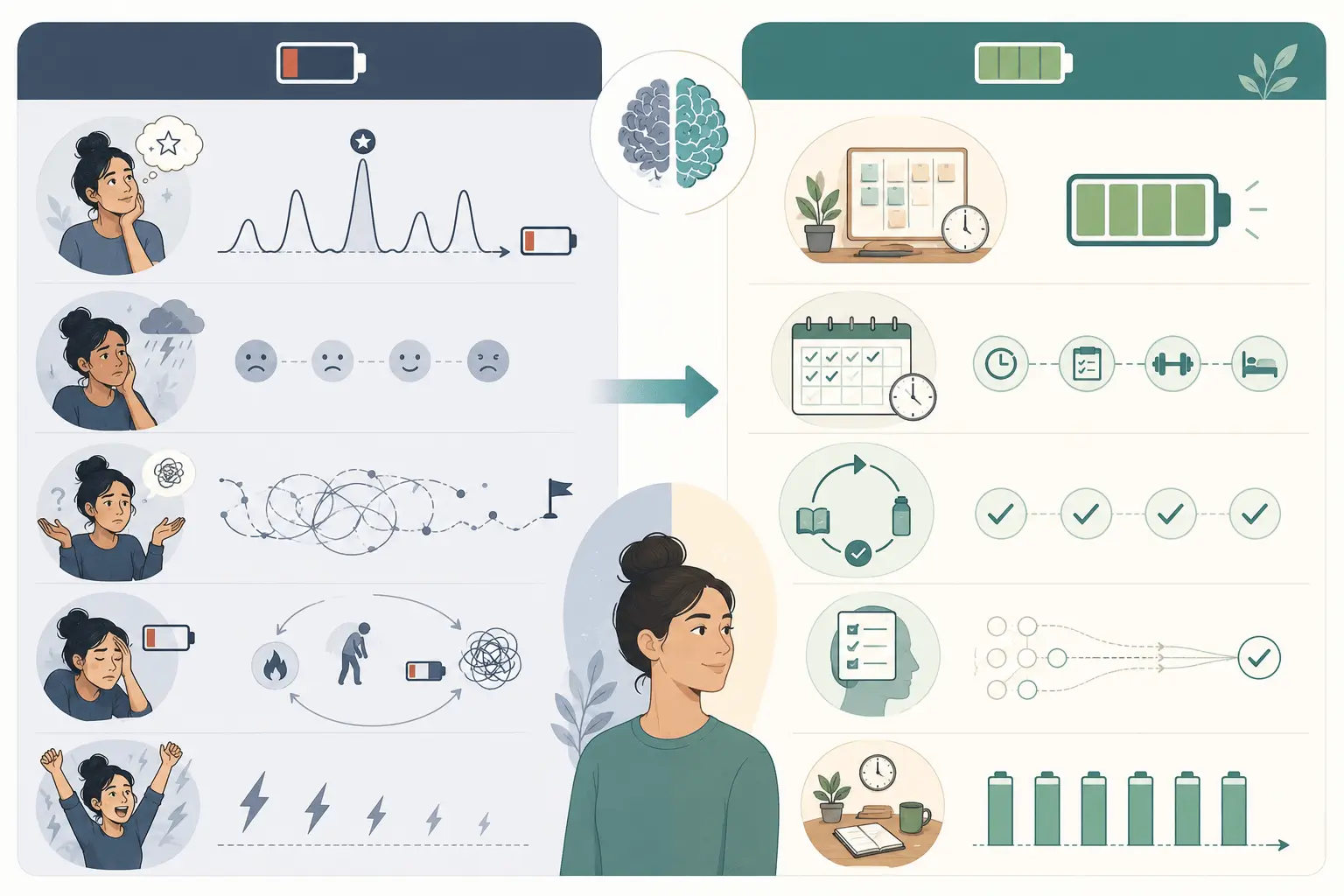
Traditional productivity advice often assumes stable motivation and executive functioning. ADHD brains usually require systems that reduce reliance on emotional consistency.
| Motivation-Based Approach | System-Based Approach |
|---|---|
| Depends on emotional state | Reduces reliance on willpower |
| Inconsistent over time | More sustainable |
| Leads to burnout cycles | Encourages consistency |
| Works short term | Works long term |
Perfectionism and unrealistic productivity standards often worsen ADHD burnout cycles.
Science-Backed Approaches That Improve ADHD Functioning
Helpful Approaches
- Behavioral therapy
- Environmental design
- Sleep regulation
- Exercise and dopamine support
- Cognitive restructuring
- Medication support when appropriate
Myths vs Reality
| Myth | Reality |
|---|---|
| ADHD is laziness | ADHD affects executive functioning |
| People with ADHD just need discipline | Systems and support matter more |
| ADHD only affects children | Many adults remain undiagnosed |
| Hyperfocus means ADHD is fake | ADHD involves attention regulation, not lack of attention |
Common Misunderstandings About Neurodivergence
Why Online Discussions Create Confusion
Social media platforms often simplify complex neurological concepts into short emotional statements.
Reddit discussions about “is ADHD neurodivergent Reddit” or “what is ADHD neurodivergent like Reddit” usually reflect personal experiences rather than scientific consensus.
Common Sources of Confusion
- Oversimplified self-diagnosis conversations
- Confusing personality traits with clinical symptoms
- Treating all neurodivergent experiences as identical
- Misinformation around executive dysfunction
Understanding ADHD accurately requires both evidence-based information and awareness of real-world lived experiences.
Conclusion
ADHD is widely understood as a neurodivergent condition because it affects attention regulation, executive functioning, emotional processing, and motivation systems differently from neurotypical patterns.
ADHD is also considered a neurodevelopmental condition, meaning these neurological differences begin during brain development. Neurodiversity refers to the broader range of human cognitive variation, while neurodivergent describes individuals whose brains function outside typical expectations.
Most importantly, neurodivergence reflects difference rather than personal failure. Many ADHD struggles are connected to unsupported environments, unrealistic productivity expectations, and chronic masking rather than lack of intelligence or effort.
Long-term improvement often comes from self-awareness, supportive systems, realistic expectations, recovery planning, and reduced shame.
FAQs
Is ADHD considered neurodivergent?
Yes. ADHD is widely considered neurodivergent because it affects executive functioning, attention regulation, emotional processing, and dopamine systems differently from neurotypical brain patterns.
If you have ADHD, are you automatically neurodivergent?
In most medical, educational, and neurodiversity discussions, yes. ADHD is commonly categorized as a neurodivergent condition.
Is ADHD a mental illness or a neurodevelopmental condition?
ADHD is primarily classified as a neurodevelopmental condition. It affects how the brain develops and regulates attention, behavior, and executive functioning.
Why do people with ADHD struggle with consistency?
ADHD affects dopamine regulation, task initiation, emotional regulation, and executive functioning. This can create procrastination, burnout cycles, and inconsistent motivation.
Can adults be neurodivergent if they were diagnosed late?
Yes. Many adults are diagnosed with ADHD later in life after years of masking symptoms or misunderstanding their struggles.
Is inattentive ADHD considered neurodivergent?
Yes. All ADHD presentations, including inattentive ADHD, are generally considered neurodivergent.
What is the difference between neurodivergent and neurodiverse?
Neurodivergent refers to an individual whose brain functions differently. Neurodiverse refers to a group containing varied neurological profiles.
Can someone have both ADHD and autism?
Yes. ADHD and autism frequently co-occur, and both are widely recognized as neurodivergent conditions.
Why do ADHD symptoms feel worse during stress or burnout?
Stress reduces executive functioning capacity and increases nervous system overload, making ADHD symptoms harder to manage.
What actually helps neurodivergent people with ADHD long term?
Long-term support often includes sustainable systems, behavioral therapy, environmental design, exercise, sleep regulation, external structure, and realistic self-management strategies.