
Introduction
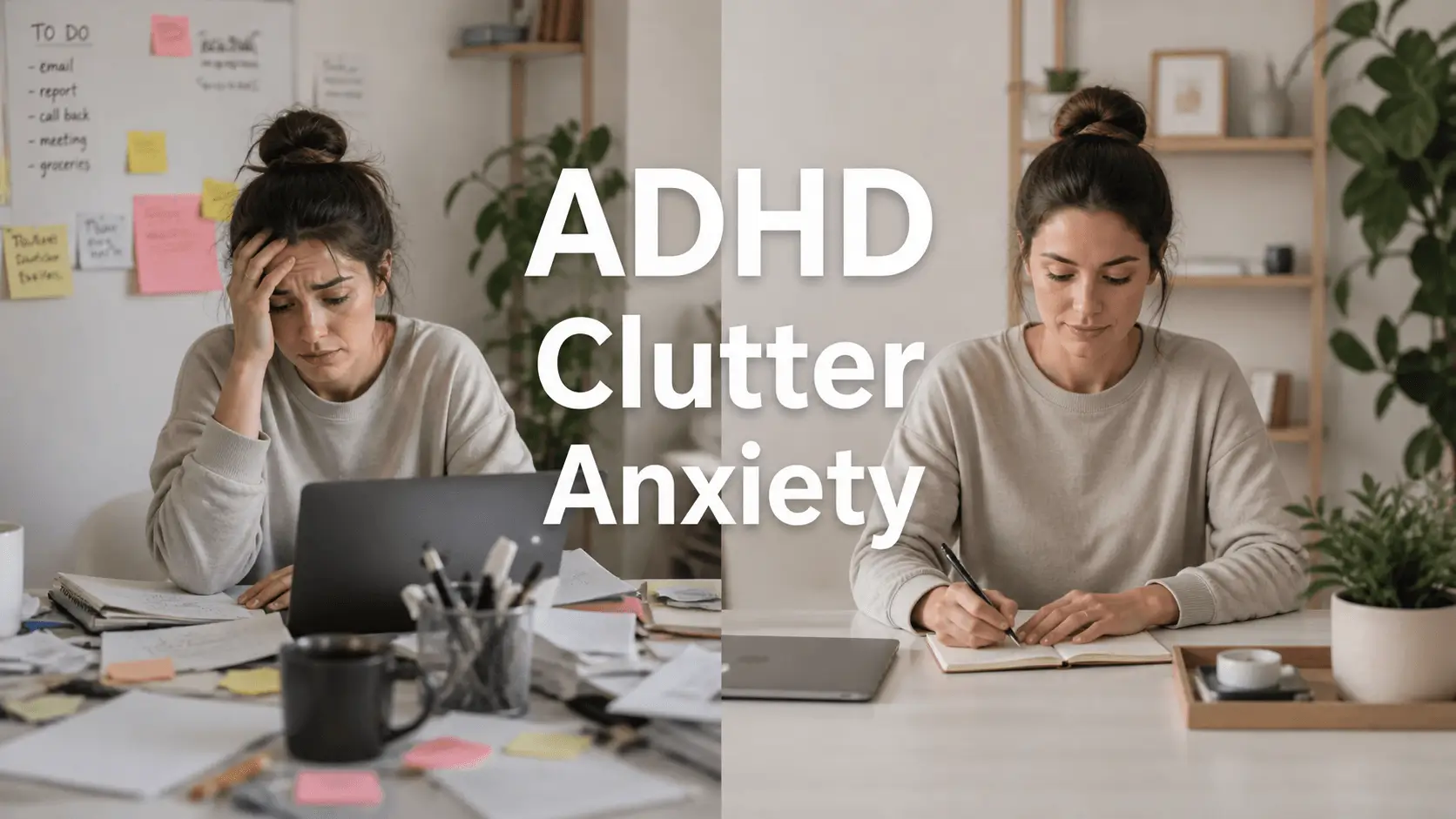
ADHD clutter anxiety refers to the overwhelming stress and mental fatigue caused by disorganized environments in people with ADHD. It’s not just about a messy space—it’s a neurological loop where clutter increases cognitive overload, leading to avoidance, paralysis, and more clutter. This happens because ADHD affects executive function, attention control, and emotional regulation, making everyday organization harder than it seems.
Quick Summary
- ADHD clutter anxiety is caused by executive dysfunction + visual overload + emotional stress
- Clutter worsens focus, increases anxiety, and creates a cycle of avoidance
- Small, structured systems work better than big clean-up efforts
- Sustainable habits—not motivation—break the clutter loop
What Is ADHD Clutter Anxiety?
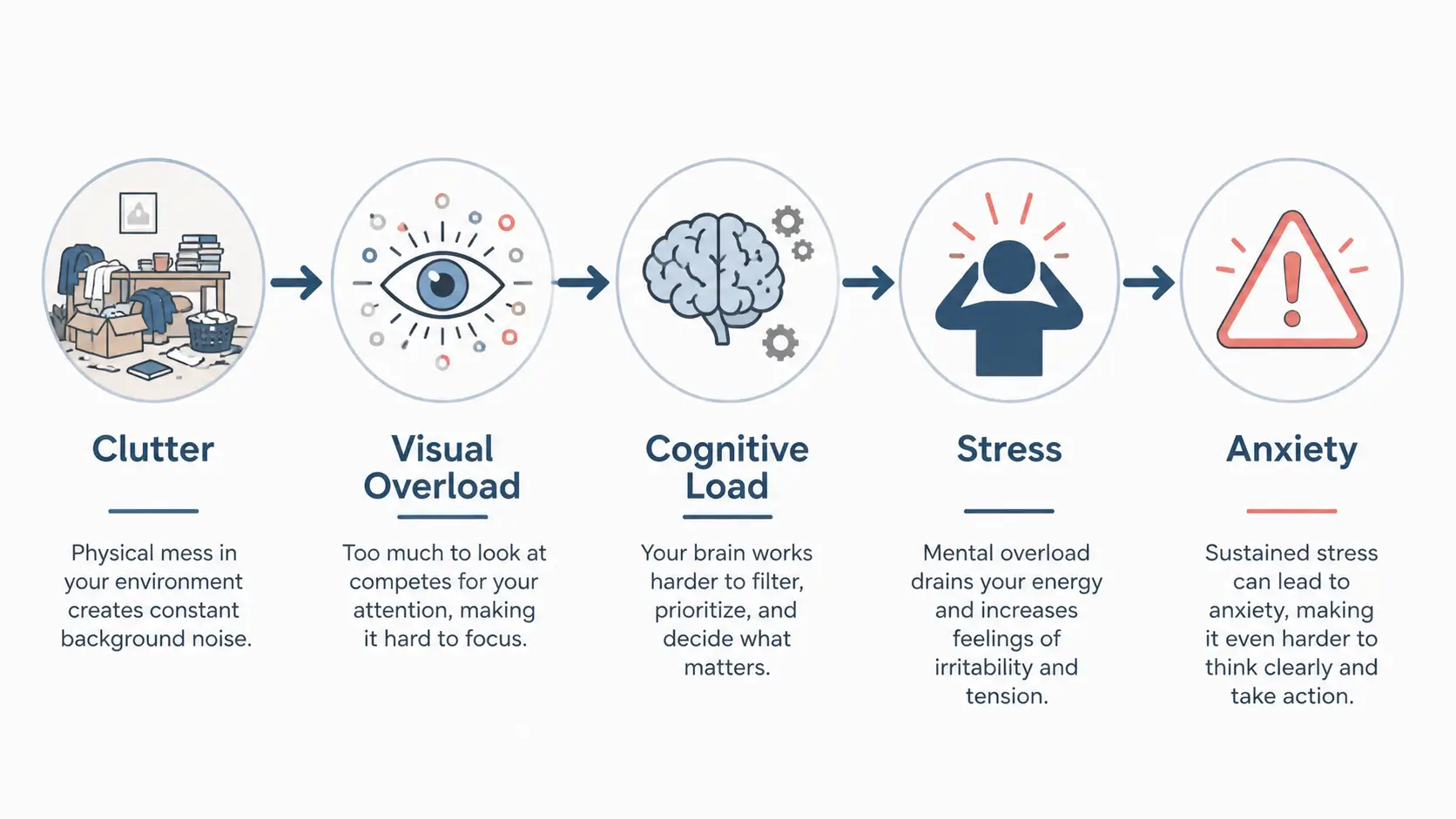
ADHD clutter anxiety is the mental and emotional overwhelm caused by disorganized environments due to how the ADHD brain processes information and stimuli. It reflects a direct link between physical clutter and cognitive load.
ADHD brains struggle with organization, prioritization, and task initiation. When a space is cluttered, it creates constant visual input, which increases mental noise. This leads to stress, guilt, and emotional overwhelm.
The concept “messy space = messy brain” is not literal, but it reflects cognitive reality. A cluttered environment mirrors internal chaos by overwhelming attention systems and reducing the brain’s ability to filter irrelevant stimuli.
Why Clutter Feels Overwhelming for ADHD Brains
Executive Dysfunction and Decision Fatigue
Executive dysfunction makes it difficult to start, organize, and complete tasks. Every object in a cluttered space becomes a decision: keep, move, organize, or discard. This creates decision fatigue, which quickly overloads the brain.
Visual Clutter and Sensory Overload
Visual clutter means too many items are visible at once. For ADHD brains, this creates sensory overload because everything competes for attention.
“Everything visible = everything demanding attention.”
This constant stimulation prevents focus and increases stress.
Clutter Blindness vs Clutter Overwhelm
Clutter blindness is when a person stops noticing mess due to familiarity or cognitive filtering limitations. However, once awareness returns, it often triggers sudden overwhelm.
This creates a contrast:
- Clutter blindness → low awareness
- Clutter overwhelm → high stress response
Does Clutter Make ADHD Anxiety Worse?
Yes, clutter directly increases ADHD-related anxiety by amplifying stress responses and cognitive overload. Clutter elevates cortisol levels, increases mental fatigue, and reinforces avoidance behaviors.
Cause-effect relationship:
- Clutter increases stress → reduces focus → delays action
- Delayed action → more clutter → increased anxiety
This creates a feedback loop where the environment continuously triggers emotional and cognitive strain.
The ADHD Clutter-Anxiety Cycle Explained
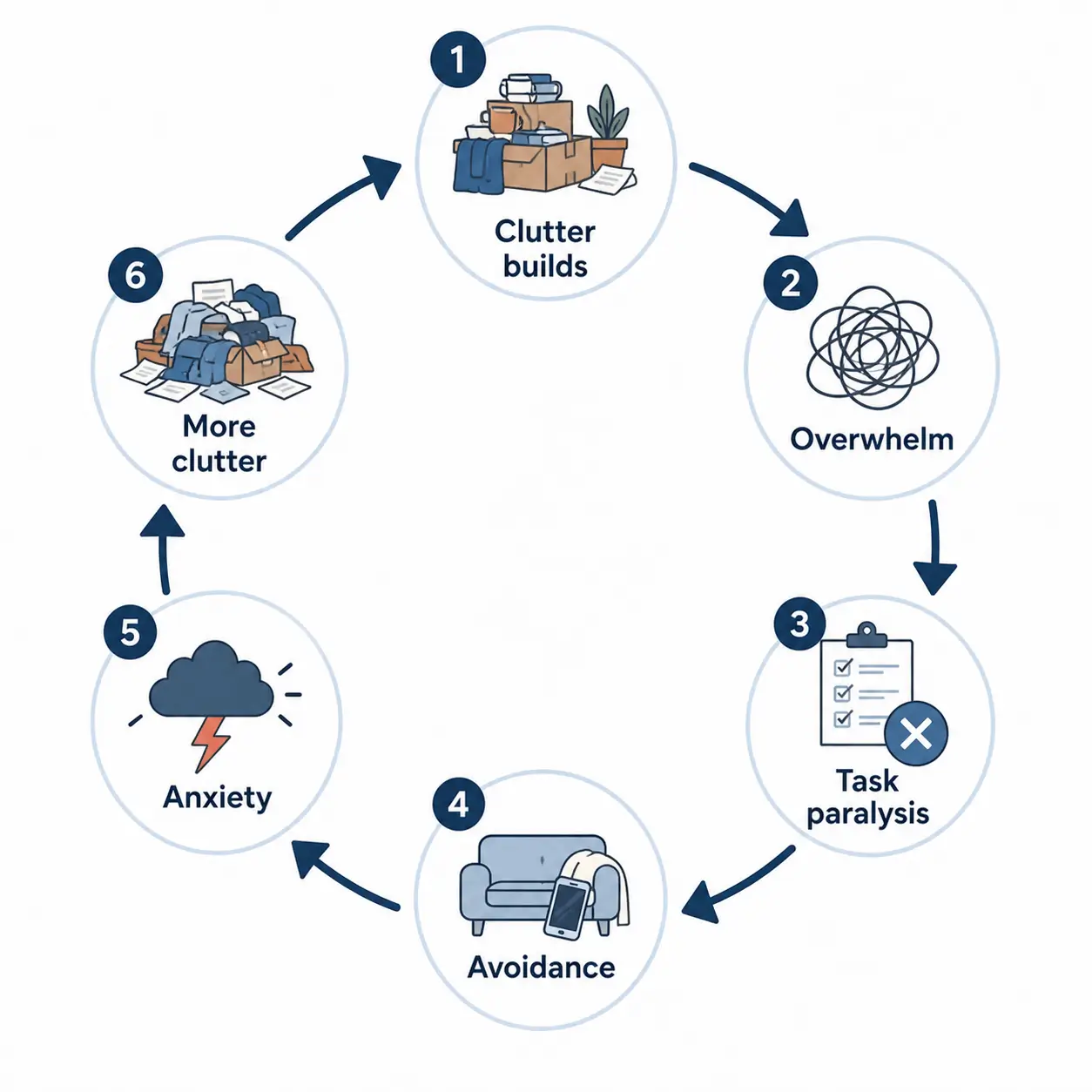
This cycle is a behavioral loop, not laziness.
Step-by-step:
- Clutter builds up
- Brain feels overwhelmed
- Task initiation fails
- Avoidance kicks in
- Anxiety increases
- Clutter worsens
This loop reinforces itself over time, making it harder to break without structured intervention.
Common Struggles (Why People Get Stuck)
People with ADHD often get stuck due to overlapping behavioral and emotional barriers:
- Overwhelm even in small spaces
- Perfectionism (“all or nothing cleaning”)
- Lack of systems in the home
- Emotional attachment to items
- Time blindness (underestimating task duration)
These factors combine to create paralysis rather than action.
Many people experiencing clutter anxiety also struggle with broader life organization, which is why learning how do i get my life in order can provide a structured starting point beyond just cleaning.
How to Stop ADHD Clutter Anxiety (Step-by-Step)
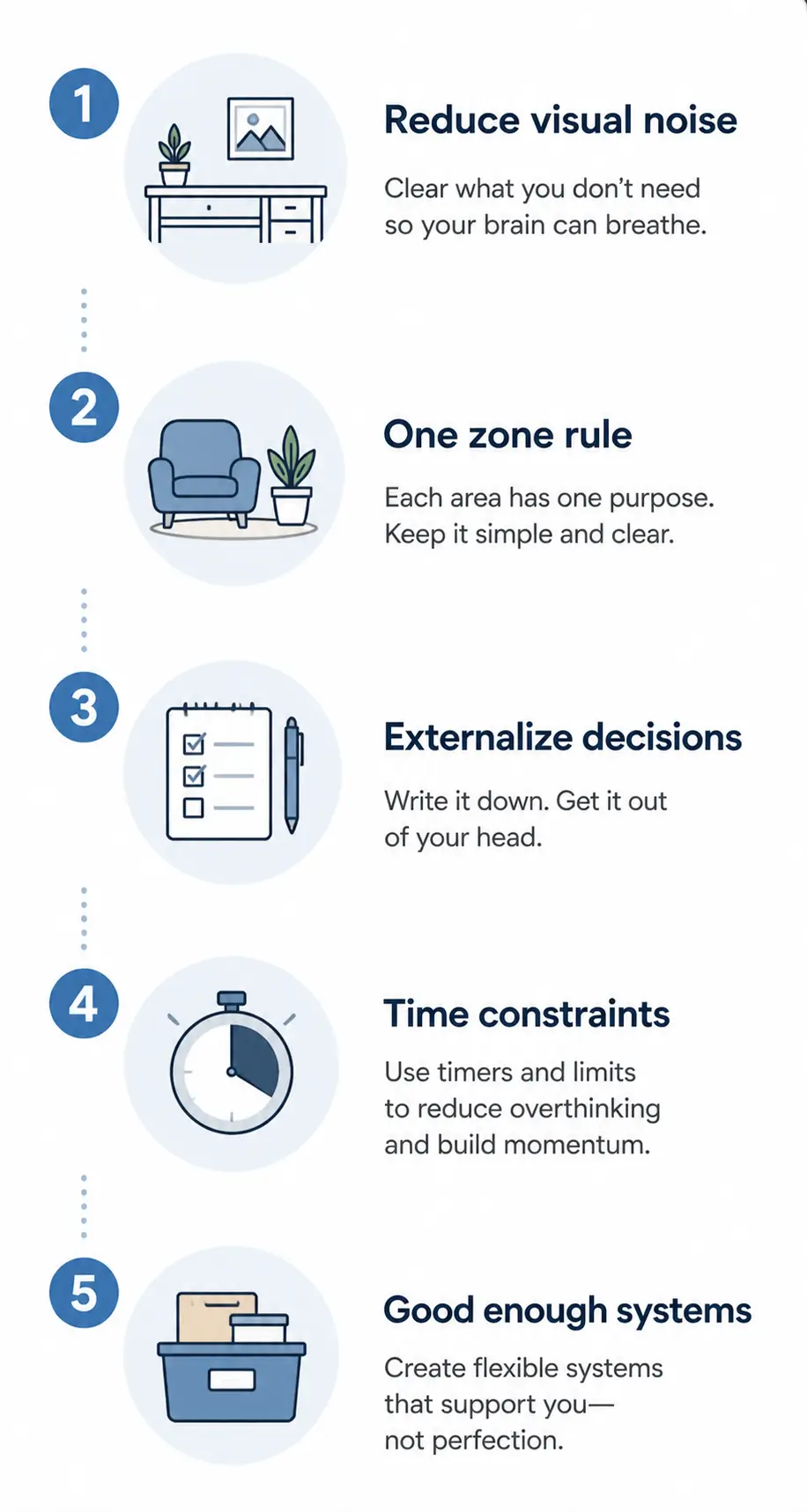
Step 1: Reduce Visual Noise First
Clear visible surfaces before organizing deeper areas. Focus on what your brain sees immediately.
Step 2: Use the “One Zone Rule”
Work on one small area at a time. Avoid thinking about the entire house.
Step 3: Externalize Decisions
Use labeled bins, categories, and simple rules. This reduces cognitive load and decision fatigue.
Instead of trying to fix everything at once, it’s more effective to focus on what you can control, such as one small zone or one simple system at a time.
Step 4: Set Time Constraints (Not Goals)
Use 10–15 minute sessions. Time limits reduce pressure and prevent burnout.
Step 5: Create “Good Enough” Systems
Focus on functionality, not perfection. Systems should be easy to maintain, not ideal.
Practical Decluttering Systems for ADHD
Systems reduce reliance on motivation and increase consistency.
Examples:
- Drop zones for daily items (keys, bags)
- Open storage to reduce “out of sight, out of mind” issues
- Minimalist categorization (limit to 3–5 categories)
The goal is to lower friction and make organization automatic.
Comparison — Motivation vs Discipline in Decluttering
| Factor | Motivation | Discipline |
|---|---|---|
| Driven by | Emotion | System |
| Consistency | Low | High |
| Works for ADHD? | Rarely | More reliable |
| Sustainability | Short-term | Long-term |
Motivation fluctuates and is unreliable for ADHD brains. Discipline, when built through systems and routines, creates consistency without requiring emotional energy.
Small Spaces and ADHD: Why It Feels Worse
Small spaces amplify clutter problems because there is less room for error.
Key insights:
- Clutter accumulates faster
- Visual density increases stress
- Fewer storage options increase chaos
This makes structured systems, vertical storage, and visible organization essential.
Mental & Emotional Factors Behind Clutter Anxiety
ADHD clutter anxiety is not just physical—it is emotional and cognitive.
Key factors:
- Shame and guilt cycles
- Fear of starting tasks
- Overthinking simple decisions
- Emotional attachment to items
These factors increase resistance and delay action, reinforcing the clutter cycle.
Practices like how to journal for self-growth can help process emotional resistance, reduce overwhelm, and build awareness around clutter-related behaviors.
Common Mistakes That Make ADHD Clutter Worse
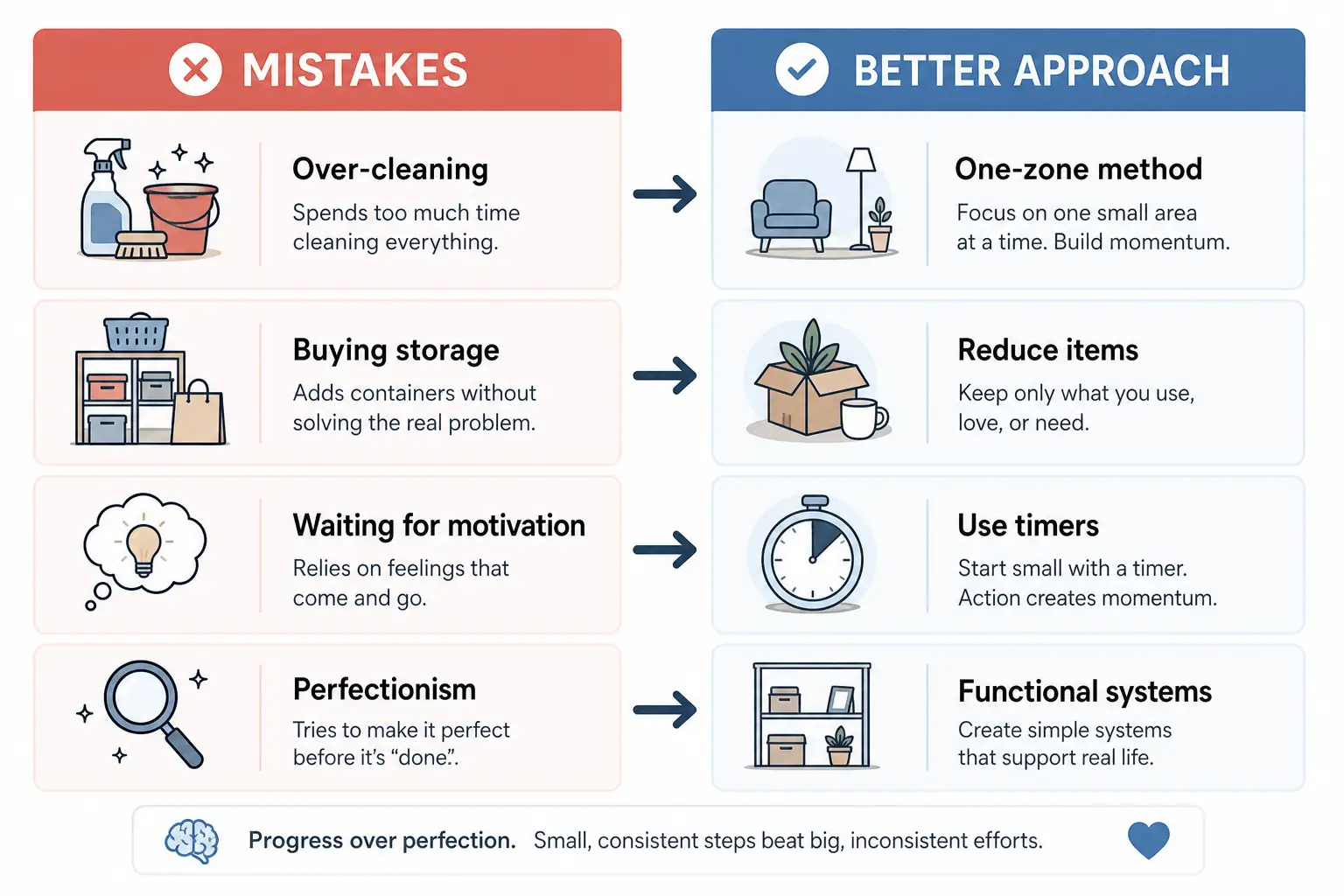
| Mistake | Why It Fails | Better Approach |
|---|---|---|
| Cleaning everything at once | Causes overwhelm | Use one-zone method |
| Buying more storage | Adds complexity | Reduce items first |
| Waiting for motivation | Inconsistent | Use timers & systems |
| Perfectionism | Leads to paralysis | Aim for functional |
These mistakes increase friction instead of reducing it.
What Actually Works vs What Sounds Good
What Works:
- Simple systems
- Repetition
- Low-effort habits
What Sounds Good (But Fails):
- “Just stay organized”
- “Do a full reset”
- “Be more disciplined overnight”
Effective strategies reduce cognitive load, not increase expectations.
Building Sustainable Habits to Prevent Clutter
Long-term success depends on habits, not one-time effort.
Habit framework:
- Anchor habits to existing routines
- Daily reset (5–10 minutes)
- Weekly review system
Consistency builds automatic behavior, reducing reliance on willpower.
Real-Life Scenarios
- Beginner: overwhelmed by a messy house → starts with one surface daily
- Advanced: uses systems + maintenance routines consistently
- Small apartment: relies on visible storage and strict decluttering rules
These scenarios show scalable application based on skill level.
Why People Fail to Stay Consistent (And How to Fix It)
Common problems:
- Burnout from over-cleaning
- Unrealistic expectations
- Lack of structure
Solutions:
- Lower the bar
- Focus on consistency over intensity
- Build repeatable systems
Behavior change requires sustainability, not intensity.
Conclusion
ADHD clutter anxiety is not about being messy—it is about how the brain processes environment, decisions, and stress. Clutter increases cognitive load, triggers anxiety, and reinforces avoidance cycles. By reducing visual overload, using simple systems, and focusing on small, repeatable habits, it is possible to break this loop. The key is consistency over perfection, systems over motivation, and action over avoidance.
FAQs
1. Why does clutter make my ADHD feel worse?
Clutter increases visual distractions and cognitive load, making it harder for the ADHD brain to focus and regulate emotions. This leads to stress, fatigue, and reduced task initiation.
2. How do I start cleaning when I feel overwhelmed?
Start with one small area and use a timer for 10–15 minutes. Reducing the starting barrier helps bypass executive dysfunction and builds momentum.
3. What is ADHD clutter blindness?
ADHD clutter blindness is when a person does not notice clutter until it becomes extreme. This happens due to reduced environmental awareness and attention filtering issues.
4. Can clutter trigger anxiety?
Yes, clutter overstimulates the brain and increases stress hormones like cortisol, which can directly trigger anxiety responses.
5. How do I stay consistent with cleaning habits?
Use simple systems, short time blocks, and repeatable routines. Consistency improves when actions are structured and require minimal decision-making.










One Response