

Table of Contents
ToggleIntroduction
Getting your life in order means creating enough structure, clarity, and emotional stability to handle your responsibilities without feeling constantly overwhelmed. It does not mean becoming perfect or fixing everything at once. It means understanding what feels chaotic, choosing priorities, building simple routines, and taking consistent action in the areas that affect your daily life most.
Many people ask, “How do I get my life in order?” when they feel stuck, behind, burned out, unmotivated, or unsure where to start. The answer is usually not one dramatic life change. It is a process of organizing your mind, time, habits, goals, finances, relationships, health, and environment into a system you can actually maintain.
Quick Summary
- Getting your life in order means reducing chaos by creating clear priorities, routines, and habits.
- Start with the basics: sleep, health, finances, responsibilities, environment, and mental clarity.
- Most people struggle because they try to fix everything at once instead of building small repeatable systems.
- Long-term progress comes from consistency, realistic goals, emotional regulation, and better daily decisions.
What Does It Mean to Get Your Life in Order?
Getting your life in order means creating stability, direction, and responsibility in the areas that shape your daily life. The meaning of “get my life in order” is not perfection, total control, or having every future decision figured out. It means building enough order that life feels manageable instead of chaotic.
Order in life usually includes:
- Having a clear sense of what matters most.
- Managing daily responsibilities instead of avoiding them.
- Building habits that support health, focus, and future progress.
- Reducing unnecessary stress caused by disorganization.
- Creating routines that make life easier to maintain.
A person with their life in order still has problems, setbacks, and difficult emotions. The difference is that they have systems for responding instead of constantly reacting. They know what needs attention, what can wait, and what habits help them stay grounded.
This creates self-trust. When you keep small promises, handle responsibilities, and reduce avoidable chaos, your brain begins to see you as someone who follows through. That self-trust becomes the foundation for bigger changes.
Why Can’t I Get My Life in Order?
You may struggle to get your life in order because you are trying to solve too many problems at once without clear priorities or repeatable systems. When life feels overwhelming, avoidance often becomes the brain’s short-term way to reduce stress, even though it creates more problems later.
Common reasons people struggle include:
- They try to change too many things at once.
- They rely on motivation instead of systems.
- They avoid problems because the problems feel too big.
- They confuse planning with action.
- They lack clear priorities.
- They are dealing with stress, burnout, anxiety, low mood, or decision fatigue.
- Their environment makes good habits harder.
When life feels chaotic, the brain often looks for relief instead of improvement. This can lead to procrastination, scrolling, avoidance, oversleeping, emotional spending, or abandoning routines. These behaviors reduce discomfort temporarily but make life feel more out of control later.
For example, ignoring bills may reduce anxiety for one evening, but it increases financial stress. Avoiding a messy room may feel easier in the moment, but the clutter continues to drain mental energy. The cause-effect pattern is simple: avoidance gives short-term relief but creates long-term pressure.
Getting your life in order begins when you stop asking, “How do I fix everything?” and start asking, “What is the next small action that reduces chaos?”
Start by Identifying What Feels Most Out of Order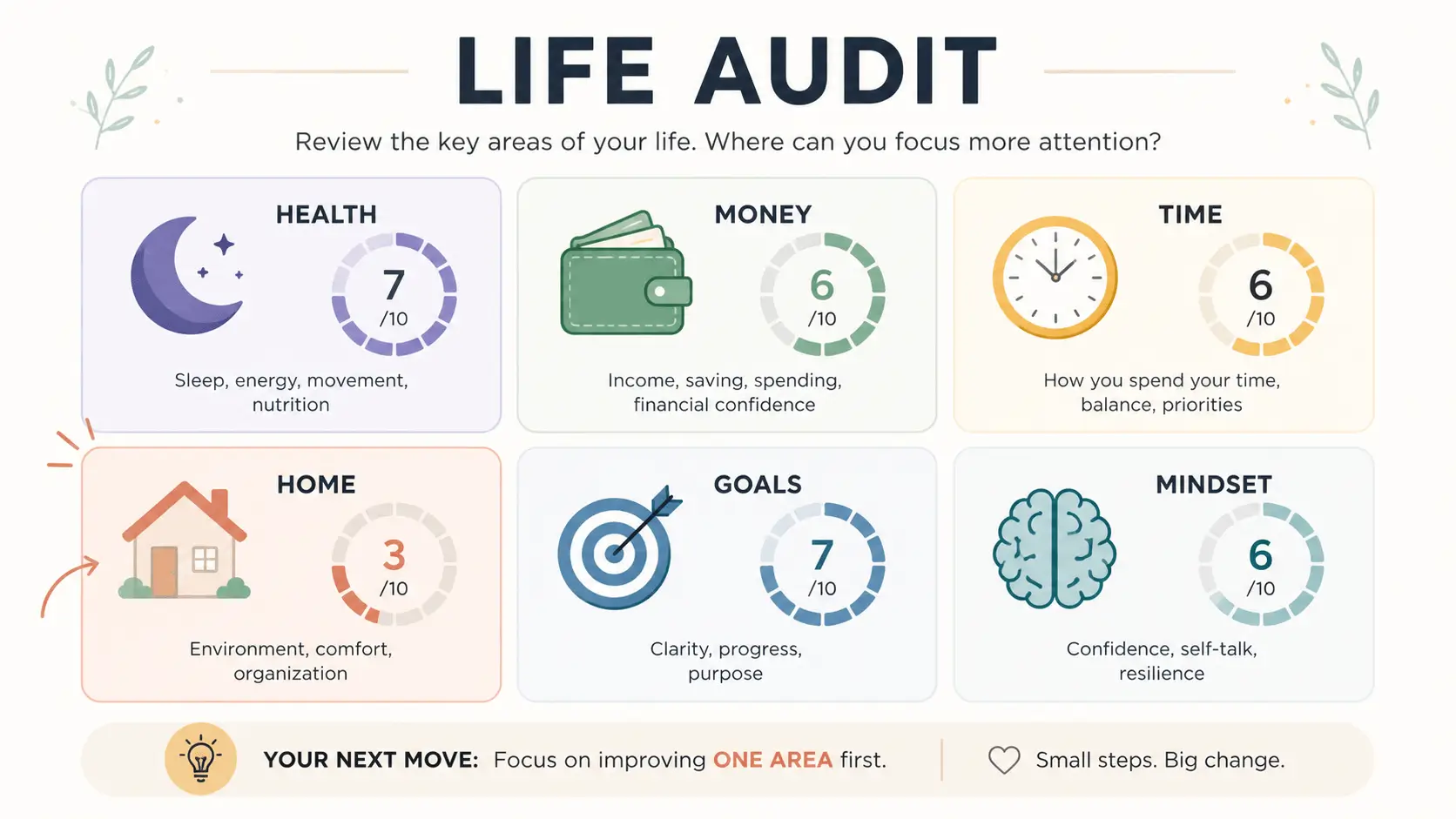
To manage life effectively, first identify which areas feel most unstable, stressful, or neglected. Diagnosis comes before solutions because you cannot create order in life if you do not know where the disorder is coming from.
Review these life areas:
- Health and sleep
- Money and bills
- Work, school, or career
- Home environment
- Relationships
- Mental health and emotional regulation
- Time management
- Personal goals
- Daily habits
- Long-term direction
A simple life audit helps you separate vague anxiety from specific problems. Instead of thinking, “My whole life is a mess,” you may realize the biggest issues are sleep, money, and unfinished work tasks. That makes the solution more practical.
| Life Area | Signs It Feels Out of Order | First Small Fix |
|---|---|---|
| Health | Low energy, poor sleep, skipped meals | Set a consistent sleep and meal routine |
| Money | Missed bills, unclear spending | Track expenses for one week |
| Time | Always rushed or behind | Plan tomorrow the night before |
| Home | Clutter, mess, avoidance | Clean one visible area daily |
| Goals | No direction or follow-through | Choose one 30-day goal |
| Mindset | Overthinking, self-criticism | Write down worries and next actions |
The goal is not to judge yourself. The goal is to see reality clearly enough to take action.
How to Get Your Life in Order Step by Step
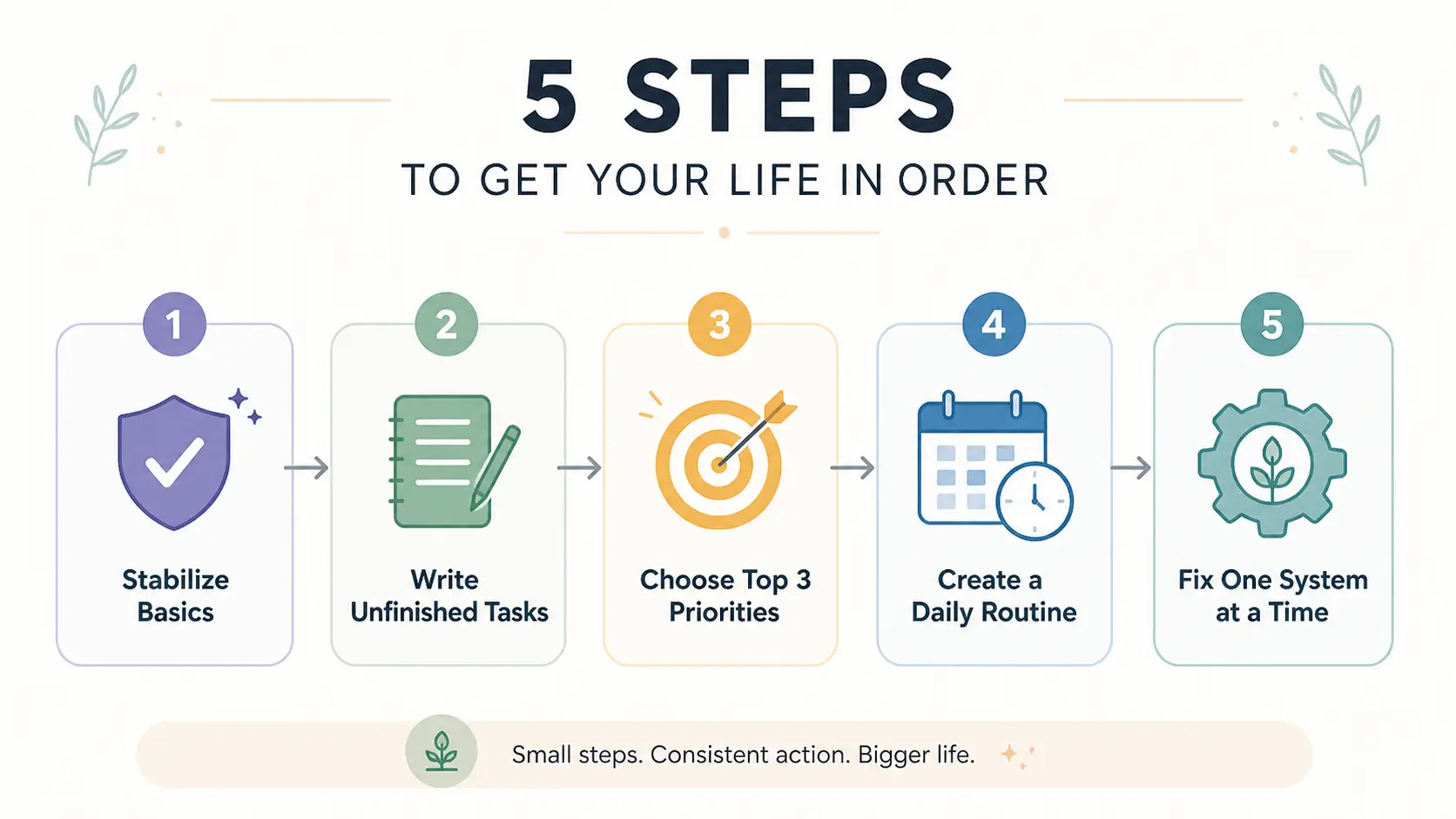
Getting your life in order works best when you follow a simple sequence: stabilize your basics, capture unfinished responsibilities, choose priorities, create routines, and improve one life system at a time. This prevents overwhelm and turns personal change into a repeatable process.
Step 1: Stabilize Your Basics First
Start with sleep, food, movement, hygiene, health needs, and your living space. These basics affect your energy, attention, emotional control, and ability to make good decisions.
Focus on:
- Sleeping and waking at consistent times.
- Eating regular meals.
- Moving your body daily, even briefly.
- Maintaining basic hygiene.
- Taking medication or addressing health needs.
- Cleaning enough of your space to function.
Basic routines reduce mental load. When your body is exhausted or your environment is chaotic, discipline becomes harder because your brain has fewer resources for planning, focus, and self-control.
Step 2: Write Down Everything That Feels Unfinished
Write down every task, bill, appointment, deadline, worry, decision, and personal goal that is taking up mental space. Do not organize it at first. Capture it.
Include:
- Tasks you keep delaying.
- Bills or financial obligations.
- Appointments to schedule.
- Work, school, or family deadlines.
- Decisions you need to make.
- Worries that keep repeating.
- Goals you have not started.
Unwritten responsibilities stay active in your mind and create background stress. Writing them down turns vague anxiety into visible tasks. Once something is visible, it becomes easier to prioritize.
Step 3: Choose Your Top Three Priorities
Choose three areas that matter most for the next 30 days. These may include health, money, work, education, home, relationships, or emotional stability.
Trying to fix ten areas at once creates overload. Choosing three priorities gives your attention a clear direction.
For example:
- Health: sleep by 11 p.m. and walk daily.
- Money: track spending and pay urgent bills.
- Home: clean one area for 10 minutes each day.
This creates focus. You are not ignoring the rest of your life; you are choosing the first areas that will reduce the most stress.
Step 4: Create a Simple Daily Routine
A daily routine gives your day structure without requiring constant decision-making. It should be simple enough to repeat on low-energy days.
Example routine:
- Wake up at a consistent time.
- Make your bed or clear one space.
- Review your top three tasks.
- Complete one important responsibility before distractions.
- Move your body for 10–20 minutes.
- Spend 10 minutes resetting your space.
- Plan tomorrow before bed.
A useful routine usually includes a morning reset, a responsibility block, basic cleaning, movement, planning, and an evening shutdown. The purpose is not to control every minute. The purpose is to reduce friction and make good decisions easier.
Step 5: Fix One Life System at a Time
A system is a repeatable way of handling a recurring responsibility. Systems reduce the need to rely on willpower because the next action is already decided.
Important life systems include:
- Calendar system
- Budget system
- Cleaning system
- Meal system
- Exercise system
- Goal tracking system
For example, a budget system may include checking your account every Friday, tracking expenses weekly, and setting bills to automatic payment. A cleaning system may include laundry on Sundays, dishes every night, and a 10-minute reset before bed.
Once a system becomes familiar, it makes the right action easier to repeat.
How to Get Your Life Together Checklist
Use this checklist to get your life together by turning vague stress into clear action. Start with the items that reduce immediate pressure, then build routines that support long-term stability.
- Clear your physical space enough to function.
- Create a basic sleep schedule.
- List all urgent responsibilities.
- Pay or schedule important bills.
- Make medical, financial, or work-related appointments.
- Choose three main priorities for the next 30 days.
- Build a simple morning and evening routine.
- Remove one major distraction.
- Track spending for seven days.
- Plan meals or basic groceries.
- Set one realistic fitness or movement habit.
- Create a weekly reset day.
- Identify one relationship that needs attention.
- Reduce commitments that drain energy.
- Review progress every Sunday.
This checklist works because it combines immediate relief with system building. It helps you handle what is urgent while creating routines that prevent the same problems from repeating.
How to Get Back on Top of Your Life After Falling Behind
To get back on top of your life after falling behind, start with damage control instead of total transformation. Handle urgent consequences first, restore basic routines, and rebuild self-trust through small promises kept.
When you feel behind, shame can make everything harder. You may compare your timeline to other people’s lives or believe you need to fix everything immediately. That mindset creates more pressure and less action.
Use this recovery method:
- List what is urgent.
- List what is important but not urgent.
- Choose one task that removes immediate pressure.
- Do it before planning more.
- Repeat daily until stability returns.
A minimum viable routine can help when energy is low. This means choosing the smallest version of daily stability:
- Brush your teeth.
- Eat one proper meal.
- Clean one surface.
- Reply to one important message.
- Complete one urgent task.
- Prepare for tomorrow.
Recovery is not about proving you are productive. It is about reducing chaos one action at a time.
Motivation vs Discipline: What Actually Helps You Get Your Life in Order?
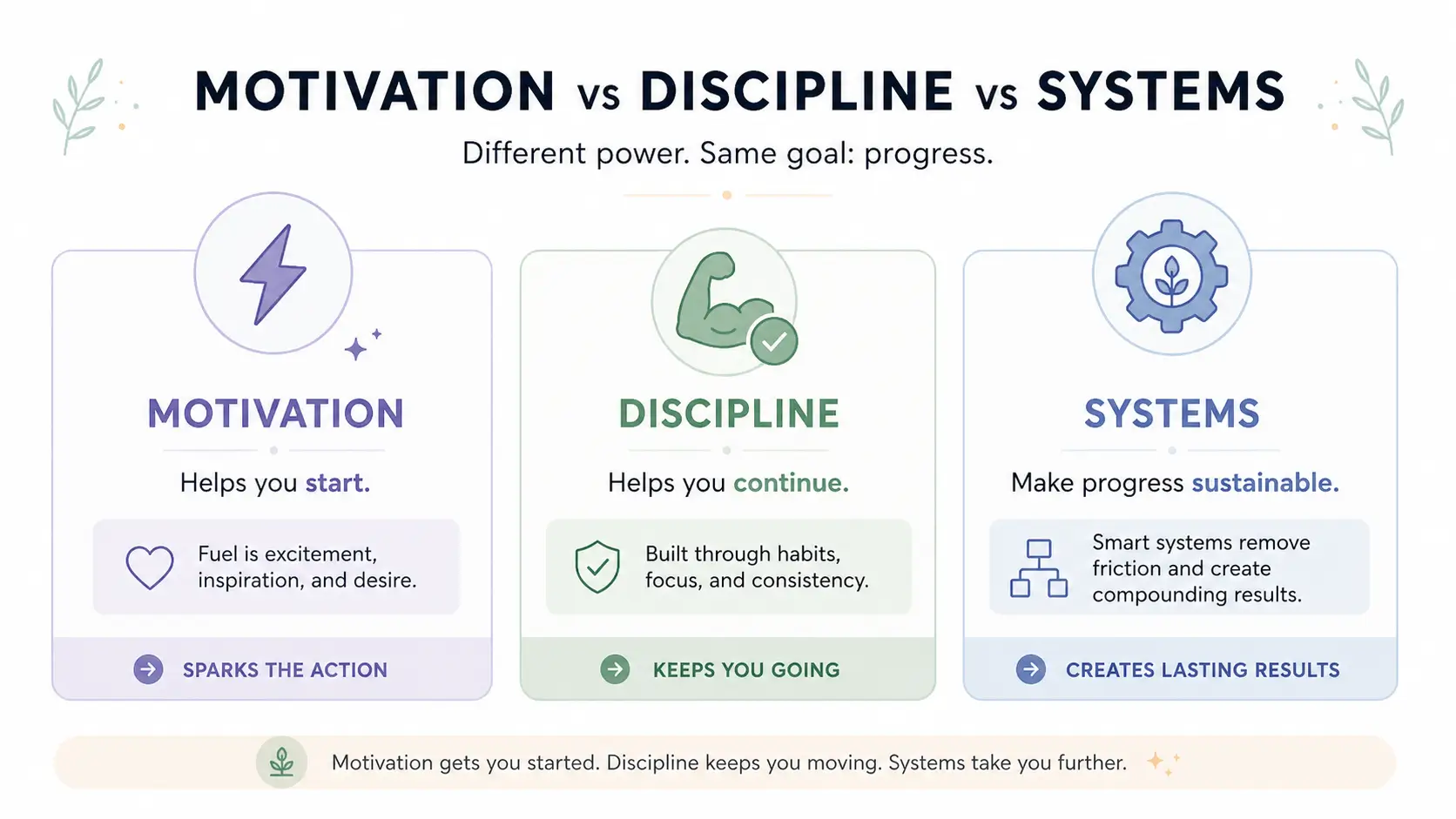
Motivation helps you start, discipline helps you continue, but systems make getting your life in order sustainable. Motivation is emotional, discipline is behavioral, and systems are structural. Long-term change works best when all three support each other.
| Concept | What It Means | Strength | Limitation |
|---|---|---|---|
| Motivation | Feeling inspired to act | Helps you start | Comes and goes |
| Discipline | Acting despite low motivation | Builds self-trust | Can fail under stress |
| Systems | Pre-planned routines and structures | Makes consistency easier | Requires setup |
| Identity | Seeing yourself as someone who follows through | Supports long-term change | Takes time to build |
Motivation is useful, but it is unreliable because mood, energy, stress, and environment change daily. Discipline is stronger because it helps you act when you do not feel like it. However, discipline alone can break down during burnout or high stress.
Systems make discipline easier. A calendar reminder, automatic bill payment, prepared workout clothes, or planned evening routine removes some of the effort required to begin.
The main takeaway: motivation helps you begin, discipline helps you continue, but systems make progress sustainable.
Consistency vs Intensity: Why Small Habits Work Better
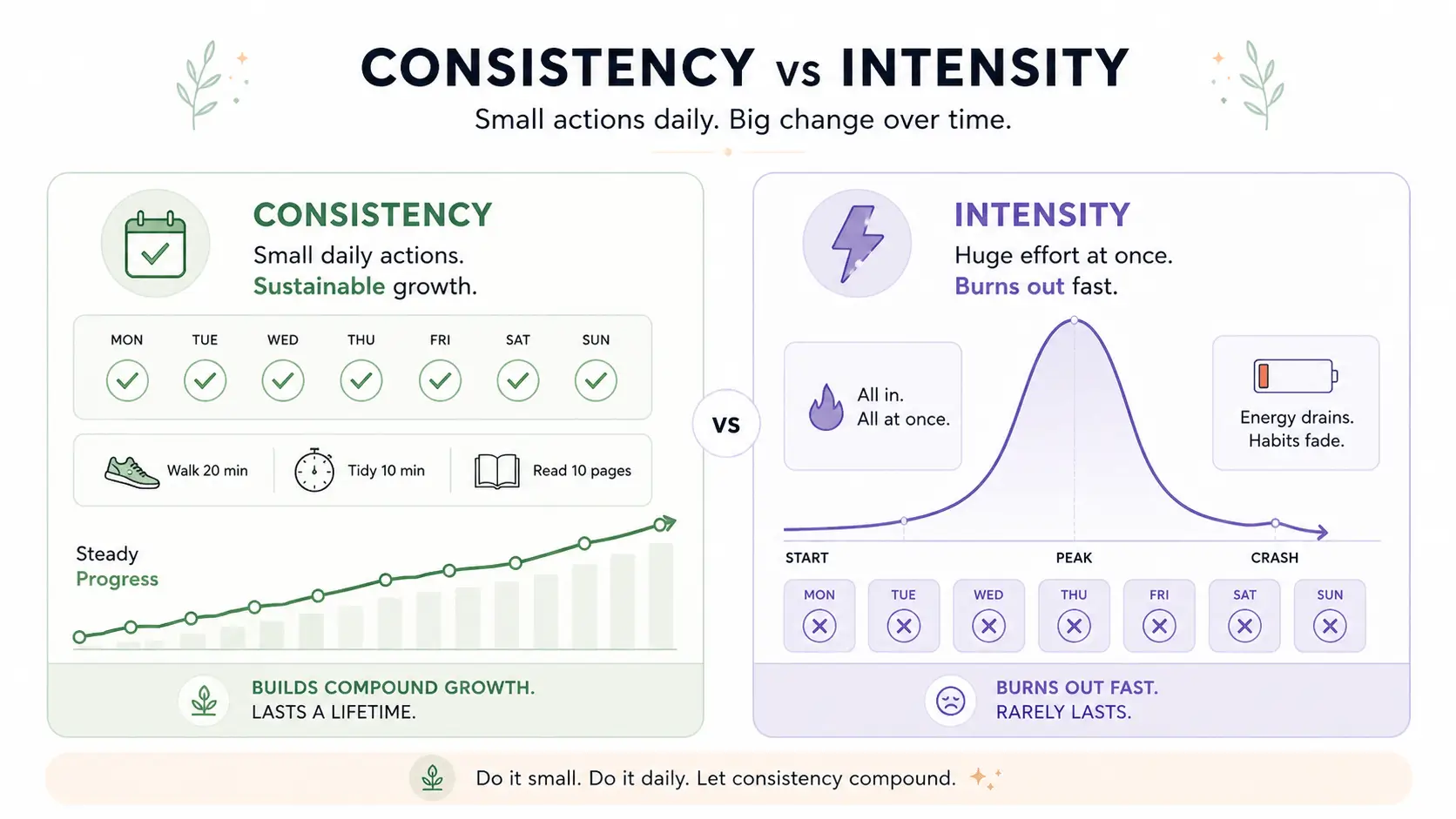
Consistency works better than intensity because small habits are easier to repeat, easier to recover from, and less likely to create burnout. Extreme change may feel exciting at first, but steady routines are more effective for long-term order in life.
| Approach | Example | Result |
|---|---|---|
| Intensity | Cleaning the whole house in one exhausting day | Short-term improvement, high burnout risk |
| Consistency | Cleaning for 10 minutes daily | Slower but more sustainable progress |
| Intensity | Exercising hard for two weeks | Possible fatigue or quitting |
| Consistency | Walking daily for 20 minutes | Easier habit formation |
| Intensity | Planning your entire future at once | Overwhelm |
| Consistency | Choosing one monthly focus | Clearer action |
People often fail because they attempt extreme change when they are already tired. They create routines that require perfect energy, perfect discipline, and perfect circumstances. When real life interrupts, the routine collapses.
Small habits lower resistance. When an action feels easy enough to repeat, it becomes part of your identity and routine. A 10-minute cleaning habit may look small, but repeated daily it changes your environment and reinforces self-trust.
How to Manage Life Without Feeling Overwhelmed
To manage life without feeling overwhelmed, use simple systems that organize your time, tasks, decisions, and repeated responsibilities. Overwhelm increases when everything is scattered, unclear, or treated as equally urgent.
Practical strategies include:
- Use one calendar for appointments and deadlines.
- Keep one task list instead of scattered notes.
- Plan your day around three important tasks.
- Time-block difficult work.
- Create routines for repeated responsibilities.
- Use reminders instead of relying on memory.
- Reduce unnecessary decisions.
- Say no to commitments that do not match your priorities.
When your responsibilities are scattered, your brain treats everything as equally urgent. This creates stress and avoidance. A simple management system gives your brain clear next steps.
For example, instead of remembering bills, appointments, workouts, and errands mentally, put them into a calendar and weekly review. This reduces cognitive load and makes action easier.
Managing life is not about doing more. It is about making the important things visible, scheduled, and repeatable.
Common Problems That Keep Your Life Out of Order
Common problems that keep life out of order include procrastination, lack of motivation, inconsistency, overthinking, burnout, and fear of failure. Each problem has a cause, a practical fix, and a prevention strategy.
Procrastination
Procrastination happens when a task feels too big, boring, unclear, or emotionally uncomfortable. The brain avoids the task to reduce discomfort.
How to fix it:
- Break the task into a two-minute first step.
- Remove distractions.
- Set a timer for 10 minutes.
- Focus on starting, not finishing.
How to prevent it:
- Define tasks clearly.
- Schedule hard tasks earlier.
- Create deadlines before the real deadline.
Lack of Motivation
Lack of motivation often happens when goals feel disconnected from values, progress feels too slow, or energy is low from stress and poor routines.
How to fix it:
- Reconnect the goal to a personal reason.
- Make the action smaller.
- Track visible progress.
How to prevent it:
- Build routines that do not depend on mood.
- Celebrate small wins.
- Protect sleep and recovery.
Inconsistency
Inconsistency happens when a habit is too ambitious, has no clear cue, or one missed day turns into giving up.
How to fix it:
- Lower the habit difficulty.
- Attach it to an existing routine.
- Use a “never miss twice” rule.
How to prevent it:
- Prepare for bad days.
- Create minimum versions of habits.
- Review weekly instead of judging daily.
Overthinking
Overthinking happens when you are trying to avoid mistakes, uncertainty, or failure. It feels productive, but it often delays action.
How to fix it:
- Set a decision deadline.
- Choose the next useful action.
- Limit research and planning time.
How to prevent it:
- Accept imperfect action.
- Measure progress by behavior, not certainty.
Burnout
Burnout happens when there is too much pressure, too little recovery, and unrealistic expectations. It makes discipline harder because your mental and physical resources are depleted.
How to fix it:
- Reduce nonessential commitments.
- Restore sleep and downtime.
- Focus on maintenance before growth.
How to prevent it:
- Schedule rest.
- Avoid all-or-nothing productivity.
- Track energy, not just output.
Fear of Failure
Fear of failure happens when mistakes feel connected to shame, rejection, or proof that you are not capable.
How to fix it:
- Treat failure as feedback.
- Start with low-risk actions.
- Separate your identity from outcomes.
How to prevent it:
- Build self-trust through effort-based goals.
- Focus on learning instead of proving yourself.
Science-Backed Insights About Behavior Change
Behavior change works best when habits are clear, easy, rewarding, and supported by the environment. People are more likely to repeat behaviors when the cue is obvious, the action is manageable, and the reward reinforces progress.
Practical behavior change concepts include:
- Habits are easier when they have a clear cue, routine, and reward.
- Environment design can reduce reliance on willpower.
- Small wins increase confidence and future action.
- Stress reduces planning ability and increases avoidance.
- Identity-based habits work because people repeat behaviors that match how they see themselves.
Practical applications:
- Put workout clothes where you can see them.
- Keep your phone away during focus blocks.
- Use automatic bill payments where possible.
- Prepare tomorrow’s first task before bed.
- Track habits visually to reinforce progress.
The reason environment matters is that behavior is often triggered by what is visible, easy, and familiar. If your phone is beside you during work, distraction becomes easier. If your walking shoes are by the door, movement becomes easier.
Small wins matter because they create evidence. Each completed action tells your brain, “I can follow through.” Over time, this supports identity-based habits: you begin to see yourself as organized, consistent, responsible, or disciplined.
What Actually Works vs What Sounds Good
What actually works is usually simple, repeatable, and realistic. What sounds good is often extreme, rigid, or dependent on motivation. Sustainable self-improvement comes from systems that match real life.
| What Sounds Good | Why It Often Fails | What Actually Works |
|---|---|---|
| “Change your whole life this week” | Creates pressure and burnout | Improve one area at a time |
| “Just be more disciplined” | Ignores stress and environment | Build systems that support discipline |
| “Wake up at 5 a.m.” | Does not fit every lifestyle | Create a consistent sleep schedule |
| “Plan every minute” | Becomes rigid and unrealistic | Plan priorities and flexible routines |
| “Wait until you feel motivated” | Motivation is inconsistent | Start with small repeatable actions |
A common self-improvement mistake is confusing intensity with commitment. You do not need a perfect morning routine, a complex planner, or a complete personality transformation. You need a few habits that reduce stress and are easy enough to repeat.
The best system is one you can maintain on normal days, busy days, and low-energy days.
Building a Sustainable Routine for Order in Life
A sustainable routine creates order in life by giving repeated responsibilities a regular place in your day or week. The goal is not to order your life perfectly, but to reduce chaos through predictable habits and systems.
Daily routine ideas:
- Morning clarity: review priorities.
- Midday focus: complete the most important task.
- Evening reset: clean, plan, and prepare.
- Digital reset: clear messages, notes, and reminders.
Weekly routine ideas:
- Review money.
- Plan meals or groceries.
- Clean key areas.
- Check appointments.
- Reflect on wins and problems.
- Adjust goals for the next week.
A weekly reset prevents small problems from becoming major stressors. It gives you a regular checkpoint for your responsibilities.
For example, reviewing money once a week can prevent missed bills. Planning groceries can reduce impulsive food spending. Checking appointments can prevent last-minute panic. These routines are simple, but they create stability because they repeat.
Systems are more reliable than memory. When important responsibilities have a place in your schedule, your mind has less to carry.
How to Find Direction When You Feel Lost
You can find direction when you feel lost by taking useful action before demanding a perfect life purpose. Purpose often becomes clearer through responsibility, skills, service, curiosity, contribution, and real-world experience.
You do not need to know your complete life purpose before improving your life. In fact, waiting for perfect clarity can become another form of avoidance. Direction often comes from action, not endless reflection.
Values can guide your next steps. Instead of asking, “What is my entire purpose?” ask questions that create movement:
- What problems do I keep wanting to solve?
- What kind of person do I want to become?
- What responsibilities have I been avoiding?
- What would make my life feel more stable in 30 days?
- What actions would I respect myself for taking?
The question “how to find my life purpose” is important, but it becomes easier to answer when your daily life has enough structure. Sleep, health, environment, money, and habits create the mental space needed for deeper reflection.
Direction is not always a revelation. Sometimes it is the result of doing the next responsible thing until a clearer path appears.
Real-Life Examples of Getting Your Life in Order
Getting your life in order looks different depending on your responsibilities, energy, and starting point. The process should adapt to your lifestyle instead of forcing one rigid formula.
Examples include:
- A student falling behind starts by organizing deadlines, sleep, and study blocks.
- A working adult overwhelmed by bills starts with expense tracking and automatic payments.
- A parent with no personal time creates a 15-minute evening reset routine.
- Someone burned out reduces commitments before adding new goals.
- A person feeling lost starts with health, environment, and one skill-building habit.
A realistic “how I got my life in order” process usually begins with small practical changes, not dramatic transformation. Someone may start by cleaning their room, fixing their sleep schedule, paying overdue bills, or making a weekly plan.
Beginners should focus on stability. Advanced readers may focus on optimizing routines, improving productivity systems, or aligning goals with values. Both levels require the same foundation: clear priorities, repeatable actions, and honest review.
When Getting Your Life in Order Also Requires Support
Getting your life in order may require support when mental health, safety, addiction, financial crisis, trauma, or chronic burnout makes daily life feel unmanageable. Self-improvement systems can help, but they are not a replacement for urgent or professional support.
Support may be important if you are dealing with:
- Persistent hopelessness
- Severe anxiety or depression
- Financial crisis
- Addiction
- Unsafe relationships
- Chronic burnout
- Thoughts of self-harm
If life feels unmanageable because of mental health struggles, trauma, addiction, or thoughts of self-harm, getting support from a qualified professional, trusted person, or crisis service can be an important first step. Self-improvement systems are helpful, but they are not a replacement for urgent support when safety or mental health is at risk.
Asking for help is not a failure of discipline. It is a responsible action when the problem requires more than personal routines.
Conclusion
Getting your life in order starts with small, honest actions that reduce chaos and rebuild self-trust. You do not need to fix your entire life at once. Start by stabilizing your basics, identifying your biggest stress points, choosing a few priorities, and building simple routines you can repeat.
The real goal is not perfection. It is creating enough order in life that you can think clearly, act consistently, recover from setbacks, and move toward the kind of person you want to become.
FAQs
How do I get my life in order when everything feels overwhelming?
Start by listing everything that feels unfinished, then choose only one urgent task and one basic routine to improve today. Overwhelm gets worse when every problem stays vague. Small visible progress helps your brain feel safer and more capable.
Why do I struggle with consistency?
You may struggle with consistency because your habits are too big, your routines are unclear, or you rely too much on motivation. Make the habit smaller, attach it to something you already do, and focus on repeating it rather than doing it perfectly.
How do I stay disciplined long-term?
Long-term discipline comes from systems, not constant willpower. Use routines, reminders, environment design, and realistic goals so the right actions become easier to repeat even when motivation is low.
What should I fix first when getting my life together?
Start with the area causing the most daily stress or the area that supports everything else. For many people, that means sleep, money, home environment, work responsibilities, or mental health.
What if I lose motivation after a few days?
Lower the difficulty instead of quitting. A smaller version of the habit keeps momentum alive. For example, do five minutes of cleaning, one page of reading, or a short walk instead of abandoning the routine completely.
How long does it take to get your life in order?
It depends on your starting point, responsibilities, and support system. You may feel more stable within a few days by handling urgent tasks, but deeper change usually comes from weeks or months of consistent routines.
Can I get my life in order without knowing my life purpose?
Yes. You can create order before you fully understand your purpose. In many cases, purpose becomes clearer after you improve your health, environment, habits, and daily responsibilities.
How do I get my life back in order after a bad period?
Begin with recovery, not self-criticism. Handle urgent responsibilities, restore basic routines, reduce unnecessary pressure, and rebuild confidence through small promises you can keep.










4 Responses