
Introduction
Empathy is the ability to understand and emotionally connect with another person’s feelings, experiences, and perspective. The empathy meaning goes beyond simply hearing words. It involves recognizing emotions, validating experiences, and responding with emotional awareness. In relationships, empathy affects communication, trust, emotional safety, and long-term connection. People who feel understood are more likely to open up honestly and communicate calmly during difficult moments. Understanding what empathy is also helps explain why emotionally healthy relationships often rely on active listening and emotional support. The good news is that empathy is not just a personality trait. Empathy in a relationship is a practical skill that can be learned and strengthened through consistent habits and emotional awareness.
Quick Summary Block
- Empathy helps people feel emotionally safe, understood, and respected in relationships.
- Strong empathy improves communication, reduces conflict, and builds trust over time.
- Relationships often struggle when partners listen to respond instead of listening to understand.
- Empathy can be developed through emotional awareness, active listening, and consistent behavioral habits.
What Is Empathy and How Does It Work in Relationships?
The Meaning of Empathy in Human Connection
Empathy is the ability to understand another person’s emotions while recognizing their emotional experience from their perspective. Defining empathy in relationships means understanding both emotional reactions and emotional needs.
There are three main types of empathy:
| Type of Empathy | Meaning | Relationship Impact |
|---|---|---|
| Emotional Empathy | Feeling another person’s emotions | Creates emotional closeness |
| Cognitive Empathy | Understanding another person’s perspective | Improves communication |
| Compassionate Empathy | Understanding emotions and taking supportive action | Builds trust and support |
Many people confuse empathy with sympathy. Sympathy acknowledges someone’s pain, while empathy emotionally connects with it. Showing empathy meaningfully involves listening without judgment and making another person feel emotionally understood.
Examples of compassionate empathy include:
- Comforting a stressed partner without immediately offering solutions
- Listening calmly during emotional conversations
- Supporting a partner emotionally after a difficult day
- Validating feelings during conflict instead of dismissing them
Emotional understanding strengthens intimacy because people naturally feel safer around those who understand their emotional state without criticism.
What Does Empathy Feel Like in Real Life?
Feeling empathy often creates a sense of emotional relief, validation, and connection. What does empathy feel like in daily life? It usually feels like being emotionally seen, heard, and understood without needing to defend your emotions.
For example:
- After a stressful day at work, a partner calmly listens instead of minimizing frustration
- During arguments, one person acknowledges the other’s feelings before reacting defensively
- During emotional vulnerability, someone responds with patience instead of judgment
Empathy reduces emotional isolation because it reassures people that their emotions matter. Emotional validation also lowers defensiveness and increases openness during communication.
Why Is Empathy Important in Relationships?
Empathy Builds Emotional Safety and Trust
Empathy is important in relationships because emotional safety determines how openly people communicate. When people feel understood, they become more comfortable expressing fears, needs, and vulnerabilities.
Empathy in romantic relationships creates psychological safety by:
- Reducing fear of judgment
- Encouraging honest communication
- Strengthening emotional trust
- Lowering emotional defensiveness
People are more likely to stay emotionally connected when they believe their emotions will be respected rather than criticized.
Empathy Improves Communication During Conflict
Most relationship conflicts escalate because people react emotionally before fully understanding each other. Empathy improves communication by slowing emotional reactions and increasing active listening.
Empathetic communication includes:
- Listening without interrupting
- Reflecting emotions back calmly
- Asking clarifying questions
- Responding instead of reacting impulsively
Empathy also improves emotional regulation during conflict. Instead of focusing only on being correct, empathetic partners focus on understanding emotional experiences.
Motivation vs Discipline in Communication
| Reactive Communication | Empathetic Communication |
|---|---|
| Focuses on winning arguments | Focuses on understanding |
| Interrupts emotions | Validates emotions |
| Creates defensiveness | Creates calm discussion |
| Escalates conflict | Supports conflict resolution |
Empathy Strengthens Long-Term Relationship Satisfaction
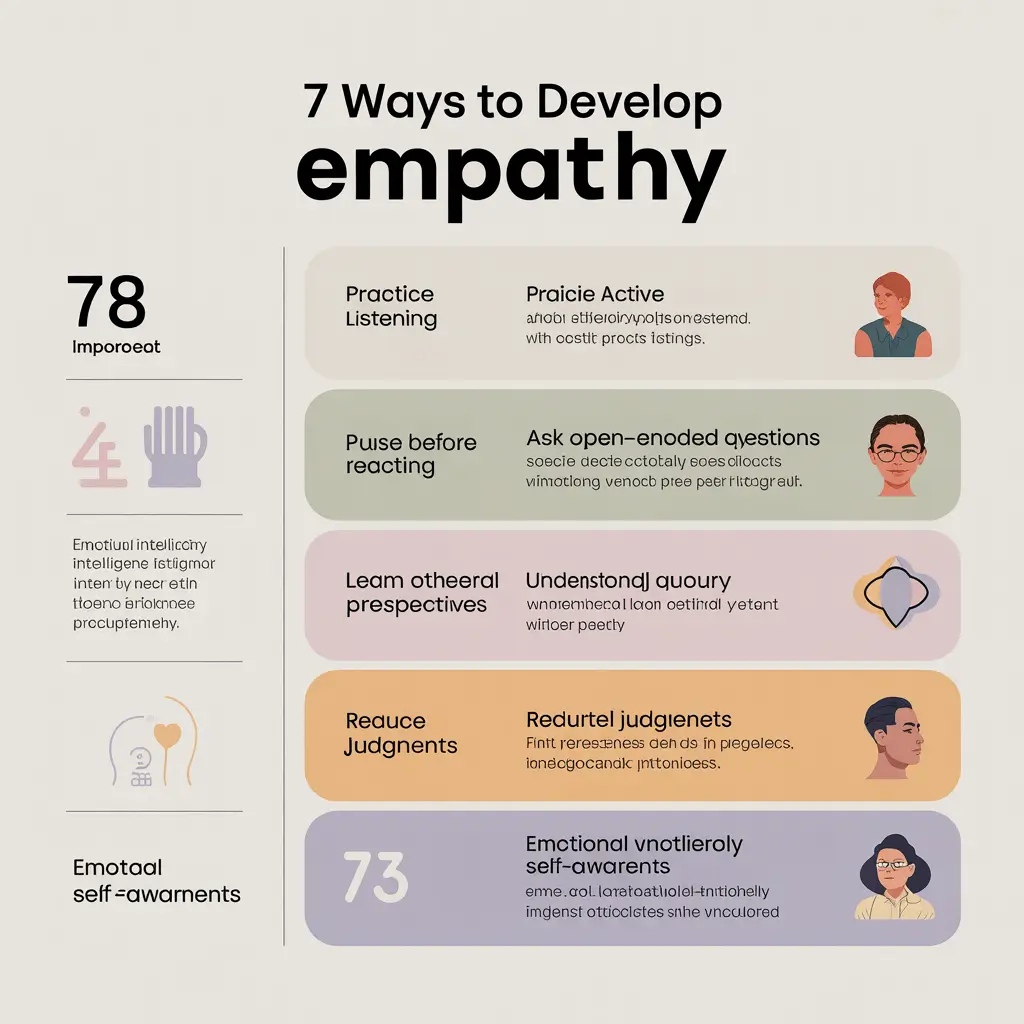
Long-term relationship stability depends heavily on emotional consistency. Empathy supports affection, emotional support systems, and mutual understanding over time.
The emotional process often works like this:
Empathy → Trust → Emotional Intimacy → Stronger Emotional Bond
Relationships with strong empathy tend to recover more effectively from stress, misunderstandings, and life challenges because emotional connection remains stable even during difficult periods.
The Psychology Behind Empathy in Relationships
Why Humans Need Emotional Validation
Humans have a psychological need to feel emotionally understood. Attachment theory explains that emotional security helps people feel safe within close relationships.
Why is empathy important in relationships psychology? Because emotional validation directly affects nervous system regulation and emotional stability.
When people feel emotionally reassured:
- Stress responses decrease
- Emotional defensiveness lowers
- Trust increases
- Communication improves
Emotional reassurance creates a sense of stability that strengthens connection and reduces anxiety within relationships.
Why People Struggle With Empathy
Many people struggle with empathy because emotional awareness is often affected by stress, burnout, and learned communication patterns.
Common barriers include:
- Emotional burnout
- Chronic stress and overwhelm
- Defensive communication habits
- Childhood conditioning
- Fear of vulnerability
- Ego-driven communication
People who become emotionally unavailable are often protecting themselves from discomfort, rejection, or emotional exposure. Understanding these barriers helps explain behavior without automatically blaming individuals.
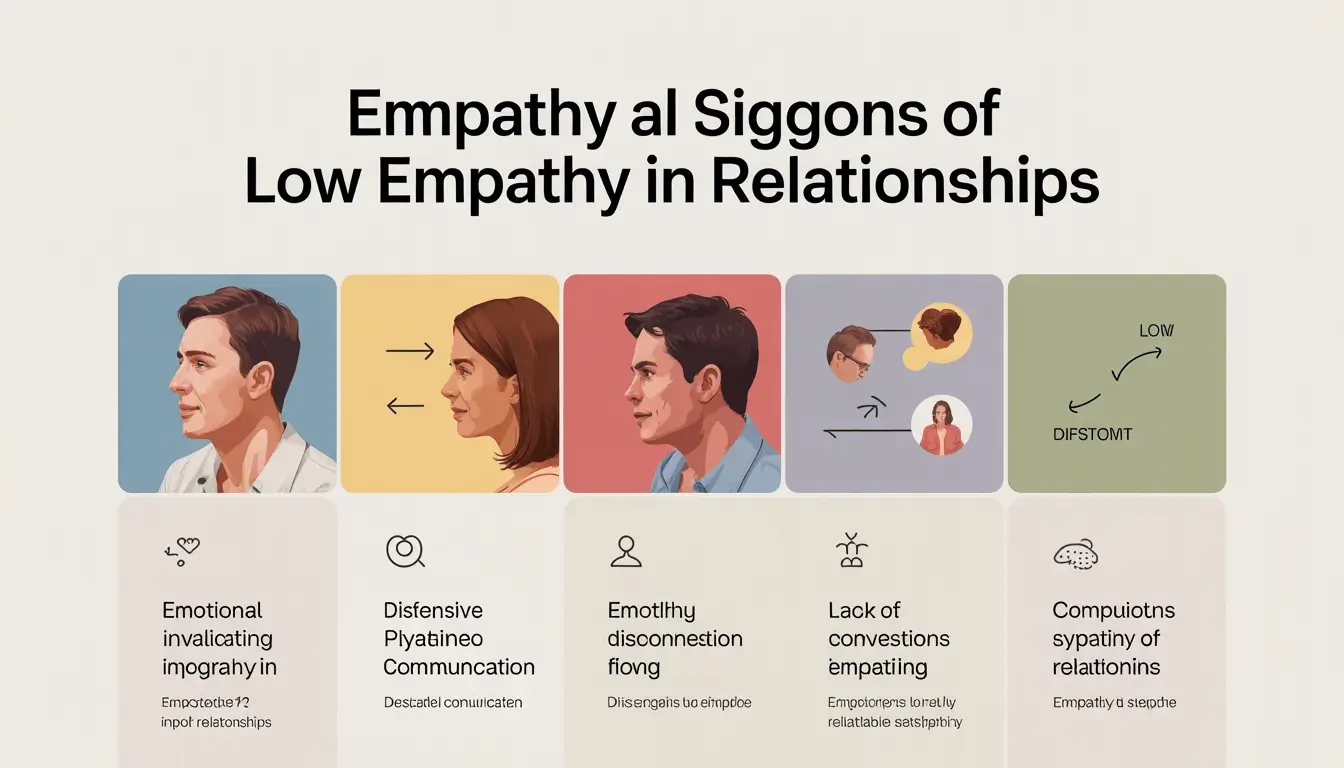
Common Signs of Low Empathy in Relationships
Emotional Invalidation
Emotional invalidation happens when feelings are minimized, ignored, or criticized.
Examples include:
- Saying “you’re overreacting”
- Dismissing emotional concerns
- Trying to immediately “fix” emotions instead of understanding them
Over time, emotional invalidation damages trust and discourages emotional openness.
Lack of Active Listening
Low empathy often appears through poor listening habits.
Common examples include:
- Distracted conversations
- Looking at phones during emotional discussions
- Interrupting frequently
- Becoming defensive immediately
When active listening disappears, emotional connection weakens gradually.
Difficulty Understanding Different Perspectives
Self-centered communication patterns reduce emotional understanding.
Signs include:
- Assuming personal experiences apply to everyone
- Ignoring emotional context
- Showing little curiosity about a partner’s feelings
Low empathy slowly creates emotional distance because one partner no longer feels emotionally understood or valued.
Empathy vs Sympathy in Relationships
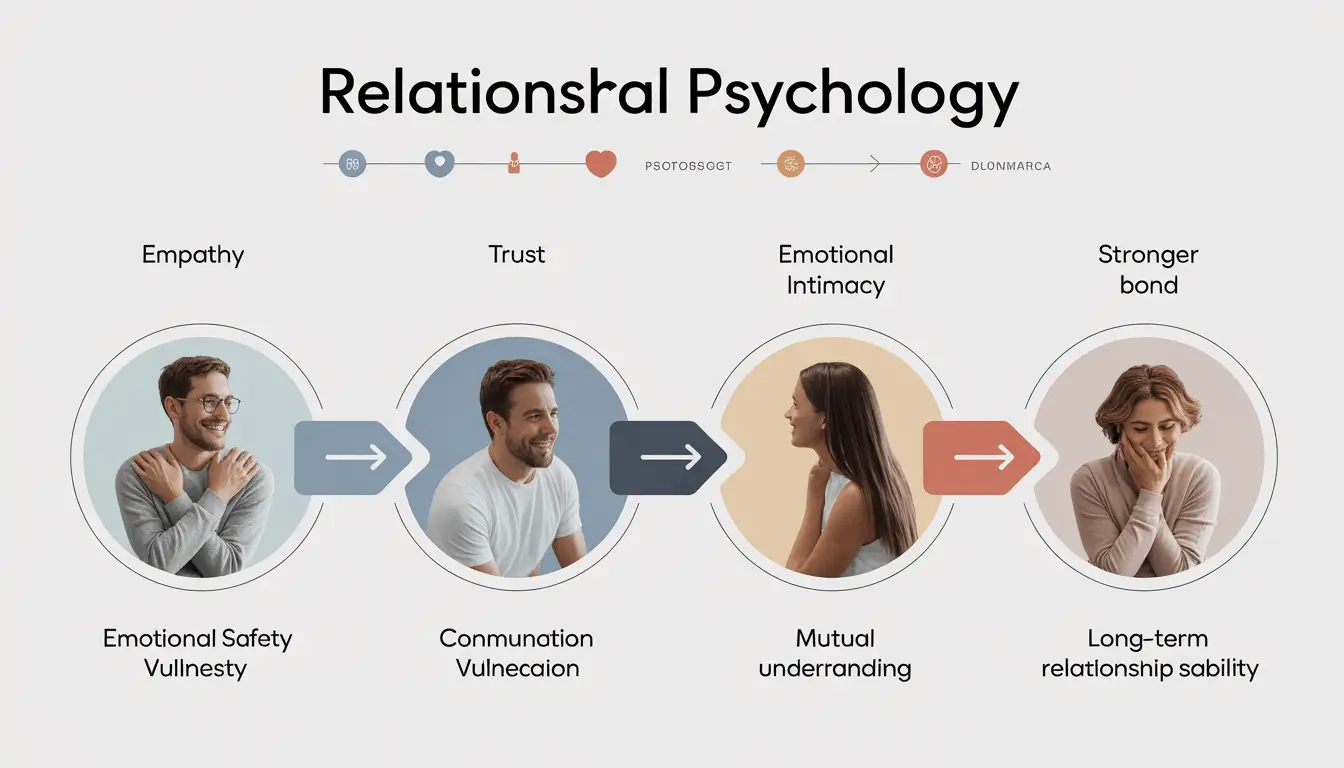
| Empathy | Sympathy |
|---|---|
| Understands emotions | Acknowledges emotions |
| Creates emotional connection | Creates emotional distance |
| Listens without judgment | Often focuses on advice |
| Builds trust and intimacy | Can feel surface-level |
Many people confuse empathy and sympathy because both involve emotional awareness. However, empathy creates deeper emotional bonds because it focuses on emotional understanding rather than emotional observation.
Empathy in Relationships Examples
Healthy Empathy Examples
Healthy empathy in relationships examples include:
- Listening without interrupting
- Validating emotions before offering solutions
- Supporting a stressed partner emotionally
- Understanding a partner’s perspective during disagreements
For example, if a partner feels overwhelmed after work, an empathetic response may sound like:
- “That sounds mentally exhausting.”
- “I understand why you feel stressed.”
- “Do you want support or solutions right now?”
Unhealthy Relationship Communication Examples
Unhealthy communication often reduces emotional safety.
Examples include:
- Dismissing emotional concerns
- Saying “you’re too sensitive”
- Turning vulnerable conversations into arguments
- Responding with sarcasm during emotional discussions
Empathy in romantic relationships improves when people prioritize understanding before defending themselves.
How to Show Empathy in a Relationship
Active Listening Habits
Active listening helps people feel emotionally respected.
Helpful habits include:
- Maintaining full attention during conversations
- Reflecting emotions back calmly
- Asking clarifying questions
- Avoiding interruptions
Emotional Validation Techniques
Emotional validation means acknowledging emotions before solving problems.
Useful techniques include:
- “I understand why you feel that way.”
- “That situation sounds frustrating.”
- “Your feelings make sense.”
Avoid judgmental language that dismisses emotions prematurely.
Nonverbal Ways to Show Empathy
Empathy is also communicated nonverbally.
Important nonverbal behaviors include:
- Calm body language
- Supportive tone of voice
- Eye contact
- Physical presence and attentiveness
People searching for how to show empathy in a relationship with a woman often focus too much on specific gender behaviors. In reality, empathy depends more on emotional attentiveness, listening, and validation than gender-based communication stereotypes.
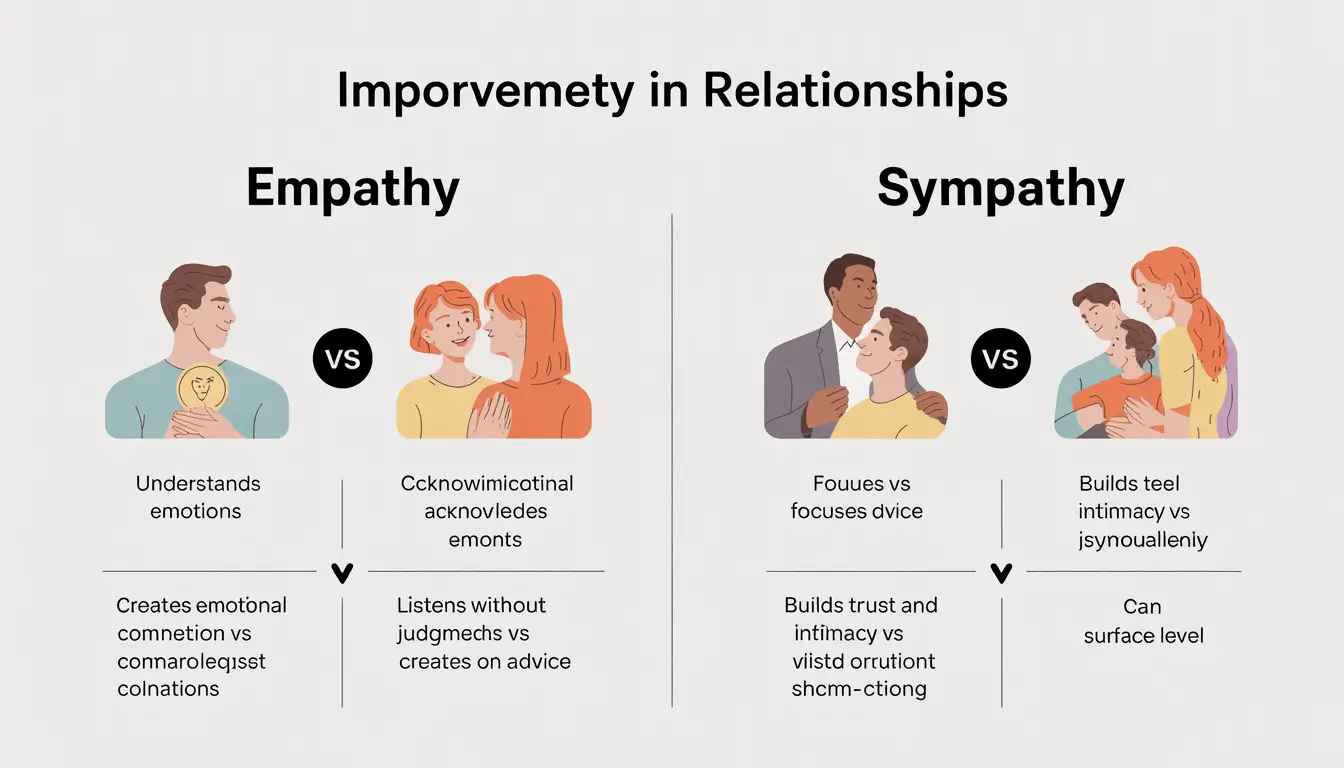
7 Ways to Develop Empathy
Daily Empathy-Building Habits
1. Practice Active Listening
Focus fully during conversations instead of preparing responses immediately.
2. Pause Before Reacting Emotionally
Short pauses improve emotional regulation and reduce impulsive communication.
3. Ask More Open-Ended Questions
Questions encourage emotional understanding and curiosity.
4. Learn Emotional Vocabulary
Better emotional language improves emotional awareness.
5. Reflect on Other Perspectives
Perspective-taking strengthens cognitive empathy.
6. Reduce Judgment During Conversations
Judgment blocks emotional openness and trust.
7. Practice Emotional Self-Awareness
Understanding personal emotions improves empathy toward others.
Consistency matters more than perfection when learning how to improve empathy. Small behavioral habits repeated daily create long-term emotional growth.
Why Relationships Fail Without Empathy
Emotional Disconnection
Without empathy, relationships often become emotionally disconnected.
Common outcomes include:
- Feeling unheard
- Emotional loneliness
- Loss of emotional intimacy
People may remain physically present while becoming emotionally distant.
Increased Conflict and Defensiveness
Lack of empathy increases:
- Reactive communication
- Escalation patterns
- Misunderstandings
- Emotional resentment
Small communication problems eventually become long-term relationship tension.
Burnout and Emotional Exhaustion
One-sided emotional labor creates emotional fatigue over time.
This often leads to:
- Emotional withdrawal
- Silent resentment
- Hidden emotional damage
- Relationship burnout
Without emotional support, relationships become mentally exhausting rather than emotionally supportive.
Practical Ways to Build More Empathy Daily
Relationship Check-In Routines
Regular emotional check-ins improve emotional awareness and communication consistency.
Helpful routines include:
- Weekly emotional conversations
- Daily reflection questions
- Asking “How are you feeling emotionally today?”
- Discussing emotional stress before conflict escalates
System-Based Relationship Habits
Strong relationships often rely on systems rather than emotional intensity alone.
Useful systems include:
| Relationship Habit | Purpose |
|---|---|
| Listening routines | Improves emotional understanding |
| Conflict-resolution systems | Prevents escalation |
| Shared communication boundaries | Builds respect and safety |
| Emotional check-ins | Strengthens consistency |
Consistency and emotional discipline strengthen relationship maintenance over time.
Common Myths About Empathy
“Empathy Means Agreeing With Everything”
Empathy does not require agreement. Understanding emotions and agreeing with opinions are different processes.
People can validate emotions while still having different perspectives.
“Some People Are Just Naturally Empathetic”
Empathy is not fixed. Research in behavioral psychology shows empathy can improve through emotional awareness, listening habits, and consistent practice.
“Logic Matters More Than Emotions”
Emotional understanding improves rational communication because emotionally safe conversations reduce defensiveness and increase cooperation.
Sustainable emotional habits often support better decision-making and healthier communication overall.
Importance of Empathy in Everyday Life
Empathy Beyond Romantic Relationships
The importance of empathy in everyday life extends beyond romantic relationships.
Empathy improves:
- Friendships
- Parenting
- Workplace communication
- Social connection
Emotionally aware communication strengthens trust in nearly every type of relationship.
How Empathy Improves Emotional Intelligence
Empathy strengthens emotional intelligence by improving:
- Self-awareness
- Emotional regulation
- Perspective-taking
- Interpersonal communication skills
People with stronger empathy often manage conflict more effectively and build healthier long-term relationships.
Conclusion
Empathy is important in relationships because it creates emotional safety, trust, and long-term emotional connection. People who feel understood are more likely to communicate openly, handle conflict calmly, and maintain emotional closeness over time. Empathy also improves emotional resilience by reducing defensiveness and strengthening mutual understanding. Most importantly, empathy is not simply an inborn personality trait. It is a practical relationship skill developed through active listening, emotional awareness, validation, and consistent daily habits. Small empathy-building behaviors practiced consistently often create stronger and healthier relationships than occasional emotional intensity.
FAQs
Why do people struggle with empathy in relationships?
People often struggle with empathy because of stress, emotional conditioning, burnout, defensiveness, and limited emotional awareness. Fear of vulnerability and reactive communication habits can also reduce emotional understanding.
How can I become more empathetic with my partner?
Focus on active listening, emotional validation, and slowing down emotional reactions. Asking open-ended questions and listening without judgment also strengthens empathy.
What is the difference between empathy and sympathy?
Empathy involves emotionally understanding another person’s experience, while sympathy mainly acknowledges emotions from a distance. Empathy creates stronger emotional connection and trust.
Can empathy improve communication in relationships?
Yes. Empathy reduces defensiveness, improves emotional regulation, and supports healthier conflict resolution. People communicate more openly when they feel understood.
What happens when there is no empathy in a relationship?
Lack of empathy often causes emotional disconnection, loneliness, resentment, communication breakdowns, and reduced emotional intimacy over time.
Is empathy a skill or a personality trait?
Empathy is a skill that can be strengthened through practice, emotional awareness, active listening, and consistent behavioral habits.
How do I show empathy during arguments?
Stay calm, listen fully, validate emotions before responding, and avoid reactive communication. Focus on understanding emotions instead of immediately defending yourself.
Why is emotional validation important in relationships?
Emotional validation helps people feel emotionally safe, respected, and understood. It strengthens trust and improves long-term emotional connection.









5 Responses