
Introduction
The special operations mindset is a mental framework built around discipline, resilience, adaptability, mission focus, decision-making under pressure, and continuous improvement. It originated in military special operations units, where operators had to function effectively under extreme uncertainty and stress. However, the underlying principles are not exclusive to combat environments. Leaders, athletes, entrepreneurs, and everyday individuals apply the same mental patterns to perform consistently under pressure. This article explains the mindset itself — the psychology, habits, and principles behind it — rather than military recruitment, equipment, or gear.
Quick Summary
- Special operations mindset emphasizes mission focus, adaptability, discipline, and resilience under pressure.
- Its principles apply beyond military contexts to leadership, productivity, and personal development.
- Developing this mindset requires consistent habits, stress management, and deliberate decision-making.
- Success comes from long-term practice rather than motivation alone.
What Is the Special Operations Mindset?
The special operations mindset is a set of mental habits — including mission-first thinking, emotional control, accountability, and adaptability — that allow a person to perform reliably under pressure and uncertainty. Elite military units prioritize this mindset over raw physical ability because strength and speed have limits, but disciplined thinking allows operators to make sound decisions even when conditions are chaotic, unpredictable, or dangerous. Physical training builds capacity; mental training determines how that capacity is used when it matters most. This principle is closely tied to learning to focus on what you can control — a skill that reduces wasted mental energy on outcomes outside your influence.
Core Definition
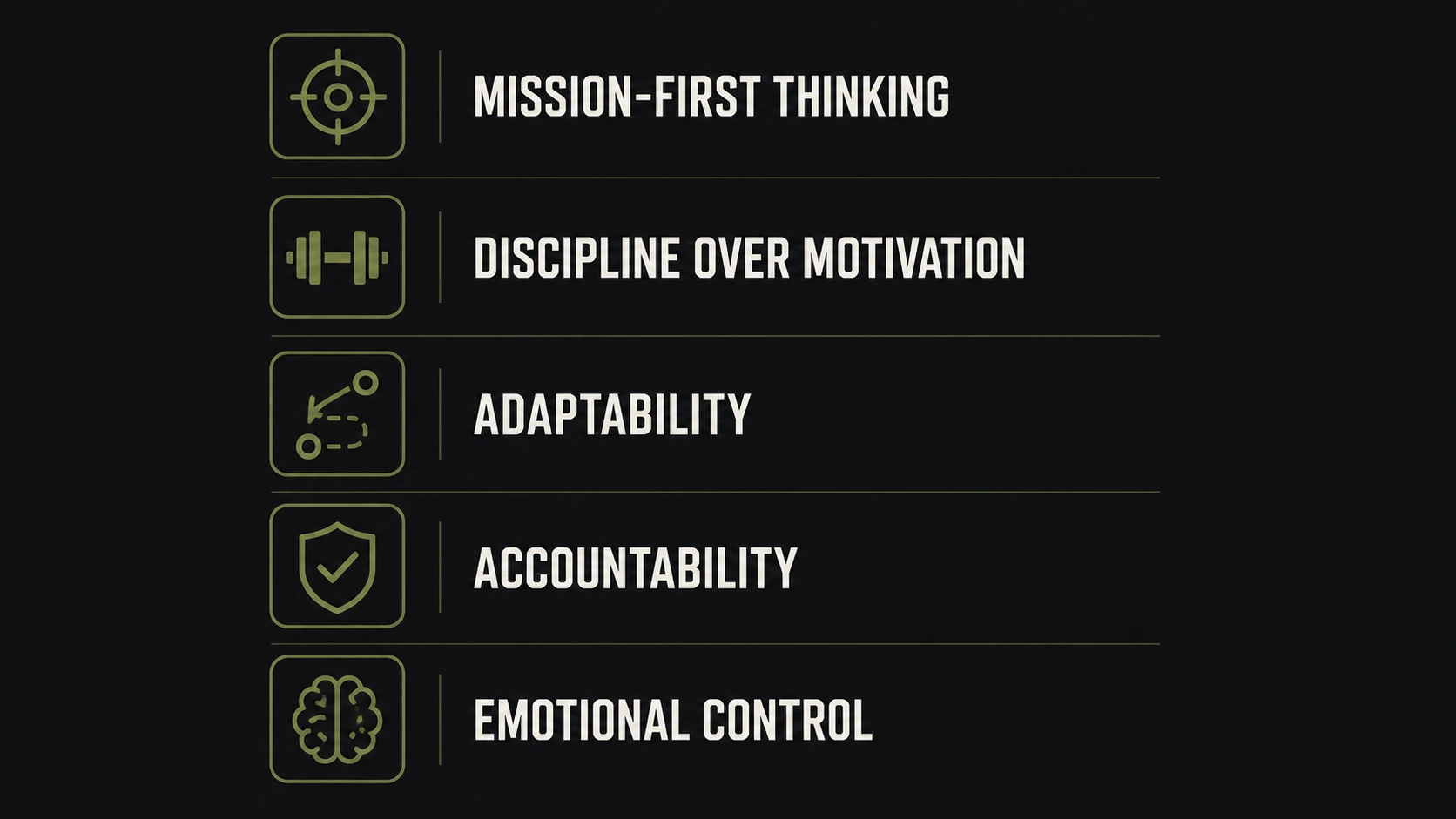
At its foundation, the special ops mindset includes:
- Mission-first thinking — keeping the objective at the center of every decision
- Emotional control — managing fear, frustration, or panic in real time
- Accountability — owning outcomes rather than assigning blame
- Mental resilience — recovering quickly from setbacks
- Adaptability — adjusting plans as situations change
These traits work together rather than independently. A person can be disciplined but lack adaptability, or resilient but lack accountability — the mindset is the integration of all five.
Why the Mindset Matters Beyond the Military
The same mental patterns that help operators complete high-stakes missions translate directly into civilian high-performance contexts:
- Leadership — making clear decisions when information is incomplete
- Business — staying focused on long-term goals despite short-term setbacks
- Emergency response — reacting calmly and effectively in crisis situations
- Athletics — pushing through fatigue and maintaining composure under competitive pressure
- Everyday life — managing stress, uncertainty, and competing priorities
Core Principles of the Special Operations Mindset
Mission-First Thinking
Mission-first thinking means prioritizing the objective above comfort, ego, or distraction. In practice, this involves identifying what actually matters in a given situation, eliminating tasks or thoughts that don’t serve that goal, and staying focused even when circumstances become difficult. This principle prevents effort from being wasted on secondary concerns.
Discipline Over Motivation
Motivation is an emotional state that fluctuates; discipline is a behavioral commitment that does not depend on how a person feels. Special operations training is built around routines and standards that must be followed regardless of mood, because relying on motivation alone is unreliable in high-stakes environments. Discipline-driven performance produces consistent results because it removes decision-making friction — the action happens automatically, not only when inspiration is present. If you’re struggling with consistency, our guide on how to build discipline without motivation breaks this process down step by step.
Adaptability in Changing Situations
Adaptability is the ability to make sound decisions with limited or incomplete information. Special operations environments rarely offer full clarity, so operators are trained to assess available data, make a decision, and adjust as new information arrives — rather than waiting for certainty that may never come. This principle is directly transferable to business, healthcare, and any environment where conditions shift quickly.
Accountability and Ownership
Accountability means accepting responsibility for outcomes, including failures, without deflecting blame onto others or circumstances. This mindset treats mistakes as data rather than as identity — errors are analyzed and corrected, not avoided or hidden. Ownership at every level of a team improves both individual growth and group trust.
Emotional Control Under Pressure
Emotional control involves staying calm, regulating stress responses, and avoiding impulsive reactions during high-pressure moments. This is developed through repeated exposure to stress in controlled settings, allowing the nervous system to become accustomed to functioning under pressure rather than shutting down or overreacting.
Key characteristics of emotional control include:
- Slower, deliberate breathing under stress
- Delayed reaction time before responding emotionally
- Ability to separate the problem from the panic
How the Special Operations Mindset Is Developed
This mindset is built through deliberate process, not innate talent. It is a trainable skill set developed over time through repetition, feedback, and exposure to controlled stress.
Mental Conditioning
Mental conditioning includes controlled stress exposure, structured reflection, and scenario planning. Repeated exposure to manageable stress — physical, cognitive, or environmental — builds tolerance and reduces the likelihood of panic in real high-stakes situations. Reflection after stressful events reinforces lessons learned, and scenario planning prepares the mind for situations before they occur.
Physical Readiness
Physical readiness and mental toughness are closely linked. Physical training under fatigue — a core element of special operations fitness — teaches the mind to keep functioning and making decisions even when the body is exhausted. This connection between physical stress and mental composure is one reason elite training programs emphasize physical conditioning as a psychological tool, not only a fitness goal.
Continuous Learning
Continuous learning involves structured feedback loops, ongoing skill development, and a long-term commitment to improvement. Operators regularly debrief after missions or training exercises to identify what worked, what failed, and what needs adjustment. This same feedback-driven approach applies to any skill-building process in civilian life.
Characteristics of People With a Special Operations Mindset
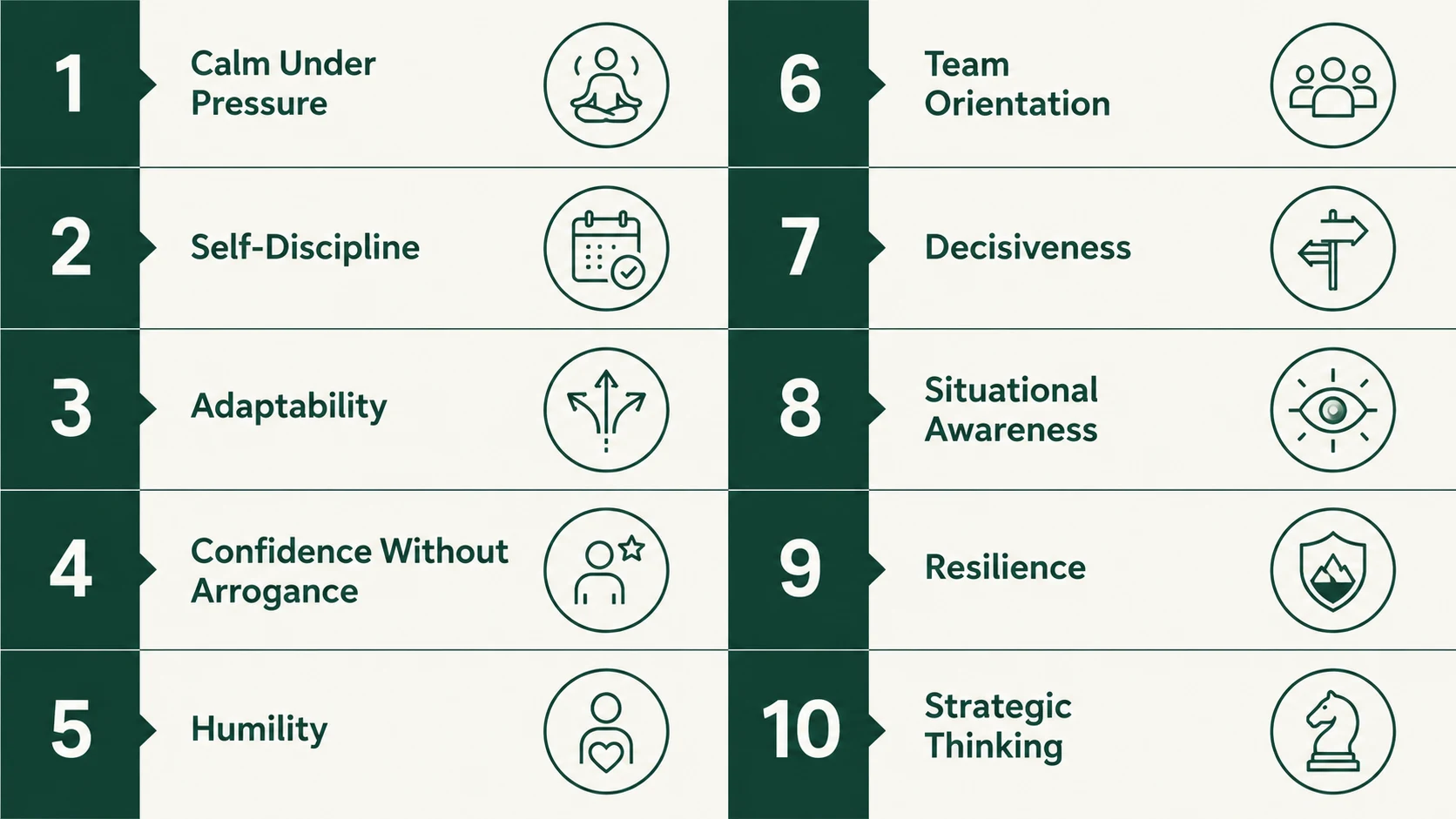
People who have developed this mindset tend to display consistent, observable behaviors rather than occasional bursts of performance:
- Calm under pressure
- Self-discipline
- Adaptability
- Confidence without arrogance
- Humility
- Team orientation
- Decisiveness
- Situational awareness
- Resilience
- Strategic thinking
These traits typically develop together over time, reinforcing one another through repeated practice in demanding situations.
Special Operations Mindset vs Traditional High-Performance Mindsets
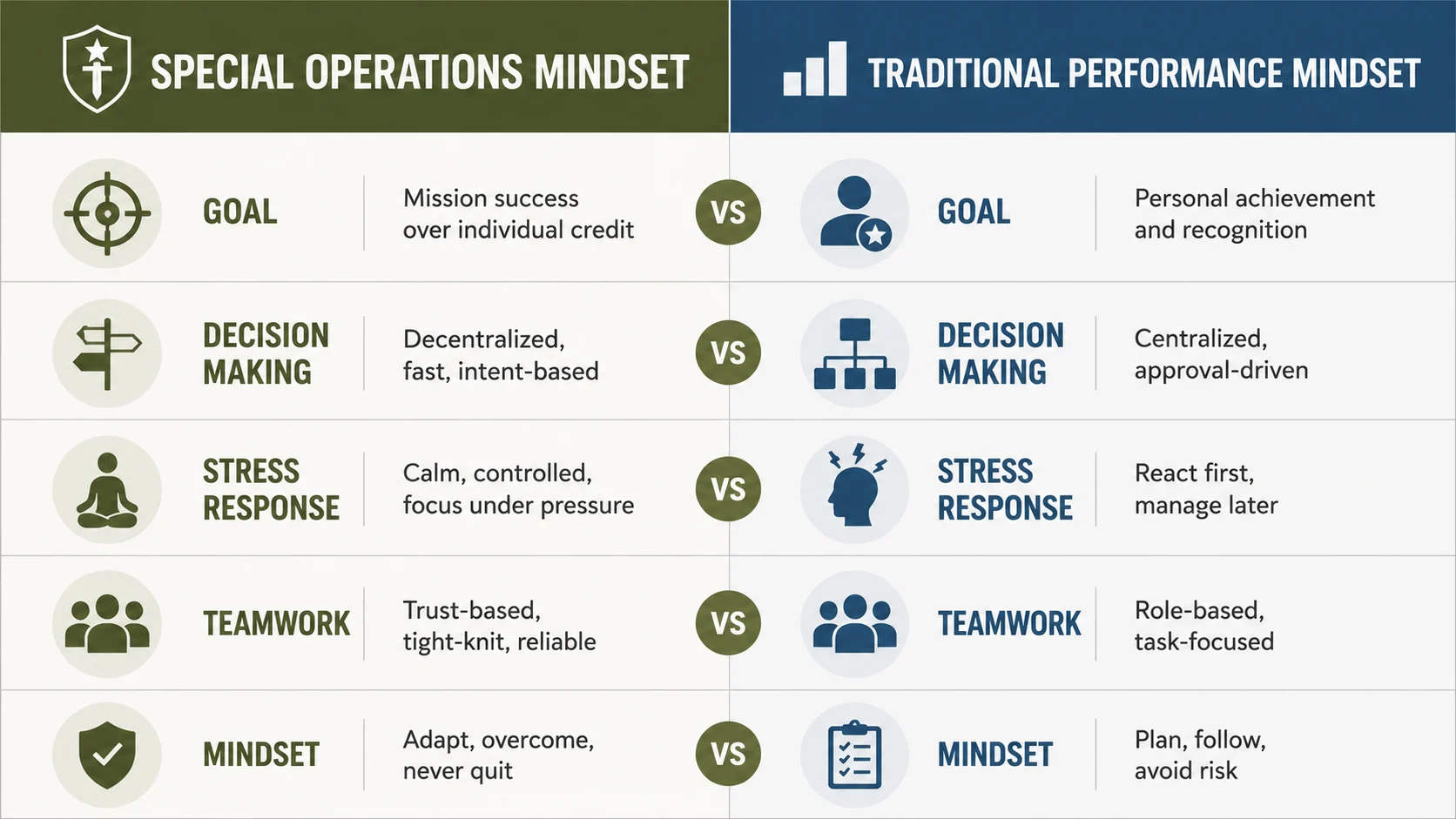
While the special operations mindset shares similarities with other high-performance mental models, several distinctions set it apart, particularly around team-based decision-making and stress tolerance in unpredictable, high-consequence environments.
| Aspect | Special Operations Mindset | Traditional Performance Mindset |
|---|---|---|
| Primary Goal | Mission success under uncertainty | Individual or organizational achievement |
| Decision Making | Fast decisions with incomplete information | Often data-driven with more available time |
| Leadership | Shared responsibility, decentralized authority | Often hierarchical, top-down |
| Stress Response | Trained tolerance for high-consequence stress | Typically lower-stakes performance pressure |
| Teamwork | Interdependence is essential for survival | Collaboration is valuable but not always critical |
| Adaptability | Constant real-time adjustment | Periodic strategy revision |
Both approaches value discipline and focus, but the special operations mindset is shaped by environments where mistakes carry immediate, serious consequences. Traditional high-performance mindsets — common in business or athletics — often allow more time for analysis and correction. Each approach is effective in the context it was designed for; the special operations mindset is especially useful in crisis-driven or rapidly changing situations, while traditional performance mindsets suit long-term, lower-volatility goals.
How to Apply the Special Operations Mindset in Everyday Life
Personal Development
- Set clear, specific goals and review progress regularly
- Practice controlled exposure to discomfort (cold showers, fasting windows, early mornings)
- Reflect weekly on decisions and outcomes
Career and Leadership
- Make timely decisions instead of waiting for perfect information
- Take ownership of team outcomes, including failures
- Communicate clearly under pressure
Education and Learning
- Break large goals into smaller, trainable skills
- Use consistent study routines rather than motivation-dependent effort
- Seek feedback actively rather than avoiding criticism
Health and Fitness
- Train consistently regardless of mood
- Use physical fatigue as a tool to build mental tolerance
- Prioritize recovery as part of the training cycle, not an afterthought
Family and Relationships
- Stay emotionally regulated during conflict
- Follow through on commitments consistently
- Model discipline and accountability for others
The Role of Motivation in a Special Operations Mindset
Motivation and discipline are frequently confused, but they function differently. Special operations motivation is typically rooted in intrinsic purpose — a clear sense of why the mission matters — rather than external rewards or temporary enthusiasm. Discipline, meanwhile, is the behavioral system that keeps performance consistent when motivation is absent. Understanding why you might lack motivation on a given day is the first step to separating emotional drive from disciplined action.
In our experience helping readers build better habits, the individuals who sustain progress long-term are the ones who build systems and routines first, and treat motivation as a bonus rather than a requirement. Special ops motivation is reinforced through purpose, consistency, and commitment — three factors that remain stable even when emotional drive fluctuates day to day.
Common Challenges When Building a Special Operations Mindset
Depending Too Much on Motivation
This happens when routines are not established, so effort collapses once initial enthusiasm fades. The fix is building small, non-negotiable daily habits that do not depend on mood.
Fear of Failure
Fear of failure often stems from treating mistakes as identity rather than information. Reframing failure as feedback, and reviewing errors objectively, reduces avoidance behavior over time.
Decision Fatigue
Decision fatigue occurs when too many choices are made without structure. Pre-planning routines and decisions in advance — such as fixed workout times or standardized daily checklists — reduces the mental load of repeated decision-making.
Poor Stress Management
Without deliberate stress exposure, the nervous system remains reactive rather than regulated. Controlled, gradual exposure to manageable stress builds tolerance and prevents overwhelm in high-stakes moments.
Inconsistent Habits
Inconsistency typically results from setting unsustainable routines too quickly. Starting with small, repeatable actions and gradually increasing intensity prevents burnout and supports long-term consistency.
Beginner Mistakes to Avoid
- Confusing toughness with aggression
- Ignoring recovery
- Overtraining
- Seeking perfection instead of progress
- Copying elite routines too early without building a foundation
- Neglecting teamwork and collaboration
- Holding unrealistic expectations about the speed of results
Different Ways to Build Mental Resilience
Mental resilience can be developed through several related but distinct approaches, each shaped by its environment:
- Military-inspired mindset — built through structured stress exposure and mission-focused training
- Athletic mindset — built through competitive pressure and physical performance goals
- Executive mindset — built through high-stakes decision-making under time and resource constraints
- Emergency responder mindset — built through rapid, high-consequence crisis response
While all four share core traits like composure and adaptability, they differ in intensity, consequence, and team structure. Military and emergency responder approaches emphasize survival-level stress tolerance, while athletic and executive approaches emphasize sustained, repeatable performance. The best-fit approach depends on the demands of a person’s specific environment and goals.
Difficulty and Time Investment
Building a special operations mindset is accessible to beginners, but sustained development requires long-term commitment rather than short-term effort. Early stages focus on small, manageable habits — controlled stress exposure, basic routines, and reflection. Over time, difficulty increases as tolerance builds. Daily effort is typically modest but consistent, rather than intense and irregular. Progress varies based on individual factors such as prior stress exposure, existing discipline, physical baseline, and available time for practice.
Results Timeline
Progress in developing this mindset generally follows a gradual curve rather than a sudden shift:
- Days — initial awareness of stress responses and habit patterns begins to form
- Weeks — early improvements in consistency, emotional regulation, and decision-making speed
- Months — noticeable resilience under pressure and stronger daily discipline
- Years — deeply ingrained habits and reliable performance under significant stress
Influencing factors include consistency of practice, quality of stress exposure, physical conditioning, and support systems such as mentorship or accountability partners.
Practice Guide for Developing a Special Operations Mindset
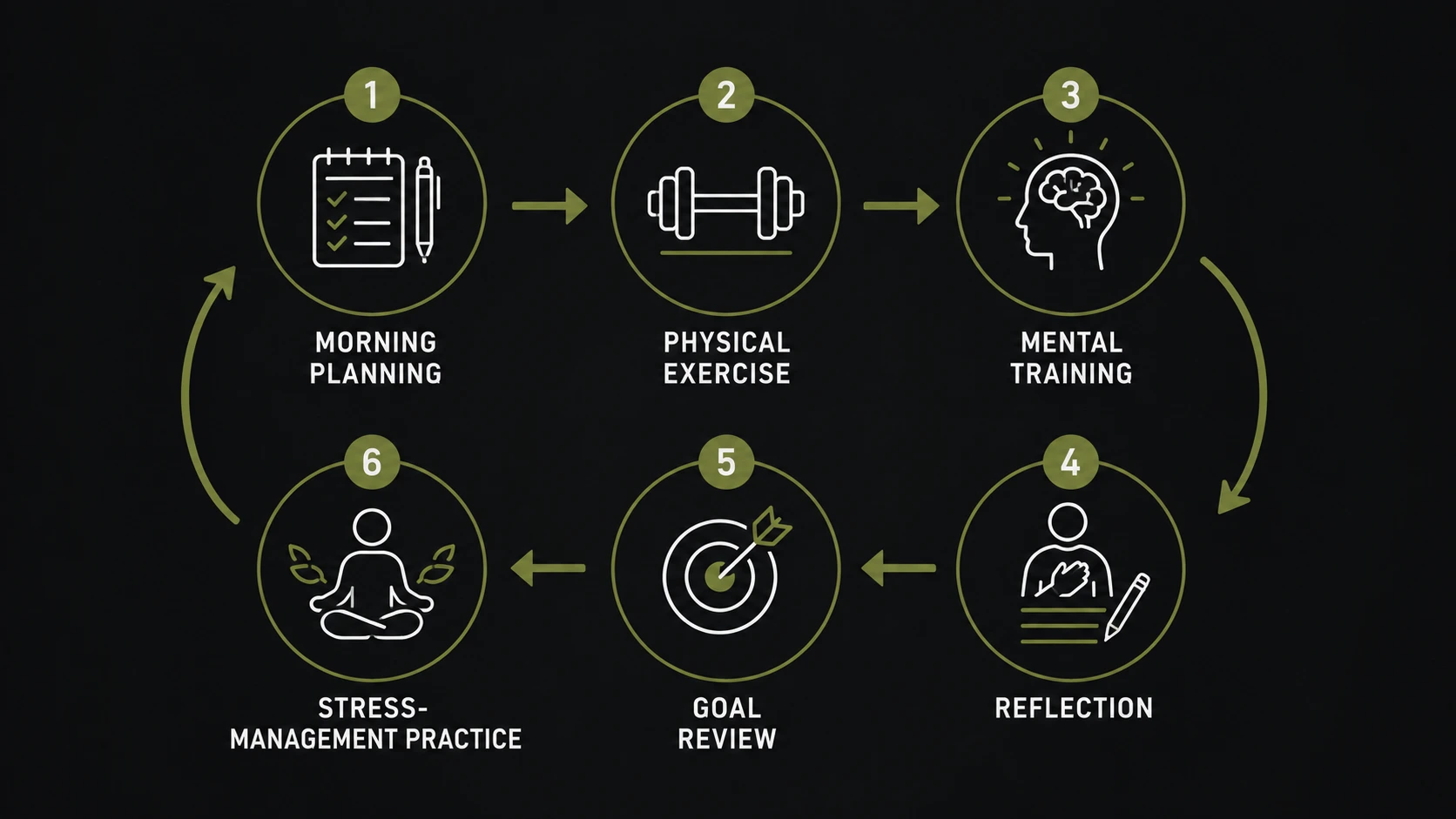
Suggested daily routine:
- Morning planning to set clear priorities for the day
- Physical exercise, particularly training that includes controlled fatigue
- Mental training such as visualization or scenario planning
- Reflection on decisions and stress responses from the day
- Goal review to maintain mission focus
- Stress-management practice, such as breathing exercises
Weekly habits:
- Skill review to identify gaps and areas for improvement
- Journaling to track patterns in behavior and mindset
- Recovery time to prevent burnout and support long-term consistency
- Accountability check-ins with a mentor, coach, or peer
Your Daily Thrive recommends using simple tracking tools — a notebook, habit-tracking app, or weekly checklist — to maintain consistency without adding unnecessary complexity. Sustainable routines should be adapted to individual schedules, physical capacity, and life circumstances rather than copied directly from elite military programs.
Frequently Misunderstood Ideas About the Special Operations Mindset
- It is only for soldiers. The underlying principles apply to any high-pressure environment, including business, athletics, and daily life.
- It requires extreme physical fitness. While physical training supports mental toughness, the mindset itself is primarily psychological and behavioral.
- It eliminates emotion. The mindset regulates emotional response; it does not remove emotion entirely.
- It means never failing. Failure is treated as feedback within this framework, not as something to be avoided entirely.
- It is based on motivation alone. Discipline, not motivation, is the primary driver of consistent performance.
Conclusion
The special operations mindset is defined by mission-first thinking, discipline, adaptability, accountability, and emotional control under pressure. As of mid-2026, behavioral science continues to reinforce what elite training programs have long emphasized: consistent systems outperform sporadic motivation, and resilience is built through structured, repeated stress exposure rather than natural talent. This mindset is not exclusive to military environments — it is a trainable set of habits that can strengthen leadership, personal growth, fitness, and everyday decision-making. Readers looking to build this mindset should start small, prioritize consistency over intensity, and apply the principles gradually across different areas of life.
Frequently Asked Questions
What is the special operations mindset?
The special operations mindset is a mental framework built around mission focus, discipline, adaptability, accountability, and emotional control under pressure, originally developed within military special operations training.
Can civilians develop a special operations mindset?
Yes, civilians can develop this mindset by applying the same principles — discipline, stress exposure, accountability, and mission-first thinking — to leadership, fitness, education, and personal goals.
Is the special operations mindset mainly about mental toughness?
Mental toughness is a component, but the mindset also includes adaptability, accountability, emotional regulation, and continuous learning, not toughness alone.
How does the special operations mindset improve leadership?
It improves leadership by strengthening decisive decision-making under uncertainty, accountability for outcomes, and composure during high-pressure situations.
What daily habits help build a special operations mindset?
Helpful daily habits include morning planning, physical training under fatigue, structured reflection, and consistent stress-management practices.
What is the difference between motivation and discipline?
Motivation is an emotional state that fluctuates, while discipline is a consistent behavioral commitment that does not depend on mood, making it more reliable for long-term performance.
Can physical fitness improve mental resilience?
Yes, physical training under fatigue helps condition the mind to keep functioning and making decisions under stress, reinforcing mental resilience over time.