

Introduction
An investor mindset is a way of thinking that prioritizes long-term value, disciplined decision-making, and strategic wealth building. Rather than focusing solely on spending or short-term gains, people with an investment mindset evaluate opportunities based on future outcomes, risk management, and sustainable growth. This perspective applies not only to stocks and real estate but also to education, business, career development, and personal growth. Understanding the mindset of an investor can help individuals make more informed financial choices, avoid emotional decisions, and develop habits that support long-term success.
By Your Daily Thrive | Self-Improvement & Personal Growth Expert
Quick Summary
- An investor mindset focuses on long-term value creation rather than immediate rewards.
- Successful investors manage risk instead of avoiding it completely.
- Behavioral habits and emotional discipline often matter as much as technical investing knowledge.
- Developing an investment mindset is a gradual process built through learning, consistency, and experience.
- Strong investors view money as a tool for creating future opportunities and assets.
What Is an Investor Mindset?
Investor Mindset Meaning Explained
The investor mindset meaning can be summarized as a way of thinking that seeks long-term growth through calculated decisions. Instead of asking, “What can I buy today?” investors ask, “What can create value tomorrow?”
An investor mindset is characterized by:
- Future-oriented thinking
- Delayed gratification
- Risk assessment
- Continuous learning
- Strategic decision-making
People often use terms such as investment mindset, investors mindset, and mindset of an investor interchangeably. While the wording differs, the underlying concept remains the same: evaluating resources, opportunities, and decisions based on their ability to generate long-term value.
From a behavioral psychology perspective, this mindset aligns closely with delayed gratification and future self-orientation, both of which are associated with improved financial outcomes and goal achievement.
Understanding the psychological foundations behind decision-making can help explain why beliefs, emotions, and thinking patterns influence financial behavior. Learning about mindset psychology provides deeper insight into how people develop productive mental frameworks.
Investor Mindset vs Consumer Mindset

One of the easiest ways to understand an investor mindset is to compare it with a consumer mindset.
| Consumer Mindset | Investor Mindset |
| Focuses on spending | Focuses on building assets |
| Seeks immediate rewards | Seeks long-term returns |
| Prioritizes consumption | Prioritizes ownership |
| Reacts emotionally | Makes structured decisions |
| Values convenience | Values future value creation |
A consumer mindset is not inherently bad. Spending is necessary and often improves quality of life. However, problems arise when consumption consistently takes priority over wealth-building activities.
An investor asks:
- Will this asset appreciate?
- Will this generate income?
- What are the long-term implications?
- What risks are involved?
In our experience helping readers improve financial habits, one of the biggest mindset shifts occurs when people begin evaluating purchases through the lens of opportunity cost. Instead of asking whether they can afford something, they ask what alternative opportunities that money could create.
Why the Investor Mindset Matters for Building Wealth
How Investors Think About Money Differently
Investors typically view money differently than the average person.
Rather than seeing money as something to spend, investors often view it as capital that can produce additional value.
This perspective changes financial behavior in several ways:
- Savings become investment capital.
- Expenses are evaluated for return potential.
- Opportunities are analyzed rather than emotionally pursued.
- Wealth becomes a process rather than a goal.
A strong investment mindset encourages people to think in terms of systems and compounding rather than isolated financial events.
For example, a single investment may not seem significant. However, consistent investing over years or decades can create substantial growth through compound returns.
What Creates Long-Term Financial Success?
Many people ask, “What creates 90% of millionaires?”
There is no single factor responsible for wealth creation, but research consistently identifies several common patterns among financially successful individuals.
These include:
- Long-term investing
- Business ownership
- Real estate ownership
- Consistent saving habits
- Strategic risk-taking
- Lifelong learning
Wealth creation is generally less about finding a perfect investment and more about maintaining productive behaviors over time.
Popular financial educators, including professionals such as Amanda Hahn and Steven Pesavento, frequently emphasize that mindset often influences results as much as investment strategy itself.
The common thread is consistency rather than extraordinary financial genius.
The Connection Between Mindset and Financial Outcomes
Behavioral finance has repeatedly shown that emotions significantly influence investment decisions.
Common emotional biases include:
- Loss aversion
- Overconfidence bias
- Herd behavior
- Recency bias
- Confirmation bias
Investors who develop emotional awareness often make better decisions because they rely on predefined processes rather than impulses.
Your Daily Thrive recommends creating decision frameworks before investing. When markets become volatile, having predetermined rules helps reduce emotional reactions and improve consistency.
As of 2026, many financial experts increasingly emphasize behavioral discipline as one of the most important investing skills because information is widely available, but emotional control remains difficult to master.
Core Characteristics of an Investment Mindset
Long-Term Thinking
Long-term thinking is one of the defining traits of an investment mindset.
Investors understand that meaningful wealth typically develops over years rather than days or weeks.
Benefits of long-term thinking include:
- Reduced emotional stress
- Better compounding opportunities
- Lower reaction to short-term volatility
- Improved decision quality
Rather than reacting to every market movement, long-term investors focus on underlying fundamentals and future potential.
Risk Awareness Instead of Risk Avoidance
Successful investors do not eliminate risk.
Instead, they learn to understand, evaluate, and manage it.
Risk awareness involves asking:
- What could go wrong?
- How likely is that outcome?
- What is the potential reward?
- Can losses be managed?
This distinction is important because avoiding all risk often limits growth opportunities.
Investor mentality involves balancing uncertainty with informed decision-making.
Continuous Learning and Adaptability
Markets, technologies, and economic conditions constantly change.
Continuous learning is a key characteristic of successful investors because adaptability allows people to improve their decisions over time. Similar principles are discussed in growth mindset books, which focus on learning, resilience, and developing abilities through effort.
As a result, investors must remain adaptable.
Continuous learning may involve:
- Reading books
- Studying market trends
- Listening to investor mindset podcasts
- Following educational content
- Reviewing past decisions
Educational resources such as the book Raising Capital for Real Estate and content from professionals like Andy McFarland often focus on developing strategic thinking rather than simply teaching tactics.
Strong investors recognize that learning never stops.
Ownership and Value Creation
Perhaps the most important characteristic of the mindset of an investor is ownership thinking.
Investors seek assets that can create future value.
Examples include:
- Businesses
- Real estate
- Stocks
- Intellectual property
- Professional skills
Ownership thinking encourages individuals to focus on:
- Value creation
- Cash flow generation
- Sustainable growth
- Long-term wealth accumulation
Instead of asking, “How much does this cost?” investors often ask, “What value can this create over time?”
The Investor Mentality and How It Develops
From Saving Money to Investing Money
Saving money and investing money serve different purposes.
Saving primarily provides security and liquidity.
Investing focuses on growth and future value creation.
The transition usually occurs when individuals begin to understand:
- Inflation
- Opportunity cost
- Asset appreciation
- Compound growth
Many people initially build financial confidence through saving. Over time, they develop enough knowledge and comfort to allocate resources toward investments.
This shift marks an important stage in developing an investor mentality.
Habits That Strengthen an Investor Mentality
The most successful investors often share common habits.
Building these habits requires consistency and self-control. Developing discipline without relying on motivation can help investors maintain productive behaviors even when emotions or circumstances change.
These habits include:
- Setting long-term goals
- Tracking financial progress
- Maintaining emergency savings
- Investing consistently
- Reviewing decisions objectively
In our experience, readers who establish regular financial review sessions often develop stronger decision-making skills than those who invest sporadically without reflection.
Additional beneficial habits include:
- Keeping an investment journal
- Studying mistakes objectively
- Avoiding emotional market reactions
- Continuously improving financial literacy
Developing an investor mindset is ultimately a behavioral process. Knowledge matters, but consistent action matters more.
The Most Common Principles Investors Follow
What Are the 3 C’s of Investing?
The phrase “3 C’s of investing” can have different interpretations depending on the educator or investing framework being discussed. However, many investors use a version that focuses on Capital, Consistency, and Compounding.
Capital
Capital is the money or resources available for investment. Building capital requires saving, increasing income, and managing expenses effectively.
Consistency
Consistency often matters more than timing. Regular contributions can help investors build wealth gradually and reduce the impact of emotional decision-making.
Compounding
Compounding occurs when investment earnings generate additional earnings over time. This principle is one of the primary reasons investors emphasize long-term investing.
An investor mindset recognizes that sustainable wealth typically comes from repeating productive behaviors rather than searching for shortcuts.
What Are the 4 Principles of Investing?
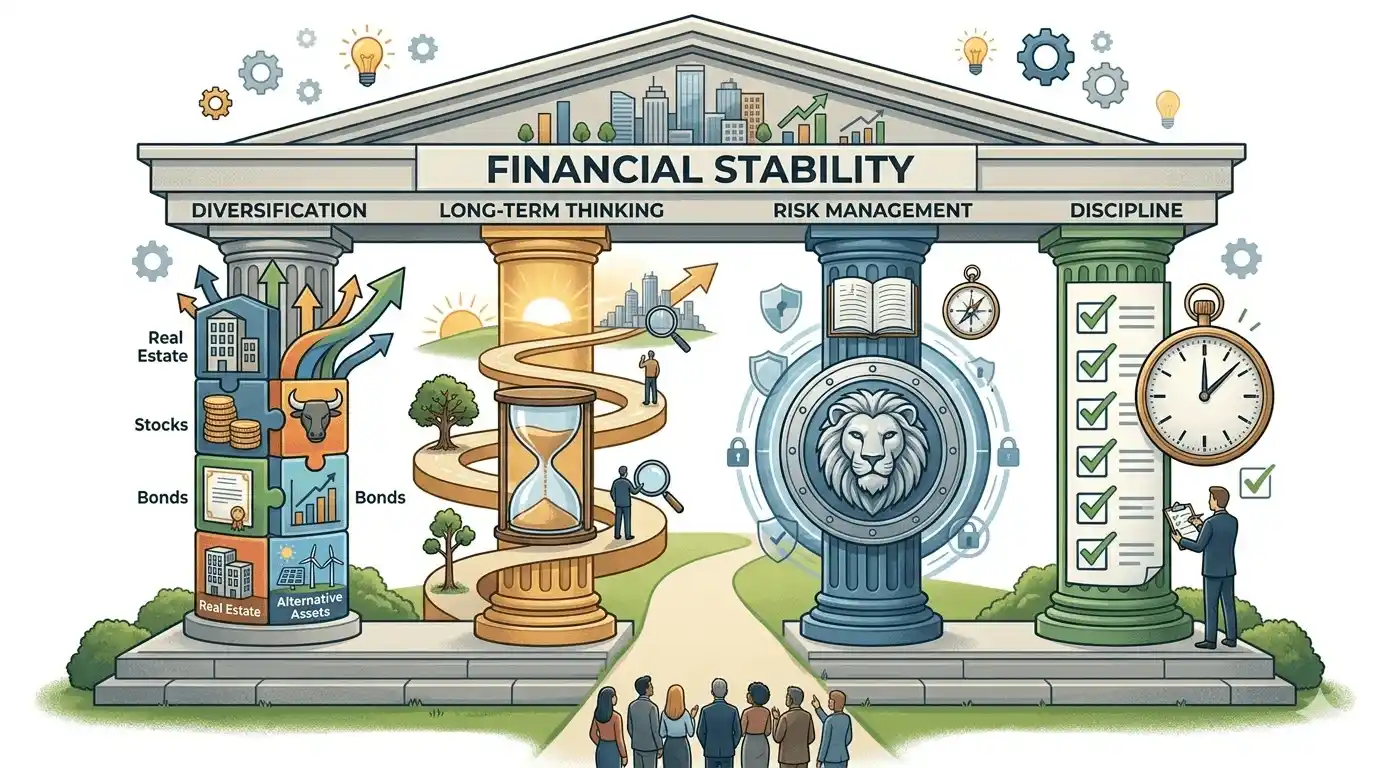
While frameworks vary, four widely accepted investing principles include:
| Principle | Purpose | Benefit |
| Diversification | Spread risk across assets | Reduced concentration risk |
| Long-Term Focus | Allow investments time to grow | Greater compounding potential |
| Risk Management | Protect against significant losses | Improved sustainability |
| Discipline | Follow a consistent strategy | Reduced emotional decisions |
These principles are supported by decades of financial research and are frequently referenced by financial professionals across asset classes.
A strong investment mindset applies these principles consistently, regardless of market conditions.
What Is the 7-7-7 Rule for Money?
The 7-7-7 rule for money does not have a universally accepted definition. Various educators use the term differently.
In many personal finance discussions, it is used as a simplified framework to encourage:
- Regular saving
- Long-term investing
- Consistent financial reviews
Because definitions vary, investors should focus on the underlying principles rather than the specific label.
The broader lesson is that structured financial habits often outperform sporadic efforts over time.
Investor Mindset Examples in Real-World Situations
Investor Mindset Examples for Beginners
Understanding investor mindset examples can make the concept easier to apply.
Consider the following scenarios:
Example 1: Investing vs Spending
A consumer may spend a bonus on short-term purchases.
An investor may allocate part of that bonus toward investments while still enjoying a portion of it.
Example 2: Skill Development
An investor views education and skill-building as assets capable of generating future income.
Example 3: Long-Term Retirement Planning
Instead of postponing retirement savings, an investor starts early to benefit from compounding.
These examples demonstrate how investor thinking influences decisions beyond traditional investing.
How Investors Respond During Market Declines
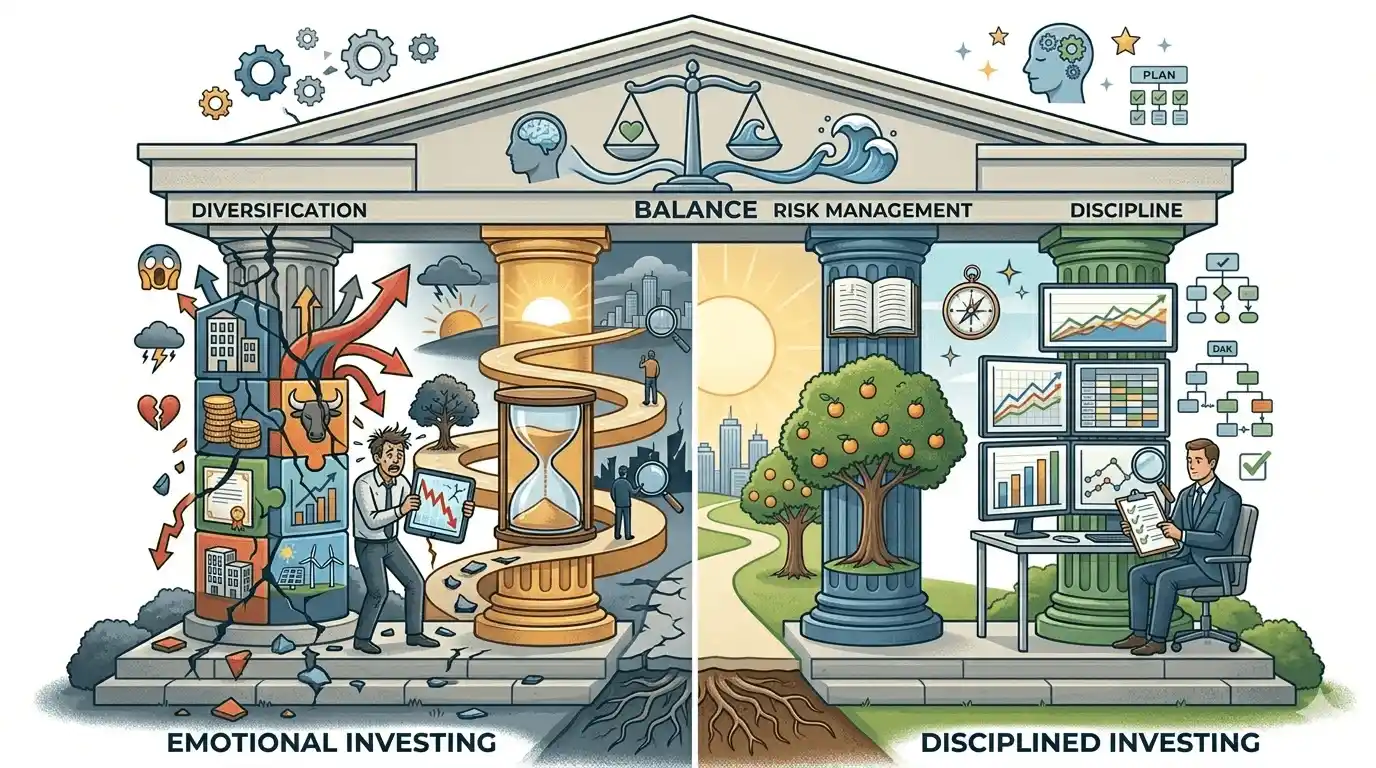
Market declines often reveal whether someone truly has an investor mindset.
When prices fall, inexperienced investors may react emotionally.
Investors with stronger discipline typically:
- Review fundamentals
- Reassess risk exposure
- Avoid panic selling
- Maintain a long-term perspective
Behavioral finance research consistently shows that emotional reactions during downturns can significantly reduce long-term investment performance.
Your Daily Thrive recommends creating investment rules before market volatility occurs. Predefined rules help reduce emotional decision-making when uncertainty increases.
Decision-Making Scenarios That Reveal an Investor Mindset
Certain situations clearly highlight the difference between investor thinking and reactive thinking.
Examples include:
Business Opportunities
Investors evaluate:
- Expected returns
- Risks
- Market demand
- Competitive advantages
Real Estate Decisions
Investors focus on:
- Cash flow
- Appreciation potential
- Market conditions
- Financing considerations
Career Development
An investment mindset views professional development as an asset capable of producing future opportunities and income growth.
The common theme is evaluating future value rather than immediate gratification.
Common Mistakes That Prevent People From Thinking Like Investors
Chasing Quick Returns
One of the most common investing mistakes is pursuing rapid gains without understanding the underlying risks.
Quick-return thinking often leads to:
- Excessive speculation
- Poor risk management
- Emotional decision-making
- Unrealistic expectations
An investor mindset prioritizes sustainability over speed.
Fear of Loss and Decision Paralysis
Many people never begin investing because they fear making mistakes.
While caution is reasonable, excessive fear can prevent action entirely.
Common causes include:
- Lack of financial knowledge
- Negative past experiences
- Market uncertainty
- Information overload
Solutions include:
- Starting small
- Focusing on education
- Developing clear goals
- Following a structured plan
Progress often comes from informed action rather than waiting for perfect certainty.
Following Trends Without Understanding Fundamentals
Social media, online forums, and market hype can influence investment decisions.
However, successful investors generally evaluate opportunities independently.
Questions worth asking include:
- How does this asset create value?
- What risks exist?
- What assumptions support the investment?
- What could cause the investment to fail?
Critical thinking is a key component of investor mentality.
How to Build an Investor Mindset Step by Step
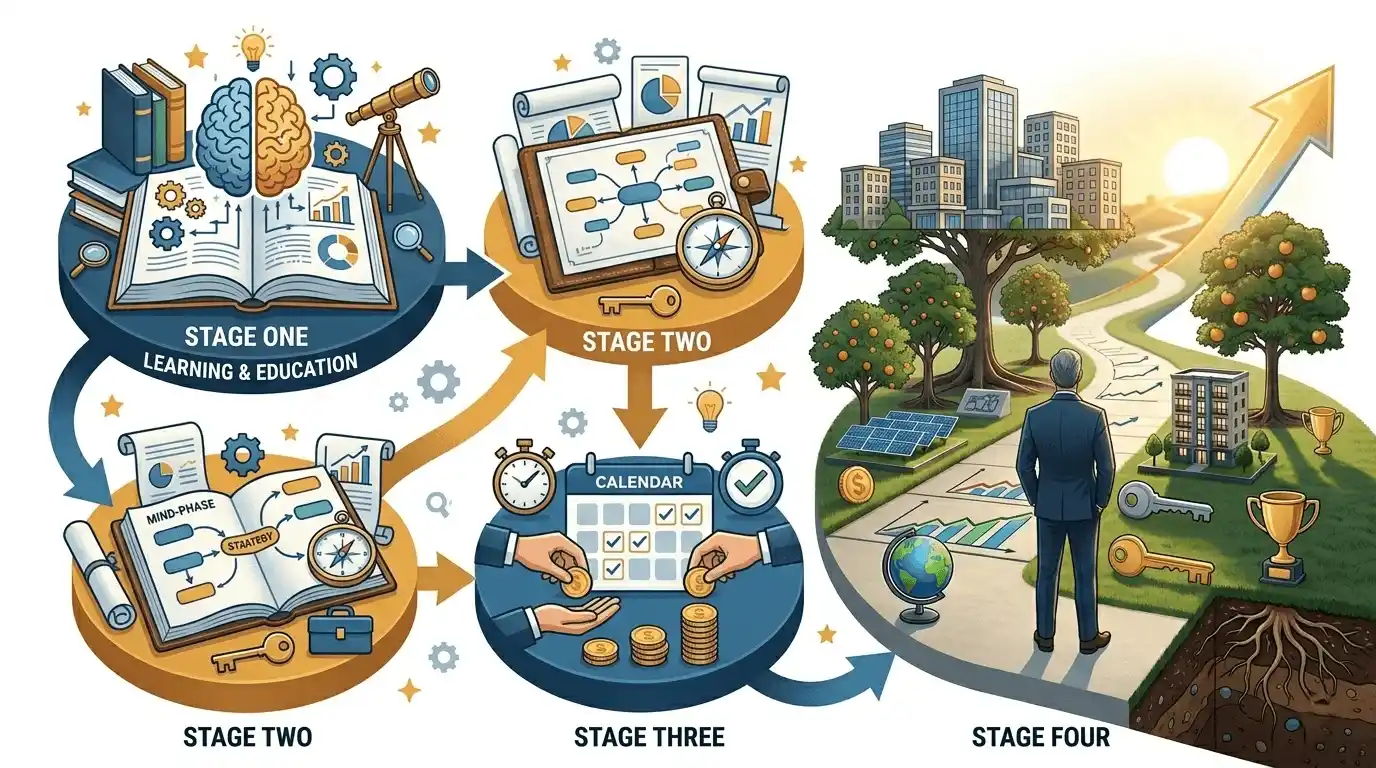
Start With Financial Education
Building an investor mindset begins with learning.
Educational sources may include:
- Books
- Courses
- Podcasts
- Financial publications
- Experienced mentors
Learning should focus on principles rather than predictions.
Strong financial education helps investors understand:
- Risk
- Asset classes
- Diversification
- Compounding
- Market behavior
Create a Long-Term Investment Framework
Investors often rely on frameworks rather than emotions.
A framework typically includes:
Financial Goals
Examples:
- Retirement planning
- Wealth accumulation
- Passive income generation
Time Horizon
The length of time before funds may be needed.
Risk Tolerance
The level of uncertainty an individual can comfortably manage.
Asset Allocation
The distribution of investments across different asset categories.
A structured framework improves consistency and decision quality.
Develop Consistent Investing Habits
Consistency is often the bridge between knowledge and results. Since investing success depends heavily on repeated behaviors, understanding how to build good habits can make long-term financial routines easier to maintain.
Practical habits include:
- Automating contributions
- Reviewing portfolios periodically
- Tracking financial goals
- Continuing education
- Avoiding emotional trading
In our experience helping readers develop long-term habits, simple systems usually outperform complex strategies because they are easier to maintain.
Small actions repeated consistently often produce significant results over time.
Books, Podcasts, and Educational Resources That Discuss Investor Thinking
Influential Investor Mindset Books
Books remain one of the most effective tools for developing an investment mindset.
Popular topics include:
- Behavioral finance
- Wealth psychology
- Real estate investing
- Capital allocation
- Decision-making
Many readers interested in real estate investing encounter works such as the book Raising Capital for Real Estate, which discusses capital formation, investor relationships, and real estate funding strategies.
A quality investor mindset book should help readers understand how investors think, not simply what they buy.
Investor Mindset Podcasts and Learning Platforms
An investor mindset podcast can provide ongoing education through expert interviews and practical discussions.
Benefits include:
- Exposure to different perspectives
- Current market insights
- Practical investing lessons
- Continuous learning opportunities
Podcasts are especially useful because they allow learning during daily activities such as commuting or exercising.
As of 2026, many financial educators increasingly emphasize behavioral finance and decision-making psychology alongside traditional investment topics.
Notable Educators and Thought Leaders
Several educators contribute valuable insights regarding investor thinking.
Examples include:
- Amanda Hahn
- Andy McFarland
- Steven Pesavento
Their educational content frequently discusses:
- Wealth-building habits
- Real estate investing
- Capital raising
- Strategic decision-making
- Financial education
Rather than focusing on individual personalities, readers often benefit most from understanding the principles these educators teach.
What Online Communities Reveal About Investor Thinking
Lessons From Investor Discussions and Forums
Online communities can provide valuable insights into common investor concerns.
Popular discussion topics include:
- Market uncertainty
- Portfolio construction
- Risk management
- Investing mistakes
- Wealth-building strategies
People searching for investor mindset Reddit discussions often seek practical experiences from real investors rather than theoretical explanations.
These discussions can highlight recurring patterns in investor behavior and decision-making.
Evaluating Advice Critically
Not all online advice is reliable.
Investors should evaluate information using several criteria:
- Evidence quality
- Source credibility
- Logical reasoning
- Consistency with established investing principles
Questions to consider include:
- Is the advice supported by facts?
- Does it acknowledge risks?
- Is it promoting unrealistic expectations?
Critical thinking remains one of the most valuable investing skills.
Difficulty, Time Investment, and Results Timeline
How Difficult Is It to Develop an Investor Mindset?
Developing an investor mindset is achievable for most people, but the difficulty depends on existing financial knowledge, personal habits, emotional patterns, and available resources. The mindset itself is not based on having advanced financial expertise from the beginning; it is built through education, practice, and repeated decision-making.
For beginners, the biggest challenges are often:
- Understanding basic financial concepts
- Managing emotions during uncertainty
- Building patience for long-term outcomes
- Creating consistent investment habits
An investment mindset usually develops gradually because it requires changing behaviors, not just learning information.
Beginner-Friendly vs Advanced Development
The process may look different depending on experience level.
| Experience Level | Main Focus | Typical Development Areas |
| Beginner | Building knowledge | Understanding assets, risk, and investing basics |
| Intermediate | Improving decisions | Creating systems and evaluating opportunities |
| Advanced | Refining strategy | Managing complexity and optimizing decisions |
A beginner does not need to master every financial concept immediately. The foundation of an investor mentality comes from developing good habits and learning how to think clearly about money.
Personal circumstances also influence difficulty. Someone with stable income, financial education, and supportive environments may develop investing habits faster than someone dealing with financial stress or limited resources.
When Do People Usually Notice Results?
Results from developing an investor mindset usually appear in stages rather than all at once.
The first changes are often behavioral, not financial.
People may notice:
- Better financial awareness
- More thoughtful spending decisions
- Increased confidence evaluating opportunities
- Reduced emotional reactions to uncertainty
Financial results typically require more time because investments depend on factors such as market conditions, contribution amounts, and investment choices.
Common progress patterns include:
| Timeline | Possible Developments |
| Days to weeks | Increased awareness and improved financial habits |
| Months | Better decision-making systems and consistency |
| Years | Potential wealth growth through disciplined investing |
An important principle of the investor mindset is understanding that sustainable results often require patience.
External factors can influence progress, including:
- Economic conditions
- Income changes
- Market cycles
- Personal responsibilities
- Access to education and resources
The goal is not to control every outcome but to improve the quality of decisions over time.
Practice Guide for Strengthening an Investment Mindset
Daily and Weekly Habits
Building an investment mindset requires regular practice. Like other forms of personal development, consistency creates stronger results than occasional effort.
Helpful routines include:
Daily Practices
- Reading financial or business information
- Reviewing personal goals
- Practicing thoughtful decision-making
- Learning one new investing concept
Weekly Practices
- Reviewing spending patterns
- Tracking financial progress
- Studying investment opportunities
- Reflecting on decisions made during the week
Your Daily Thrive recommends focusing on systems rather than motivation alone. Behavioral science research shows that habits become more sustainable when they are connected to consistent routines and environmental cues.
Staying Consistent During Uncertainty
Uncertainty is one of the greatest tests of an investor mentality.
Markets naturally experience:
- Price fluctuations
- Economic changes
- Unexpected events
- Shifts in investor sentiment
A disciplined investor responds by returning to principles instead of reacting emotionally.
Helpful strategies include:
- Creating investment rules before emotions become involved
- Maintaining a long-term perspective
- Limiting excessive exposure to financial news
- Reviewing goals regularly
Psychological concepts such as emotional regulation and cognitive reframing are useful because they help individuals interpret uncertainty more objectively.
Instead of thinking:
“A decline means failure.”
An investor mindset encourages:
“A decline is a situation requiring analysis and decision-making.”
Tools, Tracking, and Accountability Methods
Tracking progress can strengthen financial habits.
Useful tools include:
- Budgeting systems
- Investment tracking platforms
- Financial journals
- Goal-setting frameworks
Accountability can also improve consistency.
Examples include:
- Discussing goals with a trusted partner
- Joining educational communities
- Learning from experienced investors
- Reviewing progress periodically
The purpose of tracking is not to create stress but to create awareness.
Common Obstacles to Consistency
Many people understand investing principles but struggle with implementation.
Common obstacles include:
Lack of Visible Progress
Investing can feel slow because meaningful growth often occurs over long periods.
Solution:
Track behaviors as well as financial outcomes.
Information Overload
Too much conflicting advice can create confusion.
Solution:
Focus on fundamental principles instead of constantly changing strategies.
Emotional Reactions
Fear and excitement can influence decisions.
Solution:
Create systems that reduce impulsive choices.
Changing Life Circumstances
Income changes, family responsibilities, and unexpected expenses can affect investing ability.
Solution:
Adjust strategies while maintaining long-term goals.
Long-Term Sustainability Practices
A sustainable investor mindset is flexible rather than rigid.
Long-term success often requires:
- Updating knowledge
- Adjusting goals
- Reviewing strategies
- Learning from mistakes
The goal is not perfection. The goal is developing a repeatable process for making better decisions.
Conclusion
An investor mindset is the foundation of thoughtful wealth-building because it influences how people evaluate opportunities, manage risk, and make long-term decisions. It is not simply about choosing investments; it is about developing a way of thinking that values patience, learning, discipline, and future-oriented planning.
The mindset of an investor differs from a purely consumer-focused approach because it prioritizes ownership, value creation, and sustainable growth. Investors understand that financial success usually comes from consistent behaviors rather than short-term decisions.
Developing an investment mindset requires practice. Building knowledge, creating structured habits, managing emotions, and reviewing decisions regularly can help anyone improve their financial decision-making process.
The key takeaway is simple: an investor mindset is developed through intentional thinking and consistent action. By focusing on long-term value rather than immediate outcomes, individuals can make more informed choices and build stronger foundations for future financial growth.
Frequently Asked Questions
What is an investor mindset in simple terms?
An investor mindset is a way of thinking that focuses on long-term value creation, disciplined decision-making, and using resources to create future opportunities. It involves evaluating risks, understanding potential rewards, and making choices based on future outcomes rather than immediate gratification.
How does an investor mindset differ from an investment mindset?
An investor mindset and an investment mindset describe similar concepts. Both refer to the beliefs, habits, and decision-making approaches used to evaluate opportunities, manage risk, and build long-term wealth. The terms are often used interchangeably.
Can anyone develop the mindset of an investor?
Yes, most people can develop the mindset of an investor through education, practice, and consistent financial habits. While experience and resources influence the process, the core skills of patience, learning, and disciplined decision-making can be developed over time.
Why is emotional discipline important for investors?
Emotional discipline is important because fear, excitement, and uncertainty can lead to poor financial decisions. Investors who manage emotions are more likely to follow structured strategies instead of reacting impulsively to market changes.
What habits help strengthen an investor mentality?
Habits that strengthen an investor mentality include:
- Learning about financial concepts regularly
- Setting long-term goals
- Tracking progress
- Reviewing decisions
- Investing consistently
- Managing risk carefully
How long does it take to develop an investor mindset?
The time required varies by individual. Some people notice changes in their financial thinking within weeks or months, while deeper behavioral changes often develop over years of practice and experience.
What are the biggest mistakes new investors make?
Common mistakes include chasing quick returns, investing without understanding risks, reacting emotionally to market changes, and following trends without evaluating fundamentals.
Are investor mindset books and podcasts useful for beginners?
Yes, educational books and podcasts can help beginners understand investing principles, behavioral finance, and decision-making strategies. However, they should complement personal research and critical evaluation rather than replace independent thinking.