

Introduction
A spiritual mindset is more than a positive attitude or a religious routine — it is a fundamental orientation of the heart and mind toward eternal values, divine wisdom, and purposeful living. At its core, developing a spiritual mindset means allowing your beliefs, thoughts, and decisions to be shaped by something greater than temporary circumstances. This article explores what a spiritual mindset means, what the Bible teaches about it, and how anyone can cultivate it through consistent, practical daily habits. Whether you are new to faith or deepening an existing one, understanding this concept can transform how you think, relate to others, and navigate life’s challenges.
Quick Summary
- A spiritual mindset focuses thoughts, attitudes, and decisions on eternal values rather than temporary circumstances.
- The Bible describes being spiritually minded as a path toward peace, wisdom, and closer fellowship with God.
- Developing a spiritual mindset is an ongoing process involving faith, Scripture, prayer, and intentional habits.
- Anyone can strengthen a spiritual mindset through consistent spiritual growth and daily practice.
- A spiritual mindset is distinct from mere positive thinking — it is grounded in biblical truth and divine relationship, not self-generated optimism.
What Is a Spiritual Mindset?
Spiritual Mindset Meaning
A spiritual mindset is a consistent pattern of thinking, perceiving, and responding to life through the lens of spiritual truth and eternal purpose. It means choosing to interpret circumstances, relationships, and decisions through values that transcend the immediate and the material.
To have a spiritual mindset means your inner life — your beliefs, motivations, and reactions — is regularly shaped and renewed by your relationship with God, engagement with Scripture, and an awareness of a reality beyond the visible. Spirituality mindset, in this sense, is not passive. It actively filters how you process fear, setbacks, relationships, and purpose. It shapes what you prioritize, how you speak, and where you invest your energy.
What does it mean to have a spiritual mindset? Simply put, it means living with an awareness that your life has eternal significance, that wisdom comes from above, and that inner transformation is both possible and necessary.
Characteristics of a Spiritually Minded Person
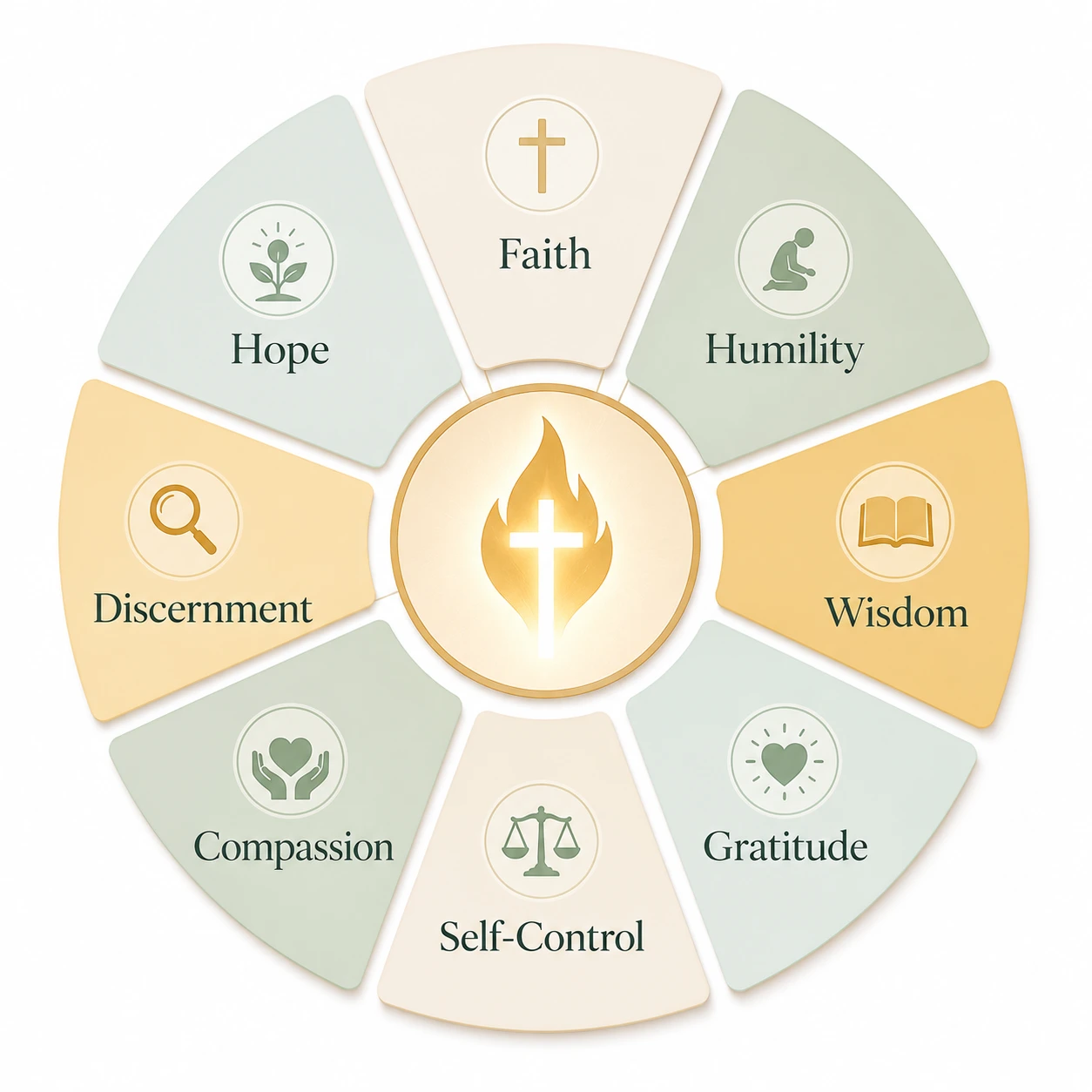
A spiritually minded person is not defined by perfection but by consistent orientation toward spiritual growth and godly values. Common characteristics include:
- Faith-centered thinking — trusting in God’s plan even when circumstances are unclear
- Humility — recognizing that wisdom and strength come from beyond oneself
- Wisdom — making decisions based on discernment rather than impulse
- Gratitude — maintaining thankfulness regardless of current conditions
- Self-control — governing emotions and reactions with intention
- Compassion — responding to others with patience and genuine care
- Discernment — distinguishing between truth and deception, healthy and harmful patterns
- Hope during challenges — maintaining confidence in a good outcome even in difficulty
A spiritually minded person does not avoid struggle. They engage with life from a stable inner foundation, which allows them to face adversity without losing their sense of identity or purpose.
What Does the Bible Say About a Spiritual Mindset?
Key Spiritual Mindset Bible Verses
The Bible consistently teaches that the condition of the mind determines the direction of a person’s life. Several passages directly address the concept of spiritual mindset and spiritually minded thinking.
| Bible Verse | Main Teaching | Practical Application |
|---|---|---|
| Romans 8:6 | To be spiritually minded is life and peace | Redirect anxious thoughts toward God’s promises |
| Romans 12:2 | Be transformed by the renewing of your mind | Replace worldly thinking patterns with Scripture-based truths |
| Philippians 4:8 | Dwell on things that are true, noble, right, and pure | Filter daily media and thought content intentionally |
| Colossians 3:2 | Set your mind on things above, not earthly things | Regularly return focus to eternal priorities during daily decisions |
| Isaiah 26:3 | God keeps in perfect peace those whose minds are fixed on Him | Practice consistent prayer and meditation to cultivate inner calm |
These godly mindset scriptures are not simply motivational slogans — they describe a complete reorientation of how a person thinks, values, and responds to life. Each spiritually minded scripture connects inward transformation with outward fruit such as peace, wisdom, and righteous living.
Biblical Meaning of Being Spiritually Minded
The biblical meaning of being spiritually minded centers on a contrast the Apostle Paul draws in Romans 8: the mind governed by the flesh leads to death, while the mind governed by the Spirit leads to life and peace.
This is not a comparison between physical and non-physical things. It is a contrast between a life governed by self-interest, fear, and worldly values versus a life governed by the Holy Spirit, divine wisdom, and eternal perspective. A common misunderstanding is that being spiritually minded means being passive, emotionally detached, or disconnected from ordinary life. Scripture presents the opposite — spiritual mindedness actively engages with real life through transformed values.
Biblical transformation of the mind, described in Romans 12:2 as anakainōsis (renewal), is an ongoing process. It involves exposing the mind to Scripture, prayer, and spiritual community consistently over time, allowing old patterns of thinking to be gradually replaced by godly truth.
Benefits of Being Spiritually Minded
The benefits of being spiritually minded extend across every dimension of life — emotional, relational, spiritual, and practical.
- Inner peace — a stable sense of calm that persists through uncertainty, rooted in trust in God
- Better decision-making — access to wisdom that goes beyond personal analysis or cultural opinion
- Stronger faith — regular engagement with spiritual truth builds confidence in God’s character and promises
- Emotional resilience — spiritual grounding reduces the impact of setbacks and prevents emotional collapse
- Greater purpose — life decisions are aligned with something meaningful and lasting
- Healthier relationships — values like compassion, patience, and forgiveness improve how you relate to others
- Increased wisdom — discernment grows with spiritual maturity, improving judgment across many situations
- Hope during uncertainty — a spiritually minded person maintains forward-looking confidence even in difficulty
In our experience helping readers build better habits, those who consistently invest in spiritual mindset development report measurable improvements in emotional stability and clarity of purpose — even before they notice changes in external circumstances.
How to Develop a Spiritual Mindset
Build Daily Spiritual Habits
Developing a spiritual mindset does not happen through a single decision. It is the accumulated result of consistent daily habits that gradually shape how you think and respond.Understanding how to build good habits in 30 days can give you a structured framework for establishing the spiritual routines described above.
Key habits that build a spiritual mindset include:
- Daily Bible reading — regular exposure to Scripture rewires thinking patterns over time
- Prayer — maintaining active communication with God anchors the mind in relationship rather than self-reliance
- Reflection — pausing to consider how daily experiences connect to spiritual values
- Worship — expressing gratitude and adoration shifts focus away from self and circumstances
- Gratitude practice — intentionally noting blessings builds a habit of abundance-oriented thinking
- Journaling — writing down insights, prayers, and observations deepens spiritual self-awareness
- Serving others — acts of service reinforce values of compassion and humility in a practical way
- Christian community — regular fellowship provides accountability, encouragement, and shared wisdom
Your Daily Thrive recommends starting with two or three of these habits rather than attempting all at once. Sustainable consistency beats intense but brief effort every time.
How to Change Your Mindset Spiritually
Changing your mindset spiritually is a gradual process of replacing ingrained thought patterns with truth rooted in Scripture and faith. Neuroscience supports what Scripture has long taught — repeated thought patterns form mental pathways, and those pathways can be redirected with intentional practice.
How to have a spiritual mindset begins with identifying the specific areas where your thinking is driven by fear, comparison, resentment, or worldly values. Once identified, those patterns are addressed by consistently introducing biblical truth into those exact areas — through memorization, prayer, journaling, or community dialogue.
How to change your mindset spiritually is not about forcing positivity. It is about consistently returning your attention to what is true, good, and eternal — especially in the moments when circumstances tempt you toward anxiety or despair.If you are just starting out, exploring positive mindset tips for beginners alongside Scripture-based practice gives you a practical entry point into this journey.
Spiritual Mindset vs Positive Thinking
A spiritual mindset is often confused with positive thinking, but the two are fundamentally different in origin, foundation, and purpose.
| Category | Spiritual Mindset | Positive Thinking |
|---|---|---|
| Foundation | Biblical truth and relationship with God | Self-generated optimism and mental effort |
| Source of Hope | God’s character, promises, and sovereignty | Personal willpower and mental reframing |
| Decision Making | Guided by Scripture, prayer, and discernment | Guided by personal goals and self-belief |
| Long-Term Purpose | Eternal significance and God’s will | Personal success, fulfillment, and achievement |
| Response to Suffering | Trusts in God’s redemptive purpose | Reframes or minimizes negative experience |
Both approaches value the power of mindset over outcomes. Both acknowledge that how you think shapes how you live. However, a spiritual mindset does not require denying reality or manufacturing enthusiasm — it anchors hope in a trustworthy source outside the self. Positive thinking, while useful in limited contexts, lacks the theological grounding and relational dimension that spiritual mindedness provides.
Spiritual Growth and Mindset Transformation
How Spiritual Growth Shapes Your Thinking
Spiritual growth and mindset are inseparable. As a person grows spiritually — through consistent Scripture engagement, prayer, community, and obedience — their thinking progressively aligns with godly values. This is not merely a religious concept. It reflects how repetitive exposure to truth and virtue gradually reshapes perception, priorities, and responses.
A spiritual growth mindset recognizes that maturity is not linear. There are seasons of rapid growth and seasons of apparent stillness. What matters is the overall direction: consistently orienting thought and life toward God’s character and purposes. As of 2025, many spiritual formation teachers and researchers emphasize that sustained community engagement is one of the strongest accelerators of this growth — private practice alone rarely produces the same depth of transformation.
Signs Your Spiritual Mindset Is Maturing
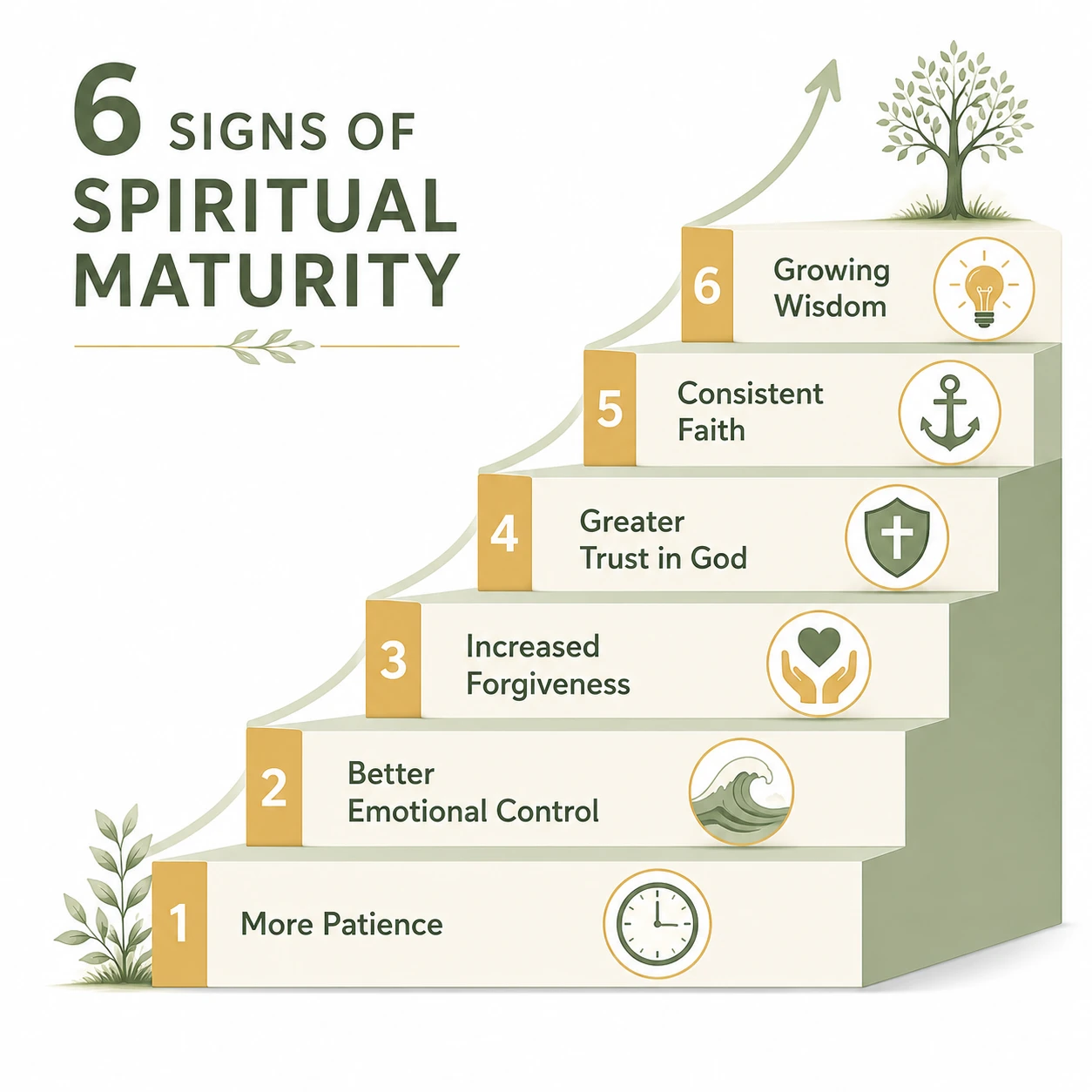
Spiritual maturity is best observed through behavioral and attitudinal shifts rather than feelings alone. Signs that your spiritual mindset is developing include:Pairing these signs with daily growth mindset affirmations can reinforce your progress and keep your focus anchored during slower seasons of growth.
- More patience — reactions slow down; responses become more considered
- Better emotional control — less reactivity in stressful situations
- Increased forgiveness — releasing offenses becomes more natural and less effortful
- Greater trust in God — anxiety decreases in areas previously dominated by worry
- Consistent faith — spiritual commitment holds steady through difficult seasons
- Growing wisdom — decisions reflect deeper discernment and longer-term thinking
Understanding Spiritual Shifts in the Bible
What Is a Spiritual Shift in the Bible?
A spiritual shift in the Bible refers to a significant transformation in a person’s inner orientation, values, or understanding as a result of an encounter with God, a season of testing, or a deepening of faith. These shifts are not superficial mood changes — they represent fundamental realignments of identity, purpose, and worldview.
Biblical examples include Paul’s transformation on the road to Damascus (Acts 9), which shifted him from persecuting Christians to becoming one of history’s most influential apostles. Jacob’s wrestling with God (Genesis 32) resulted in a new name and a new identity. Peter’s denial and subsequent restoration (John 21) produced a depth of humility and conviction that shaped his entire ministry.
What is a spiritual shift in the Bible, in practical terms? It is the moment when a person’s framework for understanding life, themselves, and God is permanently altered — producing lasting changes in thought, behavior, and relationship with God.
Common Seasons of Spiritual Growth
Spiritual growth frequently occurs through specific kinds of seasons rather than uniformly across time. Common seasons include:
- Seasons of challenge — difficulty strips away self-reliance and deepens dependence on God
- Seasons of learning — intentional study of Scripture or spiritual teaching expands understanding
- Seasons of obedience — choosing to act on faith even without certainty produces trust and character
- Seasons of waiting — patience cultivated in uncertainty builds endurance and hope
- Seasons of community — relationships with mature believers accelerate growth through shared wisdom and accountability
Recognizing which season you are in helps calibrate expectations and sustain commitment through slower or more painful periods of development.
Common Challenges When Developing a Spiritual Mindset
Why People Struggle
Despite good intentions, many people find it difficult to sustain a spiritual mindset. Common obstacles include:
- Distractions — digital media, busyness, and noise compete constantly for mental attention
- Fear — uncertainty about the future can override faith-based thinking
- Doubt — unresolved questions about God, Scripture, or personal worthiness create internal resistance
- Busyness — packed schedules crowd out time for prayer, reflection, and Scripture
- Negative influences — environments and relationships that reinforce worldly values undermine spiritual progress
- Inconsistent habits — sporadic engagement with spiritual practices prevents the deep-rooting of new thinking patterns
How to Overcome These Challenges
Overcoming these challenges requires both practical strategy and spiritual anchoring:
- Address distractions by creating intentional boundaries — designated times for prayer and Scripture that are protected from interruption
- Counter fear by memorizing and returning to specific biblical promises relevant to your situation
- Process doubt honestly through journaling, trusted community, or pastoral guidance — unexamined doubt tends to grow, while examined doubt often leads to stronger faith
- Simplify your schedule by identifying non-essential commitments that can be reduced or removed
- Curate your environment by intentionally increasing exposure to spiritually healthy content and community
- Build habits through accountability — a prayer partner, small group, or spiritual director significantly improves consistency
In our experience working with readers across different life stages, the single most effective strategy is pairing one daily habit with an existing routine — morning prayer after coffee, Scripture reading before bed — rather than attempting to add an entirely new block of time to an already full day.
Common Beginner Mistakes
Many people who begin developing a spiritual mindset encounter the same set of predictable pitfalls. Awareness of these mistakes significantly increases the chance of sustained growth:
- Expecting instant transformation — spiritual growth is gradual; expecting rapid change leads to discouragement when results take time
- Confusing emotions with spirituality — feeling peaceful or moved does not equal spiritual maturity; and feeling dry or flat does not indicate spiritual failure
- Reading Scripture without application — knowledge without practice produces intellectual familiarity, not genuine transformation
- Neglecting consistency — irregular spiritual practice prevents habits from taking root; brief but daily engagement outperforms occasional intensive sessions
- Comparing spiritual growth with others — growth is deeply personal and non-linear; comparison creates either pride or discouragement, both of which hinder progress
- Focusing on perfection instead of progress — spiritual development is a direction, not a destination; expecting flawlessness leads to shame-based patterns that undermine authentic growth
Practical Guide to Living with a Spiritual Mindset
Daily Practice Guide
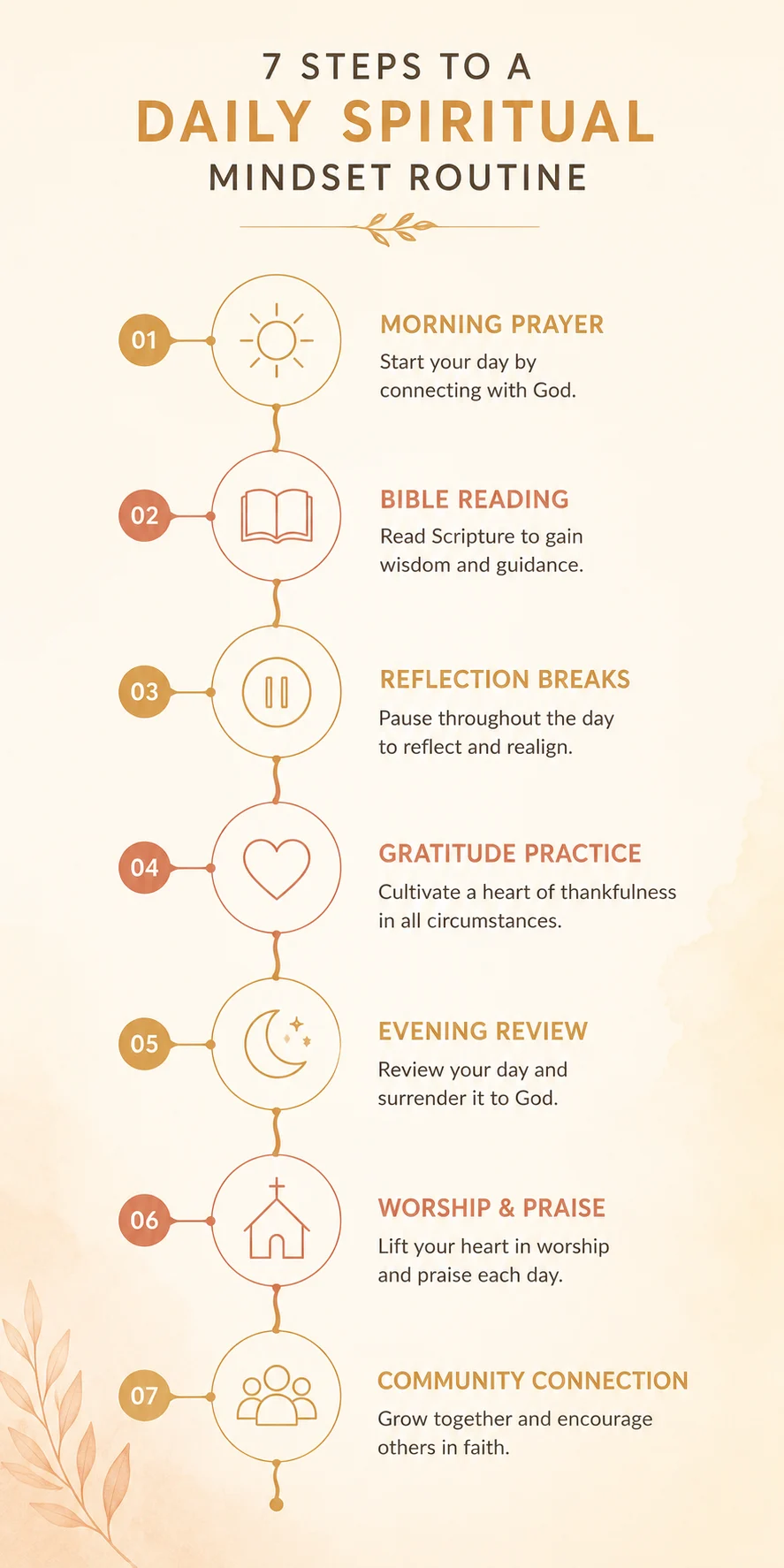
A realistic daily routine for building and sustaining a spiritual mindset includes:
- Morning prayer — begin the day by orienting your mind toward God before engaging with demands or screens
- Bible reading — a structured reading plan (even 5–10 minutes) provides consistent Scripture input
- Reflection breaks — brief mid-day pauses to recalibrate focus and release accumulated stress
- Gratitude practice — note two or three specific things you are grateful for, connecting them to God’s provision
- Evening review — a short reflection on where spiritual values were expressed well and where growth is still needed
- Weekly worship — participation in corporate worship deepens community and reinforces individual commitment
- Community involvement — regular connection with a faith community provides mentorship, accountability, and shared growth
Difficulty & Time Investment
Developing a spiritual mindset is beginner-friendly in terms of entry point — no advanced theological knowledge is required. The primary investment is time and consistency rather than complexity.
A realistic daily time commitment is 15–30 minutes for reading, prayer, and brief reflection. This can be distributed across the day rather than completed in one block. Lifestyle adjustments are usually modest — the primary shift is prioritizing spiritual practice over passive consumption habits like excessive social media or television.
Long-term consistency is the greatest challenge, not the habits themselves. Environmental design — placing a Bible where it is visible, keeping a journal nearby, scheduling community events in advance — significantly improves follow-through rates over time.
Results Timeline
Early changes in a spiritual mindset practice are typically attitudinal rather than circumstantial. Within the first few weeks, many people notice increased calm during stressful moments, greater awareness of their thought patterns, and small but meaningful shifts in how they respond to frustration or uncertainty.
Over months, deeper changes become apparent: more consistent emotional regulation, stronger faith through difficulty, improved relationships, and a growing sense of purpose and direction. Full spiritual maturity is a lifelong process. There is no finish line — only deepening, broadening, and strengthening over time.
Factors that accelerate growth include strong community involvement, consistent daily habits, honest self-reflection, and willingness to act on conviction even when it is uncomfortable.
Conclusion
A spiritual mindset is the foundation of a life characterized by peace, wisdom, purpose, and resilience. Rooted in biblical truth, it is not a technique or a personality trait — it is a continuously renewed orientation of the heart and mind toward God, eternal values, and genuine transformation.
The Bible is clear: to be spiritually minded is life and peace (Romans 8:6). That peace is available to anyone willing to consistently engage with Scripture, prayer, community, and intentional reflection. Developing a spiritual mindset takes time, but every small, faithful step contributes to lasting inner change.
Begin where you are. Start with one habit. Return to it daily. Over time, your thinking, your responses, and your relationships will reflect the transformation that consistent spiritual growth produces.
Frequently Asked Questions
What is a spiritual mindset?
A spiritual mindset is a consistent pattern of thinking and perceiving life through the lens of spiritual truth, eternal values, and a relationship with God. It means allowing faith, Scripture, and divine wisdom to shape thoughts, decisions, and responses rather than being governed primarily by circumstances, emotions, or cultural pressures.
What does it mean to be spiritually minded according to the Bible?
According to the Bible, being spiritually minded means having a mind governed by the Holy Spirit rather than by worldly or self-centered values. Romans 8:6 states that to be spiritually minded is life and peace. It involves ongoing renewal of the mind through Scripture, prayer, and obedience to God’s truth.
Which Bible verses teach about a spiritual mindset?
Key Bible verses on spiritual mindset include Romans 8:6 (spiritual mindedness leads to life and peace), Romans 12:2 (be transformed by the renewing of your mind), Philippians 4:8 (dwell on what is true, noble, and pure), Colossians 3:2 (set your mind on things above), and Isaiah 26:3 (God keeps in perfect peace those whose minds are fixed on Him).
How can I develop a spiritual mindset every day?
You can develop a spiritual mindset daily through consistent habits including morning prayer, structured Bible reading, mid-day reflection breaks, gratitude practice, evening review, weekly worship, and regular involvement in a faith community. Starting with 15–30 minutes daily and building consistency over time is more effective than occasional intensive efforts.
What are the benefits of being spiritually minded?
The benefits of being spiritually minded include inner peace, better decision-making, stronger faith, emotional resilience, greater sense of purpose, healthier relationships, increased wisdom, and sustained hope during uncertainty. These outcomes develop gradually through consistent spiritual practice and engagement with Scripture and community.
Is a spiritual mindset the same as positive thinking?
No. A spiritual mindset and positive thinking share an emphasis on the power of mental orientation, but they differ significantly. Positive thinking relies on self-generated optimism and personal willpower. A spiritual mindset is grounded in biblical truth, relationship with God, and divine wisdom — providing a source of hope that is external to oneself and remains stable through suffering and uncertainty.
What is a spiritual shift in the Bible?
A spiritual shift in the Bible refers to a significant, lasting transformation in a person’s inner orientation, identity, or understanding as a result of an encounter with God or a season of spiritual growth. Biblical examples include Paul’s conversion (Acts 9), Jacob’s wrestling with God (Genesis 32), and Peter’s restoration (John 21) — each resulting in permanent changes in character and direction.
How do I know if I’m growing spiritually?
Signs of spiritual growth include increased patience, better emotional regulation, a growing capacity for forgiveness, deepening trust in God, consistency of faith through difficult seasons, and expanding wisdom in decisions. Growth is most reliably observed in behavioral patterns and attitudinal shifts over time rather than in feelings or spiritual experiences alone.