
Introduction
A mindset training institute is an organization that provides structured learning designed to help people build productive mental habits, resilience, leadership ability, and overall performance. Rather than a single universal institution, the term describes a category of educational providers — ranging from small coaching academies to large professional development organizations — that teach people how to think, respond, and grow more effectively. These programs typically draw on mindset coaching, growth mindset principles, personal development frameworks, leadership training, and behavioral change science. As of 2026, more organizations are blending in-person workshops with digital coaching platforms, making mindset education more accessible than ever. In our experience helping readers evaluate personal growth programs, the right institute depends less on brand name and more on fit: your goals, your learning style, and your willingness to practice consistently.
Quick Summary
- A mindset training institute teaches practical methods for developing productive thinking patterns and behaviors.
- Programs may focus on personal growth, leadership, communication, resilience, or professional development.
- Formats vary widely — online, in-person, self-paced, or cohort-based — with different levels of personalization.
- Choosing the right institute depends on your goals, learning style, and desired outcomes.
- Consistent practice, not program length, is the strongest predictor of real behavioral change.
What Is a Mindset Training Institute?
A mindset training institute is an educational organization that teaches structured methods for changing thought patterns, habits, and behaviors to improve personal or professional performance. Unlike a one-time motivational seminar, which delivers inspiration in a single session, or life coaching, which is typically one-on-one and open-ended, a mindset training institute follows a defined curriculum with sequential lessons, exercises, and measurable objectives.
These institutes exist because mindset — the collection of beliefs and thinking habits a person holds — has a direct, well-documented influence on behavior. Structured programs give people a repeatable process for changing that mindset rather than relying on willpower alone.
Mindset Training Meaning
Mindset refers to the underlying beliefs, attitudes, and habitual thinking patterns that shape how a person interprets situations and makes decisions. A person’s mindset influences how they respond to failure, approach new challenges, learn new skills, and sustain motivation over time. Mindset training is the deliberate, structured practice of identifying unhelpful thought patterns and replacing them with more constructive ones. Understanding the mindset psychology behind these patterns helps explain why structured training is more effective than willpower alone.
Goals of Mindset Training
Most mindset training programs are built around a consistent set of core objectives:
- Building self-confidence and self-efficacy
- Improving resilience under stress or setbacks
- Strengthening leadership and decision-making ability
- Supporting better, faster decision-making
- Developing emotional regulation skills
- Encouraging continuous learning and adaptability These goals connect directly to a larger idea worth understanding on its own — why growth mindset is important for long-term personal and professional success.
How Does Mindset Training Work?
Mindset training works by combining instruction with repeated practice, feedback, and real-world application. Rather than presenting information passively, most programs use interactive exercises, structured reflection, and group discussion so participants actively rehearse new thinking patterns instead of simply hearing about them. Coaching sessions and accountability check-ins reinforce the material between formal lessons, and participants are typically asked to apply what they learn in daily situations so the new patterns become habitual rather than theoretical.
Common Learning Methods
Programs typically draw from a mix of the following:
- Classroom-style or workshop-based instruction
- Virtual or hybrid instruction
- Structured practice exercises
- Goal-setting frameworks
- Accountability systems (partners, check-ins, or trackers)
- Ongoing feedback loops with instructors or coaches
Skills Commonly Developed
- Communication
- Confidence
- Adaptability
- Problem-solving
- Critical thinking
- Emotional intelligence
- Leadership
- Teamwork
Types of Mindset Training Programs
Mindset training institutes generally organize their offerings into a few broad categories, each targeting a different outcome.
Personal Development Programs
These programs focus on the individual rather than a workplace context. Core themes include self-awareness, confidence-building, habit formation, and sustaining motivation over time. They’re often the entry point for people new to structured mindset work. If you want to start building these skills on your own, explore practical personal development activities you can begin today.
Leadership Mindset Programs
Leadership-focused programs teach the thinking patterns associated with effective decision-making, team management, and organizational influence. These programs often combine mindset concepts with practical leadership frameworks and are commonly used inside companies for management development.
Professional and Career Development
This category addresses workplace-specific mindset challenges: productivity, communication under pressure, adaptability during change, and strategies for career advancement. It’s frequently chosen by professionals preparing for a promotion or career transition.
Online vs In-Person Mindset Training Institutes
Both formats deliver the same underlying content, but the learning experience differs significantly. A mindset training institute online typically offers greater scheduling flexibility and lower cost, while in-person programs tend to offer richer interaction and stronger networking opportunities.
| Feature | Online Programs | In-Person Programs |
|---|---|---|
| Flexibility | High — self-paced or scheduled around your calendar | Lower — fixed class times and locations |
| Interaction | Moderate — via video, chat, or forums | High — face-to-face discussion and exercises |
| Networking | Limited to virtual communities | Strong — in-person relationship building |
| Cost | Generally lower | Generally higher due to venue and logistics |
| Learning Pace | Often self-directed | Typically group-paced |
| Accessibility | Available regardless of location | Limited by geography |
Which Learning Format Is Best?
The best format depends on individual learning preferences, scheduling flexibility, budget, and geographic access. Visual and self-directed learners often do well online, while people who benefit from real-time accountability and in-person energy may prefer a physical classroom. Budget-conscious learners and those in areas without local programs typically gravitate toward online options.
What Can You Learn in a Mindset Training Institute?
Mindset training institutes generally cover a broad set of interconnected skills and concepts, including:
- Growth mindset principles
- Fixed vs growth thinking
- Goal-setting frameworks
- Resilience and stress management
- Communication skills
- Leadership fundamentals
- Productivity habits
- Emotional intelligence
- Decision-making processes
Who Can Benefit from Mindset Training?
Mindset training is broadly applicable because thinking patterns affect performance in nearly every context. Common participants include:
- Students preparing for academic or career transitions
- Working professionals seeking career growth
- Business owners managing uncertainty and risk
- Managers developing their teams
- Leaders responsible for organizational direction
- Coaches expanding their own skill set
- Entrepreneurs building resilience through early-stage challenges
- Career changers adapting to new industries
How to Become a Mindset Coach
People frequently ask how to become a mindset coach after completing their own training. The path typically combines formal learning with supervised practice rather than a single certification exam.
Skills Needed
- Strong communication ability
- Coaching and questioning techniques
- Foundational knowledge of psychology
- Active listening
- Leadership and facilitation skills
Typical Learning Path
Most aspiring coaches follow a similar progression:
- Complete foundational education in psychology, coaching, or behavioral science
- Earn a relevant coaching certification
- Gain practical experience through supervised or volunteer coaching
- Pursue continuing education to stay current with research
- Commit to ethical coaching practices and clear professional boundaries
Mindset Training vs Mindset Coaching

Mindset training and mindset coaching are related but structurally different. Training is typically curriculum-based and delivered to groups, while coaching is personalized and delivered one-on-one.
| Aspect | Mindset Training | Mindset Coaching |
|---|---|---|
| Structure | Structured curriculum with defined modules | Flexible, personalized sessions |
| Duration | Fixed program length | Open-ended, ongoing |
| Personalization | Moderate — same content for all participants | High — tailored to the individual |
| Learning Style | Group-based instruction | One-on-one dialogue |
| Outcomes | Broad skill-building across a group | Targeted change for a specific person |
Common Challenges During Mindset Development
Even well-designed programs encounter predictable obstacles. Understanding them in advance improves the odds of success.
Why Progress Sometimes Feels Slow
Progress can feel slow because of several overlapping factors: new habits require repeated reinforcement before they become automatic, existing thought patterns create cognitive resistance to change, participants often hold unrealistic expectations about how fast change happens, and environmental factors — such as stress, unsupportive social circles, or inconsistent routines — can slow momentum.
How to Stay Consistent
Consistency is best supported through daily practice, regular reflection, accountability structures, visible goal tracking, and ongoing feedback from a coach, instructor, or peer group.
Common Beginner Mistakes
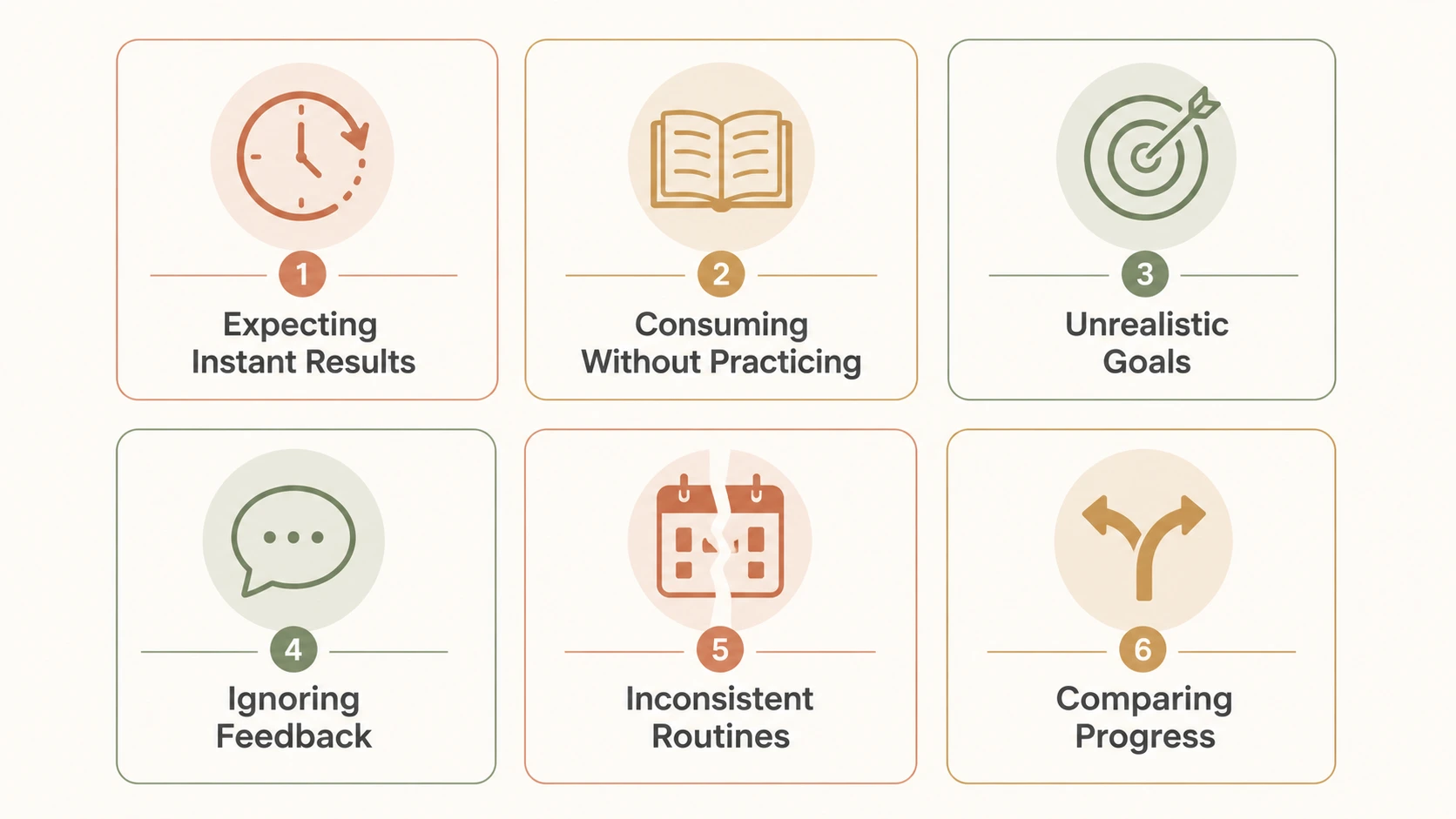
Several mistakes appear consistently among people new to mindset training:
- Expecting instant results: Mindset change is gradual; expecting overnight transformation leads to discouragement. Set incremental milestones instead.
- Consuming information without practice: Reading or watching content without applying it produces knowledge but not behavioral change. Pair every lesson with a concrete action.
- Setting unrealistic goals: Overly ambitious goals increase the risk of burnout or abandonment. Break large goals into smaller, achievable steps.
- Ignoring feedback: Skipping coach or peer feedback slows growth. Actively seek and apply feedback regularly.
- Inconsistent routines: Sporadic practice weakens habit formation. Anchor practice to a fixed daily or weekly schedule.
- Comparing progress with others: Comparison can distort perceived progress and reduce motivation. Track personal progress against your own baseline instead.
Difficulty and Time Investment
Mindset training is generally beginner-friendly, though the required time commitment varies by program depth and personal goals. Most structured programs ask for a modest weekly time investment — often in the range of a few dedicated sessions plus daily micro-practices — rather than a large single time block. Beginners typically start with foundational modules focused on self-awareness and basic habit-building, while advanced learners move into leadership-level or specialized coaching tracks. Factors that influence overall difficulty include prior exposure to self-reflection practices, current stress levels, and the amount of consistent practice a person can realistically sustain.
Results Timeline
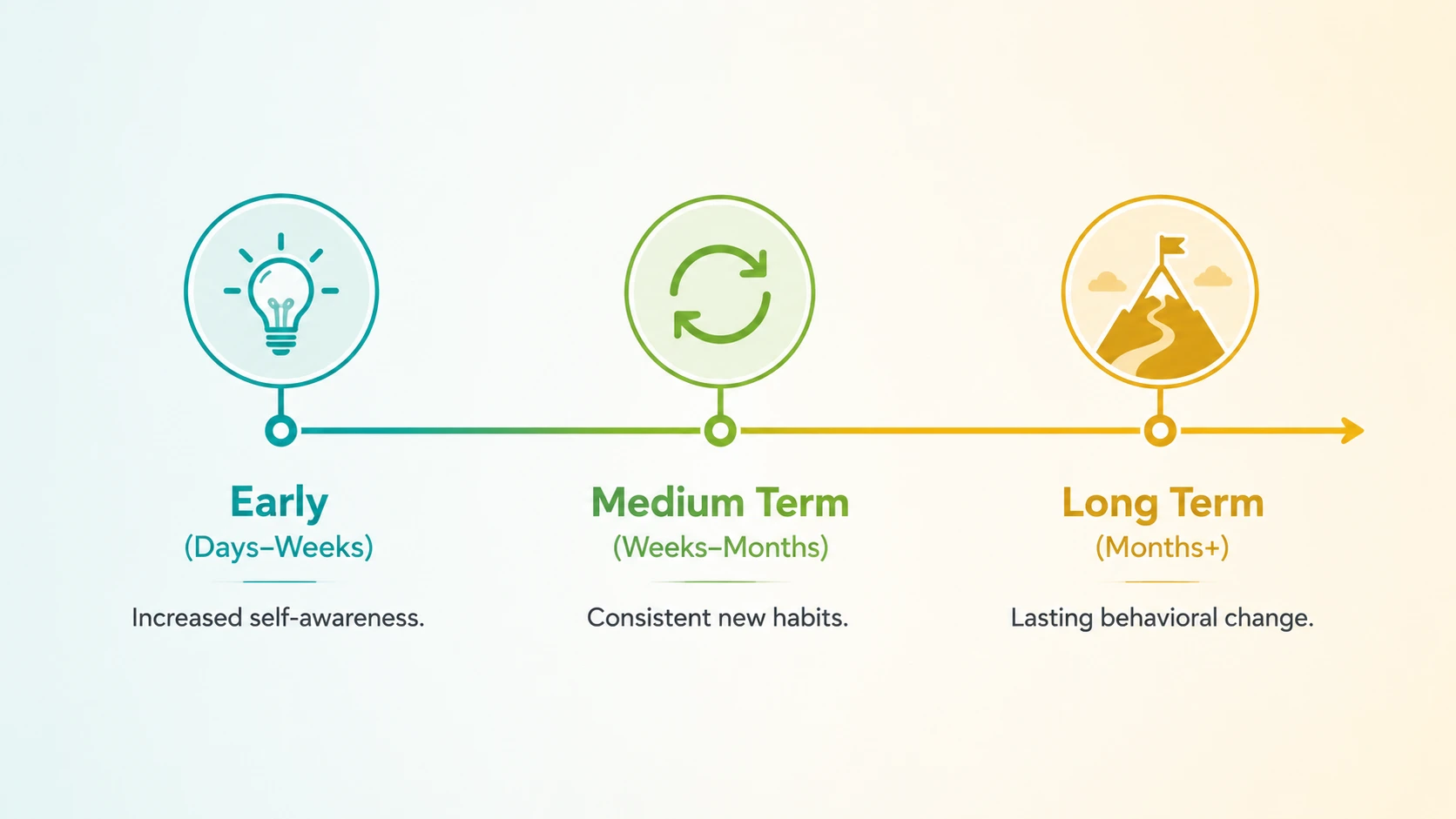
Results from mindset training typically follow a gradual, three-stage pattern rather than a sudden shift.
- Early stage (days to a few weeks): Increased self-awareness and small shifts in reaction patterns.
- Medium term (weeks to a few months): More consistent application of new thinking patterns in real situations, along with visible habit formation.
- Long term (several months and beyond): Durable behavioral change that persists without conscious effort.
Progress speed is influenced by consistency of practice, the complexity of the habits being changed, the level of environmental support, and individual factors such as prior mindset patterns and current life circumstances.
Practice Guide for Long-Term Mindset Growth
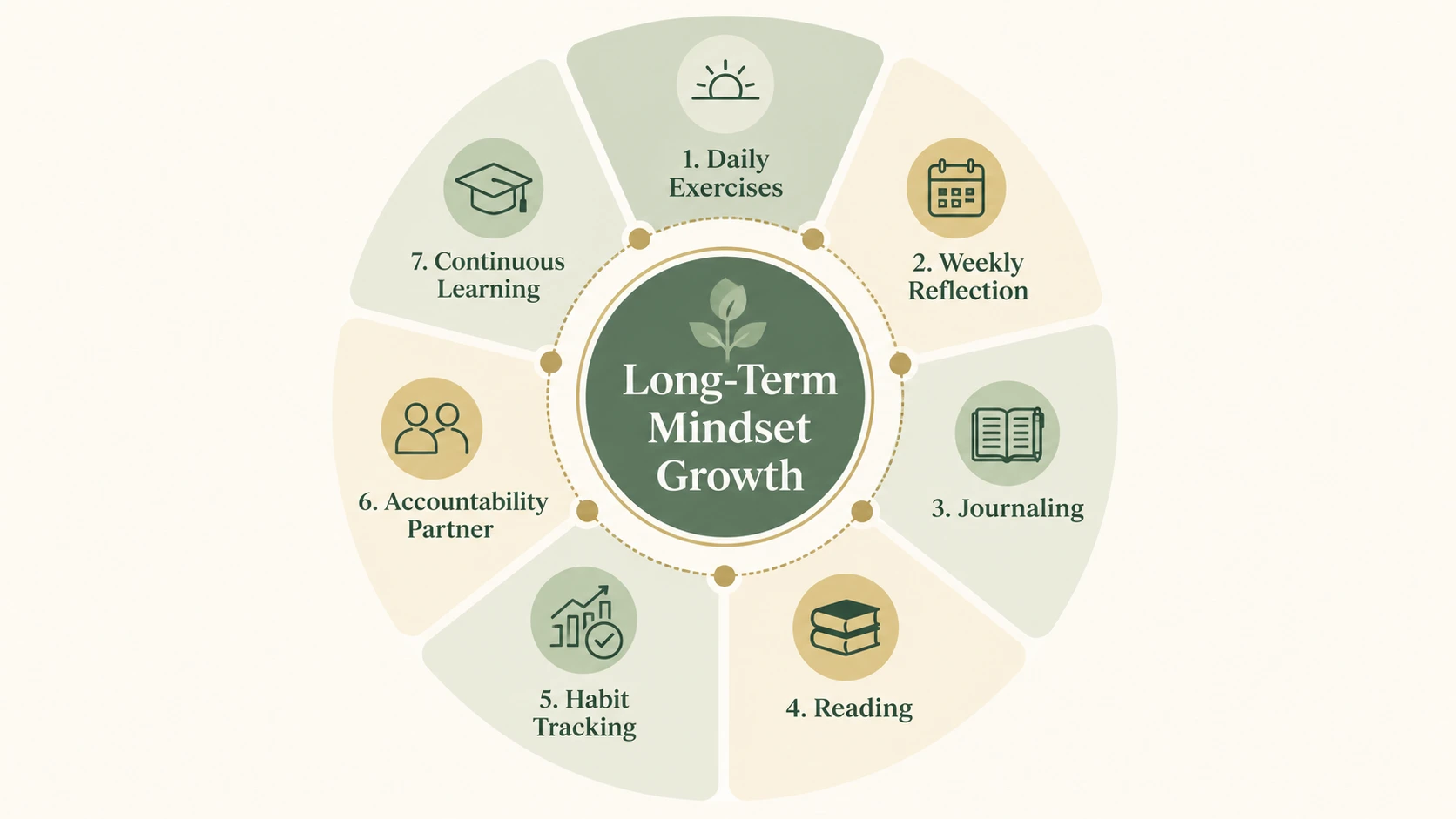
Sustained growth depends on consistent, structured practice rather than program completion alone. Your Daily Thrive recommends building the following elements into a long-term routine:
- Daily exercises: Short reflection or mindset check-ins to reinforce new thinking patterns.
- Weekly reflection: A dedicated review of progress, setbacks, and adjustments needed.
- Journaling: Written reflection to track thought patterns and identify recurring triggers.
- Reading: Ongoing exposure to behavioral science and personal development material.
- Habit tracking: A simple system (digital or physical) to monitor consistency over time.
- Accountability partners: A peer, coach, or group to provide external accountability.
- Continuous learning: Periodic refresher courses or advanced modules to prevent plateaus.
Sustainability matters more than intensity. A modest routine practiced consistently across busy seasons of life will outperform an intensive routine that collapses under schedule pressure. Adjusting practice frequency — rather than abandoning it entirely — during demanding periods helps maintain long-term momentum.
How to Choose the Right Mindset Training Institute
Selecting the right institute involves evaluating several practical factors rather than choosing based on marketing alone:
- Instructor expertise and relevant credentials
- Curriculum quality and depth
- Teaching methods and format fit
- Accreditation, where applicable to the field
- Availability of student support
- Alignment between program content and your personal learning objectives
- Access to an ongoing community or alumni network
- Reviews and testimonials from past participants
- Program flexibility around schedule and pacing
Frequently Asked Questions About Mindset Training Institutes
What is mindset training?
Mindset training is a structured educational process that teaches people how to identify and change unhelpful thought patterns in order to improve resilience, confidence, decision-making, and overall performance.
What does mindset training help improve?
Mindset training commonly improves confidence, resilience, emotional regulation, communication, leadership ability, and decision-making, along with overall adaptability to change.
Who should attend a mindset training institute?
Students, professionals, managers, business owners, entrepreneurs, coaches, and anyone navigating a significant personal or career transition can benefit from structured mindset training.
Can mindset training improve professional performance?
Yes. Mindset training often strengthens workplace communication, leadership, stress management, and decision-making, all of which contribute directly to professional performance.
How long does it take to develop a stronger mindset?
Early shifts in self-awareness often appear within days to weeks, while durable behavioral change typically develops over several months of consistent practice.
What skills are taught in mindset training programs?
Common skills include growth mindset principles, resilience, communication, emotional intelligence, goal-setting, leadership, and productivity habits.
Is mindset coaching different from mindset training?
Yes. Mindset training is typically structured and delivered to groups through a set curriculum, while mindset coaching is personalized, one-on-one, and open-ended in duration.
Conclusion
A mindset training institute offers structured, repeatable methods for building resilience, confidence, leadership ability, and stronger decision-making — skills that carry value across personal and professional life. As of 2026, the growing availability of both online and in-person formats makes structured mindset education more accessible than ever, but the most suitable program still depends on individual goals, preferred learning format, and genuine commitment to consistent practice. In short: mindset training works best not as a one-time course, but as an ongoing practice supported by the right institute, the right format, and steady, realistic application over time.