Introduction
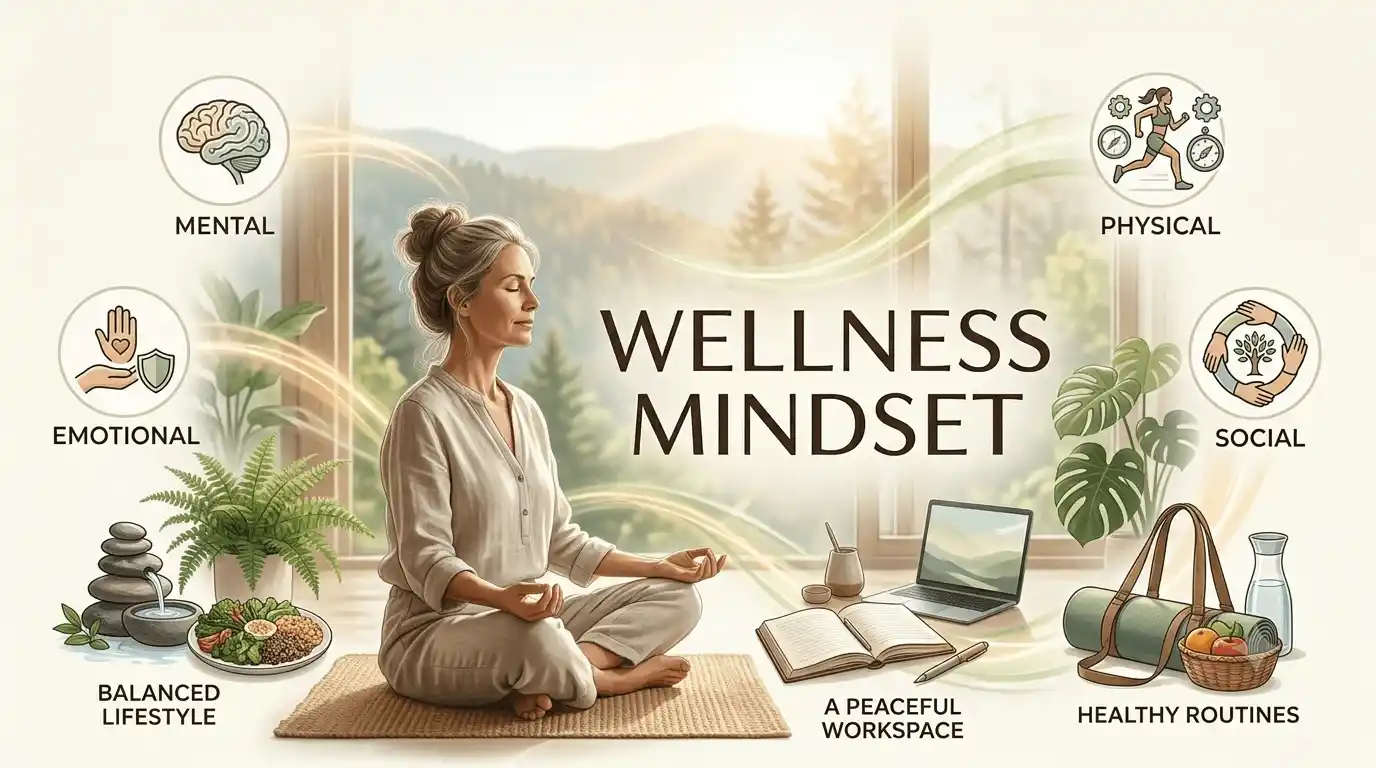
A wellness mindset is a way of thinking that prioritizes long-term physical, emotional, mental, and social well-being. It focuses on creating sustainable habits, developing self-awareness, and making choices that support overall quality of life. Unlike approaches that only target short-term improvements, a wellness mindset recognizes that thoughts, behaviors, relationships, and daily routines all influence personal growth. By understanding how mindset affects wellness, individuals can build stronger resilience, improve mental wellness, and create healthier patterns that support long-term balance.
By Your Daily Thrive | Self-Improvement & Personal Growth Expert
What Is a Wellness Mindset?
Core Definition and Meaning
A wellness mindset is a perspective that encourages individuals to actively support their overall well-being through intentional thoughts, behaviors, and lifestyle choices. It involves recognizing that health is influenced by more than physical condition alone. Emotional regulation, relationships, stress management, personal values, and daily habits all play important roles.
In simple terms, a wellness mindset means approaching life with the belief that well-being can be developed through awareness and intentional action. Instead of waiting until problems appear, individuals with this mindset focus on prevention, balance, and continuous improvement.
The concept of mindset wellness highlights the relationship between thinking patterns and healthy behaviors. The way people interpret challenges, set goals, and respond to setbacks can influence their ability to maintain positive habits.
A wellness mindset does not require perfection. It encourages realistic progress by helping people understand their needs, recognize limitations, and make choices that support long-term health.
Why Mindset Influences Overall Wellness
Mindset affects the connection between thoughts, emotions, and behaviors. Psychological research shows that cognitive patterns influence how people respond to stress, challenges, and opportunities for growth.
For beginners, developing healthier thought patterns can start with practical strategies such as positive mindset tips that encourage awareness, optimism, and constructive responses to challenges.
For example, someone who believes they can improve their habits may be more likely to continue exercising, learning new skills, or seeking support after setbacks. In contrast, someone who believes change is impossible may avoid taking action.
A wellness-oriented mindset can support:
- Better emotional regulation
- Healthier decision-making
- Greater resilience during difficult situations
- Improved motivation
- More consistent self-care practices
Behavioral science often emphasizes the importance of systems over willpower. Creating supportive routines and environments can make healthy choices easier to maintain.
Wellness Mindset vs Positive Thinking
A wellness mindset is broader than positive thinking. Positive thinking focuses mainly on maintaining optimistic thoughts, while a wellness mindset includes realistic awareness, problem-solving, and emotional acceptance.
A person with a wellness mindset understands that negative emotions and challenges are normal parts of life. The goal is not to eliminate difficulties but to develop healthier ways of responding to them.
For example:
| Positive Thinking | Wellness Mindset |
| Focuses on optimism | Focuses on balanced thinking |
| Avoids negative emotions | Accepts and manages emotions |
| May emphasize feeling good | Emphasizes sustainable well-being |
| Often focuses on outcomes | Focuses on habits and processes |
A wellness mindset combines optimism with practical action.
Why a Wellness Mindset Matters for Mental Wellness
The Connection Between Thoughts and Mental Well-Being
A wellness mindset supports mental wellness by helping individuals develop healthier relationships with their thoughts and emotions. Mental wellness involves the ability to manage emotions, handle stress, maintain relationships, and function effectively in daily life.
Thought patterns can influence emotional experiences. For example, constantly interpreting challenges as failures may increase stress, while viewing challenges as opportunities to learn can encourage resilience.
Psychological approaches such as Cognitive Behavioral Therapy (CBT) are based on the idea that thoughts, feelings, and behaviors are interconnected. Changing unhelpful thinking patterns can support healthier emotional responses.
A wellness mindset encourages practices such as:
- Recognizing automatic negative thoughts
- Developing emotional awareness
- Practicing self-compassion
- Building coping strategies
- Seeking support when needed
Benefits of a Wellness-Oriented Perspective
A wellness mindset can provide several long-term benefits:
- Improved stress management: People may develop healthier ways to respond to pressure.
- Greater emotional balance: Awareness helps individuals understand and regulate emotions.
- Stronger resilience: Challenges become opportunities for learning rather than reasons to give up.
- Better relationships: Emotional awareness can improve communication and connection.
- Increased motivation: Clear values and goals support consistent action.
In our experience helping readers build better habits, the biggest improvements often come from focusing on manageable daily actions rather than attempting major lifestyle changes immediately.
When an Unhealthy Mindset Creates Barriers
Certain thought patterns can interfere with wellness development. These patterns may prevent individuals from taking action or maintaining healthy behaviors.
Common barriers include:
- Perfectionism that creates unrealistic expectations
- Fear of failure that prevents trying new approaches
- Negative self-talk that reduces confidence
- Comparing personal progress with others
- Believing change must happen quickly
Recognizing these barriers is an important first step. A wellness mindset does not eliminate challenges, but it provides tools for responding to them more effectively.
The Major Dimensions of Wellness
What Are the 7 Types of Wellness?
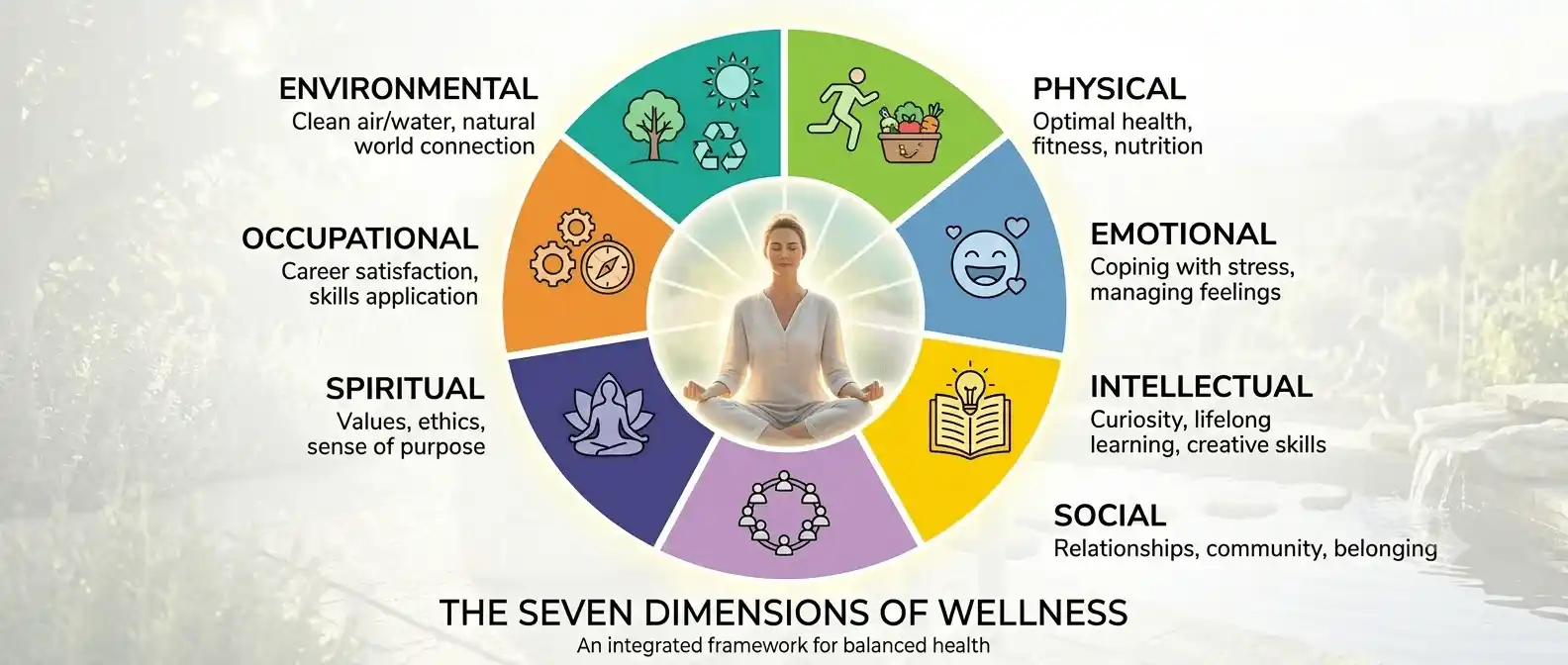
The seven types of wellness describe different areas that contribute to overall well-being. These dimensions are commonly used in wellness education frameworks to show that health is multidimensional.
The seven dimensions include:
- Physical wellness – Supporting the body through movement, nutrition, sleep, and preventive care.
- Emotional wellness – Understanding and managing emotions effectively.
- Intellectual wellness – Continuing learning, curiosity, and mental development.
- Social wellness – Building healthy relationships and meaningful connections.
- Spiritual wellness – Developing purpose, values, and personal meaning.
- Occupational wellness – Finding satisfaction and balance in work or professional activities.
- Environmental wellness – Creating surroundings that support health and comfort.
How These Dimensions Work Together
Wellness areas are interconnected rather than separate. A challenge in one area can affect others.
For example:
- Poor sleep may reduce emotional regulation.
- Workplace stress may affect physical health.
- Social isolation may influence mental wellness.
- A supportive environment may make healthy habits easier.
A wellness mindset recognizes these connections and encourages a balanced approach instead of focusing on only one area.
| Wellness Dimension | Main Focus | Examples |
| Physical | Body health | Exercise, nutrition, sleep |
| Emotional | Emotional awareness | Reflection, coping skills |
| Intellectual | Learning | Reading, skill development |
| Social | Relationships | Communication, community |
| Spiritual | Meaning and values | Reflection, purpose |
| Occupational | Work satisfaction | Career goals, balance |
| Environmental | Surroundings | Organization, healthy spaces |
Understanding the 5 C’s of Wellness
What Are the 5 C’s of Wellness?
The 5 C’s of wellness are a framework used to describe important qualities that contribute to personal growth and overall well-being. While different wellness programs may define them slightly differently, the concepts generally focus on connection, confidence, competence, character, and caring.
These principles support a wellness mindset by helping individuals strengthen both internal skills and external relationships.
The five areas include:
- Connection: Building meaningful relationships and maintaining social support.
- Confidence: Developing trust in personal abilities and decisions.
- Competence: Improving skills and knowledge through learning and practice.
- Character: Acting according to personal values and principles.
- Caring: Showing compassion toward yourself and others.
Together, these areas encourage balanced development and reinforce healthier patterns of thinking and behavior.
Applying the 5 C’s in Daily Life
The 5 C’s can be applied through simple daily practices:
- Strengthening connection by communicating openly and maintaining supportive relationships.
- Building confidence by setting realistic goals and recognizing progress.
- Developing competence by learning new skills and improving existing abilities.
- Supporting character by making decisions aligned with personal values.
- Practicing caring through empathy, kindness, and self-compassion.
Your Daily Thrive recommends focusing on gradual improvement rather than trying to change every area at once. Small, consistent actions are more likely to become sustainable habits.
What Is the Healthiest Mindset?
Characteristics of a Healthy Mindset
The healthiest mindset is generally one that combines self-awareness, adaptability, emotional balance, and a willingness to grow. It allows individuals to recognize challenges while still believing they can develop skills, improve behaviors, and make meaningful changes.
A healthy mindset does not mean avoiding difficult emotions or pretending problems do not exist. Instead, it involves responding to experiences in constructive ways.
Key characteristics include:
- Self-awareness: Understanding personal thoughts, emotions, strengths, and limitations.
- Adaptability: Adjusting to changing circumstances without losing direction.
- Self-compassion: Treating yourself with understanding during challenges.
- Growth orientation: Believing abilities can improve through effort and learning.
- Emotional regulation: Managing emotions effectively rather than reacting automatically.
These qualities support psychological resilience, which is the ability to recover and adapt after stressful experiences.
Growth Mindset vs Fixed Mindset
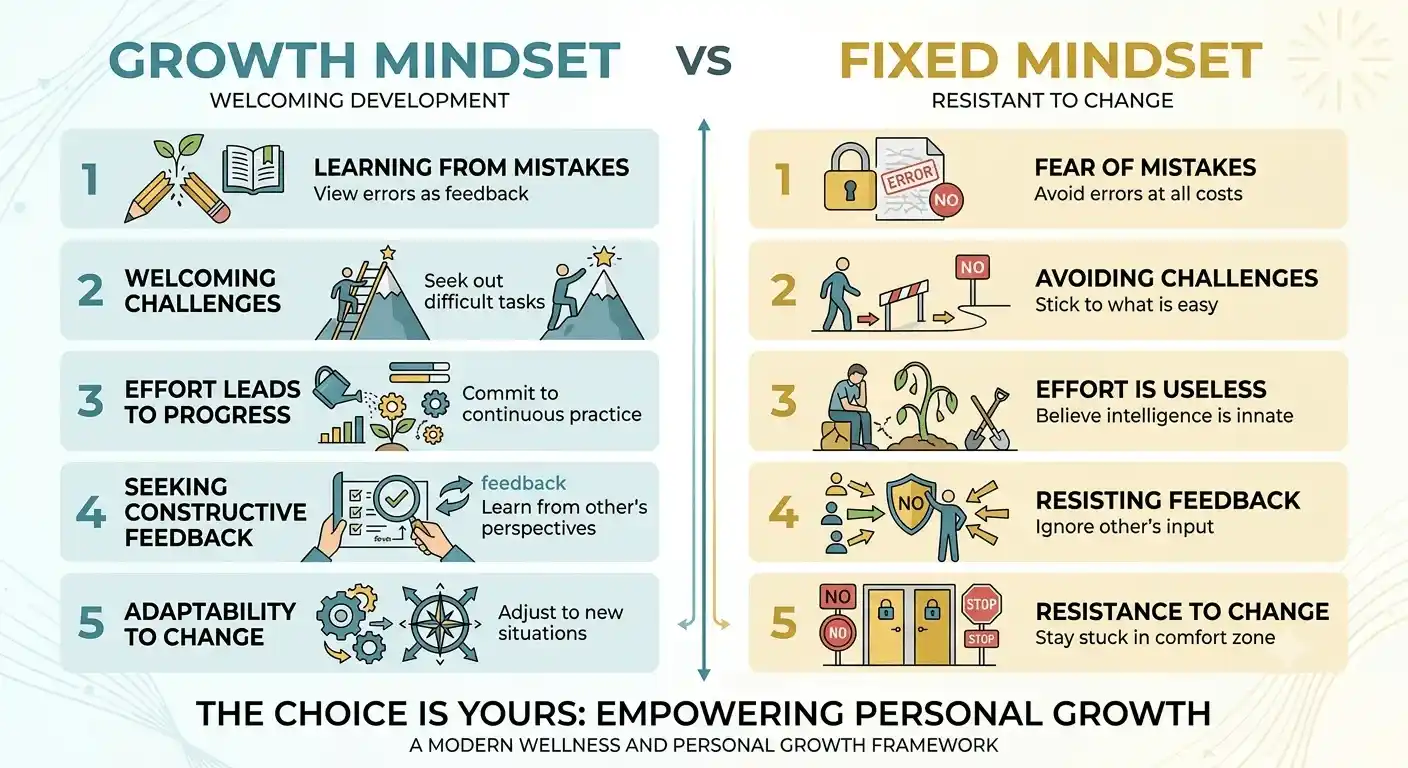
One of the most recognized psychological frameworks related to mindset is the growth mindset concept developed by psychologist Carol Dweck. This model explains how beliefs about ability can influence motivation, learning, and persistence.
| Growth Mindset | Fixed Mindset |
| Believes abilities can improve | Believes abilities are mostly permanent |
| Views mistakes as learning opportunities | Views mistakes as evidence of failure |
| Accepts feedback | Avoids criticism |
| Takes on challenges | Avoids situations where failure is possible |
| Values effort and improvement | Focuses mainly on proving ability |
A wellness mindset often aligns with growth mindset principles because both emphasize learning, flexibility, and continuous development.
Understanding why a growth mindset is important can help explain how beliefs about learning and improvement influence personal development.
However, wellness involves more than achievement. A person can have a growth mindset while still needing balance, rest, emotional awareness, and healthy boundaries.
Building a Wellness Mindset Step by Step
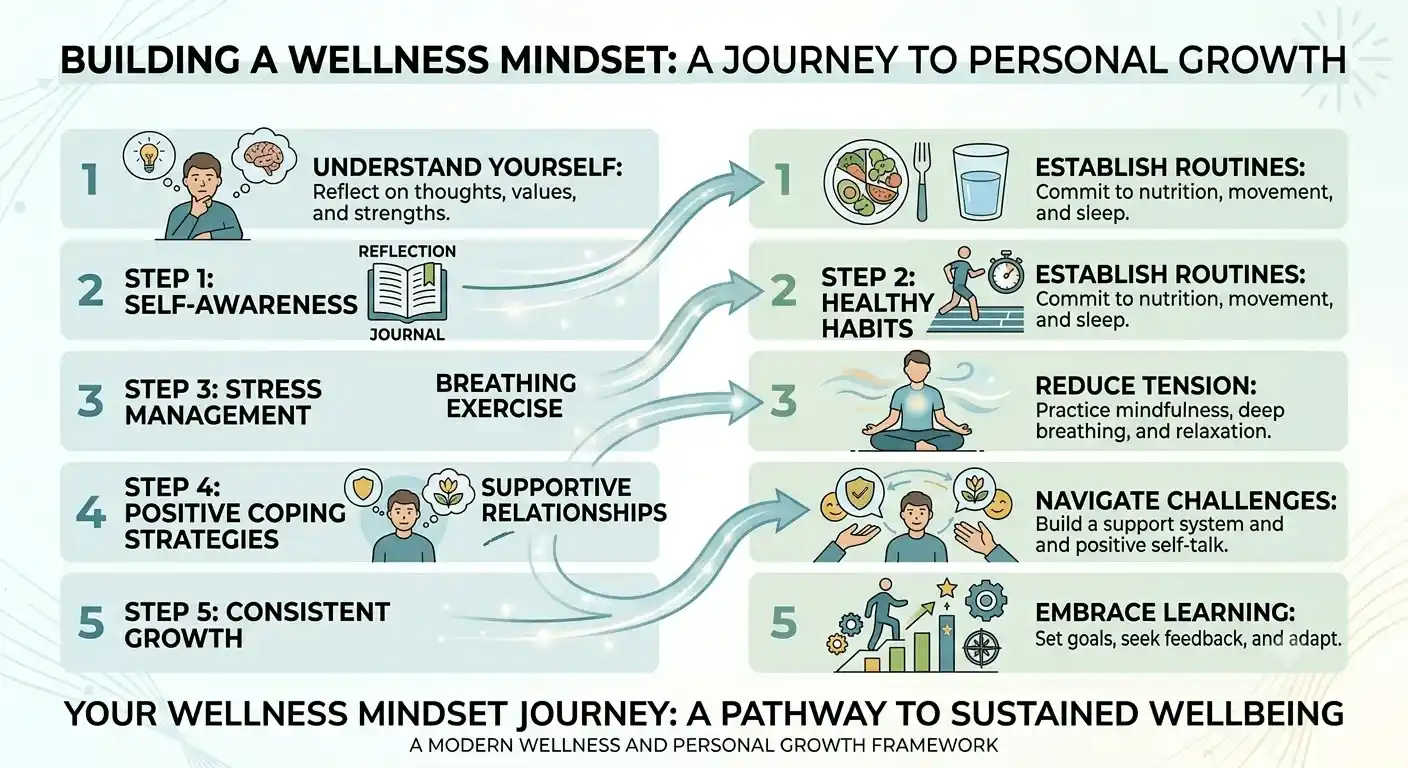
Wellness habits become easier to maintain when people develop systems instead of depending only on motivation. Learning how to build discipline without motivation can help create routines that continue even during difficult periods.
Developing Self-Awareness
Self-awareness is the foundation of a wellness mindset because it allows individuals to understand their behaviors, emotions, and patterns.
Without awareness, people may repeat habits that do not support their goals. With awareness, they can identify what needs to change and choose more effective responses.
Helpful self-awareness practices include:
- Journaling about thoughts and emotions
- Reflecting on daily experiences
- Practicing mindfulness
- Tracking habits and behaviors
- Identifying emotional triggers
Mindfulness-based approaches encourage people to observe thoughts without immediately reacting to them. This can improve emotional regulation and decision-making.
Creating Wellness-Supportive Habits
A wellness mindset becomes stronger when supported by consistent behaviors. Habits reduce the need to rely only on motivation because they create automatic routines.
Examples of wellness-supportive habits include:
- Maintaining regular sleep patterns
- Moving the body through exercise or daily activity
- Eating balanced meals
- Creating time for recovery
- Maintaining social connections
- Setting realistic goals
Behavioral science research suggests that small repeated behaviors are often more effective for long-term change than extreme short-term efforts.
Understanding the process of building good habits in 30 days can help individuals create realistic routines that support long-term wellness goals.
For example, walking for 20 minutes daily may be easier to maintain than committing to an intense exercise plan that quickly becomes overwhelming.
Managing Stress and Challenges
Stress is a normal part of life, but a wellness mindset changes how individuals respond to stress.
Effective stress management strategies include:
- Identifying stress triggers
- Creating healthy boundaries
- Using relaxation techniques
- Practicing problem-solving
- Asking for support when necessary
As of 2026, many evidence-based wellness approaches continue to emphasize recovery, emotional regulation, and sustainable routines rather than constant productivity.
A healthy wellness mindset recognizes that rest is not a lack of progress. Recovery supports long-term performance and mental wellness.
The Role of Mindset Counseling and Therapy in Wellness
What Is Mindset Counseling?
Mindset counseling is a supportive approach that helps individuals explore thoughts, beliefs, emotions, and behaviors that influence their well-being.
It focuses on understanding how internal perspectives affect daily choices and personal development.
Mindset counseling may help individuals:
- Identify limiting beliefs
- Improve confidence
- Develop healthier coping strategies
- Clarify personal goals
- Strengthen emotional awareness
Although mindset approaches vary between professionals, effective counseling is typically grounded in established psychological principles rather than simple motivational advice.
How Mindset Therapy Supports Mental Wellness
Mindset therapy often uses evidence-based psychological methods to help people develop healthier patterns.
Common approaches may include:
- Cognitive Behavioral Therapy (CBT): Examines connections between thoughts, emotions, and behaviors.
- Acceptance and Commitment Therapy (ACT): Helps individuals accept difficult experiences while acting according to values.
- Mindfulness-based approaches: Encourage awareness and emotional regulation.
A mindset therapist may help clients recognize unhelpful thought patterns and replace them with more balanced perspectives.
The goal is not to eliminate all negative thoughts but to develop healthier ways of responding to them.
When Professional Support May Be Helpful
Professional support may be useful when challenges begin affecting daily functioning, relationships, work, or emotional health.
Examples include:
- Ongoing stress
- Difficulty managing emotions
- Burnout
- Major life transitions
- Persistent feelings of anxiety or discouragement
Mindset counseling can complement personal development practices by providing structured guidance and individualized strategies.
Common Obstacles to Developing a Wellness Mindset
Why Motivation Often Fades
Motivation naturally changes over time. Many people struggle because they depend entirely on feeling motivated before taking action.
A stronger approach is creating systems that make healthy behaviors easier.
Common reasons motivation decreases include:
- Unrealistic expectations
- Trying to change too many habits at once
- Lack of visible progress
- Excessive pressure
- Poor planning
Instead of asking, “How can I stay motivated forever?” a wellness mindset asks, “How can I create routines that support me even when motivation is low?”
Overcoming Negative Self-Talk
Negative self-talk involves repeated critical or discouraging thoughts about oneself. These thoughts can reduce confidence and make behavior change more difficult.
Common examples include:
- “I always fail.”
- “I am not capable of changing.”
- “If I cannot do it perfectly, there is no point.”
Strategies for managing negative self-talk include:
- Questioning whether thoughts are based on facts
- Replacing extreme statements with balanced ones
- Practicing self-compassion
- Focusing on progress rather than perfection
Handling Setbacks Without Losing Progress
Setbacks are expected during personal growth. A missed workout, unhealthy decision, or difficult week does not erase previous progress.
A wellness mindset treats setbacks as information.
A productive response includes:
- Identify what caused the setback.
- Adjust the approach.
- Restart with a realistic next step.
- Continue building consistency.
This approach supports resilience and prevents temporary challenges from becoming long-term abandonment of goals.
Practical Ways to Maintain a Wellness Mindset Long Term
Daily Practices That Reinforce Wellness
Maintaining a wellness mindset requires regular attention because thoughts, habits, and circumstances continuously change. Long-term well-being is usually built through small actions that are repeated consistently rather than through occasional major efforts.
Helpful daily practices include:
- Reflection: Spend a few minutes reviewing emotions, choices, and priorities.
- Mindfulness: Practice being aware of thoughts and feelings without immediately reacting.
- Movement: Include physical activity that supports energy and health.
- Gratitude: Recognize positive experiences and sources of support.
- Healthy routines: Create consistent patterns around sleep, nutrition, and recovery.
These practices support self-regulation, which is the ability to manage thoughts, emotions, and behaviors in alignment with personal goals.
Your Daily Thrive recommends focusing on realistic routines that fit individual circumstances. A wellness practice that works with someone’s lifestyle is more sustainable than a strict routine that creates additional stress.
Creating a Supportive Environment
Personal growth is influenced by the environment around us. A wellness mindset is easier to maintain when surroundings support healthy choices.
A supportive environment may include:
- People who encourage growth and healthy behaviors
- Organized spaces that reduce unnecessary stress
- Boundaries around technology use
- Access to resources that support physical and mental wellness
- Daily schedules that allow time for recovery
Behavioral science shows that environment plays an important role in habit formation. People often find it easier to maintain behaviors when healthy choices are convenient and visible.
For example, preparing healthy meals in advance or scheduling time for exercise can reduce decision fatigue and make positive actions more automatic.
Adapting Your Wellness Strategy Over Time
Wellness needs change throughout different stages of life. A routine that works during one period may need adjustments during another.
Factors that may influence wellness needs include:
- Career changes
- Family responsibilities
- Health changes
- Personal goals
- Seasonal changes
- Stress levels
A flexible wellness mindset allows individuals to adjust without viewing changes as failures.
The goal is not maintaining the exact same routine forever. The goal is continuing to make choices that support well-being based on current circumstances.
Beginner Mistakes People Make With Wellness Mindset Development
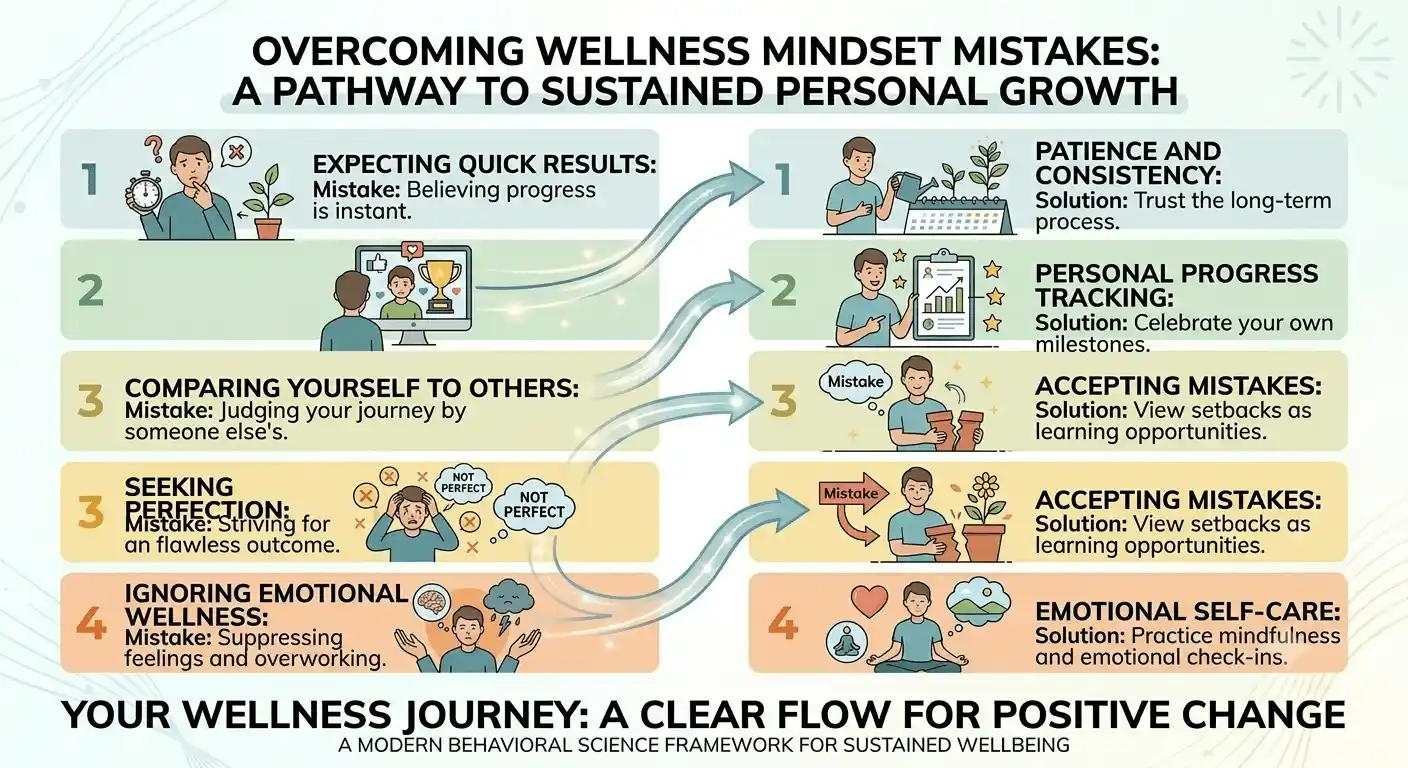
Developing a wellness mindset can be challenging because many people approach personal growth with unrealistic expectations. Understanding common mistakes can help create a more sustainable path.
Expecting Immediate Results
One common mistake is assuming that mindset changes should happen quickly.
While some improvements, such as increased awareness or motivation, may appear within weeks, deeper behavioral changes usually require repeated practice over time.
A wellness mindset develops through:
- Consistent habits
- Reflection
- Learning from experiences
- Adjusting strategies when needed
Comparing Progress With Others
Comparison can create unnecessary frustration because every person’s circumstances, resources, and starting point are different.
A healthier approach is measuring progress against personal goals.
Helpful questions include:
- Am I responding to challenges better than before?
- Have my habits improved?
- Am I becoming more aware of my needs?
- Am I making choices that support my values?
Pursuing Perfection Instead of Progress
Perfectionism often prevents people from maintaining healthy habits because small mistakes feel like failures.
A wellness mindset focuses on progress.
For example:
- Missing one workout does not eliminate fitness progress.
- Having a stressful day does not mean emotional growth has disappeared.
- Changing goals does not mean failure.
Ignoring Emotional Wellness
Some people focus only on physical health while neglecting emotional needs.
A complete wellness approach recognizes that emotional awareness, stress management, and relationships are equally important.
| Mistake | Why It Happens | Better Approach |
| Expecting fast results | Unrealistic expectations | Focus on gradual progress |
| Comparing with others | External pressure | Track personal improvement |
| Trying to be perfect | Fear of mistakes | Accept learning experiences |
| Ignoring emotions | Focus only on physical goals | Include emotional care |
| Overcommitting | Desire for rapid change | Build sustainable routines |
Difficulty, Time Investment, and Results Timeline
How Difficult Is It to Develop a Wellness Mindset?
Developing a wellness mindset requires ongoing effort, but it is accessible for most people when approached gradually.
The difficulty level depends on several factors:
- Existing habits
- Current stress levels
- Support systems
- Personal circumstances
- Willingness to reflect and adjust
For beginners, the most effective approach is usually starting with one or two manageable changes rather than attempting a complete lifestyle transformation.
Advanced wellness development may involve deeper emotional work, stronger self-awareness, and continued personal growth.
How Long Does It Take to Notice Changes?
The timeline for developing a wellness mindset varies between individuals.
A general pattern may look like:
- Days to weeks: Increased awareness of thoughts, habits, and behaviors.
- Weeks to months: Improved consistency with healthier routines.
- Several months or longer: Stronger identity changes and lasting behavioral patterns.
Progress depends on consistency, environment, and the complexity of the changes being made.
A person developing a simple daily reflection habit may notice benefits sooner than someone working through deeper emotional patterns.
Factors That Influence Results
Several factors affect how quickly someone develops a stronger wellness mindset.
Important influences include:
- Consistency: Repeated actions strengthen habits.
- Support: Encouragement from others can improve persistence.
- Environment: Supportive surroundings make healthy behaviors easier.
- Stress levels: High stress can make change more difficult.
- Self-awareness: Understanding personal patterns supports better decisions.
Wellness development is not a race. Sustainable improvement is usually more valuable than rapid but temporary change.
Practice Guide for Strengthening a Wellness Mindset
A Simple Daily Routine
A practical wellness routine does not need to be complicated. Small actions performed consistently can create meaningful changes.
A daily routine may include:
Morning
- Identify one priority for the day.
- Practice gratitude or reflection.
- Set an intentional mindset.
During the Day
- Take movement breaks.
- Monitor stress levels.
- Practice mindful decision-making.
Evening
- Review accomplishments and challenges.
- Prepare for the next day.
- Create time for relaxation.
The purpose of a routine is not perfection. It is creating repeated opportunities to support well-being.
Weekly Wellness Review Process
Weekly reflection helps individuals evaluate progress and make adjustments.
A weekly review may include:
- Which habits worked well?
- What challenges appeared?
- What caused unnecessary stress?
- What changes could improve the next week?
- Are current goals still aligned with personal values?
Tracking progress can be done through:
- Journals
- Habit trackers
- Calendars
- Digital wellness tools
The best tracking method is one that is simple enough to maintain consistently.
Staying Consistent Over the Long Term
Consistency is one of the most important factors in developing a wellness mindset.
Strategies that support long-term success include:
- Setting realistic goals
- Creating accountability systems
- Celebrating small improvements
- Adjusting routines when circumstances change
- Maintaining self-compassion during setbacks
In our experience helping readers build better habits, people often achieve stronger results when they focus on identity and consistency rather than relying only on motivation.
A sustainable wellness mindset develops when healthy choices become part of how someone approaches daily life.
Conclusion
A wellness mindset is a long-term approach to personal well-being that combines healthy thinking patterns, emotional awareness, supportive habits, and resilience. It helps individuals understand that wellness is not limited to physical health but includes mental, social, emotional, occupational, and environmental factors.
Building a wellness mindset requires patience, self-awareness, and consistent action. Evidence-based approaches such as growth mindset principles, cognitive behavioral strategies, mindfulness practices, and habit formation methods provide practical tools for lasting improvement.
The most effective wellness mindset is not based on perfection. It is built through small, intentional choices that support balance, adaptability, and continuous growth. By developing healthier ways of thinking and responding to challenges, individuals can create a stronger foundation for long-term wellness.
Frequently Asked Questions
What is a wellness mindset?
A wellness mindset is a way of thinking that prioritizes overall well-being through healthy habits, self-awareness, emotional regulation, and intentional decision-making. It focuses on sustainable improvement rather than quick results.
Why is mindset important for mental wellness?
Mindset influences how people interpret experiences, manage emotions, and respond to challenges. Healthier thinking patterns can support resilience, coping skills, and emotional balance.
What are the 5 C’s of wellness?
The 5 C’s of wellness commonly refer to Connection, Confidence, Competence, Character, and Caring. These areas support personal development, relationships, and overall well-being.
What are the 7 types of wellness?
The seven types of wellness are physical, emotional, intellectual, social, spiritual, occupational, and environmental wellness. Together, they represent different areas that contribute to a balanced life.
What is the healthiest mindset to develop?
A healthy mindset combines growth, self-awareness, adaptability, emotional balance, and self-compassion. It allows people to learn from challenges while maintaining realistic expectations.
How can I improve my wellness mindset every day?
You can improve your wellness mindset through daily practices such as reflection, mindfulness, healthy routines, physical activity, gratitude, and learning from experiences.
Can mindset counseling help improve overall wellness?
Yes. Mindset counseling can help individuals explore thought patterns, develop coping strategies, and build healthier approaches to emotions, goals, and personal challenges.
How long does it take to build a wellness mindset?
Building a wellness mindset is an ongoing process. Increased awareness may develop within weeks, while deeper changes in habits and thinking patterns often take months of consistent practice.