

Introduction
Books about motivation and mindset are resources designed to help readers build the internal drive to act and the mental framework to sustain that action over time. Motivation supplies the spark, while mindset shapes how a person interprets setbacks, effort, and progress. Together, these two elements form the foundation of most personal development literature. Inspirational motivational books to read span multiple formats, including practical guides, psychology-based research, biographies, and even fiction. Books on mindset and success are especially valuable because they connect belief systems to measurable outcomes in career, health, and relationships. Reading in this category supports long-term growth when paired with consistent, real-world application rather than passive consumption.
Quick Summary
- Motivation creates the desire to act, while mindset determines how consistently you keep going.
- Different types of motivation and mindset books solve different personal and professional challenges.
- Choosing books based on your goals leads to better learning than relying on bestseller lists alone.
- Combining reading with practical application produces more lasting personal growth.
What Are Motivation and Mindset Books?
Books about motivation and mindset are nonfiction or narrative works that explain how psychological drive and belief systems influence behavior, performance, and long-term achievement. Motivation books typically focus on the emotional or biological triggers behind action, while mindset books focus on the mental frameworks that determine how a person responds to challenges, failure, and success. These categories are frequently grouped together because motivation initiates behavior and mindset sustains it. Books for a success mindset often draw from cognitive psychology, behavioral science, and organizational research to explain why some people persist through difficulty while others give up.
What Motivation Means in Personal Development
Motivation in personal development refers to the internal or external forces that drive a person toward a goal. Intrinsic motivation comes from personal satisfaction, curiosity, or values, while extrinsic motivation stems from external rewards such as money, recognition, or approval. Motivation naturally fluctuates due to fatigue, stress, or lack of clear goals, which is why many books in this category emphasize habits as a way to maintain progress when motivation is low. This is why many readers also explore how to build discipline without motivation as a complementary strategy to reading alone.
What Mindset Means and Why It Matters
Mindset refers to the underlying beliefs a person holds about their abilities and potential for growth. A fixed mindset assumes intelligence and talent are static, while a growth mindset views abilities as improvable through effort and learning. Mental resilience and a learning orientation are core components of a growth mindset, allowing individuals to interpret setbacks as information rather than failure.
How Motivation and Mindset Work Together
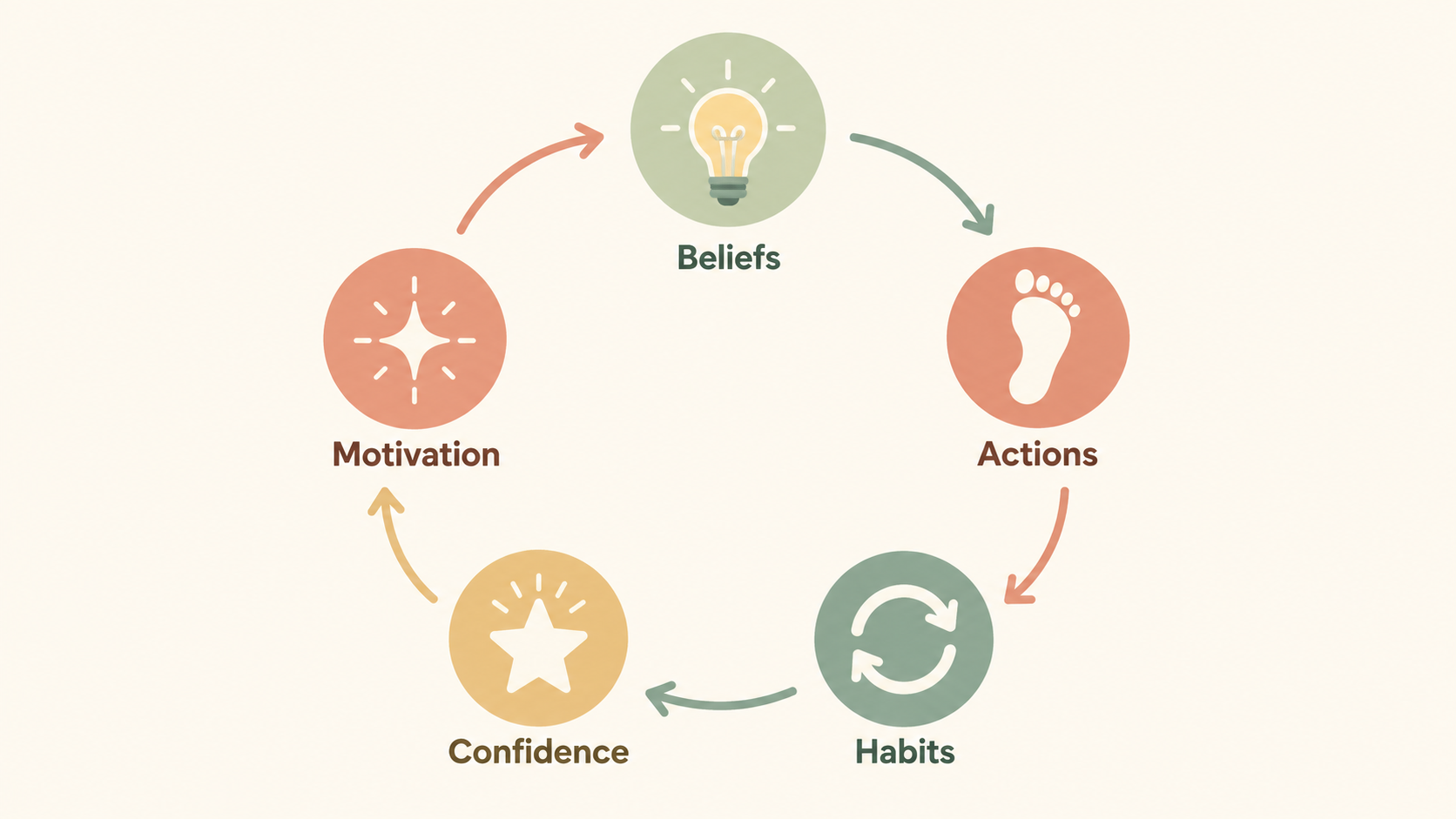
Motivation and mindset interact through a continuous cycle involving beliefs, actions, habits, and confidence. A person’s beliefs shape the actions they are willing to attempt, and repeated actions form habits that reinforce or challenge those original beliefs. As habits produce visible results, confidence increases, which in turn strengthens motivation for future effort. This cycle appears across multiple life domains:
- Career: Belief in one’s competence influences willingness to pursue promotions or new roles.
- Education: A growth mindset helps students persist through difficult coursework.
- Health: Confidence built from small consistent habits supports long-term fitness or nutrition changes.
- Business: Resilient mindset patterns help entrepreneurs recover from setbacks and pivot strategically.
- Relationships: Motivation to communicate effectively is reinforced by a mindset open to feedback and growth.
Types of Books About Motivation and Mindset
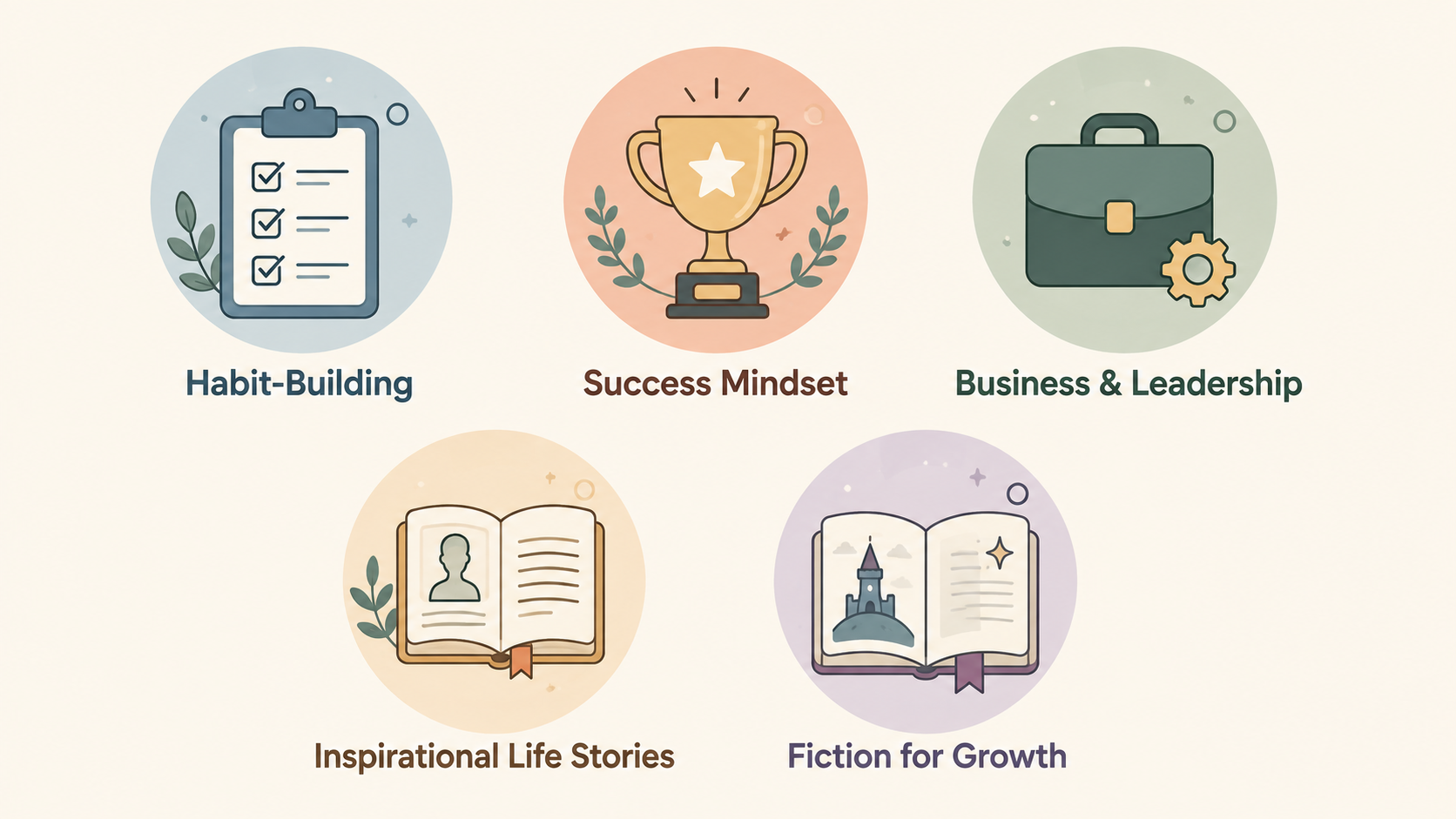
Rather than one generic list, books in this category are best understood through distinct subcategories, each addressing different needs.
Habit-Building Books
These books focus on daily consistency, discipline, and productivity systems. They typically break down how small, repeatable actions compound into significant long-term change, often referencing behavioral science research on habit formation.
Success Mindset Books
Books on mindset and success in this subcategory address confidence, goal achievement, and mental toughness. They are useful for readers seeking books for a success mindset that connect psychological principles directly to performance outcomes. For a deeper dive into specific titles in this category, see our roundup of the best growth mindset books.
Business and Leadership Mindset Books
Mindset books for business explore entrepreneurship, decision-making, and leadership psychology. These titles often examine how successful leaders manage uncertainty, delegate effectively, and maintain resilience under pressure.
Inspirational Life Story Books
Biographies and memoirs offer real-world lessons by showing how individuals overcame specific obstacles. These books provide context and emotional relevance that purely instructional books may lack.
Fiction Books That Inspire Growth
Fiction books about motivation and mindset can improve perspective and emotional intelligence by allowing readers to experience challenges and growth through a character’s journey, often making psychological concepts more memorable and relatable.
How to Choose the Best Motivation and Mindset Book
Choosing the right book depends on several practical factors rather than popularity alone. Readers should consider their current reading experience, the specific challenge they are facing, their career goals, their preferred learning style, and the writing style that keeps them engaged. A beginner facing low daily motivation may benefit from a habit-focused book, while an experienced reader preparing for a leadership role may need a business mindset title. Matching the book to a specific, current need produces better retention and application than selecting titles solely from general bestseller lists.
Best Self-Improvement Books Across Different Goals
Instead of a single ranking, the best self-improvement books of all time are more useful when organized by the specific outcome a reader wants to achieve.
For Building Better Habits
Readers seeking the best self-development books to read on habits should look for titles that explain habit loops, environmental design, and consistency systems.
For Developing Confidence
The best book for self-improvement in this area typically combines psychological research with practical exercises for reframing self-doubt.
For Productivity
Among the best self-improvement books ever written on productivity, the strongest titles focus on prioritization frameworks and energy management rather than time management alone.
For Success Mindset
The best books about motivation and mindset in this category link belief systems directly to measurable achievement, often through case studies and research citations.
For Emotional Resilience
The best self-development books ever published on resilience typically address stress response, cognitive reframing, and recovery from setbacks.
Comparison Table — Motivation Books vs. Mindset Books
| Feature | Motivation Books | Mindset Books |
|---|---|---|
| Primary goal | Spark short-term drive to act | Build long-term mental frameworks |
| Focus | Emotional triggers, energy, inspiration | Beliefs, resilience, self-perception |
| Best for | Overcoming procrastination or low energy | Sustaining effort through setbacks |
| Long-term impact | Moderate without reinforcement | High when practiced consistently |
| Typical topics | Goal-setting, inspiration, momentum | Growth mindset, resilience, self-belief |
What Makes a Motivation or Mindset Book Effective?
Effective books in this category are grounded in scientific evidence rather than generalized advice. In our experience helping readers build better habits, the most useful titles combine research-backed concepts with practical exercises readers can apply immediately. Real-life examples and case studies make abstract psychological concepts easier to understand and remember. Author credibility, drawn from relevant academic background or professional experience, also strengthens the reliability of the guidance offered. Books that pair theory with clear, actionable advice tend to produce better long-term outcomes than those relying on motivational language alone.
Common Mistakes When Choosing Self-Improvement Books
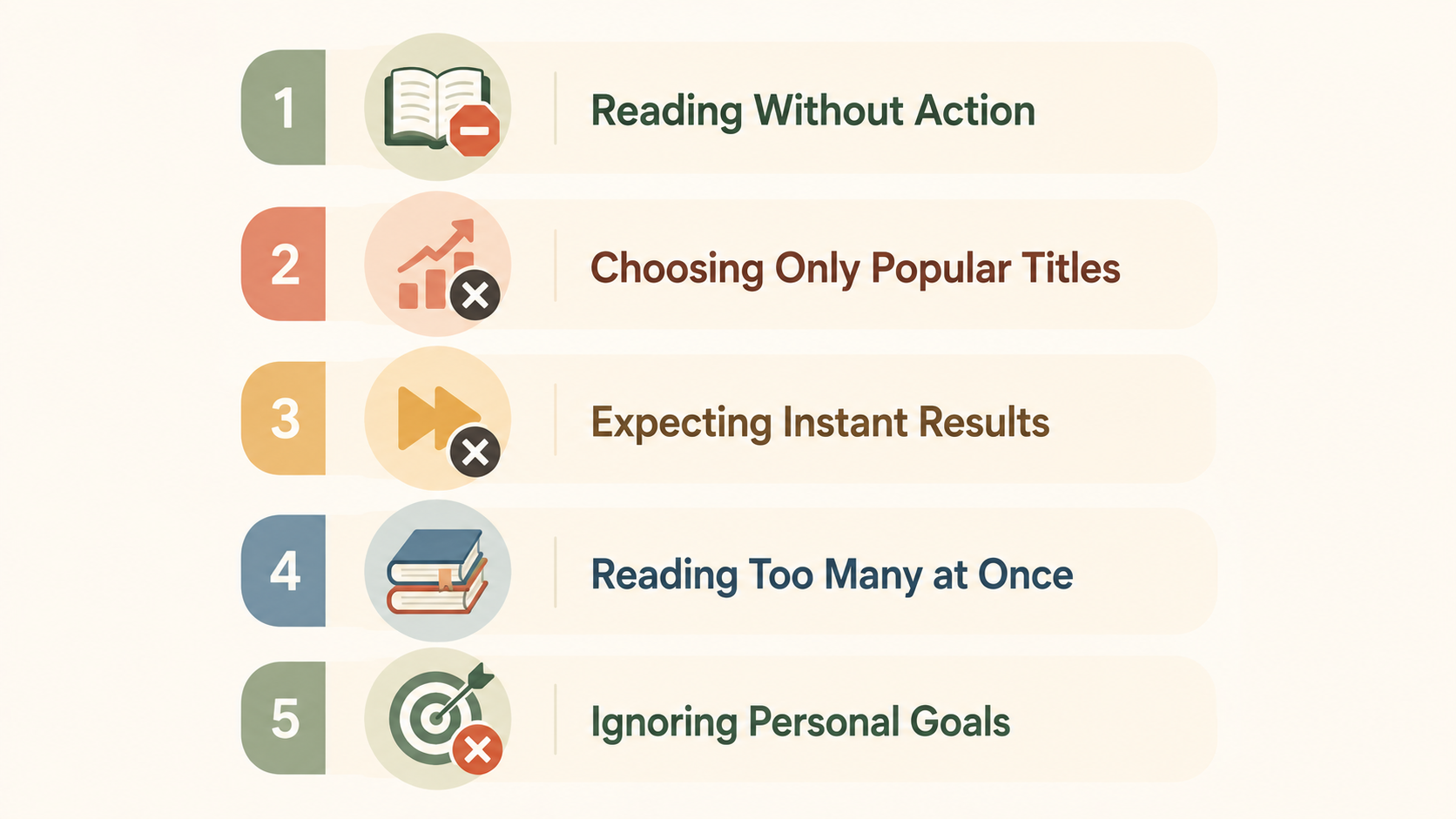
Several avoidable mistakes reduce the value readers get from motivation and mindset books:
- Reading without taking action: Consuming content passively without applying any lessons.
- Choosing books only because they’re popular: Popularity does not guarantee relevance to a specific personal challenge.
- Expecting instant transformation: Mindset change is gradual and requires repeated practice.
- Reading too many books without implementation: Volume without application dilutes retention and results.
- Ignoring personal goals: Selecting books unrelated to current priorities wastes reading time.
These mistakes typically happen because readers prioritize novelty over depth. Your Daily Thrive recommends selecting one book at a time, fully implementing its core lesson, and only then moving to the next title.
Practical Ways to Apply Lessons From Motivation and Mindset Books
Turning reading into lasting change requires structured application methods, including: If you’re unsure where to start, our journaling prompts for self growth offer a structured way to begin.
- Taking targeted notes on one actionable concept per chapter
- Using reflection questions after each reading session
- Tracking related habits daily or weekly
- Journaling about progress, obstacles, and insights
- Conducting a weekly review of what was learned and applied
- Partnering with an accountability contact to reinforce commitments
- Applying one lesson fully before introducing another
Motivation Books vs. Podcasts, Courses, and Videos
| Factor | Books | Podcasts/Videos | Courses |
|---|---|---|---|
| Learning depth | High | Moderate | High |
| Cost | Low to moderate | Often free | Moderate to high |
| Retention | Strong, due to focused reading | Lower, passive listening | Strong, with structured practice |
| Flexibility | High | Very high | Moderate |
| Practical application | Requires reader initiative | Limited | Built into structure |
Books remain the better resource when readers need in-depth, well-organized explanations of psychological concepts, while podcasts and videos work well for quick reinforcement and courses suit readers who need structured accountability.
Are Motivation and Mindset Books Suitable for Different Life Stages?
Reading goals shift depending on life stage. Students often benefit from books addressing focus, discipline, and academic resilience. Professionals typically seek titles on productivity and career growth, while entrepreneurs and managers gravitate toward leadership and decision-making frameworks. Parents may look for books balancing personal growth with family responsibilities, career changers often need confidence-focused titles, and retirees frequently seek books on purpose and continued personal development beyond traditional career milestones.
Difficulty and Time Investment
Beginner-friendly books use accessible language and simple frameworks, making them suitable for readers new to personal development. Intermediate books introduce more structured systems and require greater consistency to apply. Advanced psychology-based books often reference academic research and demand more focused reading time. Typical reading time ranges from a few days to several weeks depending on book length and reading pace, and factors such as prior exposure to the topic, available daily reading time, and personal motivation all affect how quickly a reader progresses.
Results Timeline
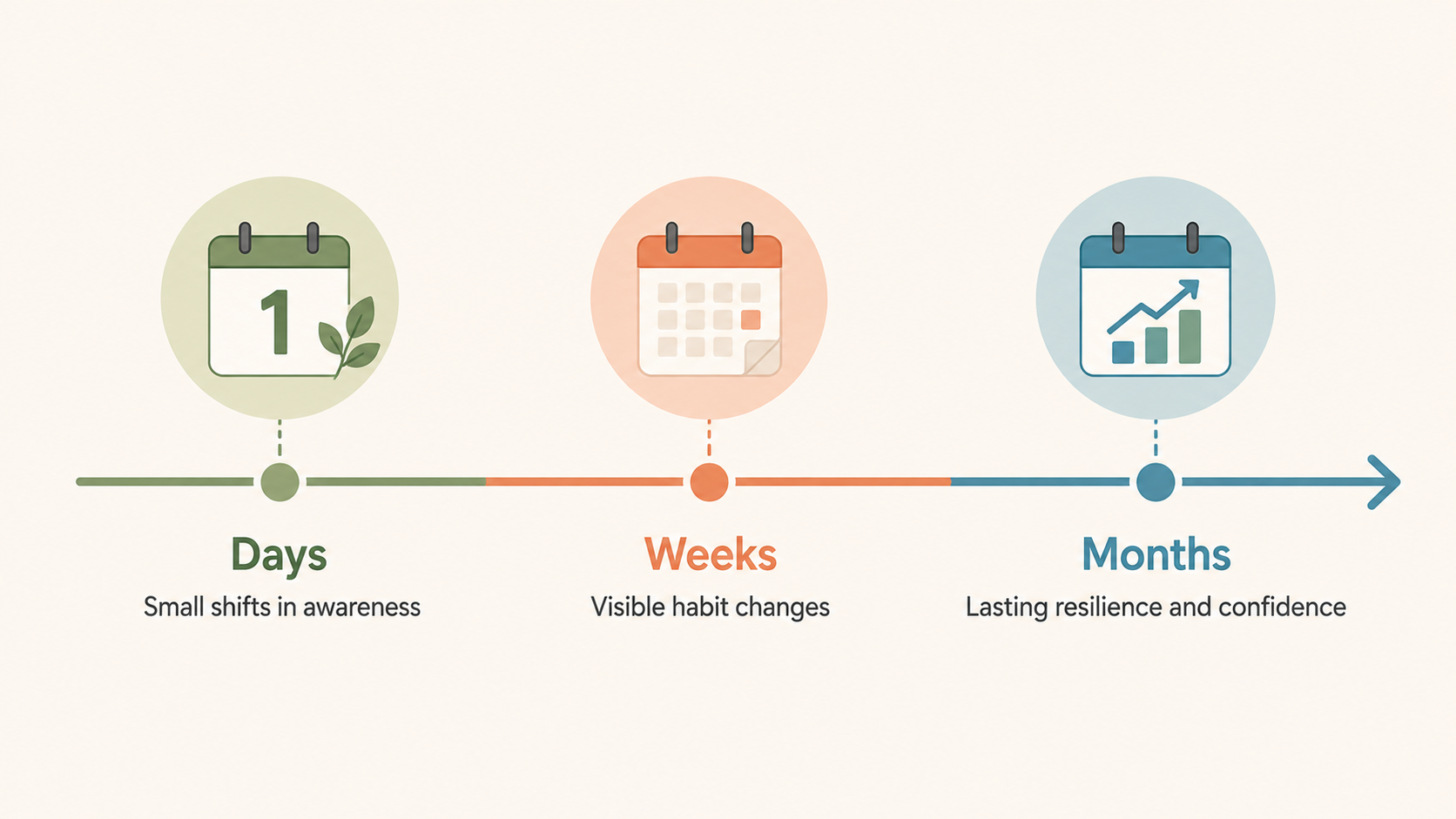
Readers may notice small shifts in awareness or motivation within days of applying a single concept consistently. Within weeks, more measurable changes in habits or confidence typically emerge as repeated actions begin to reinforce new beliefs. Over several months, sustained application of mindset principles can lead to noticeable changes in resilience, decision-making, and overall behavior patterns. Progress pace varies based on consistency, the complexity of the goal, and external life circumstances, so results should be viewed as gradual rather than immediate.
Practice Guide for Getting the Most Value From These Books
To extract maximum value from motivation and mindset books, readers should follow a structured practice approach:
- Set a consistent daily reading routine, even in short sessions
- Define one weekly implementation goal based on the reading
- Use reflection exercises to connect concepts to personal experience
- Track related habits to measure real behavioral change
- Establish accountability through a partner, group, or written commitment
- Revisit key concepts periodically to reinforce long-term retention
- Prioritize long-term consistency over reading speed or volume
Frequently Asked Questions
What are the best books about motivation and mindset for beginners?
Beginner-friendly books about motivation and mindset use simple language and practical frameworks focused on habit-building and basic growth mindset principles, making them easier to apply immediately.
What is the difference between motivation books and mindset books?
Motivation books focus on sparking short-term drive to act, while mindset books focus on building long-term mental frameworks that sustain effort through setbacks and challenges.
Can reading self-improvement books really change your mindset?
Yes, but only when reading is paired with consistent, real-world application; passive reading alone rarely produces lasting mindset change.
How many motivation books should you read at one time?
Most personal development experts recommend focusing on one book at a time to allow full implementation of its lessons before starting another.
Which books focus on both mindset and success?
Books on mindset and success typically combine psychological principles with performance strategies, connecting internal beliefs directly to measurable achievement.
Are fiction books useful for improving motivation and mindset?
Yes, fiction books about motivation and mindset can improve perspective and emotional intelligence by illustrating growth and resilience through relatable characters and narratives.
How can I apply the lessons from motivation books in daily life?
Lessons can be applied through note-taking, habit tracking, weekly reviews, journaling, and accountability partnerships that reinforce one concept at a time.
Conclusion
Books about motivation and mindset work together to build both the drive to act and the mental resilience to sustain that action over time. As of 2026, evolving research in behavioral science continues to reinforce those foundational frameworks. The most effective approach isn’t relying on generic bestseller lists, but selecting titles that match specific personal or professional goals, whether that involves habit-building, success mindset, leadership, or emotional resilience. Consistent application, structured reflection, and accountability turn reading into lasting personal growth, making books about motivation and mindset a practical, long-term tool for individual development.