
Introduction
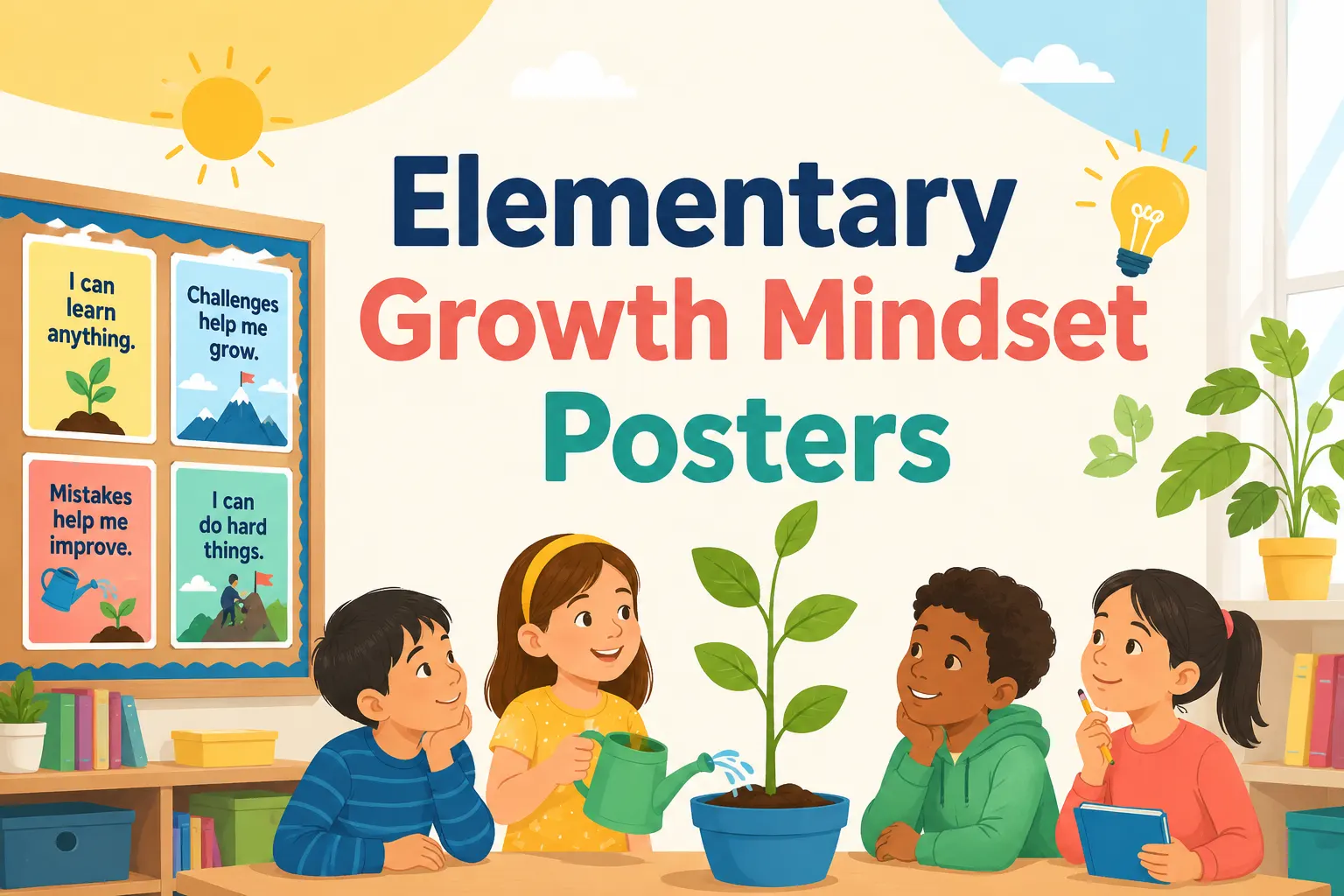
Elementary growth mindset posters are visual learning tools that reinforce positive thinking, resilience, perseverance, and a love of learning in elementary classrooms. Rooted in psychologist Carol Dweck’s research on fixed versus growth mindsets, these posters give students consistent, everyday reminders that abilities can be developed through effort and practice. Rather than functioning as passive decoration, growth mindset posters for elementary students act as ongoing prompts that help children reframe mistakes as learning opportunities instead of signs of failure. When placed strategically and paired with classroom discussion, an elementary growth mindset poster becomes a working part of the classroom’s emotional and academic environment, not just wall art.
Quick Summary
- Elementary growth mindset posters encourage students to embrace challenges and learn from mistakes.
- Well-designed classroom posters reinforce positive learning habits every day.
- Printable and PDF poster resources make classroom implementation easy and affordable.
- Effective posters work best when paired with classroom discussions and daily practice.
What Are Elementary Growth Mindset Posters?
Definition and Purpose
A growth mindset poster is a classroom visual that communicates the belief that intelligence, skills, and abilities can grow through effort, strategy, and persistence. Unlike generic motivational posters that offer broad inspiration, a poster for growth mindset is built around specific, teachable language tied to learning behavior — phrases like “I can’t do this yet” or “Mistakes help my brain grow.” This distinction matters: a mindset poster is designed to be referenced repeatedly during instruction, not just glanced at once. Because young children rely heavily on repetition and visual cues to internalize new concepts, a poster on growth mindset functions as a teaching tool as much as a decorative one, reinforcing vocabulary and thinking patterns that teachers introduce verbally throughout the day.
Why They Matter in Elementary Education
In early childhood and elementary settings, abstract psychological concepts land best when tied to something concrete and visible. Elementary growth mindset posters translate an abstract idea — that ability develops over time — into simple, memorable language young learners can revisit independently. This supports early learning habits such as persistence during difficult tasks and willingness to try again after a mistake. Growth mindset posters for elementary classrooms also contribute to a positive classroom climate by normalizing struggle as a natural part of learning rather than something to hide or fear, which helps reduce anxiety around academic risk-taking. For a broader look at the research and benefits behind this concept, see our guide on why is growth mindset important.
How Growth Mindset Posters Support Student Learning
Encouraging Resilience
Posters that emphasize phrases such as “Mistakes help me learn” give students a consistent reference point when they encounter setbacks. Over time, repeated exposure to this language helps children build the confidence to attempt challenging tasks, recover from errors without excessive frustration, and view difficulty as a normal, expected part of the learning process rather than evidence of inability.
Promoting Positive Self-Talk
A core function of elementary growth mindset posters is replacing fixed mindset language (“I’m bad at this”) with growth-oriented alternatives (“I’m still learning this”). By modeling this vocabulary visually, posters give students a script for internal dialogue, encouraging persistence and framing daily affirmations as an achievable classroom habit rather than an abstract exercise.
Supporting Social-Emotional Learning
Growth mindset posters intersect closely with social-emotional learning (SEL) by helping students name and regulate emotional responses to challenge, such as frustration or embarrassment. They also support collaboration by establishing shared classroom language around effort, and they reinforce respect for effort over natural ability, which research in behavioral science associates with stronger long-term motivation.
Reinforcing Classroom Expectations
Beyond mindset language, growth mindset classroom posters often reinforce behavioral expectations by serving as consistent visual reminders of routines and norms. This supports independent learning, since students can reference a growth mindset display without needing direct teacher prompting, and it helps establish predictable classroom routines tied to effort-based language.
Key Elements of an Effective Growth Mindset Poster
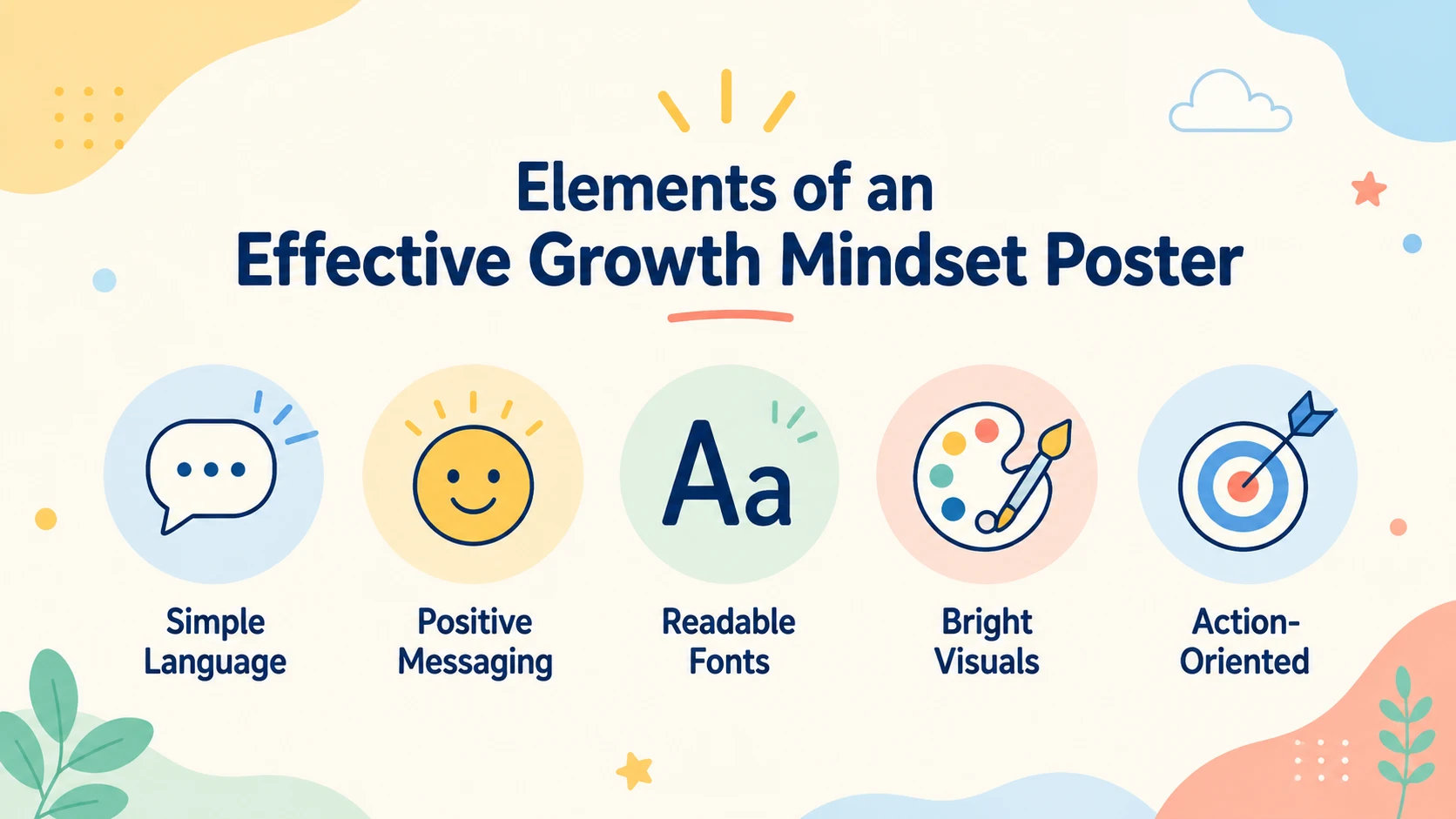
Not every classroom visual functions equally well as a teaching tool. The most effective elementary growth mindset posters share several defining characteristics:
- Simple, age-appropriate vocabulary that elementary students can read and understand independently
- Positive, action-oriented messaging (e.g., “Try a new strategy” rather than vague inspiration)
- Readable fonts sized appropriately for classroom viewing distance
- Bright, engaging visuals that draw attention without overwhelming the message
- Consistent tone that connects to how the teacher speaks about effort and mistakes
These elements of growth mindset poster design matter because a poster that is too text-heavy, uses abstract adult language, or lacks visual clarity will be ignored rather than internalized. A well-designed motivational elementary growth mindset poster or quote elementary growth mindset poster should be scannable in seconds, since elementary students typically engage with classroom visuals in brief glances throughout the day rather than sustained reading.
Common Growth Mindset Messages for Elementary Students
Examples of Positive Growth Mindset Statements
Common, research-aligned growth mindset poster examples include:
- “Mistakes help me learn.”
- “I can improve with practice.”
- “Challenges help me grow.”
- “Yet is a powerful word.”
- “Effort helps me succeed.” Many of these classroom-friendly phrases are adapted from foundational research — you can explore more in our roundup of growth mindset quotes from Carol Dweck.
These statements are effective because they are short, concrete, and directly tied to observable classroom behavior — trying, practicing, and persisting — rather than abstract personality traits.
When Different Messages Work Best
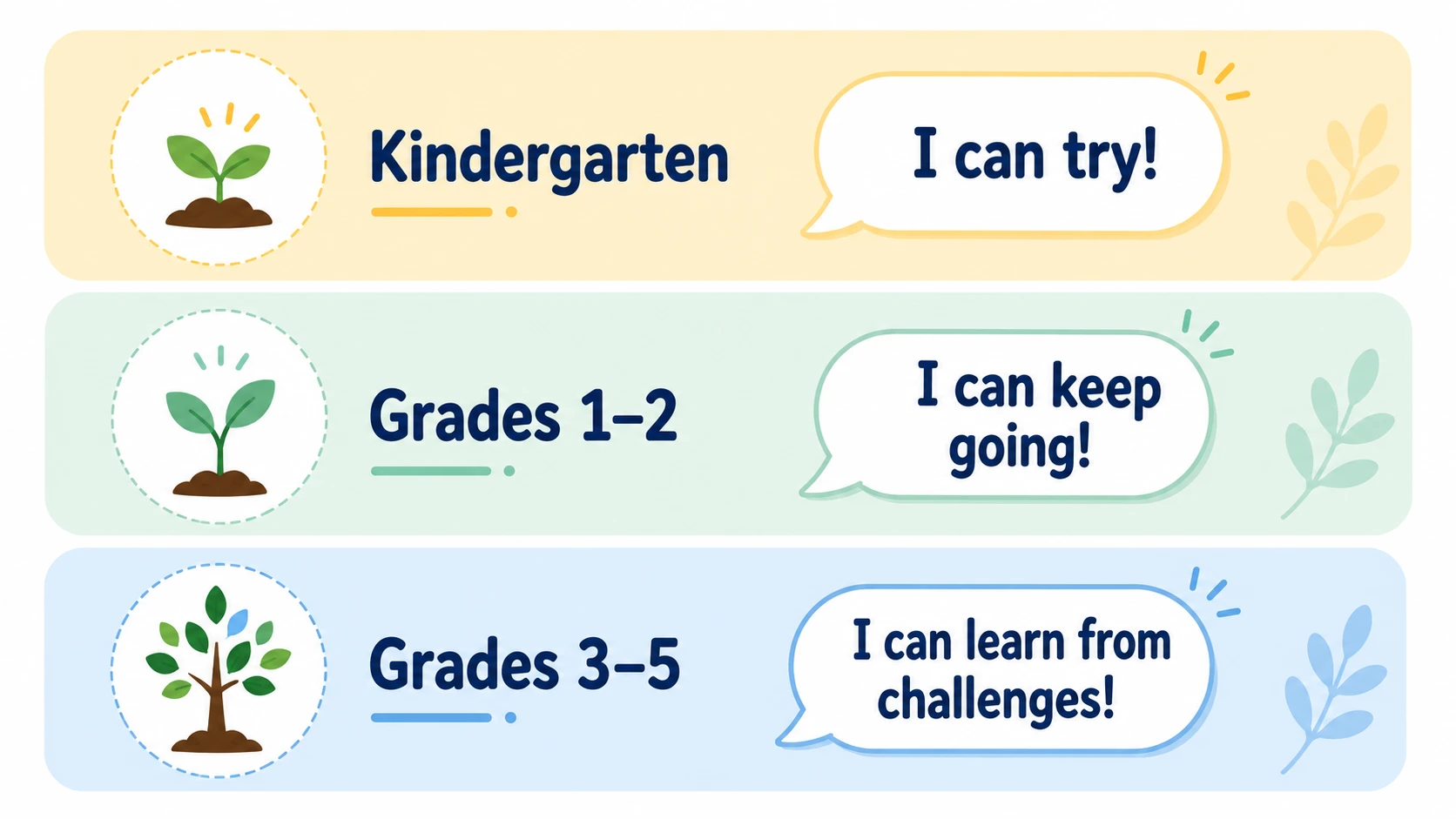
Message complexity and phrasing should shift across grade bands to match reading level and developmental stage.
| Grade | Student Focus | Poster Message Example | Classroom Goal |
|---|---|---|---|
| Kindergarten | Simple emotional vocabulary, picture-based cues | “I can try again!” | Build comfort with trying and repeating tasks |
| Grades 1–2 | Short sentences, effort-based language | “Mistakes help my brain grow.” | Normalize mistakes as part of learning |
| Grades 3–5 | Reflective, strategy-based language | “What strategy can I try next?” | Encourage independent problem-solving |
Printable and PDF Growth Mindset Posters
Printable Posters
Printable formats allow teachers to produce classroom-ready visuals without relying on pre-made physical posters. Common classroom practices include printing on cardstock, laminating for durability, and rotating displays across bulletin boards throughout the school year to keep messaging fresh.
PDF Poster Collections
PDF poster collections offer practical advantages for classroom use: easy digital storage, simple sharing between grade-level teams, and consistent print quality across multiple copies. Elementary growth mindset posters PDF sets are particularly useful for teachers building a themed collection, since growth mindset posters for classroom PDF files can be printed at multiple sizes for different display areas.
Free Printable Resources
Many educational websites and individual teachers share growth mindset posters free PDF resources through teacher-created marketplaces and blogs. When sourcing elementary growth mindset posters free printable materials, it’s important to download responsibly from reputable educational sources and respect copyright terms, since not all elementary growth mindset posters free download or growth mindset posters free download listings are licensed for unrestricted classroom or commercial reuse. Reviewing usage terms before printing helps ensure growth mindset posters for classroom free resources are used appropriately.
Where to Display Growth Mindset Posters in the Classroom
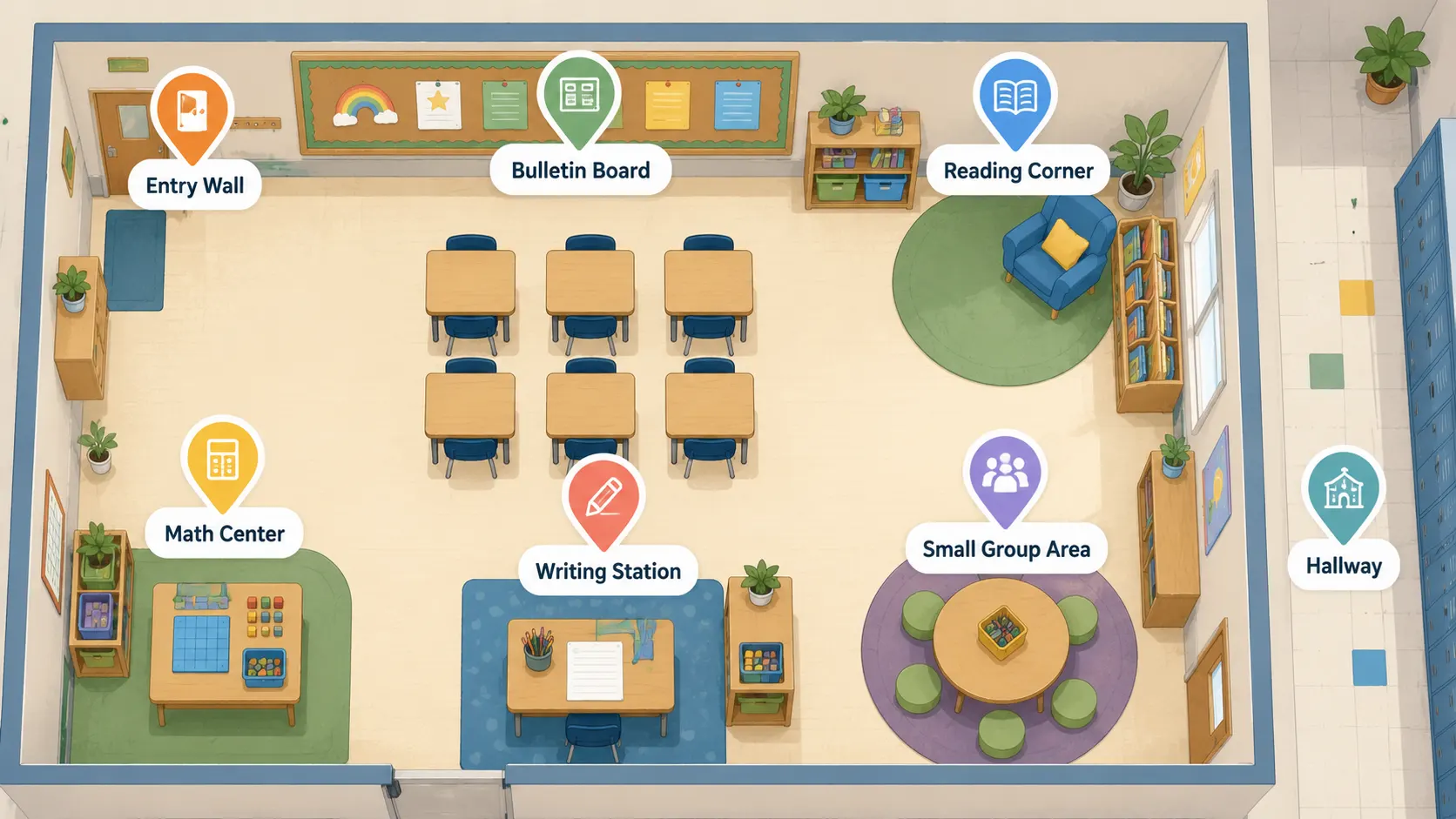
Placement directly affects how often students engage with a poster’s message. High-visibility, high-traffic areas tend to work best:
- Entry wall — sets a growth-oriented tone as students enter each day
- Reading corner — reinforces persistence during independent reading
- Math center — supports productive struggle during problem-solving
- Writing station — encourages revision as growth rather than failure
- Bulletin board — serves as a rotating, central classroom reference point
- Small group area — supports teacher-led discussion during instruction
- Hallways — extends the message beyond the classroom itself
Visibility matters because reinforcement depends on repeated, incidental exposure. A poster placed only in a low-traffic corner is far less likely to influence daily student behavior than one integrated into spaces students use constantly.
How Teachers Can Use Posters Beyond Decoration
Classroom Discussions
Posters are most effective when actively referenced during morning meetings, reflection time, and goal-setting conversations, rather than left to speak for themselves on the wall.
Daily Reinforcement Activities
Teachers can extend poster messaging through student discussions, exit tickets that ask students to reflect on effort, writing prompts tied to poster language, and weekly challenges that invite students to apply a specific growth mindset statement.
Linking Posters to Classroom Rules
Connecting posters to classroom expectations, positive behavior supports, and SEL lessons helps students see growth mindset language as part of how the classroom functions day to day, not as a separate, optional theme.
Growth Mindset Posters vs General Motivational Posters
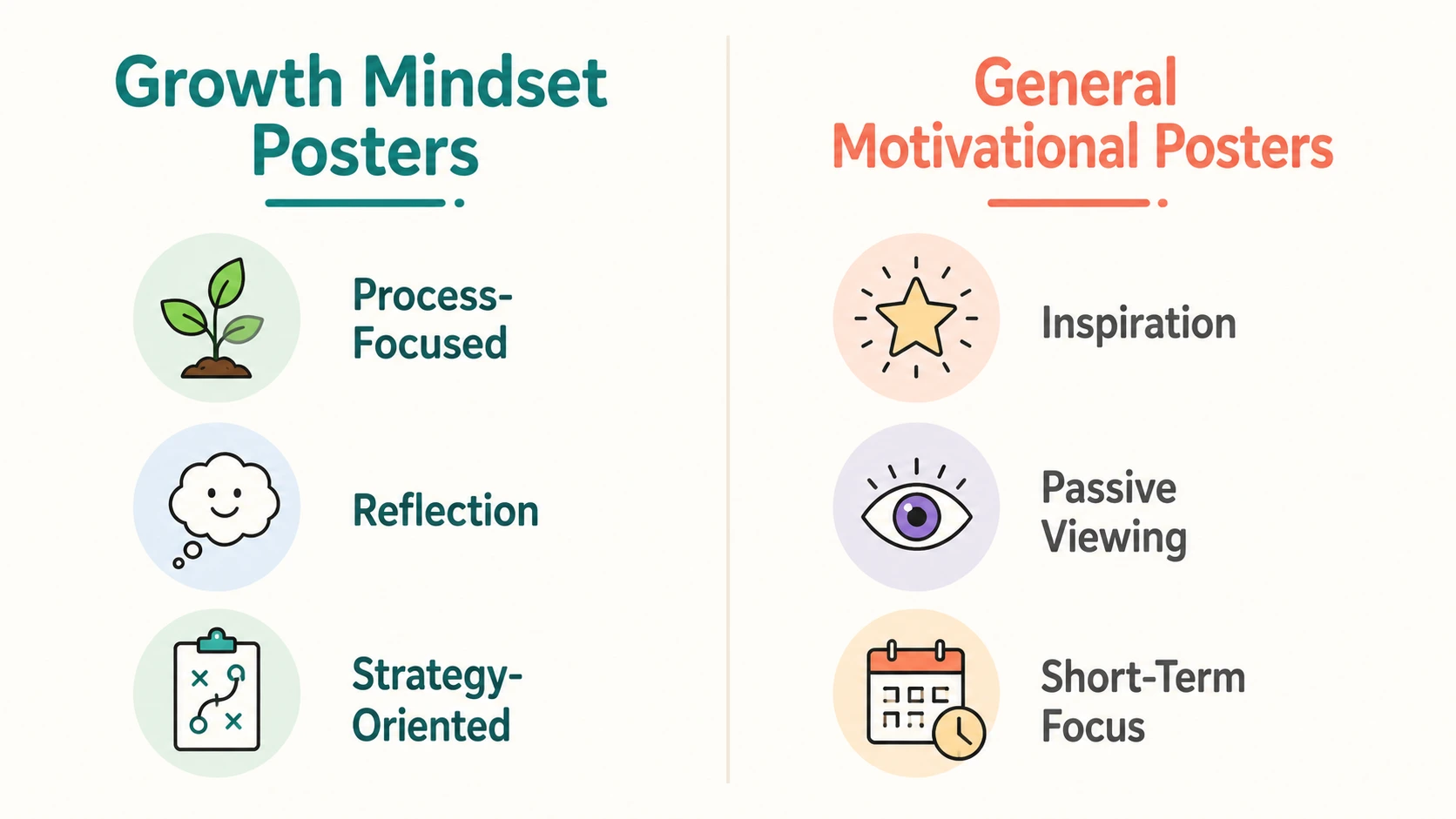
While both poster types aim to inspire students, their purpose and classroom function differ significantly.
| Feature | Growth Mindset Posters | General Motivational Posters |
|---|---|---|
| Primary Goal | Build effort-based thinking and resilience | Provide general inspiration |
| Focus | Learning process, strategy, and mistakes | Broad positivity or achievement |
| Student Action | Prompts reflection and specific behavior change | Often passive viewing |
| Classroom Integration | Tied to discussions, SEL, and routines | Typically standalone decoration |
| Long-Term Benefit | Supports sustained academic resilience | Short-term mood or motivation boost |
Ways to Build a Growth Mindset Beyond Posters
Posters work best as one component of a broader classroom strategy. Additional ways to build a growth mindset include:
- Adjusting teacher language to emphasize process over outcome
- Praising effort and strategy rather than innate ability
- Using reflection journals to track progress and setbacks
- Setting specific, achievable learning goals
- Encouraging collaborative learning and peer support
- Modeling persistence openly when teachers themselves face challenges
In our experience helping readers build better habits, visual reminders are most effective when adults consistently model the same language the poster displays — students notice when words on the wall don’t match daily classroom behavior. Pairing posters with read-aloud reinforces the same language in a new format — see our picks for the best growth mindset books for kids.
Common Mistakes When Using Growth Mindset Posters
Even well-designed posters can fail to influence classroom culture if implementation is inconsistent. Common mistakes include:
- Hanging posters without discussion — Posters introduced without explanation rarely change student behavior on their own.
- Too many visual displays — Overcrowded walls dilute attention and reduce the impact of any single message.
- Using vague motivational quotes — Generic phrases lack the specific, actionable language growth mindset instruction requires.
- Never referring to posters again — Without ongoing reference, posters become background noise rather than active teaching tools.
- Ignoring student participation — Students are more invested in messages they help create or select.
- Choosing age-inappropriate messages — Text that is too abstract or complex for a grade level fails to connect with students.
Your Daily Thrive recommends addressing each of these issues proactively: introduce new posters with a brief lesson, limit the number of active displays, choose specific and concrete language, revisit posters weekly, involve students in poster creation, and match vocabulary to grade-level reading ability.
Choosing the Right Poster for Different Elementary Grades
Matching poster complexity to developmental stage improves comprehension and engagement.
| Grade Level | Reading Level | Visual Style | Recommended Themes | Best Placement |
|---|---|---|---|---|
| Kindergarten–1 | Emerging readers, picture-supported | Bright colors, simple icons | Trying again, effort | Entry wall, reading corner |
| Grades 2–3 | Independent short sentences | Moderate detail, clear fonts | Mistakes as learning, practice | Math center, bulletin board |
| Grades 4–5 | Fluent, reflective reading | Minimalist, text-forward | Strategy, goal-setting, perseverance | Writing station, small group area |
Frequently Asked Classroom Questions About Growth Mindset Posters
How often should posters be updated? Rotating posters every few weeks or aligning them with new units keeps messaging relevant and prevents visual fatigue.
Should students help create posters? Yes — involving students in poster creation increases ownership and reinforces the language through the act of writing or designing it themselves.
Can posters support classroom management? Growth mindset posters can reinforce behavioral expectations when explicitly linked to classroom routines and positive behavior supports.
Should posters be displayed year-round? Core posters can remain year-round, while supplementary posters can rotate seasonally or by unit to maintain engagement.
How many posters should a classroom have? A focused set of 3–6 well-placed posters is generally more effective than a large, overcrowded display, since it keeps attention on core messages.
Conclusion
Elementary growth mindset posters serve an educational purpose well beyond classroom decoration. When designed with age-appropriate language and placed in high-visibility areas, they reinforce resilience, effort, and positive learning habits on a daily basis. However, posters achieve their full impact only when paired with intentional teaching practices — classroom discussion, modeling, and consistent reinforcement of the same language they display. For teachers building a classroom culture centered on growth and perseverance, elementary growth mindset posters work best not as standalone decor, but as one visible, recurring part of a broader, deliberate approach to teaching students that ability develops through effort.
Frequently Asked Questions
What are elementary growth mindset posters?
Elementary growth mindset posters are classroom visuals that use simple, effort-based language to help young students understand that abilities can improve through practice, effort, and persistence.
How do growth mindset posters help elementary students learn?
They provide consistent visual reminders that reframe mistakes as learning opportunities, supporting resilience, positive self-talk, and independent reflection during challenging tasks.
What should be included on an effective growth mindset poster?
Effective posters use simple, age-appropriate vocabulary, positive and action-oriented messaging, readable fonts, and bright, engaging visuals suited to the target grade level.
Are printable growth mindset posters as useful as printed classroom posters?
Yes — printable and PDF posters offer the same instructional value as pre-made posters, with the added benefit of easy customization, digital storage, and flexible reprinting.
Where should growth mindset posters be displayed in a classroom?
High-traffic, high-visibility areas work best, including entry walls, reading corners, math centers, writing stations, bulletin boards, and small group instruction areas.
How many growth mindset posters should an elementary classroom have?
A focused set of 3–6 posters is generally more effective than a large collection, since it keeps student attention on a small number of core messages.
Can growth mindset posters support social-emotional learning?
Yes — growth mindset posters reinforce SEL skills such as emotional regulation, collaboration, and respect for effort by giving students shared language for discussing challenges.
What is the difference between a growth mindset poster and a motivational poster?
Growth mindset posters focus on specific, effort-based learning language tied to classroom instruction, while general motivational posters typically offer broad inspiration without a direct instructional purpose.