

Introduction
A bible verse about growth mindset points to an attitude of learning, developing character, persevering through difficulty, and allowing God to transform one’s life. The Bible does not use the modern psychological phrase “growth mindset,” but it speaks extensively about growth, renewal, wisdom, and perseverance through concepts like sanctification, spiritual maturity, and the renewing of the mind. Biblical growth differs from simply chasing personal achievement or success — it centers on becoming more Christlike in character, thought, and action. Spiritual growth, personal development, faith, and renewed thinking are deeply connected throughout Scripture, offering a framework for lasting transformation rather than short-term motivation.
Quick Summary
- Biblical growth involves renewing the mind, developing wisdom, persevering through trials, and becoming more Christlike.
- Scripture connects growth with faith, patience, discipline, strength, and dependence on God rather than positive thinking alone.
- Verses about growth and change encourage people to learn from challenges and pursue meaningful personal transformation.
- A biblical growth mindset focuses on faithful progress and character development rather than comparing yourself with others.
What Does Having a Growth Mindset Really Mean in the Bible?
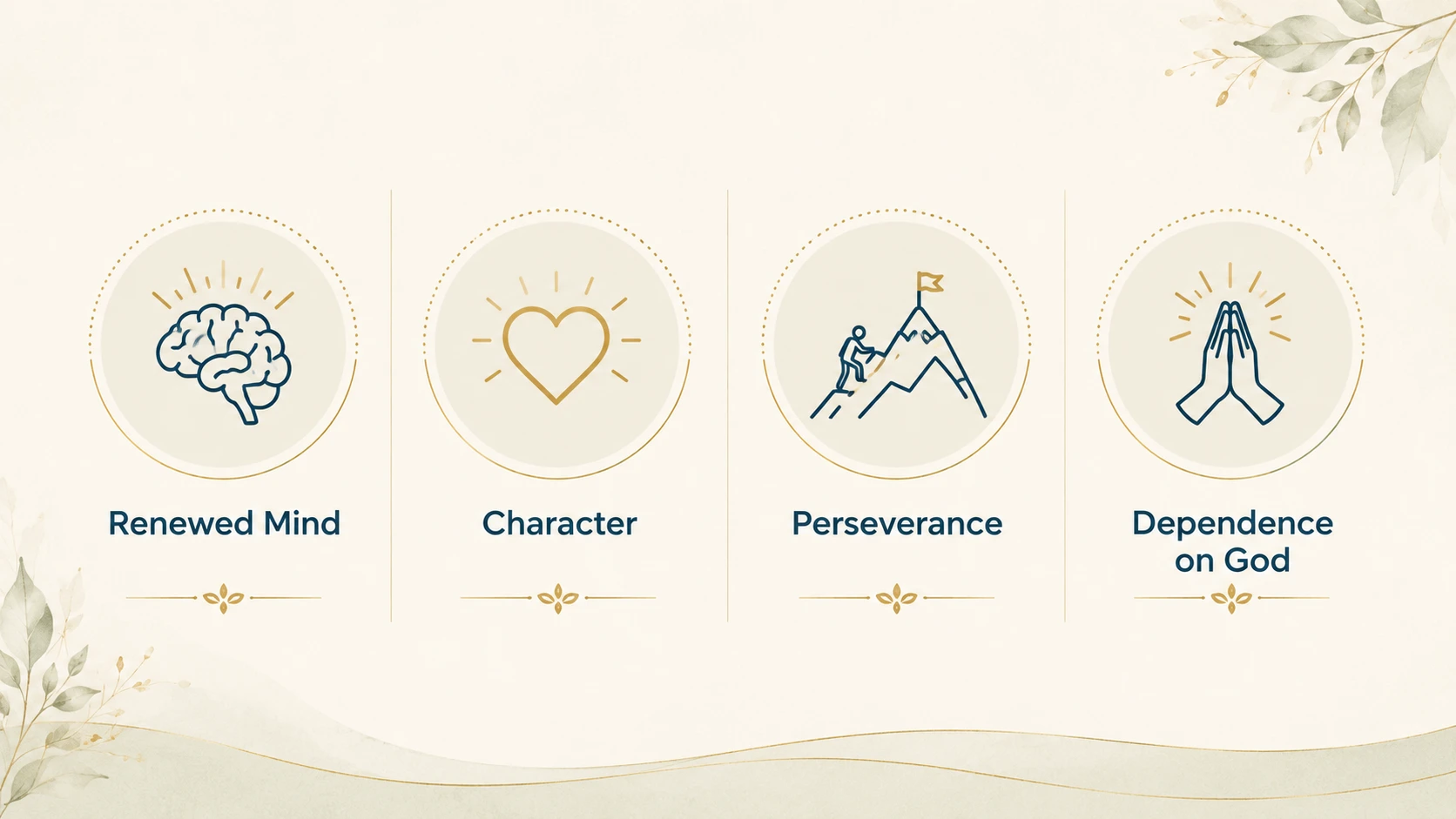
A biblical growth mindset means approaching life with a willingness to be shaped by God, to learn through difficulty, and to pursue character over comparison. It reframes growth as an internal, spiritual process rather than a purely mental or motivational one.
Growth Begins With a Renewed Mind
Biblical growth starts with the renewal of the mind rather than willpower alone. Romans 12:2 teaches that transformation happens as believers stop conforming to worldly patterns and instead allow their thinking to be reshaped, resulting in a mind that can discern what is good, acceptable, and right. This differs from simply “thinking positive,” which focuses on emotional outlook. Biblical renewal goes deeper, addressing the underlying beliefs and values that shape a person’s decisions, attitudes, and behavior over time. In our experience helping readers build better habits, the shift often begins not with a new routine, but with a new way of interpreting circumstances — which is precisely what Scripture describes as renewal of the mind.
This concept connects closely with what people search for under bible verses about positive mindset, though the biblical version is rooted in transformed thinking rather than emotional management alone.
Biblical Growth Is About Character, Not Just Achievement
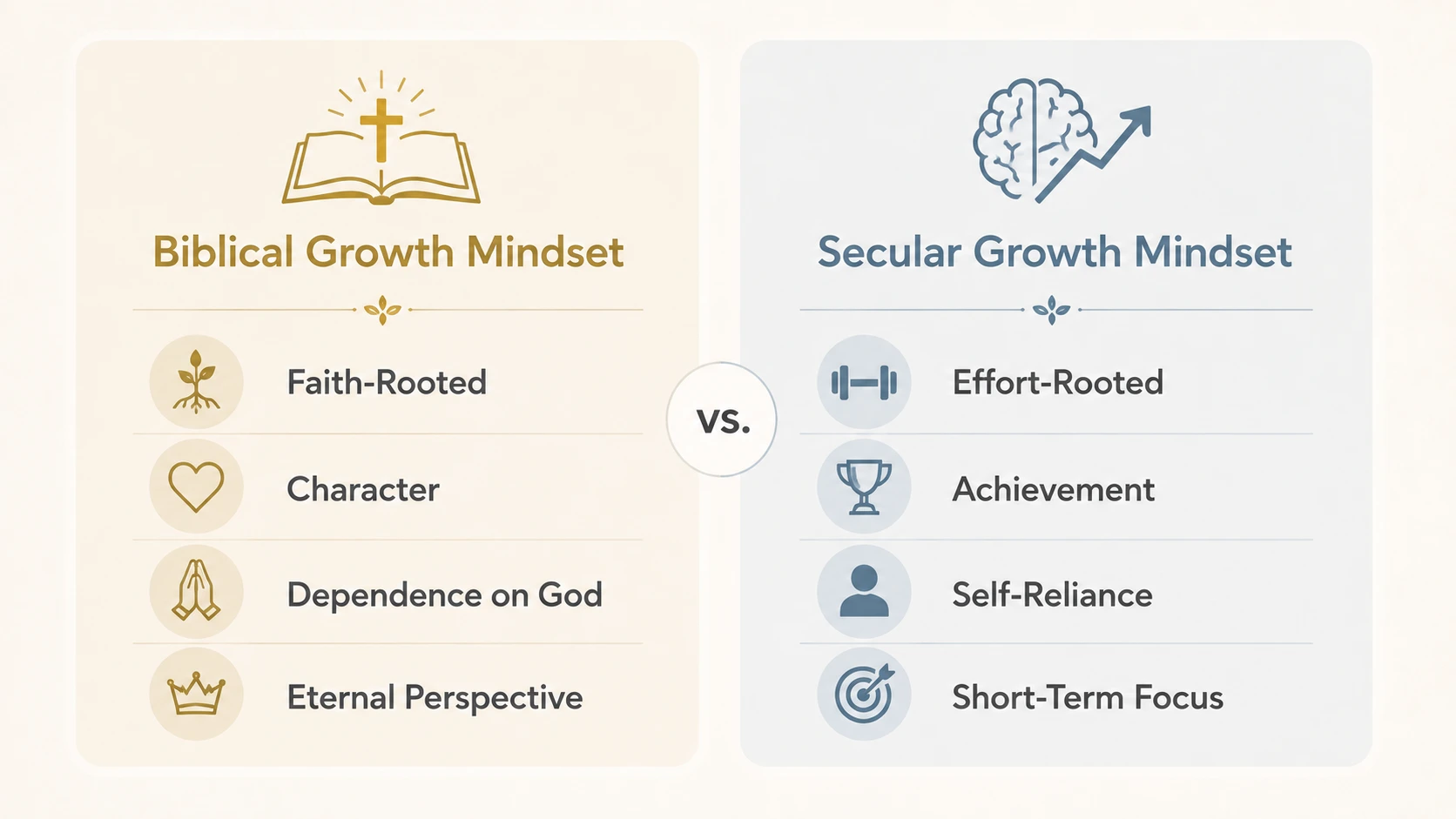
Scripture consistently emphasizes spiritual maturity — love, patience, humility, wisdom, and perseverance — over external accomplishment. Success in a biblical context is measured differently than wealth, status, or achievement; it is measured by faithfulness, integrity, and growth in character. This is a foundational distinction behind many searches for bible verses for growth and success, where the biblical answer often looks different than the modern, achievement-based one.
Bible Verses About Growth and Personal Transformation
Several passages form the core of what Scripture teaches about growth and change. Each carries a distinct principle that applies to personal development today.
- Romans 12:2 — Encourages believers to reject conformity to worldly thinking and instead pursue a renewed mind. Application: personal growth often requires changing thought patterns before changing behavior.
- Philippians 1:6 — Affirms that the work God begins in a person will continue toward completion. Application: growth is an ongoing process, not a single event.
- 2 Peter 3:18 — Calls believers to grow in grace and knowledge over time. Application: growth is continual and intentional, not passive.
- Proverbs 4:18 — Compares the path of the righteous to a light that grows brighter, gradually, until full clarity. Application: progress is often incremental rather than immediate.
- Galatians 5:22–23 — Describes the fruit of the Spirit, including patience, self-control, and gentleness, as evidence of spiritual growth. Application: character traits, not just accomplishments, mark genuine growth.
Bible Verses on Growth and Change
Meaningful growth in Scripture almost always requires change — a willingness to leave behind harmful patterns and develop wisdom. This process is tied to spiritual maturity rather than a single decision. Passages addressing renewal and transformation, such as Romans 12:2 and 2 Corinthians 5:17, frame change as something that unfolds through ongoing dependence on God rather than a one-time resolution.
Bible Verses About Changing Yourself for the Better
The biblical idea of self-improvement is closely tied to repentance and renewed thinking rather than willpower alone. Scripture presents transformation as a cooperative process: a person turns from destructive patterns while God works internally to reshape character. This distinction matters because it reframes “changing yourself” not as self-reliance, but as responsiveness to God’s ongoing work in a person’s life.
Bible Verses About Positive Mindset and Hope
Biblical positivity is rooted in hope, faith, gratitude, and trust in God’s promises — not in denying difficulty. Passages such as Philippians 4:8, Romans 15:13, Proverbs 17:22, and Psalm 118:24 point toward a mindset shaped by gratitude, joy, and confidence in God’s character, even amid uncertainty. This contrasts with unrealistic optimism, which ignores or minimizes real struggles. Scripture consistently acknowledges suffering while still encouraging hope, which is a meaningful distinction for anyone searching for bible verses about positive mindset.
How to Stay Positive Without Ignoring Difficult Circumstances
Biblical hope is not the same as pretending everything is fine. It involves honestly acknowledging hardship while trusting that it is not the final word. Prayer, gratitude, community, Scripture reading, and consistent trust in God’s presence all support a resilient outlook without requiring emotional avoidance. Your Daily Thrive recommends pairing moments of gratitude journaling with prayer, since Scripture repeatedly links thankfulness with a steadier, more hopeful perspective — this reflects the themes behind bible verses about staying positive in hard times.
Bible Verses About Staying Positive in Hard Times
Scripture addresses discouragement, suffering, and setbacks directly rather than avoiding them. Key passages include:
- James 1:2–4 — Frames trials as opportunities for developing perseverance and completeness of character.
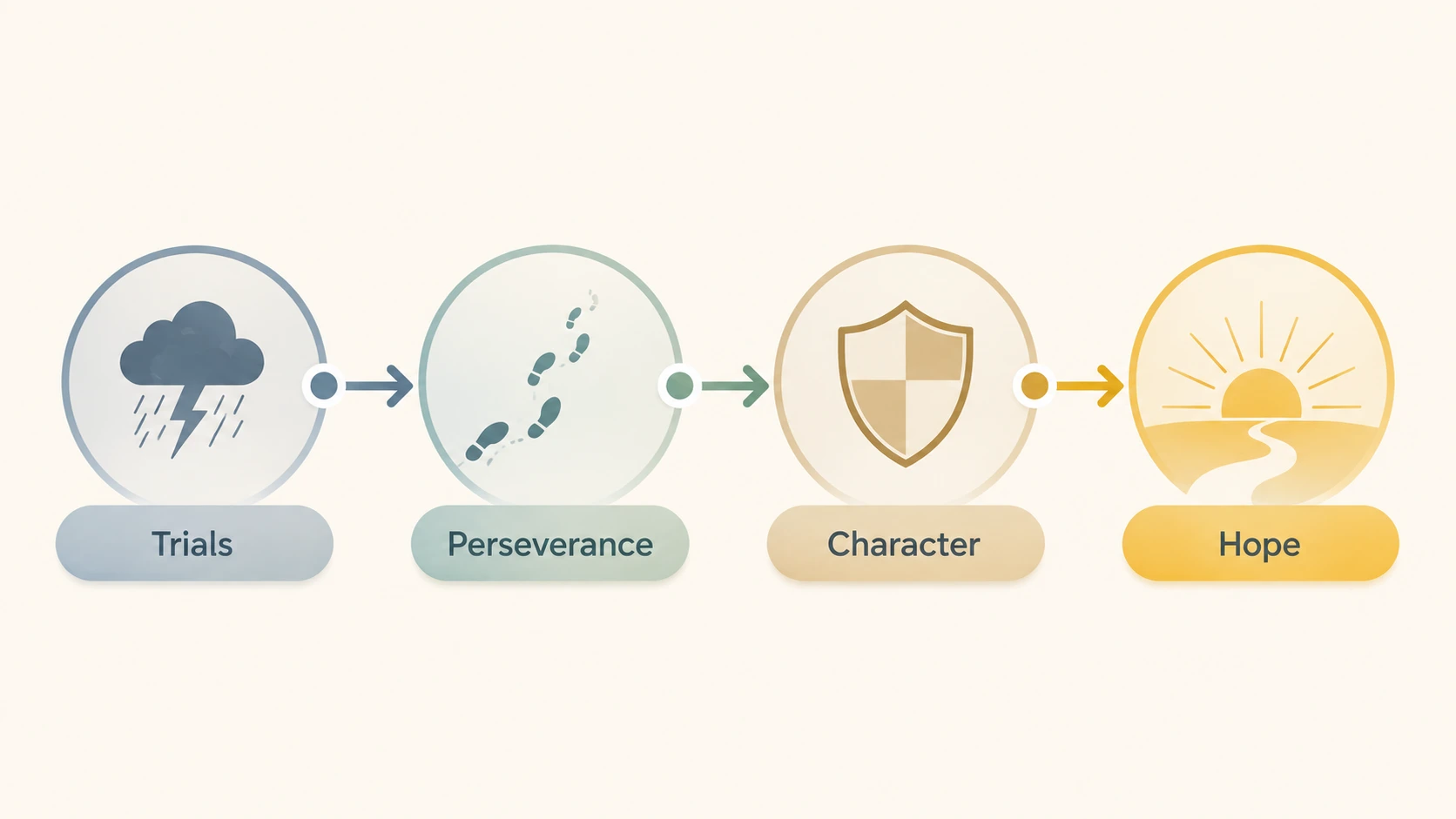
- Romans 5:3–5 — Connects suffering to endurance, character, and hope in a cause-and-effect progression.
- Isaiah 41:10 — Offers assurance of God’s presence and strength during fear.
- Psalm 34:17–18 — Describes God’s closeness to those who are brokenhearted.
- Philippians 4:6–7 — Encourages prayer over anxiety, promising peace that guards the heart and mind.
These passages show a consistent pattern: trials, when met with faith, tend to build endurance, which develops character, which produces hope. This progression is a recurring biblical framework for understanding hardship as formative rather than purely negative.
What to Do When Growth Feels Slow
Personal and spiritual growth is often gradual and not immediately visible, which can be discouraging. Scripture encourages patience, consistency, and trust in gradual progress rather than instant results. Practically, this means continuing prayer and reflection even when change feels slow, viewing setbacks as part of the learning process rather than proof of failure, and trusting that growth — like the “light of dawn” described in Proverbs 4:18 — tends to increase steadily over time rather than all at once.
Bible Verses About Growth and Strength
Biblical strength is tied to God’s power and a believer’s dependence on Him, rather than self-reliance alone. Central passages include:
- Isaiah 40:31 — Describes renewed strength for those who wait on the Lord.
- Philippians 4:13 — Affirms the ability to face circumstances through Christ’s strength.
- Ephesians 6:10 — Instructs believers to be strong in the Lord’s power.
- 2 Corinthians 12:9 — Teaches that God’s grace is sufficient, and that His power is displayed through human weakness.
How Challenges Can Build Spiritual Strength
Perseverance in Scripture is presented as a process rather than an instant outcome. Hardship, when endured with faith, is repeatedly connected to endurance, maturity, and resilience. Importantly, biblical strength does not mean the absence of weakness, fear, or discouragement — it means relying on God’s power specifically in those moments rather than waiting until difficult emotions disappear.
Bible Verses on Focus and Determination
Scripture offers substantial guidance on perseverance, discipline, and staying focused on purpose. Relevant passages include:
- Philippians 3:13–14 — Describes pressing forward toward a goal while letting go of the past.
- Hebrews 12:1–2 — Encourages running the race with endurance, fixing attention on Christ.
- Proverbs 16:3 — Connects committing plans to the Lord with their establishment.
- 1 Corinthians 9:24–27 — Uses the image of disciplined training to describe spiritual focus.
Biblical focus involves setting priorities, removing distractions, remaining faithful to responsibilities, and continuing forward despite setbacks — themes that align closely with bible verses on focus and determination.
How Faith and Discipline Work Together
Biblical determination is not simply personal willpower; it is shaped by prayer, wise goal-setting, discipline, and accountability. Consistent action tends to grow out of a combination of spiritual dependence and practical structure, rather than motivation alone. In our experience helping readers build better habits, discipline paired with prayerful reflection tends to produce more sustainable focus than sheer willpower. A consistent prayer for growth mindset can anchor these efforts, turning discipline into an act of dependence on God rather than willpower alone.
Bible Verses for Growth and Success
Biblical success is defined differently than material achievement. It centers on faithfulness, wisdom, character, stewardship, and obedience. Relevant passages include Joshua 1:8, Proverbs 3:5–6, Psalm 1:1–3, and Colossians 3:23–24, each connecting diligence and trust in God with meaningful, lasting outcomes.
| Verse | Biblical Principle | Growth Lesson | Practical Application |
|---|---|---|---|
| Joshua 1:8 | Meditating on and obeying God’s word | Wisdom guides successful action | Set aside time for regular reflection on Scripture |
| Proverbs 3:5–6 | Trusting God over personal understanding | Growth requires surrendered direction | Seek guidance before major decisions |
| Psalm 1:1–3 | Delighting in God’s instruction | Consistent grounding produces fruitfulness | Build steady spiritual habits |
| Colossians 3:23–24 | Working as service to God | Purposeful effort matters more than recognition | Approach daily work with intentional diligence |
Can Biblical Growth Include Prosperity?
Scripture distinguishes between God’s blessing, material prosperity, and spiritual flourishing. Some passages address material provision, but these should be interpreted within their broader biblical context rather than treated as a guaranteed formula for financial success. Biblical prosperity is more accurately understood as holistic well-being — spiritual, relational, and material — rather than wealth alone. For a deeper look at how Scripture addresses scarcity thinking, see our related guide on poverty mindset bible teachings
How to Apply a Biblical Growth Mindset to Everyday Life
Turning these principles into daily practice does not require reducing faith to a self-help formula. Practical applications include:
- Reflect on Scripture regularly.
- Pray about areas requiring change.
- Learn from mistakes rather than defining yourself by them.
- Practice gratitude consistently.
- Set purposeful, faith-aligned goals.
- Develop discipline and consistency in habits.
- Seek wise counsel and accountability from trusted community.
- Track character and spiritual progress, not only external achievements. Pairing Scripture reflection with growth mindset affirmations rooted in biblical truth can reinforce these mental shifts throughout the day
These practices connect biblical growth with broader concepts such as habit formation, goal setting, and resilience, while keeping the focus on spiritual maturity rather than performance.
Common Mistakes When Trying to Develop a Growth Mindset
- Treating positive thinking as a substitute for faith.
- Expecting instant transformation instead of gradual growth.
- Comparing personal progress with other people. As of 2026, many self-improvement approaches increasingly emphasize gradual, sustainable habit-building over rapid transformation — a shift that aligns closely with the biblical view of growth as a steady, ongoing process rather than a single breakthrough.
- Interpreting every setback as failure rather than part of the learning process.
- Pursuing success without considering character or purpose.
- Using isolated Bible verses without considering their broader context.
Different Ways to Practice Biblical Growth
- For students: Learning from mistakes and developing academic and personal discipline.
- For professionals: Practicing perseverance, integrity, focus, and responsible stewardship at work.
- During difficult seasons: Leaning on hope, prayer, patience, and resilience.
- For personal transformation: Identifying unhealthy patterns and pursuing constructive, faith-grounded change.
A Biblical Growth Mindset vs. a Secular Growth Mindset
Biblical and secular growth mindsets share some overlap — both value learning, effort, and resilience — but they differ in source, focus, and definition of success.
| Aspect | Biblical Growth Mindset | Secular Growth Mindset |
|---|---|---|
| Source of growth | God, Scripture, faith, learning, and discipline | Learning, effort, feedback, and experience |
| Primary focus | Spiritual maturity, character, faithfulness, and transformation | Development of abilities and potential |
| Response to failure | Persevere, learn, repent when necessary, and trust God | Learn from mistakes and adjust |
| View of success | Faithfulness, wisdom, character, stewardship, and purpose | Achievement, development, or goal attainment |
| Role of dependence | Dependence on God alongside responsible action | Primarily personal effort and available resources |
This comparison highlights that the two are not mutually exclusive — a biblical growth mindset can incorporate practical strategies from secular personal development while grounding them in faith, humility, and dependence on God.
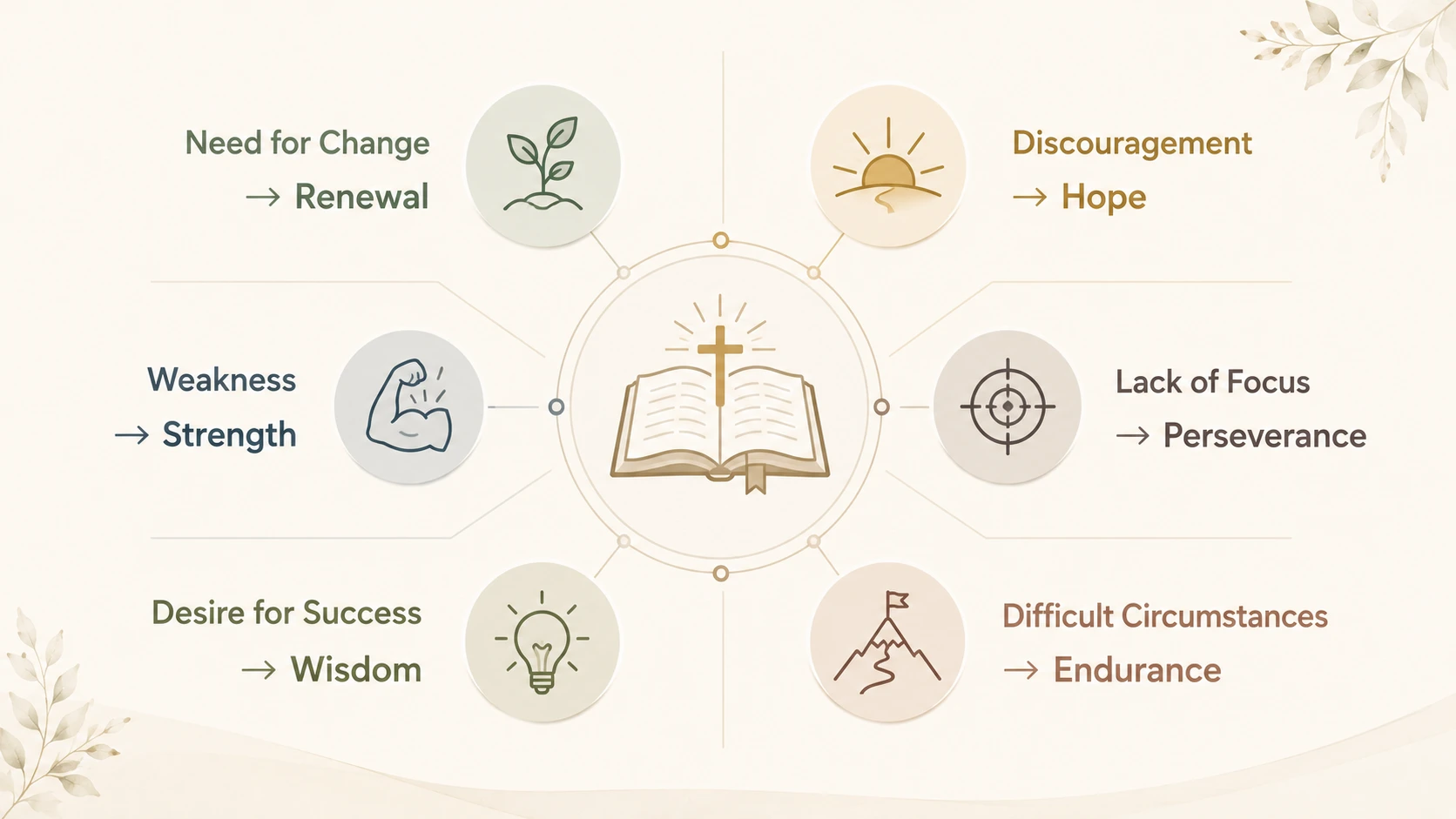
How to Choose the Right Bible Verse for Your Season of Growth
Different life circumstances call for different biblical themes:
- Need for change: Focus on verses about renewal and transformation (Romans 12:2).
- Discouragement: Focus on verses about hope and God’s presence (Psalm 34:17–18).
- Weakness: Focus on verses about strength and dependence on God (Isaiah 40:31).
- Lack of focus: Focus on verses about perseverance and purpose (Philippians 3:13–14).
- Desire for success: Focus on verses about wisdom and faithful work (Proverbs 3:5–6).
- Difficult circumstances: Focus on verses about endurance and hope (Romans 5:3–5).
Matching a verse to a specific season of life can make Scripture feel more directly applicable, rather than treating all growth-related passages as interchangeable.
Conclusion
The Bible offers extensive teaching consistent with a growth-oriented approach to life, even though it does not use the modern term “growth mindset.” Central biblical themes — renewed thinking, transformation, perseverance, strength, wisdom, focus, hope, and faithful action — provide a framework for growth that goes beyond mindset alone. A bible verse about growth mindset ultimately points toward allowing God to transform the mind and character while responding to challenges with faith, perseverance, wisdom, and purposeful action. Biblical growth is less about achieving more and more about becoming wiser, stronger in faith, and more mature in character.
Frequently Asked Questions
What is a good Bible verse about a growth mindset?
Romans 12:2 is one of the strongest starting points, since it directly addresses the renewal of the mind and the transformation that follows changed thinking.
What does the Bible say about personal growth and change?
Scripture presents transformation through renewed thinking, spiritual maturity, wisdom, repentance, and God’s ongoing work in a person’s life, rather than through willpower alone.
What Bible verses help with staying positive during hard times?
Passages such as Philippians 4:6–7, Psalm 34:17–18, and Isaiah 41:10 center on hope, God’s presence, and peace rather than simple positive thinking.
What Bible verses encourage growth and success?
Verses like Joshua 1:8 and Proverbs 3:5–6 connect meaningful success with wisdom, faithful work, obedience, and character rather than material achievement alone.
What Bible verse is good for strength and perseverance?
Isaiah 40:31 and Philippians 4:13 are commonly referenced for encouragement around endurance and reliance on God during difficulty.
What does the Bible say about changing yourself for the better?
The Bible frames self-improvement through the lens of transformation, renewed thinking, repentance, spiritual maturity, and God’s grace working within a person, rather than self-reliance alone.
Does the Bible teach a growth mindset?
“Growth mindset” is a modern psychological term, but Scripture contains extensive teaching about learning, renewal, perseverance, wisdom, and transformation that aligns closely with the concept.