

Introduction
Many students struggle with productivity not because they lack intelligence but because their systems, habits, and environments make studying unnecessarily difficult. The Best Productivity Tips for Lazy Students focus on simplifying actions, reducing decision fatigue, and creating routines that make studying automatic instead of dependent on motivation. When tasks feel easier to start, consistency naturally improves and academic performance increases without requiring extreme effort or long study hours.
Quick Summary
- Productivity improves when studying becomes simple and friction-free
- Motivation is unreliable; systems and habits create consistency
- Small daily actions are more effective than long study sessions
- Environment and routines strongly influence student behavior
- Reducing distractions is key to sustained academic focus
What Does Productivity Mean for Students?
Productivity for students means completing important academic tasks efficiently while maximizing learning outcomes with minimal wasted effort. It is not about studying longer but about studying smarter.
Key points:
- Focus on results, not hours
- Prioritize high-value academic tasks
- Manage attention and energy effectively
- Build consistent study systems
Productivity in life and academics depends on clarity, structure, and execution rather than effort alone.
Why Do Some Students Feel Lazy?
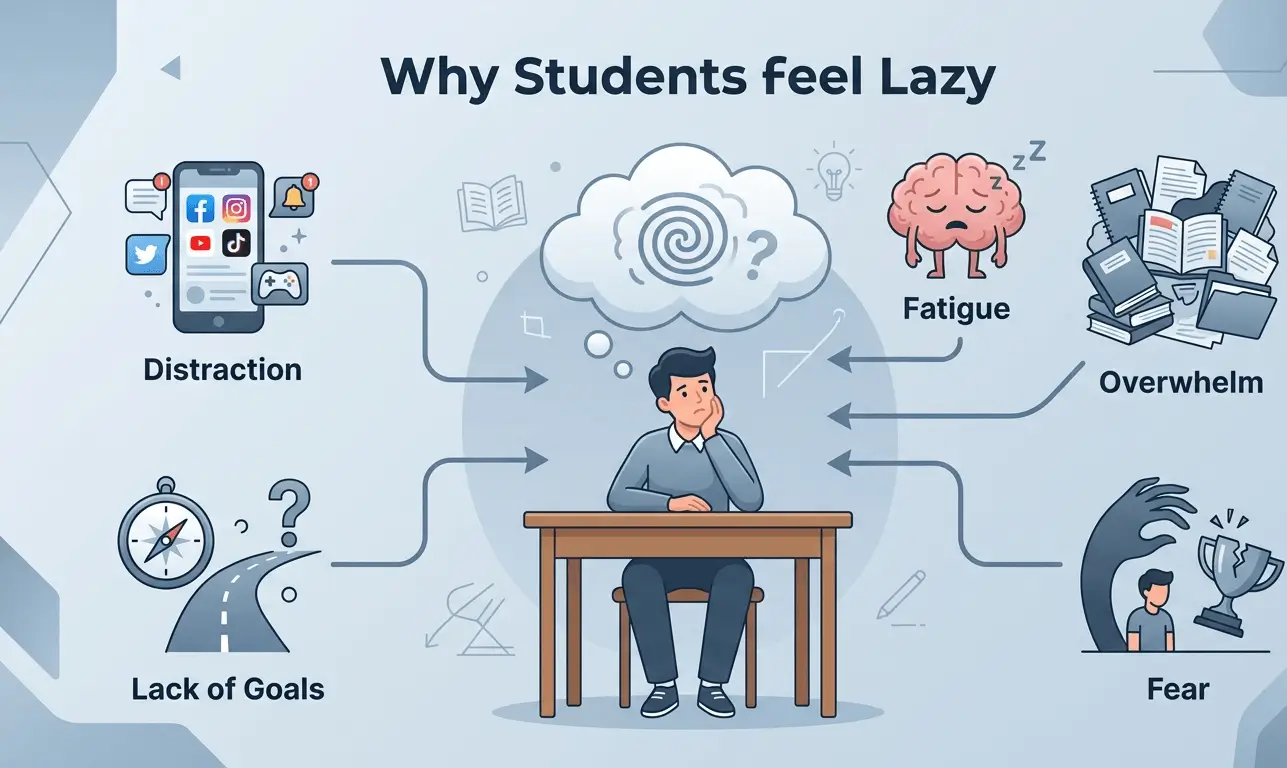
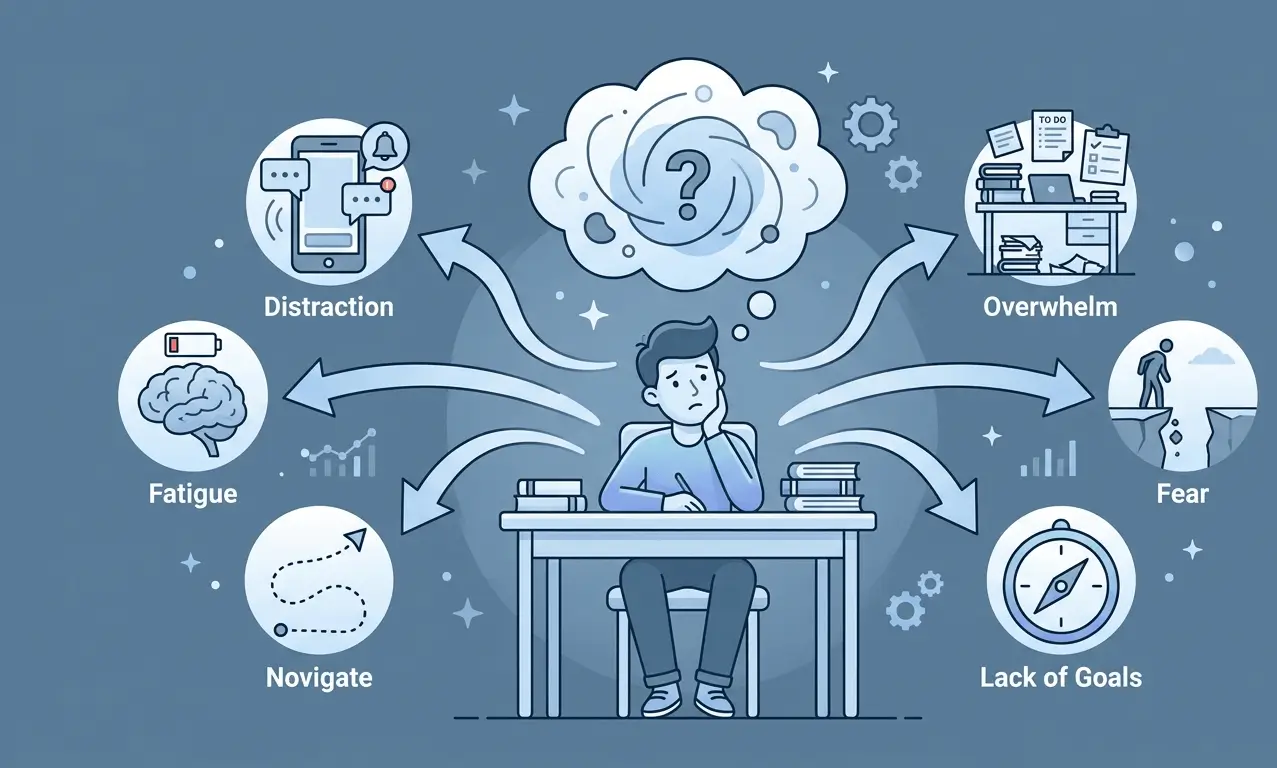
Students often experience “laziness” due to psychological resistance rather than actual lack of motivation or intelligence.
Common reasons:
- Decision fatigue from too many choices
- Fear of failure or perfectionism
- Lack of structured study routines
- Digital distractions and overstimulation
- Low energy due to poor sleep habits
- Unclear goals or priorities
Behavioral insight: The brain prefers immediate rewards, making entertainment more appealing than studying unless systems guide behavior.
How to Be More Productive as a Student Without Relying on Motivation
Motivation fluctuates, but systems remain stable. Productivity improves when actions are automated through habits.
One of the most effective ways to improve productivity is to strengthen your time management skills, which helps students structure their day and avoid procrastination.
Action strategies:
- Use a fixed study start time daily
- Apply the 5-minute rule to start tasks easily
- Design distraction-free environments
- Prepare study materials in advance
- Study during peak energy periods
These methods help students become more productive consistently without emotional dependence.
Daily Habits for Productivity That Make Studying Easier
Daily habits reduce decision-making and create automatic discipline.
These routines work best when combined with proven habit-building strategies that make behaviors automatic over time.
Recommended habits:
- Plan the next day before sleeping
- Select 3 priority tasks daily
- Study in focused blocks (not random intervals)
- Take structured breaks
- Review daily progress
- Maintain consistent sleep schedule
These habits improve staying productive without mental overload.
Best Productivity Tips for Lazy Students at Home
Home environments often increase distractions and reduce focus.
Practical solutions:
- Create a dedicated study space
- Remove unnecessary visual distractions
- Keep materials organized and accessible
- Use website blockers during study sessions
- Follow a simple daily routine
Studying in bed reduces focus, while a designated workspace improves mental discipline and task association.
The Most Effective Productivity Methods for Students
Different productivity systems work for different personalities and workloads.
| Method | Best For | Benefit | Limitation |
|---|---|---|---|
| Pomodoro Technique | Short attention span | Easy focus cycles | Frequent breaks |
| Time Blocking | Structured learners | Clear schedule | Requires planning |
| Task Batching | Similar tasks | Efficiency | Less flexibility |
| Eisenhower Matrix | Prioritization | Reduces overwhelm | Learning curve |
| Two-Minute Rule | Small tasks | Immediate action | Not for complex work |
Motivation vs Discipline: What Actually Keeps Students Productive?
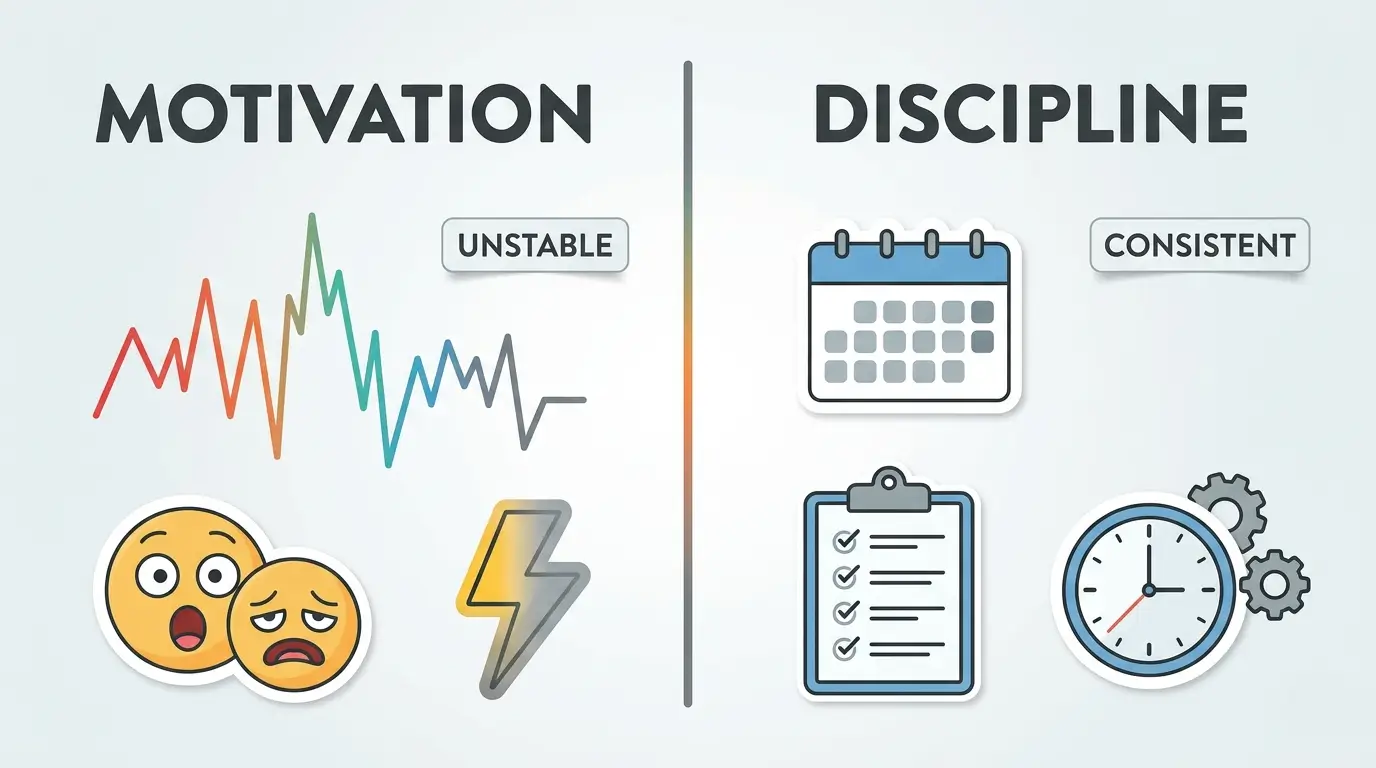
Motivation is emotional, while discipline is behavioral. Long-term productivity depends on discipline.
| Motivation | Discipline |
|---|---|
| Emotion-based | Routine-based |
| Unstable | Consistent |
| Temporary | Long-term |
| Easily disrupted | Reliable under stress |
Discipline combined with systems ensures sustainable productivity.
Consistency vs Intensity in Academic Success
Consistency leads to stronger learning outcomes than short bursts of effort.
| Consistency | Intensity |
|---|---|
| Daily small effort | Occasional cramming |
| Lower stress | Higher burnout risk |
| Better retention | Short-term gain |
| Habit formation | Difficult sustainability |
Consistent effort builds long-term academic strength.
Common Productivity Mistakes Students Make
| Mistake | Why It Happens | Solution |
|---|---|---|
| Multitasking | Overconfidence | Single-task focus |
| Waiting for motivation | Emotional reliance | Start immediately |
| Overplanning | Fear of execution | Quick action |
| No breaks | Mental fatigue | Scheduled rest |
| Unrealistic plans | Overestimation | Flexible scheduling |
How to Overcome Procrastination and Stay Productive
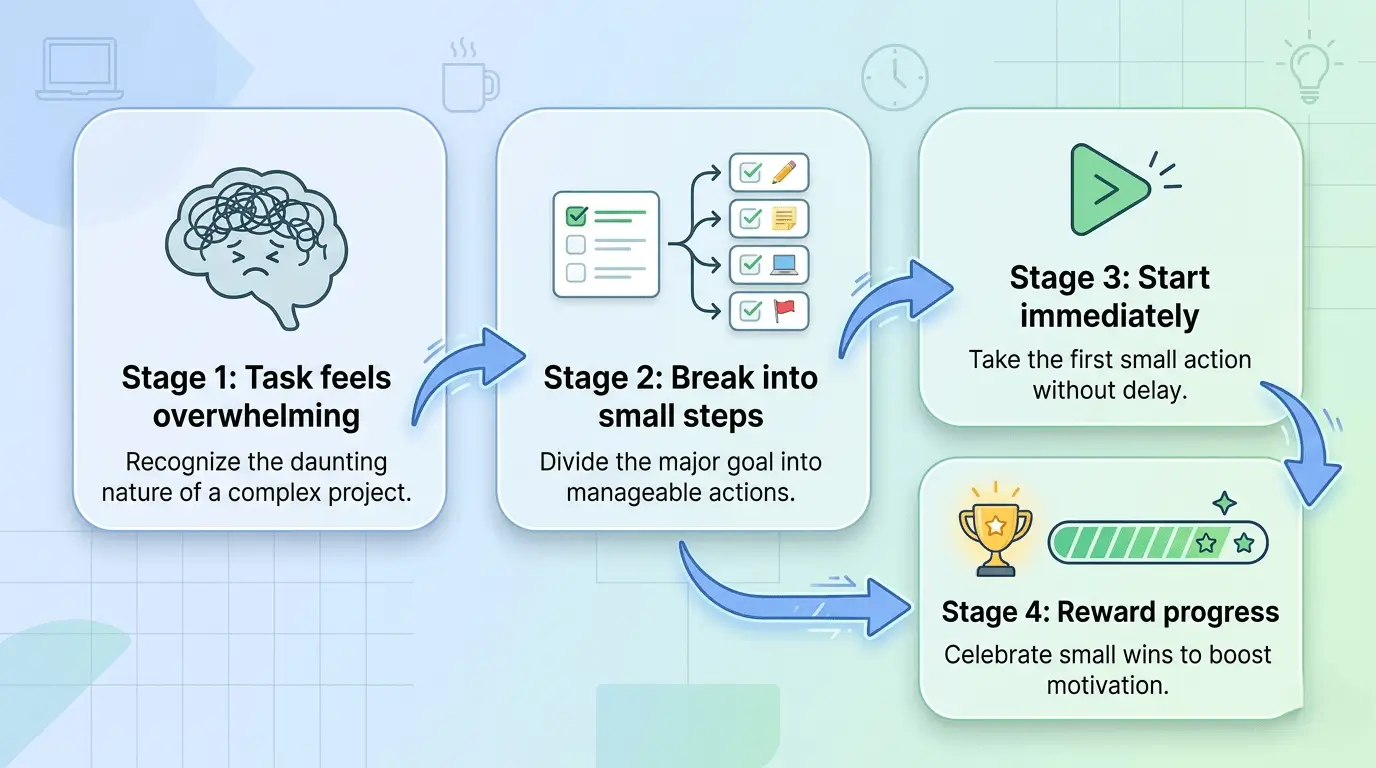
Procrastination occurs when tasks feel overwhelming or unrewarding.
How to fix it:
- Break tasks into small steps
- Set clear deadlines
- Use accountability systems
- Reward completed actions
How to prevent it:
- Daily planning
- Consistent routines
- Reduced distractions
- Progress tracking
Managing Burnout, Overwhelm, and Mental Resistance
Burnout reduces performance even in motivated students.
Common barriers:
- Overthinking
- Perfectionism
- Fear of failure
- Comparison with others
Sustainable practices:
- Focus on progress, not perfection
- Take recovery breaks
- Set realistic expectations
- Celebrate small wins
A Simple Productivity Routine for Students
Morning:
- Review priorities
- Complete hardest task first
Afternoon:
- Focused study blocks
- Batch similar assignments
Evening:
- Review progress
- Plan next day
Beginner version: 20–30 minutes planning daily
Advanced version: Time-blocking with weekly review
What Actually Works for Long-Term Student Productivity?
Long-term productivity depends on systems, not temporary effort.
Effective strategies:
- Consistent routines
- Clear priorities
- Optimized environment
- Habit automation
- Regular self-review
Common myths:
- More study hours = better results
- Motivation guarantees success
- Multitasking improves learning
Conclusion
The best productivity tips for lazy students focus on simplifying actions, reducing distractions, and building consistent habits. Productivity improves when students rely on systems rather than motivation. Small daily improvements create long-term academic success without stress or burnout. Consistency, structure, and environment design are the core drivers of sustainable student productivity.
Frequently Asked Questions
Why do I struggle with consistency even when motivated?
Motivation is temporary, while consistency depends on habits and structured routines.
How can I be more productive as a student in high school?
Use daily planning, focused study blocks, and distraction control systems.
What should I do if I lose motivation to study?
Start with a very small task to trigger action.
How many productivity habits should I build at once?
Start with 1–2 habits to avoid overwhelm.
What is the best productivity method for students?
Pomodoro, time blocking, and task batching are highly effective.
How can I stop procrastinating on difficult tasks?
Break tasks into smaller steps and focus on starting, not finishing.
Is studying longer equal to productivity?
No, productivity depends on learning efficiency, not hours spent.