

Introduction
A mindset business coach helps individuals and business owners identify limiting beliefs, strengthen decision-making, and build sustainable personal and professional growth. Rather than focusing only on strategy or tactics, this type of coach works on the thought patterns that drive behavior, confidence, and long-term success. Mindset coaching often extends beyond business into confidence, relationships, and everyday behavioral patterns. Two concepts sit at the center of this work: scarcity mindset and abundance mindset. Understanding the difference between them explains why some people stay stuck in fear-based thinking while others consistently grow, adapt, and seize opportunity.
Quick Summary
- A mindset business coach helps identify and replace limiting thought patterns that affect business and personal growth.
- Scarcity and abundance mindsets influence decision-making, confidence, relationships, and opportunities.
- Developing an abundance mindset involves intentional habits, self-awareness, and consistent practice.
- Sustainable mindset change combines practical strategies with long-term behavioral improvement.
What Is a Mindset Business Coach?
Definition and Core Role
A mindset business coach is a professional who helps clients recognize and reframe limiting beliefs that interfere with business performance and personal growth. Unlike a consultant, who typically advises on strategy, operations, or finance, a mindset coach focuses on the internal beliefs and thought patterns that shape how a person makes decisions and responds to challenges. This distinguishes mindset coaching from mentoring, which usually involves guidance from someone with direct industry experience, and from therapy, which addresses clinical or emotional health concerns rather than performance and growth. Common coaching objectives include building confidence, improving decision-making under pressure, clarifying goals, and developing resilience in the face of setbacks.
Who Can Benefit from a Mindset Business Coach?
Mindset coaching is not limited to a single profession or stage of business. People who commonly seek out this type of coaching include:
- Entrepreneurs building or scaling a business
- Small business owners managing day-to-day pressure and uncertainty
- Professionals navigating career transitions or leadership roles
- Leaders responsible for guiding teams through change
- Freelancers managing inconsistent income and client relationships
- Individuals focused on broader personal growth, beyond business contexts
How Mindset Coaching Influences Success
Mindset directly shapes several measurable outcomes in business and life. A coach typically works on:
- Decision-making: Reducing fear-based or reactive choices in favor of clear, evidence-based decisions
- Confidence: Building self-trust to take calculated risks
- Emotional resilience: Recovering more quickly from setbacks or failure
- Leadership: Strengthening communication and accountability with teams
- Productivity: Reducing procrastination linked to fear or perfectionism
- Opportunity recognition: Noticing and acting on growth opportunities rather than dismissing them
Understanding Scarcity Mindset
Scarcity Mindset Meaning
Scarcity mindset is the belief that resources, opportunities, or success are inherently limited, which leads to fear-based decision-making and a focus on competition over collaboration. This concept, popularized in behavioral economics and psychology, describes a mental framework where people perceive a constant shortage of money, time, opportunity, or recognition, even when objective conditions don’t support that belief. Scarcity mindset typically develops through a combination of psychological and environmental influences, including early financial hardship, past failures, high-pressure environments, or repeated exposure to competitive, zero-sum thinking. Scarcity mindset examples include hoarding information at work out of fear a colleague will “steal” credit, or avoiding new business opportunities due to fear of failure rather than evaluating them on merit.
Common Signs of a Scarcity Mindset
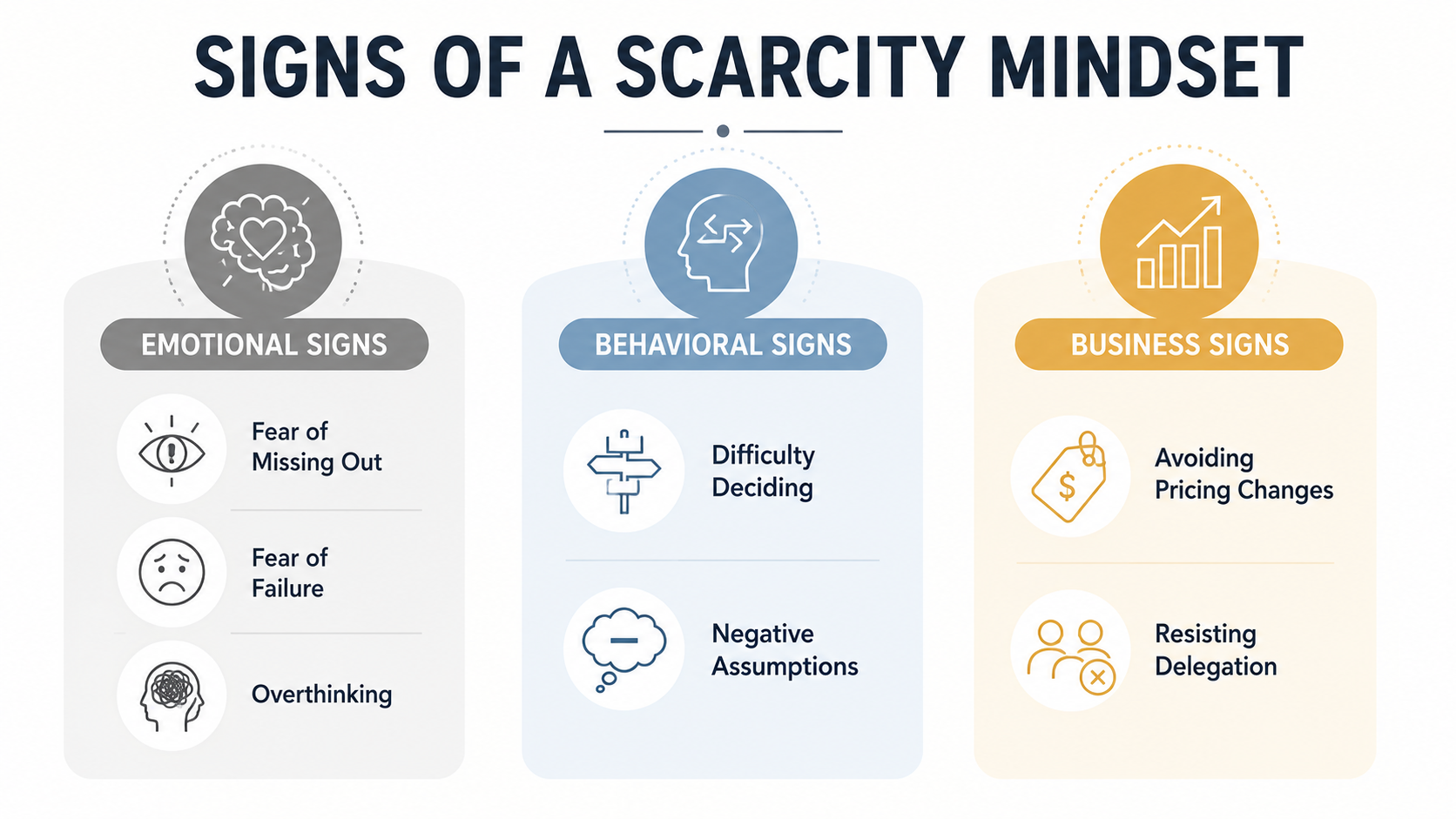
Scarcity thinking shows up across emotional, behavioral, and business-related patterns.
Emotional signs
- Persistent fear of missing opportunities
- Fear of failure that outweighs rational risk assessment
- Frequent comparison with others’ success
- Chronic overthinking and second-guessing
Behavioral signs
- Difficulty making decisions, even minor ones
- Defaulting to negative assumptions about outcomes
- Reluctance to share resources, knowledge, or credit
Business-related signs
- Avoiding pricing increases out of fear of losing clients
- Viewing competitors purely as threats rather than as market signals
- Resisting delegation due to fear of losing control
Scarcity vs Abundance Mindset
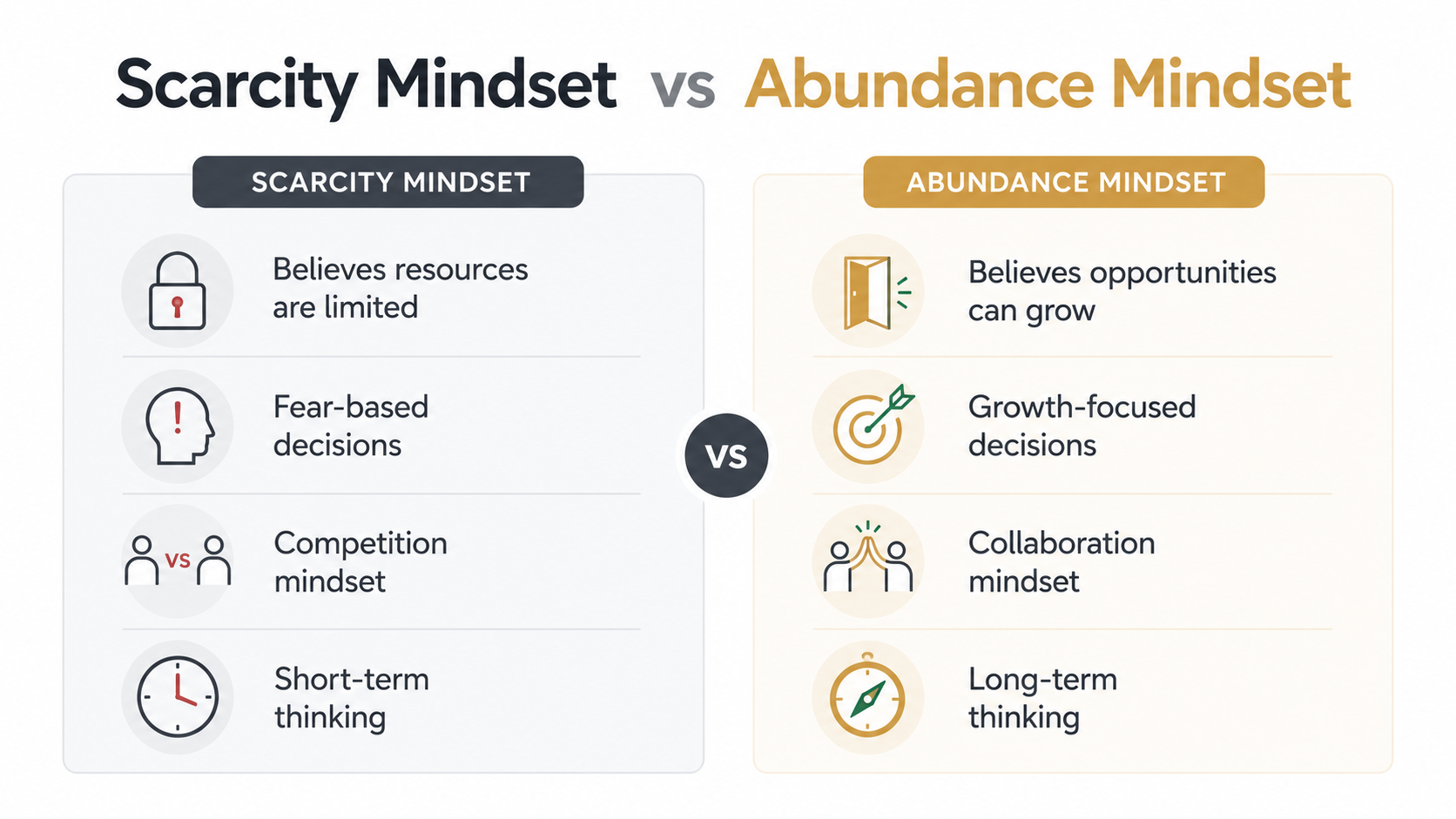
Key Differences
Scarcity mindset and abundance mindset represent opposite approaches to evaluating risk, opportunity, and growth.
| Scarcity Mindset | Abundance Mindset |
|---|---|
| Believes resources are limited | Believes opportunities can grow |
| Fear-based decisions | Growth-focused decisions |
| Competition mindset | Collaboration mindset |
| Short-term thinking | Long-term thinking |
The scarcity mindset vs abundance mindset distinction has direct consequences in business and daily life. In business, a scarcity-driven owner may underprice services or avoid partnerships out of fear of losing market share, while an abundance-driven owner is more likely to invest in growth, form strategic alliances, and view setbacks as temporary. In daily life, scarcity thinking can limit willingness to try new things, while abundance thinking supports adaptability and openness to change. Moving from one pattern to the other is often described as learning how to go from scarcity to abundance mindset, a process that typically requires sustained self-awareness and practice rather than a single insight.
How Scarcity Mindset Affects Relationships
What Is Scarcity Mindset in Relationships?
Scarcity mindset in relationships refers to the belief that love, attention, or connection is limited, which often produces emotional dependency, insecurity, and anxious attachment patterns. People operating from this mindset may feel that a romantic partner or close relationship is hard to replace, leading to fear-driven behavior such as excessive reassurance-seeking or difficulty trusting a partner’s intentions. This pattern is closely related to attachment theory, a well-established framework in psychology that explains how early relational experiences shape adult relationship behavior.
Scarcity Mindset in Dating
Scarcity mindset in dating tends to produce specific, recognizable patterns:
Scarcity Mindset in Dating” section. This is a near-exact keyword match to your existing page, so it’s your strongest, most natural link.
Suggested sentence: Replace “These patterns are sometimes described using related terms such as scarcity mentality dating or scarcity mindset love, all referring to the same underlying fear-based relational pattern.” with: “These patterns are sometimes described using related terms such as scarcity mentality dating or scarcity mindset love — for a deeper look, see our full guide on scarcity mindset in dating.”
- Fear of rejection that prevents authentic self-expression
- Seeking constant validation from a partner or potential partner
- Settling for relationships that don’t meet personal needs out of fear of being alone
- Difficulty setting and maintaining boundaries
These patterns are sometimes described using related terms such as scarcity mentality dating or scarcity mindset love, all referring to the same underlying fear-based relational pattern.
Scarcity vs Abundance Mindset in Relationships
| Scarcity Mindset in Relationships | Abundance Mindset in Relationships |
|---|---|
| Fear of being alone drives choices | Self-worth is independent of relationship status |
| Difficulty trusting a partner | Confidence in mutual trust |
| Avoids boundaries to keep the peace | Sets and respects healthy boundaries |
| Relies on partner for validation | Maintains independent identity and confidence |
An abundance mindset in relationships supports trust, independence, and confidence, allowing both partners to engage from a place of security rather than fear.
How to Overcome a Scarcity Mindset
Identify Limiting Beliefs
The first step in overcoming scarcity mindset is building self-awareness around the specific beliefs driving fear-based decisions. Journaling and structured reflection exercises help surface recurring thought patterns, such as assumptions about money, opportunity, or personal worth, that may not hold up under closer examination.
Identify Limiting Beliefs” (under “How to Overcome a Scarcity Mindset”). Pairs naturally with the self-awareness/journaling discussion.
Suggested addition: Add a new sentence at the end of that paragraph: “This process works best when paired with the practice of
focus on what you can control, which reduces the anxiety that often fuels scarcity-driven thinking.
Replace Scarcity Thinking with Growth-Oriented Beliefs
Cognitive reframing, a technique drawn from cognitive behavioral approaches, involves consciously identifying a limiting belief and replacing it with a more accurate, evidence-based alternative. This process works best when paired with positive evidence gathering, where a person actively notes examples that contradict the scarcity belief, and goal-oriented thinking, which redirects focus toward what is achievable rather than what feels threatened.
Build Daily Abundance Habits
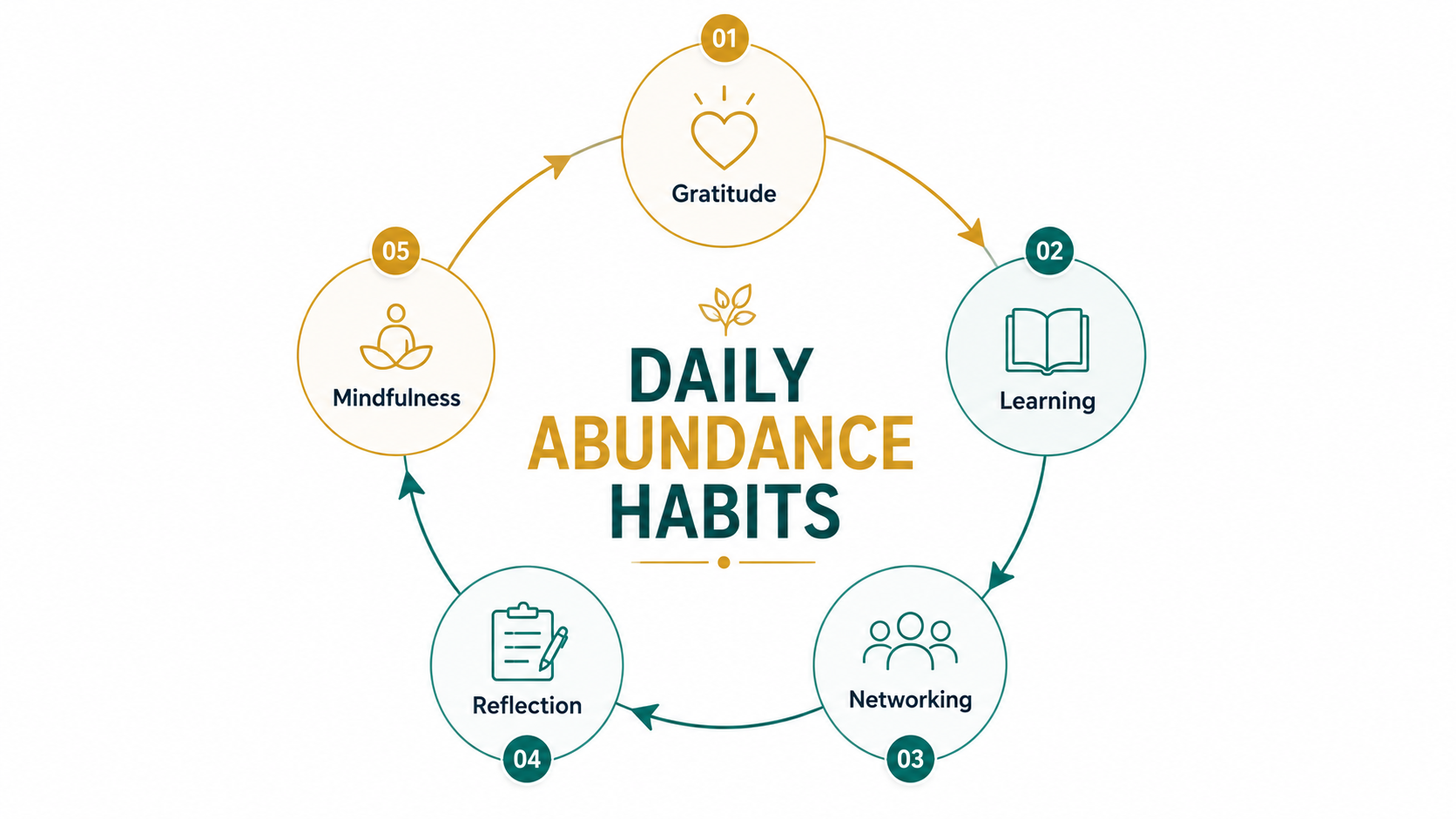
Sustainable mindset change relies on consistent daily habits rather than occasional effort. Common abundance-building habits include:
- Practicing gratitude to shift focus toward existing resources
- Engaging in continuous learning to build confidence and capability
- Networking intentionally to expand perceived opportunity
- Maintaining regular reflection to track mindset shifts
- Practicing mindfulness to reduce reactive, fear-based responses
These habits form the practical foundation for learning how to go from scarcity to abundance mindset over time.
Applying an Abundance Mindset to Dating and Relationships
How to Overcome Scarcity Mindset in Dating
Overcoming scarcity mindset in dating starts with building self-worth that doesn’t depend on a relationship’s outcome. Improving communication skills, reducing fear of rejection through gradual exposure to vulnerability, and developing realistic, healthy expectations all support this shift.
Scarcity Mindset in Dating” section. This is a near-exact keyword match to your existing page, so it’s your strongest, most natural link.
Suggested sentence: Replace “These patterns are sometimes described using related terms such as scarcity mentality dating or scarcity mindset love, all referring to the same underlying fear-based relational pattern.” with: “These patterns are sometimes described using related terms such as scarcity mentality dating or scarcity mindset love — for a deeper look, see our full guide on scarcity mindset datingin. How to Get Rid of Scarcity Mindset in Dating
Practical behavioral changes reinforce internal mindset work. This includes building emotional independence by maintaining personal interests and friendships outside of dating, and expanding social opportunities so no single interaction feels disproportionately high-stakes.
How to Not Have a Scarcity Mindset in Dating
Daily mindset habits, such as confidence-building practices and consistent self-reflection, support long-term emotional growth. Over time, these practices reduce the intensity of fear-based reactions in dating situations.
Abundance Mindset in Dating
An abundance mindset in dating is characterized by healthy dating behaviors, emotional security, and respect for personal and partner boundaries. This approach supports long-term compatibility by allowing both people to evaluate the relationship clearly, rather than through a lens of fear or urgency.
Practical Strategies a Mindset Business Coach Uses
Goal Clarification
Coaches often begin with vision development, helping clients articulate long-term goals before breaking them into SMART goals (specific, measurable, achievable, relevant, time-bound). This process is typically grounded in the client’s personal values to ensure goals remain motivating over time.
Mindset Reframing
Replacing limiting beliefs is a core coaching function, often supported by structured decision frameworks that help clients evaluate choices objectively rather than reactively. Accountability mechanisms, such as regular check-ins, reinforce follow-through.
Confidence and Resilience Building
Coaches help clients develop strategies for handling setbacks constructively, manage stress through practical techniques, and build consistency, which research in habit formation identifies as a primary driver of long-term behavioral change.
Common Mistakes That Keep People Stuck
Expecting Immediate Results
Mindset change is a gradual process, and expecting immediate results often leads to discouragement. Setting realistic expectations from the outset helps maintain motivation through the slower early stages of change.
Waiting for Motivation Instead of Building Habits
Motivation is inconsistent, while habits create structure that doesn’t depend on daily emotional state. Building small, repeatable habits prevents progress from stalling when motivation dips.
Comparing Yourself to Others
Comparison reinforces scarcity thinking by framing others’ success as a threat rather than a neutral data point. Redirecting focus toward personal progress helps prevent this pattern.
Ignoring Emotional Triggers
Unexamined emotional triggers, such as financial stress or past failures, often resurface scarcity thinking even after initial progress. Identifying and addressing these triggers directly prevents regression.
Quitting Too Early
Mindset work often produces gradual, non-linear results. Quitting after a brief plateau is one of the most common reasons people fail to see long-term change; consistency through plateaus is typically what produces lasting results.
Difficulty and Time Investment
Mindset work ranges from beginner-friendly practices, such as daily gratitude journaling, to more advanced work involving deep-rooted belief systems that may require sustained coaching support. Typical effort required varies by individual, but most people see initial shifts with 15–30 minutes of daily reflective practice. Factors affecting progress include the depth of the limiting belief, current stress levels, and consistency of practice. Across all levels, consistency plays a larger role in outcomes than the intensity of any single session.
Results Timeline
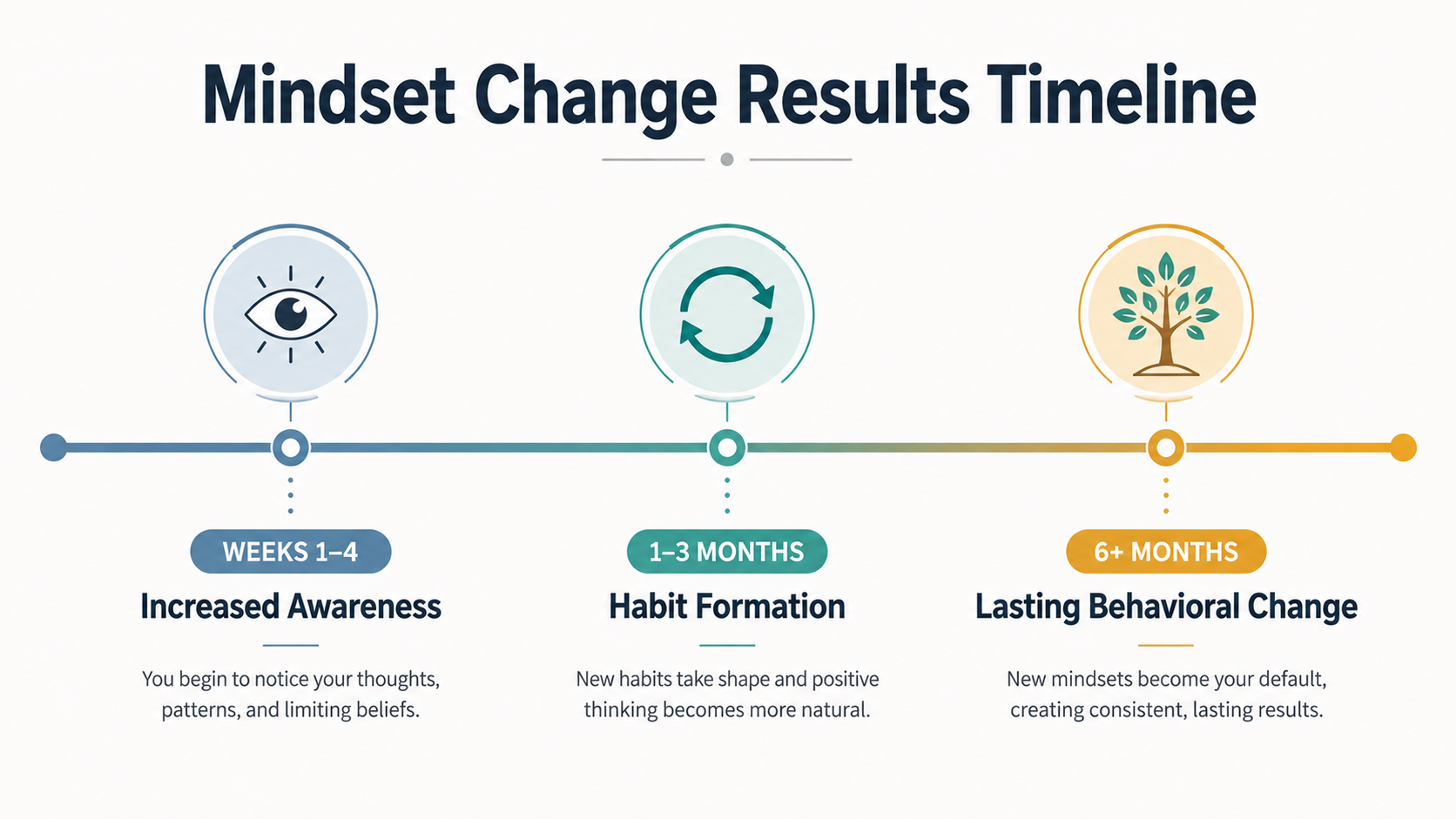
Mindset shifts typically follow a layered timeline. Short-term mindset shifts, such as increased awareness of scarcity-driven thoughts, can occur within the first few weeks of intentional practice. Medium-term habit formation, including consistent reframing and daily abundance habits, generally develops over one to three months. Long-term behavioral transformation, where new thought patterns become automatic, often takes six months or longer. Individual differences, including the severity of underlying beliefs and life circumstances, can shorten or extend this timeline.
Practice Guide for Long-Term Mindset Growth
Daily Practices
Daily practices such as gratitude journaling, brief mindfulness exercises, and reviewing personal goals help reinforce abundance-oriented thinking.
Weekly Reflection
A weekly review of progress, challenges, and recurring thought patterns helps identify whether scarcity thinking is resurfacing in specific situations.
Tracking Progress
Simple tracking methods, such as a habit tracker or journal, provide measurable evidence of progress, which reinforces motivation.
Maintaining Motivation
Connecting daily practices to a clear long-term goal helps sustain motivation, particularly during periods when progress feels slow.
Adapting During Life Changes
Major life changes, such as a career shift or financial setback, can temporarily increase scarcity thinking. Adjusting practice intensity during these periods, rather than abandoning it, supports long-term consistency.
Common tools supporting long-term mindset growth include:
- Journaling
- Reading on psychology and behavioral science
- Coaching sessions
- An accountability partner
- Habit tracking
Frequently Overlooked Factors That Influence Mindset
Environment and Social Circles
Surrounding social environments significantly shape mindset; spending time with people who model scarcity thinking can reinforce the same patterns, while supportive, growth-oriented circles encourage abundance thinking.
Stress and Burnout
Chronic stress narrows decision-making capacity and increases reliance on fear-based, scarcity-driven responses, making stress management a practical component of mindset work.
Past Experiences
Past financial hardship, failure, or instability often shapes default mindset patterns, even when current circumstances have changed.
Financial Pressure
Ongoing financial pressure can reinforce scarcity thinking regardless of mindset work, making practical financial stability an important supporting factor.
Personal Values
Clarity around personal values helps anchor decision-making in what genuinely matters, reducing the influence of fear-based, externally driven choices.
As of 2026, behavioral science research continues to emphasize environment and consistency, rather than willpower alone, as the primary drivers of lasting mindset change.
Conclusion
A mindset business coach plays a central role in helping individuals identify limiting beliefs and replace them with growth-oriented thinking that supports business performance and personal development. Recognizing the signs of a scarcity mindset, understanding how it contrasts with an abundance mindset, and applying consistent, evidence-based strategies are the foundation of meaningful change. These patterns extend well beyond business, shaping confidence, decision-making, and relationships, including dating and romantic partnerships. Developing an abundance mindset is not a one-time shift but an ongoing practice built through daily habits, self-awareness, and consistency. Readers looking to begin this process can start with a single daily practice, such as journaling or gratitude reflection, and build from there.
Identify Limiting Beliefs” section, or the “Daily Practices” H3 under “Practice Guide for Long-Term Mindset Growth.”
Suggested addition: In Daily Practices, change “Daily practices such as gratitude journaling, brief mindfulness exercises…” to: “Daily practices such as gratitude journaling (try these journaling prompts for self growth, brief mindfulness exercises, and reviewing personal goals help reinforce abundance-oriented thinking.
Frequently Asked Questions
What does a mindset business coach do? A mindset business coach helps clients identify limiting beliefs, reframe fear-based thinking, and build the confidence and decision-making skills needed for sustainable business and personal growth.
How is a mindset business coach different from a business consultant? A mindset coach focuses on internal beliefs and thought patterns, while a business consultant typically advises on external strategy, operations, or financial decisions.
What is a scarcity mindset? A scarcity mindset is the belief that resources, opportunities, or success are inherently limited, leading to fear-based decisions and competitive rather than collaborative thinking.
How can someone develop an abundance mindset? Developing an abundance mindset involves identifying limiting beliefs, practicing cognitive reframing, and building consistent daily habits such as gratitude, reflection, and continuous learning.
How does scarcity mindset affect relationships? Scarcity mindset in relationships often produces emotional dependency, fear of rejection, and difficulty setting boundaries, driven by the belief that connection is limited or hard to replace.
Can mindset coaching improve business performance? Yes, mindset coaching can improve business performance by strengthening decision-making, confidence, resilience, and the ability to recognize and act on opportunities.
How long does it take to change a scarcity mindset? Initial awareness shifts can occur within weeks, habit formation typically develops over one to three months, and deeper behavioral change often takes six months or longer, depending on individual circumstances.
Is an abundance mindset realistic in challenging situations? Yes, an abundance mindset can be realistic even during financial or personal hardship, as it focuses on evaluating opportunities and resources accurately rather than denying genuine challenges.










2 Responses