
introduction
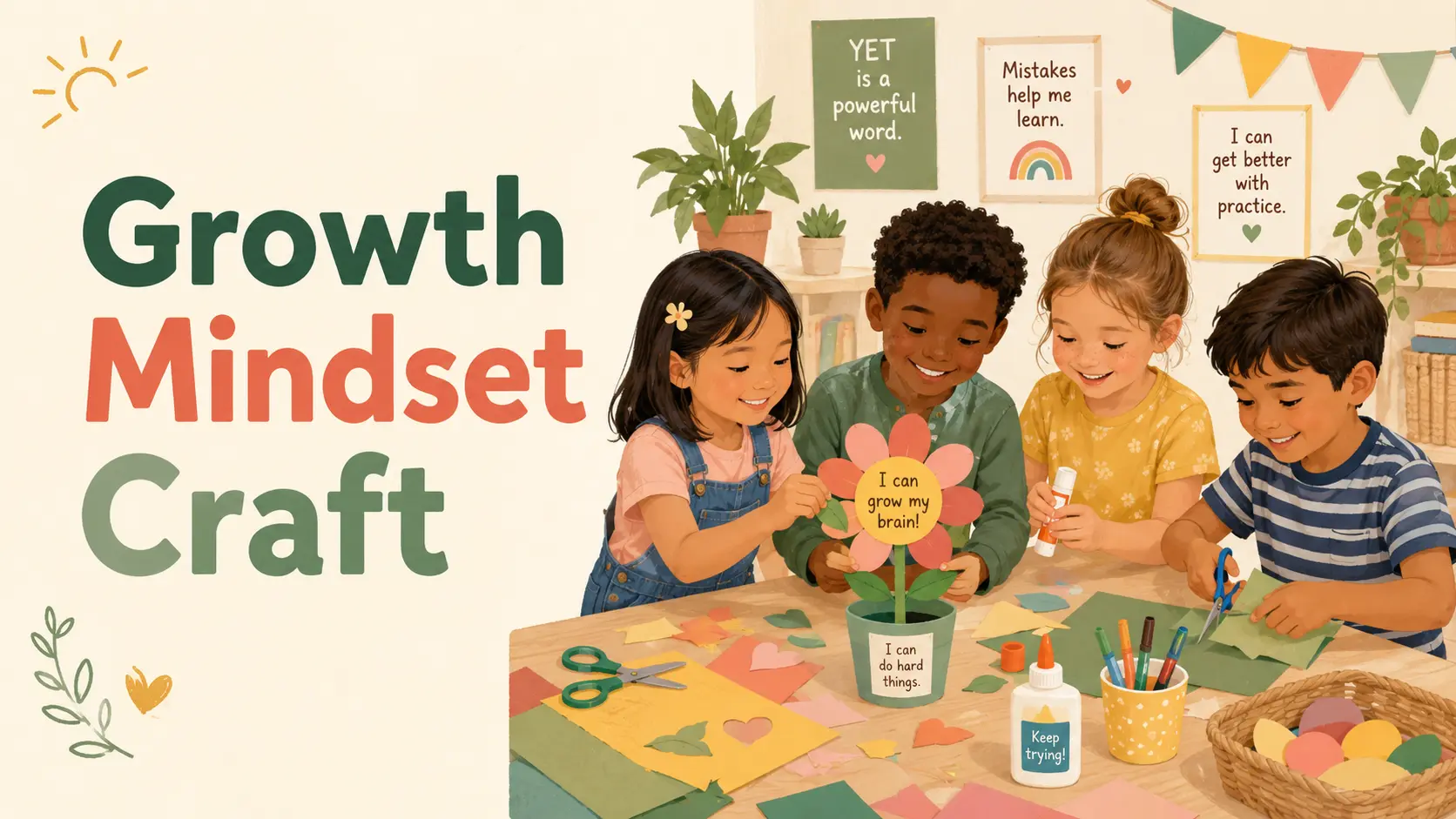
A growth mindset craft is a hands-on creative activity designed to teach children that abilities and intelligence can be developed through effort, practice, and persistence. Unlike a typical art project, a growth mindset craft pairs the creative process with a specific lesson — about mistakes, perseverance, or effort — so children internalize the concept while they cut, color, glue, or write. These activities give parents, teachers, and caregivers a practical, low-pressure way to introduce psychological concepts that are otherwise abstract for young learners. Growth mindset crafts commonly use printable templates, reflection worksheets, and age-appropriate adaptations, making them easy to bring into classrooms, homeschool routines, or family activity time.
Quick Summary
- A growth mindset craft combines creative activities with lessons about perseverance, learning, and effort.
- Crafts help children remember growth mindset concepts through visual and hands-on experiences.
- Printable templates, worksheets, and coloring activities make implementation easier at home or in classrooms.
- Activities can be adapted for toddlers, preschoolers, elementary students, and older children.
What Is a Growth Mindset Craft?
A growth mindset craft is any creative, hands-on activity that intentionally teaches the core idea behind a growth mindset: that skills, intelligence, and abilities grow through effort and practice rather than being fixed traits a person is simply born with. The concept originates from psychologist Carol Dweck’s research on mindset theory, which distinguishes between a growth mindset (belief that abilities can improve) and a fixed mindset (belief that abilities are static). A growth mindset craft translates this theory into something a child can touch, build, and reflect on.
The key difference between a growth mindset craft and a standard art activity is intention. A regular craft focuses primarily on the finished product — a drawing, a paper flower, a collage. A growth mindset craft uses the process itself as the lesson, often incorporating growth mindset examples like “mistakes help me learn” or “I can’t do this yet” directly into the design. Many teachers also refer to these as a growth mindset craftivity, a term that blends “craft” and “activity” to emphasize the combination of making and learning.
How Crafts Reinforce Growth Mindset Principles
Crafts reinforce growth mindset thinking through several mechanisms:
- Learning through doing. Physically manipulating materials helps children encode abstract ideas like perseverance into concrete memory.
- Reflection during creative activities. Pausing to discuss choices, mistakes, or challenges during the craft deepens understanding.
- Positive reinforcement. Completing a challenging step builds a felt sense of accomplishment tied to effort, not just talent.
- Building confidence after mistakes. Crafts naturally involve errors — a crooked cut, a smudged color — which become teachable moments rather than failures.
Why Growth Mindset Crafts Are Effective for Children
Growth mindset crafts work because they engage children cognitively, emotionally, and socially at the same time. Visual learning improves comprehension for most children, since seeing a concept represented physically (such as a flower growing from a seed) makes an abstract idea like “effort over time” easier to grasp than verbal explanation alone. These activities also bridge classroom discussions and home learning, giving children a consistent reference point they can return to in both settings.
Growth mindset crafts commonly support development in the following areas:
- Persistence
- Problem-solving
- Creativity
- Emotional regulation
- Self-confidence
- Resilience
In our experience helping readers build better habits with their children, the crafts that stick are rarely the most elaborate ones — they are the ones paired with a short conversation about effort and mistakes immediately afterward.
Types of Growth Mindset Crafts
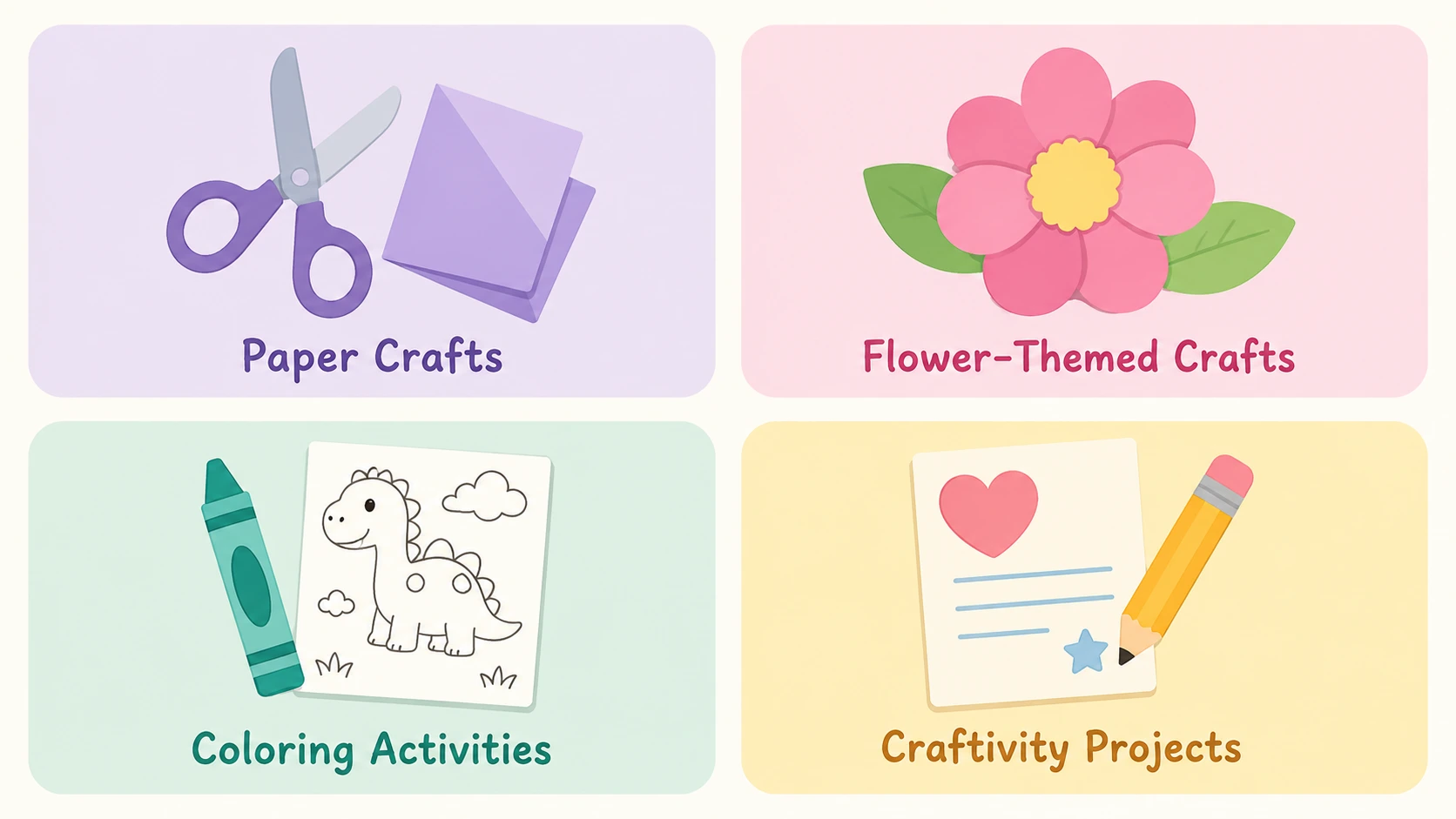
Growth mindset crafts fall into several categories, each suited to different settings, age groups, and learning goals.
Paper Crafts
Paper-based crafts are the most accessible entry point because they require minimal materials and setup. Common formats include:
- Cut-and-paste projects that build fine motor skills alongside the lesson
- Interactive crafts with movable parts, such as flaps or spinners
- Foldable activities that reveal growth mindset statements as they open
Flower-Themed Crafts
A growth mindset flower craft is one of the most popular formats because flowers naturally symbolize growth. Children plant a paper seed, add petals as they complete challenges or practice new skills, and watch the flower “bloom” over time. This visual metaphor reinforces the idea that growth happens gradually and requires ongoing care and effort.
Coloring Activities
Coloring growth mindset craft pages combine relaxation with reinforcement. These typically include:
- Coloring pages featuring growth mindset affirmations
- Reflection prompts alongside the artwork, asking children to describe a recent challenge
Craftivity Projects
A growth mindset craftivity combines writing and crafting in a single activity, making it well suited for classroom lessons. Students might write a personal goal on a craft piece, then assemble it into a larger visual display, connecting literacy practice with mindset education.
Growth Mindset Craft Activities for Different Age Groups
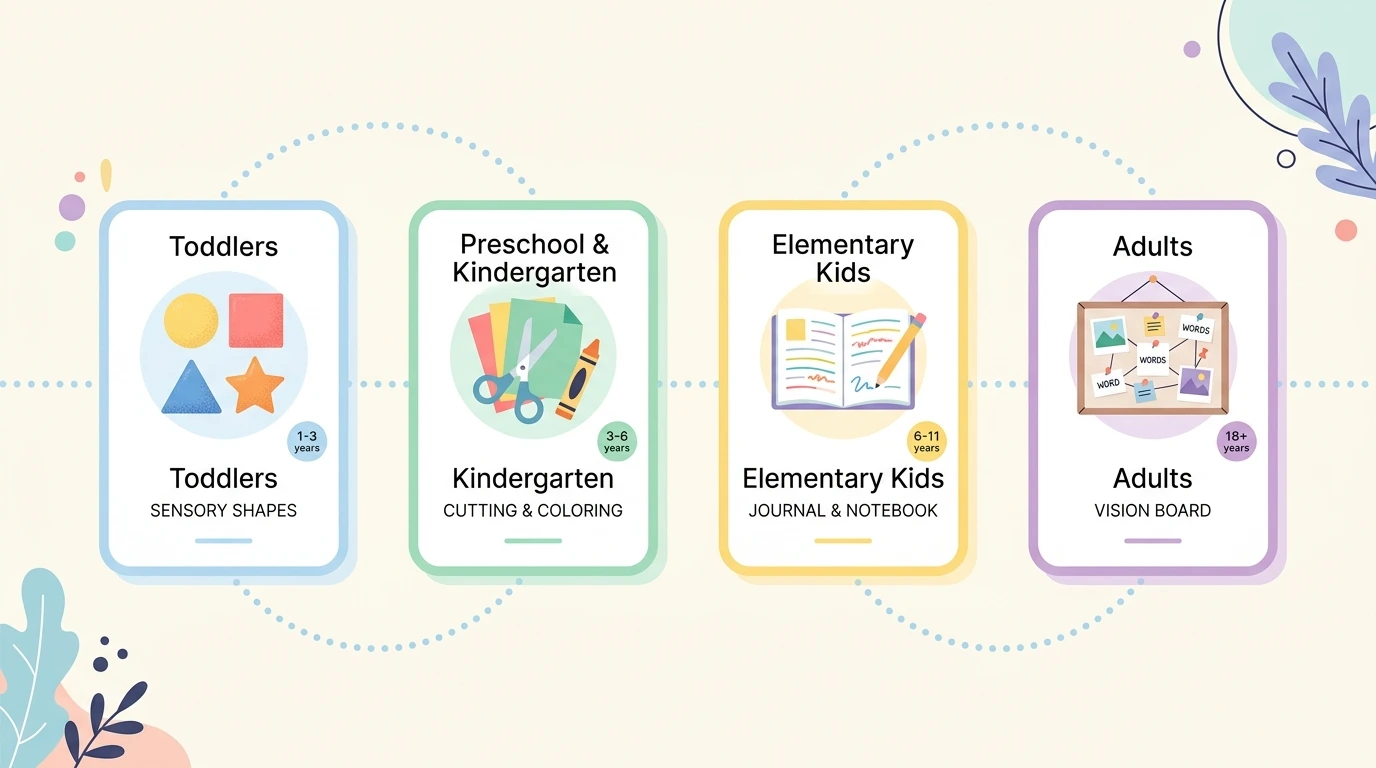
Developmental stage significantly influences which growth mindset craft format will be effective. Attention span, fine motor skill, and comprehension level all shape activity design.
Growth Mindset Crafts for Toddlers
A growth mindset craft for toddlers should rely on simple shapes and sensory experiences rather than reading or writing. Toddler growth mindset craft activities work best when they are parent-assisted, using large pieces, textured materials, and short, single-step instructions.
Crafts for Preschool and Kindergarten
Preschool and kindergarten children benefit from short-attention-span-friendly formats that use basic affirmations, simple cutting, and coloring. Activities at this stage should take 10–15 minutes and use pre-cut templates when possible.
Growth Mindset Crafts for Elementary Kids
A growth mindset craft for kids in elementary school can incorporate more complexity, including reflection journals and collaborative classroom projects. Growth mindset crafts for kids at this age often involve writing short responses about challenges they’ve overcome, making the activity both a literacy and mindset-building exercise.
Growth Mindset Crafts for Adults
An adult growth mindset craft shifts the format toward journaling, vision boards, and structured reflection exercises. While the materials differ from children’s activities, the underlying principle — using a hands-on creative process to reinforce belief in developable ability — remains the same. Adults looking to deepen this practice can pair their vision board or craft session with journaling prompts for self growth to extend the reflection beyond the activity itself.
Printable Growth Mindset Craft Resources
A growth mindset craft printable offers a convenient, ready-to-use option for parents and teachers who want structured materials without designing activities from scratch. These resources are commonly distributed as a growth mindset craft pdf and can include a growth mindset craft template for multiple age groups. Many educators search specifically for a free growth mindset craft or growth mindset craft free option before purchasing a paid resource pack.
What to Include in a Printable Craft Pack
A well-designed printable craft pack typically contains:
- Templates for the core craft elements
- Step-by-step instructions
- Reflection prompts to use during or after the activity
- Coloring pages that reinforce the theme
- Discussion questions for group or family settings. Some packs also include a growth mindset poster that children can display afterward as an ongoing visual reminder of the lesson.
Worksheets, Coloring Pages, and Companion Learning Materials
Supporting materials extend the value of a growth mindset craft beyond the activity itself. A workbook growth mindset craft format, or a dedicated notebook growth mindset craft, gives children a place to record reflections over multiple sessions rather than treating each craft as an isolated event. Some educators also use a worksheet crafter growth mindset approach, generating custom worksheets tailored to a specific lesson plan or classroom theme. These materials work best when integrated directly into existing lesson plans, rather than used as standalone supplements.
Books and Classroom Resources That Complement Growth Mindset Crafts
Pairing books growth mindset craft activities with read-aloud sessions strengthens the lesson considerably. Stories that model perseverance, effort, and learning from failure give children a narrative framework before they apply the concept hands-on. A typical classroom sequence might involve reading a short story about a character overcoming a challenge, discussing the character’s mindset, and then completing a related craft that reinforces the same theme.
Growth Mindset vs. Fixed Mindset: Understanding the Difference
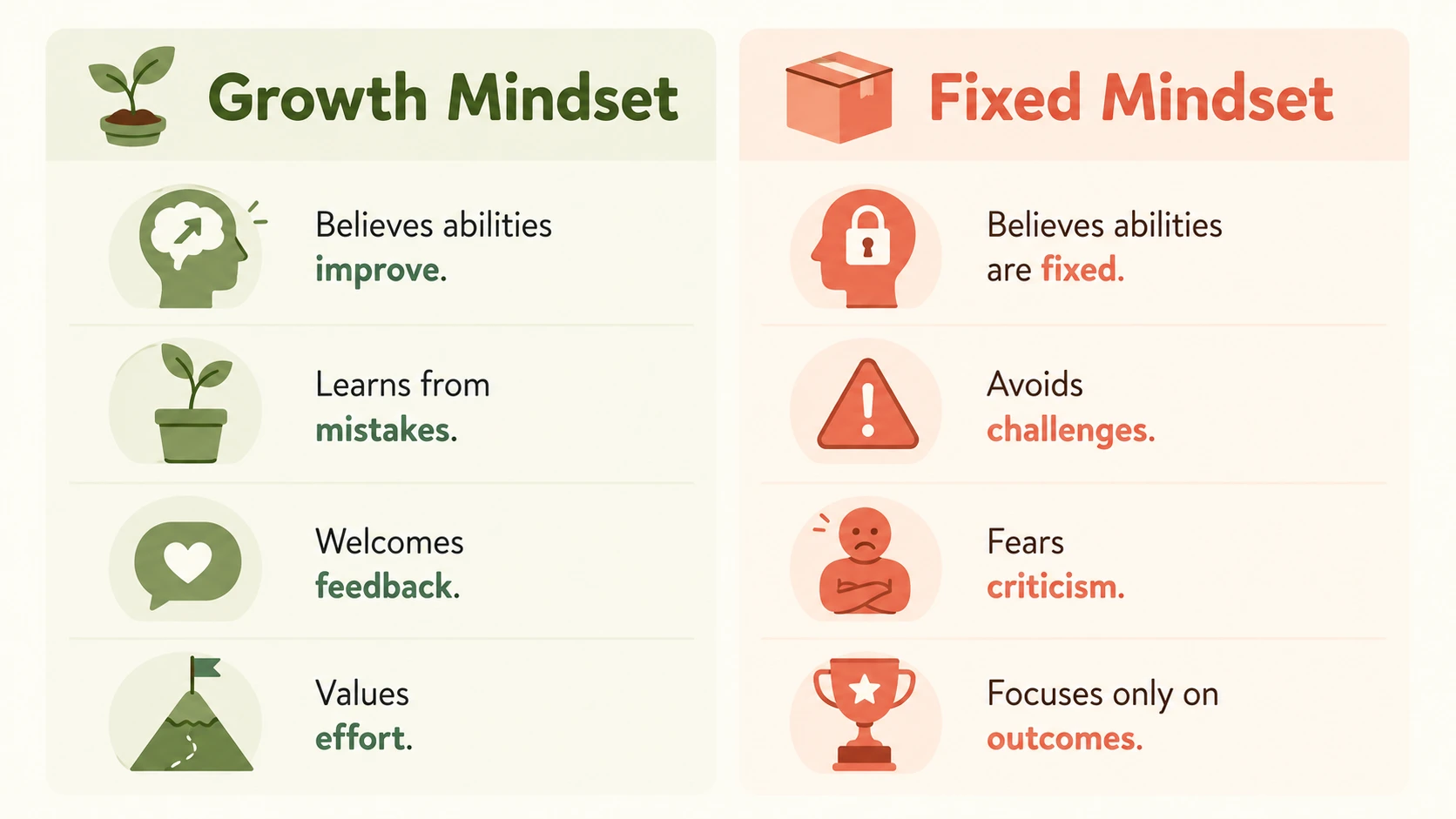
A growth mindset is the belief that abilities and intelligence can improve through effort, practice, and learning from mistakes. A fixed mindset, by contrast, is the belief that abilities are static traits that cannot meaningfully change. Understanding this contrast helps children (and adults) recognize their own thought patterns and consciously shift toward more growth-oriented thinking.
Visual Comparison
| Growth Mindset | Fixed Mindset |
|---|---|
| Believes abilities improve | Believes abilities are fixed |
| Learns from mistakes | Avoids challenges |
| Welcomes feedback | Fears criticism |
| Values effort | Focuses only on outcomes |
A growth mindset and fixed mindset diagram like this one is a useful tool for classroom walls or family discussions, giving children a quick visual reference point when reinforcing the distinction.
How to Use Growth Mindset Crafts at Home and in the Classroom
Practical implementation varies depending on setting, but growth mindset crafts adapt well to both family routines and structured classroom environments. Common approaches include:
- Daily lessons that introduce a new growth mindset concept each morning
- Weekly themes built around a specific craft project
- Morning meetings that open with a short reflection activity
- Art centers where students can revisit crafts independently
- Homework extensions that involve family discussion at home
Ways to Build a Growth Mindset Beyond Crafts
Crafts are one entry point among many ways to build a growth mindset, and they work best as part of a broader set of habits rather than a standalone intervention. Children (and adults) who want to create their own mindset shift over time benefit from combining crafts with consistent daily practices.
Everyday Habits That Reinforce Growth Mindset
- Using positive, effort-focused language (“you worked hard on that” instead of “you’re so smart”)
- Building in regular reflection time
- Setting specific, achievable goals
- Celebrating effort and process, not just results
- Treating mistakes as information rather than failure
Common Mistakes When Using Growth Mindset Crafts
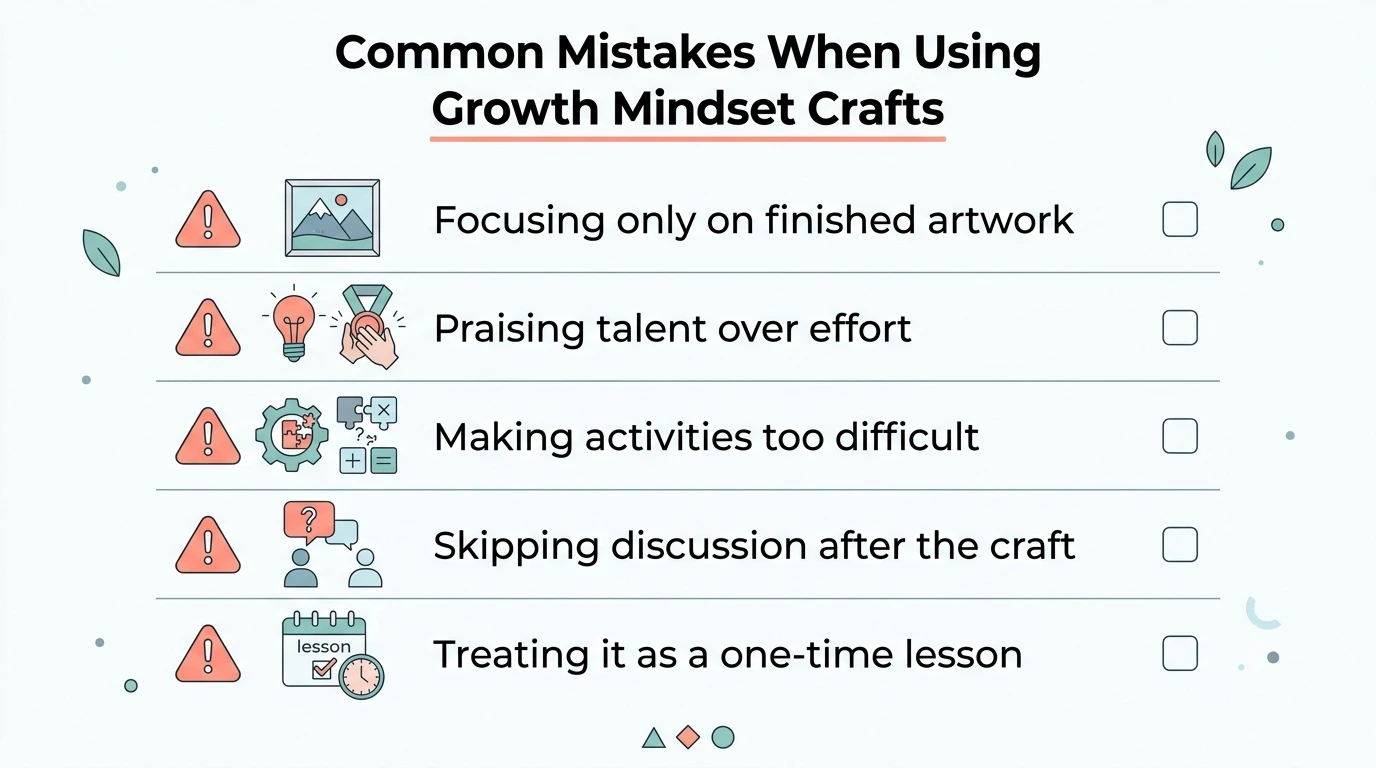
Even well-intentioned growth mindset crafts can fall short if certain pitfalls go unaddressed.
- Focusing only on finished artwork. This happens when the craft becomes about the product rather than the process. Fix it by asking process-focused questions throughout the activity, not just at the end.
- Praising talent instead of effort. Comments like “you’re so artistic” reinforce fixed mindset thinking. Replace them with effort-based praise, such as acknowledging persistence through a difficult step.
- Making activities too difficult. An overly complex craft creates frustration that undermines the lesson. Match the activity’s complexity to the child’s developmental stage.
- Skipping discussion after the craft. Without reflection, the craft remains just an art project. Build in a short conversation immediately after completion.
- Treating growth mindset as a one-time lesson. A single craft rarely creates lasting change. Repetition and consistency across weeks and months are what reinforce the concept long-term.
Practical Tips for Making Growth Mindset Crafts More Meaningful
- Ask reflection questions before, during, and after the activity.
- Encourage storytelling about personal challenges related to the craft’s theme.
- Connect crafts to real-life challenges the child is currently facing.
- Display finished work somewhere visible to reinforce ongoing pride in effort.
- Revisit projects over time to track growth and changing reflections.
- Pair crafts with books and discussions for a fuller learning experience.
Difficulty and Time Investment
Most growth mindset crafts are beginner-friendly and require minimal preparation, particularly paper-based or coloring formats. Intermediate crafts, such as craftivity projects or multi-step flower crafts, involve more creativity, materials, and guided discussion. Time investment ranges from quick 10-minute classroom activities to extended projects spanning multiple sessions. The right choice depends on the child’s age, attention span, and the materials available at home or in the classroom.
Results Timeline
Growth mindset development is a gradual process rather than an instant shift. Early engagement — such as a child using new language like “I can’t do this yet” — may appear within days of introducing a craft. However, consistent reinforcement over weeks and months is what leads to lasting changes in how a child approaches challenges. As of 2026, educators increasingly emphasize combining crafts with ongoing classroom or family routines rather than one-off activities, since sustained support from both parents and teachers accelerates and stabilizes progress.
Practice Guide
Building a lasting growth mindset through crafts benefits from a structured, repeatable approach:
- Daily affirmations tied to effort and learning
- Weekly craft sessions to maintain engagement
- Reflection journals for recording thoughts over time
- Goal tracking to visualize progress
- Teacher-parent collaboration to reinforce consistency across settings
- Adapting activities for different learning styles, including visual, auditory, and kinesthetic learners
- Maintaining consistency over time, since sporadic use significantly reduces long-term impact Daily growth mindset affirmations recited before or after a craft session
Conclusion
A growth mindset craft offers a practical, engaging way to teach children that effort and persistence — not fixed talent — drive real learning and growth. From simple toddler-friendly shapes to more advanced craftivity projects for elementary students, these activities translate an abstract psychological concept into something children can build, discuss, and revisit. Your Daily Thrive recommends focusing less on artistic polish and more on the reflection and discussion that surrounds each craft, since consistent practice matters far more than the finished product. By adapting growth mindset craft activities to a child’s developmental stage and pairing them with everyday reinforcement, parents and teachers can help build resilience and a genuine love of learning that extends well beyond the craft table.
Frequently Asked Questions
What is a growth mindset craft?
A growth mindset craft is a hands-on creative activity designed to teach the belief that abilities improve through effort, practice, and learning from mistakes, rather than being fixed traits.
How do growth mindset crafts help children learn?
Growth mindset crafts help children learn by pairing physical, hands-on activity with reflection on effort and mistakes, which reinforces abstract psychological concepts through memorable, visual experiences.
What age is best for growth mindset craft activities?
Growth mindset craft activities can be adapted for nearly any age, from sensory-based toddler crafts to reflection-heavy projects for elementary students and even journaling-based activities for adults.
Are printable growth mindset crafts useful for classrooms?
Yes, printable growth mindset crafts are useful for classrooms because they provide ready-made templates, instructions, and discussion prompts that save teachers preparation time while ensuring consistent lesson quality.
What materials are commonly needed for growth mindset crafts?
Common materials include paper, scissors, glue, coloring supplies, and printable templates, though specific materials vary depending on the craft format and the child’s age group.
How can parents encourage a growth mindset through crafts at home?
Parents can encourage a growth mindset at home by choosing age-appropriate crafts, asking reflection questions during the activity, and consistently praising effort rather than natural talent.
What is the difference between a growth mindset craft and a regular art activity?
A growth mindset craft intentionally incorporates a lesson about effort, mistakes, or perseverance into the activity, while a regular art activity typically focuses only on producing a finished piece of artwork.










2 Responses