
Introduction
Bible verses about growth mindset connect an ancient text to a modern idea. “Growth mindset” is a psychological term coined in recent decades, but Scripture has always taught learning, transformation, perseverance, wisdom, and spiritual maturity. Where secular growth mindset theory centers on self-belief and effort, biblical growth centers on trusting God while continually developing character, faith, and right action. The Bible presents change as a lifelong process — renewal of the mind, growth in wisdom, and perseverance through trials — guided by God rather than achieved through willpower alone. Understanding this connection helps readers apply biblical wisdom to real personal development, not just self-motivation.
Quick Summary
- A biblical growth mindset focuses on continual spiritual and personal transformation through God’s guidance.
- Many Bible verses encourage perseverance, wisdom, renewal of the mind, and learning from challenges.
- Scripture connects lasting growth with faith, humility, obedience, and hope rather than self-reliance.
- Developing a growth mindset in the Bible involves both inner transformation and outward actions.
What Having a Growth Mindset Really Means from a Biblical Perspective
Understanding the Modern Idea of a Growth Mindset
A growth mindset is the belief that abilities and character can be developed through effort, learning, and persistence, rather than being fixed traits a person is simply born with. This concept, popularized in modern psychology, contrasts with a “fixed mindset,” where people assume intelligence, talent, or personality cannot meaningfully change.
Key features of a growth mindset include:
- Viewing challenges as opportunities to learn
- Treating failure as feedback rather than identity
- Valuing effort and practice over natural talent alone
- Seeking feedback and adjusting behavior over time
While this framework is secular in origin, its emphasis on resilience and continual improvement overlaps meaningfully with biblical teaching on sanctification and spiritual maturity.
How the Bible Describes Personal and Spiritual Growth
Scripture consistently frames growth as an ongoing, God-guided process rather than a one-time event. The apostle Paul wrote that spiritual growth continues throughout life: “being confident of this very thing, that he which hath begun a good work in you will perform it until the day of Jesus Christ” (Philippians 1:6).
Biblical growth typically involves:
- Growth in wisdom — gaining discernment through Scripture and experience
- Growth in faith — deepening trust in God through trials and obedience
- Growth in character — developing patience, humility, and self-control
- Renewal through God — inner transformation rather than surface-level change
Peter’s instruction to believers reflects this same continual-growth principle: “grow in grace, and in the knowledge of our Lord and saviour Jesus Christ” (2 Peter 3:18).
Bible Verses About Growth Mindset and Spiritual Transformation
Bible Verses About Changing Your Mindset
The Bible directly addresses the renewal of thought patterns, which aligns closely with the modern concept of shifting from a fixed to a growth mindset. Romans 12:2 instructs believers: “be not conformed to this world: but be ye transformed by the renewing of your mind, that ye may prove what is that good, and acceptable, and perfect, will of God.” This principle mirrors practical guidance on how to change your thoughts, which explores the mental habits that support lasting transformation.”
This verse teaches that transformation begins internally, with thought patterns, before it shapes outward behavior. Ephesians 4:23 reinforces this idea, calling believers to “be renewed in the spirit of your mind” — a continual, active process rather than a single decision made once and never revisited.
Bible Verses About Changing Yourself for the Better
Biblical change for the better is closely tied to repentance, sanctification, and daily obedience rather than self-improvement for its own sake. Second Corinthians 5:17 describes the foundational shift: “if any man be in Christ, he is a new creature: old things are passed away; behold, all things are become new.” This idea connects closely with broader bible quotes about self-improvement, which frame personal change as a spiritual as well as practical process.
This transformation is not instantaneous perfection but an ongoing pursuit. Paul described his own spiritual growth as unfinished work: “I press toward the mark for the prize of the high calling of God in Christ Jesus” (Philippians 3:14). This verse illustrates that biblical self-improvement is a continuous pursuit, marked by daily obedience and character development rather than arrival at a final, static state.
Bible Verses That Encourage Positive Thinking During Difficult Times
Maintaining Hope During Challenges
Biblical hope during hardship is not the same as ignoring reality — it is trusting God’s purpose within difficult circumstances. Romans 8:28 states this directly: “we know that all things work together for good to them that love God, to them who are the called according to his purpose.”
James 1:2-4 goes further, framing trials as productive rather than purely negative: “count it all joy when ye fall into divers temptations; knowing this, that the trying of your faith worketh patience.” This reframes hardship as a mechanism for growth, not simply something to endure.
Choosing Positive Thoughts Through Faith
Scripture also addresses the practical discipline of controlling one’s thoughts. Philippians 4:8 offers a direct instruction: believers should think on “whatsoever things are true, whatsoever things are honest, whatsoever things are just, whatsoever things are pure, whatsoever things are lovely, whatsoever things are of good report.” Paired with gratitude and prayer, this verse supports emotional steadiness without denying real struggle — a distinction that separates biblical peace from surface-level positive thinking. Readers building this habit may also find growth mindset affirmations useful for reinforcing Scripture-based thinking throughout the day.
Bible Verses About Growth, Success, and Prosperity
What Biblical Success Really Means
Biblical success is defined primarily by obedience and faithfulness rather than achievement or recognition. Joshua 1:8 links prosperity directly to obedience to God’s word: meditating on and doing what is written brings the promise that “thou shalt make thy way prosperous, and then thou shalt have good success.”
This framing places wisdom and faithful action ahead of worldly markers of accomplishment.
Understanding Prosperity in Biblical Context
Biblical prosperity is broader than financial wealth. Jeremiah 29:11 describes God’s plans as intended for well-being: “thoughts of peace, and not of evil, to give you an expected end.” Third John 1:2 extends this concept to holistic well-being, wishing prosperity “even as thy soul prospereth — tying material and spiritual flourishing together rather than treating them as separate goals.
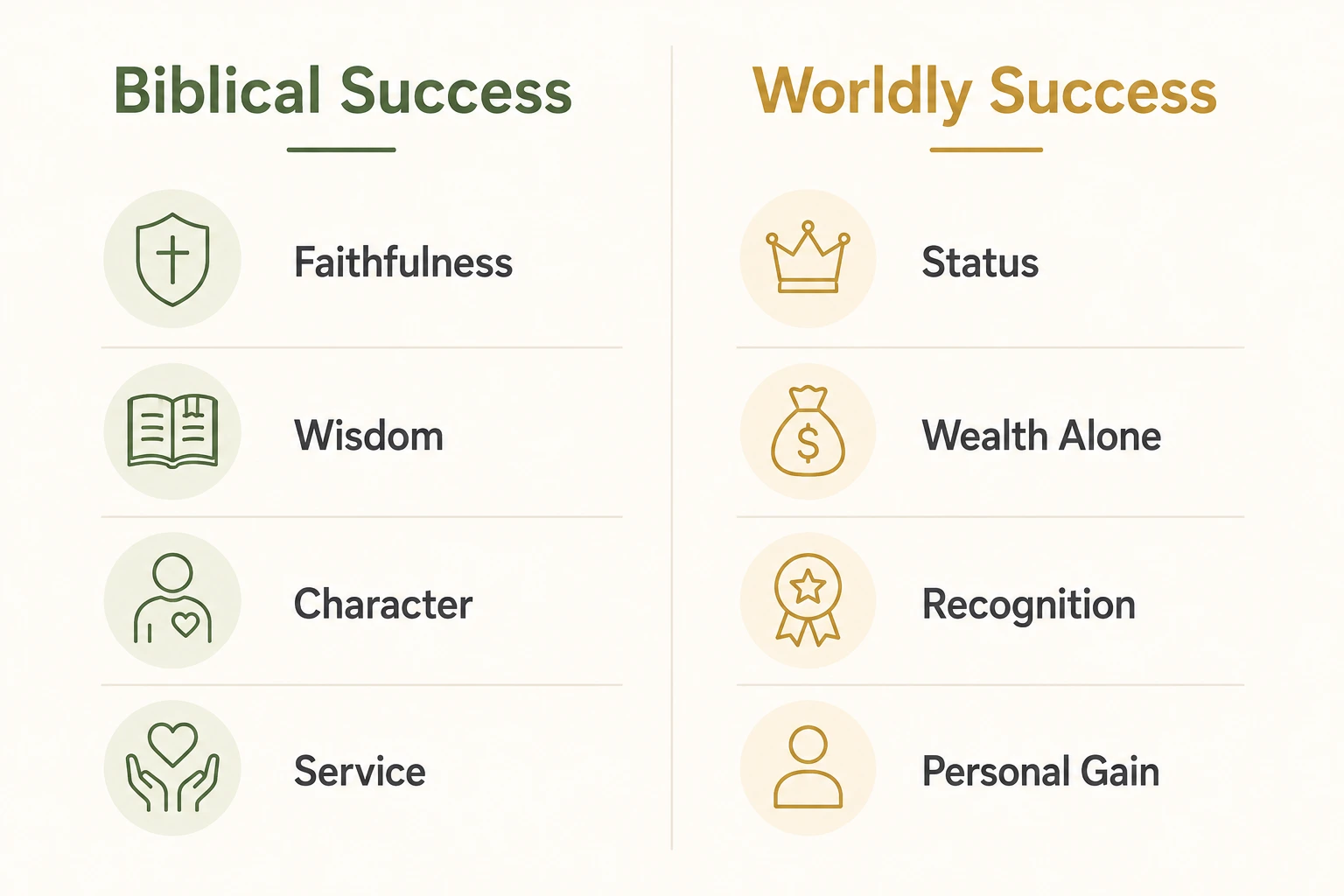
Comparison: Biblical Success vs. Worldly Success
| Biblical Success | Worldly Success |
|---|---|
| Faithfulness | Status |
| Wisdom | Wealth alone |
| Character | Recognition |
| Service | Personal gain |
Bible Verses on Focus, Determination, and Perseverance
Staying Focused on God’s Purpose
The Bible frequently uses imagery of racing or running to describe focused spiritual discipline. Hebrews 12:1-2 encourages believers to lay “aside every weight, and the sin which doth so easily beset us,” running “with patience the race that is set before us, looking unto Jesus.” This verse emphasizes eliminating distractions and maintaining clear priorities centered on spiritual purpose.
Developing Determination Through Faith
Perseverance in Scripture is directly tied to reward and spiritual maturity. James 1:12 promises that “the man that endureth temptation… when he is tried, he shall receive the crown of life.” Galatians 6:9 adds a practical encouragement against burnout: “let us not be weary in well doing: for in due season we shall reap, if we faint not.” Together, these verses frame determination as patient endurance rather than short-term intensity.
Key Biblical Themes That Support a Growth Mindset
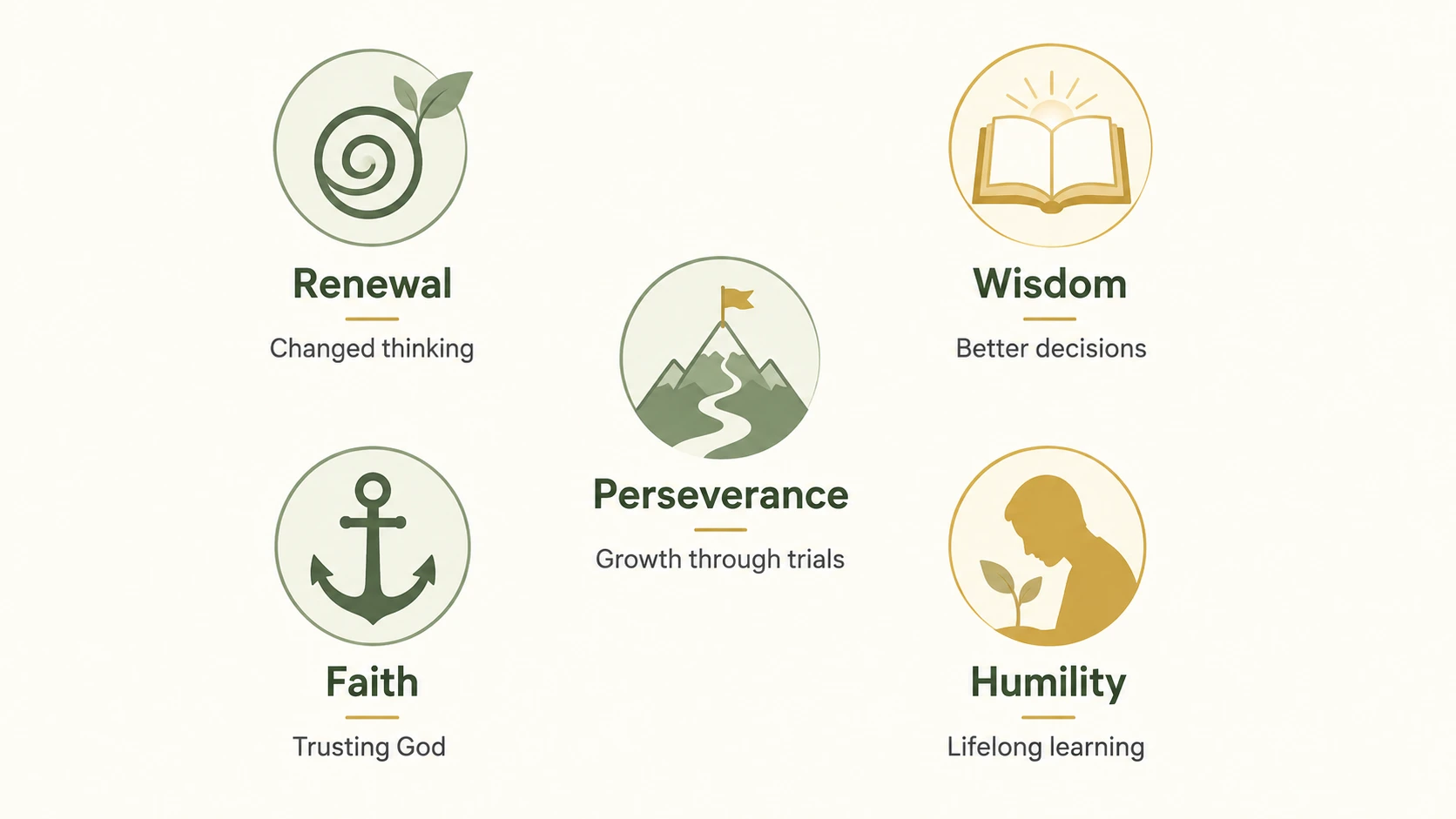
Bible verses about growth mindset cluster around several recurring themes. Understanding these categories helps readers study Scripture by concept rather than collecting isolated verses.
| Theme | What It Teaches | Example Verse |
|---|---|---|
| Renewal | Changed thinking | Romans 12:2 |
| Wisdom | Better decisions | Proverbs 4:7 |
| Perseverance | Growth through trials | James 1:2-4 |
| Faith | Trusting God | Hebrews 11:1 |
| Humility | Lifelong learning | Proverbs 11:2 |
Additional supporting themes include hope, obedience, discipline, love, and patience — each reinforcing that biblical growth is multidimensional, touching thought, emotion, and action simultaneously.
How to Apply These Bible Verses in Everyday Life
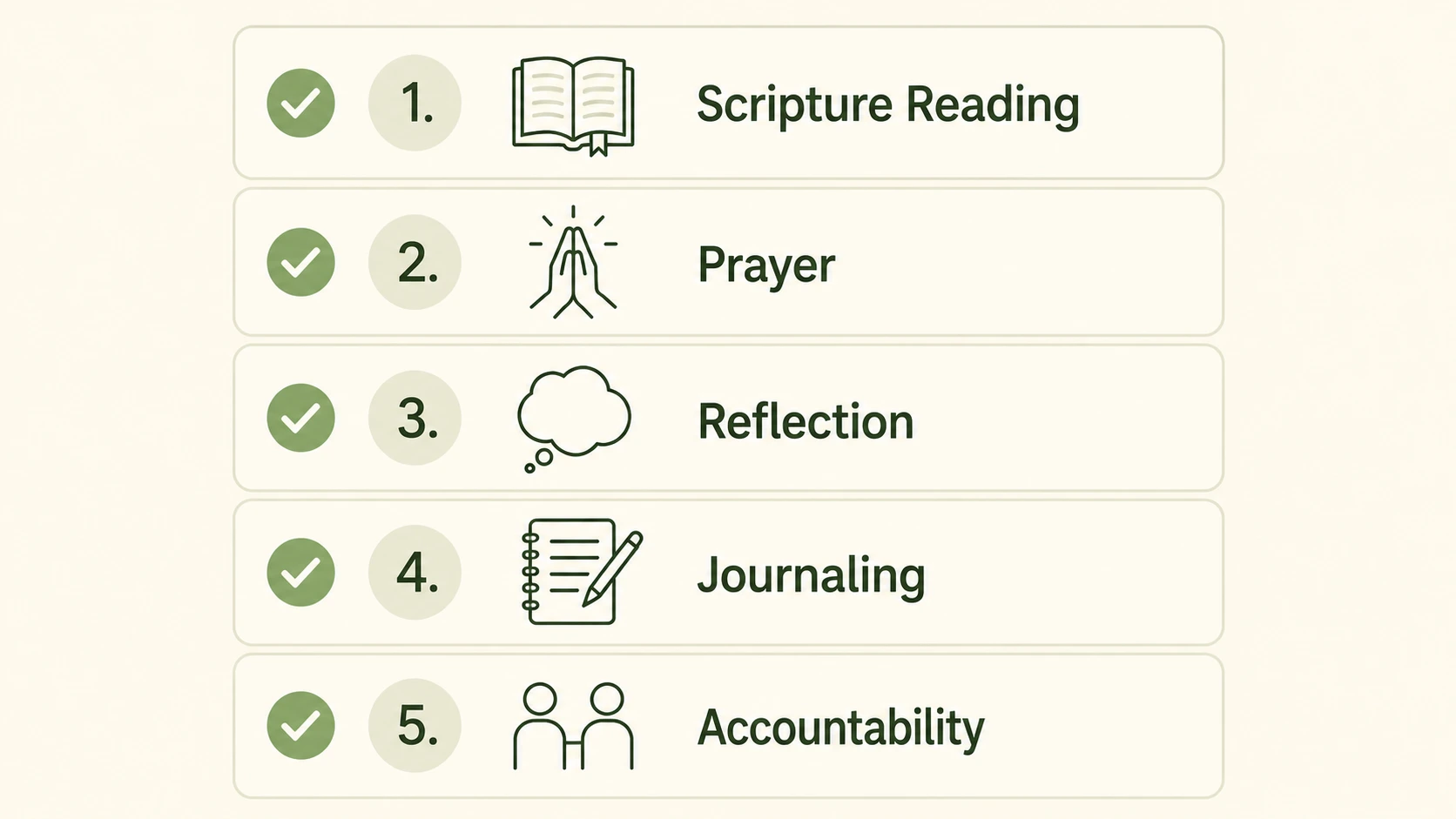
Daily Practices for Developing a Biblical Growth Mindset
Applying these verses consistently requires practical habits, not just occasional reading. In our experience helping readers build better habits, the most effective approach combines several practices:
- Scripture reading — consistent daily engagement, not sporadic study
- Prayer — inviting God into the process of change
- Reflection — journaling on how a verse applies to current circumstances
- Accountability — sharing growth goals with a trusted community
- Applying biblical wisdom — translating verses into specific actions
Using Bible Verses During Difficult Seasons
Certain verses are especially useful during specific life circumstances. Your Daily Thrive recommends returning to verses on patience and trust during decision-making, verses on peace during stress, and verses on grace during seasons of failure or waiting. Matching Scripture to the specific challenge — rather than applying general verses indiscriminately — tends to produce more meaningful application.
Common Misunderstandings About Growth Mindset in the Bible
Growth Does Not Mean Instant Perfection
Sanctification — the biblical process of becoming more Christlike — is explicitly lifelong, not instantaneous. Scripture repeatedly shows even faithful figures learning from mistakes and growing through failure, supported by God’s grace rather than flawless performance.
Positive Thinking Is Not the Same as Biblical Faith
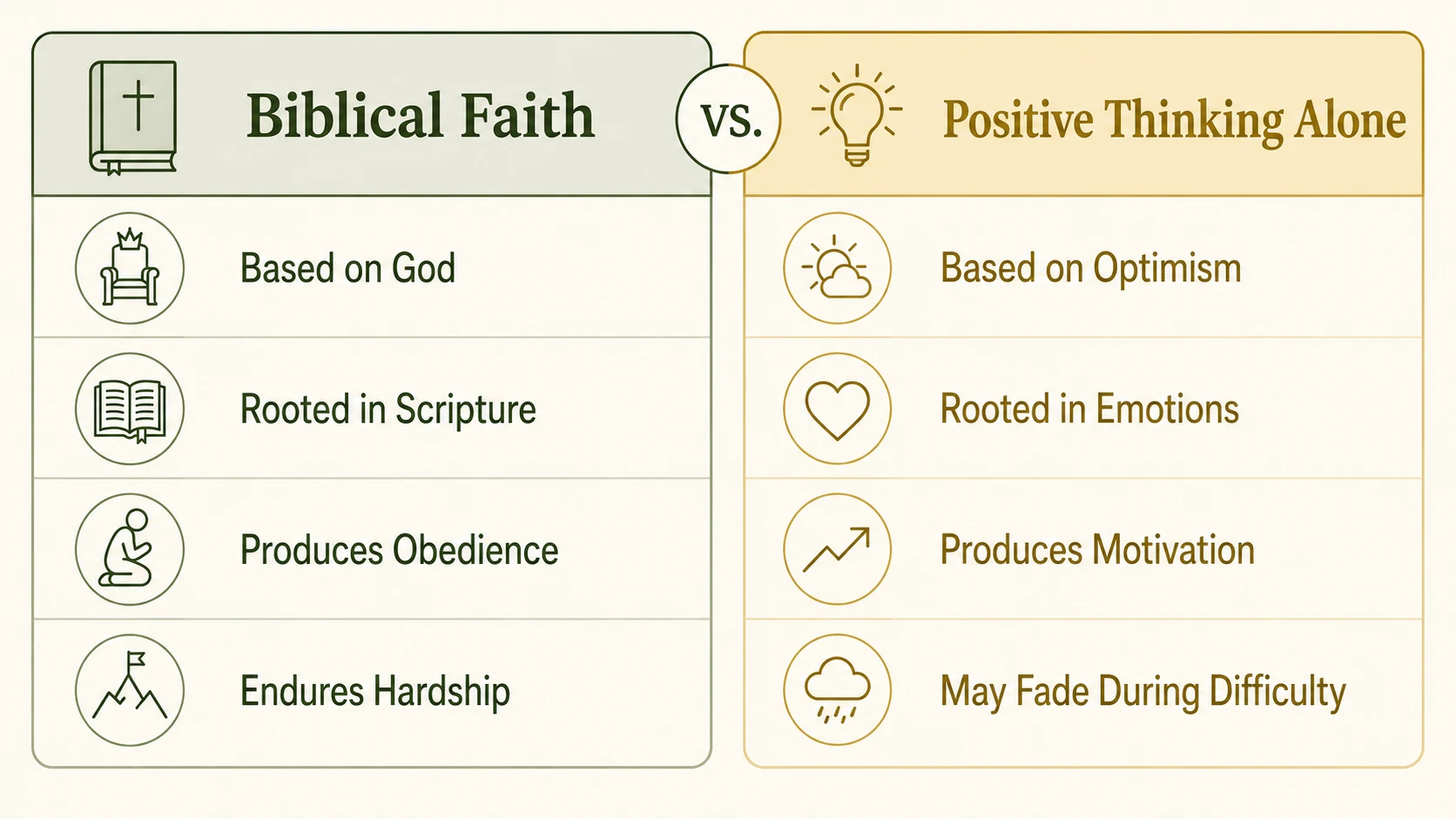
These two concepts are often confused but are meaningfully different in origin and durability.
| Biblical Faith | Positive Thinking Alone |
|---|---|
| Based on God | Based on optimism |
| Rooted in Scripture | Rooted in emotions |
| Produces obedience | Produces motivation |
| Endures hardship | May fade during difficulty |
Biblical faith is anchored outside the self, which is why Scripture presents it as more durable than positive thinking, which depends heavily on circumstances and emotional state.
Common Challenges When Developing a Biblical Growth Mindset
Readers pursuing biblical growth commonly encounter the following obstacles:
- Fear of failure — often rooted in perfectionism; addressed biblically through grace and God’s patience with imperfect progress. Practical solution: recall that sanctification is a process, and review verses on grace during setbacks.
- Doubt — a natural part of faith development, not evidence of failure; addressed through prayer and community. Practical solution: bring doubts openly to God and trusted mentors rather than suppressing them.
- Discouragement — commonly tied to comparing current struggles to an idealized future self. Practical solution: focus on daily faithfulness rather than distant outcomes.
- Negative self-talk — countered by renewing the mind according to Philippians 4:8. Practical solution: intentionally replace critical thoughts with Scripture-based truth.
- Comparing yourself with others — undermines individual growth and gratitude. Practical solution: focus on personal calling rather than others’ progress.
- Spiritual complacency — growth stalling after initial enthusiasm fades. Prevention involves consistent habits rather than relying on motivation alone.
Beginner Mistakes When Studying Bible Verses About Growth
Readers new to this topic often make avoidable errors that limit meaningful application:
- Reading verses without context — isolating a single verse from its surrounding passage can distort its meaning.
- Confusing prosperity with wealth — biblical prosperity is holistic, not purely financial.
- Expecting immediate change — biblical transformation is gradual and ongoing.
- Ignoring spiritual discipline — reading verses without consistent practices like prayer and reflection limits their impact.
- Selecting isolated verses instead of understanding biblical themes — studying by theme, as outlined above, produces deeper and more accurate understanding than collecting disconnected quotes.
Interpreting Scripture responsibly, with attention to context and theme, produces more durable growth than simply gathering encouraging verses.
How These Bible Verses Connect to Personal Growth
Biblical principles naturally support broader self-improvement goals while remaining centered on faith. These verses connect meaningfully to:
- Habit formation — consistent Scripture engagement mirrors evidence-based habit-building principles
- Goal setting — biblical purpose provides direction similar to secular goal-setting frameworks
- Resilience — perseverance verses build emotional and spiritual endurance
- Emotional maturity — renewal of the mind supports healthier thought patterns
- Self-discipline — spiritual discipline reinforces broader behavioral consistency
- Wisdom — biblical wisdom informs better decision-making
- Decision-making — trust and discernment guide practical choices
- Lifelong learning — growth in wisdom and faith mirrors a growth mindset’s core premise
Conclusion
Bible verses about growth mindset reveal that Scripture has long taught what modern psychology now describes: growth is continuous, effort matters, and setbacks are part of the process rather than evidence of failure. A biblical growth mindset is expressed through renewed thinking, perseverance, wisdom, and faith, with personal transformation understood as an ongoing process guided by God rather than achieved through self-reliance alone. Readers seeking lasting change are encouraged to meditate on Scripture consistently, apply biblical principles daily, and approach growth with patience rather than expecting instant results.
Frequently Asked Questions
Does the Bible actually teach a growth mindset?
The Bible does not use the term “growth mindset,” but it consistently teaches continual learning, transformation, and perseverance. Concepts like renewal of the mind, growth in wisdom, and sanctification closely parallel modern growth mindset principles, though they are rooted in reliance on God rather than self-belief alone.
What Bible verse best represents a growth mindset?
Romans 12:2 is often considered the clearest representation, as it directly instructs believers to be “transformed by the renewing of your mind.” Philippians 1:6 and Philippians 3:14 are also widely cited for their emphasis on ongoing, unfinished spiritual progress.
What is the difference between biblical transformation and positive thinking?
Biblical transformation is rooted in God’s truth and produces obedience, while positive thinking is rooted in optimism and emotion alone. Biblical faith tends to endure hardship, whereas positive thinking driven purely by circumstances can fade when difficulties intensify.
Which Bible verses encourage perseverance and personal growth?
James 1:2-4, Galatians 6:9, and Hebrews 12:1-2 are commonly cited verses on perseverance. Each frames endurance through trials as a pathway to spiritual maturity rather than something to simply survive.
How can I develop a growth mindset through Scripture?
Consistent daily practices support this development, including regular Scripture reading, prayer, reflection or journaling, and accountability with a trusted community. Applying specific verses to real circumstances, rather than reading passively, strengthens practical growth.
What Bible verses help during difficult seasons?
Romans 8:28 and James 1:2-4 are frequently used during hardship, as both address purpose and growth within trials. Philippians 4:8 supports maintaining constructive thought patterns during emotionally difficult periods.
Does biblical prosperity always refer to financial success?
No. Biblical prosperity, as described in verses like 3 John 1:2, encompasses spiritual and personal well-being alongside material provision. It is not limited to wealth and should not be equated solely with financial gain.
How often should I meditate on Bible verses about growth?
Consistency matters more than frequency alone. Many teachers on spiritual discipline recommend daily engagement with Scripture, even briefly, to reinforce renewed thinking and sustain long-term spiritual growth over time.