

Introduction
A success mindset is the collection of beliefs, habits, and thinking patterns that determine how a person responds to challenges, setbacks, and opportunities. Books remain one of the most effective tools for building this mindset because they distill decades of psychological research and real-world experience into structured, repeatable lessons. This guide recommends books based on educational value, timeless principles, and practical application rather than popularity alone. Along the way, it introduces related concepts such as growth mindset, confidence-building, business thinking, and personal development, so readers can match the right book to their specific goals.
Quick Summary
- A success mindset is built through consistent learning, habits, and perspective—not motivation alone.
- The best mindset books teach resilience, confidence, goal setting, and long-term thinking.
- Different books serve different needs, including business, personal growth, confidence, and leadership.
- Choosing the right book depends on your current goals, experience level, and learning preferences.
- Applying lessons through notes, habits, and reflection matters more than the number of books read.
What Is a Success Mindset?
Defining a Success Mindset
A success mindset is a set of thought patterns and beliefs that shape how someone interprets effort, failure, and opportunity. It is distinct from intelligence or natural talent; a person does not need exceptional ability to develop it, only consistent practice in how they think and respond. Central to this concept is the distinction between a fixed mindset, where abilities are seen as static, and a growth mindset, where abilities are seen as developable through effort. Beliefs shaped by this mindset directly influence the actions a person takes and, over time, the results they achieve. Central to this concept is the distinction between a fixed mindset, where abilities are seen as static, and a growth mindset, a term popularized by psychologist Carol Dweck, where abilities are seen as developable through effort.
Why Mindset Matters More Than Motivation
Motivation is temporary and fluctuates with mood, energy, and circumstances. Mindset, by contrast, provides consistency because it shapes automatic responses to difficulty rather than relying on short bursts of inspiration. A strong mindset supports better habits and decision-making because it reduces the emotional volatility that often derails long-term plans. Over months and years, this consistency compounds into meaningful personal and professional growth, even when motivation is low on any given day.
Characteristics of People With a Strong Success Mindset
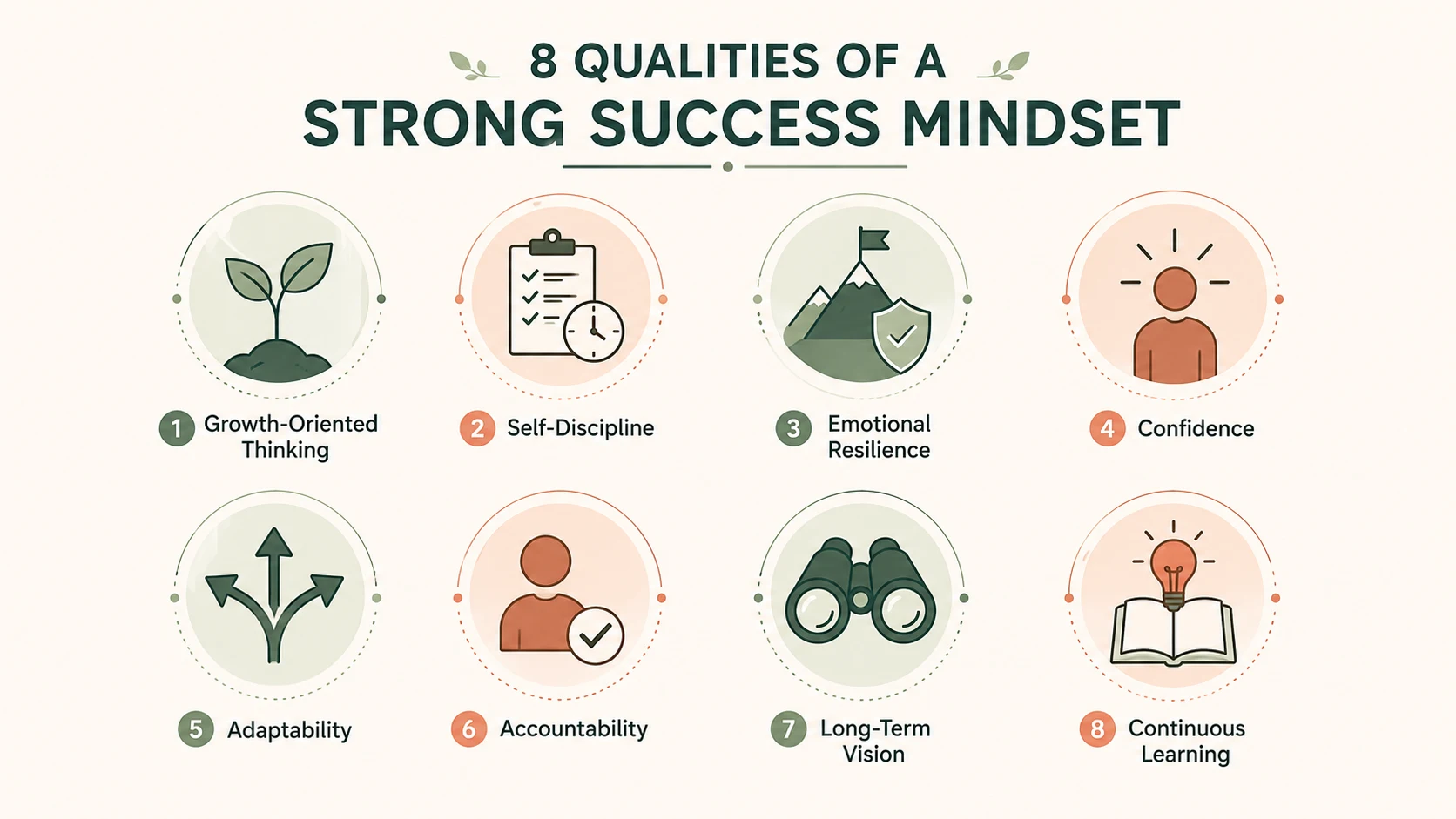
People who consistently perform well and adapt to change tend to share a recognizable set of traits:
- Growth-oriented thinking — viewing challenges as opportunities to improve rather than threats to avoid
- Self-discipline — following through on commitments even without external pressure
- Emotional resilience — recovering quickly from setbacks and disappointment
- Confidence — trusting one’s ability to learn and adapt, even in unfamiliar situations
- Adaptability — adjusting plans and strategies when circumstances change
- Accountability — taking ownership of outcomes instead of assigning blame
- Long-term vision — prioritizing sustained progress over short-term comfort
- Continuous learning — actively seeking new information and feedback
Best Books on Success Mindset
Choosing a mindset book is easier with clear selection criteria. The recommendations below are based on:
- Practical lessons that can be applied immediately
- Research-backed ideas grounded in psychology or behavioral science
- Timeless relevance rather than short-lived trends
- Readability for a general audience
- Real-world application across careers, relationships, and personal goals
Best Overall Success Mindset Books
Readers looking for the best books on success mindset, or simply the best mindset books available today, often start with these widely recognized titles:
- Mindset by Carol Dweck — introduces the growth versus fixed mindset framework
- Atomic Habits by James Clear — connects small habits to long-term identity change
- The 7 Habits of Highly Effective People by Stephen Covey — a framework for personal and professional effectiveness
- Think and Grow Rich by Napoleon Hill — an early, influential text on goal-directed thinking
- The Psychology of Money by Morgan Housel — applies mindset principles to financial decision-making
- Grit by Angela Duckworth — examines perseverance as a predictor of success
- The Magic of Thinking Big by David J. Schwartz — a classic on ambition and self-belief
These books about mindset each approach the topic from a different angle, which is why many readers combine two or three rather than relying on a single title. Mindset by Carol Dweck introduces the growth versus fixed mindset framework, and her most memorable Carol Dweck mindset quotes are widely used to summarize the book’s core ideas.
Best Books for Building Confidence
For readers specifically seeking the best books on mindset and confidence, the priority is material that addresses self-belief, fear management, communication confidence, and decision confidence. Books in this category typically walk through techniques for reframing self-doubt, practicing assertive communication, and making decisions without excessive second-guessing. Confidence-focused reads work best when paired with real-world practice, since confidence is built through repeated action rather than reading alone.
Best Growth Mindset Books
Growth mindset books focus specifically on how learning, adaptability, and continuous improvement shape long-term outcomes. This category emphasizes: This category emphasizes learning mindset, adaptability, and continuous improvement — readers looking for a single growth mindset book to start with often find this the most approachable entry point into the genre.
- Learning mindset — treating knowledge gaps as temporary, not permanent
- Adaptability — adjusting approach when initial strategies fail
- Continuous improvement — small, incremental gains over time
- Mistake-based learning — using errors as data rather than evidence of failure
Books mindset readers choose in this category often serve as a foundation before moving into more specialized business or confidence-focused titles.
Best Business Mindset Books
Mindset books for business shift the focus toward strategic thinking, leadership mindset, entrepreneurship, decision-making, and problem solving. These titles are especially useful for readers managing teams, running a business, or navigating career advancement, since they translate psychological principles into workplace and leadership contexts. Strong business mindset books typically combine case studies with actionable frameworks that can be applied to real decisions.
Best Fiction Books That Inspire a Success Mindset
Fiction best books on success mindset work differently than nonfiction guides. Rather than presenting direct frameworks, well-written fiction develops resilience, courage, leadership, and character growth through narrative and character development. Readers often internalize lessons about perseverance and decision-making more naturally when they are demonstrated through a story rather than stated outright.
Best Success Mindset Books for Adults
Best books on success mindset for adults typically address realities that differ from those faced by students or early-career readers, including career growth, family responsibilities, financial mindset, and lifelong learning. These books tend to balance ambition with practical constraints like time, income, and competing responsibilities, making them more directly applicable to readers managing multiple life priorities at once.
Comparison of Different Types of Mindset Books
| Book Type | Best For | Main Focus | Ideal Reader |
|---|---|---|---|
| Growth Mindset | Learning and adaptability | Reframing ability as developable | Students, career changers |
| Confidence | Self-belief and decision-making | Reducing fear and self-doubt | Anyone facing new challenges |
| Business | Strategic and leadership thinking | Decision-making, leadership | Entrepreneurs, managers |
| Productivity | Habit and system building | Consistency and execution | Readers seeking structure |
| Leadership | Guiding and influencing others | Communication, accountability | Team leads, executives |
| Psychology | Understanding behavior | Root causes of thought patterns | Readers wanting depth |
| Success Philosophy | Long-term life direction | Values, purpose, ambition | Readers early in personal development |
How to Choose the Best Mindset Book for Your Goals
If You Want More Confidence
Prioritize books that address fear management and self-belief directly, paired with exercises for practicing assertiveness in low-stakes situations before applying it to bigger decisions.
If You Want Career Success
Look for titles that connect mindset principles to workplace behavior, including communication, accountability, and long-term career planning.
If You Want Better Habits
Choose books centered on habit formation and consistency, since these provide the structure needed to turn mindset shifts into daily behavior.
If You Want Business Success
Select books that combine strategic frameworks with leadership psychology, particularly those grounded in real business case studies.
If You’re New to Personal Development
Start with foundational growth mindset titles before moving into specialized confidence, business, or productivity books, since foundational concepts make later material easier to apply.
How Reading Mindset Books Improves Long-Term Success
Consistent reading in this category contributes to measurable, compounding benefits over time:
- Better decision making through exposure to structured frameworks
- Emotional resilience from understanding how setbacks fit into long-term progress
- Improved discipline through habit-focused content
- Higher productivity from applying time and energy management principles
- Goal achievement through clearer, more structured planning
- Stronger leadership through communication and accountability lessons
- Better communication from confidence and interpersonal frameworks
- A durable learning mindset that supports growth beyond any single book
Common Lessons Shared by the Best Success Mindset Books
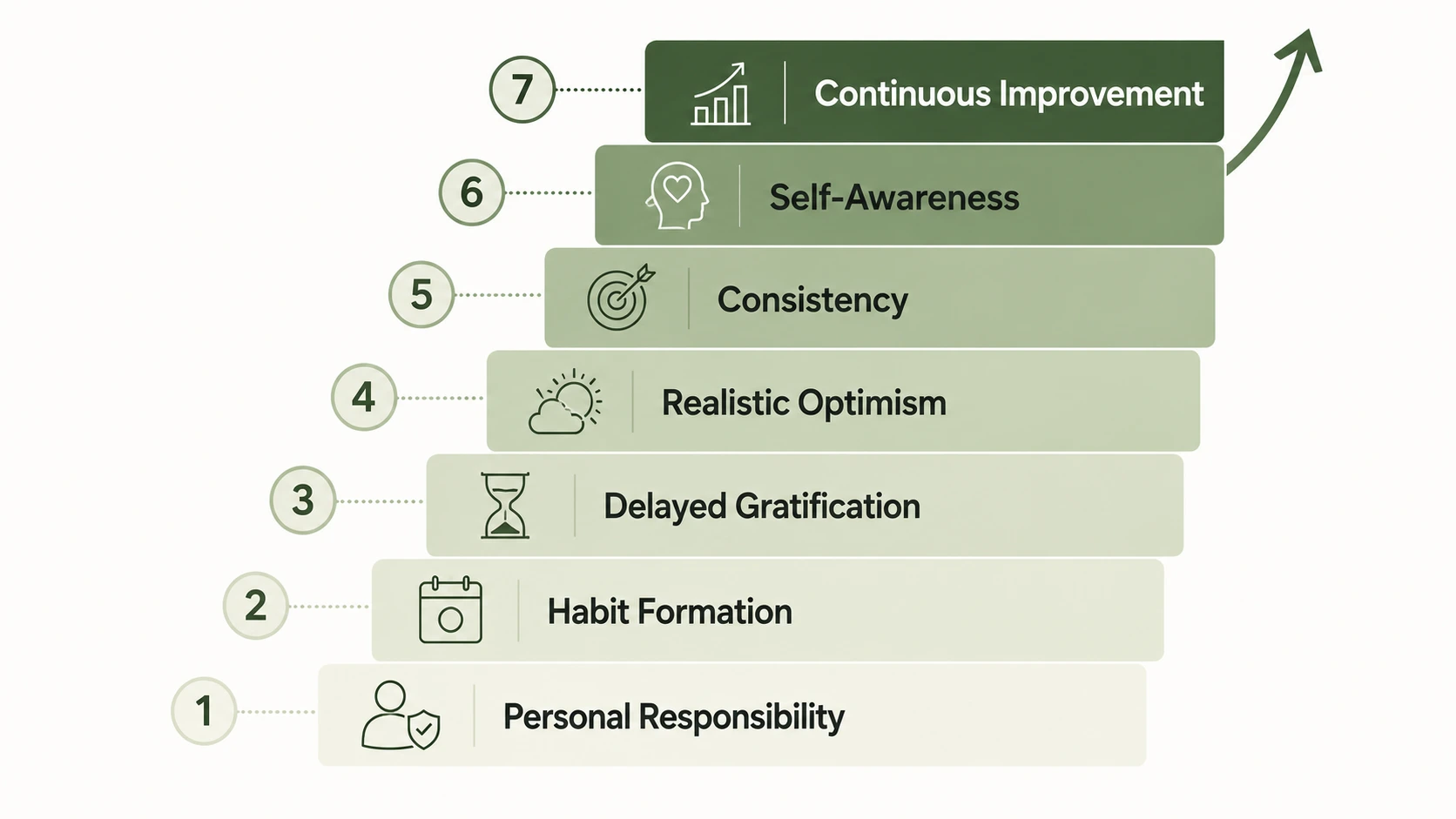
Despite different angles and authors, most respected mindset books converge on similar core principles:
- Personal responsibility — outcomes are shaped more by response than circumstance
- Habit formation — small, repeated actions outperform occasional large efforts
- Delayed gratification — short-term discomfort often produces long-term gain
- Positive thinking with realism — optimism paired with honest self-assessment
- Consistency — steady effort outperforms sporadic intensity
- Self-awareness — understanding personal patterns is a prerequisite for change
- Continuous improvement — progress is treated as ongoing, not a fixed endpoint
Beginner Mistakes When Reading Mindset Books
Readers new to this genre commonly encounter avoidable setbacks:
- Reading without taking action — happens when a book is treated as entertainment rather than a working guide; fixed by pairing each chapter with one applied action.
- Reading too many books simultaneously — dilutes focus and retention; fixed by finishing one book and applying its core lesson before starting another.
- Chasing motivation — relying on the emotional high of reading rather than building habits; prevented by scheduling implementation time immediately after reading.
- Not reviewing notes — lessons fade without reinforcement; fixed by a short weekly review of highlighted ideas.
- Ignoring practical exercises — skipping worksheets or reflection prompts reduces long-term impact; prevented by treating exercises as mandatory, not optional.
How to Apply Lessons From Mindset Books in Daily Life
Creating Actionable Reading Notes
Summarize each chapter in one or two sentences focused on what to do differently, rather than transcribing full passages.
Turning Ideas Into Habits
Select one concept per book and attach it to an existing daily routine, since habits stick more easily when linked to established behavior.
Weekly Reflection System
Set aside 10–15 minutes each week to review notes, assess what was applied successfully, and identify what needs adjustment.
Measuring Personal Progress
Track specific, observable indicators—such as consistency of a new habit or frequency of a behavior change—rather than relying on subjective feelings of improvement alone.
Success Mindset Books vs Motivation Books
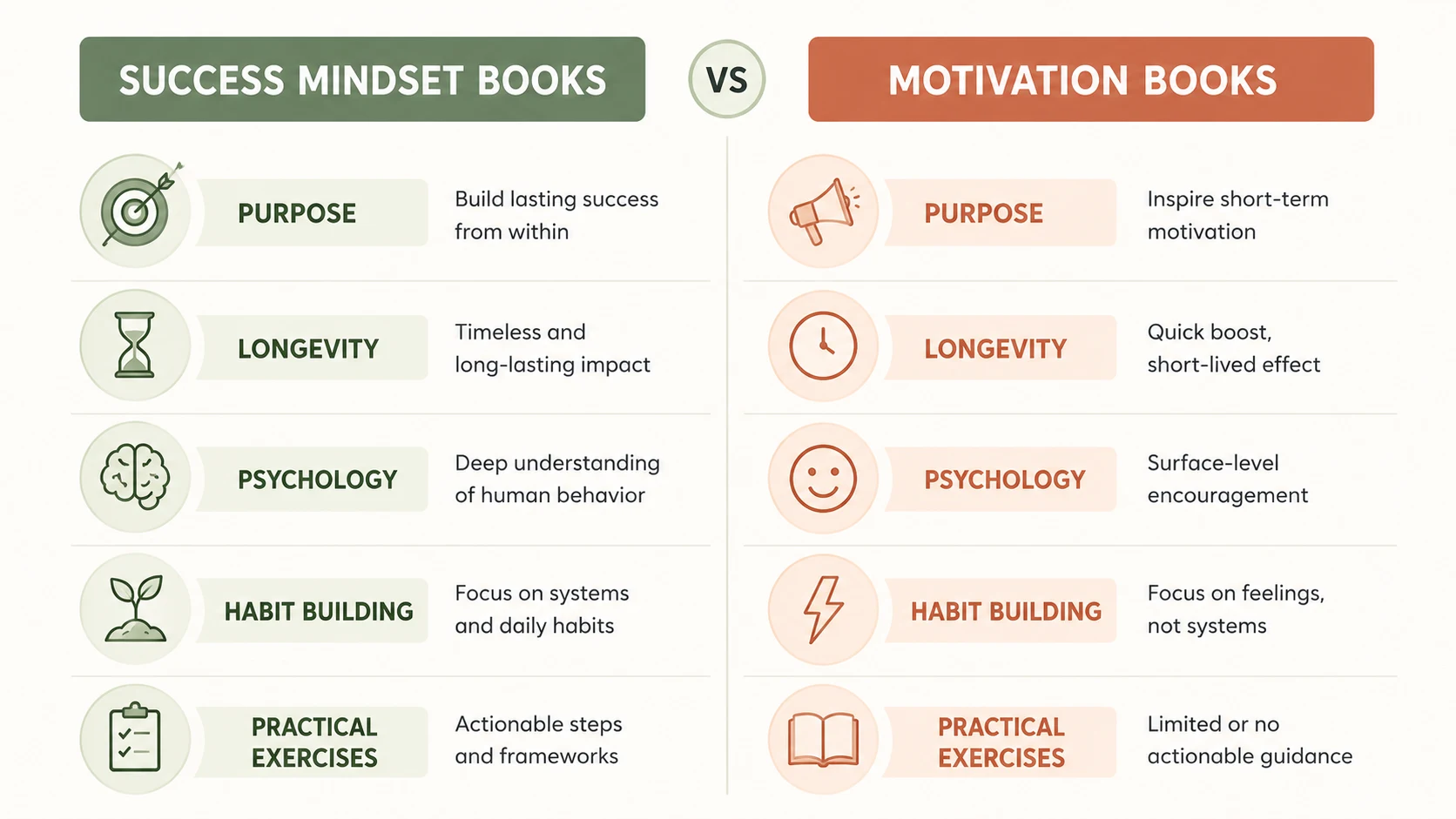
| Feature | Success Mindset Books | Motivation Books |
|---|---|---|
| Purpose | Build lasting thought patterns and habits | Provide short-term emotional inspiration |
| Longevity | Effects compound over months and years | Effects often fade within days |
| Psychology | Grounded in behavioral science and cognitive frameworks | Often anecdotal or emotionally driven |
| Habit Building | Central focus, with structured systems | Rarely addressed in depth |
| Practical Exercises | Frequently included | Less common |
Are Digital Editions and PDFs Worth Reading?
Readers searching for terms like books on mindset and success PDF, strong mindset books PDF, or book on success PDF are usually looking for a convenient way to access these titles. Print books, ebooks, and audiobooks each offer different advantages: print supports focused reading and physical annotation, ebooks allow searchable notes and portability, and audiobooks fit into commutes or exercise routines. Readers should use authorized retailers, publishers, or library platforms to access digital editions, since unauthorized PDF sources often violate copyright and may contain inaccurate or incomplete content. Legitimate digital editions offer meaningful reading convenience and note-taking advantages without these risks.
Difficulty & Time Investment
Most success mindset books are written for a general audience and do not require specialized background knowledge, though difficulty varies by title:
- Beginner-friendly books typically use narrative examples and simple frameworks, requiring 3–5 hours of reading.
- Intermediate reads introduce more structured frameworks and require slower, more deliberate reading, often 5–8 hours.
- Advanced psychology-based books involve denser research citations and benefit from a slower pace, sometimes 8–10 hours or more.
- Reading pace should prioritize comprehension over speed; rereading key chapters is common and expected.
Results Timeline
Mindset development does not follow a single fixed timeline, but general patterns are consistent:
- Immediate mindset shifts can occur within days, particularly around specific limiting beliefs.
- Habit development typically becomes noticeable over several weeks of consistent application.
- Long-term behavioral change tends to solidify over three to six months of sustained practice.
- Factors affecting progress include consistency, environment, existing habits, and how actively lessons are applied rather than passively read.
Practice Guide
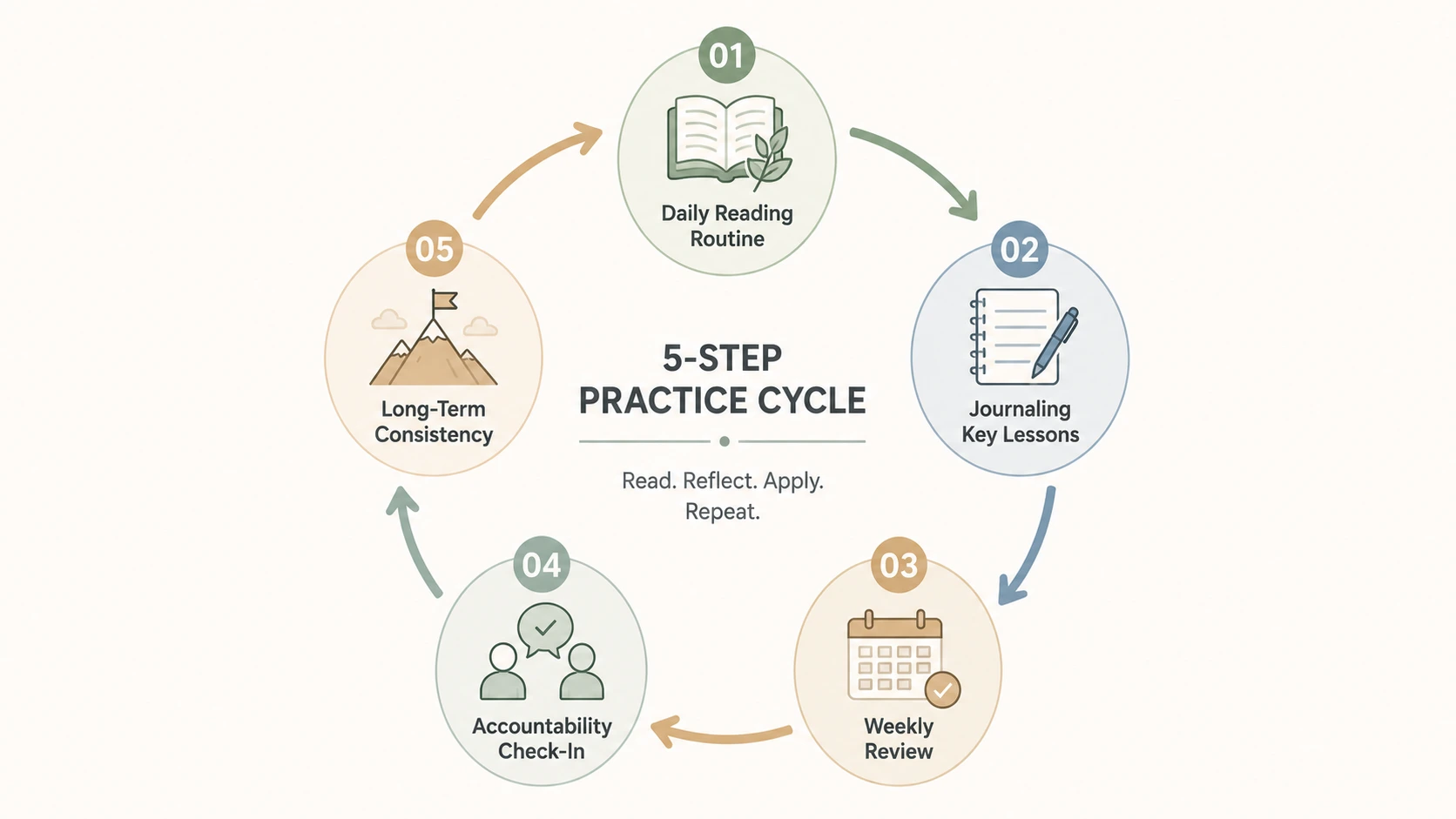
Daily Reading Routine
Set a fixed, small daily reading target—such as one chapter or 15–20 minutes—to build consistency without requiring large blocks of free time.
Weekly Review Process
Revisit notes and highlights once per week to reinforce retention and identify which ideas are ready to apply.
Journaling Key Lessons
Write brief, specific entries connecting a book’s ideas to real situations encountered that week, rather than general summaries.
Accountability Methods
Share goals with a friend, mentor, or reading group, or use a tracking system to record which lessons have been implemented.
Maintaining Long-Term Consistency
Adjust routines around changing schedules rather than abandoning them; a shorter, consistent practice is more effective than an ambitious routine that gets dropped after a few weeks.
Frequently Overlooked Factors That Influence Mindset Development
Beyond book selection, several external factors significantly affect how well mindset lessons translate into real change:
- Environment — surroundings that reinforce or undermine new habits
- Peer influence — the mindset and behavior of close social circles
- Sleep — insufficient rest reduces emotional regulation and decision quality
- Physical health — energy levels directly affect discipline and follow-through
- Stress management — chronic stress interferes with long-term thinking
- Learning style — matching content format (text, audio, visual) to personal preference
- Consistency over intensity — steady, moderate effort outperforms occasional bursts of high effort
Conclusion
A success mindset is not defined by a single trait but by a consistent pattern of growth-oriented thinking, resilience, and disciplined action. The best books on success mindset offer different entry points—whether the goal is confidence, business growth, personal development, or long-term habit change—and selecting the right one depends on individual goals rather than popularity alone. Ultimately, lasting success comes not from reading more books, but from consistently applying their lessons through habits, reflection, and accountability.
Frequently Asked Questions
What is the best book on success mindset for beginners?
Beginners typically benefit most from foundational titles like Mindset by Carol Dweck, which introduces core growth mindset concepts in accessible language before moving into more specialized material.
Which mindset books are best for building confidence?
Confidence-focused books that address fear management, self-belief, and decision-making tend to work best, especially when paired with real-world practice rather than reading alone.
What is the difference between a growth mindset book and a success mindset book?
Growth mindset books focus specifically on how abilities develop through effort and learning, while success mindset books cover a broader range of topics, including habits, confidence, and goal achievement.
How many mindset books should I read each year?
There is no fixed number, but reading fewer books and fully applying their lessons typically produces better results than reading many books without implementation.
Can reading mindset books actually change behavior?
Yes, but only when paired with consistent application; reading alone provides knowledge, while behavior change requires repeated practice and reflection over time.
Which mindset books are best for business owners?
Business owners benefit most from books that combine strategic frameworks with leadership psychology, particularly those addressing decision-making and problem-solving in real business contexts.
Are fiction books effective for developing a success mindset?
Yes, well-written fiction can build resilience, courage, and character growth through narrative, offering a complementary approach to direct nonfiction frameworks.
Should I choose physical books, ebooks, or audiobooks for mindset learning?
The best format depends on personal preference and lifestyle; physical books support focused annotation, ebooks offer portability and searchable notes, and audiobooks fit into busy schedules like commuting or exercise.