Introduction
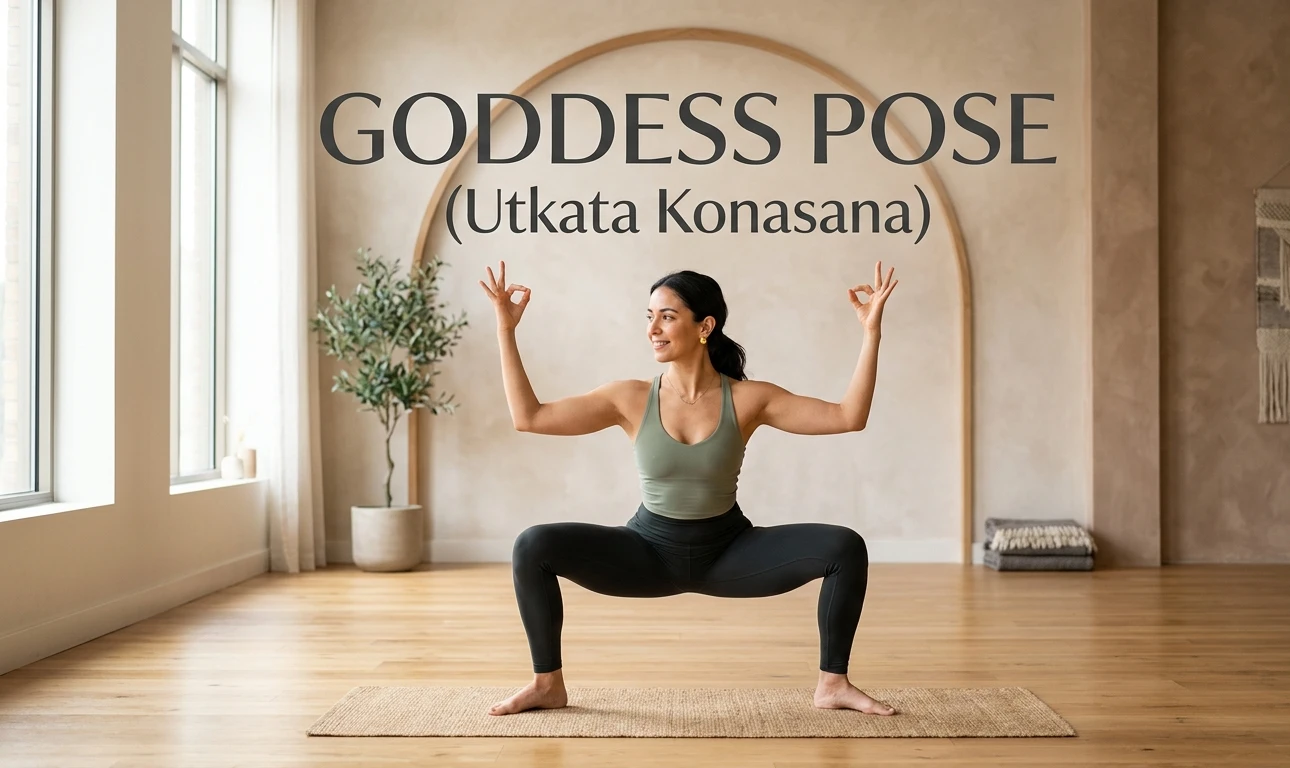
Goddess Pose is a foundational standing yoga posture that builds lower-body strength, stability, mobility, and body awareness. Known in Sanskrit as Utkata Konasana, it is widely practiced in modern yoga for its ability to combine strength training with mindful movement. The posture involves a wide stance, bent knees, and an upright spine, creating both physical engagement and mental focus. It is commonly used in yoga sequences, fitness-inspired flows, and mobility routines. Beginners find it accessible due to its simple structure, while advanced practitioners use it to refine alignment and endurance. Its benefits extend beyond physical conditioning, influencing posture, confidence, and breathing awareness.
Many people start this journey by searching for clarity on how to become the best version of yourself, especially when they feel stuck or unstructured in life.
Quick Summary
- Goddess Pose (Utkata Konasana) is a wide-legged yoga posture that strengthens the legs, hips, and core.
- The pose improves balance, posture, hip mobility, and body awareness.
- Multiple variations make it suitable for beginners, intermediate, and advanced practitioners.
- Consistent practice can support strength, stability, and mindful movement.
What Is Goddess Pose?
Goddess Pose is a standing yoga posture that combines strength, stability, and mobility training in one movement. It is often used to develop lower-body control while improving hip flexibility and core engagement.
Goddess Pose Meaning
Goddess Pose symbolizes strength, confidence, grounding, and openness. The wide stance represents stability, while the lifted chest reflects confidence and awareness. This combination creates a physical expression of inner strength and mental balance. In practice, the posture encourages a shift in mindset toward resilience and grounded presence.
Goddess Pose Sanskrit Name
The Sanskrit name for Goddess Pose is Utkata Konasana.
- Utkata means powerful or fierce
- Kona means angle
- Asana means posture
The modern name “Goddess Pose” reflects the empowering visual form of the posture and its association with strength and stability.
Goddess Pose Yoga Name and Classification
Goddess Pose is classified as:
- A standing yoga posture
- A hip-opening pose
- A lower-body strengthening exercise
- A functional movement similar to a squat pattern
How to Do Goddess Pose Correctly
Step-by-Step Instructions
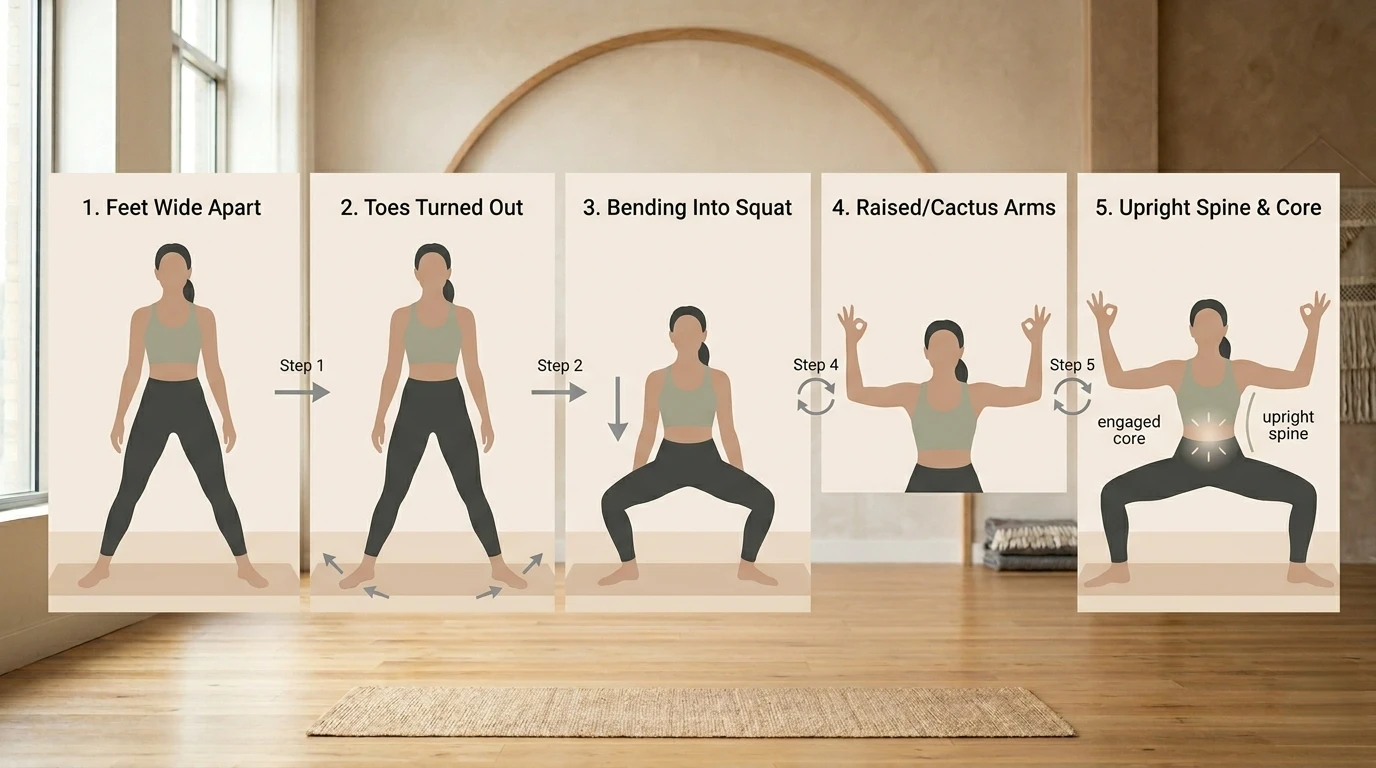
- Stand with feet wider than hip-width apart.
- Turn toes outward slightly.
- Bend knees into a squat position.
- Keep knees aligned over toes.
- Engage core muscles.
- Lift chest and maintain upright spine.
- Relax shoulders and open the chest.
- Place arms in cactus position or extend upward.
- Breathe steadily through the nose.
- Hold the position for several breaths.
Essential Goddess Pose Cues
- Knees track over toes
- Spine remains upright
- Core stays engaged
- Weight is evenly distributed
- Chest remains open
Common Mistakes to Avoid
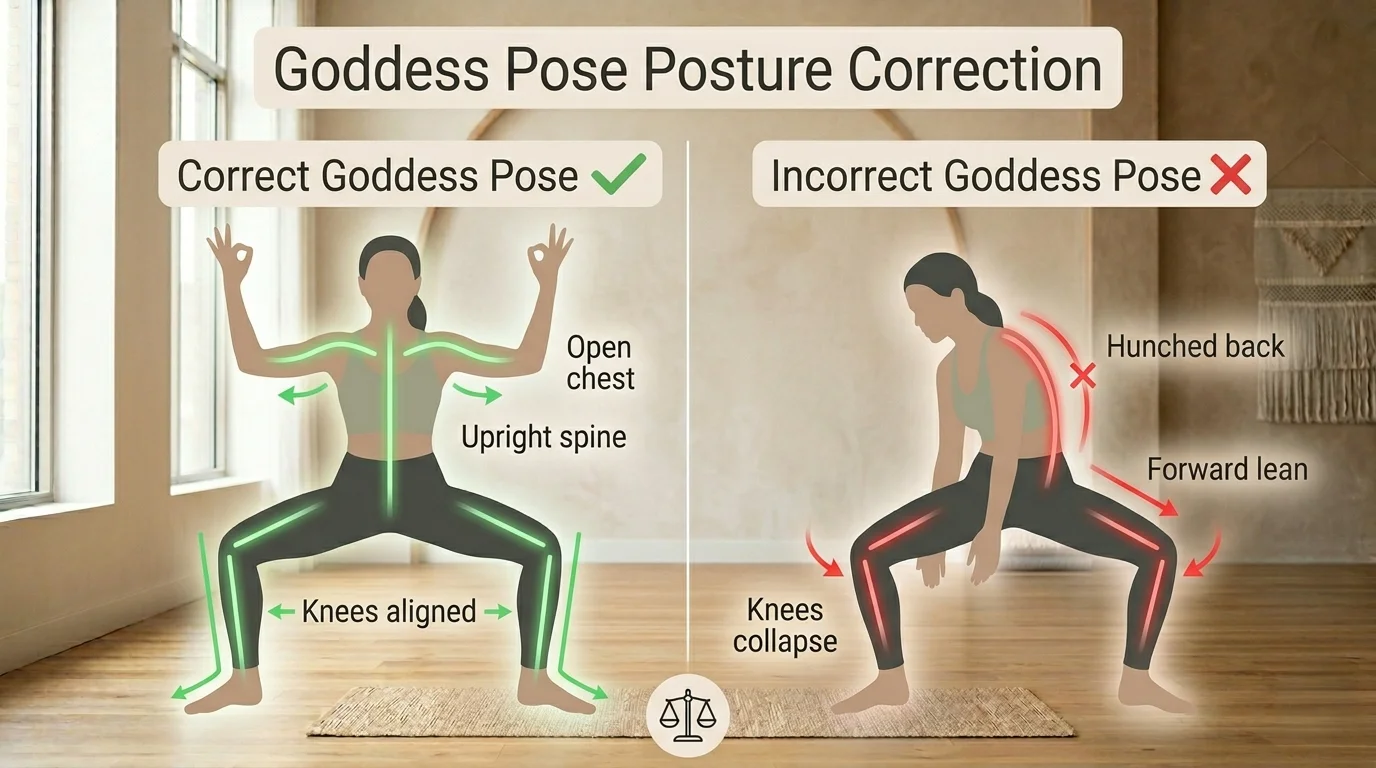
- Knees collapsing inward
- Overarching the lower back
- Leaning too far forward
- Holding breath
- Tension in shoulders and neck
Goddess Pose Benefits
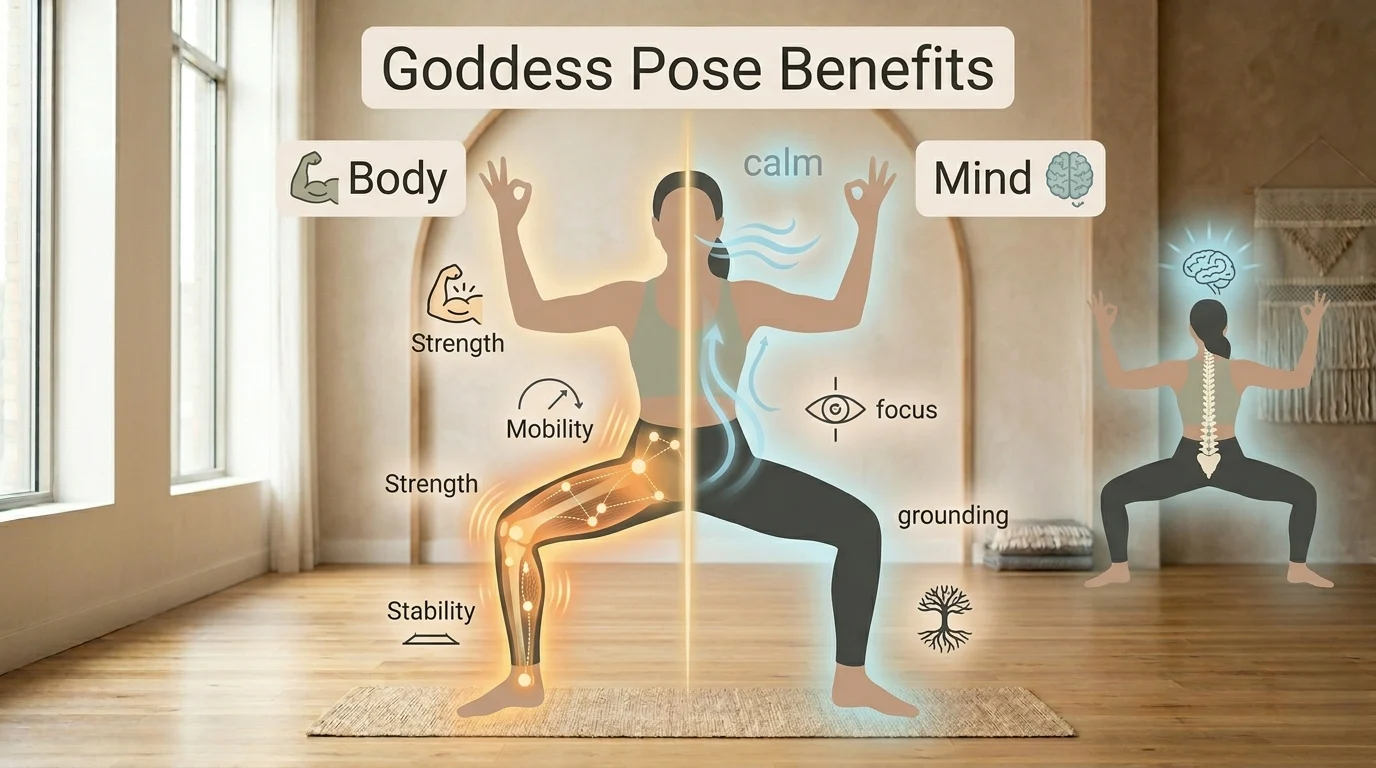
Goddess Pose improves both physical performance and mental awareness through controlled movement and sustained engagement.
Benefits for the Body
- Strengthens thighs and glutes
- Improves hip mobility
- Enhances posture
- Builds core stability
- Increases lower-body endurance
Benefits for the Mind
- Builds confidence through posture
- Improves focus and awareness
- Encourages mindful breathing
- Promotes grounded mental state
Why Goddess Pose Works
It activates multiple muscle groups simultaneously while requiring balance and controlled breathing, creating a strong mind-body connection through stability and mobility integration.
Goddess Pose for Female Practitioners
Goddess Pose is often included in routines focused on lower-body strength, posture improvement, and mobility development. It is commonly used in yoga and fitness practices to support functional movement patterns, especially those involving hips and legs.
Real-Life Applications
- Daily movement support
- Fitness training integration
- Yoga flow transitions
- Mobility routines
Goddess Pose Variations
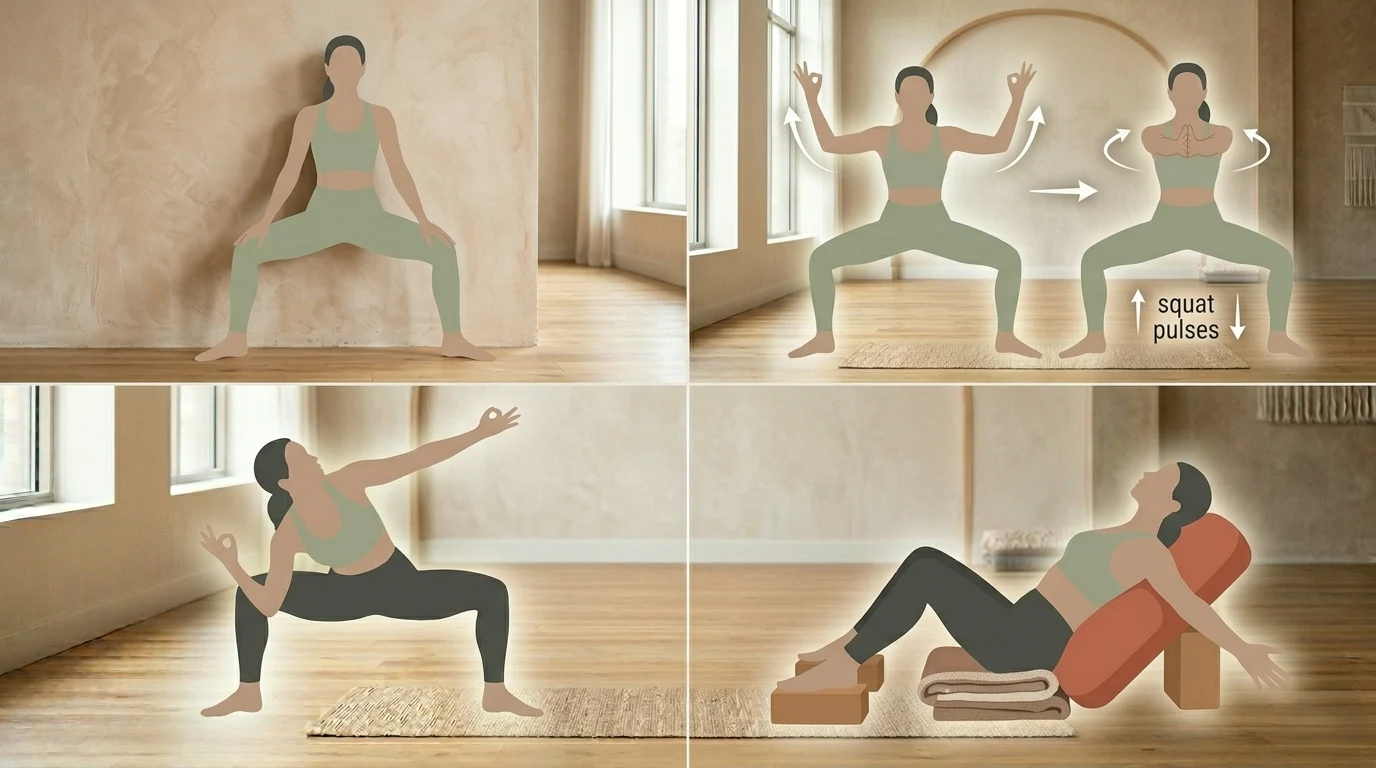
Beginner-Friendly Variations
- Reduced squat depth
- Wall-supported posture
- Block-supported stance
Intermediate Variations
- Arm movement integration
- Dynamic squat pulses
- Flow-based transitions
Advanced Variations
- Revolved Goddess Pose
- Balance transitions
- Extended hold variations
Restorative and Gentle Variations
- Reclined version
- Seated variation
- Supported restorative hold
Goddess Squat vs Goddess Pose
| Feature | Goddess Pose | Goddess Squat |
|---|---|---|
| Primary Purpose | Yoga posture | Fitness movement |
| Focus | Strength + mobility + awareness | Strength and conditioning |
| Breathing Emphasis | High | Moderate |
| Mindfulness Component | Strong | Limited |
| Typical Use | Yoga practice | Workout training |
Goddess Pose integrates mindfulness and alignment, while Goddess Squats emphasize physical conditioning and repetition.
Horse Pose vs Goddess Pose
| Aspect | Horse Pose | Goddess Pose |
|---|---|---|
| Stance Width | Moderate to wide | Wide |
| Arm Position | Varies | Fixed or expressive |
| Training Goal | Martial stability | Yoga strength and mobility |
| Movement Style | Static power | Mindful alignment |
Horse Pose is more martial in nature, while Goddess Pose focuses on controlled movement and breath awareness.
How to Add Goddess Pose to a Yoga Sequence
Before Goddess Pose
- Hip warm-ups
- Joint mobility exercises
- Light squats
During a Flow
- Warrior transitions
- Standing sequences
- Balance integration
After Goddess Pose
- Forward folds
- Hip stretches
- Relaxation poses
Mental and Behavioral Benefits of Consistent Practice
Why People Avoid Challenging Poses
- Discomfort avoidance
- Fear of incorrect form
- Limited mobility
- Lack of confidence
Building Consistency
- Short daily practice
- Habit stacking routines
- Gradual progression
- Tracking improvements
Motivation vs Discipline Comparison
| Motivation | Discipline |
|---|---|
| Temporary | Sustainable |
| Emotion-driven | System-driven |
| Inconsistent | Stable |
| Starts action | Maintains action |
Common Challenges and Solutions
Problem: Tight Hips
- Caused by inactivity
- Solution: gradual mobility training and consistent practice
Problem: Knee Discomfort
- Caused by alignment issues
- Solution: adjust knee tracking and reduce depth
Problem: Lack of Consistency
- Caused by unrealistic expectations
- Solution: short, daily sessions
Problem: Overtraining and Burnout
- Caused by excessive intensity
- Solution: balanced recovery and moderation
Myths About Goddess Pose
Myth 1: Deeper Is Always Better
Proper alignment matters more than depth.
Myth 2: Only Flexible People Can Do It
Modifications make it accessible to all levels.
Myth 3: It Is Only a Stretch
It also builds strength, stability, and endurance.
What Actually Works
- Consistent practice
- Proper alignment
- Gradual progression
Conclusion
Goddess Pose (Utkata Konasana) is a powerful yoga posture that combines strength, mobility, and mindful awareness. It strengthens the lower body while improving posture, balance, and mental focus. Its adaptability makes it suitable for beginners and advanced practitioners alike. Long-term benefits depend on consistent practice, proper alignment, and gradual progression rather than intensity. When practiced regularly, it supports both physical development and mental stability through integrated movement and breath control.
FAQs
What is Goddess Pose in yoga?
It is a wide-legged standing posture that strengthens the lower body and improves mobility and awareness.
What is the Sanskrit name for Goddess Pose?
The Sanskrit name is Utkata Konasana.
What are the main benefits of Goddess Pose?
It improves strength, balance, hip mobility, posture, and mental focus.
How do beginners practice Goddess Pose safely?
By using reduced depth, maintaining alignment, and practicing near a wall if needed.
Is Goddess Pose good for hip mobility?
Yes, it helps improve controlled hip opening and flexibility over time.
What is the difference between Goddess Pose and a squat?
Goddess Pose includes mindfulness and breath control, while squats focus mainly on strength.
Can Goddess Pose be included in a daily yoga routine?
Yes, it can be safely practiced daily with proper form.
Which variation is best for beginners?
Wall-supported or shallow-depth versions are best for beginners.
Why do my knees hurt during Goddess Pose?
Usually due to poor alignment or excessive depth.
How long should I hold Goddess Pose?
Typically 20–60 seconds depending on strength and comfort.