
Introduction
Children’s books about growth mindset teach kids that intelligence and ability are not fixed traits but skills that grow through effort, practice, and learning from mistakes. A growth mindset, a concept popularized by psychologist Carol Dweck, contrasts with a fixed mindset, in which children believe their talents are set in stone. This distinction matters early in childhood, when kids are forming beliefs about failure, effort, and their own potential. Stories are one of the most effective ways to teach this concept because children absorb lessons through characters they relate to, not through abstract instruction. As characters face setbacks, try again, and improve, young readers internalize perseverance, resilience, confidence, and problem-solving skills in a way that feels natural rather than instructional.
Quick Summary
- Children’s books can teach kids that mistakes are part of learning and improvement.
- Growth mindset stories encourage persistence, curiosity, and resilience rather than perfection.
- Different books suit different ages, from young children to older elementary students.
- Parents and teachers can reinforce growth mindset lessons through discussion and everyday activities.
- In our experience helping readers build better habits, pairing books with simple conversation questions makes the lessons stick far longer than reading alone.
What Is a Growth Mindset for Children?
Explaining Growth Mindset in Simple Words
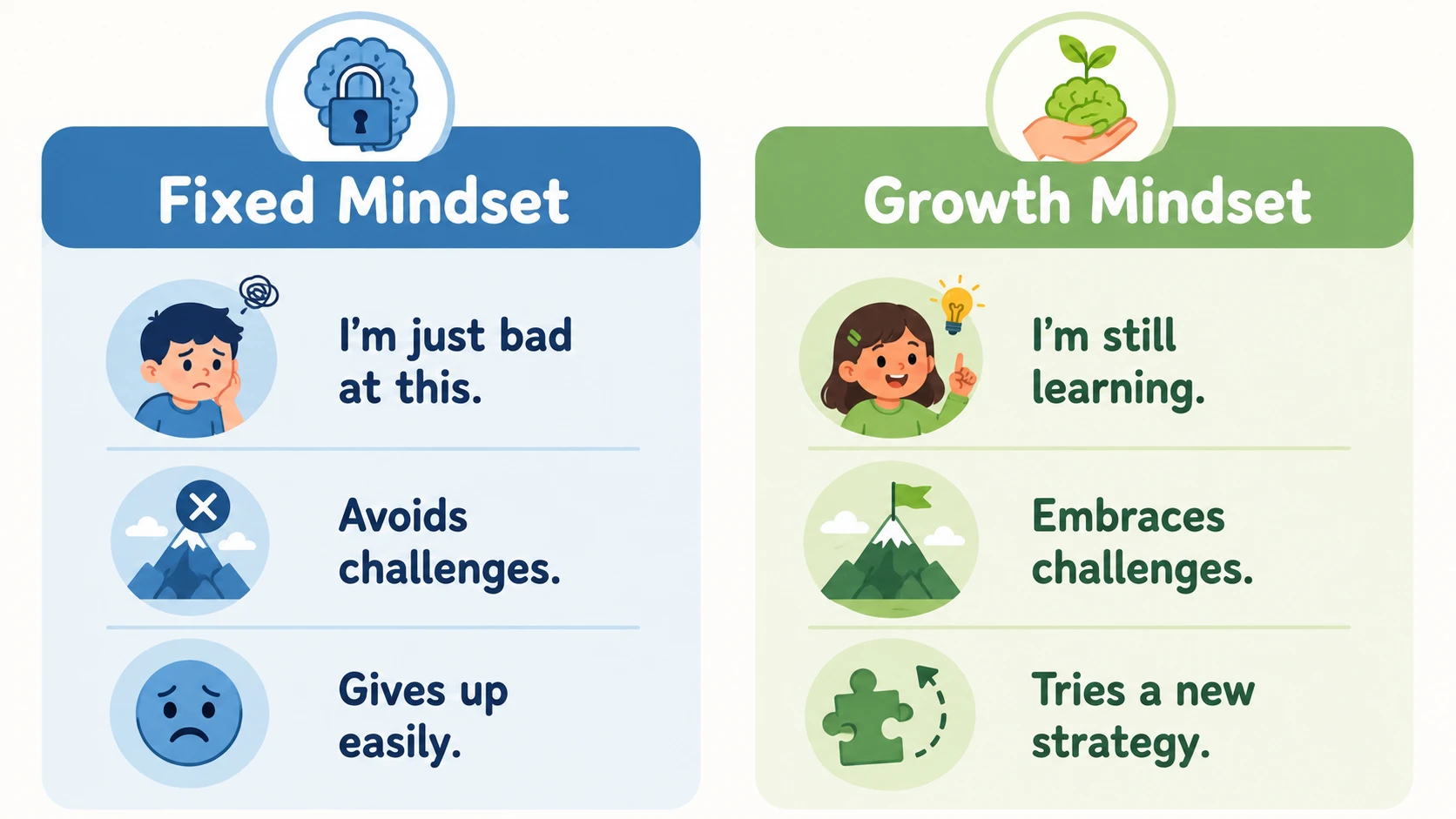
A growth mindset is the belief that abilities can improve with effort, practice, and learning from mistakes. Children with a growth mindset see a hard math problem or a missed soccer goal as a chance to improve rather than proof that they aren’t good enough. Understanding why growth mindset is important early on shapes how children respond to challenges well beyond childhood.
The opposite is a fixed mindset, where a child believes intelligence, talent, or skill is unchangeable. A child with a fixed mindset might avoid a challenging puzzle because failing would feel like confirmation that they simply “aren’t smart,” while a child with a growth mindset views the same puzzle as an opportunity to practice a new skill.
Everyday examples help make this concrete:
- A fixed-mindset child says, “I’m just bad at drawing.” A growth-mindset child says, “I’m still learning how to draw.”
- A fixed-mindset child gives up after one failed attempt at riding a bike. A growth-mindset child tries again with small adjustments.
Learning how to explain growth mindset to a child often starts with these simple before-and-after comparisons, since young readers understand contrast better than definitions alone.
Why Children Learn Best Through Stories
Stories let children see growth mindset principles in action rather than hearing them as rules. When a character perseveres through a difficult challenge, kids witness the process of struggle, effort, and eventual improvement play out step by step.
Storytelling also supports emotional learning. Children form attachments to characters, so when a character feels frustrated or embarrassed after a mistake, readers process those same emotions in a safe, low-stakes way. This emotional engagement is part of why children tend to remember lessons from stories longer than lessons delivered as direct advice.
Why Children’s Books Are Effective for Teaching Growth Mindset
How Fiction Helps Children Develop Positive Beliefs
Fiction children’s books about growth mindset work because they combine relatable characters, emotional engagement, problem-solving, and visible character development in a single narrative arc.
- Relatable characters: Kids see themselves in characters facing everyday struggles, like a spelling test or a difficult friendship.
- Emotional engagement: Following a character’s frustration and eventual success helps children process similar feelings in their own lives.
- Problem-solving: Many growth mindset stories show a character trying multiple strategies before succeeding, modeling flexible thinking.
- Character development: Watching a character change from discouraged to confident reinforces the idea that abilities are not fixed.
Growth Mindset Skills Children Can Learn
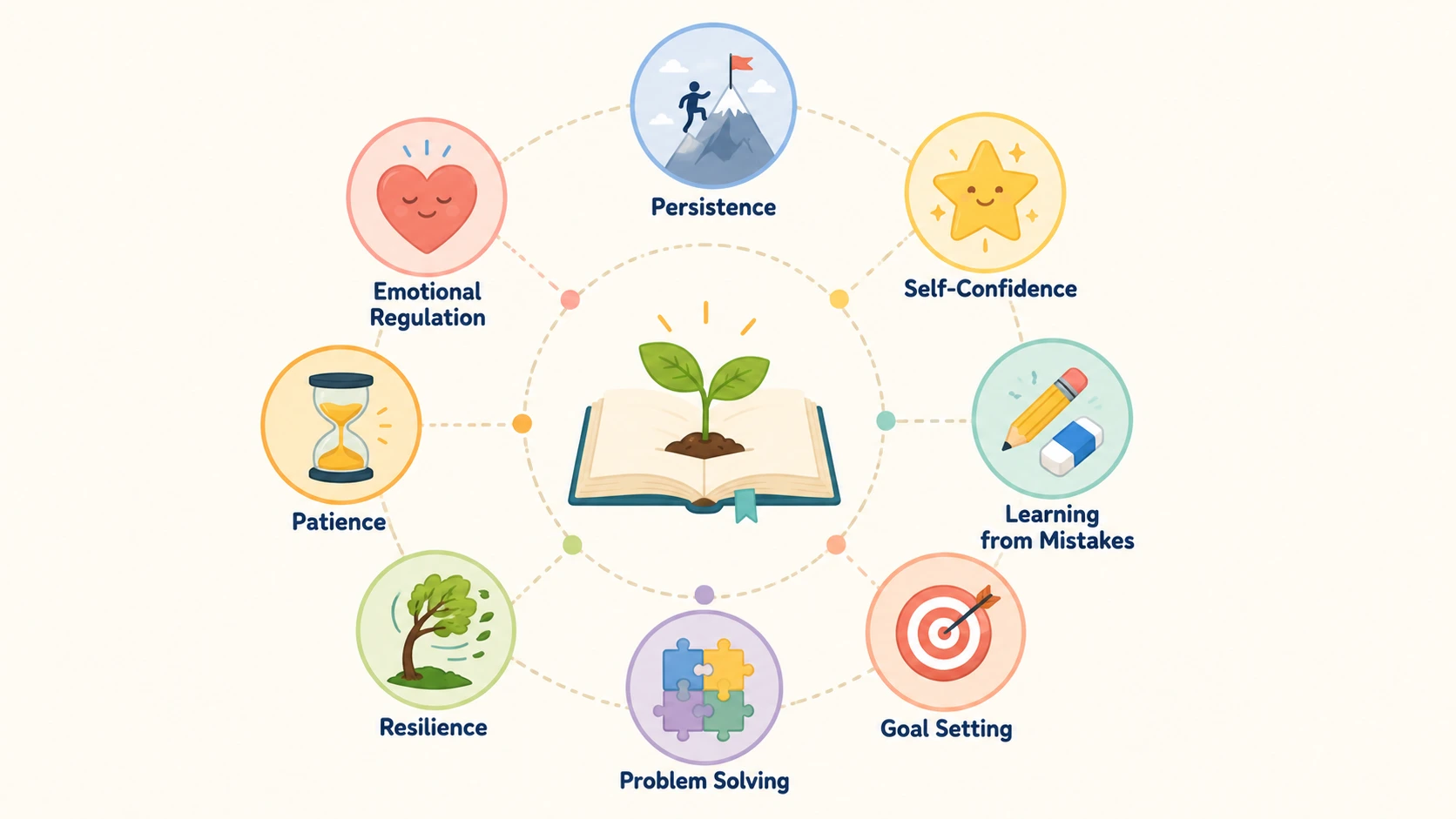
Well-chosen books can reinforce several specific skills:
- Persistence
- Self-confidence
- Learning from mistakes
- Goal setting
- Problem solving
- Resilience
- Patience
- Emotional regulation
Each skill is typically reinforced through a different story element. Persistence often appears when a character repeats an attempt after failing; self-confidence grows as characters take on new challenges; and emotional regulation is modeled when characters manage frustration constructively instead of giving up entirely.
Best Children’s Books About Growth Mindset
Choosing the best children’s books about growth mindset depends less on popularity and more on three selection criteria: whether the book shows a clear struggle-to-growth arc, whether the language matches the child’s age, and whether the story avoids equating success only with winning or being “the best.”
| Book | Recommended Age | Main Lesson | Growth Mindset Theme |
|---|---|---|---|
| The Dot by Peter Reynolds | 4–8 | Small efforts can grow into confidence | Starting despite self-doubt |
| Beautiful Oops! by Barney Saltzberg | 3–7 | Mistakes can become something new | Reframing errors |
| The Girl Who Never Made Mistakes by Mark Pett | 5–9 | Perfection isn’t the goal | Embracing imperfection |
| What Do You Do With an Idea? by Kobi Yamada | 5–10 | Ideas grow through persistence | Nurturing effort over time |
| Rosie Revere, Engineer by Andrea Beaty | 5–9 | Failure is part of invention | Trying again after setbacks |
| The Most Magnificent Thing by Ashley Spires | 4–8 | Frustration is a normal part of creating | Managing setbacks |
| Your Fantastic Elastic Brain by JoAnn Deak | 6–10 | The brain grows stronger with practice | Understanding neuroplasticity |
Picture Books for Young Children
Picture books work well for preschool, kindergarten, and early elementary readers because they rely on visual storytelling to convey emotion and progress. Simple, repetitive language and expressive illustrations make abstract ideas like effort and resilience easier for young children to grasp without needing extended text.
Chapter Books for Elementary Readers
Chapter books suit independent readers who can follow more complex character growth across multiple chapters. These books often include layered problem-solving storylines, where a character tries several strategies before succeeding, giving older elementary readers a more nuanced model of persistence.
Growth Mindset Books for Different Age Groups
Growth Mindset Books for 10-Year-Olds
Growth mindset books for 10-year-olds should match a reading level that supports chapter-book fluency while addressing the emotional maturity of preteens. At this age, children are managing more complex school challenges and beginning to value independence, so books that show characters solving academic or social problems tend to resonate most.
Growth Mindset Books for Students
Growth mindset books for students span elementary through middle school and are often used to support classroom learning and academic resilience. Teachers frequently select these titles to introduce discussion around effort-based praise and to normalize struggle as part of the learning process.
Growth Mindset Books for Teens
Growth mindset books for teens typically address identity, confidence, academic pressure, friendships, and motivation. Because teens face more complex social and academic stakes, these books often move beyond simple story arcs into more reflective narratives about setbacks and self-belief.
Growth Mindset Books for Adults Supporting Children
Adults benefit from understanding growth mindset principles because their own language and reactions shape how children interpret success and failure. Growth mindset books for adults, such as Carol Dweck’s Mindset: The New Psychology of Success, help parents and educators learn how to praise effort instead of innate ability, model healthy responses to mistakes, and create environments where children feel safe attempting difficult tasks. For inspiration on shifting your own language, these Carol Dweck mindset quotes offer a quick reference for effort-based praise.
How to Help Your Child Develop a Growth Mindset Through Reading
Reading Strategies That Reinforce Learning
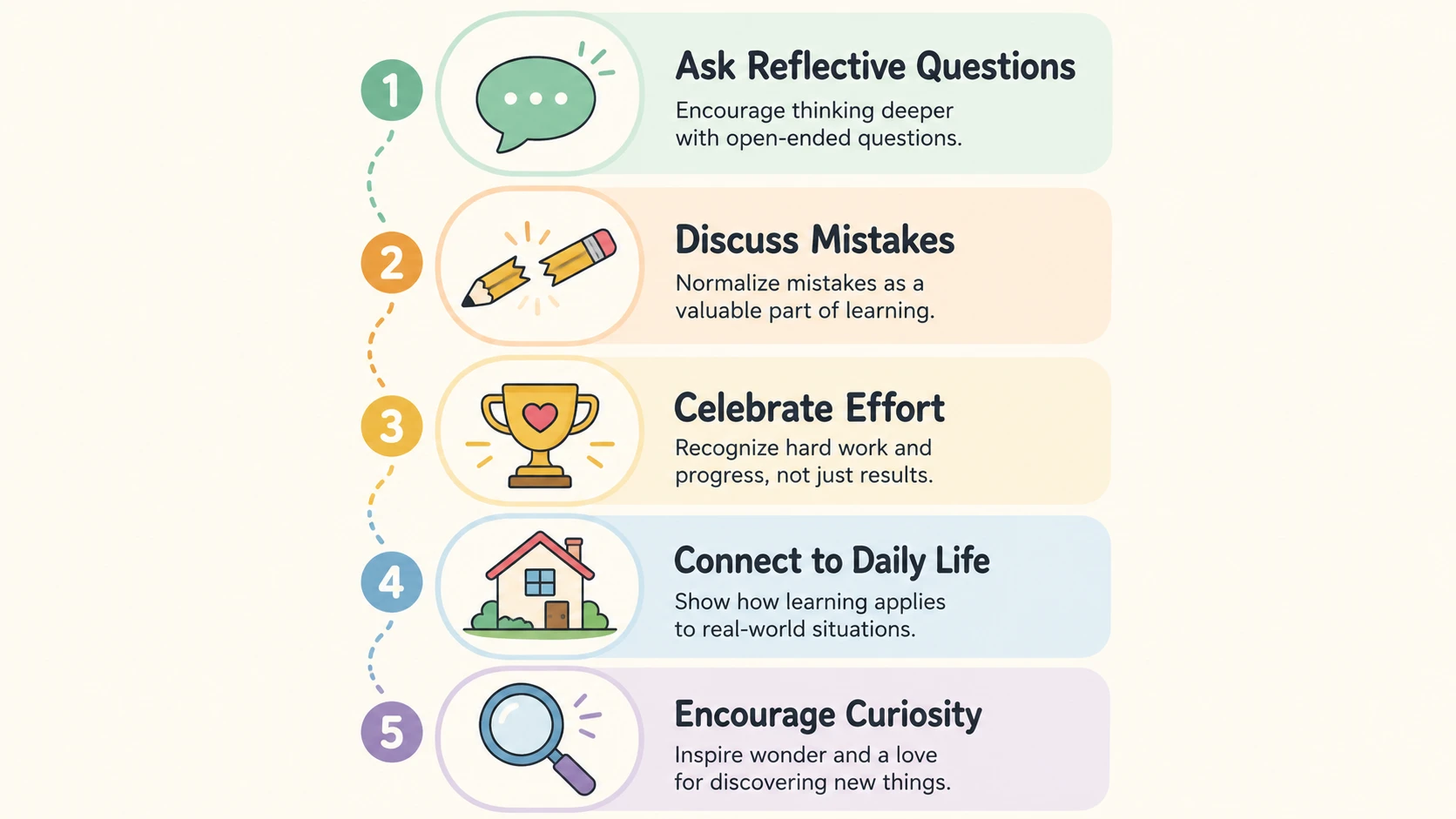
Understanding how to help your child have a growth mindset starts with how a book is discussed, not just what is read. Effective strategies include:
- Ask reflective questions
- Discuss mistakes made by characters
- Celebrate effort
- Connect lessons to daily life
- Encourage curiosity
Questions to Ask After Reading
Simple, consistent questions help children translate a story into a personal lesson:
- What challenge did the character face?
- What did they learn?
- What mistake helped them grow?
- What would you do differently?
Growth Mindset Activities to Pair With Books
Reading alone builds awareness, but pairing books with hands-on activities reinforces the lesson through practice. Useful options include:
- Reflection journals
- Drawing favorite lessons
- Goal-setting charts
- Family discussions
- Classroom activities
- Role-playing
- Gratitude exercises
Comparing Different Types of Growth Mindset Books
Different book formats serve different purposes, and choosing the right type depends on the child’s age and the specific learning goal.
| Type | Best For | Advantages | Limitations |
|---|---|---|---|
| Picture Books | Young children | Simple concepts | Limited depth |
| Fiction Stories | Elementary readers | Emotional connection | Longer reading time |
| Educational Books | Older students | Direct teaching | Less storytelling |
| Parent Guides | Adults | Practical implementation | Not child-focused |
Common Mistakes When Teaching Growth Mindset Through Books
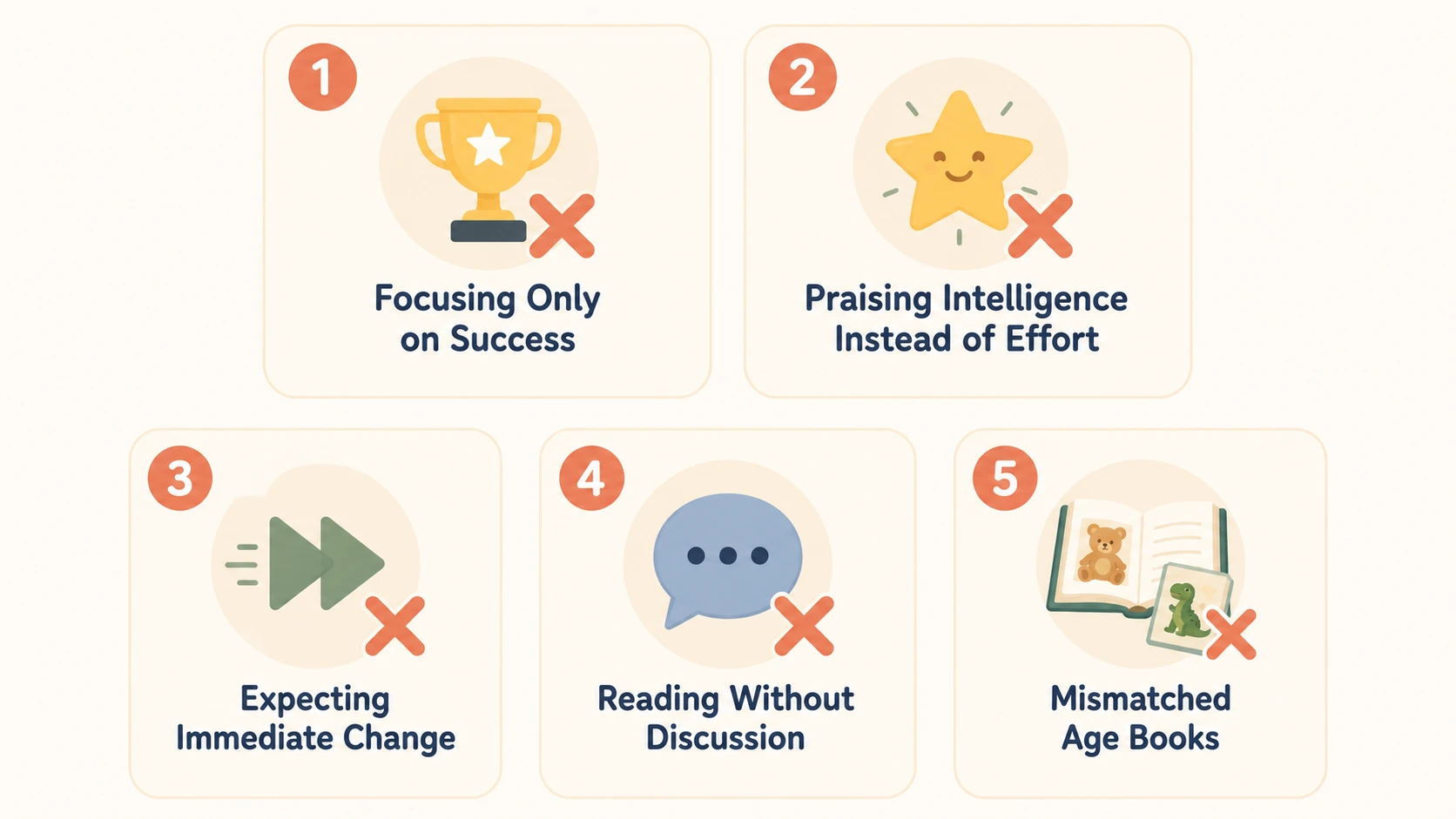
Focusing Only on Success
Some books and discussions emphasize the happy ending rather than the struggle that led to it. This happens when adults skip past a character’s setbacks to reach the resolution quickly. Correct this by slowing down and discussing the difficult middle section of the story, not just the outcome.
Praising Intelligence Instead of Effort
Saying “you’re so smart” reinforces a fixed mindset, while praising the process reinforces growth. This mistake often happens out of habit, since ability-based praise feels natural. Preventing it involves consciously shifting language toward effort, strategy, and persistence.
Expecting Immediate Behavior Changes
Growth mindset development takes repeated exposure and practice, not a single reading. This mistake happens when adults treat one book as a complete lesson. Revisiting themes across multiple books and real-life situations prevents this gap.
Reading Without Discussion
Reading a story without any follow-up conversation reduces its impact. This often happens due to time constraints. Even one or two reflective questions after reading can correct this and reinforce the lesson.
Choosing Books That Don’t Match the Child’s Age
A book that is too advanced or too simple can fail to land the intended lesson. This mistake typically comes from selecting popular titles without checking reading level. Reviewing recommended age ranges before choosing a book helps prevent mismatched expectations.
Practical Tips for Parents and Teachers
Your Daily Thrive recommends building growth mindset habits gradually rather than all at once. Practical steps include: Pairing books with simple growth mindset affirmations gives children a phrase to return to when a task feels difficult
- Build a regular reading routine.
- Let children choose books.
- Model a growth mindset.
- Celebrate progress.
- Encourage questions.
- Connect stories to real-life experiences.
- Revisit favorite books over time.
As of 2026, many educators are increasingly pairing growth mindset picture books with short reflective writing prompts, an approach shown to strengthen retention compared to reading alone.
How Growth Mindset Reading Supports Long-Term Development
Consistent exposure to growth mindset stories supports development well beyond the immediate lesson of a single book. Long-term benefits include:
- Academic confidence
- Emotional resilience
- Creativity
- Problem-solving
- Motivation
- Healthy attitudes toward failure
- Lifelong learning
These outcomes connect to broader personal development concepts such as habit formation, goal setting, and resilience. Children who regularly encounter growth mindset narratives tend to build these positive learning habits into how they approach new challenges well into adolescence and adulthood.
Frequently Asked Questions
What are children’s books about growth mindset?
Children’s books about growth mindset are stories that teach kids that abilities improve through effort, practice, and learning from mistakes, rather than being fixed traits.
How do you explain growth mindset to a child?
Explain growth mindset to a child using simple contrasts, such as saying “I’m still learning” instead of “I’m bad at this,” paired with concrete examples from daily life like practicing a skill.
What age is best to introduce growth mindset books?
Growth mindset books can be introduced as early as preschool, using picture books with simple language, and continued through elementary and teen years with more complex stories.
Which qualities should parents look for in a growth mindset book?
Look for books that show a clear struggle-to-growth arc, age-appropriate language, and a focus on effort and improvement rather than winning or innate talent.
Can growth mindset books improve confidence?
Yes, growth mindset books can improve confidence by showing characters overcoming setbacks through effort, which helps children believe their own abilities can also improve with practice.
Are fiction books better than nonfiction for teaching growth mindset?
Fiction books tend to build stronger emotional engagement through relatable characters, while nonfiction books offer more direct explanations, so both formats work best when used together.
How often should children read growth mindset books?
Regular, repeated exposure works better than a single reading, so incorporating growth mindset books into a weekly reading routine helps reinforce the lessons over time.
Conclusion
Children’s books about growth mindset help kids build resilience, perseverance, confidence, and a positive attitude toward learning by showing these qualities in action through relatable characters and stories. Books work best as one part of a larger approach that includes conversation, effort-based praise, and real-life practice, rather than as a stand-alone lesson. Parents and educators who choose age-appropriate stories and consistently discuss them help make growth mindset thinking a natural, everyday part of how children approach challenges, setbacks, and learning.