

Introduction
A Bible verse for growth mindset points to something deeper than modern psychology’s version of the term. While “growth mindset” is a contemporary phrase, Scripture has always taught spiritual growth, wisdom, perseverance, humility, and transformation. The Bible frames growth not as self-improvement through willpower alone, but as a process rooted in dependence on God, guided by His Word, and shaped through obedience over time. This distinction matters: biblical growth is relational and Spirit-led, while secular growth mindset theory centers on self-belief and effort. Understanding both helps believers pursue change with the right foundation.
Quick Summary
- A biblical growth mindset focuses on continual spiritual transformation rather than perfection.
- Scripture teaches that faith, perseverance, wisdom, and humility contribute to lifelong growth.
- Many Bible verses encourage positive thinking by centering the mind on God’s truth rather than circumstances.
- Spiritual growth involves both God’s work in believers and intentional daily obedience.
What Does a Growth Mindset Mean According to the Bible?
Defining a Growth Mindset in Biblical Terms
A growth mindset, in modern terms, is the belief that abilities and character can develop through effort and learning. In biblical terms, this concept aligns closely with spiritual maturity, sanctification, repentance, and perseverance. Scripture describes believers as works in progress, continually shaped by God. Philippians 1:6 (KJV) expresses confidence that God, having begun a good work, “will perform it until the day of Jesus Christ.” This verse about growth mindset reframes personal development as an ongoing partnership with God rather than a self-driven project. Understanding why growth mindset is important helps clarify why Scripture treats spiritual maturity as a lifelong process rather than a fixed trait.
Having a growth mindset, biblically speaking, really means embracing correction, pursuing wisdom, and trusting that character forms gradually through faith and obedience — not through instant willpower.
Growth Mindset vs Fixed Mindset Through Scripture
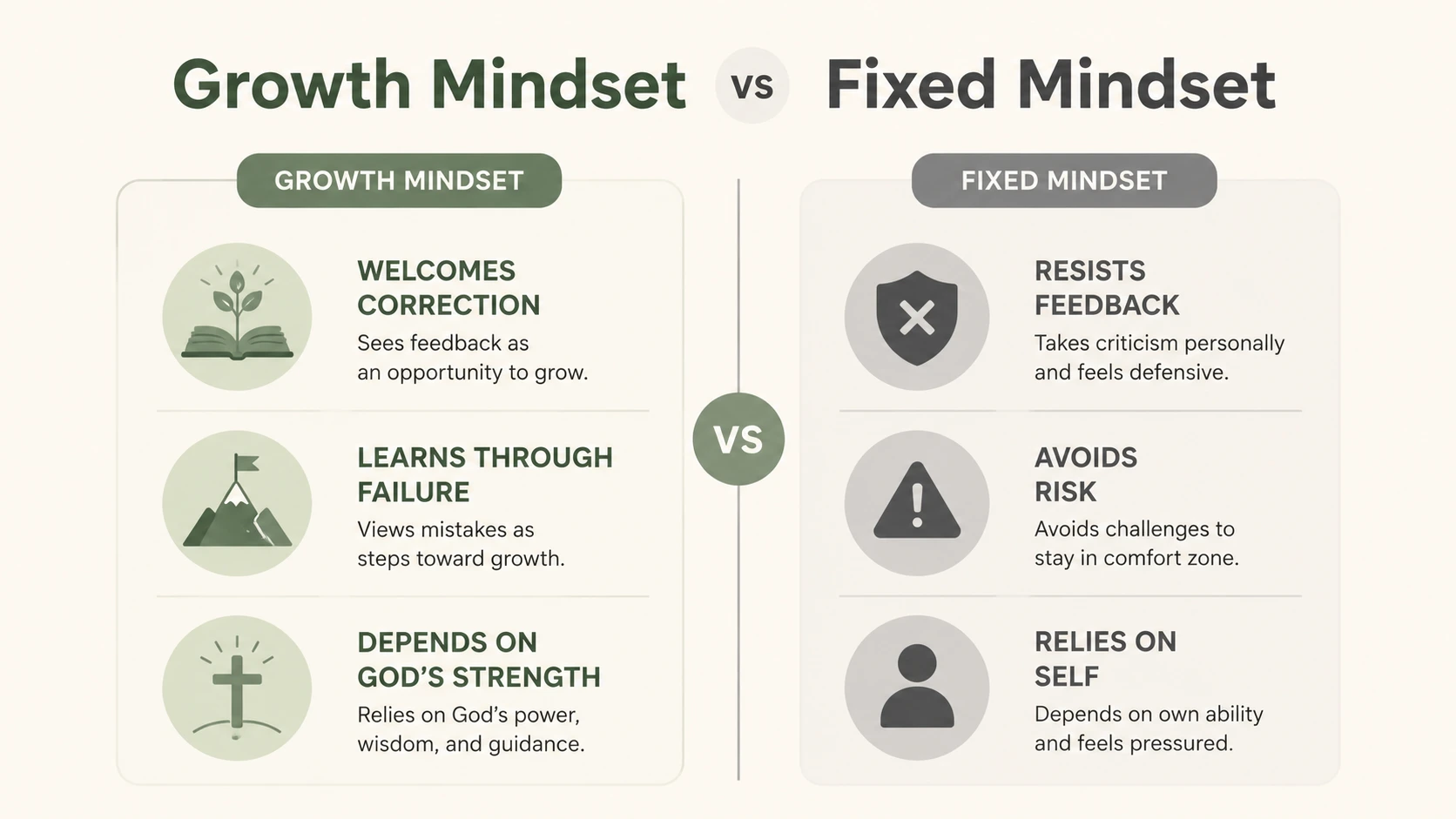
Scripture consistently favors teachability over rigidity. Figures like Peter, who grew through failure and correction, illustrate a biblical growth orientation, while examples of stubbornness or self-reliance illustrate a fixed mindset.
| Growth Mindset | Fixed Mindset | Biblical Principle |
|---|---|---|
| Welcomes correction | Resists feedback | Proverbs 12:1 |
| Learns through failure | Avoids risk of failure | Proverbs 24:16 |
| Views challenges as refinement | Views challenges as threats | James 1:2-4 |
| Depends on God’s strength | Relies solely on self | 2 Corinthians 12:9 |
| Pursues wisdom over time | Assumes knowledge is fixed | Proverbs 4:7 |
Bible Verses That Encourage a Growth Mindset
Rather than listing verses at random, this section groups them by theme so each can be understood in context.
Bible Verses About Spiritual Growth
A Bible quote for growth often centers on maturity as a process. 2 Peter 3:18 encourages believers to “grow in grace, and in the knowledge of our Lord and Saviour Jesus Christ.” This is one of the clearest bible verses to help grow spiritually, framing growth as both relational (grace) and intellectual (knowledge). Similarly, Colossians 1:10 speaks of “increasing in the knowledge of God,” reinforcing that growth is continuous rather than a one-time event. A bible verse that talks about growth typically pairs knowledge with practice — learning and living out truth together.
Bible Verses About Renewing Your Mind
Romans 12:2 instructs believers to be “transformed by the renewing of your mind,” rather than conforming to surrounding culture. This renewal is central to biblical growth: thinking patterns change first, and behavior follows. Philippians 4:8 reinforces this by directing focus toward what is true, honest, and good, shaping character through disciplined thought rather than fleeting emotion.
Bible Verses About Perseverance and Learning
James 1:2-4 teaches that trials produce patience, and patience leads to maturity and completeness. Romans 5:3-4 follows a similar pattern: tribulation produces perseverance, perseverance produces character, and character produces hope. These verses show that biblical growth is refined through endurance, not avoided through comfort.
Bible Verses About Positive Mindset During Difficult Times
Finding Hope During Hard Seasons
Biblical hope differs from generic optimism. Optimism assumes things will improve; biblical hope is grounded in God’s character regardless of circumstances. Romans 15:13 calls God “the God of hope,” who fills believers with joy and peace through faith. These bible verses about staying positive in hard times don’t promise the absence of difficulty — they promise God’s presence within it.
Bible Verses About Positive Thinking
Biblical positive thinking is not toxic positivity, which dismisses pain or forces false cheerfulness. Instead, it redirects attention toward truth. Isaiah 26:3 promises perfect peace for those whose minds are focused on God. Among the many bible verses about positive mindset, Philippians 4:6-7 stands out, instructing believers to bring anxiety to God in prayer rather than suppress it. A broader collection — often referenced as 20 bible verses about positive thinking — typically draws from Psalms, Proverbs, and the Epistles, all emphasizing trust over anxiety. Pairing these verses with growth mindset affirmations can help reinforce truth-centered thinking throughout the day.
Bible Verses About Personal Change and Transformation
Becoming More Like Christ
2 Corinthians 3:18 describes believers being “changed into the same image” of Christ, moving “from glory to glory.” This transformation is progressive, not instantaneous, and is attributed to the work of the Spirit rather than self-effort alone.
Bible Verses About Changing Yourself for the Better
Ephesians 4:22-24 instructs believers to put off the old self and put on the new self, “created in righteousness and true holiness.” These bible verses about changing yourself for the better emphasize an internal shift in identity that then produces external change in behavior.
Bible Verses About Growth, Success, and Prosperity
What Biblical Success Really Means
Joshua 1:8 links prosperity and success to meditating on God’s law and acting according to it. Biblical success is measured by faithfulness and obedience rather than external achievement alone.
Understanding Prosperity in Scripture
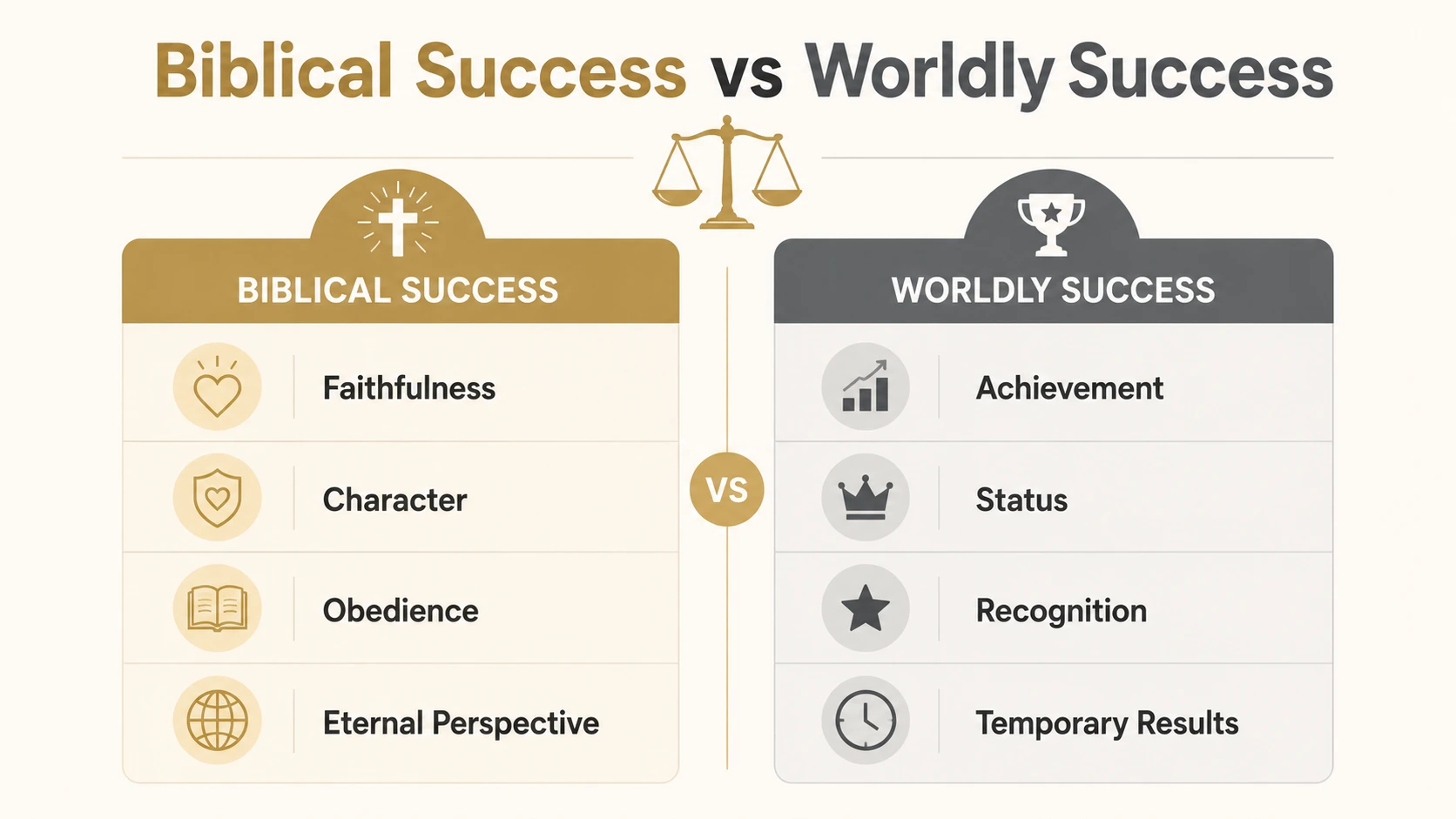
3 John 1:2 expresses a wish for prosperity and health that parallels the soul’s well-being — a reminder that prosperity in Scripture is holistic, not purely financial. A common misconception treats these bible verses for growth and success as guarantees of wealth; in context, they point to alignment with God’s purposes. Bible verses on growth and prosperity generally tie material and spiritual well-being together rather than separating them.
Comparison Block
| Biblical Success | Worldly Success |
|---|---|
| Faithfulness | Achievement |
| Character | Status |
| Obedience | Recognition |
| Eternal Perspective | Temporary Results |
Practical Ways to Develop a Biblical Growth Mindset
Daily Habits That Encourage Spiritual Growth
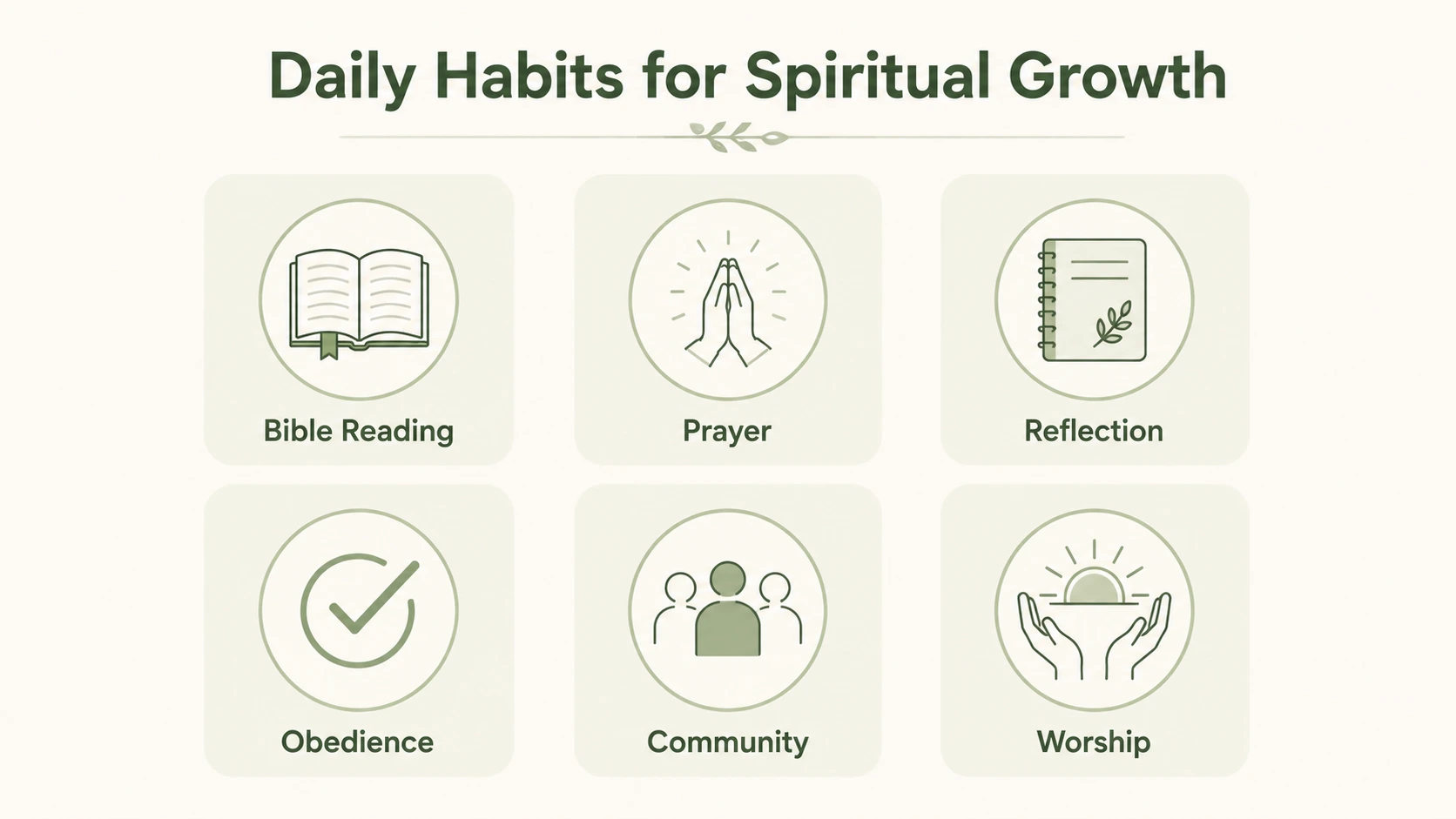
- Bible reading — consistent exposure to Scripture shapes thought patterns over time.
- Prayer — ongoing communication builds dependence on God rather than self-reliance.
- Reflection — reviewing the day against biblical values reinforces awareness.
- Obedience — applying what is learned turns knowledge into growth.
- Community — accountability within a church body supports consistency.
- Worship — regular worship reorients focus toward God rather than circumstances.
Applying Scripture to Everyday Decisions
In our experience helping readers build better habits, growth becomes tangible when Scripture is applied to specific situations rather than treated as abstract theory. At work, this might mean responding to criticism with humility. At school, it could involve persevering through a difficult subject rather than giving up. In parenting, it often looks like modeling patience. In relationships, it may mean choosing forgiveness. In personal struggles, it involves returning to prayer and Scripture rather than isolation.
Four Biblical Steps Toward Spiritual Growth
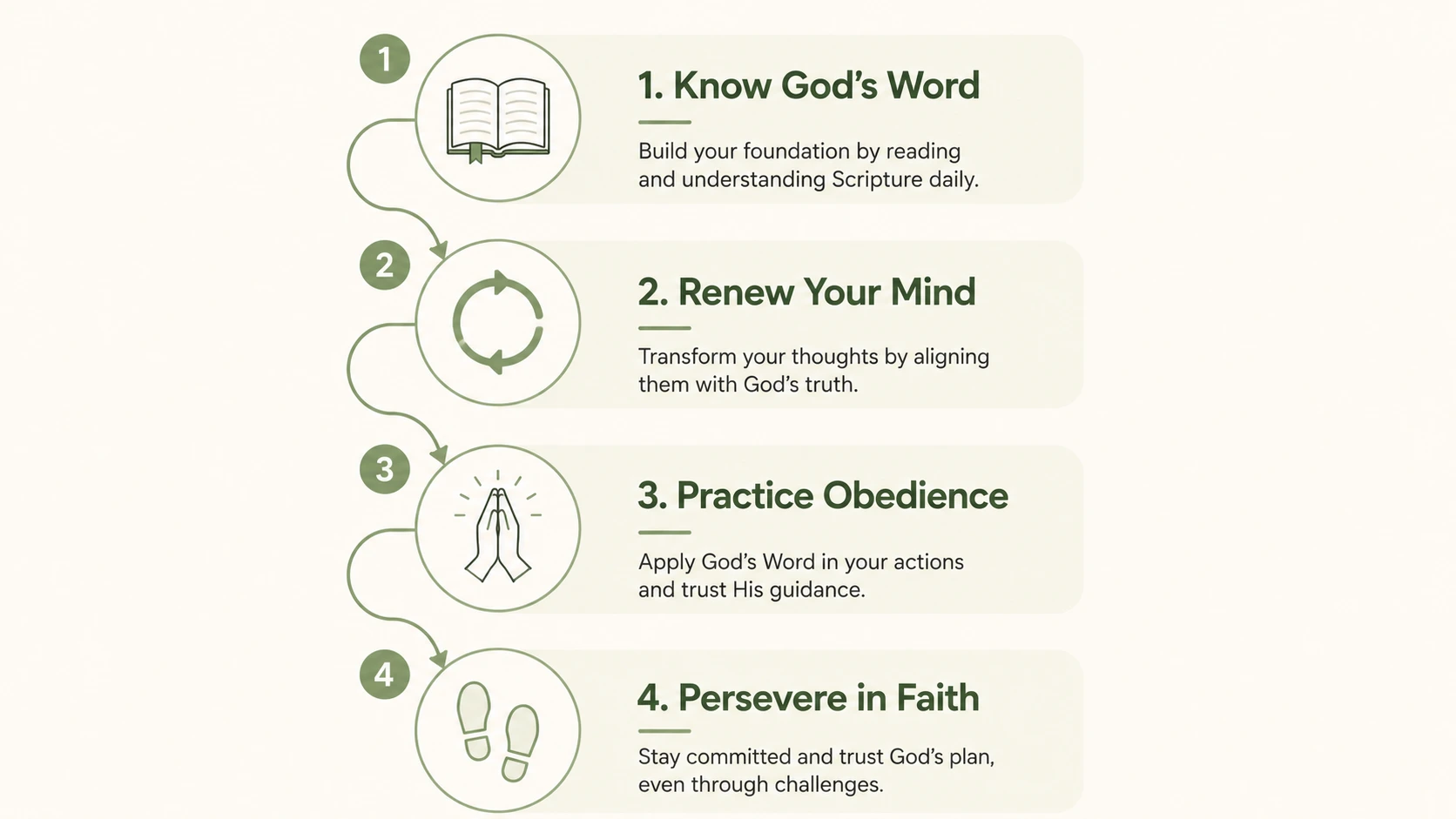
These four steps to spiritual growth verses in the Bible provide a simple framework:
- Know God’s Word — Regular study builds the foundation for growth (2 Timothy 3:16-17).
- Renew Your Mind — Actively replace old thought patterns with biblical truth (Romans 12:2).
- Practice Obedience — Apply what is learned through consistent action (James 1:22).
- Persevere in Faith — Continue steadily through difficulty (Hebrews 12:1-2).
Teaching Children About Spiritual Growth
Encouraging a Growth Mindset in Children Through Scripture
Bible verses for a growing child should be introduced with age-appropriate language and repetition. Proverbs 22:6 encourages training a child in the way they should go, emphasizing early, consistent guidance. Encouragement paired with gentle discipline helps children associate correction with growth rather than failure, and simple routines — like short daily readings — build lasting faith habits.
Common Misunderstandings About a Biblical Growth Mindset
- Growth does not mean instant change; it is a gradual process.
- Faith does not eliminate struggle; it provides strength within it.
- Positive thinking is not the same as biblical hope, which is grounded in God’s character, not optimism alone.
- Spiritual maturity is a lifelong process without a final “arrival point” in this life.
- Failure can become part of spiritual growth when met with humility and correction rather than shame.
Common Challenges and How to Overcome Them
Discouragement often happens when progress feels invisible. Biblically, Galatians 6:9 encourages believers not to grow weary in doing good. The practical response is to focus on faithfulness in small daily actions rather than immediate results.
Slow progress can feel discouraging, but Scripture frames growth as seasonal (Ecclesiastes 3:1). Preventing frustration involves setting realistic, process-based expectations rather than fixed timelines.
Spiritual dryness is a common season where connection with God feels distant. This often stems from inconsistency in prayer or Scripture engagement. Returning to small, sustainable habits — rather than trying to “fix” it all at once — tends to be the most effective response.
Fear of failure can prevent people from taking steps toward growth. Proverbs 24:16 notes that the righteous may fall many times but rise again, reframing failure as part of the process rather than the end of it.
Comparison with others undermines personal growth by measuring progress against someone else’s journey. Galatians 6:4 encourages self-examination rather than comparison.
Setbacks are best addressed by returning to foundational habits — prayer, Scripture, and community — rather than abandoning the process altogether.
Beginner Mistakes When Seeking Spiritual Growth
- Expecting immediate transformation instead of gradual change.
- Reading Scripture without applying it to daily life.
- Relying only on motivation instead of consistent habits.
- Neglecting prayer as a core part of the growth process.
- Comparing personal spiritual journeys to others.
- Misunderstanding biblical prosperity as purely financial gain.
Difficulty & Time Investment
Spiritual growth is a lifelong pursuit rather than a short-term goal. Beginners typically focus on building foundational habits like daily reading and prayer, while more mature believers often engage in deeper study, mentorship, and service. Difficulty varies based on personal circumstances, prior habits, and consistency. As with most meaningful growth, consistency matters more than intensity — steady, moderate effort sustained over time tends to produce more lasting change than sporadic bursts of intense focus.
Results Timeline
Short-term encouragement can appear quickly, often within days or weeks, as new habits like prayer or reading bring a sense of clarity or peace. Character development, however, tends to unfold gradually over months as thought patterns and responses shift. Long-term transformation — visible changes in patience, humility, or resilience — often takes years and is shaped significantly by life circumstances. Scripture repeatedly emphasizes God’s timing over rigid personal expectations, encouraging patience with the process itself (Galatians 6:9).
Practice Guide for Building a Biblical Growth Mindset
- Daily Bible reading routine — a consistent time and passage-based plan builds familiarity with Scripture.
- Weekly reflection questions — reviewing growth areas reinforces self-awareness.
- Prayer habits — structured or spontaneous prayer maintains connection with God.
- Scripture memorization — retaining key verses supports mental renewal (Romans 12:2).
- Journaling — recording insights and struggles tracks progress over time.
- Accountability — sharing goals with trusted others supports consistency.
- Church involvement — community participation reinforces growth through shared learning.
- Long-term sustainability — building habits that fit realistically into daily life prevents burnout.
- Adjustments for different lifestyles — busy seasons may call for shorter, more frequent practices rather than lengthy sessions. Using journal prompts for growth mindset alongside Scripture reading can deepen self-reflection and track spiritual progress over time.
How This Approach Differs From Secular Growth Mindset Advice
Secular growth mindset advice centers on self-confidence, personal achievement, and positive thinking rooted in self-belief. A biblical approach shifts the foundation toward God-confidence, where ability comes through reliance on God (2 Corinthians 3:5). Spiritual maturity replaces personal achievement as the primary measure of growth, and biblical truth — not generalized positive thinking — becomes the filter for thought patterns. Ultimately, the biblical model frames growth as sanctification: an ongoing, Spirit-led transformation rather than self-improvement driven solely by willpower.
Conclusion
A Bible verse for growth mindset reveals that Scripture has addressed personal development long before the modern term existed. Biblical growth is rooted in faith, shaped by Scripture, refined through perseverance, and ultimately dependent on God’s transforming work rather than self-effort alone. Renewing the mind, practicing obedience, and persevering through difficulty form a sustainable path toward spiritual maturity. Growth, from a biblical perspective, is not about reaching perfection — it’s about walking faithfully, one step at a time, trusting the process to God.
Frequently Asked Questions
What is the best Bible verse for a growth mindset?
Philippians 1:6 is widely regarded as a strong verse for growth mindset, expressing confidence that God will continue the work He has begun in a believer until completion.
Does the Bible teach the idea of a growth mindset?
The Bible does not use the modern term “growth mindset,” but it consistently teaches related concepts such as spiritual maturity, sanctification, perseverance, and renewal of the mind.
Which Bible verses encourage personal growth?
Key verses include 2 Peter 3:18, Romans 12:2, Philippians 1:6, and James 1:2-4, each addressing growth through knowledge, renewed thinking, perseverance, and God’s ongoing work.
How can Scripture help develop a positive mindset?
Scripture encourages a positive mindset by directing focus toward God’s truth and promises rather than circumstances, as seen in Isaiah 26:3 and Philippians 4:6-8.
What is the difference between biblical growth and worldly success?
Biblical growth emphasizes faithfulness, character, and obedience, while worldly success typically emphasizes achievement, status, and recognition.
Which Bible verses help during difficult times?
Romans 15:13 and Isaiah 26:3 are commonly referenced for hope and peace during hard seasons, emphasizing trust in God rather than the absence of hardship.
How can I grow spiritually every day according to the Bible?
Daily spiritual growth typically involves consistent Bible reading, prayer, reflection, obedience, and community involvement, applied steadily over time rather than in isolated bursts.