

Introduction
To set mindset effectively means deliberately choosing and reinforcing a way of thinking that supports a specific goal, rather than leaving your thought patterns to chance. Mindset shapes how people interpret challenges, make decisions, build habits, and sustain effort over time. A reactive mindset often leads to inconsistent results, while an intentionally set mindset creates a stable foundation for learning, productivity, and resilience. This article explains what set mindset means, how it differs from related concepts like growth mindset, and how to apply the right mindset to different goals, including study, weight loss, and career growth.
Quick Summary
- A set mindset is the deliberate process of establishing a way of thinking that supports specific goals.
- The right mindset can improve learning, productivity, resilience, and personal growth.
- Different situations may require different mindsets rather than one universal approach.
- Developing a mindset is an ongoing process supported by habits, reflection, and consistent practice.
What Does Set Mindset Mean?
Set mindset meaning refers to the intentional act of choosing and reinforcing thought patterns that align with a desired outcome, rather than allowing beliefs and reactions to form automatically. The phrase is commonly used in self-improvement, productivity, and behavioral science contexts to describe a deliberate mental shift, such as preparing for a challenge or building long-term discipline.
Setting mindset is different from simply having a mindset. Everyone has existing thought patterns shaped by past experiences, but setting mindset involves actively identifying which beliefs serve a goal and reinforcing them through consistent practice. When someone decides to set your mindset before a difficult project, they are choosing a specific mental approach, such as focus or patience, instead of defaulting to whatever emotional state arises naturally.
This distinction matters because intentional mindset-setting is a skill that can be practiced, while an unexamined mindset is often inconsistent and reactive.
Why Your Mindset Matters
How Mindset Shapes Decisions
Beliefs directly influence behavior because people tend to act in ways that confirm what they already think is true or possible. A person who believes a task is unmanageable is more likely to procrastinate or give up early, while a person who believes the same task is achievable through effort is more likely to persist. This relationship between thinking patterns and behavior is well documented in behavioral science and explains why two people with similar skills can produce very different outcomes based on mindset alone.
The Connection Between Mindset, Habits, and Results
Mindset and habits operate in a cause-and-effect relationship. A supportive mindset increases the likelihood of consistent action, and consistent action produces measurable results, which then reinforces the mindset further. This cycle depends heavily on three underlying factors:
- Motivation – the initial drive behind an action
- Discipline – the ability to act consistently even when motivation is low
- Resilience – the capacity to recover from setbacks without abandoning the goal
When mindset is poorly aligned with a goal, even strong motivation tends to fade quickly, which is why intentionally setting mindset is considered a foundational step rather than an afterthought.
Set Mindset vs Growth Mindset
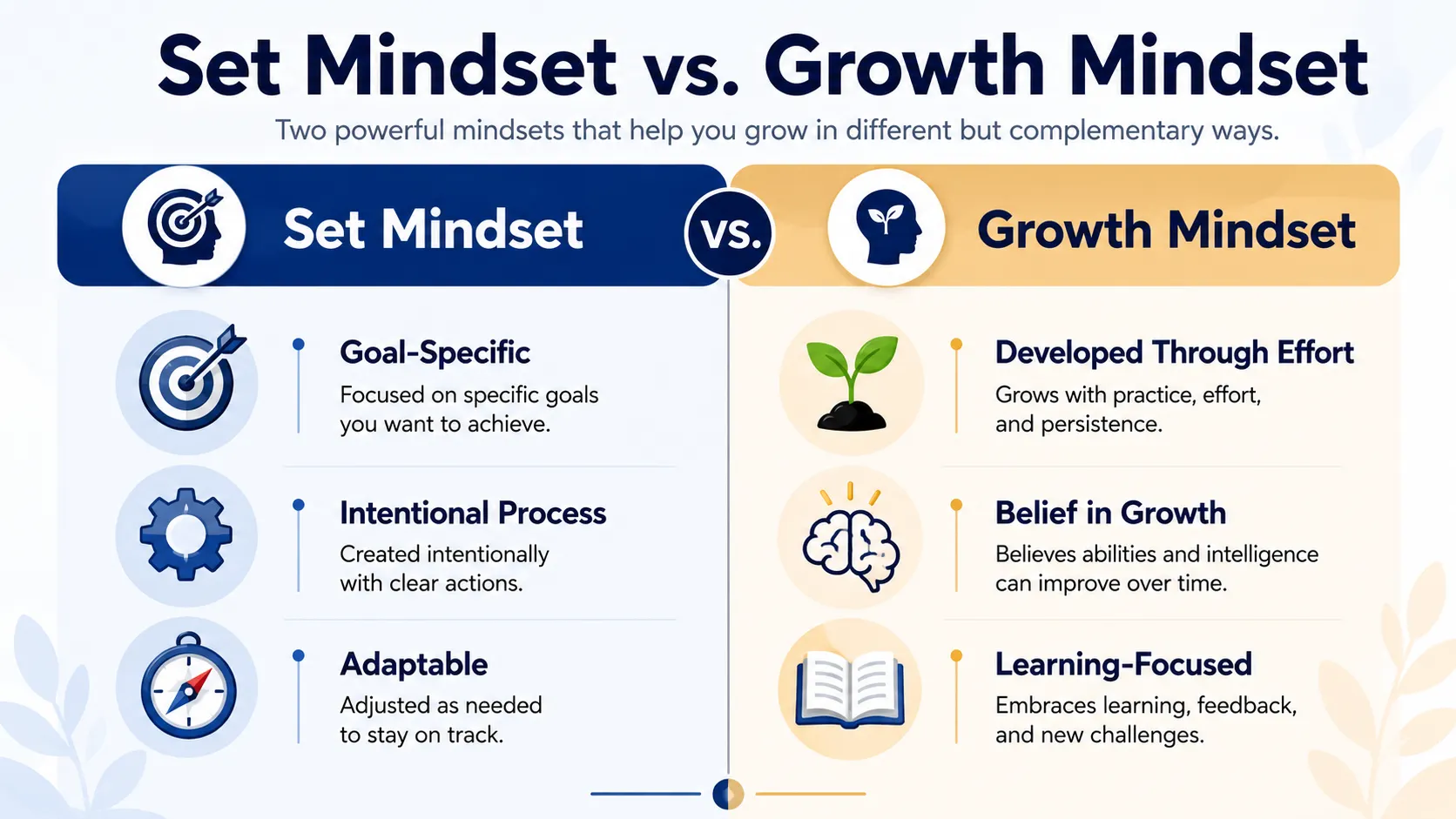
Set mindset and growth mindset are related but not identical concepts, and the two terms are often confused. Growth mindset, a concept popularized in educational psychology, refers to the belief that abilities can be developed through effort and learning. Set mindset is a broader process: deliberately establishing any mental approach, including a growth mindset, a performance mindset, or a resilient mindset, depending on the situation.
A common misconception is that set mindset and growth mindset are interchangeable. In reality, growth mindset is one possible mindset a person might choose to set, while set mindset describes the act of choosing and reinforcing it.
| Aspect | Set Mindset | Growth Mindset |
|---|---|---|
| Definition | The deliberate process of establishing a way of thinking aligned with a goal | The belief that abilities and intelligence can be developed through effort |
| Primary Focus | Intentional mental preparation for any situation | Long-term learning and skill development |
| Flexibility | Can apply to multiple mindset types depending on the goal | Specific to attitudes about ability and effort |
| Best Use Cases | Goal-specific preparation, habit-building, performance situations | Education, skill acquisition, overcoming perceived ability limits |
Understanding set mindset vs growth mindset helps clarify that growth set mindset approaches, where someone deliberately sets a growth-oriented mindset, are simply one practical application of the broader mindset-setting process.”Understanding why growth mindset matters can help clarify when a growth-oriented approach is the right mindset to set.
Different Types of Mindsets You Can Intentionally Set
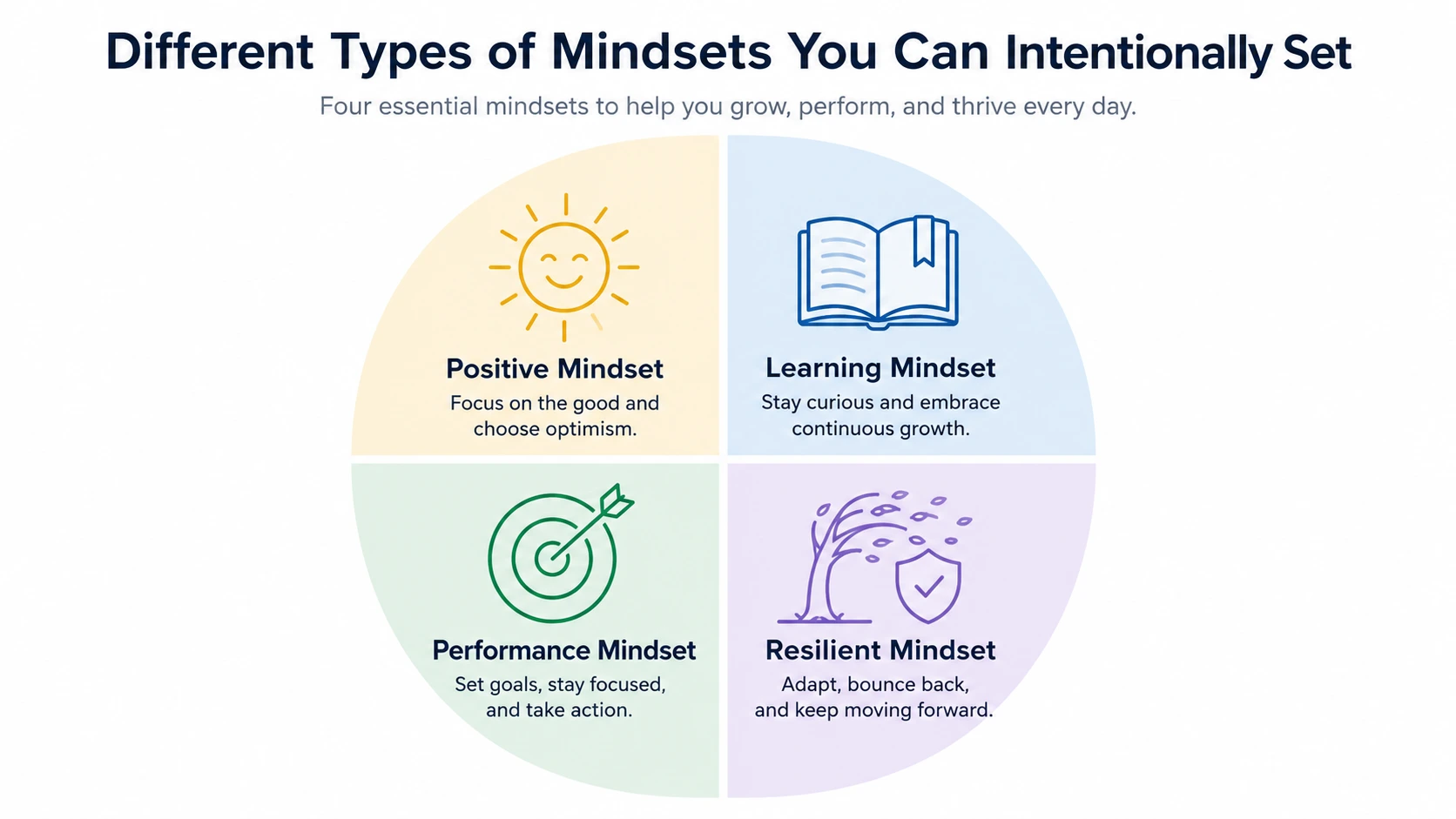
Positive Mindset
A positive mindset emphasizes optimism and emotional resilience, helping individuals interpret setbacks as temporary rather than permanent. Choosing to set a positive mindset before a stressful event can reduce anxiety and improve problem-solving under pressure, though it should be paired with realistic planning rather than blind optimism.
Learning Mindset
A learning mindset centers on continuous improvement and curiosity. People who intentionally set this mindset tend to view mistakes as informative feedback rather than failures, which supports long-term skill development.
Performance Mindset
A performance mindset prioritizes productivity, focus, and achievement, often used before high-stakes tasks such as presentations, competitions, or deadlines. This mindset emphasizes efficient execution over exploratory learning.
Resilient Mindset
A resilient mindset is built around handling setbacks and adapting to change. It is particularly useful during periods of uncertainty, where flexibility and emotional regulation matter more than rigid planning.
How to Set the Right Mindset
Identify Your Goal First
Clarifying the desired outcome is the necessary first step in any mindset-setting process. Without a clear goal, it is difficult to align beliefs and thought patterns with a specific direction. Defining clear set mindset goals helps determine which type of mindset, such as performance or learning, is most appropriate for the situation.
Replace Limiting Beliefs
Recognizing negative or limiting thoughts is essential before they can be replaced. This involves identifying recurring negative self-talk patterns and substituting them with constructive, realistic perspectives that still acknowledge genuine challenges.Recognizing negative or limiting thoughts is essential before they can be replaced — learning how to change your thoughts is a core part of this process.
Build Supportive Daily Habits
Small, consistent actions reinforce mindset more effectively than occasional large efforts. Habit stacking, which involves attaching a new habit to an existing routine, combined with regular reflection, helps mindset changes become automatic over time.
Review and Adjust Your Mindset Regularly
Setting the right mindset is not a one-time event. Self-awareness practices, such as periodic check-ins on progress and emotional state, allow for continuous adjustment. Revisiting how to set your mindset on a weekly or monthly basis helps ensure it remains aligned with evolving goals.
How to Set Your Mindset for Different Life Goals
How to Set Mindset for Study
To set mindset for study, prioritize a structured routine that supports concentration, consistent learning habits, and clear short-term motivation. Effective approaches include scheduling focused study blocks, minimizing environmental distractions, and breaking large subjects into smaller, manageable sections to reduce procrastination.
How to Set Mindset for Weight Loss
How to set mindset for weight loss centers on sustainable, long-term thinking rather than short-term restriction. This involves prioritizing consistency over perfection, viewing setbacks as temporary adjustments rather than failures, and building habits that fit realistically into daily life instead of relying on extreme short-term measures.
Setting a Mindset for Career and Personal Growth
Career-focused mindset setting emphasizes confidence, ongoing skill development, and a commitment to lifelong learning. Developing a skill set mindset means treating professional growth as a continuous process rather than a fixed endpoint, which supports adaptability as job requirements and industries evolve.
Daily Exercises to Strengthen Your Mindset
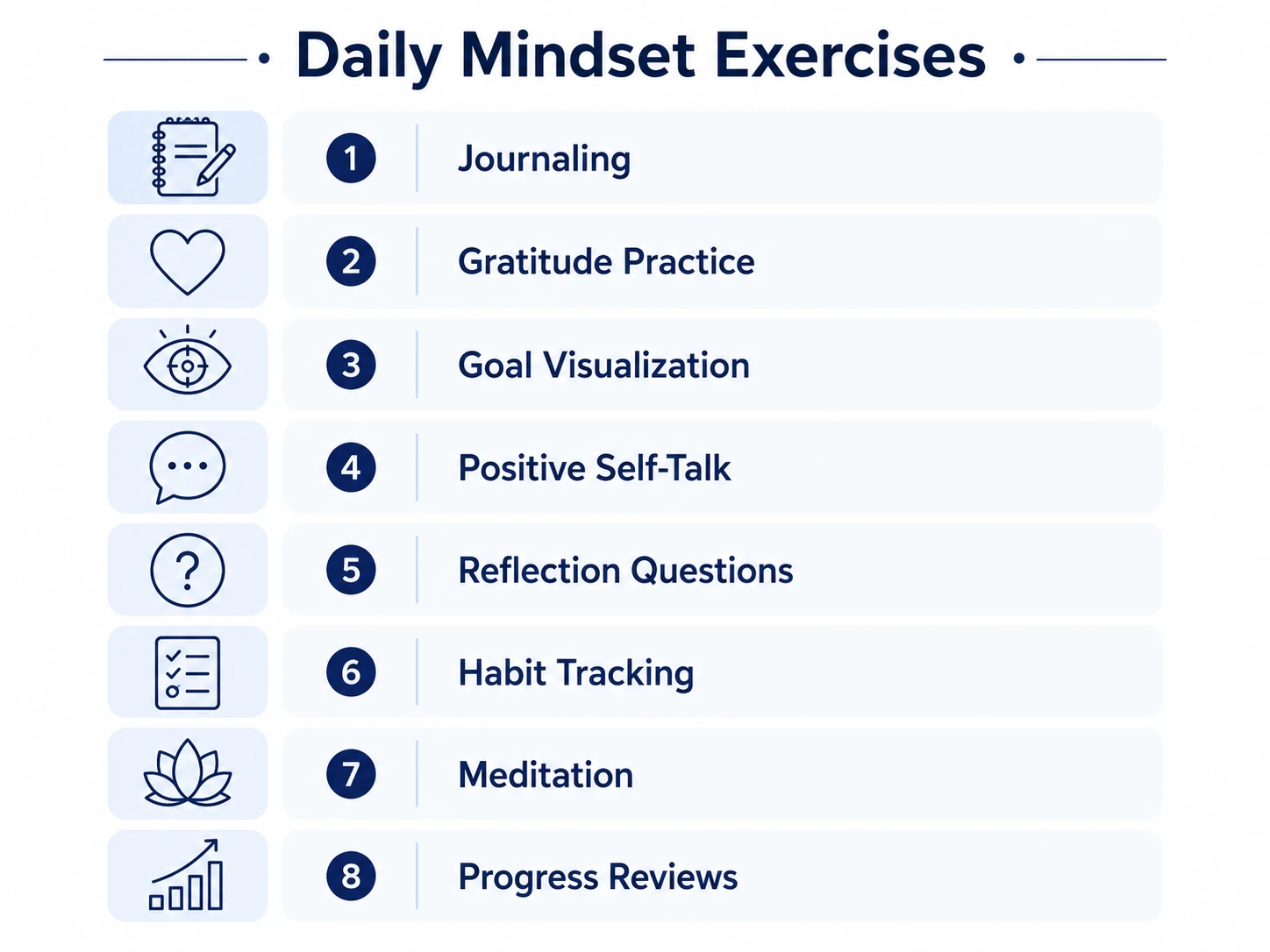
Practical set mindset exercises help translate mindset goals into daily action. Effective options include:
- Journaling to track thoughts and patterns
- Gratitude practice to reinforce positive perspective
- Goal visualization to clarify direction
- Positive self-talk to counter limiting beliefs
- Reflection questions to assess progress
- Habit tracking to maintain consistency
- Meditation to improve focus and emotional regulation
- Progress reviews to identify what is and isn’t working
Common Mistakes When Trying to Change Your Mindset
Expecting instant results. This happens because mindset change is often misunderstood as a single decision rather than a gradual process. The fix is setting realistic timelines and measuring progress in small increments rather than expecting immediate transformation.
Depending only on motivation. Motivation naturally fluctuates, so relying on it exclusively leads to inconsistency. Building structured habits and routines prevents progress from stalling when motivation is low.
Setting unrealistic expectations. Overly ambitious goals can create discouragement when results don’t appear quickly. Breaking goals into smaller, achievable milestones helps maintain momentum.
Ignoring habits. Mindset alone rarely produces results without supporting behavior. Pairing mindset shifts with concrete daily actions closes the gap between intention and outcome.
Negative self-talk. Unchecked negative self-talk undermines mindset efforts by reinforcing limiting beliefs. Actively replacing it with constructive, realistic language helps prevent this pattern from derailing progress.
Challenges That Can Prevent Mindset Change
Fear of Failure
Fear of failure often prevents people from taking the actions necessary to reinforce a new mindset. Reframing failure as informative feedback rather than a final outcome reduces this barrier over time.
Lack of Consistency
Inconsistent effort weakens mindset-building because new thought patterns require repetition to become automatic. Scheduling regular, smaller actions is more effective than relying on infrequent bursts of effort.
Fixed Beliefs
Long-held beliefs about personal limitations can resist change even when someone consciously wants to adopt a new mindset. Gradual exposure to small successes helps shift these deeply rooted beliefs.
Environmental Influences
Surroundings, including social circles and daily environment, can either support or undermine mindset change. Adjusting environmental factors, such as reducing exposure to discouraging influences, supports more sustainable progress.
Difficulty and Time Investment
Setting a new mindset is generally beginner-friendly, though the effort required varies by individual and goal. Typical daily commitment ranges from ten to thirty minutes for reflection-based practices such as journaling or goal review, with more advanced approaches incorporating structured habit tracking or coaching. Difficulty is influenced by factors including the strength of existing beliefs, current stress levels, available support systems, and how clearly the goal has been defined. Beginners often start with simple practices like daily reflection before progressing to more structured routines.
Results Timeline
Initial shifts in awareness and self-talk can often be noticed within the first few days of intentional practice. Measurable changes in habits and consistency typically develop over several weeks, as new thought patterns begin to feel more automatic. Substantial, lasting mindset development generally takes a few months of sustained practice, particularly when replacing long-held limiting beliefs. Progress pace is influenced by individual factors such as prior experience with self-reflection, consistency of practice, and the level of environmental support available.
Practice Guide for Long-Term Success
A sustainable mindset-building routine typically includes a short daily practice, such as journaling or goal visualization, combined with a weekly review to assess progress and adjust strategies. Accountability methods, including progress tracking tools or check-ins with a trusted person, help maintain consistency. Long-term sustainability depends on adapting practices to lifestyle changes rather than rigidly following a fixed routine, and on maintaining motivation through visible progress markers rather than relying solely on willpower.
Common Misconceptions About Setting a Mindset
- Mindset alone guarantees success. Mindset improves the likelihood of consistent action, but it does not replace skill development or effort.
- Positive thinking replaces action. Optimism supports persistence, but results still depend on concrete behavior and habits.
- One mindset fits every situation. Different goals, such as study versus performance tasks, often require different mindset types.
- Mindsets never change. Mindset is adaptable at any stage of life with consistent, intentional practice.
Practical Tips That Most Articles Miss
Matching mindset to the specific situation, rather than applying a single mindset universally, produces more consistent results across different goals. Adjusting expectations during setbacks, instead of treating them as failures, helps maintain momentum during difficult periods. Recognizing gradual, incremental progress is often more sustainable than seeking dramatic transformation. Environment and social support play a significant role in mindset consistency, often more than willpower alone. Balancing optimism with realistic planning helps avoid the common pitfall of positive thinking without corresponding action.
Comparison of Popular Mindset Approaches
| Approach | Best For | Strengths | Limitations |
|---|---|---|---|
| Positive mindset | Stressful or uncertain situations | Reduces anxiety, supports emotional resilience | Can become unrealistic without action-based planning |
| Growth mindset | Skill development and education | Encourages persistence and learning from mistakes | Less focused on short-term performance execution |
| Performance mindset | High-stakes tasks and deadlines | Sharpens focus and productivity | May increase pressure if overused long-term |
| Learning mindset | Ongoing skill or knowledge acquisition | Builds curiosity and adaptability | Slower to produce immediate measurable results |
Conclusion
To set mindset means intentionally choosing and reinforcing thought patterns that align with a specific goal, rather than leaving thinking patterns to chance. The right mindset, whether positive, growth-oriented, performance-focused, or resilient, depends on the situation and desired outcome rather than a single universal approach. Sustainable mindset change relies on consistent habits, regular reflection, and realistic expectations rather than relying on motivation or willpower alone. The practical takeaway is straightforward: identify the goal, choose the mindset that supports it, reinforce it through small daily actions, and review progress regularly to keep it aligned with changing circumstances.
Frequently Asked Questions (FAQs)
What does set mindset mean?
Set mindset means deliberately choosing and reinforcing a way of thinking that supports a specific goal, rather than allowing thought patterns to form automatically or react to circumstances without direction.
Is set mindset the same as a growth mindset?
No, set mindset is the broader process of intentionally establishing any mindset, while growth mindset is one specific type that focuses on the belief that abilities can be developed through effort.
How long does it take to develop a new mindset?
Initial awareness shifts can appear within days, measurable habit changes typically develop over several weeks, and substantial, lasting mindset change generally takes a few months of consistent practice.
Can mindset be changed at any age?
Yes, mindset can be changed at any age through consistent, intentional practice, as thought patterns and beliefs remain adaptable throughout life rather than becoming permanently fixed.
What are the best daily exercises for improving mindset?
Effective daily exercises include journaling, gratitude practice, goal visualization, positive self-talk, reflection questions, habit tracking, meditation, and regular progress reviews.
How do I set the right mindset before studying?
Setting the right mindset for study involves creating a structured routine, minimizing distractions, breaking material into manageable sections, and reinforcing consistent motivation through short, focused study sessions.
How can mindset help with weight loss?
A sustainable mindset for weight loss prioritizes long-term consistency over short-term perfection, treating setbacks as temporary adjustments and building habits that realistically fit daily life rather than relying on extreme restriction.
What habits support long-term mindset improvement?
Long-term mindset improvement is supported by daily reflection practices, weekly progress reviews, accountability methods, consistent habit tracking, and adapting routines to fit ongoing lifestyle changes.