

Introduction
Mindset shapes how a person learns, builds habits, handles setbacks, and pursues long-term goals. It influences confidence, decision-making, and resilience in ways that often go unnoticed until a challenge exposes an unhelpful belief pattern. Because of this, many readers search for the best book on mindset to better understand their own thinking and change it for the better. However, there is no single best book for every reader — the right choice depends on individual goals, whether that’s building confidence, developing discipline, improving financial habits, or strengthening leadership skills. This article explains what makes a mindset book valuable and how to match one to your specific situation.
Quick Summary
- A mindset book can help reshape beliefs, habits, and decision-making through practical psychological principles.
- Different books focus on different outcomes, such as success, confidence, discipline, business, or financial thinking.
- Choosing the right mindset book depends on your current challenges, goals, and experience level.
- Applying the lessons consistently matters more than simply finishing a book.
What Is a Mindset and Why Does It Matter?
A mindset is the set of core beliefs a person holds about their own abilities, intelligence, and potential for growth. These beliefs act as a filter, shaping how someone interprets challenges, setbacks, and feedback. In our experience helping readers build better habits, the biggest shifts happen not when someone learns a new fact, but when they change the underlying belief driving their behavior.
Mindset affects nearly every area of life, including:
- Learning and skill development
- Habit formation and consistency
- Resilience during setbacks
- Confidence in decision-making
- Long-term achievement and career growth
These effects are well documented in psychology, particularly in research on cognitive beliefs, self-efficacy, and behavioral change.
Fixed Mindset vs. Growth Mindset
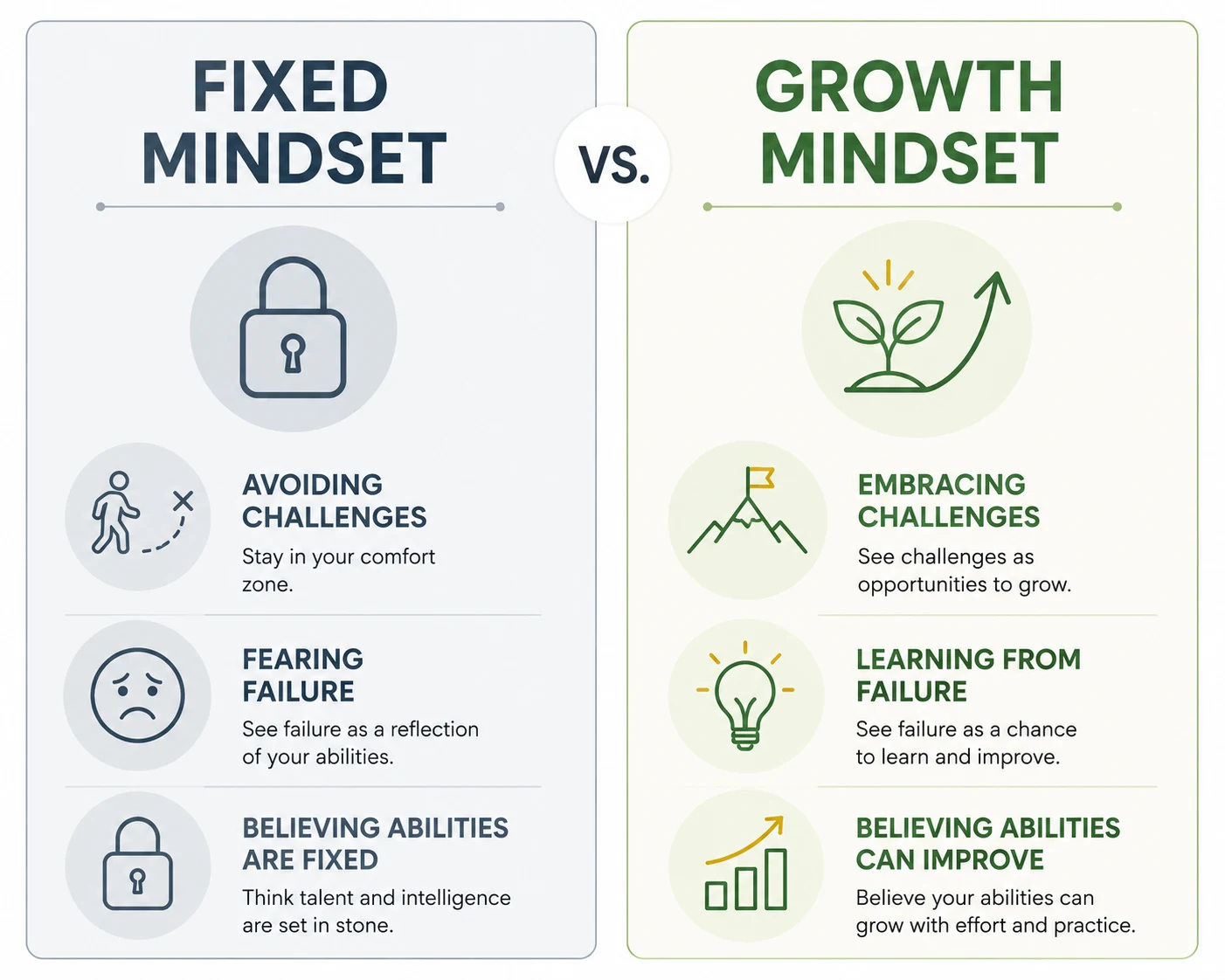
One of the most widely referenced psychological frameworks in this space distinguishes between a fixed mindset and a growth mindset. A fixed mindset assumes that abilities and intelligence are static traits, while a growth mindset treats abilities as skills that can be developed through effort and practice.
| Fixed Mindset | Growth Mindset |
|---|---|
| Believes abilities are fixed | Believes abilities can improve |
| Avoids challenges | Embraces challenges |
| Fears failure | Learns from failure |
People with a growth-oriented outlook tend to persist longer through difficulty and treat failure as feedback rather than proof of inadequacy. This distinction underlies most modern mindset books, even those focused on unrelated topics like business or money.
What Makes the Best Book on Mindset?
Rather than promoting a single title, it’s more useful to evaluate mindset books against consistent criteria. The best book to read on mindset for one person may not be the best selling book on mindset overall — sales figures reflect popularity, not necessarily fit for your specific goals. For a broader roundup of top-rated titles across categories, see our guide to the best mindset books.
Qualities of a High-Value Mindset Book
- Evidence-based insights grounded in psychology or behavioral science rather than opinion alone
- Actionable advice that translates into specific daily behaviors
- Clear writing that avoids unnecessary jargon
- Practical examples that illustrate abstract concepts
- Long-term usefulness beyond a single read-through
A book that scores well across these categories is more likely to produce lasting change than one that relies purely on motivational language.
Types of Mindset Books Based on Your Goals
Mindset books are not interchangeable. Matching a book to your specific objective increases the likelihood that its lessons will feel relevant and applicable.
Books on Mindset and Success
Books on mindset and success typically focus on achievement, perseverance, and structured goal setting. The best books on mindset and success often combine psychological principles with case studies of long-term effort, helping readers connect daily actions to larger outcomes. If achievement and perseverance are your main focus, explore our full list of the best books for success mindset
Mindset Books for Confidence
The best books on mindset and confidence address self-belief, internal self-talk, and emotional resilience. These books often include exercises for reframing negative thought patterns and building a more constructive internal dialogue.
Mindset Books for Discipline
Books on mindset and discipline center on consistency, habit formation, delayed gratification, and structured routines. They tend to emphasize systems over willpower alone. For practical strategies beyond reading, see our guide on how to build discipline without motivation
Growth Mindset Books
The best book on growth mindset explains how continuous learning and adaptability lead to long-term skill development, particularly in education, careers, and relationships.
Positive Mindset Books
The best book on positive mindset typically covers optimism, emotional regulation, gratitude practices, and resilience-building techniques.
Books for Changing Your Mindset
The best book on changing mindset focuses on belief transformation — identifying limiting beliefs and replacing them with more constructive ones through repeated practice.
Abundance Mindset Books
The best book on abundance mindset contrasts abundance thinking with scarcity thinking, exploring how perceived limitation affects decision-making and opportunity recognition.
Money Mindset Books
The best book on money mindset examines financial beliefs and behaviors, often addressing how early experiences shape adult spending, saving, and risk-taking habits.
Business and Leadership Mindset Books
The best book on business mindset and best book on CEO mindset typically cover entrepreneurship, leadership psychology, strategic thinking, and high-stakes decision-making.
Strong Mental Resilience Books
The best book on strong mindset addresses resilience, emotional strength, and the ability to persevere through prolonged difficulty.
How to Choose the Right Mindset Book for Your Situation
The right mindset book depends heavily on life stage, current responsibilities, and personal development goals.
Beginners
Beginners generally benefit most from foundational books that clearly explain core psychological concepts without assuming prior knowledge.
Professionals
Professionals often look for mindset books connected to career advancement, workplace resilience, or leadership development.
Entrepreneurs
Entrepreneurs tend to prioritize books addressing risk tolerance, decision-making under uncertainty, and sustained motivation.
Students
Students often benefit from growth mindset books that connect directly to learning strategies and academic performance.
Adults Seeking Personal Growth
A best book on mindset for adults pursuing broader personal growth typically blends several themes — confidence, discipline, and resilience — rather than focusing narrowly on one outcome.
Popular Mindset Books Frequently Recommended by Readers
Certain titles are consistently mentioned across recommendation lists and reader discussions because they address foundational psychological concepts in an accessible way. These books are frequently recommended rather than universally ranked as “the best,” since readers value different qualities such as tone, structure, and depth of exercises.
Why Reader Recommendations Differ
Recommendations vary because readers differ in their goals, personalities, and preferred learning styles. A book praised for its practical exercises may not resonate with a reader who prefers conceptual explanations, and vice versa.
Are “Top 10 Mindset Books” Lists Actually Helpful?
Top 10 mindset books lists can be a useful starting point for discovering options, but they have real limitations. Rankings often reflect sales volume or general popularity rather than fit for an individual reader’s goals. Instead of relying solely on a ranked list, it’s more effective to evaluate each recommended title against your specific challenge — confidence, discipline, leadership, or financial behavior — before choosing one to read.
Should You Trust Community Recommendations?
Online communities, including forums and discussion boards, can offer valuable firsthand accounts of how a book impacted a real reader. A best book on mindset reddit thread, for example, can surface honest opinions and practical takeaways not found in marketing copy. However, these recommendations remain subjective and shaped by the poster’s personal circumstances. Balancing community input with established, research-backed sources produces a more reliable decision than relying on either source alone.
Print, book, Audiobook, or PDF: Which Format Is Best?
Format choice affects how well the material is absorbed and applied. Readers searching for strong mindset books pdf options should always seek legally licensed and authorized editions to support authors and ensure accurate, unaltered content.
Format Comparison
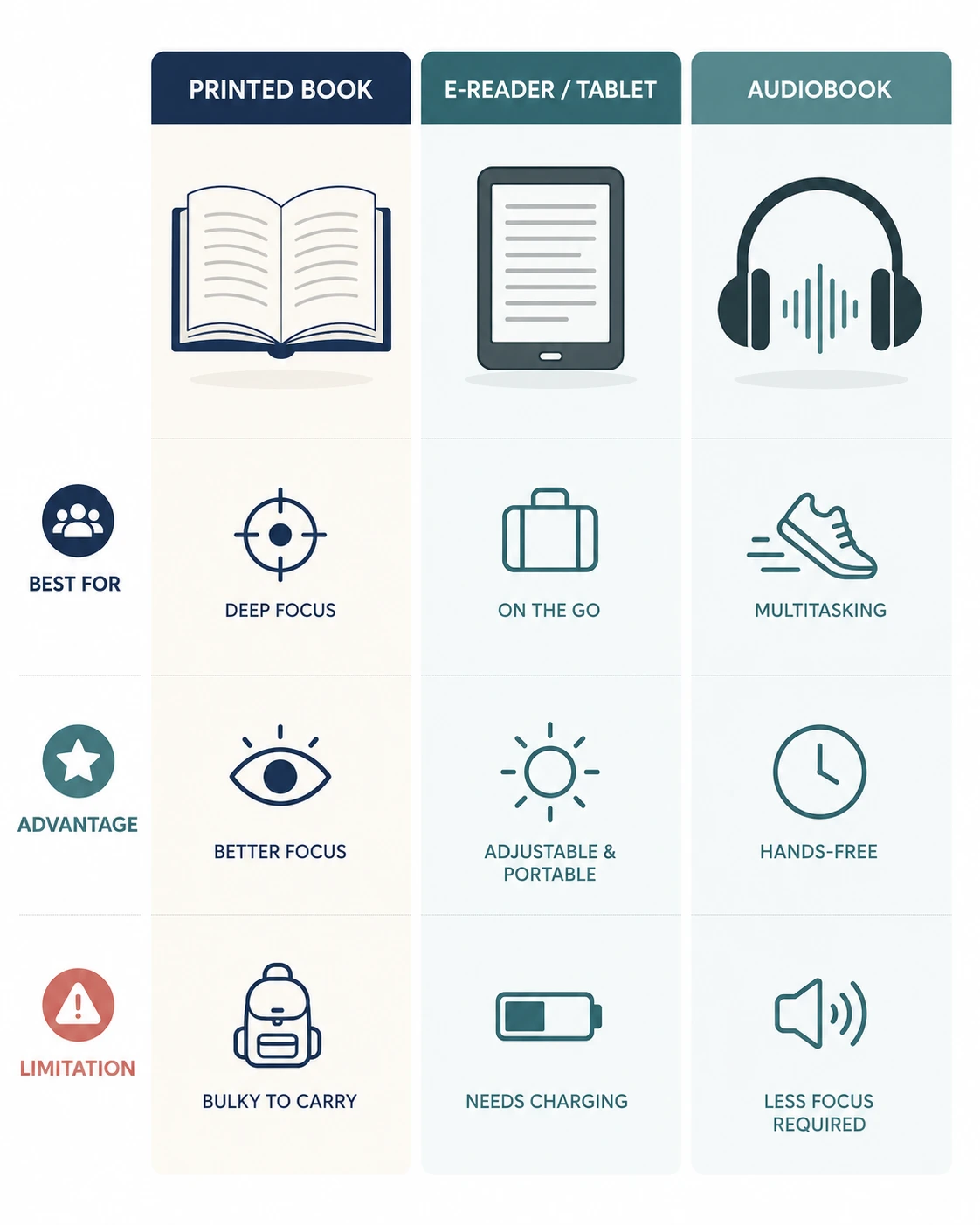
| Format | Best For | Advantages | Limitations |
|---|---|---|---|
| Deep reading | Better focus | Less portable | |
| Ebook | Convenience | Searchable | Screen fatigue |
| Audiobook | Busy schedules | Multitasking | Less note-taking |
Choosing a format often comes down to personal learning style and daily schedule rather than one format being objectively superior.
Common Mistakes When Reading Mindset Books
Many readers finish a mindset book without experiencing lasting change. Common mistakes include:
- Reading without taking any action on the material
- Reading too many books simultaneously, diluting focus
- Expecting instant transformation after a single read
- Ignoring reflection and self-assessment
- Not practicing new habits consistently after finishing the book
Avoiding these mistakes significantly increases the practical value gained from any mindset book.
How to Apply Lessons From Mindset Books in Daily Life
Reading alone rarely produces change. Turning insights into behavior requires structured daily and weekly practice.
Daily Practice Routine
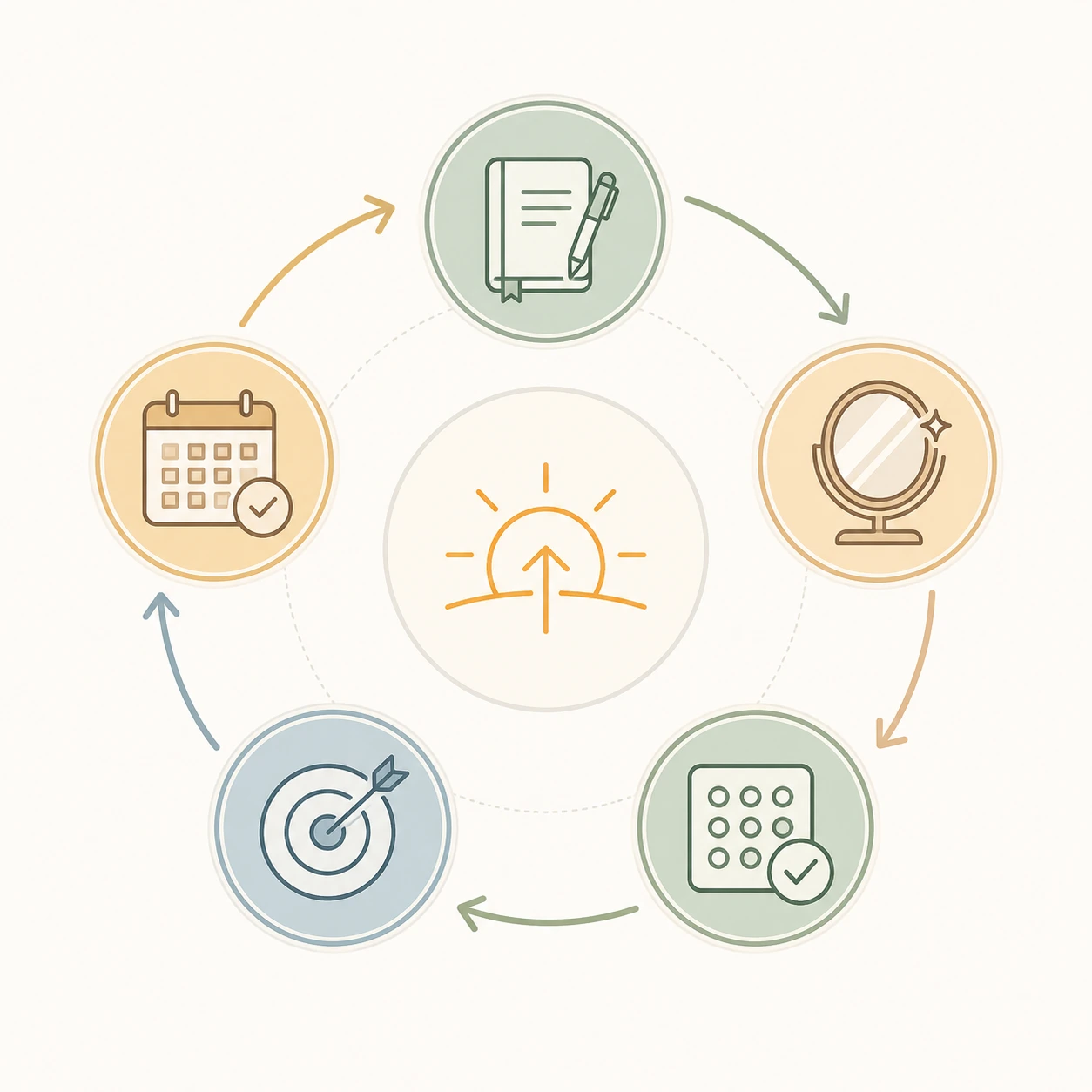
- Journaling to process new insights
- Reflection on daily decisions and reactions
- Habit tracking to reinforce consistency
- Goal review to stay aligned with priorities
- Weekly progress assessment to identify patterns
Building Long-Term Consistency
- Maintaining motivation through clear, personal reasons for change
- Using accountability, such as a partner or tracking system
- Designing an environment that supports new habits
- Habit stacking new behaviors onto existing routines
- Continuing to learn and refine strategies over time
Your Daily Thrive recommends pairing any mindset book with at least one concrete daily practice, since passive reading rarely produces lasting behavioral change on its own.
Difficulty & Time Investment
Applying mindset principles is generally beginner-friendly, though the time investment varies by individual. Reading pace differs from person to person, and reflection time — pausing to connect concepts to personal experience — often matters more than reading speed. Practice requirements typically include short daily exercises rather than lengthy sessions. Individual learning differences, including prior exposure to psychology or self-improvement concepts, can also affect how quickly someone internalizes new material.
Results Timeline
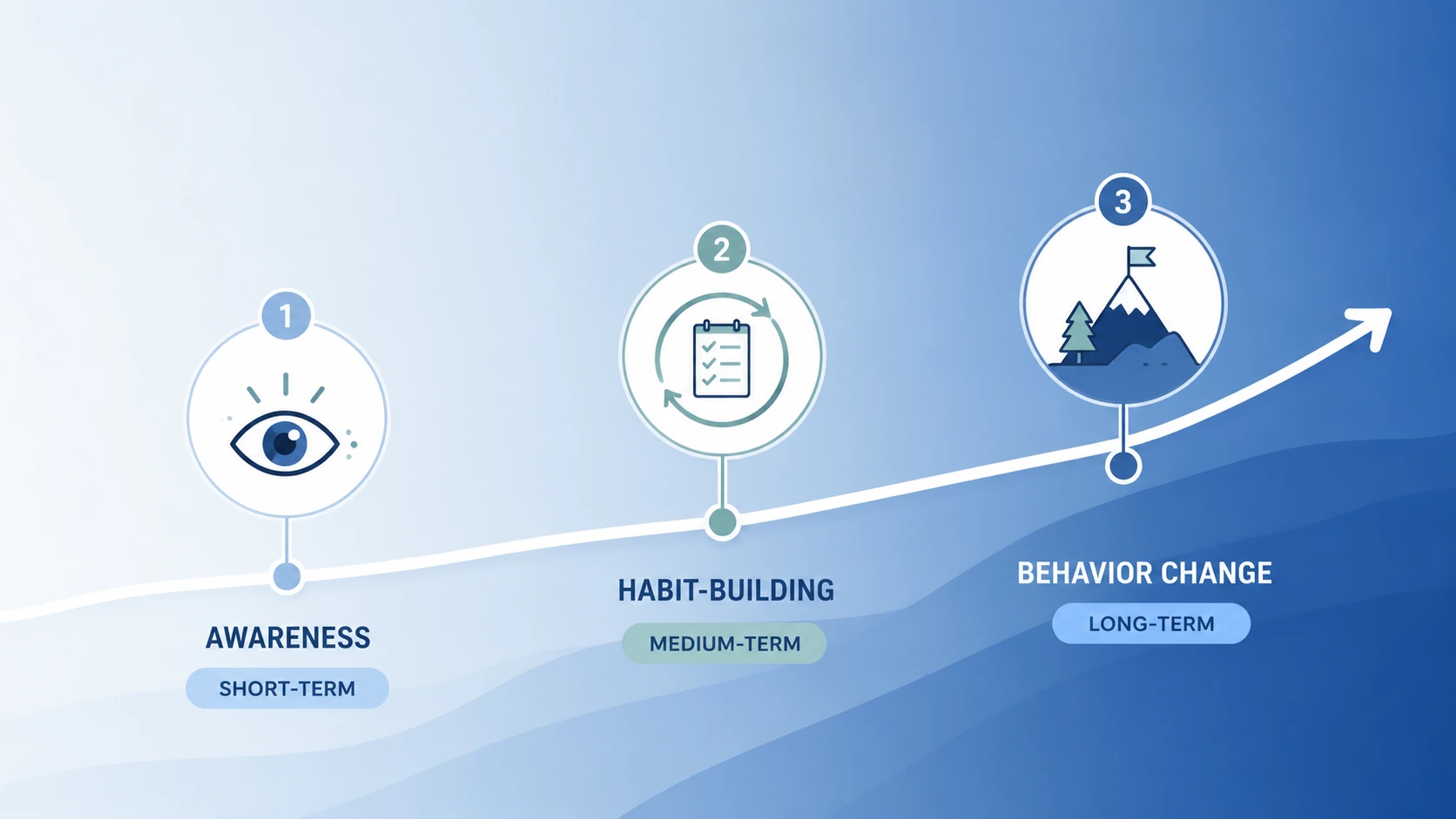
Mindset shifts often follow a gradual timeline rather than an immediate one.
- Short-term (days to weeks): Initial shifts in awareness and self-talk often appear quickly, as readers begin noticing previously automatic thought patterns.
- Medium-term (weeks to months): Habit development becomes more visible as new routines start to feel more natural.
- Long-term (months and beyond): Deeper behavioral change, including improved resilience and decision-making, typically develops with sustained practice.
As of 2026, behavioral science research continues to reinforce that consistency over time produces more durable change than intensity in short bursts. Factors such as stress levels, environment, and support systems can all affect how quickly progress occurs.
Common Challenges and How to Overcome Them
Loss of motivation
- Why it happens: Initial enthusiasm fades once novelty wears off.
- How to fix it: Reconnect with a specific, personal reason for change.
- How to prevent it: Build small, sustainable habits rather than relying on motivation alone.
Inconsistent practice
- Why it happens: Lack of structure or a clear routine.
- How to fix it: Schedule practice at a fixed time each day.
- How to prevent it: Use habit stacking to attach new behaviors to existing routines.
Information overload
- Why it happens: Reading multiple books or sources at once.
- How to fix it: Focus on one book and a small number of actionable takeaways.
- How to prevent it: Apply lessons before moving to new material.
Negative self-talk
- Why it happens: Long-standing thought patterns resist quick change.
- How to fix it: Practice reframing techniques and track recurring negative thoughts.
- How to prevent it: Build daily reflection habits that catch unhelpful patterns early.
Lack of visible progress
- Why it happens: Behavioral change is often gradual and hard to notice day to day.
- How to fix it: Track progress with journaling or habit logs to reveal patterns over time.
- How to prevent it: Set realistic, incremental milestones instead of expecting sudden transformation.
How Mindset Books Connect to Broader Personal Development
Mindset is closely tied to other areas of personal development, including habit formation, goal setting, productivity, emotional intelligence, resilience, continuous learning, and self-awareness. Improving mindset often creates a ripple effect — stronger self-belief supports better habits, which in turn improves productivity and decision-making. Because of this interconnection, mindset books frequently serve as a foundation for broader personal growth work rather than a standalone topic.
Conclusion
There is no universal best book on mindset — the right choice depends on individual goals, whether that means building confidence, strengthening discipline, improving financial thinking, or developing leadership skills. The most valuable mindset books share common qualities: evidence-based insights, actionable guidance, and content that translates into daily practice. Ultimately, consistent application of a book’s lessons matters more than finding a “perfect” title. Readers who pair thoughtful book selection with daily reflection, habit tracking, and long-term consistency are far more likely to experience meaningful, lasting change.
Frequently Asked Questions
What is the best book on mindset for beginners?
Beginners generally benefit most from foundational titles that explain core psychological concepts, such as fixed versus growth thinking, in clear, accessible language without requiring prior background knowledge.
Which mindset books focus most on success and achievement?
Books on mindset and success typically emphasize perseverance, structured goal setting, and connecting daily actions to long-term outcomes through psychological and behavioral principles.
What is the difference between a growth mindset book and a positive mindset book?
Growth mindset books focus on learning ability and skill development through effort, while positive mindset books emphasize optimism, emotional regulation, and resilience during challenges.
Are mindset books supported by psychological research?
Many mindset books draw on established psychological research, including cognitive behavioral concepts and studies on self-efficacy, though the depth of research backing varies by title.
How long does it take to notice results from applying mindset principles?
Initial shifts in awareness often appear within days to weeks, while habit development typically takes weeks to months, and deeper behavioral change usually requires sustained practice over several months.
Can mindset books improve confidence and self-discipline?
Yes, books focused on confidence and discipline can improve these areas when readers actively apply exercises like self-talk reframing, habit tracking, and consistent daily routines.
Should I read multiple mindset books at the same time?
Reading multiple books simultaneously often leads to information overload and diluted focus; it’s generally more effective to fully apply one book’s lessons before starting another.
Are audiobook versions of mindset books as effective as printed books?
Audiobooks can be equally effective for many readers, particularly for busy schedules, though print formats may support deeper focus and printed formats make note-taking easier.
How do I choose the right mindset book for my goals?
Identify your primary challenge — such as confidence, discipline, or leadership — then select a book whose focus and format align with that goal and your preferred learning style.
What habits help readers get the most value from mindset books?
Journaling, reflection, habit tracking, and weekly progress reviews help translate book lessons into consistent daily behavior rather than passive reading alone.