
introduction
Mindset athletics refers to youth and community sports programs that pair sport-specific coaching with structured mental-performance training. The name is used by more than one independently operated program — most notably a California-based nonprofit and separate regional training groups — that share a common philosophy: athletic performance improves fastest when physical skill-building and psychological preparation are coached together rather than separately. This article explains how that combined approach works, what a well-run program typically includes, and how to evaluate any athletic development program you’re considering, whether or not it carries the Mindset Athletics name.
Quick Summary
- Mindset athletics programs combine sport-specific skill training with structured mental-performance coaching to improve overall athletic development.
- Athletes benefit from progressive skill drills, physical conditioning, and confidence-building techniques delivered together, not as separate tracks.
- Programs vary by sport, age group, experience level, and training objective — a beginner’s plan looks very different from a competitive athlete’s.
- The Mindset Athletics name is used by more than one independently run organization, including a nonprofit based in Yuba City, California; verify which specific program you’re evaluating before enrolling.
- Choosing the right program depends on coaching quality, athlete-to-coach ratio, training philosophy, and long-term consistency — not marketing claims alone.
What Is Mindset Athletics?
Mindset athletics is best understood as a training category rather than a single company: it describes programs built around the idea that athletic performance depends on both physical conditioning and mental preparation. In our experience helping readers evaluate youth sports programs, the ones that hold up longest are the ones that treat mindset coaching as a daily habit, not a one-time pep talk.
One well-documented example is the Mindset Athletics Foundation, a 501(c)(3) nonprofit based in Yuba City, California, that runs youth training sessions built around skill development and a team-first “village” coaching philosophy. Separate organizations using similar branding — including a training LLC based in Arizona and a camp program that originated from a Phoenix training trip — operate independently in their own regions. Because the name is shared across multiple groups, it’s worth confirming which specific organization a given program belongs to before assuming they are affiliated or interchangeable.
Across these programs, the general model is consistent: an athletic development program introduces structured coaching that pairs physical skill drills with mental-performance components, so athletes build competence and composure together.
Core Mission and Training Philosophy
Most mindset-focused athletic programs organize their coaching philosophy around a few consistent pillars:
- Athlete development — building foundational movement and sport skills before layering in complexity
- Skill improvement — progressive drills that move from basic technique to game-speed application
- Confidence — reinforcing effort and progress rather than only outcomes
- Discipline — consistent attendance, effort, and follow-through on individual development plans
- Long-term athletic growth — treating each season as one stage in a multi-year development arc right after the bullet list: “Many athletes wonder whether is self discipline a skill that can be trained — within a structured program, it consistently is.
Who Can Benefit from Mindset Athletics
Programs built around this model are typically designed for a range of participants, including:
- Youth athletes just starting organized sports
- High school athletes preparing for competitive seasons
- Competitive athletes pursuing higher levels of play
- Recreational players who want structured improvement without a competitive track
- Multi-sport participants building transferable athletic skills
How Mindset Athletics Improves Athletic Performance
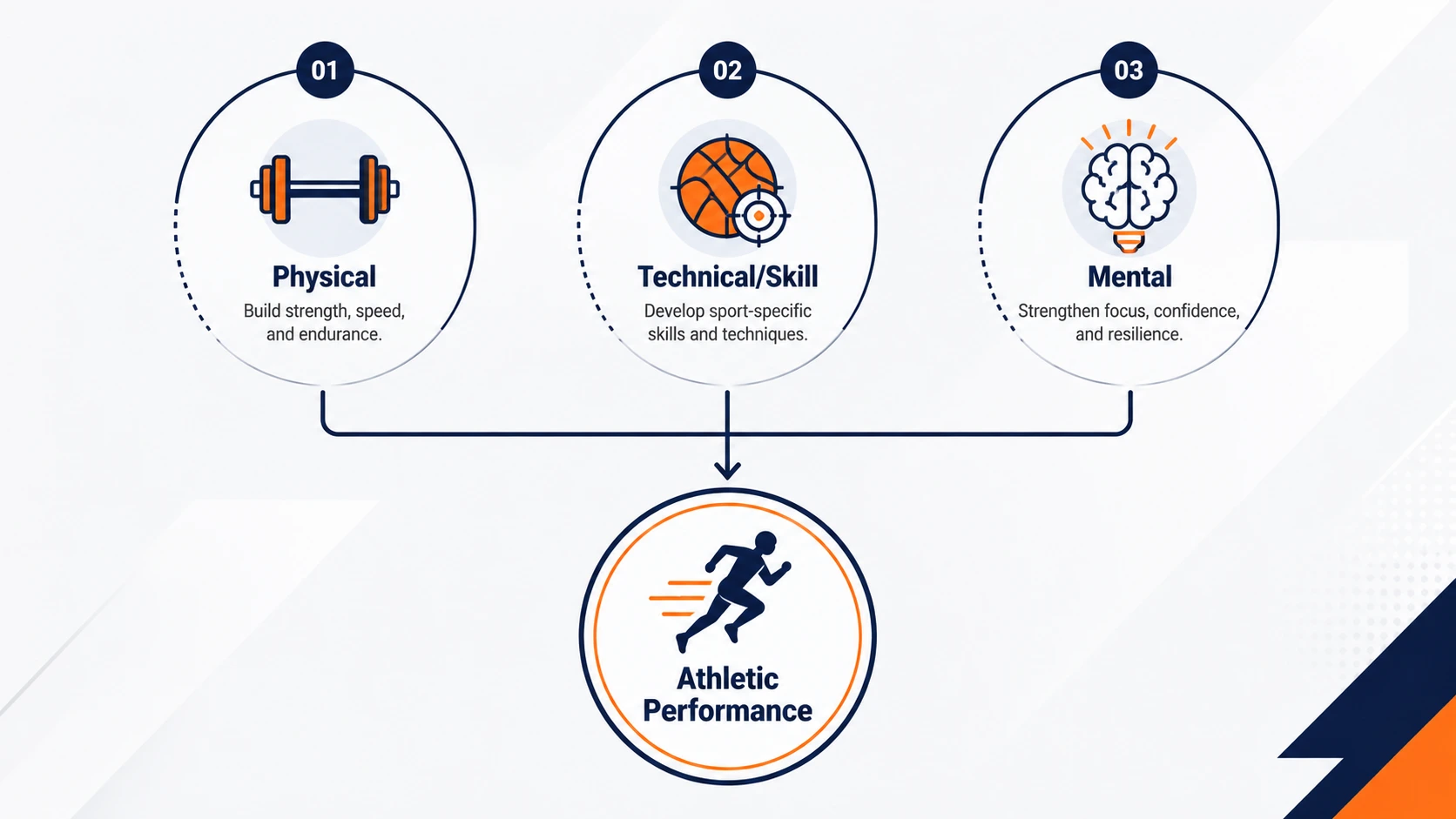
Athletic performance develops through the interaction of physical, technical, tactical, and mental components — improving one area without the others produces uneven results. A player with strong footwork but weak decision-making, for example, will still hesitate in game situations. Mindset-based coaching addresses this by training these components in parallel rather than treating mental preparation as an afterthought.
Physical Development
Physical conditioning forms the base layer of athletic performance and typically includes:
- Strength
- Speed
- Agility
- Balance
- Coordination
- Endurance
Mental Performance
Mental performance training targets the psychological skills that determine whether physical ability translates into game performance:
- Confidence
- Focus
- Resilience
- Decision-making
- Handling pressure
Skill Development
Sport-specific skill development relies on a few consistent principles regardless of sport:
- Repetition to build muscle memory
- Correct technique before speed or intensity is added
- Progressive learning that layers complexity gradually
- Sport-specific drills that mirror real competitive situations
Mindset Athletics Basketball Programs
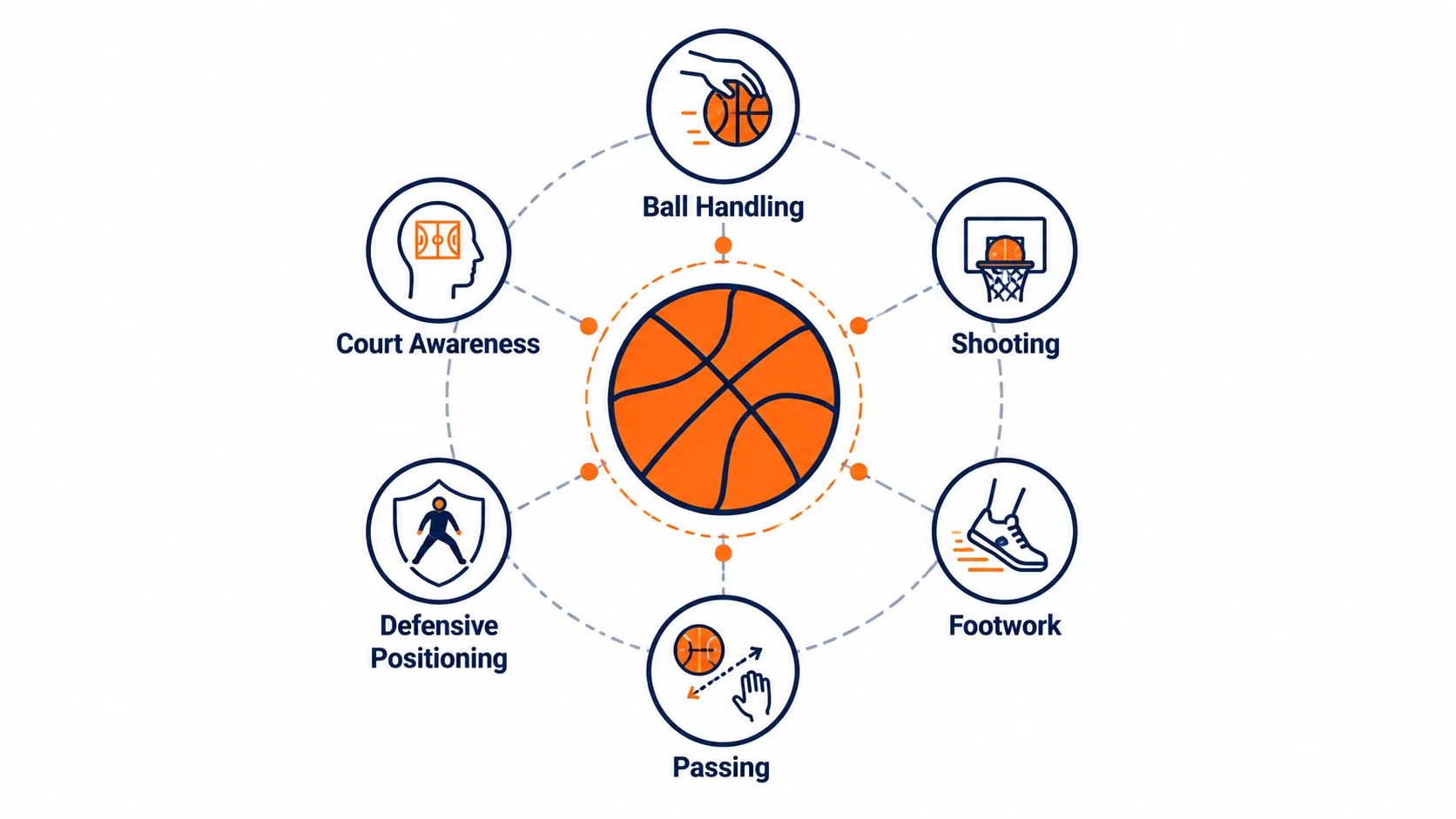
Basketball is one of the most common sports associated with mindset-based athletic training, largely because the sport demands rapid decision-making under physical and time pressure. Basketball-focused programs generally aim to build both mechanical skill and in-game composure, since a technically sound player who freezes under pressure will still underperform.
Skills Commonly Developed
Basketball training within a mindset-based program typically targets:
- Ball handling
- Shooting mechanics
- Footwork
- Passing accuracy
- Defensive positioning
- Court awareness
How Basketball Training Differs by Age and Skill Level
| Level | Primary Focus |
|---|---|
| Beginner | Fundamentals, coordination, enjoyment of the game |
| Intermediate | Technique refinement, basic tactical awareness |
| Advanced | Position-specific skill, decision speed, conditioning |
| Competitive athletes | Game-speed execution, mental preparation, performance tracking |
Mental Training and Athletic Mindset
Mindset influences athletic success because performance under pressure depends on psychological readiness as much as physical preparation. Two athletes with similar physical ability often perform differently in competition based on how well they manage focus, self-talk, and recovery from mistakes. Two athletes with similar physical ability often perform differently in competition based on how well they manage focus, self-talk, and recovery from mistakes — a difference often described as athlete mindset.
Confidence Under Pressure
Confidence under pressure is built through repeated exposure to high-stakes situations in practice, so competition feels familiar rather than overwhelming. Athletes who rehearse pressure situations in training — a final free throw, a game-deciding play — tend to handle them with more composure than athletes encountering that pressure for the first time in competition.
Goal Setting for Athletes
Effective goal setting for athletes typically follows a structure similar to established behavioral frameworks: specific, measurable, and time-bound targets, paired with regular check-ins. Vague goals like “get better” tend to produce inconsistent effort; specific goals like “improve free-throw percentage by 10% over eight weeks” give athletes a clear reference point for practice.
Developing Consistency
Consistency develops through routine — the same warm-up, the same pre-competition preparation, the same recovery habits — because predictable structure reduces the mental energy spent on decision-making and leaves more capacity for performance itself.
Building Competitive Resilience
Competitive resilience is the ability to recover quickly from a mistake, a loss, or a setback without it compounding into a longer performance slump. Your Daily Thrive recommends treating setbacks as data rather than identity — a missed shot reflects a moment, not a permanent judgment on ability. Your Daily Thrive recommends treating setbacks as data rather than identity, and learning to focus on what you can control rather than the outcome of any single play.
Components of an Effective Athletic Development Program
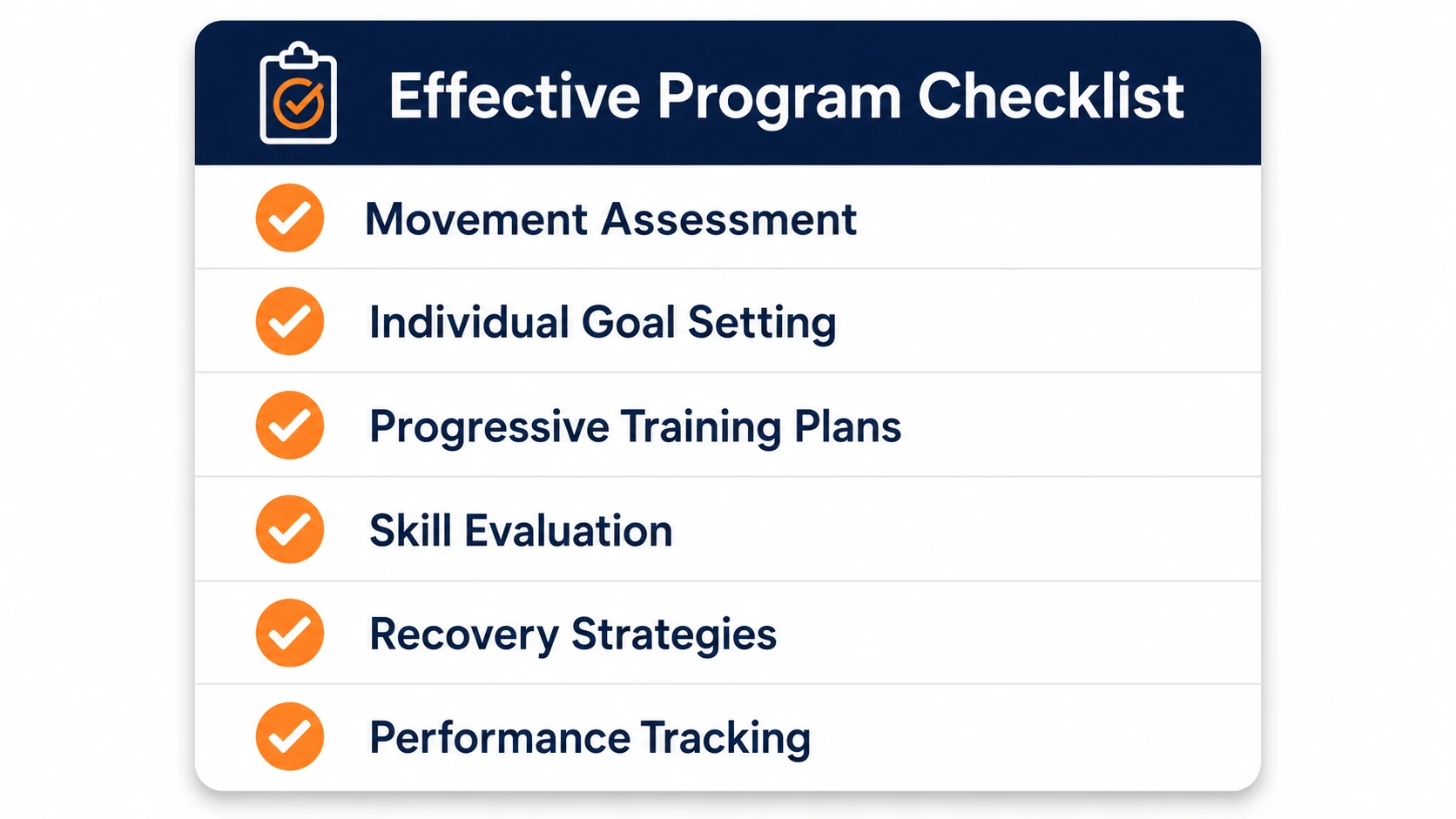
High-quality athletic development programs generally include the following components:
- Movement assessment to identify strengths and limitations
- Individual goal setting tailored to the athlete’s level
- Progressive training plans that build in complexity over time
- Skill evaluation at regular intervals
- Recovery strategies built into the training calendar
- Performance tracking to measure improvement objectively
Mindset Athletics Foundation and Community Impact
Beyond individual skill-building, athletic organizations often extend their impact into the broader community. The Mindset Athletics Foundation, based in Yuba City, California, operates as a nonprofit focused on youth sports development, positioning itself around a team-oriented “village” philosophy that emphasizes mutual support among athletes.
Community-oriented athletic programs of this kind commonly focus on:
- Youth development — giving young athletes structured access to coaching and competition
- Community outreach — extending training opportunities to families who might not otherwise access organized coaching
- Leadership development — using team sports as a vehicle for teaching accountability and leadership skills
Events and Community Activities
Community sports events strengthen athlete development by giving athletes low-stakes competitive experience outside of a formal season, while also building the social and team dynamics that reinforce a program’s culture.
One example is the Mindset Athletics Turkey Bowl, a community event associated with the Yuba City–based Mindset Athletics Foundation. Events structured this way typically run alongside seasonal or holiday timing and combine competition with community gathering.
Benefits of Competitive Community Events
- Teamwork built through shared competitive experience
- Sportsmanship reinforced in a lower-pressure setting than a formal season
- Leadership opportunities for older or more experienced athletes
- Community engagement that connects families and coaches outside regular training
Mindset Athletics Locations and Regional Programs
Athletic organizations often operate through local training centers because in-person coaching, facility access, and community relationships are inherently regional. It’s worth noting that “Mindset Athletics” is not a single centralized brand with uniform branches — it’s a name used independently by more than one program.
| Region | Known Association | Program Focus |
|---|---|---|
| Yuba City, California | Mindset Athletics Foundation (501(c)(3) nonprofit) | Youth skill development, community events, multi-sport training |
| Arizona | Independently registered training entity | Athletic training programs |
Because these are separately operated, athletes and parents evaluating a program should confirm the specific organization, its coaching staff, and its local reputation directly, rather than assuming shared ownership or standards across regions.
Mindset Athletics Reviews: What Factors Should Athletes Evaluate?
Reviews of any athletic program — Mindset Athletics or otherwise — are most useful when read for specific, verifiable details rather than overall star ratings. A program with glowing but vague reviews tells you less than one with a handful of reviews describing concrete coaching interactions.
What Makes Athletic Program Reviews Useful?
Look for reviews that speak to:
- Coaching quality and communication style
- Responsiveness and clarity of communication from staff
- Specific, observable athlete progress
- Safety practices during training and events
- The overall training environment (structured vs. chaotic)
- Parent feedback on logistics, scheduling, and follow-through
Questions to Ask Before Joining Any Athletic Program
Before enrolling in any program, it’s worth asking directly:
- What is the coaching staff’s experience and background?
- What training philosophy guides the program’s approach?
- What is the athlete-to-coach ratio during sessions?
- How is a typical session structured?
- Does the program track and share performance data with athletes or parents?
Comparing Different Athletic Mindset Approaches
Mindset-based training approaches differ by sport and emphasis. The table below compares a general athletic mindset approach, basketball-specific development, and a boxing-oriented mental toughness approach, to illustrate how emphasis shifts by discipline.
| Training Focus | Athletic Mindset | Basketball Development | Boxing Mindset |
|---|---|---|---|
| Primary Goal | Overall performance | Basketball-specific skills | Mental toughness |
| Mental Training | High | Moderate | Very high |
| Physical Conditioning | High | High | High |
| Competition Preparation | High | High | High |
These approaches are not mutually exclusive. Many programs blend elements of general athletic mindset training with sport-specific coaching, adjusting the mental-training emphasis based on the demands of the sport.
Common Mistakes Athletes Make During Performance Training
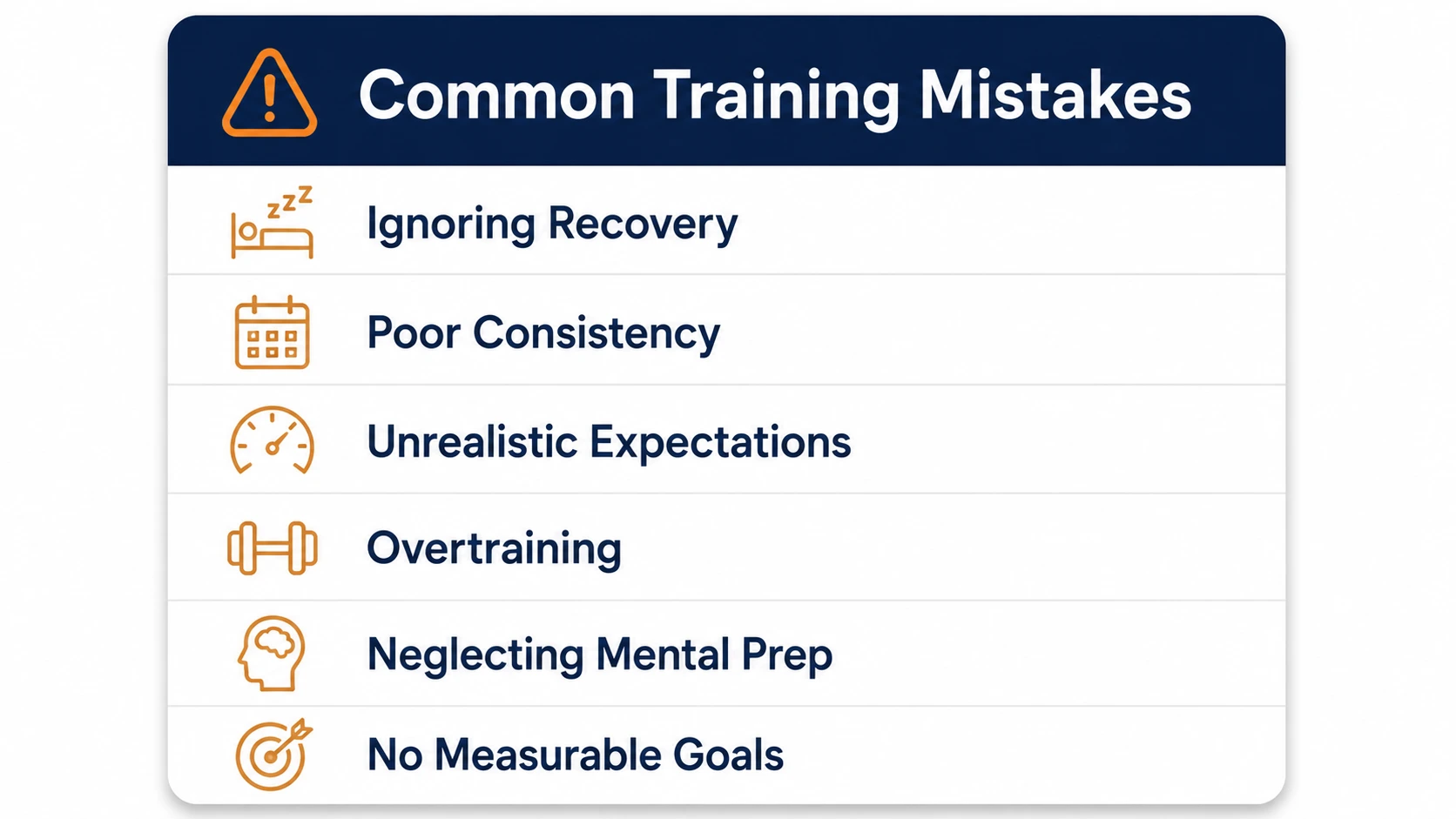
Several recurring mistakes tend to slow athletic progress, regardless of sport or program:
- Ignoring recovery, which increases injury risk and slows adaptation
- Poor consistency, which undermines the compounding effect of regular training
- Unrealistic expectations that lead to discouragement when progress is gradual
- Overtraining without adequate rest between sessions
- Neglecting mental preparation in favor of physical drills alone
- Lack of measurable goals, which makes it difficult to evaluate whether training is working
Factors That Influence Athletic Performance Results
Progress varies between athletes because performance outcomes depend on several interacting factors.
Age
Younger athletes often show faster skill acquisition but require developmentally appropriate training loads, while older athletes may progress more slowly but can handle more advanced technical and tactical work.
Training Frequency
More frequent, well-structured practice generally produces faster improvement, though frequency must be balanced against recovery needs to avoid diminishing returns.
Nutrition
Adequate nutrition supports energy availability, recovery, and adaptation to training — insufficient fueling can blunt the benefits of an otherwise well-designed program.
Recovery
Recovery — sleep, rest days, and active recovery — allows the physiological adaptations from training to actually take effect; skipping it can stall progress even with excellent training design.
Coaching Quality
Coaching quality affects how efficiently athletes learn correct technique and how well training is individualized to their current level.
Individual Motivation
Internal motivation shapes how consistently an athlete engages with training outside of scheduled sessions, which often determines long-term outcomes more than any single program feature.
Practical Tips for Getting the Most from Athletic Training
Athletes and parents can maximize the value of any training program by applying a few consistent practices:
- Set measurable goals tied to specific skills or performance metrics
- Track progress regularly rather than relying on subjective impressions
- Prioritize recovery as part of the training plan, not an afterthought
- Practice consistently, since irregular effort slows skill retention
- Seek constructive feedback from coaches rather than only praise
- Maintain long-term discipline, since athletic development compounds over months and years rather than weeks
As of 2026, more programs are incorporating structured performance tracking and recovery monitoring into standard coaching practice, reflecting a broader shift toward evidence-based athletic development.
Conclusion
Mindset athletics — as a training philosophy — combines structured physical development with deliberate mental-performance coaching, on the premise that athletic performance depends on both working together. Programs vary in scope and are often run independently by region, including the Yuba City–based Mindset Athletics Foundation and separately operated groups elsewhere, so it’s worth confirming the specific organization behind any program you’re evaluating. Regardless of which program an athlete chooses, long-term improvement consistently comes down to the same fundamentals: structured practice, quality coaching, consistent effort, and realistic expectations about the pace of progress.
Frequently Asked Questions (FAQ)
What is Mindset Athletics?
Mindset athletics refers to athletic training programs that combine sport-specific skill coaching with structured mental-performance development. The name is used by more than one independently operated organization, including a nonprofit based in Yuba City, California.
How does Mindset Athletics improve athletic performance?
Programs built around this approach improve performance by training physical skills, technical execution, and mental preparation together, rather than treating mindset coaching as separate from physical practice.
What sports does Mindset Athletics support?
Basketball is the most commonly associated sport, though the underlying mindset-training approach can apply to multi-sport athletes and other team or individual sports as well.
Is Mindset Athletics basketball training suitable for beginners?
Yes. Programs typically adjust training focus by age and skill level, with beginner sessions emphasizing fundamentals and coordination before progressing to more advanced technical and tactical work.
What should athletes look for when reading Mindset Athletics reviews?
Look for specific, verifiable details about coaching quality, communication, athlete progress, safety, and training environment, rather than relying on overall ratings alone — and confirm which specific organization the reviews refer to.
How important is mindset in athletic performance?
Mindset plays a significant role because psychological factors like confidence, focus, and resilience determine how consistently athletes can execute physical skills under competitive pressure.
How often should athletes train to improve performance?
Training frequency depends on age, goals, and recovery capacity, but consistent, regular practice — balanced with adequate rest — generally produces better results than sporadic, high-intensity sessions.
What are the biggest factors affecting athletic development?
Age, training frequency, nutrition, recovery, coaching quality, and individual motivation all interact to determine the pace and extent of an athlete’s development.