
Introduction
An athlete mindset is the mental framework that helps athletes develop discipline, resilience, focus, confidence, and the ability to improve through challenges. The mindset of an athlete is not limited to professional competition; it represents a set of psychological skills that support consistent performance in sports and everyday goals. Research in sports psychology shows that mental skills such as goal setting, self-regulation, visualization, and constructive self-talk influence how people respond to pressure and setbacks. Developing this mindset requires intentional practice, awareness, and habits that strengthen both performance and personal growth.
By Your Daily Thrive | Self-Improvement & Personal Growth Expert
Quick Summary
- An athlete mindset combines mental skills such as resilience, focus, confidence, discipline, and adaptability.
- Elite athletes train psychological abilities alongside physical skills to improve consistency.
- A strong mindset helps people respond effectively to failure, pressure, and uncertainty.
- Mental performance improves through structured habits, reflection, and continuous learning.
What Is an Athlete Mindset?
Defining the Athlete Mindset
An athlete mindset is a collection of beliefs, attitudes, and behaviors that help individuals pursue improvement, manage challenges, and perform effectively under pressure. It describes how athletes think about preparation, competition, mistakes, and long-term development.
The mindset of an athlete is often associated with qualities such as:
- Commitment to improvement
- Emotional control during difficult situations
- Willingness to learn from mistakes
- Ability to maintain focus on important tasks
- Confidence developed through preparation
Unlike natural ability or physical talent, mindset is a trainable psychological skill. Athletes can strengthen it through repeated practice, reflection, and behavioral changes.
Why Mindset Influences Athletic Performance
Mindset affects how athletes interpret challenges and respond to competitive situations. Two athletes with similar physical abilities may perform differently because they approach pressure, mistakes, and preparation in different ways.
A strong mindset influences:
- Decision-making: Athletes can remain focused instead of reacting emotionally.
- Consistency: They maintain training habits even when motivation decreases.
- Recovery: They use setbacks as information rather than seeing them as permanent failures.
- Confidence: They build belief through preparation and previous progress.
Sports psychology commonly emphasizes self-efficacy, a concept developed by psychologist Albert Bandura, which explains how belief in one’s ability affects effort, persistence, and performance.
Core Characteristics of the Mindset of Top Athletes
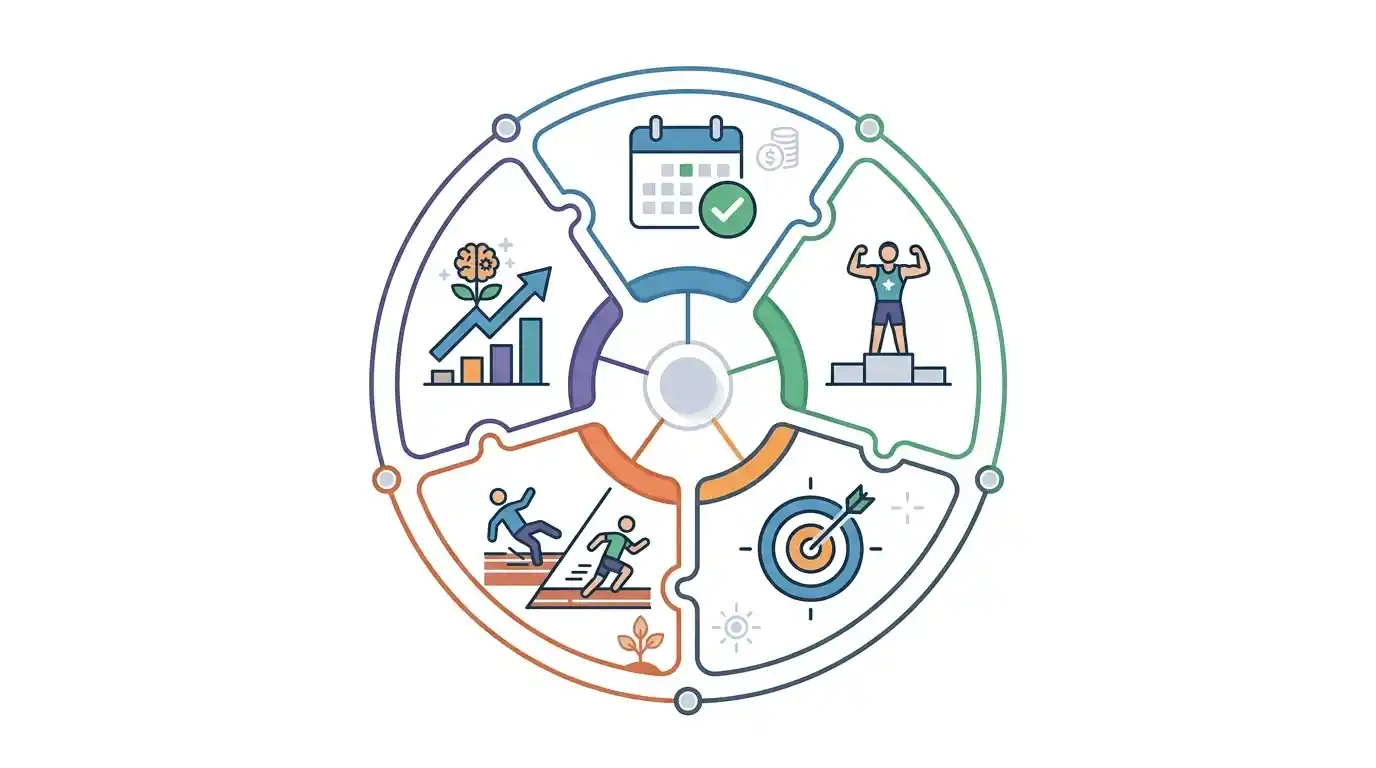
The mindset of top athletes is usually built around several connected psychological characteristics. These traits do not appear instantly; they develop through repeated behaviors and deliberate practice.
Discipline and Consistency
Discipline allows athletes to follow effective routines even when motivation changes. High performers understand that improvement comes from repeated actions rather than occasional intense effort.
Developing self-discipline helps athletes continue taking action even when motivation decreases or challenges become difficult.
Examples of disciplined behaviors include:
- Following training schedules
- Prioritizing recovery
- Practicing fundamental skills regularly
- Maintaining preparation routines
Consistency creates the foundation for performance because skills improve through repetition and feedback.
Growth-Oriented Thinking
A growth-oriented mindset focuses on development rather than fixed ability. Athletes with this approach believe skills can improve through training, coaching, and effort.
A growth-oriented mindset is closely connected to the concept of a growth mindset, which teaches that abilities can improve through effort, learning, and consistent practice.
This concept is closely connected to the work of psychologist Carol Dweck, who studied how beliefs about ability influence learning and achievement.
Athletes using growth-oriented thinking typically:
- Analyze mistakes
- Seek feedback
- Adapt training methods
- View challenges as opportunities to improve
Mental Toughness
Mental toughness refers to the ability to maintain effective performance despite pressure, discomfort, or setbacks.
It includes:
- Emotional regulation
- Persistence
- Confidence under stress
- Ability to recover after failure
Mental toughness does not mean ignoring emotions. Instead, it involves recognizing emotions and responding productively.
Confidence and Self-Belief
Athletic confidence develops from preparation, experience, and evidence of progress. Effective confidence is not simply positive thinking; it is built through competence.
Athletes strengthen confidence by:
- Setting achievable goals
- Tracking improvement
- Preparing consistently
- Learning from previous successes
Focus and Concentration
Focus allows athletes to direct attention toward relevant actions rather than distractions.
Strong concentration helps athletes:
- Follow game plans
- Manage pressure
- Stay present during competition
- Recover quickly after mistakes
Suggested Comparison Table
| Trait | Meaning | Performance Benefit |
| Discipline | Consistent commitment to actions | Builds reliable habits |
| Confidence | Trust developed through preparation | Improves decision-making |
| Focus | Control of attention | Reduces distractions |
| Resilience | Recovery after setbacks | Supports long-term progress |
| Growth mindset | Belief in improvement | Encourages learning |
Athlete Mindset Psychology Explained
How Thoughts Affect Performance
Athlete mindset psychology examines how thoughts, emotions, and behaviors interact during performance. The way athletes interpret situations can influence confidence, motivation, and decision-making.
For example:
- A mistake can be viewed as proof of failure.
- A mistake can also be viewed as feedback for improvement.
The second interpretation encourages learning and resilience.
The Role of Emotions in Competition
Emotions are a normal part of athletic performance. Successful athletes learn emotional regulation rather than trying to eliminate feelings such as nervousness or excitement.
Useful emotional regulation strategies include:
- Controlled breathing
- Positive self-talk
- Pre-performance routines
- Attention management
Managing emotions helps athletes maintain focus when facing competitive pressure.
Motivation and Goal Pursuit
Motivation explains why athletes continue working toward goals. Sports psychology commonly distinguishes between:
- Intrinsic motivation: Performing because of enjoyment, mastery, or personal growth.
- Extrinsic motivation: Performing because of rewards, recognition, or external outcomes.
A balanced approach often creates more sustainable motivation.
The Mind-Body Connection
Mental and physical performance are closely connected. Stress, confidence, attention, and recovery habits influence how effectively athletes use their physical abilities.
Modern performance approaches increasingly combine:
- Physical training
- Psychological preparation
- Recovery strategies
- Lifestyle management
As of 2026, sports performance practices continue moving toward more integrated approaches that treat mental skills as a standard part of athletic development rather than an optional addition.
The Four Types of Mindsets and Their Impact on Athletes
Fixed Mindset
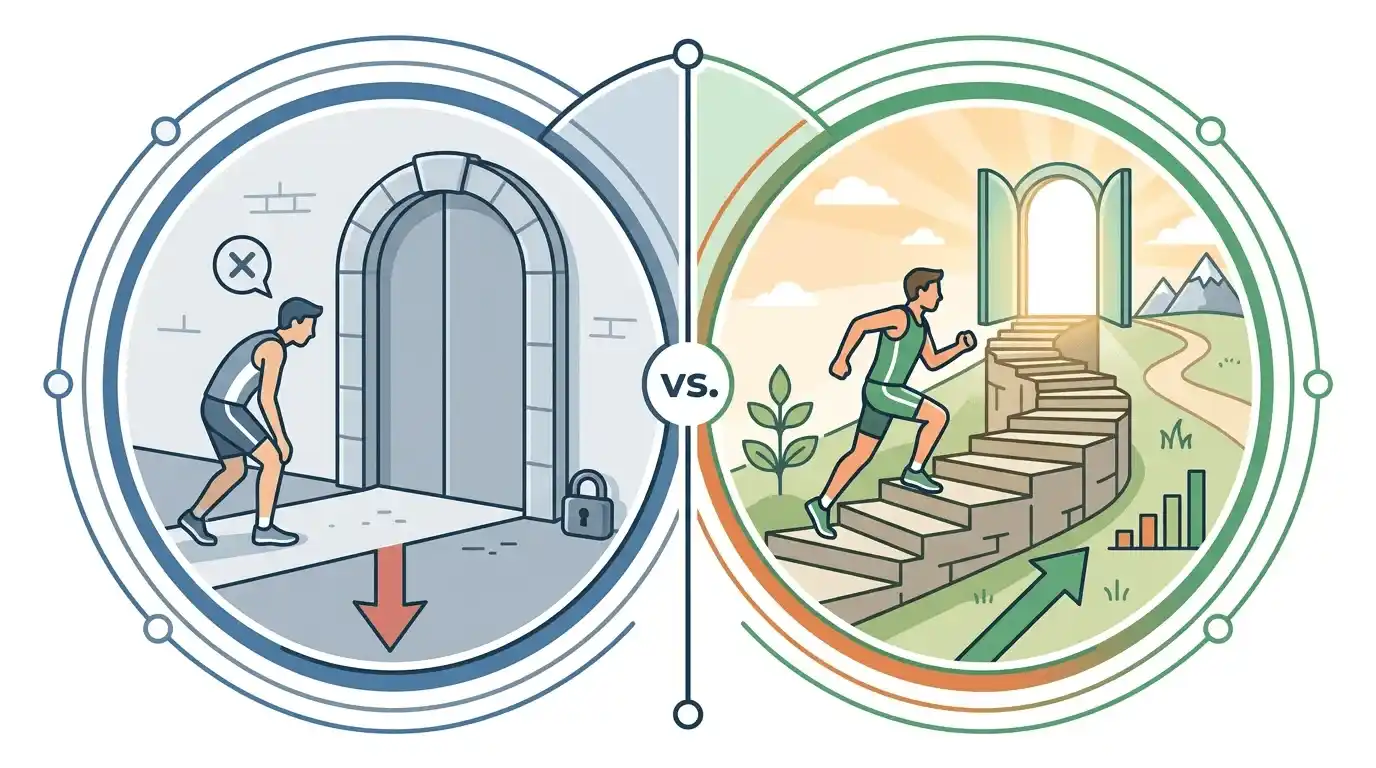
A fixed mindset involves believing that abilities are mostly unchangeable.
Athletes with this approach may:
- Avoid difficult challenges
- Fear mistakes
- Interpret failure as evidence of limited ability
This can reduce willingness to experiment and improve.
Growth Mindset
A growth mindset focuses on learning and development.
Athletes with this mindset:
- Accept coaching
- Practice deliberately
- Learn from errors
- Continue improving over time
Performance Mindset
A performance mindset focuses on achieving results and executing effectively.
Benefits include:
- Competitive focus
- Clear objectives
- Strong preparation standards
However, focusing only on outcomes can create unnecessary pressure.
Development Mindset
A development mindset balances improvement with performance goals.
It emphasizes:
- Skill building
- Long-term progress
- Sustainable success
Comparison Table
| Mindset Type | Main Focus | Common Outcome |
| Fixed | Protecting ability | Limited adaptation |
| Growth | Improving ability | Continuous learning |
| Performance | Achieving results | Competitive execution |
| Development | Long-term progress | Sustainable improvement |
The 5 C’s of Sports Psychology and Athletic Success
Commitment
Commitment is the ability to maintain effort toward a goal despite obstacles, slow progress, or changing motivation. In sports psychology, commitment is considered a foundation of consistent performance because improvement requires repeated action over time.
Committed athletes typically:
- Follow training plans consistently
- Maintain discipline during difficult periods
- Prioritize long-term development over short-term comfort
- Continue learning after setbacks
Commitment does not mean training without limits. Effective athletes also understand recovery, injury prevention, and sustainable performance.
Confidence
Confidence refers to an athlete’s belief that they can successfully perform a specific task or overcome a challenge. In psychology, this relates closely to self-efficacy, where belief in capability influences effort and persistence.
Athletes can strengthen confidence by:
- Preparing thoroughly
- Practicing skills repeatedly
- Reviewing previous improvements
- Setting realistic performance goals
Confidence based on preparation is generally more stable than confidence based only on outcomes.
Concentration
Concentration is the ability to direct attention toward important information while reducing distractions. In competitive environments, concentration allows athletes to execute skills effectively under pressure.
Ways athletes improve concentration include:
- Developing pre-performance routines
- Practicing mindfulness techniques
- Breaking performance goals into smaller actions
- Focusing on controllable factors
Control
Control involves managing thoughts, emotions, and behaviors during challenging situations. Athletes cannot control every external factor, such as opponents, weather, or referee decisions, but they can control their responses.
A strong sense of control helps athletes:
- Recover quickly from mistakes
- Stay composed during pressure situations
- Avoid emotional reactions that affect performance
Communication
Communication is essential for teamwork, coaching relationships, and performance improvement. Effective athletes communicate clearly with coaches, teammates, and support systems.
Strong communication includes:
- Asking for feedback
- Expressing concerns
- Understanding team responsibilities
- Giving constructive input
What Is the 4-2-1 Rule for Athletes?
Understanding the Framework
The 4-2-1 rule for athletes is a performance structure that is interpreted differently across coaching environments. It is generally used as a simple framework for organizing priorities, preparation, or reflection. Because there is no single universal scientific definition of this rule, athletes should understand the specific version used by their coach or training system.
Frameworks like the 4-2-1 rule can be useful because they simplify complex preparation processes into repeatable actions.
How Structured Rules Improve Mental Performance
Athletes often perform better when they use consistent systems rather than relying only on motivation or emotion.
Structured approaches help by:
- Reducing decision fatigue
- Creating predictable preparation habits
- Improving accountability
- Supporting focus during competition
Your Daily Thrive recommends viewing performance frameworks as tools rather than rigid formulas. The most effective systems are those that fit an athlete’s goals, sport, experience level, and personal circumstances.
How Elite Athletes Develop a Winning Mindset
Goal Setting Strategies
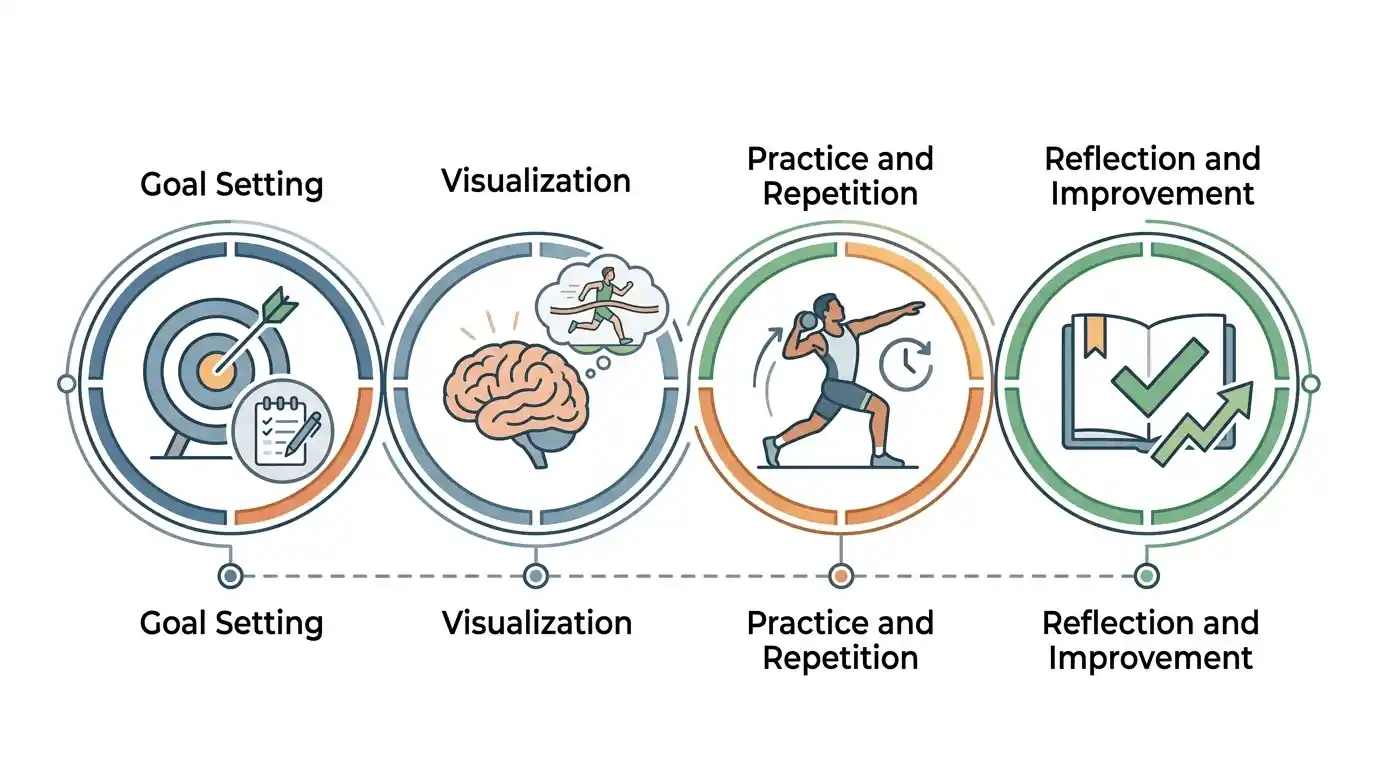
Elite athletes usually focus on structured goal setting rather than vague ambitions. Effective goals provide direction and allow athletes to measure progress.
A common framework is SMART goals:
- Specific
- Measurable
- Achievable
- Relevant
- Time-based
Athletes often separate goals into:
Outcome goals
- Winning a competition
- Achieving a ranking
- Reaching a performance milestone
Process goals
- Improving technique
- Completing training sessions
- Following recovery routines
Process goals are especially valuable because they focus attention on actions athletes can control.
Visualization and Mental Rehearsal
Visualization involves mentally practicing a skill, situation, or performance scenario before physically performing it.
Athletes may visualize:
- Executing technical skills
- Responding to pressure situations
- Following competition strategies
Mental rehearsal does not replace physical training, but it can support preparation by strengthening focus and confidence.
Performance Reflection
Reflection helps athletes turn experience into learning. Without reflection, mistakes may repeat without improvement.
A useful reflection process includes:
- What worked?
- What needs improvement?
- What action will be taken next?
Regular reflection develops self-awareness and supports continuous improvement.
Building Productive Habits
The athletes mindset is strengthened through daily behaviors rather than occasional motivation.
Learning how to build good habits allows athletes to create systems that make consistent improvement easier over time.
Important habits include:
- Consistent sleep routines
- Planned training sessions
- Recovery practices
- Goal reviews
- Learning from feedback
In our experience helping readers build better habits, the biggest challenge is often not understanding what to do but creating systems that make consistent action easier.
Athlete Mindset vs Talent: Which Matters More?
The Limits of Natural Ability
Talent can provide an early advantage, but it does not guarantee long-term success. Physical ability, coordination, and natural skill are influenced by many factors, but continued improvement requires training and adaptation.
Athletes who depend only on talent may struggle when they encounter stronger competition or difficult periods.
How Mindset Amplifies Skill Development
Mindset determines how athletes respond to training opportunities.
A strong mindset helps athletes:
- Practice deliberately
- Accept coaching
- Adapt strategies
- Continue improving
Talent provides potential, but mindset influences how effectively that potential is developed.
Finding the Right Balance
Success usually comes from the interaction of:
- Natural abilities
- Quality coaching
- Training consistency
- Psychological skills
- Supportive environments
| Factor | Talent | Mindset |
| Starting advantage | Often helpful | Develops over time |
| Trainability | Limited | Highly trainable |
| Long-term impact | Depends on development | Strong influence |
| Response to setbacks | Variable | Often adaptable |
Common Challenges That Prevent a Strong Athlete Mindset
Fear of Failure
Fear of failure occurs when athletes view mistakes as threats rather than learning opportunities.
It can lead to:
- Avoiding difficult challenges
- Playing too cautiously
- Losing confidence
Solutions include:
- Focusing on improvement rather than perfection
- Reviewing mistakes objectively
- Setting process-based goals
Prevention involves creating an environment where learning is valued.
Loss of Motivation
Motivation naturally changes over time. Athletes may experience reduced motivation because of fatigue, repeated setbacks, or unclear goals.
Understanding the causes behind a lack of motivation can help athletes create better strategies for maintaining consistency.
Ways to rebuild motivation include:
- Revisiting personal reasons for participation
- Adjusting goals
- Creating smaller milestones
- Improving training variety
Negative Self-Talk
Negative self-talk involves unhelpful internal statements that reduce confidence and focus.
Many athletes improve their confidence by practicing positive self-talk and replacing limiting thoughts with constructive mental patterns.
Common examples include:
- “I always fail under pressure.”
- “I am not improving.”
Constructive alternatives focus on action:
- “What can I learn from this?”
- “What adjustment can I make next?”
Burnout and Mental Fatigue
Burnout can occur when physical and psychological demands exceed recovery capacity.
Warning signs may include:
- Persistent exhaustion
- Reduced enjoyment
- Declining performance
- Increased frustration
Prevention strategies include:
- Adequate recovery
- Balanced schedules
- Open communication
- Periodic breaks
Practical Daily Habits to Strengthen the Athlete Mindset
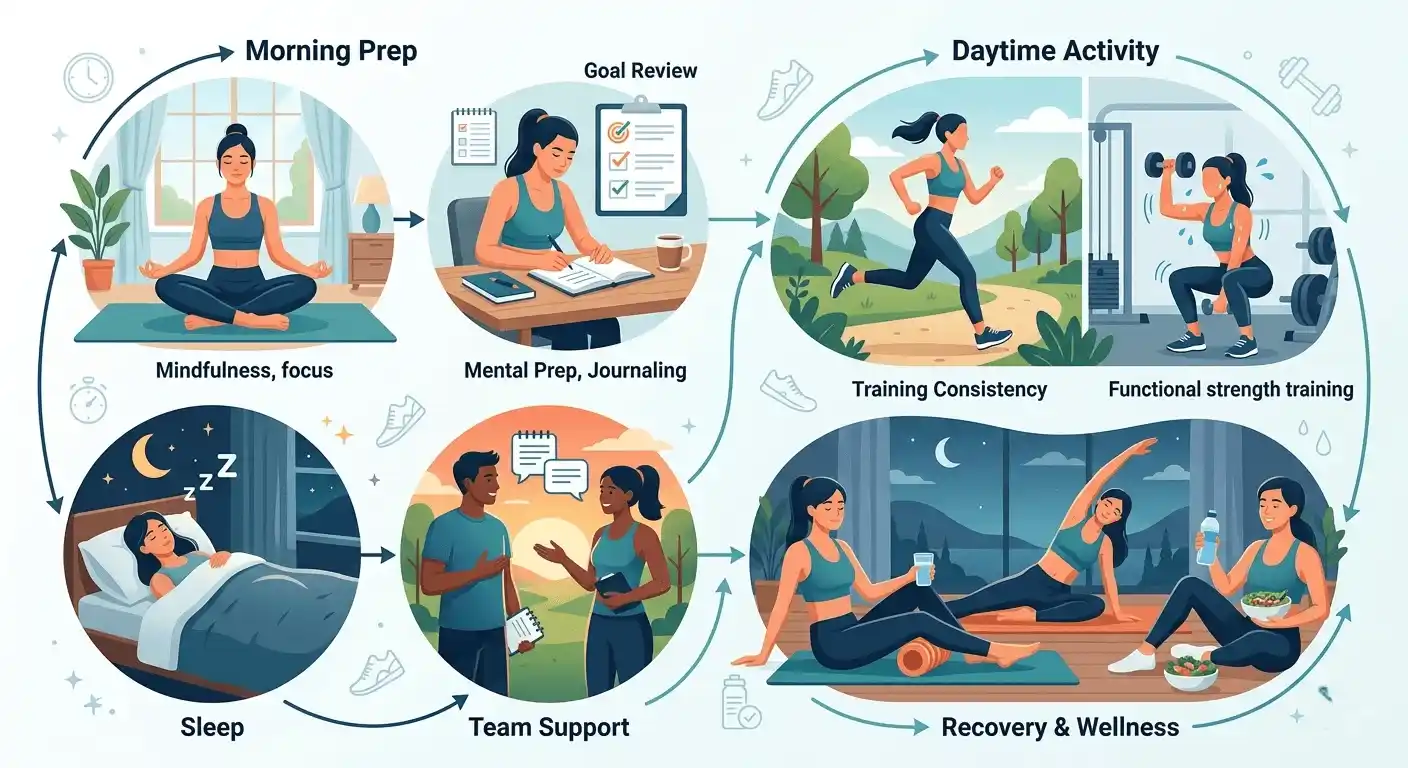
Morning and Pre-Training Routines
Consistent routines prepare the brain for performance.
Useful practices include:
- Reviewing daily goals
- Mental preparation
- Mobility or warm-up routines
- Setting performance intentions
Performance Journaling
Journaling helps athletes identify patterns and track improvement.
A simple journal can include:
- Training completed
- Challenges experienced
- Lessons learned
- Next improvement goal
Mental Recovery Practices
Recovery supports both physical and psychological performance.
Helpful practices include:
- Quality sleep
- Relaxation techniques
- Mindfulness exercises
- Time away from competition demands
Accountability Systems
Accountability increases consistency by creating external and internal support.
Examples include:
- Coaches
- Training partners
- Progress tracking systems
- Weekly reviews
Athlete Mindset Across Different Stages of Development
Youth Athletes
Young athletes benefit from developing confidence, enjoyment, and healthy competition habits.
Important priorities include:
- Learning skills
- Building resilience
- Understanding effort and improvement
Competitive Athletes
Competitive athletes often need stronger emotional regulation and pressure management.
Key areas include:
- Maintaining confidence
- Managing expectations
- Learning from competition experiences
Elite and Professional Athletes
Elite athletes focus on sustaining performance over long periods.
Challenges may include:
- Public pressure
- Career uncertainty
- Maintaining motivation after success
A mature athlete mindset involves balancing ambition with recovery and personal well-being.
Difficulty and Time Investment
Developing an athlete mindset requires consistent practice rather than a single change in thinking.
Typical progression:
- Beginner level: Learning awareness and basic mental skills
- Intermediate level: Building routines and improving self-regulation
- Advanced level: Applying psychological skills automatically under pressure
Difficulty depends on:
- Previous experience
- Coaching support
- Personal habits
- Training environment
Mental skills are generally beginner-friendly because they can be practiced gradually alongside physical training.
Results Timeline
The development of an athlete mindset usually happens gradually.
Possible progress patterns include:
Days to weeks
- Increased awareness of thoughts and behaviors
- Better preparation routines
Weeks to months
- Improved consistency
- Stronger confidence
- Better emotional control
Months to years
- Greater resilience
- More reliable performance under pressure
Progress varies depending on training consistency, environment, and individual goals.
Practice Guide for Developing an Athlete Mindset
Daily Practice Routine
A practical routine may include:
- Reviewing goals
- Practicing positive self-talk
- Visualizing key actions
- Reflecting after training
Weekly Review Process
Weekly reviews help athletes evaluate progress.
Questions to consider:
- What improved this week?
- What challenge appeared repeatedly?
- What adjustment should be made?
Long-Term Sustainability
Maintaining an athlete mindset requires balance.
Important principles include:
- Avoiding extreme approaches
- Prioritizing recovery
- Adjusting goals over time
- Maintaining enjoyment and purpose
Common obstacles include unrealistic expectations, inconsistent routines, and focusing only on results.
Frequently Overlooked Factors That Influence Athletic Mindset
Environment and Social Support
Athlete development is influenced by coaches, teammates, family, and training culture.
Supportive environments encourage:
- Confidence
- Accountability
- Learning
Sleep and Recovery
Recovery affects concentration, emotional regulation, and physical performance.
Athletes should recognize recovery as part of training rather than a separate activity.
Identity Beyond Sports
A healthy athletic identity includes understanding that personal value extends beyond performance results.
Balanced identity can help athletes manage setbacks and transitions.
Conclusion
An athlete mindset is the combination of psychological skills, habits, and beliefs that allow individuals to improve, perform under pressure, and recover from challenges. The mindset of an athlete is developed through discipline, reflection, confidence-building, and consistent practice rather than natural ability alone.
The strongest athletes understand that mental performance is trainable. By developing resilience, focus, emotional control, and growth-oriented thinking, athletes can create sustainable progress both in sports and in personal development.
FAQs
What is the athlete mindset?
The athlete mindset is a way of thinking that focuses on discipline, continuous improvement, resilience, and effective responses to challenges. It helps athletes develop stronger performance habits and mental skills.
How do athletes develop mental toughness?
Athletes develop mental toughness through consistent practice, exposure to challenges, emotional regulation skills, reflection, and learning from setbacks.
Can mindset improve sports performance without more physical training?
Yes. Mental skills can improve focus, confidence, decision-making, and consistency, although they work best when combined with effective physical training.
What are the 5 C’s of sports psychology?
The 5 C’s are commitment, confidence, concentration, control, and communication. These concepts describe important psychological skills that support athletic performance.
What are the four types of mindsets in sports?
The four commonly discussed mindset types are fixed mindset, growth mindset, performance mindset, and development mindset. Each influences how athletes approach learning and competition.
How long does it take to build an athlete mindset?
Building an athlete mindset is an ongoing process. Some improvements in awareness can happen quickly, while deeper changes in habits and resilience usually develop over months or years.
Why do elite athletes focus on process goals?
Elite athletes focus on process goals because these goals emphasize controllable actions, helping athletes maintain focus and improve consistently regardless of external results.