
Introduction
A corporate mindset coach works with employees, managers, and executives to build the thinking patterns that support better decision-making, adaptability, and performance at work. Unlike personal coaching, which centers on an individual’s private life goals, corporate mindset coaching applies mindset coaching principles inside an organizational context — tied to leadership development, team collaboration, and measurable business outcomes. As workplaces face faster change, hybrid work models, and rising performance pressure, more companies are investing in mindset development to strengthen resilience and leadership capacity. This article explains the coach mindset, the skills involved, and how to enter this growing field.
Quick Summary
- A corporate mindset coach helps employees and leaders develop productive thinking patterns that improve workplace performance and adaptability.
- Mindset coaching differs from life coaching by focusing on organizational goals, leadership, collaboration, and professional growth.
- Becoming a corporate mindset coach typically involves coaching skills, psychology-based communication, business knowledge, and practical experience.
- Certifications can strengthen credibility, but practical coaching experience and continuous learning are equally important.
What Is a Corporate Mindset Coach?
A corporate mindset coach is a professional who helps individuals and teams within an organization shift limiting thought patterns into more adaptive, growth-oriented ones. The primary purpose of this role is to improve how employees think under pressure, respond to change, and collaborate — not simply to boost short-term motivation. Related concepts include mindset coaching, coach mindset, and corporate mindset training, all of which describe different facets of applying psychological and behavioral principles inside a business setting.
How a Corporate Mindset Coach Supports Organizations
Corporate mindset coaches contribute to several organizational functions:
- Leadership development — helping managers build confidence and decision-making clarity
- Employee engagement — addressing disengagement through mindset shifts
- Team collaboration — improving how teams communicate and resolve friction
- Performance improvement — connecting thinking patterns to output quality
- Organizational change — supporting employees through restructuring or new processes
- Workplace resilience — building capacity to handle stress and uncertainty
What Is Mindset Coaching?
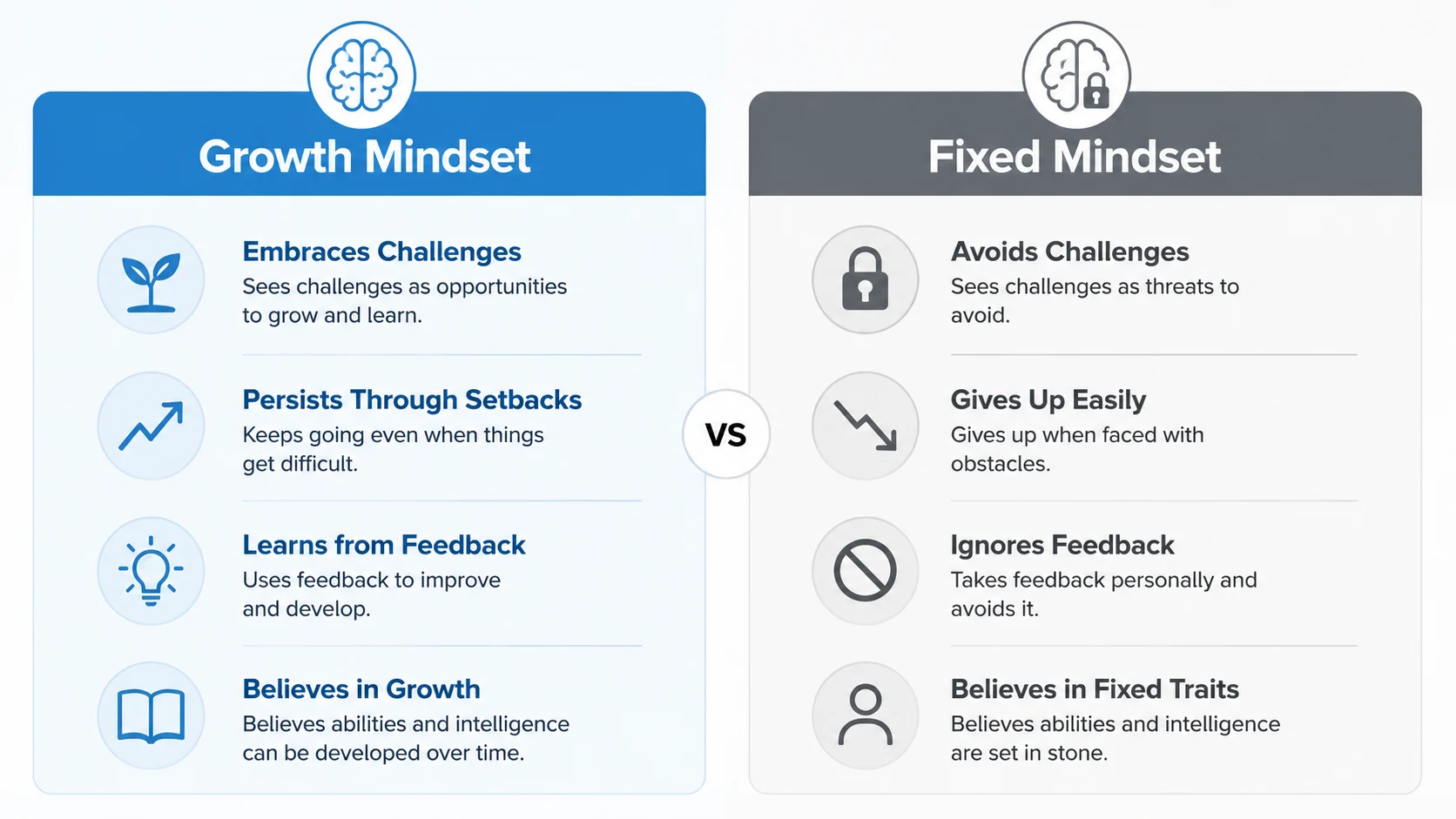
Mindset coaching is a coaching discipline focused on identifying and reshaping the beliefs and thought patterns that influence behavior. It draws heavily on the distinction between a growth mindset — the belief that abilities can be developed through effort — and a fixed mindset, which assumes traits are static. In a professional context, mindset coaching connects this psychological framework to career development, helping employees approach challenges, feedback, and setbacks more constructively. Understanding why growth mindset is important helps explain why this distinction matters so much in coaching outcomes.
What Does a Corporate Mindset Coach Do?
A corporate mindset coach works directly with individuals or groups to identify unproductive thinking patterns and replace them with strategies that support workplace goals, using structured conversations, exercises, and follow-up accountability.
Typical Responsibilities
- Coaching executives on decision-making and self-awareness
- Leadership coaching for new or transitioning managers
- Facilitating team workshops on collaboration and communication
- Improving communication across departments
- Supporting decision-making under uncertainty
- Building confidence in high-pressure roles
- Managing workplace change and transitions
- Providing accountability coaching for goal follow-through
- Developing a performance mindset tied to measurable outcomes
Common Workplace Challenges They Address
- Resistance to change during restructuring
- Low motivation or disengagement
- Poor cross-team collaboration
- Difficult leadership transitions
- Stress and burnout
- Uncertainty during organizational restructuring
Corporate Mindset Coach vs Other Types of Coaches
Several coaching roles sound similar but differ in focus, audience, and objective. Clarifying these distinctions helps employers and aspiring coaches choose the right path.
Comparison Table
| Coaching Type | Primary Focus | Typical Clients | Main Objective |
|---|---|---|---|
| Corporate Mindset Coach | Workplace mindset | Organizations | Performance & leadership |
| Mindset Coach | Personal mindset | Individuals | Personal growth |
| Life Coach | Life goals | Individuals | Overall life improvement |
| Business Coach | Business growth | Entrepreneurs | Business performance |
| Executive Coach | Senior leaders | Executives | Leadership effectiveness |
A mindset coach working with individual clients may address confidence or personal habits, while a mindset business coach blends business strategy with mindset work for entrepreneurs. Corporate mindset coaches, by contrast, are embedded in organizational systems, working alongside HR and leadership teams rather than solely one-on-one with private clients. For those focused more on entrepreneurship and business strategy than organizational systems, a mindset business coach may be a closer fit.
Why Companies Invest in Corporate Mindset Coaching
Organizations increasingly treat mindset development as a performance lever rather than a soft skill add-on.
Key Business Benefits
- Higher employee engagement
- Better adaptability to change
- Improved innovation and creative problem-solving
- Stronger leadership pipelines
- Healthier workplace culture
- Improved productivity
- Better conflict resolution
- Higher employee retention
In our experience helping readers build better habits at work, the organizations that see the strongest results treat mindset coaching as an ongoing practice tied to specific business goals, not a one-time workshop.
Skills Every Corporate Mindset Coach Needs
Certifications matter less than the underlying competencies a coach brings to each engagement.
Core Coaching Skills
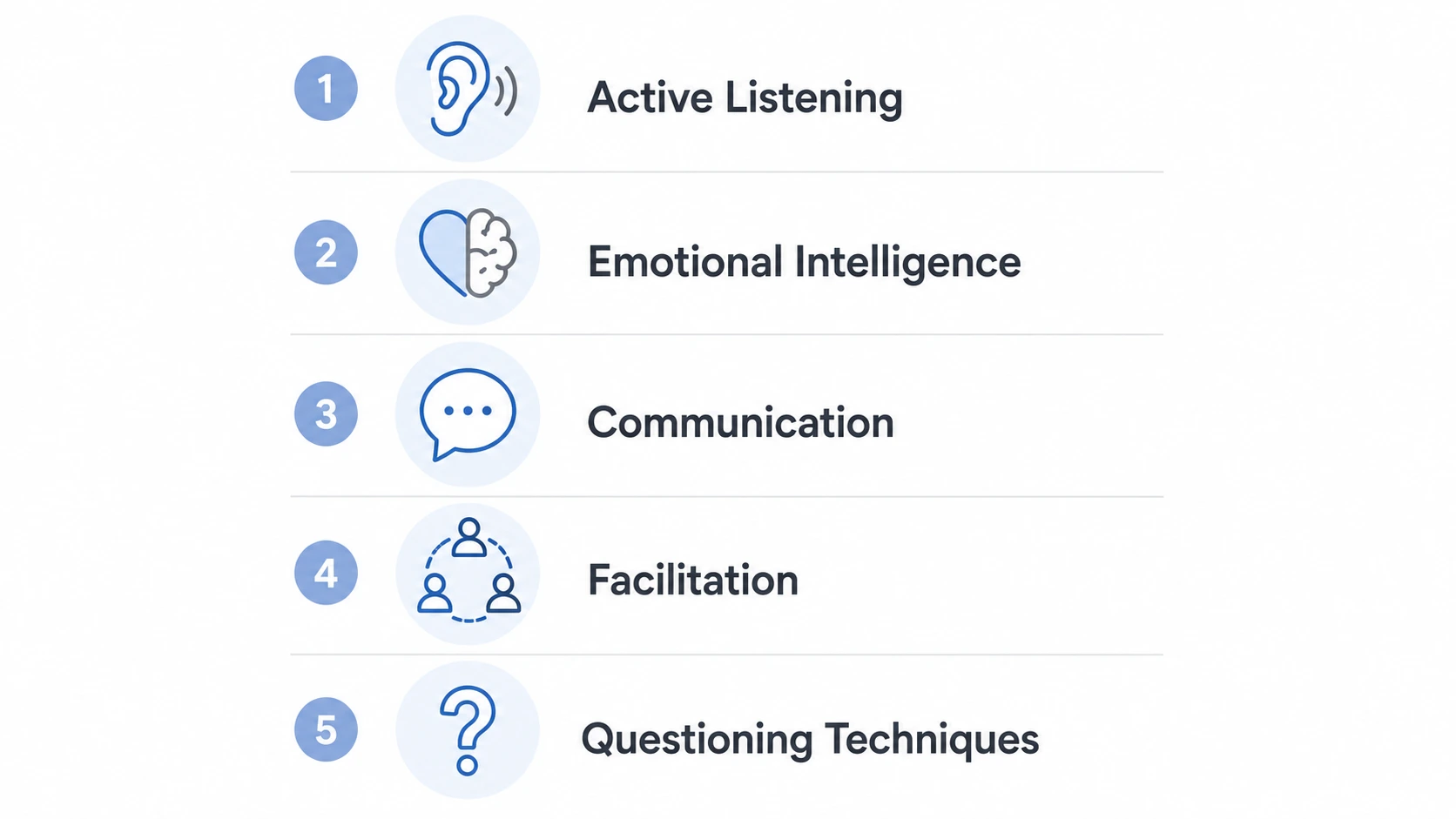
- Active listening
- Emotional intelligence
- Clear communication
- Group facilitation
- Effective questioning techniques
- Accountability structuring
- Strategic thinking
- Foundational behavioral psychology knowledge
Business Knowledge That Adds Value
A corporate mindset coach benefits from understanding:
- Organizational behavior
- Leadership frameworks
- Change management principles
- Team dynamics
- Corporate culture
- Employee development pathways
Your Daily Thrive recommends coaches pair psychological training with basic business literacy, since coaching that ignores organizational realities tends to produce advice that doesn’t stick.
How to Become a Corporate Mindset Coach
Becoming a corporate mindset coach generally requires building coaching competencies, understanding psychology principles, and gaining real-world practice inside organizations — certification helps but is not strictly mandatory.
Step-by-Step Process
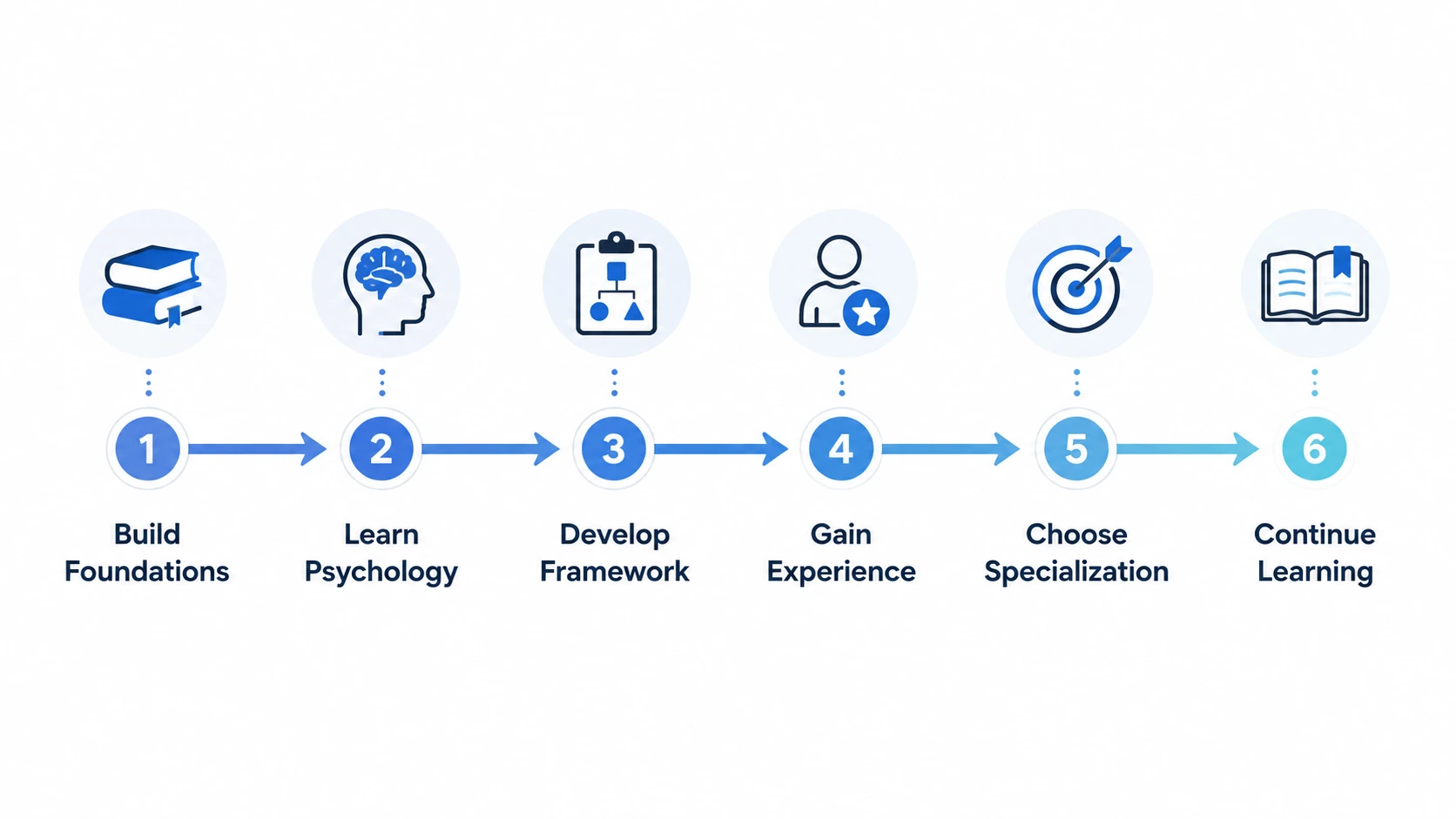
- Build core coaching foundations (listening, questioning, facilitation)
- Learn foundational psychology and behavioral science principles
- Develop a personal coaching framework or methodology
- Gain practical experience through supervised or volunteer coaching
- Choose a specialization (leadership, team performance, change management)
- Build corporate-specific expertise in business language and structures
- Continue professional development through ongoing learning
Beginner Roadmap
Newcomers typically start with foundational coaching skill-building, then move into practice opportunities such as coaching colleagues, volunteering with organizations, or assisting more experienced coaches. Many combine this with a certification program to formalize their approach before pursuing paid corporate clients. Those researching how to become a mindset coach or how to get into life coaching more broadly often follow a similar early path before specializing in corporate environments.
Education, Training, and Certifications
Formal education is not strictly required to practice as a corporate mindset coach, but structured training builds both skill and credibility.
Types of Training Available
- Online learning platforms and self-paced courses
- Live workshops and in-person training
- Formal certification programs
- Mentorship under experienced coaches
- Practical coaching experience with real clients
Do You Need Certification?
A corporate mindset coach certification or mindset coach certification can:
- Strengthen credibility with corporate clients
- Provide structured skill development
- Meet employer or client expectations for formal training
- Build client confidence during early client acquisition
However, certification alone has limitations — mindset coaching courses build a foundation, but real coaching competence develops through applied practice, feedback, and reflection over time.
Corporate Mindset Training: How Coaching Fits into Workplace Development
Coaching and corporate mindset training are related but distinct approaches to workplace development.
Coaching vs Corporate Mindset Training
| Factor | Coaching | Corporate Mindset Training |
|---|---|---|
| Duration | Ongoing, extended | Often short-term or one-time |
| Personalization | Highly individualized | Standardized for groups |
| Goals | Specific, personal objectives | Broad organizational objectives |
| Format | Group vs individual | Usually group-based |
| Follow-up | Built into the process | Often limited |
| Measurement | Tracked over time | Harder to measure long-term |
Coaching tends to produce deeper, more personalized change, while training delivers consistent messaging across larger groups efficiently.
Career Opportunities for Corporate Mindset Coaches
Corporate mindset coaches work across a range of organizational settings.
Where Corporate Mindset Coaches Work
- Large corporations and enterprises
- Internal HR departments
- Leadership development firms
- Management consulting firms
- Learning & development (L&D) teams
- Independent consulting practices
- Online coaching platforms
Online Mindset Coaching vs Corporate Coaching
Online mindset coaching typically reaches a broader, more varied individual audience, delivered through virtual sessions or digital programs, with outcomes measured at the individual level. Corporate coaching, by contrast, usually serves a defined organizational audience, is delivered through structured engagements tied to business units, and scales through group programs and leadership cohorts rather than individual sign-ups.
Mindset Coach Salary and Career Factors
Mindset coach salary varies considerably based on context rather than following a single fixed figure, so it’s more useful to understand the factors that influence earnings than to rely on a specific number.
Factors That Influence Earnings
- Years of coaching experience
- Industry specialization
- Geographic location
- Certifications held
- Access to corporate clients versus individual clients
- Professional reputation and referrals
- Area of specialization (leadership, teams, change management)
- Delivery model (in-person, online, hybrid)
Corporate Entrepreneurial Mindset and Innovation Coaching
Beyond traditional leadership coaching, some corporate mindset coaches specialize in fostering a corporate entrepreneurial mindset — helping employees think and act with the initiative typically associated with entrepreneurs, even within a large organization. This includes:
- Building an innovation mindset among teams
- Supporting intrapreneurship (entrepreneurial behavior inside a company)
- Strengthening problem-solving under ambiguity
- Improving risk management and calculated decision-making
- Embedding continuous improvement practices into daily work
This specialization is increasingly relevant as organizations look for internal innovation rather than relying solely on external disruption.
Common Challenges New Corporate Mindset Coaches Face
New coaches entering corporate environments often encounter predictable obstacles.
Building credibility happens slowly because organizations are cautious about unproven coaching relationships; new coaches can overcome this by starting with smaller pilot engagements and documenting results, then preventing recurrence by consistently gathering feedback and outcome data from the start.
Finding first clients is difficult without an existing network; coaches typically overcome this through partnerships with HR teams or L&D departments, and prevent ongoing difficulty by building referral relationships early.
Understanding corporate culture takes time because each organization operates differently; coaches address this by conducting thorough onboarding conversations with stakeholders before designing interventions.
Measuring coaching outcomes is challenging because mindset shifts are not always immediately visible; this is addressed by establishing clear, agreed-upon metrics at the start of any engagement.
Handling organizational resistance occurs when employees are skeptical of coaching; this is best addressed through transparent communication about goals and voluntary, rather than mandated, participation wherever possible.
Common Beginner Mistakes
New corporate mindset coaches frequently make avoidable errors:
- Focusing only on motivation instead of sustainable behavior change
- Ignoring specific business objectives tied to the engagement
- Using one coaching style for every client or team
- Neglecting to define and track measurable outcomes
- Underestimating the complexity of organizational dynamics and politics
Measuring the Success of Corporate Mindset Coaching
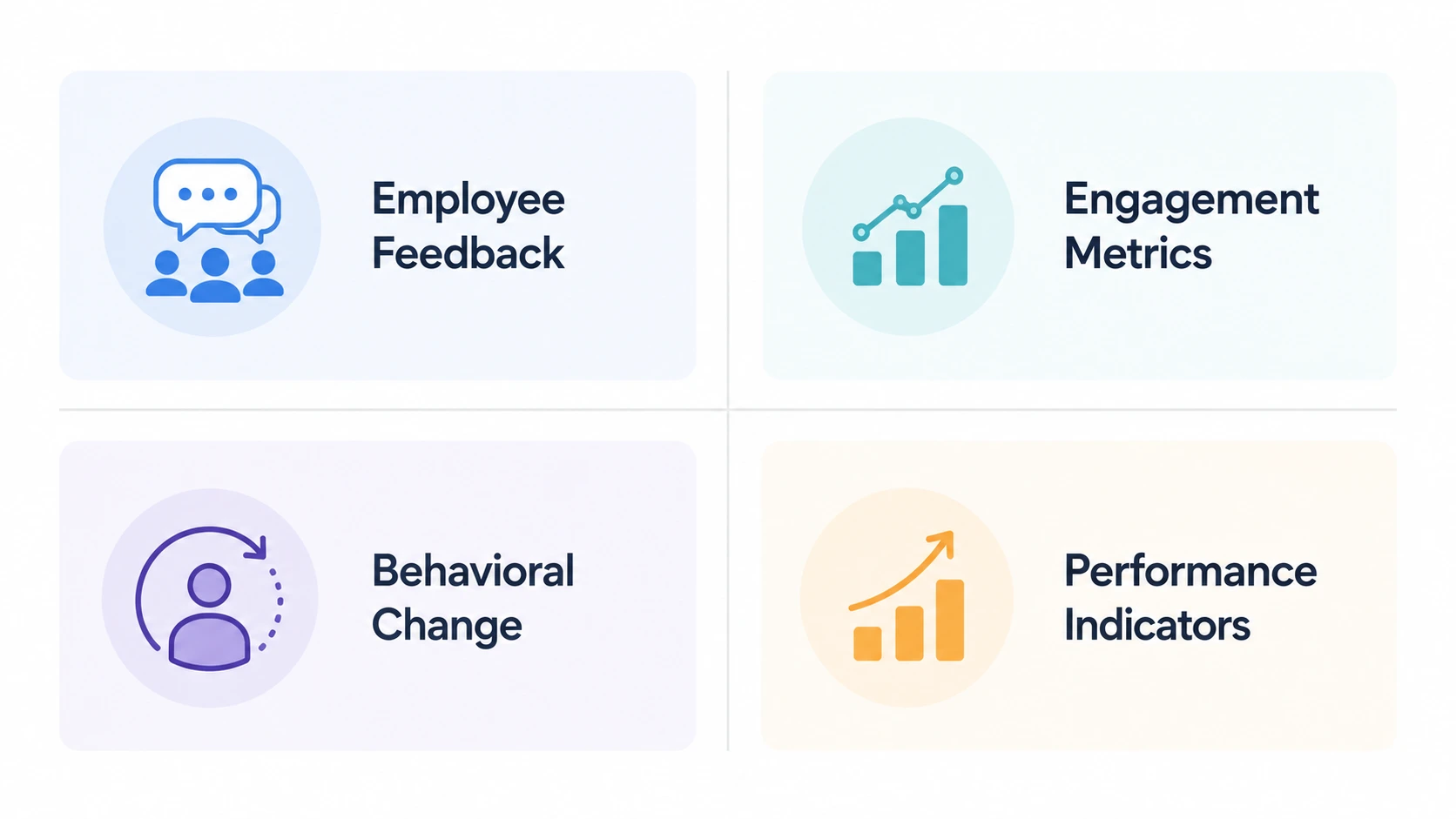
Evaluating coaching impact requires combining qualitative and quantitative indicators.
- Employee feedback surveys
- Leadership assessments before and after coaching
- Engagement metrics over time
- Observable behavioral changes
- Performance indicators tied to role expectations
- Improvements in team collaboration
- Progress against specific coaching goals
Frequently Asked Questions About Coaching Mindsets
What is a coaching mindset?
A coaching mindset is an approach characterized by curiosity, active listening, and a focus on empowering others to find their own solutions rather than providing direct answers.
What is mindset coaching?
Mindset coaching is a structured process that helps individuals identify unproductive thought patterns and replace them with more adaptive ones, aiming for improved decision-making, resilience, and performance. For inspiration on applying this framework daily, see these growth mindset quotes from Carol Dweck.
What can you do with a life coach certification?
A life coach certification can open opportunities in personal coaching, wellness coaching, and general life-goal support; applying it specifically to corporate mindset coaching typically requires additional business-focused training and organizational experience.
Practical Tips for Building a Successful Corporate Mindset Coaching Career
- Develop a clear coaching niche (leadership, team performance, change management)
- Create measurable, structured coaching programs rather than open-ended sessions
- Build professional credibility through consistent, documented results
- Network actively within organizations and HR/L&D communities
- Pursue continuing education to stay current with behavioral science research
- Gather testimonials and case studies to demonstrate real-world impact
Conclusion
A corporate mindset coach helps employees and leaders build the thinking patterns needed to perform, adapt, and lead effectively inside organizations. Unlike personal or life coaching, this role is grounded in business objectives, measurable outcomes, and organizational dynamics. Success in this field depends on a combination of core coaching skills, behavioral science knowledge, and practical business understanding — with certification supporting, but not replacing, hands-on coaching experience. As of 2026, more organizations are formalizing mindset development as part of leadership pipelines, making this a growing and increasingly structured career path for those willing to combine psychology, coaching skill, and continuous learning.
Frequently Asked Questions
What is a corporate mindset coach? A corporate mindset coach is a professional who helps employees and leaders develop thinking patterns that support workplace performance, adaptability, and leadership growth.
How is a corporate mindset coach different from a life coach? A corporate mindset coach focuses on organizational goals, leadership, and team performance, while a life coach typically works with individuals on personal life goals outside a workplace context.
Do you need certification to become a corporate mindset coach? Certification is not strictly required, but it can strengthen credibility, provide structured training, and build client confidence, especially when paired with practical coaching experience.
What skills are most important for corporate mindset coaching? Active listening, emotional intelligence, communication, facilitation, strategic thinking, and a working understanding of behavioral psychology are essential skills.
Can corporate mindset coaching be delivered online? Yes, corporate mindset coaching can be delivered online through virtual sessions, though in-person or hybrid formats are also common for leadership and team-based engagements.
How long does it typically take to become a corporate mindset coach? Timelines vary based on prior experience, but most coaches spend months to a few years building coaching skills, gaining practical experience, and developing a corporate specialization before working with paid clients.
Is mindset coaching suitable for leaders as well as employees? Yes, mindset coaching is commonly applied to both senior leaders and individual employees, though the focus areas may differ based on role and responsibility.
How do organizations measure the success of mindset coaching? Organizations typically measure success through employee feedback, engagement metrics, leadership assessments, behavioral changes, and performance indicators tracked over time.