

Introduction
Warrior mindset training is a structured approach to developing mental toughness, self-discipline, resilience, emotional control, and purposeful action. Although many people associate the concept with military personnel, elite athletes, or martial arts, its principles apply equally to everyday life. Students, professionals, entrepreneurs, parents, and leaders can all benefit from cultivating a mindset focused on consistent growth and thoughtful decision-making.
In simple terms, the warrior mindset meaning centers on responding to challenges with discipline rather than emotion. If you have ever wondered what is a warrior mindset or what is the warrior mentality, the answer lies in developing habits that strengthen resilience, accountability, and long-term consistency instead of relying on temporary motivation. A healthy warrior mindset emphasizes courage, adaptability, empathy, and self-control—not aggression or emotional suppression.
Quick Summary
- Warrior mindset training develops discipline, resilience, emotional control, and purposeful action.
- A warrior mindset is built through consistent habits and deliberate practice rather than natural talent.
- Mental toughness is most effective when balanced with empathy, flexibility, and sound judgment.
- Anyone can strengthen a warrior mindset through structured daily routines and continuous self-improvement.
What Is Warrior Mindset Training?
Warrior mindset training is the deliberate practice of strengthening mental and emotional skills that help individuals remain disciplined, resilient, and focused during challenges. Rather than being a personality trait, it is a collection of learnable habits supported by behavioral science, goal-directed action, and emotional regulation.
Modern psychology shows that resilience, self-regulation, and habit formation can all improve through repeated practice. Warrior mindset training combines these principles into practical routines that help people make thoughtful decisions under pressure while remaining committed to long-term goals.
In our experience helping readers build better habits, the people who achieve lasting personal growth are rarely those with the highest motivation. Instead, they are the ones who consistently practice small, meaningful behaviors every day.
Warrior Mindset Meaning
The warrior mindset meaning refers to a disciplined way of thinking that prioritizes responsibility, resilience, courage, and purposeful action.
When people ask what is a warrior mindset, they are usually referring to the ability to:
- Stay calm during stressful situations.
- Continue working despite discomfort.
- Learn from setbacks instead of avoiding them.
- Take responsibility for personal decisions.
- Focus on solutions rather than excuses.
Similarly, what is the warrior mentality can be understood as choosing consistent action over emotional reactions. A warrior mentality does not eliminate fear or uncertainty; instead, it teaches people to respond thoughtfully while maintaining progress toward meaningful objectives.
Psychologically, this mindset is closely connected with:
- Self-regulation
- Delayed gratification
- Cognitive flexibility
- Emotional intelligence
- Growth-oriented thinking
These evidence-based concepts contribute to better decision-making and increased resilience over time.
Why It Is Called a “Warrior” Mindset
The term “warrior” has historically represented individuals who demonstrated courage, discipline, loyalty, and perseverance in demanding circumstances. Across many cultures, warriors were expected to develop both physical capability and mental composure.
Today, the phrase has evolved beyond military contexts. Modern warrior mindset training focuses on developing inner strength rather than preparing for conflict.
Key characteristics include:
- Remaining composed under pressure.
- Acting according to personal values.
- Demonstrating discipline despite emotional fluctuations.
- Showing courage when facing uncertainty.
- Continuing to learn and improve after setbacks.
Importantly, a healthy warrior mindset is not about aggression or domination. Instead, it emphasizes thoughtful action, responsibility, and resilience. As of 2026, many leadership, coaching, and performance experts increasingly emphasize emotional intelligence and adaptability alongside mental toughness, reflecting a more balanced understanding of resilience.
Core Principles of a Warrior Mindset
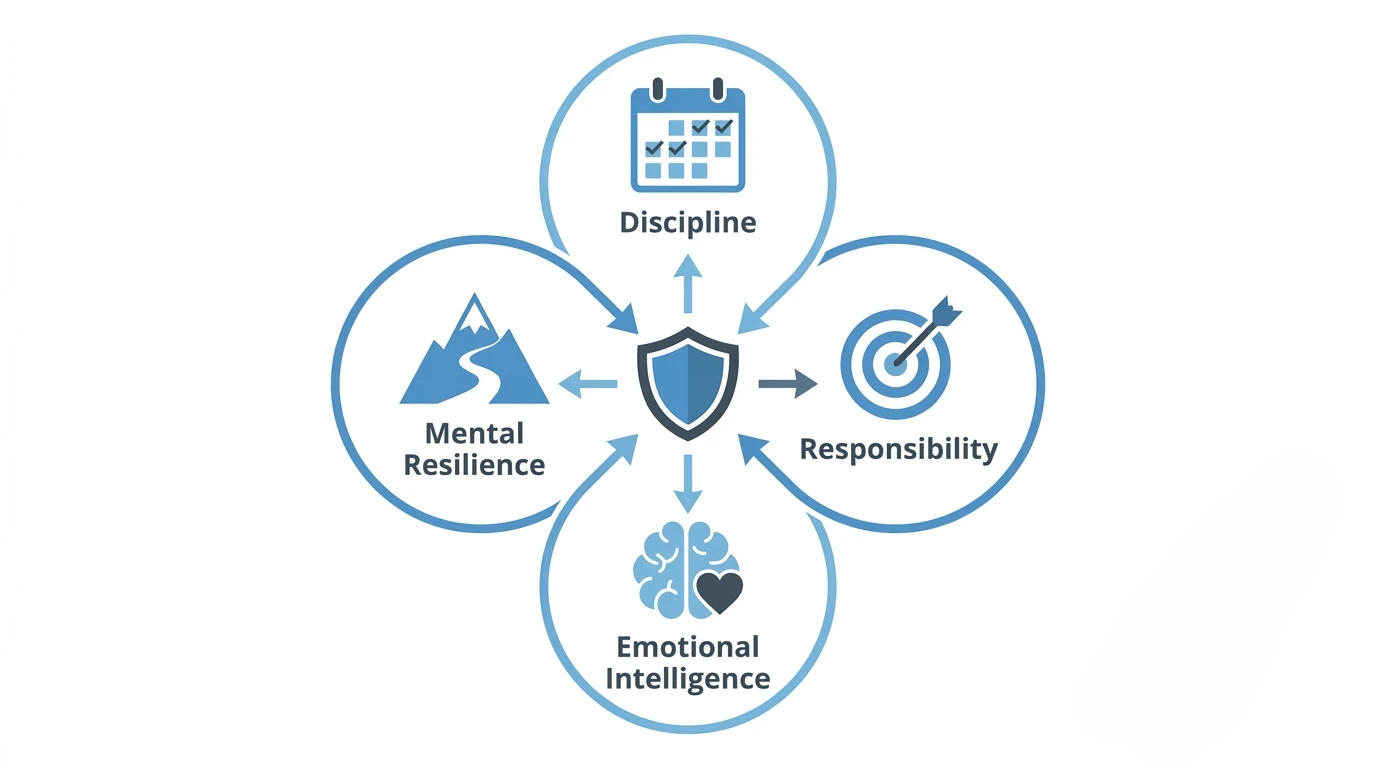
The foundation of warrior mindset training rests on several interconnected principles. Together, these principles support consistent personal growth and long-term performance across many areas of life.
If you’re new to personal development, these Positive Mindset Tips for Beginners provide a practical foundation before developing more advanced warrior mindset habits.
Discipline Over Motivation
Motivation naturally rises and falls depending on mood, energy, and circumstances. Discipline, however, allows people to continue taking productive action even when motivation is absent.
Habit researchers consistently show that repeated behaviors performed in stable environments become increasingly automatic over time. This reduces the need to rely on willpower alone.
A disciplined individual:
- Completes important tasks regardless of mood.
- Builds routines that reduce decision fatigue.
- Maintains healthy habits consistently.
- Focuses on long-term objectives instead of immediate comfort.
Your Daily Thrive recommends starting with one or two daily habits rather than attempting dramatic lifestyle changes. Sustainable consistency almost always outperforms short bursts of intense motivation.
Mental Resilience
Mental resilience refers to the capacity to recover, adapt, and continue moving forward after experiencing setbacks, stress, or failure.
Resilient individuals recognize that challenges are a normal part of growth. Rather than interpreting failure as evidence of personal inadequacy, they view it as feedback that can inform future decisions.
Warrior mindset training strengthens resilience by encouraging people to:
- Accept temporary discomfort.
- Learn from mistakes.
- Maintain perspective during difficult situations.
- Adapt strategies when circumstances change.
- Continue progressing despite obstacles.
Developing resilience does not eliminate stress. Instead, it increases confidence in one’s ability to manage stress effectively.
Self-Control and Emotional Intelligence
One of the most misunderstood aspects of the warrior mindset is emotional control.
True emotional strength is not the absence of emotion. Instead, it is the ability to recognize emotions, understand their influence, and respond thoughtfully rather than impulsively.
Emotional intelligence includes:
- Self-awareness
- Emotional regulation
- Empathy
- Effective communication
- Relationship management
These skills improve decision-making under pressure and reduce the likelihood of reactive behavior.
For example, fear before an important presentation or examination is completely normal. A warrior mindset acknowledges that fear while choosing productive action instead of avoidance.
Likewise, patience plays a significant role in maintaining long-term progress. Individuals who consistently delay immediate gratification often achieve greater personal and professional success over time because they remain committed to meaningful goals.
Responsibility and Accountability
Responsibility is the cornerstone of sustainable personal growth.
People with a warrior mindset focus primarily on factors they can influence rather than circumstances outside their control. This perspective encourages continuous improvement instead of blame.
An accountability-focused mindset involves:
- Accepting ownership of decisions.
- Evaluating personal performance honestly.
- Setting high but realistic standards.
- Correcting mistakes quickly.
- Remaining committed to long-term development.
Accountability also supports healthier relationships, stronger leadership, and greater professional credibility because trustworthy individuals consistently follow through on their commitments.
In our experience, readers who regularly review their progress through journaling, weekly reflection, or goal tracking develop stronger self-awareness and maintain momentum more effectively than those who rely solely on memory or motivation.
By mastering discipline, resilience, emotional intelligence, and accountability, individuals establish a strong psychological foundation for every other aspect of warrior mindset training. These core principles make it easier to build productive habits, strengthen focus, and perform consistently even during challenging periods.
How Warrior Mindset Training Works
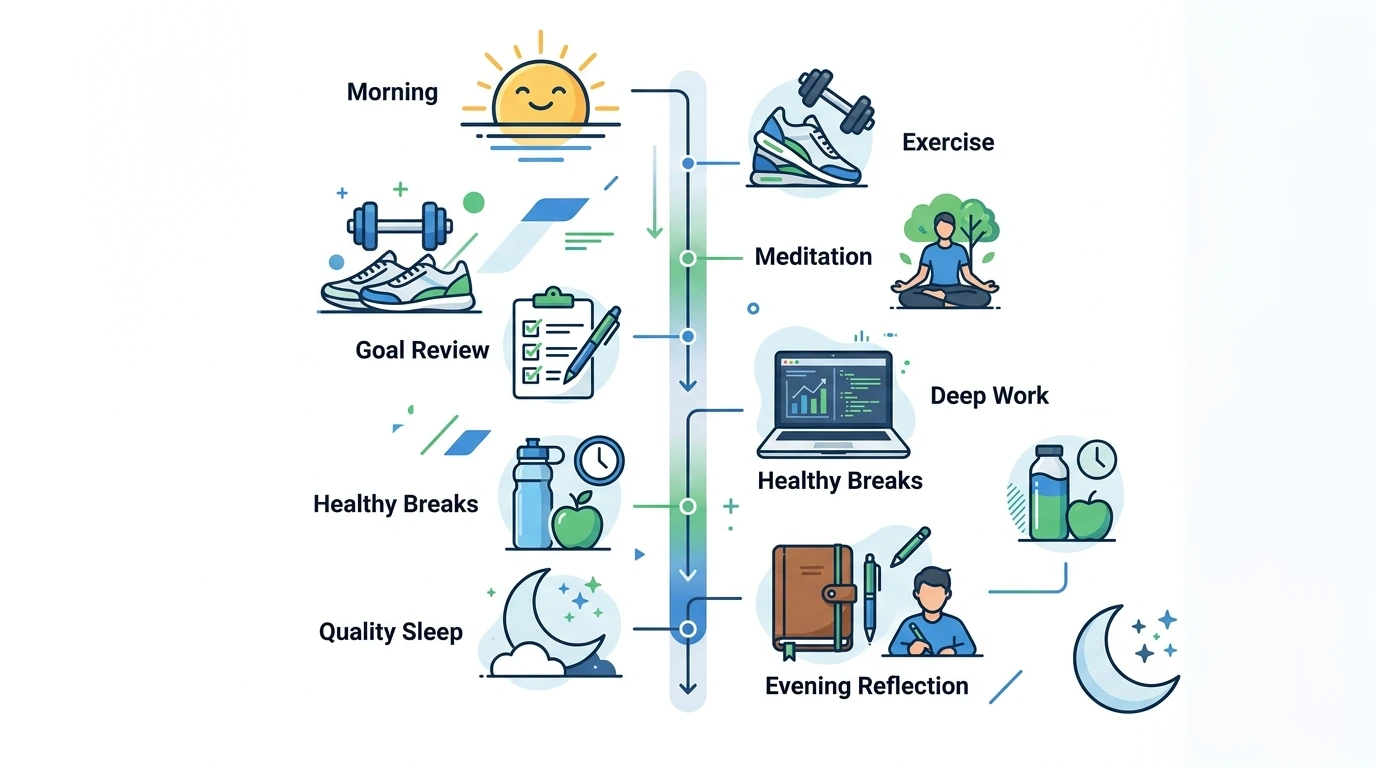
Warrior mindset training works by reinforcing positive behaviors through consistent practice rather than relying on occasional bursts of motivation. Instead of seeking quick transformations, it focuses on creating sustainable routines that strengthen discipline, resilience, emotional regulation, and purposeful action over time.
Behavioral science suggests that repeated actions performed in consistent environments gradually become automatic habits. This process reduces dependence on willpower and helps individuals maintain progress even during stressful or emotionally challenging periods.
Your Daily Thrive recommends viewing warrior mindset training as a lifelong practice. Small improvements repeated daily often create greater long-term results than attempting dramatic changes that are difficult to sustain.
Building Daily Habits
Daily habits are the foundation of every strong warrior mindset. Each intentional action reinforces self-discipline and builds confidence through repeated success.
Effective daily habits include:
- Following a consistent morning routine.
- Exercising regularly to improve physical and mental resilience.
- Reading educational material to encourage continuous learning.
- Journaling to improve self-awareness.
- Practicing gratitude or reflection.
- Reviewing personal goals before beginning important work.
Morning routines are particularly valuable because they establish a proactive mindset before external distractions appear. Beginning the day with purposeful activities helps reduce decision fatigue while reinforcing consistency.
Reading develops knowledge and strategic thinking, while journaling allows individuals to evaluate emotions, identify recurring obstacles, and monitor personal growth objectively.
Developing Mental Toughness
Mental toughness develops gradually through repeated exposure to manageable challenges. Rather than avoiding discomfort, warrior mindset training encourages individuals to face progressively more difficult situations while maintaining emotional control.
Strategies include:
- Taking on progressively challenging goals.
- Practicing delayed gratification.
- Expanding personal comfort zones.
- Learning from constructive criticism.
- Viewing setbacks as opportunities for improvement.
For example, delaying immediate rewards to complete meaningful work strengthens self-control. Similarly, volunteering for difficult projects at work or attempting new skills builds confidence by demonstrating the ability to adapt under pressure.
Stress adaptation also plays an important role. Moderate levels of manageable stress help improve resilience when balanced with proper recovery, sleep, and self-care.
Strengthening Focus
Focus is essential for consistent performance. Modern environments present constant distractions, making concentration one of the most valuable skills in warrior mindset training.
Improving focus involves:
- Eliminating unnecessary digital distractions.
- Prioritizing high-value tasks.
- Scheduling uninterrupted deep work sessions.
- Completing one task before beginning another.
- Reviewing priorities daily.
Many successful professionals use time-blocking techniques to dedicate uninterrupted periods to meaningful work. This reduces multitasking and increases productivity.
Daily Focus Practices
- Begin each day by identifying three priority tasks.
- Silence unnecessary notifications during focused work.
- Schedule dedicated deep work sessions.
- Take intentional breaks to maintain energy.
- End the day by reviewing accomplishments.
Weekly Review Techniques
- Evaluate completed goals.
- Identify recurring distractions.
- Reflect on lessons learned.
- Adjust priorities for the following week.
- Celebrate consistent progress.
Goal Tracking Methods
- Habit trackers
- Progress journals
- Weekly scorecards
- Accountability partners
- Digital planning tools
Essential Skills Developed Through Warrior Mindset Training
Consistent warrior mindset training strengthens a broad range of practical skills that improve both personal and professional performance.
| Skill | Why It Matters | Everyday Application |
|---|---|---|
| Confidence | Encourages decisive action | Public speaking, interviews, leadership |
| Self-discipline | Builds consistent habits | Exercise, studying, budgeting |
| Adaptability | Improves flexibility | Workplace changes, unexpected challenges |
| Resilience | Supports recovery from setbacks | Career setbacks, personal difficulties |
| Leadership | Inspires others | Team management, family responsibilities |
| Courage | Enables action despite fear | Difficult conversations, new opportunities |
| Patience | Supports long-term goals | Learning, investing, habit building |
| Persistence | Encourages continued effort | Skill development, entrepreneurship |
| Emotional Regulation | Improves relationships | Conflict resolution, stress management |
| Strategic Thinking | Enhances decision-making | Business planning, goal setting |
Each skill complements the others. For example, resilience strengthens confidence because repeated recovery from setbacks reinforces belief in one’s ability to overcome future obstacles.
Similarly, emotional regulation improves leadership by allowing individuals to communicate thoughtfully during stressful situations rather than reacting impulsively.
In our experience helping readers improve productivity, those who focus on developing foundational skills—such as discipline and emotional regulation—often see improvements across multiple areas of life simultaneously.
Warrior Mindset vs Motivation
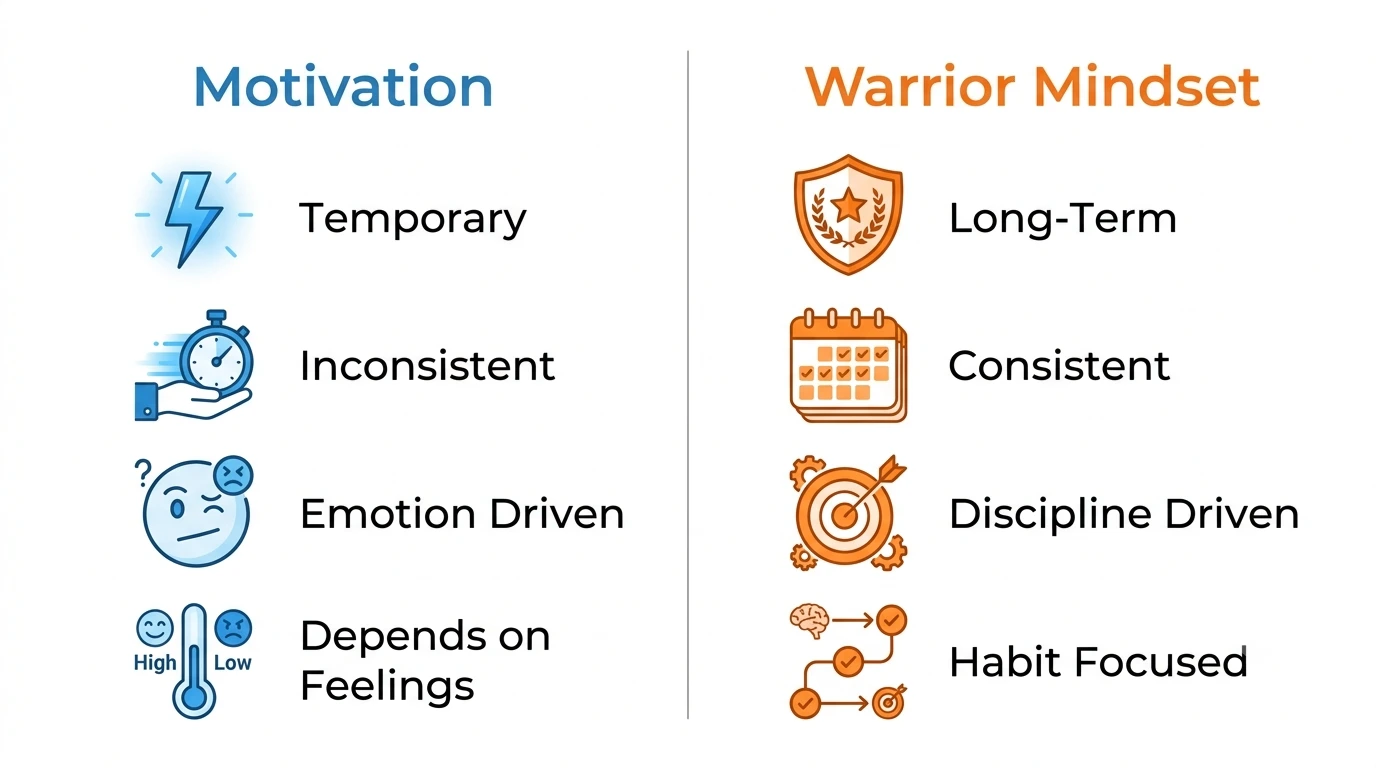
Many people believe success depends primarily on motivation. In reality, motivation is temporary, while discipline creates lasting results.
Why Motivation Comes and Goes
Motivation naturally fluctuates because it is influenced by emotions, energy levels, environment, sleep quality, stress, and external circumstances.
Some days people feel enthusiastic about pursuing goals, while other days they feel discouraged or distracted. Relying exclusively on motivation often leads to inconsistent progress.
Common reasons motivation decreases include:
- Fatigue
- Stress
- Lack of immediate results
- Competing priorities
- Unexpected setbacks
Understanding these fluctuations helps individuals avoid interpreting temporary low motivation as failure.
Why Discipline Creates Long-Term Results
Discipline provides stability regardless of emotional state.
A warrior mindset teaches individuals to continue taking meaningful action even when motivation is absent. This consistent behavior gradually compounds into significant long-term achievements.
Warrior mindset training emphasizes systems over feelings. If you want practical strategies for staying consistent even when motivation fades, read our guide on How to Build Discipline Without Motivation.
This principle reflects the idea behind “warrior mindset build your dream life without relying on motivation.” Sustainable success depends more on reliable habits than temporary inspiration.
Motivation vs Warrior Mindset
| Motivation | Warrior Mindset |
| Temporary | Consistent |
| Emotion-driven | Habit-driven |
| Unpredictable | Reliable |
| Depends on feelings | Depends on commitment |
| Encourages starting | Encourages finishing |
| Short-term energy | Long-term discipline |
Rather than waiting to “feel ready,” individuals with a warrior mindset establish systems that make productive behavior the default choice.
Daily Warrior Mindset Training Routine
Developing a warrior mindset requires intentional daily practice. A structured routine creates consistency while strengthening discipline and mental resilience.
Morning Practices
Morning habits establish the tone for the day.
Recommended morning practices include:
- Wake with intention instead of repeatedly delaying the alarm.
- Exercise to increase physical and mental energy.
- Practice meditation or mindful breathing.
- Review personal goals.
- Read educational material for 15–30 minutes.
These activities reinforce focus before external demands compete for attention.
Midday Habits
Throughout the day, maintain momentum by protecting focus and managing energy.
Helpful habits include:
- Prioritize high-impact tasks.
- Schedule uninterrupted deep work.
- Take movement breaks.
- Stay hydrated.
- Practice mindful breathing during stressful moments.
- Review progress at midday.
Consistent execution often matters more than perfect performance.
Evening Reflection
Evening reflection helps transform daily experiences into long-term learning.
Useful questions include:
- What did I accomplish today?
- What challenges did I overcome?
- What distracted me?
- What will I improve tomorrow?
- Which habit deserves more attention?
A consistent sleep routine also supports recovery, cognitive performance, and emotional regulation, making it an essential component of warrior mindset training.
Example Mindset Warrior Routine
- Wake with purpose.
- Exercise for 30–45 minutes.
- Meditate for 10 minutes.
- Review goals.
- Complete deep work before checking social media.
- Journal in the evening.
- Prepare for tomorrow.
- Maintain a consistent bedtime.
Learning how to have a warrior mindset is less about extraordinary effort and more about repeating these small, intentional behaviors every day. Over weeks and months, these habits strengthen discipline, improve resilience, and create a reliable foundation for long-term personal growth.
Conclusion
Warrior mindset training is a practical framework for developing the mental and emotional qualities needed to face challenges with confidence, discipline, and resilience. Rather than relying on temporary motivation, it encourages consistent habits, purposeful action, emotional regulation, and personal accountability. These qualities help individuals perform more effectively in their personal lives, careers, education, leadership roles, and long-term goals.
A healthy warrior mindset is not about aggression, emotional suppression, or striving for perfection. Instead, it emphasizes self-control, adaptability, courage, and continuous improvement. By practicing daily habits such as exercise, reflection, goal setting, focused work, and mindful decision-making, anyone can strengthen mental toughness while maintaining balance and compassion.
In our experience at Your Daily Thrive, sustainable personal growth comes from small, consistent actions repeated over time—not dramatic bursts of motivation. Building a warrior mindset is a lifelong process that rewards patience, persistence, and intentional practice.
The most important takeaway is simple: focus on building habits rather than waiting to feel motivated. Every disciplined action strengthens your resilience and brings you one step closer to becoming the strongest version of yourself.
Frequently Asked Questions
What is a warrior mindset?
A warrior mindset is a disciplined approach to thinking and acting that emphasizes resilience, emotional control, responsibility, courage, and consistent action. It focuses on overcoming challenges through self-discipline rather than relying on temporary motivation or emotional impulses.
What is the difference between a warrior mindset and a growth mindset?
A growth mindset focuses on believing that abilities can improve through learning and effort. A warrior mindset includes that belief while placing greater emphasis on discipline, resilience, accountability, emotional regulation, and taking consistent action during difficult situations.
How can beginners start warrior mindset training?
Beginners should start with small, sustainable habits instead of trying to change everything at once. A simple routine might include daily exercise, goal setting, journaling, reading, mindfulness, and weekly reflection. Consistency is more important than intensity during the early stages.
Can anyone develop a warrior mindset?
Yes. A warrior mindset is developed through deliberate practice rather than being an inborn personality trait. People of all ages and backgrounds—including students, professionals, entrepreneurs, athletes, and parents—can strengthen discipline, resilience, and emotional control through consistent habits.
How long does it take to build a warrior mindset?
Early improvements in focus and self-awareness may appear within a few weeks of consistent practice. However, building a lasting warrior mindset is an ongoing process. Most people notice meaningful habit formation and increased resilience after several months of regular practice.
Is a warrior mindset only for athletes or military personnel?
No. Although the concept has historical roots in military and athletic settings, modern warrior mindset training is widely applied to leadership, education, business, personal development, relationships, and everyday problem-solving. Its principles benefit anyone seeking greater mental strength and consistency.
What daily habits strengthen a warrior mindset?
Effective daily habits include:
- Waking with intention
- Regular physical exercise
- Meditation or mindful breathing
- Reading for continuous learning
- Journaling and self-reflection
- Reviewing daily goals
- Completing focused deep work
- Maintaining a consistent sleep schedule
Practicing these habits consistently helps reinforce discipline and resilience over time.
Can a warrior mindset improve productivity and resilience?
Yes. A warrior mindset encourages structured routines, emotional regulation, and disciplined action, which can improve productivity, stress management, confidence, and long-term consistency. By responding thoughtfully to setbacks instead of reacting emotionally, individuals often become more resilient and effective in achieving their goals.