
Introduction
A growth mindset is the belief that abilities and skills can develop through learning, effective strategies, practice, feedback, and persistence — rather than being fixed traits a person either has or lacks. Books growth mindset resources cover this idea from different angles: some explain the psychological research behind it, others offer practical exercises, and many use stories or real-world examples to show what growth-oriented thinking looks like in action. Choosing the right one depends less on popularity and more on the reader’s age, purpose, and learning style. Some books focus mainly on explaining the psychology of mindset, while others are built to help readers actively practice it through activities, journaling, or reflection. This guide breaks down the main categories, how they differ by age group, and how to evaluate whether a book will actually be useful rather than just motivational.
Quick Summary
- Growth mindset books explain how abilities can develop through learning, practice, strategies, feedback, and persistence.
- The most appropriate book depends on the reader’s age, purpose, reading level, and learning context.
- Books for children and students generally use stories, examples, and activities, while adult-oriented books often emphasize psychology, work, goals, and personal development.
- The strongest choices connect mindset principles with practical behavior rather than treating positive thinking alone as a growth mindset.
What Makes a Book a Growth Mindset Book?
A book qualifies as a growth mindset resource when it explains how abilities develop through process — not just outcome. Readers should look for material that ties learning to concrete actions: trying new strategies, using feedback, and revising after setbacks, rather than simply encouraging optimism.
Core ideas commonly explained in growth mindset books
Most credible titles in this category cover a consistent set of concepts:
- Fixed mindset vs. growth mindset
- Learning from mistakes
- Productive responses to challenges
- Effort paired with effective strategies
- Feedback and revision
- Persistence without glorifying ineffective effort
- Developing skills over time through deliberate practice
These ideas form the semantic core of books having a growth mindset, books related to growth mindset, and books on growth mindset more broadly. A title that touches on most of these areas is generally a stronger fit than one that only repeats motivational slogans.
Growth mindset vs. generic positive-thinking books
Optimism alone does not constitute a growth mindset. In our experience helping readers build better habits, the books that create real change are the ones that connect belief with method — not the ones that claim anyone can achieve anything simply by trying harder. A genuine growth mindset acknowledges that effort must be paired with strategy, feedback, and adjustment. Generic self-help content often skips this nuance, framing willpower as sufficient on its own, which can set unrealistic expectations and lead to frustration when effort alone doesn’t produce results.
What Types of Growth Mindset Books Are Available?
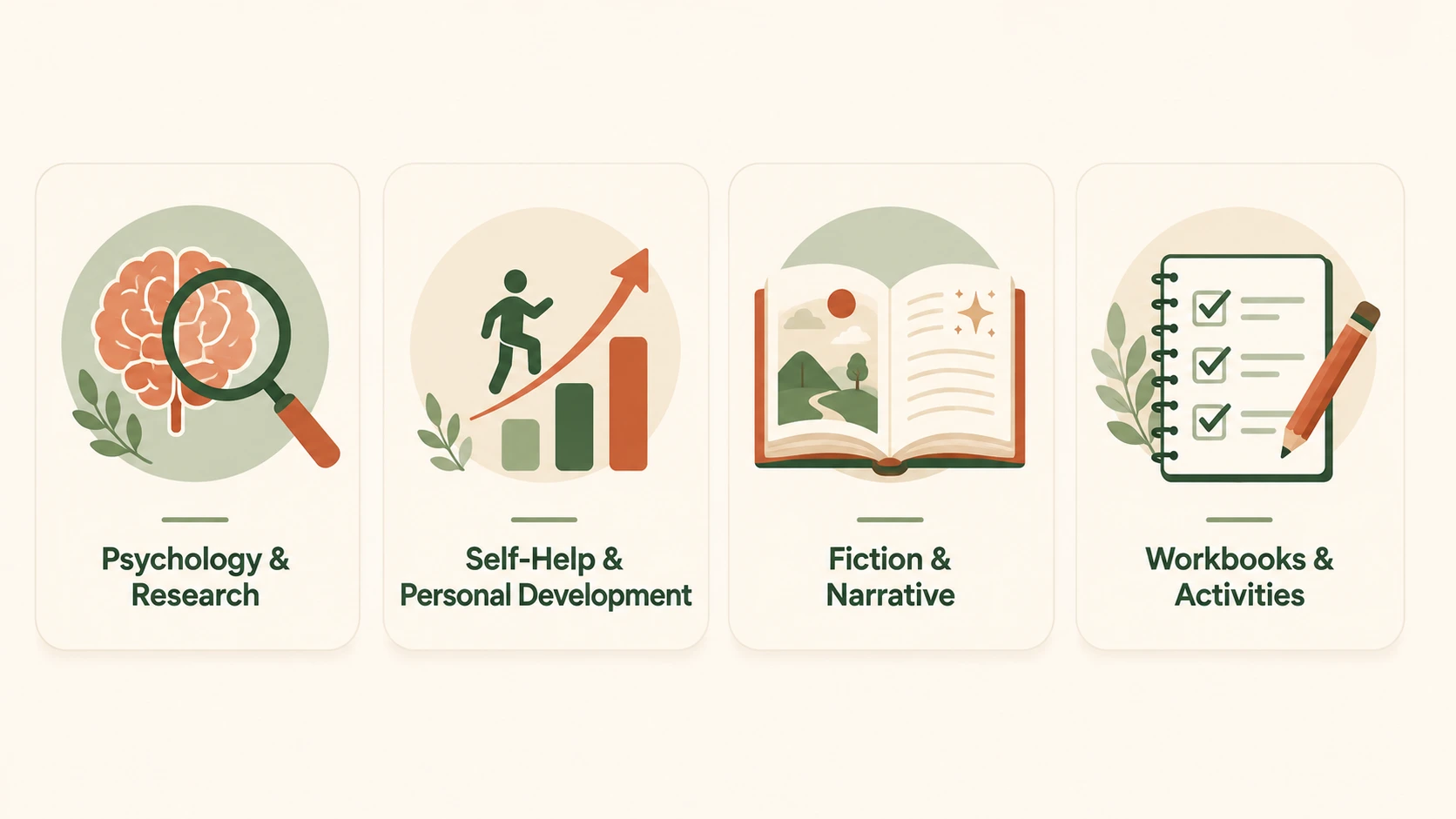
Books on this topic are best understood by audience, purpose, and format rather than as one undifferentiated list.
Psychology and research-based books
These titles explore the research foundations behind growth mindset theory, often drawing on established behavioral science and cognitive psychology. Psychology books growth mindset resources tend to explain why the concept works, citing studies on learning, motivation, and neuroplasticity, and they differ from practical self-help books by prioritizing explanation over exercises.
Self-help and personal-development books
Self-help books growth mindset titles are aimed at adult readers seeking to apply the concept to daily life. Books on mindset and success in this category typically connect growth mindset with resilience, goal setting, learning new skills, and behavior change, offering frameworks readers can apply to careers, relationships, and personal goals. Books about growth mindset for adults generally fall into this bucket.
Fiction and narrative books
Fiction books growth mindset titles use characters who face setbacks, make mistakes, and adapt over time to model the concept indirectly. Stories can make abstract psychological ideas easier to understand, particularly for children and young readers, because they show mindset principles in action rather than explaining them abstractly.
Non-fiction, workbooks, and activity-based books
Non-fiction books growth mindset resources split into two functional types: those that teach concepts and those that provide structured practice. Workbook-style resources typically include reflection prompts, journaling exercises, and practice tasks designed to move readers from understanding a concept to applying it consistently.
How Do Growth Mindset Books Differ by Age?
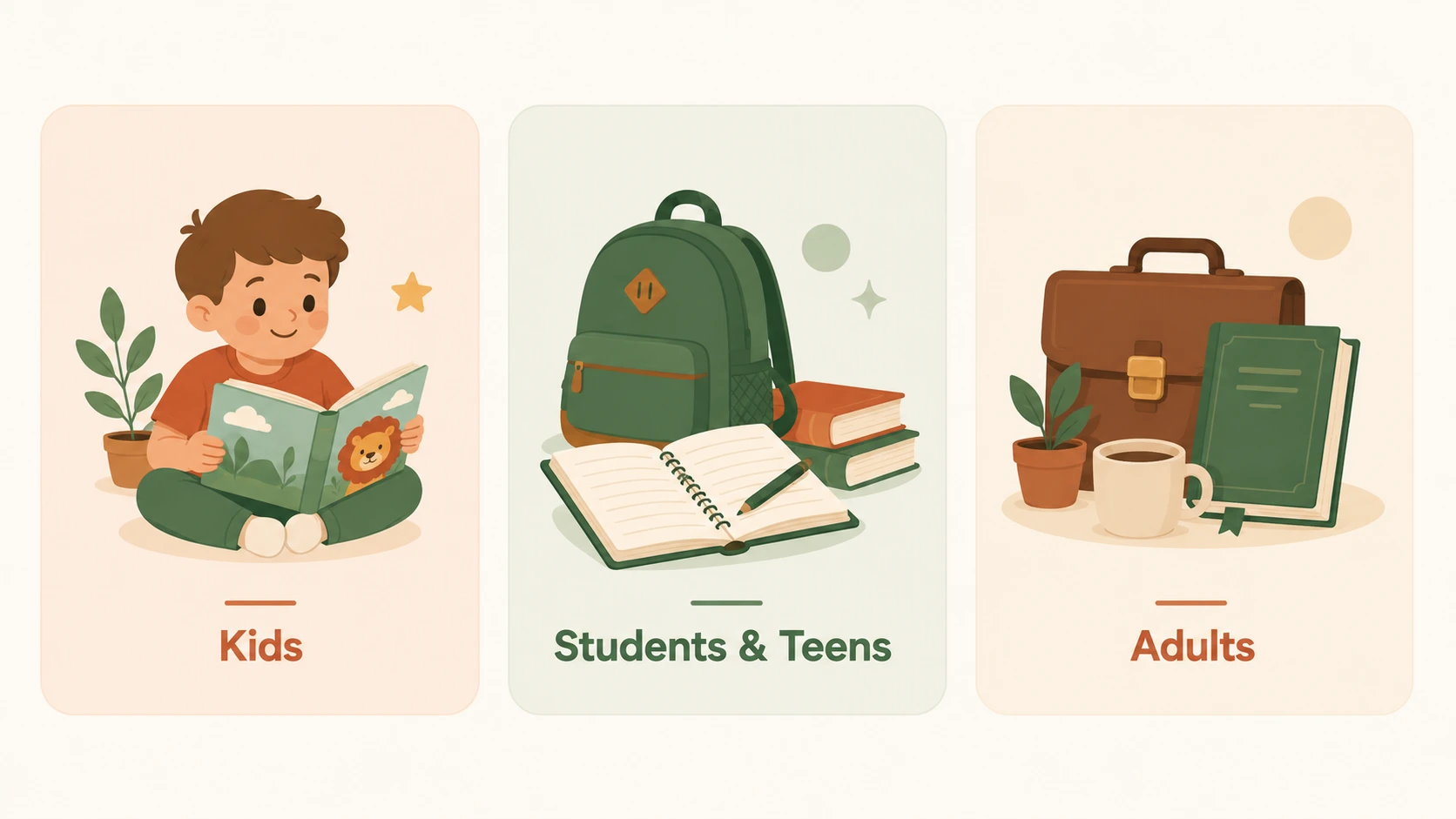
Reading needs and developmental stage should guide book selection more than general popularity rankings.
Growth mindset books for kids
Growth mindset books for kids and kids books growth mindset titles rely on age-appropriate storytelling: simple language, illustrations, repetition, and relatable characters. Picture books growth mindset resources typically introduce the idea of mistakes and challenges gently, without creating pressure to always “try harder,” which can otherwise backfire with young children.
Growth mindset books for students and teens
Growth mindset books for students help readers apply the concept to studying, difficult subjects, handling feedback, and recovering from exam setbacks. Books growth mindset for teens often go further, addressing identity, confidence, peer comparison, and long-term skill development as teens navigate more complex social and academic pressures. “Growth mindset books for kids rely on age-appropriate storytelling: simple language, illustrations, repetition, and relatable characters.
Growth mindset books for adults
Books growth mindset adults resources apply the concept to careers, learning new skills, relationships, goals, and leadership. Compared with children’s books, adult-oriented material generally offers more depth, more nuanced examples, and more direct practical application to work and life decisions.
Books for specific age groups
Age-specific recommendations, such as growth mindset books for 10 year olds, tend to be more useful than universal reading lists because they account for reading ability, maturity, attention span, and relevance to a reader’s current challenges. Age is a useful starting filter, but it should not be the only selection criterion.
How Can Books Help Someone Develop a Growth Mindset?
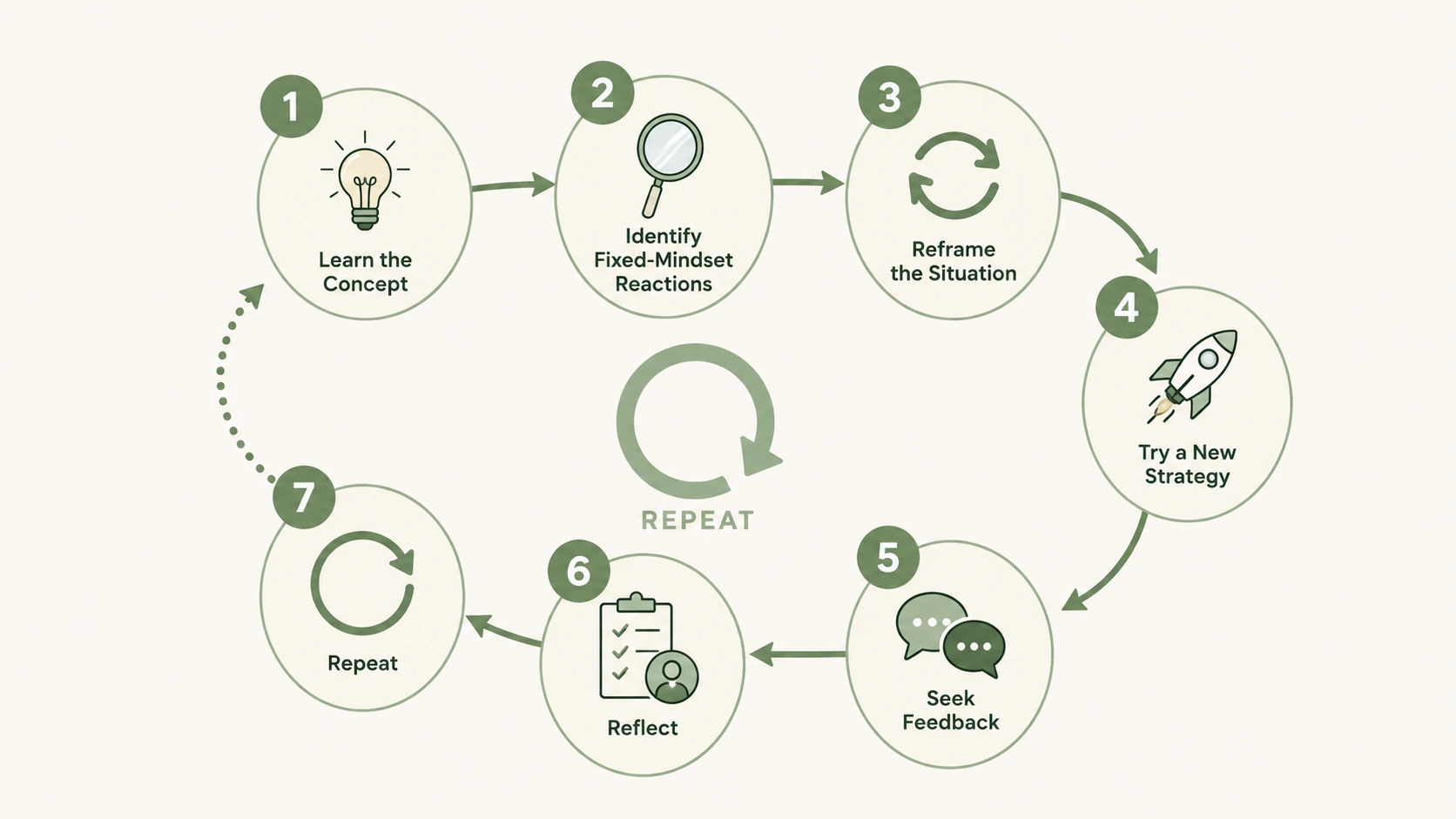
Reading alone rarely changes mindset on its own — applying the ideas is what produces change.
From reading to practical behavior
A simple progression connects reading to habit change:
- Learn the concept.
- Identify fixed-mindset reactions.
- Reframe the situation.
- Try a different strategy.
- Seek feedback.
- Reflect on what worked.
- Repeat the process.
This progression links reading directly to habit formation, goal setting, productivity, and resilience.
Why practice matters more than simply finishing a book
There’s a meaningful difference between consuming motivational information and changing behavior. Your Daily Thrive recommends treating each book as a starting point rather than an endpoint: reflection, experimentation, and feedback are what turn abstract concepts into durable habits.
Fixed Mindset vs. Growth Mindset: What Should Readers Learn From Books?
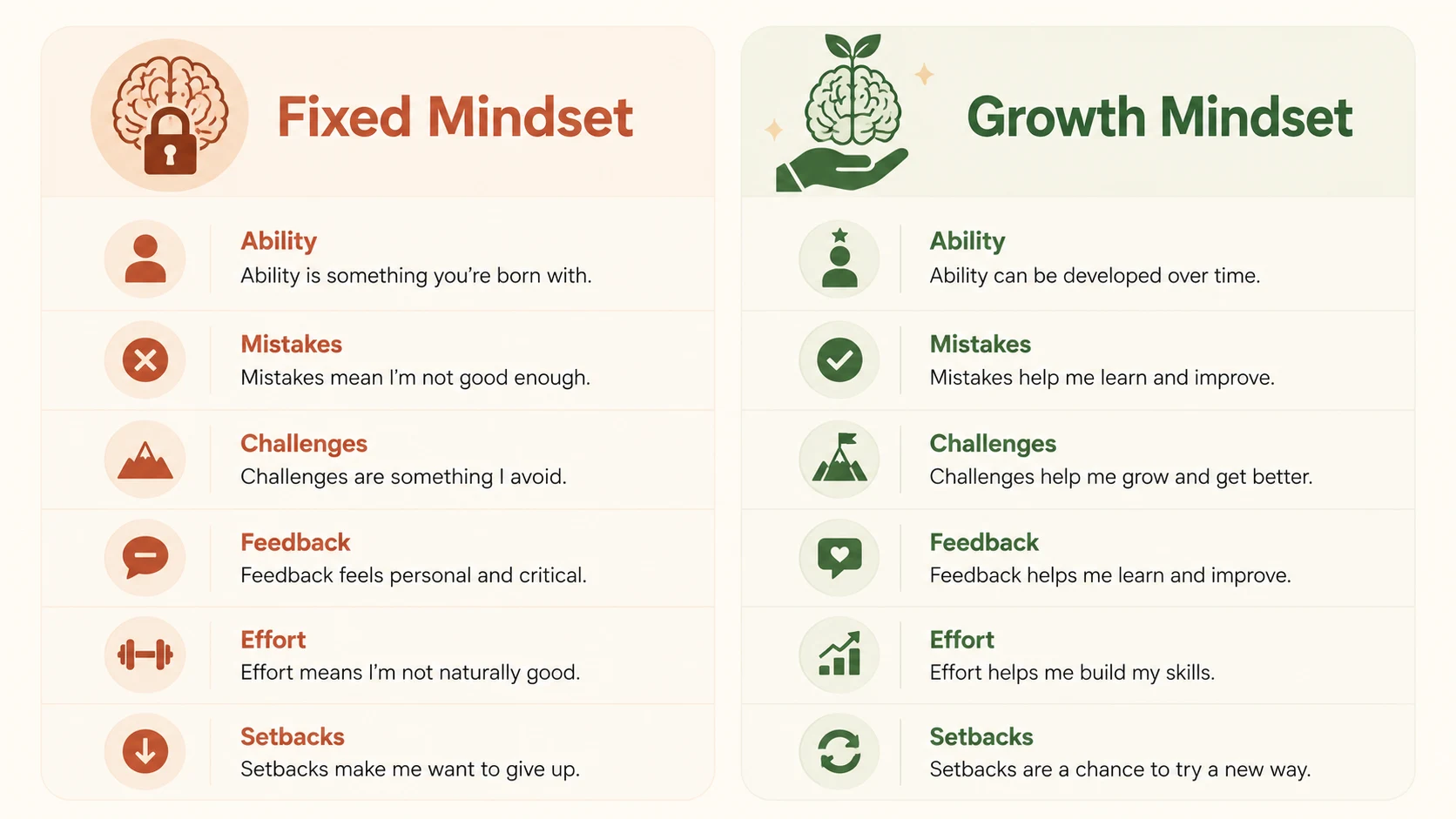
| Area | Fixed mindset | Growth mindset |
|---|---|---|
| Ability | Seen as relatively unchangeable | Viewed as developable |
| Mistakes | Evidence of inability | Information for learning |
| Challenges | May be avoided | Approached as opportunities to learn |
| Feedback | Can feel threatening | Can provide useful information |
| Effort | May be viewed as proof of low ability | Can be part of skill development |
| Setbacks | May lead to giving up | Can prompt strategy changes |
Growth mindset does not mean ignoring real limitations, circumstances, talent gaps, resources, or legitimate constraints. Books that address books on fixed vs. growth mindset accurately will acknowledge these boundaries rather than promising unlimited potential.
How Should You Choose a Growth Mindset Book?
Selecting a book effectively requires more than checking a bestseller list.
Choose according to your purpose
Consider whether the reader wants:
- Psychological understanding
- Personal development
- Academic application
- Parenting or teaching support
- Children’s stories
- Practical exercises
- Fictional examples
Evaluate the evidence and depth
Check whether psychological claims are explained accurately, and distinguish research-based discussion from unsupported motivational claims. Stronger books also explain limitations and context rather than presenting growth mindset as a cure-all.
Match the book to reading level and learning style
Consider age, reading ability, preferred format, and whether the reader learns better through explanation, stories, examples, or exercises. Matching format to learning style improves the odds that the material is actually used rather than left unfinished.
Common Mistakes People Make When Using Growth Mindset Books
Reading about growth mindset does not automatically produce one.
Treating effort as the only solution
Effort without an effective strategy may not improve performance. Feedback and strategy adjustment need to complement persistence, not replace it.
Using growth mindset as forced positivity
Acknowledging frustration, difficulty, or genuine limitations can coexist with a growth mindset. Suppressing negative reactions in the name of positivity is not the same as developing durable skills.
Reading without applying the ideas
There’s a well-documented gap between knowledge and behavior. Reflection and practical experimentation are what close that gap.
Choosing material that does not match the reader
A children’s picture book, an academic psychology text, and an adult self-help book serve different purposes. Mismatched material is a common reason readers feel a book “didn’t work.”
How Can Growth Mindset Books Be Used in Different Settings?
At school and in academic learning
Mindset principles connect naturally to challenging subjects, study habits, feedback, revision, and academic setbacks. Teachers can use books as discussion starters rather than as substitutes for effective teaching methods.
At home with children
Parents can read together, discuss characters’ decisions, and ask children what they learned from mistakes, reinforcing the concept through conversation rather than lecture.
In professional and adult learning
In the workplace, the same concepts apply to learning new skills, career development, receiving feedback, and adapting to change — areas where a fixed mindset can quietly limit growth over time.
Growth Mindset Books vs. Strong Mindset Books vs. Success Books
| Book category | Primary focus | Typical questions answered |
|---|---|---|
| Growth mindset | Developing beliefs and behaviors around learning | How can I respond differently to challenges and mistakes? |
| Strong mindset | Mental resilience, discipline, and coping | How can I become more mentally resilient? |
| Success/mindset | Achievement, goals, performance, and personal development | How can my thinking affect progress toward goals? |
These categories overlap but are not interchangeable. A book about success, for example, may contain growth-mindset principles without being primarily about growth mindset — which is a useful distinction when searching for strong mindset books pdf or books on mindset and success specifically.
What Should You Know About Digital and Alternative Book Formats?
Format and content quality are separate considerations, and one does not guarantee the other.
Digital and online reading
Digital editions offer convenience and accessibility, but readers should confirm that any digital copy is authorized and complete before relying on it, since incomplete or unauthorized versions can omit exercises or key sections.
Audio and alternative formats
Audiobooks can work well for adult learners, commuters, or readers who prefer listening. However, they have limitations when a book relies heavily on diagrams, written exercises, or visual activities that don’t translate to audio.
How to Build a Growth Mindset Reading Practice
A simple weekly reading-and-practice routine
- Read a manageable section.
- Identify one mindset principle.
- Connect it to a real challenge.
- Apply one strategy.
- Record the result.
- Reflect and adjust.
Difficulty and time investment
Reading itself is generally low-barrier, while changing habitual responses takes longer. Time requirements vary by book length, reading speed, age, and whether exercises are completed alongside the reading.
Results timeline
Awareness can develop quickly — often within a single chapter or discussion — while durable behavior change generally requires repeated practice over weeks or months. As of 2026, behavioral science guidance increasingly emphasizes that results vary according to environment, consistency, feedback, and the type of challenge being addressed, rather than following a fixed timeline.
How Do You Know Whether a Growth Mindset Book Is Actually Helping?
Practical indicators are more reliable than how motivated a reader feels immediately after finishing a book. Look for changes such as:
- Greater willingness to attempt difficult tasks
- More constructive responses to mistakes
- Increased use of feedback
- Greater willingness to change strategies
- More realistic persistence
- Better reflection after setbacks
Feeling motivated right after reading is not, on its own, evidence of lasting change — sustained behavior shift is the more reliable signal. If you want a more structured check-in, a growth mindset quiz for adults can help you track these shifts over time rather than relying on memory alone.
Frequently Asked Questions About Growth Mindset Books
What are growth mindset books?
Growth mindset books teach or explore the idea that abilities can develop through learning, strategies, practice, feedback, and persistence, rather than being fixed traits.
Which growth mindset books are suitable for students?
The right choice depends on age, academic needs, reading level, and whether the student benefits more from stories, psychology, examples, or hands-on activities.
What are good growth mindset books for kids?
Suitable children’s books use age-appropriate language, storytelling, illustrations, and practical examples that introduce mistakes and challenges without creating pressure to always try harder. Growth mindset books for kids rely on age-appropriate storytelling: simple language, illustrations, repetition, and relatable characters.
What are growth mindset books for adults about?
Adult-focused titles typically address personal development, learning new skills, resilience, career challenges, goal setting, feedback, and behavior change.
Are fiction books useful for learning about growth mindset?
Yes — fictional characters can demonstrate persistence, learning from mistakes, adaptation, and constructive responses to challenges in ways that are often easier to relate to than direct instruction.
What is the difference between a fixed mindset and a growth mindset?
A fixed mindset treats abilities as largely unchangeable, while a growth mindset treats abilities as developable through effort, feedback, and effective strategies, particularly in how a person responds to challenges and mistakes.
Can reading a growth mindset book actually change your mindset?
Reading can increase awareness, but meaningful change generally requires applying the concepts through repeated behavior, reflection, feedback, and strategy adjustment over time.
Conclusion
A genuinely useful growth mindset book connects psychological principles to practical behavior rather than relying on positive thinking alone. The best choice among books growth mindset depends on the reader’s age, purpose, the depth of evidence behind the material, preferred reading style, and how much practical application the book offers. Growth mindset, at its core, is about developing abilities through effective learning processes — trying strategies, using feedback, and adjusting after setbacks — not simply feeling optimistic. The clearest takeaway: choose material that fits the reader, understand the underlying principles, and treat reading as the starting point for practice rather than the finish line.