
Introduction
The best books for success mindset do more than motivate — they reshape the beliefs, habits, and decision-making patterns that determine long-term outcomes. A success mindset is the combination of thinking patterns, self-belief, and behavioral habits that allow a person to pursue goals with resilience and clarity. Reading remains one of the most effective, low-cost ways to build this mindset because well-researched books condense decades of psychology, behavioral science, and real-world experience into practical frameworks. This guide covers growth mindset, confidence, business thinking, and lifelong learning as they relate to selecting the right titles, and provides a structured path for applying what you read.
Quick Summary
- The best success mindset books help reshape beliefs, habits, and decision-making rather than simply motivate.
- Different books serve different goals, including confidence, resilience, business success, and personal growth.
- Reading consistently and applying lessons is more valuable than reading many books quickly.
- Choosing books based on your current challenges produces better long-term results.
What Is a Success Mindset?
Definition of a Success Mindset
A success mindset is a set of thinking patterns — including beliefs, habits, resilience, and adaptability — that shape how a person interprets challenges and pursues goals. It is distinct from talent or intelligence: talent describes natural ability, while mindset describes how a person responds to effort, failure, and feedback. Someone with strong natural ability but a fixed mindset may avoid challenges that risk failure, while someone with an adaptive, growth-oriented mindset tends to treat setbacks as information rather than proof of inability. Understanding this distinction also explains why growth mindset is important as a foundation for broader personal and professional success.
Why Mindset Influences Personal and Professional Success
Thinking patterns directly shape outcomes because they determine which actions a person takes and how consistently they take them. In the workplace, employees who interpret feedback as useful information tend to improve faster than those who interpret it as personal criticism. In education, students who believe ability can be developed through effort typically persist longer through difficult material. In entrepreneurship, founders who treat early failures as data points — rather than verdicts on their potential — are more likely to iterate toward a viable business. These patterns repeat across everyday life: the same event (a rejection, a mistake, a setback) produces different behavior depending on the underlying mindset.
What Makes a Mindset Book Worth Reading?
Characteristics of High-Quality Mindset Books
Strong mindset books share several traits:
- Practical advice that can be applied immediately, not just abstract inspiration
- Research-backed principles drawn from psychology or behavioral science
- Actionable exercises, frameworks, or self-assessments
- Real-world examples that illustrate the concept in practice
- Long-term applicability beyond a single life stage or career phase
Choosing Books Based on Your Goals
The most useful mindset book depends on the specific outcome a reader is pursuing:
- Personal development — books focused on identity, habits, and self-awareness
- Career advancement — books on discipline, focus, and professional decision-making
- Leadership — books on influence, communication, and team psychology
- Business — books on entrepreneurial thinking and risk tolerance
- Confidence — books on self-belief and overcoming fear
- Productivity — books on systems, habits, and time management
- Emotional resilience — books on handling setbacks and stress
Matching the book to the goal, rather than choosing the most popular title, tends to produce faster and more relevant results.
Best Books for Success Mindset
The following selections are widely regarded as foundational success mindset books because they combine research-backed psychology with practical, repeatable frameworks. Selection criteria include long-term relevance, actionable content, and applicability across different life and career stages.
Best Overall Mindset Books
Mindset by Carol Dweck
- Main lesson: Abilities can be developed through effort, strategy, and feedback rather than being fixed traits.
- Best suited for: Readers who avoid challenges out of fear of failure.
- Key mindset takeaway: A growth mindset reframes failure as feedback rather than identity.
- Practical application: Replace “I’m not good at this” with “I’m not good at this yet.” For readers who want a quick dose of inspiration between chapters, our collection of growth mindset quotes from Carol Dweck captures the book’s core ideas in shareable form.
Atomic Habits by James Clear
- Main lesson: Small, consistent habits compound into significant long-term change.
- Best suited for: Readers who struggle with consistency or follow-through.
- Key mindset takeaway: Identity change drives lasting behavior change more than willpower alone.
- Practical application: Build systems around tiny, repeatable actions rather than relying on motivation.
The 7 Habits of Highly Effective People by Stephen R. Covey
- Main lesson: Effectiveness comes from character-based principles rather than quick technique.
- Best suited for: Readers seeking a comprehensive personal and professional framework.
- Key mindset takeaway: Proactivity and clear priorities create sustainable success.
- Practical application: Distinguish between urgent tasks and genuinely important goals each week.
Think and Grow Rich by Napoleon Hill
- Main lesson: Clear goals combined with persistence and focused desire drive achievement.
- Best suited for: Readers interested in classic success psychology and goal-setting.
- Key mindset takeaway: Defined purpose sustains motivation through setbacks.
- Practical application: Write specific, measurable goals rather than vague ambitions.
The Psychology of Money by Morgan Housel
- Main lesson: Financial success depends more on behavior than technical knowledge.
- Best suited for: Readers who want a financial mindset alongside personal growth.
- Key mindset takeaway: Long-term patience often outperforms short-term optimization.
- Practical application: Prioritize consistent financial habits over chasing high returns.
The Magic of Thinking Big by David J. Schwartz
- Main lesson: The size of a person’s goals shapes the size of their results.
- Best suited for: Readers who underestimate their own potential.
- Key mindset takeaway: Confidence and belief precede capability in many cases.
- Practical application: Set goals slightly beyond current comfort level.
Grit by Angela Duckworth
- Main lesson: Sustained passion and perseverance predict long-term achievement more than talent.
- Best suited for: Readers pursuing long-term, multi-year goals.
- Key mindset takeaway: Consistency over time outweighs short bursts of intensity.
- Practical application: Track effort and consistency rather than only outcomes.
Can’t Hurt Me by David Goggin
- Main lesson: Mental toughness can be deliberately built through discomfort and discipline.
- Best suited for: Readers seeking resilience and extreme accountability.
- Key mindset takeaway: Discomfort tolerance expands personal capability.
- Practical application: Practice small, deliberate discomfort to build mental resilience.
Best Books by Mindset Goal
Best Books for Growth Mindset
A growth mindset is the belief that abilities can be developed through dedication and effort. Beginner-friendly options include Mindset by Carol Dweck for foundational theory and Atomic Habits for translating growth-oriented beliefs into daily action.
Best Books for Confidence
Confidence-focused reading typically addresses self-belief, overcoming fear, and building self-esteem. The Magic of Thinking Big and Can’t Hurt Me both address confidence from different angles — one through belief and goal-setting, the other through discipline and discomfort tolerance.
Best Books for Business Mindset
Business-oriented mindset books emphasize entrepreneurial thinking, decision-making under uncertainty, leadership, and opportunity recognition. Think and Grow Rich and The Psychology of Money both support this goal, covering long-term thinking and financial behavior relevant to entrepreneurs and professionals.
Best Books for Adults Seeking Personal Growth
Adults balancing career, relationships, and long-term development often benefit from a combination of habit-focused and identity-focused books, such as Atomic Habits and The 7 Habits of Highly Effective People, which address career, relationships, and financial mindset within a single framework.
Comparison Guide — Which Mindset Book Fits Your Goals?
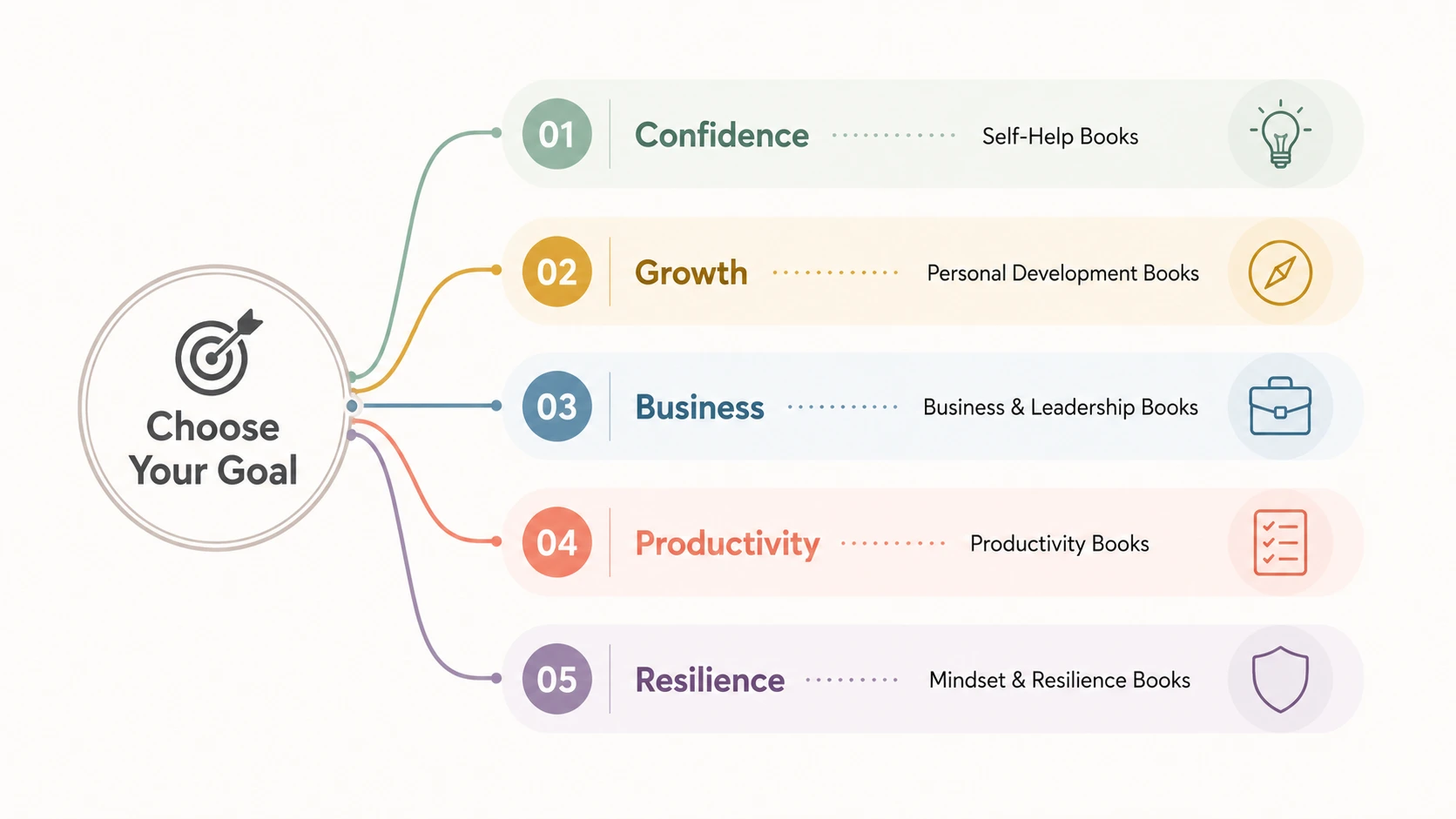
| Goal | Recommended Book Type | Best For |
|---|---|---|
| Confidence | Confidence-focused | Self-belief |
| Growth | Growth mindset | Learning |
| Business | Entrepreneurial mindset | Professionals |
| Productivity | Habit books | Daily improvement |
| Resilience | Mental toughness | Handling setbacks |
This table allows readers to quickly match a personal goal to the type of book most likely to produce results, rather than selecting titles based on popularity alone.
Growth Mindset vs Success Mindset
Key Differences
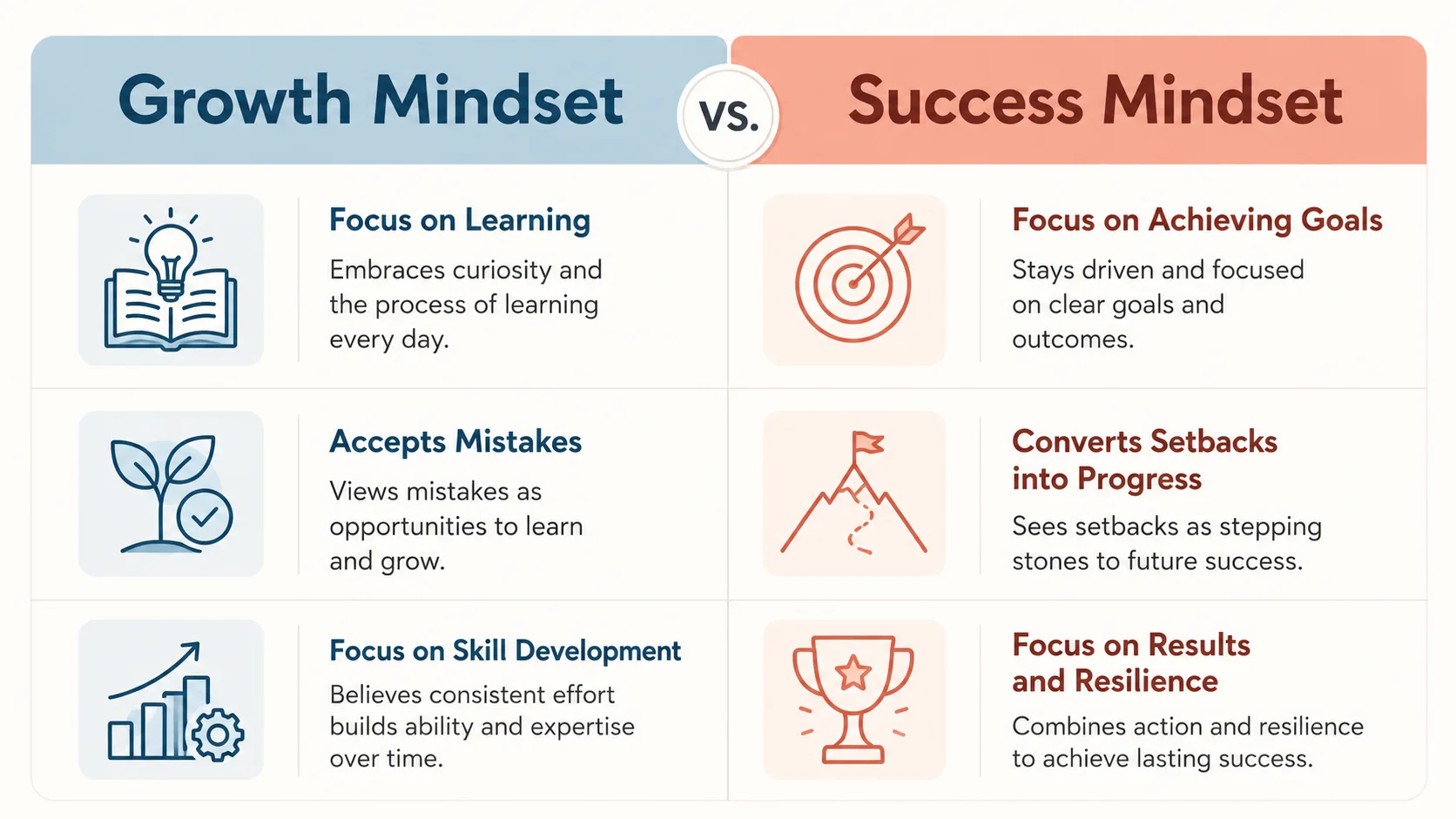
A growth mindset centers on the belief that abilities can improve through effort, while a success mindset centers on the broader set of habits and thinking patterns used to achieve specific goals. Growth mindset is primarily about learning and skill development; success mindset is primarily about results and resilience across multiple areas of life.
Where They Overlap
| Growth Mindset | Success Mindset |
|---|---|
| Focus on learning | Focus on achieving goals |
| Accepts mistakes | Converts setbacks into progress |
| Skill development | Results and resilience |
Both concepts overlap significantly: a growth mindset is often a core component within a broader success mindset, since the willingness to learn and adapt supports long-term achievement.
How Reading Mindset Books Creates Lasting Change
How Books Influence Thinking
Books introduce new mental models and vocabulary that allow readers to reframe experiences. A concept like “growth mindset” gives readers a specific lens for interpreting failure, which can shift behavior even after a single read.
Turning Knowledge Into Daily Habits
Information alone rarely changes behavior. Lasting change requires translating concepts into small, repeatable actions — such as a daily reflection prompt or a specific habit trigger — that reinforce the idea until it becomes automatic.
Why Action Matters More Than Reading
Reading builds awareness, but action builds capability. In our experience helping readers build better habits, the people who see the most change are those who apply one or two concepts consistently rather than trying to implement an entire book at once.
Beginner Mistakes When Reading Mindset Book
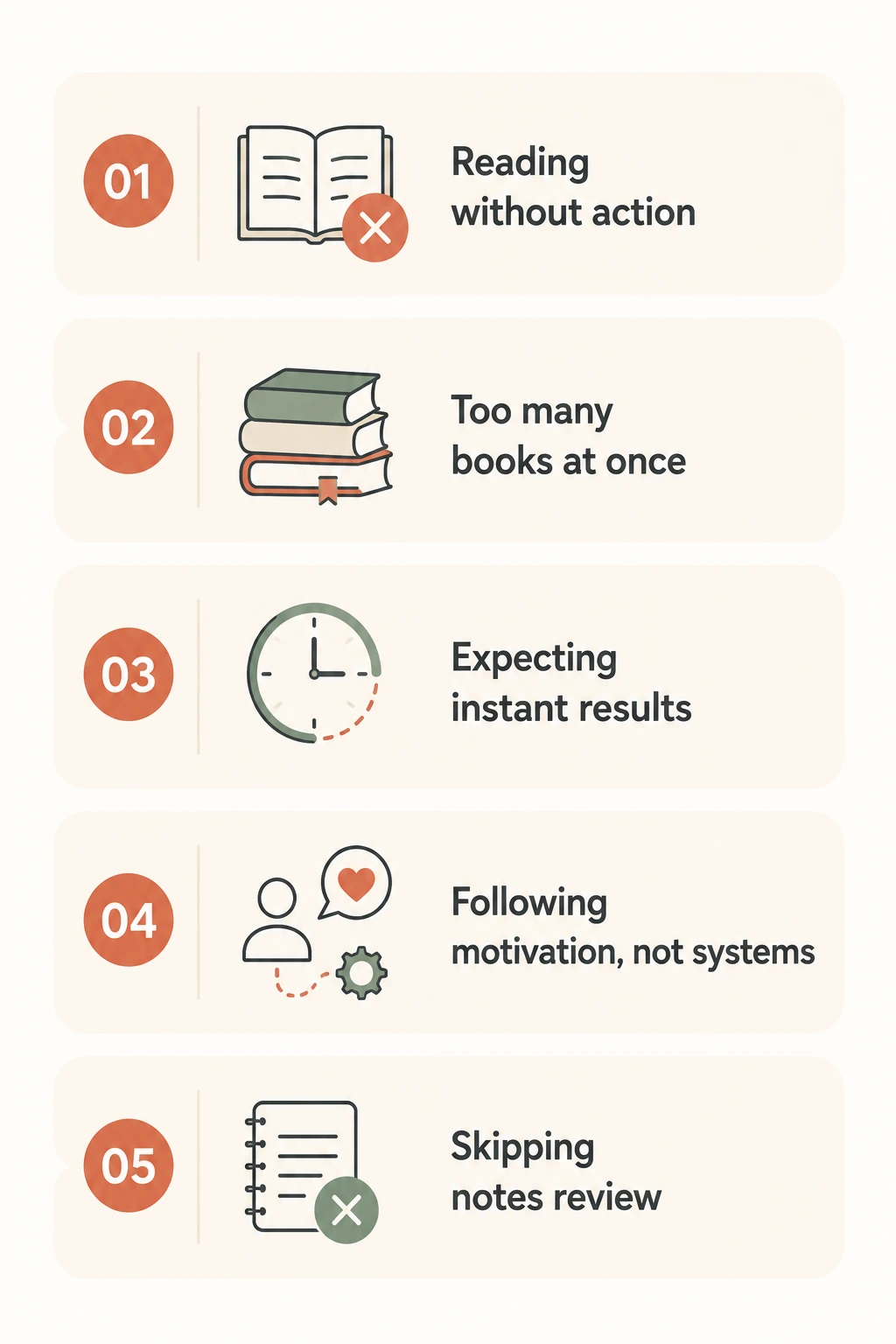
Common mistakes include:
- Reading without taking action — treating books as entertainment rather than a source of applied change.
- Consuming too many books at once — leading to shallow understanding of any single framework.
- Expecting instant transformation — mindset change is gradual, not immediate.
- Following motivation instead of systems — relying on short-term inspiration rather than repeatable routines.
- Not reviewing notes — losing insights that were never revisited or applied.
These mistakes happen because reading feels productive on its own, even without follow-through. Preventing them requires a structured system: taking notes, selecting one action per book, and scheduling a follow-up review.
Practical Guide to Applying Lessons From Mindset Books
Daily Reading Routine
Your Daily Thrive recommends setting a fixed, short daily reading window — even 15 to 20 minutes — rather than sporadic long sessions, since consistency builds retention more effectively than volume.
Journaling Key Insights
Writing down one or two key insights per chapter helps convert passive reading into active reflection, improving long-term recall. If you’re unsure where to start, our list of journaling prompts for self growth offers ready-made questions to deepen reflection after each reading session.
Setting Weekly Action Goals
Choose one specific, measurable action per week based on the current book, rather than attempting to apply every concept simultaneously.
Measuring Personal Progress
Track progress through simple indicators such as habit consistency, mood, or goal completion rate, reviewed weekly or monthly.
How Long Does It Take to Develop a Success Mindset?
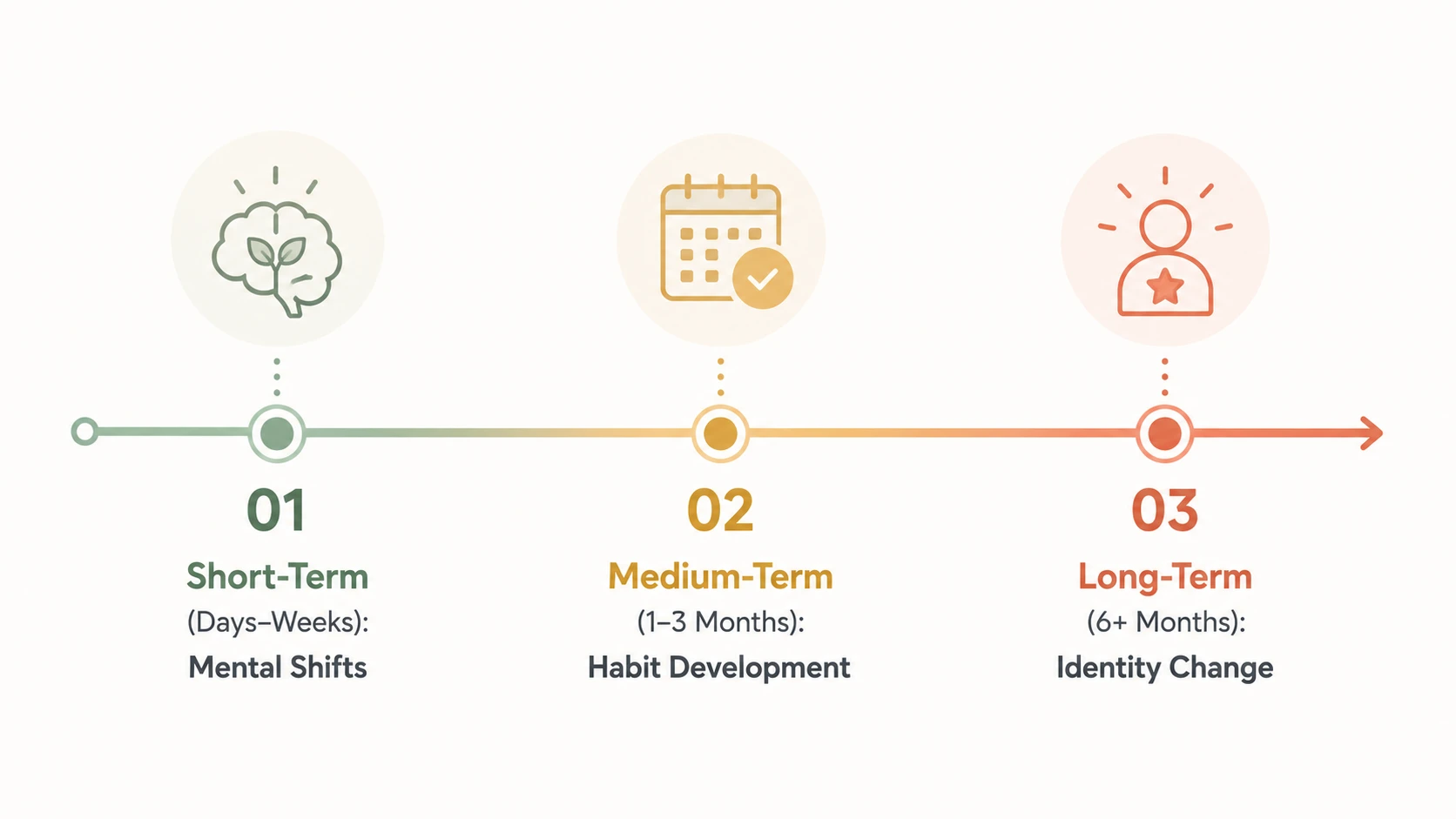
Mindset development typically occurs in three stages:
- Short-term mental shifts — within days to weeks, readers often notice a change in how they interpret setbacks.
- Medium-term habit development — over one to three months, consistent application turns new thinking patterns into habits.
- Long-term identity change — over six months or longer, repeated behavior reshapes self-perception and default responses to challenges.
The pace of change depends on consistency, environment, deliberate practice, and personal life circumstances. As of 2026, behavioral science increasingly emphasizes environment design — structuring daily surroundings to support desired habits — as a key accelerator of mindset change, alongside repetition and reflection.
Common Challenges and How to Overcome Them
Losing Motivation
Motivation naturally fluctuates. Relying on systems and scheduled habits, rather than emotional motivation, sustains progress during low-motivation periods.
Information Overload
Reading too many books without application creates confusion rather than clarity. Limiting focus to one framework at a time prevents overload.
Inconsistent Reading Habits
Irregular reading reduces retention. Fixed daily or weekly reading blocks improve consistency more effectively than open-ended intentions.
Applying Knowledge in Real Life
Concepts often remain theoretical without a specific implementation plan. Selecting one concrete action per concept bridges the gap between knowledge and behavior.
Frequently Overlooked Factors That Influence Mindset
Several factors beyond book selection significantly affect mindset development:
- Environment — surroundings that reinforce or undermine desired habits
- Peer influence — the mindset and behavior of people in a person’s immediate circle
- Sleep and mental energy — cognitive resources required for self-regulation and learning
- Emotional regulation — the ability to manage stress and setbacks without derailing progress
- Long-term consistency — sustained effort across months rather than short bursts
- Reflection and feedback — regularly reviewing what is and isn’t working
How to Build a Personal Mindset Reading Plan
Building an effective reading plan involves:
- Choosing one goal — such as confidence, business thinking, or resilience
- Selecting complementary books — titles that reinforce the same goal from different angles
- Scheduling reading sessions — fixed, recurring time blocks rather than irregular reading
- Reviewing progress — periodic check-ins on applied habits and outcomes
- Revisiting favorite books annually — reinforcing key concepts as circumstances change
Conclusion
A success mindset is built through consistent thinking patterns — beliefs, habits, and resilience — rather than talent alone, and the best books for success mindset accelerate this process by translating psychology and behavioral science into practical frameworks. Selecting the right titles based on a specific goal, whether confidence, business thinking, or personal growth, produces more relevant results than reading popular titles at random. Ultimately, applying lessons consistently through habits, journaling, and reflection determines whether a book creates lasting change or remains simply an interesting read. Readers who choose the best books for success mindset and apply them deliberately are more likely to see measurable, long-term improvement in both personal and professional outcomes.
Frequently Asked Questions
What are the best books for developing a success mindset?
Widely recommended titles include Mindset, Atomic Habits, The 7 Habits of Highly Effective People, Think and Grow Rich, The Psychology of Money, The Magic of Thinking Big, Grit, and Can’t Hurt Me, each addressing a different aspect of mindset development.
Which mindset book is best for beginners?
Mindset by Carol Dweck and Atomic Habits by James Clear are commonly recommended starting points because they introduce foundational concepts in accessible, practical language.
What is the difference between a growth mindset and a success mindset?
A growth mindset focuses specifically on the belief that abilities can improve through effort, while a success mindset encompasses a broader set of habits and thinking patterns used to achieve goals across multiple life areas.
How many mindset books should I read each year?
There is no fixed number, but reading fewer books with deeper application typically produces better results than reading many books without follow-through.
Are mindset books effective without taking action?
Mindset books primarily build awareness; lasting change requires applying specific lessons through habits, journaling, and consistent practice rather than reading alone.
Which books help improve confidence and resilience?
The Magic of Thinking Big and Can’t Hurt Me are frequently recommended for confidence and resilience, addressing self-belief and mental toughness from different perspectives.
What qualities should I look for in a mindset book?
Look for practical advice, research-backed principles, actionable exercises, real-world examples, and long-term applicability beyond a single life stage.
Can business mindset books also improve personal success?
Yes. Business mindset books often address decision-making, risk tolerance, and long-term thinking that apply equally well to personal goals, relationships, and financial habits.