

Introduction
An athletic mindset is the combination of mental habits, attitudes, and psychological skills that help individuals perform consistently, overcome challenges, and pursue continuous improvement. While physical ability is important, research in sports psychology shows that focus, resilience, confidence, and self-discipline often determine how effectively athletes use their skills under pressure. The mindset of an athlete is not limited to professional sports. It can help anyone develop persistence, handle setbacks, and achieve long-term goals. Understanding how an athlete mindset works provides valuable insights into performance, growth, and success in both sports and everyday life.
By Your Daily Thrive | Self-Improvement & Personal Growth Expert
Quick Summary
- An athletic mindset combines discipline, resilience, focus, confidence, and adaptability.
- Sports psychology shows that mental skills significantly influence performance outcomes.
- Strong athlete mindsets are built through practice, not inherited traits.
- Team culture, communication, and accountability play major roles in mental development.
- Athletic thinking can improve success in work, education, and personal growth.
What Is an Athletic Mindset?
Athletic Mindset Meaning Explained
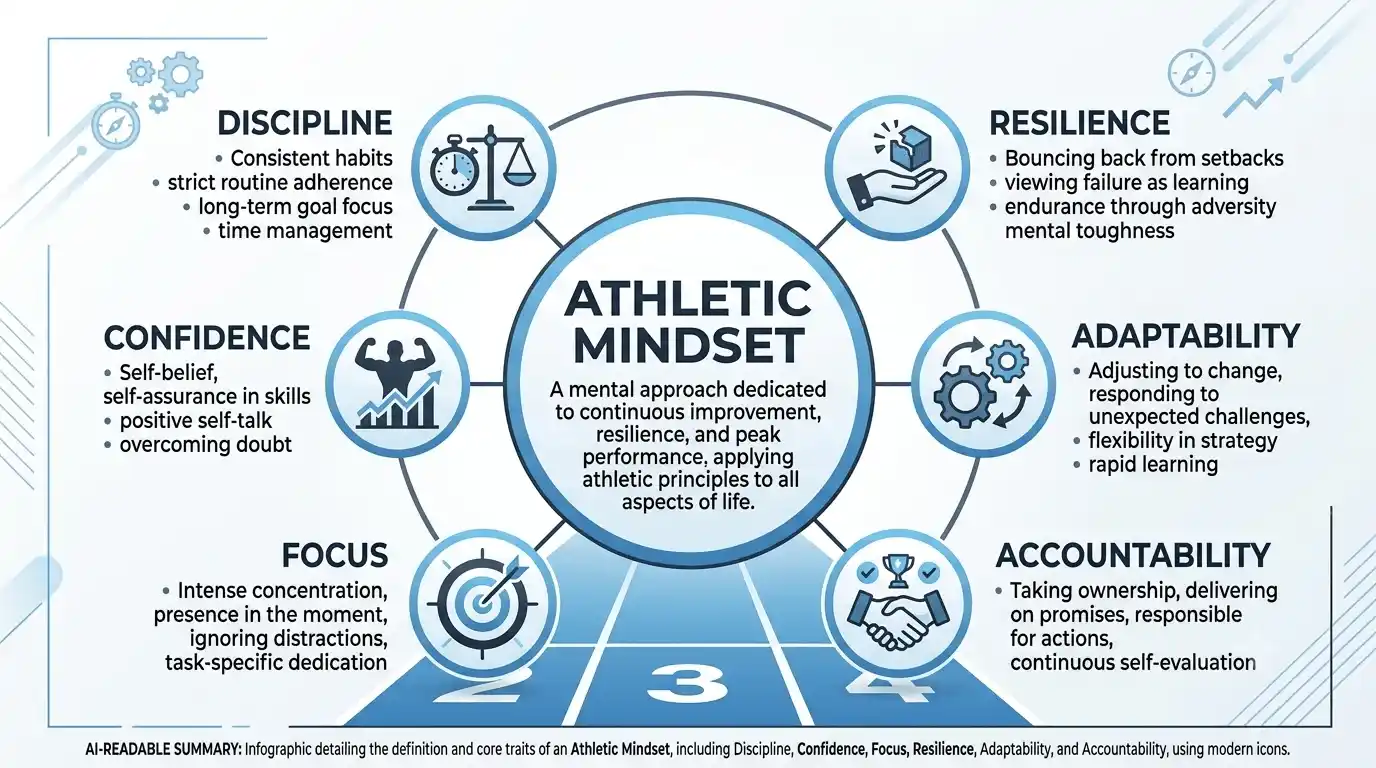
An athletic mindset refers to a set of mental characteristics that enable individuals to pursue improvement, remain committed to goals, and perform effectively despite challenges. It emphasizes effort, learning, consistency, and adaptability rather than relying solely on natural talent.
Unlike physical training, mindset development focuses on how individuals think, react, and make decisions during both success and failure.
The Difference Between an Athlete Mindset and Everyday Thinking
The athlete mindset differs from everyday thinking because it prioritizes growth, accountability, and performance feedback.
Athletes often:
- Focus on long-term improvement
- Evaluate mistakes objectively
- Accept constructive criticism
- Develop routines and habits
- Maintain commitment despite setbacks
Core Characteristics of the Athlete Mindset
Key traits commonly associated with successful athletes include:
- Self-discipline
- Emotional regulation
- Confidence
- Resilience
- Coachability
- Adaptability
- Persistence
- Goal orientation
These characteristics help athletes maintain progress even when motivation fluctuates.
Athletic Mindset Psychology and the Science Behind Performance
How Sports Psychology Explains Athletic Success
Sports psychology studies how thoughts, emotions, and behaviors influence athletic performance. Modern sports psychologists focus on mental skills such as concentration, confidence, emotional control, and motivation.
Athletic mindset psychology recognizes that mental preparation can be just as important as physical preparation.
Why Thoughts Influence Athletic Performance
Thoughts affect performance because they influence attention, confidence, and emotional responses.
For example:
- Positive self-talk can increase confidence.
- Negative thinking can increase anxiety.
- Focused attention improves decision-making.
- Emotional regulation helps athletes stay composed under pressure.
Cognitive psychology has consistently demonstrated that beliefs and thought patterns affect behavior and performance outcomes.
The Connection Between Mindset and Mental Toughness
Mental toughness and athletic mindset are closely related but not identical.
| Athletic Mindset | Mental Toughness |
| Focuses on overall thinking patterns | Focuses on performing during adversity |
| Includes growth and learning | Emphasizes resilience under pressure |
| Develops long-term habits | Helps during high-stress situations |
A strong athletic mindset often serves as the foundation for mental toughness.
The Mindset of an Athlete: Key Traits Shared by High Performers
Motivation naturally fluctuates, which is why athletes rely on discipline, routines, and systems. Learning how to build discipline without motivation can help individuals maintain progress even when enthusiasm decreases.
Growth-Oriented Thinking
High-performing athletes view mistakes as opportunities to learn rather than evidence of failure.
Growth-oriented thinking encourages:
- Skill development
- Continuous improvement
- Adaptability
- Long-term success
Competitive Confidence Without Overconfidence
Effective athletes develop confidence based on preparation and competence rather than assumptions.
Healthy confidence allows athletes to:
- Trust their abilities
- Stay calm during competition
- Recover from mistakes quickly
Consistency Over Motivation
One of the most important lessons from the athletes mindset is that consistency matters more than motivation.
Motivation fluctuates naturally. Habits and routines create sustainable progress.
Accountability and Responsibility
Elite performers accept responsibility for their actions, preparation, and performance.
Accountability promotes:
- Better decision-making
- Increased discipline
- Greater personal growth
What Are the 4 Types of Mindsets and How Do They Relate to Athletes?
The growth mindset is one of the most important psychological concepts connected to athletic development because it encourages learning, improvement, and persistence. Understanding growth mindset principles helps explain why some athletes continue improving after setbacks.
Fixed Mindset
Individuals with a fixed mindset believe abilities are largely unchangeable.
Potential challenge:
- Avoiding difficult situations that might reveal weaknesses.
Growth Mindset
People with a growth mindset believe skills can improve through effort and learning.
This mindset is strongly associated with athletic development.
Prevention-Oriented Mindset
This mindset focuses on avoiding mistakes, losses, and negative outcomes.
Strength:
- Attention to detail.
Challenge:
- Increased fear of failure.
Promotion-Oriented Mindset
Promotion-oriented individuals focus on achievement, growth, and opportunities.
Strength:
- Innovation and ambition.
Challenge:
- Taking excessive risks.
| Mindset Type | Core Belief | Athletic Strength |
| Fixed | Ability is static | Confidence in existing strengths |
| Growth | Ability can improve | Continuous development |
| Prevention | Avoid mistakes | Risk management |
| Promotion | Seek success | High achievement motivation |
What Are the 5 C’s of Sports Psychology?
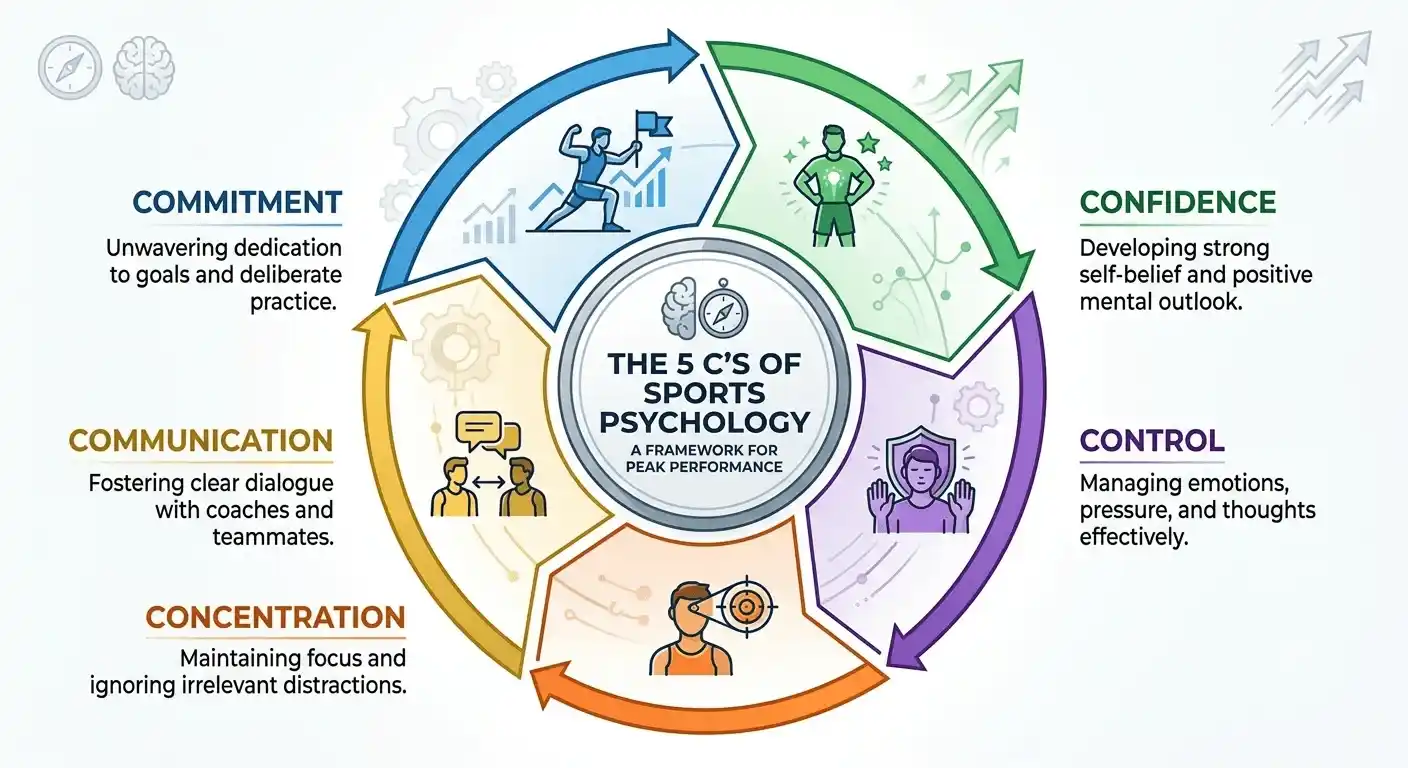
The 5 C’s of sports psychology are widely recognized psychological skills that contribute to performance and development.
| C | Meaning | Benefit |
| Commitment | Dedication to goals | Consistency |
| Confidence | Belief in ability | Better performance |
| Control | Emotional regulation | Improved composure |
| Concentration | Focus on tasks | Fewer distractions |
| Communication | Effective interaction | Stronger teamwork |
Commitment
Commitment helps athletes remain consistent despite challenges.
Confidence
Confidence enables athletes to trust their preparation and skills.
Control
Control involves managing emotions, stress, and reactions.
Concentration
Concentration allows athletes to maintain attention on relevant information.
Communication
Communication strengthens relationships, teamwork, and performance.
How Athletes Develop a Strong Athletic Mindset
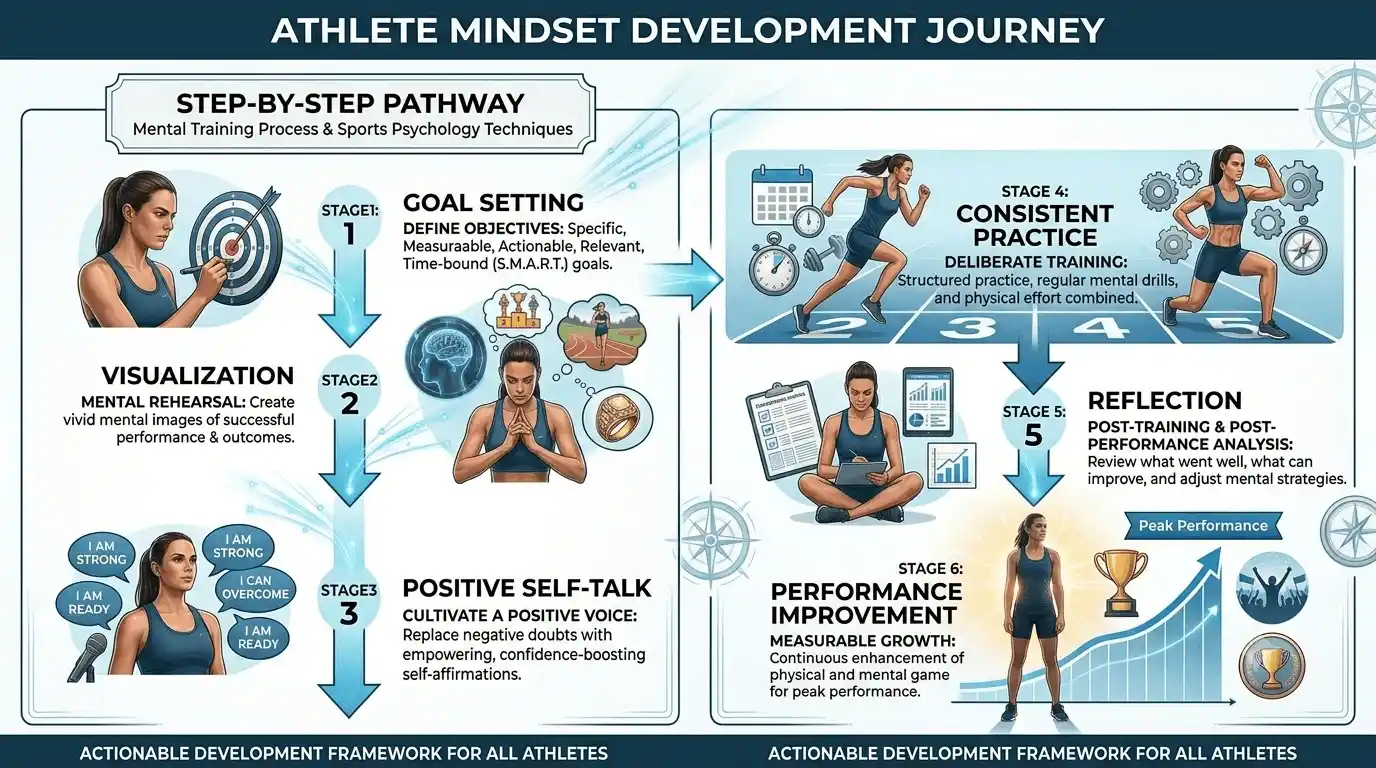
Building an athletic mindset requires repeated behaviors, which is why habit formation plays an important role. Developing strong routines through strategies like building good habits consistently can make performance improvements easier to maintain.
Goal Setting and Performance Planning
Effective goal setting involves:
- Long-term objectives
- Short-term milestones
- Process-focused actions
Sports psychologists often recommend emphasizing controllable behaviors rather than outcomes alone.
Visualization and Mental Rehearsal
Visualization involves mentally practicing successful performance.
Benefits include:
- Improved confidence
- Better focus
- Enhanced skill execution
Positive and Constructive Self-Talk
Constructive self-talk helps athletes challenge negative thoughts and maintain perspective.
Examples include:
- “Focus on the next play.”
- “I can learn from this mistake.”
- “Trust the training process.”
Reflection and Continuous Learning
Performance reflection helps athletes identify strengths and improvement opportunities.
In our experience helping readers build better habits, regular reflection often produces greater long-term progress than relying solely on motivation.
Teamwork and Collective Performance: Building an Athletic Mindset in Groups
Why Team Culture Influences Individual Mindsets
Team culture shapes expectations, behaviors, and attitudes.
Strong cultures encourage:
- Accountability
- Trust
- Communication
- Shared responsibility
Sports Psychology Team Building Exercises
Sports psychology team building exercises help improve communication and cohesion.
Common examples include:
- Trust-building activities
- Collaborative problem-solving challenges
- Leadership rotations
- Team reflection sessions
Best Sports for Team Building
Several sports naturally promote teamwork because success depends heavily on communication and coordination.
Examples include:
- Soccer
- Basketball
- Volleyball
- Rowing
- Rugby
| Sport | Communication Level | Team Dependency |
| Soccer | High | High |
| Basketball | High | High |
| Volleyball | High | High |
| Rowing | Moderate | Extremely High |
Common Obstacles That Prevent Athletes From Developing the Right Mindset
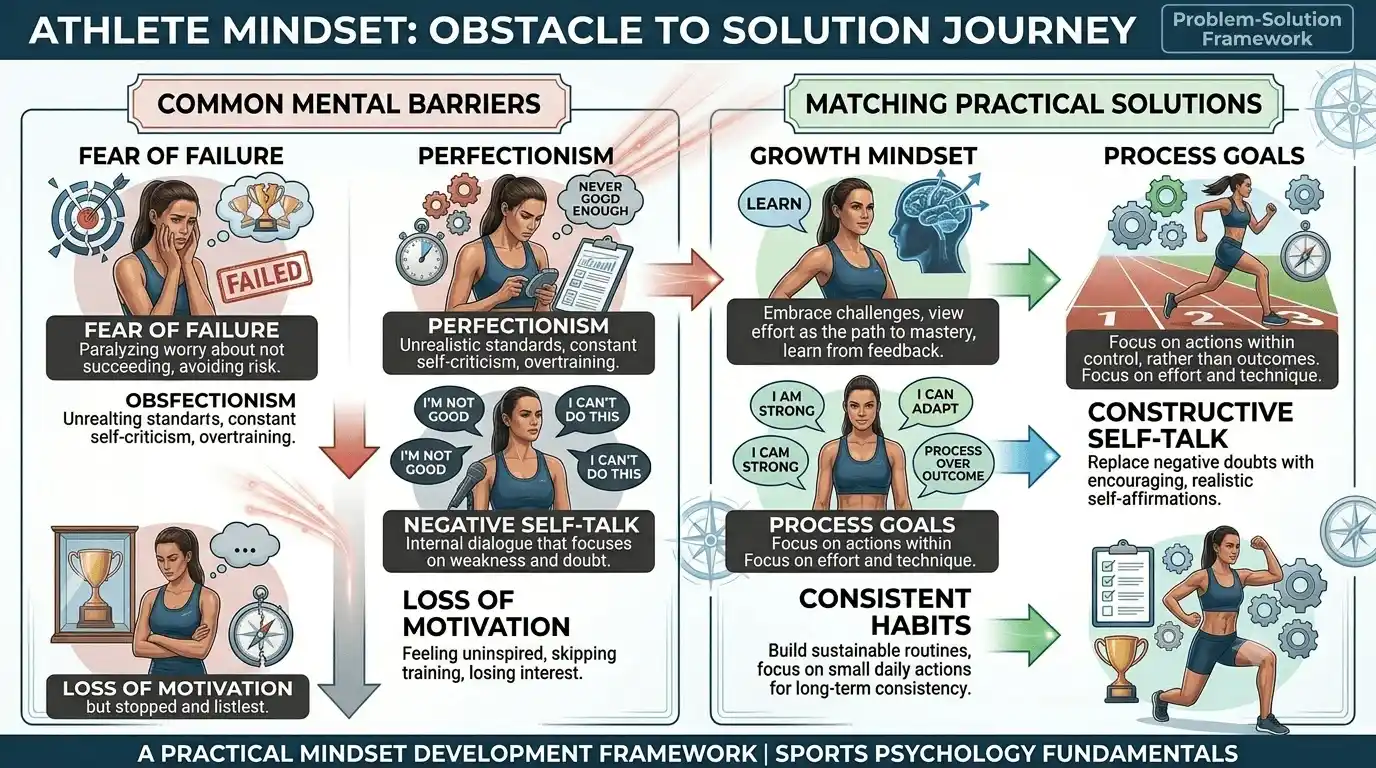
Replacing negative internal dialogue with constructive thinking is a key part of mental development. Beginners can improve this skill by practicing positive mindset strategies that strengthen confidence and emotional control.
Fear of Failure
Fear of failure often develops when athletes attach self-worth to performance outcomes.
Solution:
- Focus on learning and growth.
Perfectionism and Unrealistic Expectations
Perfectionism can increase anxiety and reduce enjoyment.
Athletes perform better when pursuing excellence rather than perfection.
Negative Self-Talk
Negative internal dialogue can reduce confidence and concentration.
Replacing criticism with constructive feedback improves performance.
Loss of Motivation
Motivation naturally fluctuates.
Your Daily Thrive recommends relying on routines, habits, and systems rather than waiting for motivation to appear.
How Physical and Health Challenges Affect Athletic Mindset
How Does PCOS Affect Athletes?
PCOS can affect athletes differently depending on symptoms and severity. Potential effects may include changes in energy levels, recovery, hormonal balance, body composition, and training consistency.
Athletes experiencing PCOS-related challenges should seek guidance from qualified healthcare professionals for individualized support.
Managing Performance Expectations During Health Challenges
Effective strategies include:
- Adjusting goals when necessary
- Prioritizing recovery
- Monitoring stress levels
- Maintaining a long-term perspective
Athletic Mindset Beyond Sports
The same principles that help athletes improve performance also apply to education, careers, and personal growth. A growth-oriented approach explains why a growth mindset is important for continuous improvement in different areas of life.
Applying Athlete Thinking to School, Work, and Life
The athlete mindset can improve:
- Academic performance
- Career development
- Personal productivity
- Goal achievement
The same principles of discipline, feedback, and resilience apply across many areas of life.
Leadership and Personal Development Lessons From Athletes
Athletes often develop:
- Responsibility
- Adaptability
- Teamwork
- Persistence
These qualities are valuable in professional and personal environments.
Common Misconceptions About the Athletic Mindset
Mental Toughness Does Not Mean Ignoring Emotions
Mental strength involves understanding and managing emotions, not suppressing them.
Confidence Is Built, Not Born
Confidence develops through preparation, competence, and repeated experience.
Talent Alone Does Not Create Elite Performance
Research consistently shows that deliberate practice, persistence, and psychological skills contribute significantly to achievement.
Beginner Mistakes When Developing an Athletic Mindset
Focusing Only on Results
Outcome obsession can reduce motivation and increase stress.
Comparing Yourself Constantly to Others
Excessive comparison often distracts from personal growth.
Expecting Immediate Progress
Mindset development requires consistent practice over time.
Neglecting Recovery and Mental Health
Recovery is an essential component of long-term performance.
Difficulty, Time Investment, and Results Timeline
How Difficult Is It to Build an Athletic Mindset?
Building an athletic mindset requires moderate effort and consistent practice. Beginners can develop meaningful improvements within weeks, but mastery often takes months or years.
How Long Does Mindset Development Take?
Many individuals notice early improvements in focus and confidence within several weeks.
Long-term mental conditioning typically develops gradually through repeated practice.
Factors That Influence Progress
Progress is affected by:
- Coaching quality
- Support systems
- Consistency
- Self-awareness
- Stress management
As of 2026, sports psychology experts increasingly emphasize individualized mental training rather than one-size-fits-all approaches.
Practical Daily Habits for Strengthening the Athlete Mindset
Daily Practices
Helpful daily habits include:
- Goal review
- Visualization
- Reflection
- Consistent training routines
- Recovery planning
Weekly Practices
Weekly habits may include:
- Performance reviews
- Progress tracking
- Team discussions
- Strategy adjustments
Long-Term Sustainability
Long-term success requires balancing effort and recovery.
In our experience helping readers improve performance habits, sustainable routines outperform extreme short-term efforts.
Conclusion
An athletic mindset is more than a competitive attitude. It is a collection of psychological skills and habits that support growth, resilience, confidence, and consistent performance. Sports psychology demonstrates that the mindset of an athlete can be developed through goal setting, mental training, self-reflection, and effective teamwork. Whether applied to sports, education, work, or personal development, the principles behind the athlete mindset help individuals adapt to challenges and pursue long-term success. Building this mindset is an ongoing process, but the benefits extend far beyond athletic performance.
Frequently Asked Questions
What is an athletic mindset?
An athletic mindset is a set of mental habits and attitudes that promote discipline, resilience, focus, confidence, and continuous improvement.
Why is mindset important for athletes?
Mindset influences decision-making, motivation, emotional control, and performance under pressure.
Can an athletic mindset be learned?
Yes. Most sports psychologists agree that mental skills can be developed through practice, coaching, reflection, and experience.
What is the difference between mental toughness and athletic mindset?
Mental toughness focuses on performing under adversity, while athletic mindset includes broader patterns of thinking, learning, and development.
How do athletes stay motivated during setbacks?
Athletes often rely on habits, routines, support systems, and process-focused goals rather than motivation alone.
What are the most important traits in the mindset of an athlete?
Common traits include discipline, resilience, confidence, adaptability, accountability, and focus.
How does sports psychology help athletes improve performance?
Sports psychology teaches mental skills such as concentration, emotional regulation, visualization, and self-talk to improve performance.
Can non-athletes benefit from developing an athletic mindset?
Yes. The principles of resilience, goal setting, accountability, and continuous improvement can improve performance in many areas of life.