

Introduction
Personality is the combination of behaviors, attitudes, emotional patterns, communication style, values, and habits that shape how people experience you. Many people believe personality is something people are born with permanently, but personality can actually be developed intentionally through self-awareness, emotional growth, communication habits, and repeated behaviors.
A common struggle is feeling boring, disconnected, socially awkward, or unsure of who you are. This often happens when people suppress their interests, avoid vulnerability, overthink social situations, or depend too heavily on external validation. A strong personality does not come from pretending to be someone else. It develops through authenticity, confidence, emotional intelligence, and consistent self-expression over time.
Quick Summary
- Personality develops through habits, communication style, emotional patterns, and self-confidence.
- A better personality comes from authenticity, curiosity, emotional intelligence, and consistent social behaviors.
- Strong and attractive personalities are built through self-awareness, confidence, boundaries, and meaningful interactions.
- Improving personality is a gradual process based on behavior change, mindset shifts, and real-world practice.
What Is Personality and Why Does It Matter?
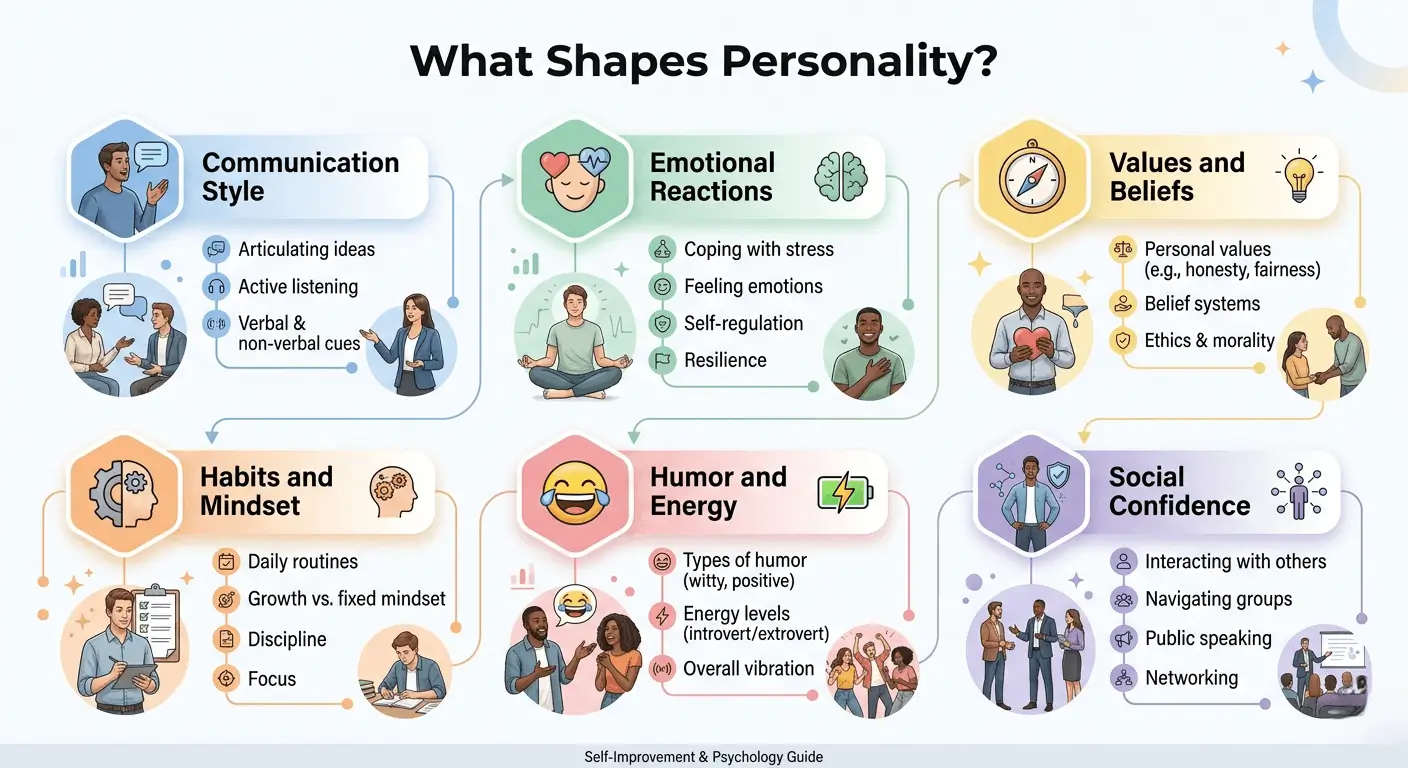
Personality is the combination of emotional responses, communication habits, behaviors, attitudes, and values that shape how someone interacts with the world. In psychology, the definition of personality refers to relatively stable patterns of thinking, feeling, and behaving.
Personality meaning goes beyond being outgoing or entertaining. It includes how someone handles stress, communicates emotions, reacts socially, and expresses personal values. When people ask, “What is personality?” or “What does personality mean?” they are usually referring to the traits and behaviors that make someone distinct.
Personality Includes:
- Communication style
- Emotional reactions
- Humor and energy
- Values and beliefs
- Social confidence
- Habits and mindset
Personality Influences:
- Relationships
- Career opportunities
- Leadership ability
- Confidence
- Social connection
Personality vs Identity vs Mood
| Concept | Meaning |
|---|---|
| Personality | Consistent patterns of behavior and emotional expression |
| Identity | How someone defines themselves internally |
| Mood | Temporary emotional state |
| Reputation | How others perceive someone socially |
Many people think personality is fixed because they confuse comfort zones with identity. Social anxiety, fear of judgment, and low self-esteem can suppress personality expression and make someone feel emotionally invisible.
Why Some People Feel Like They “Don’t Have a Personality”
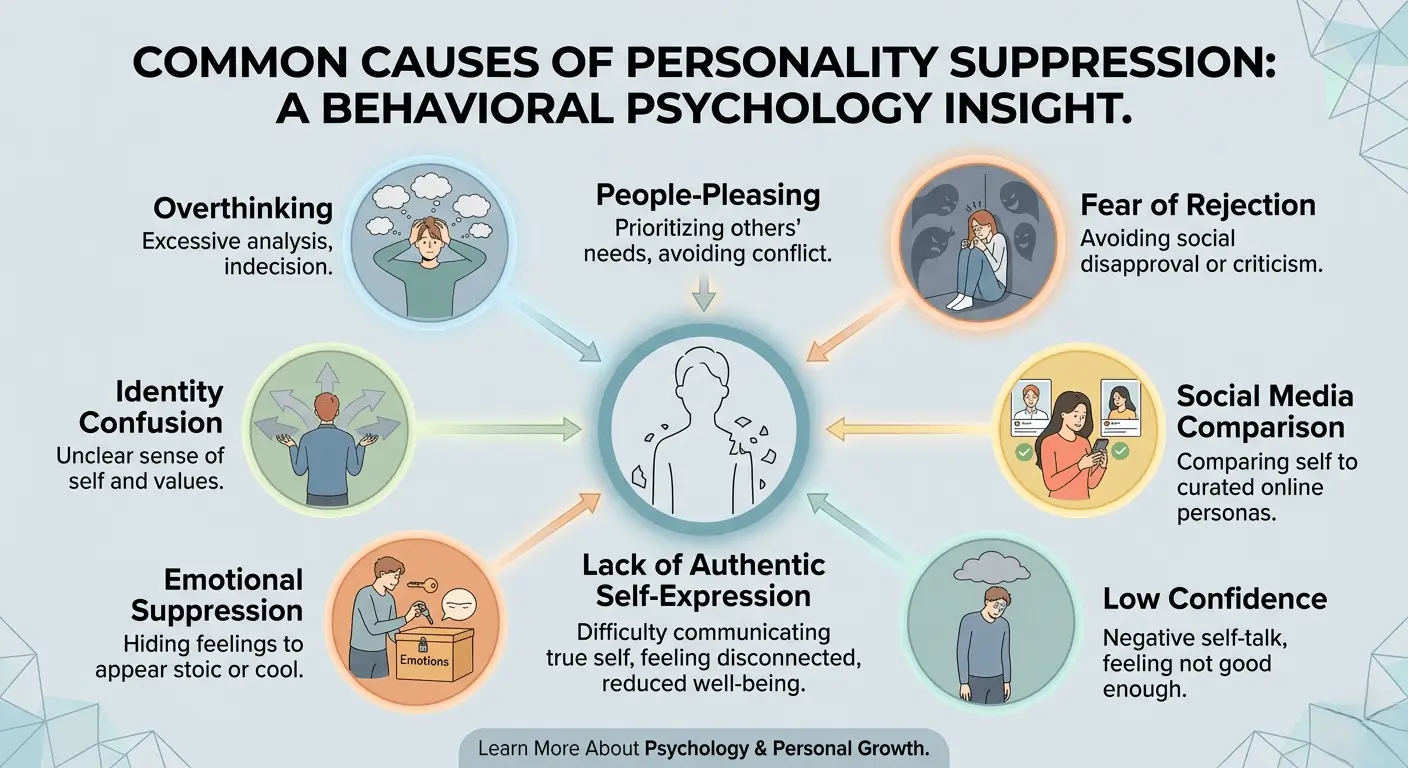
Many people who feel boring or emotionally flat do not actually lack personality. Instead, they suppress their authentic thoughts, preferences, and emotions because of psychological barriers.
Common causes include:
- Overthinking
- People-pleasing
- Low confidence
- Social masking
- Fear of rejection
- Identity confusion
- Emotional suppression
People often copy others socially because they fear standing out or being disliked. Excessive social media comparison can also weaken self-identity by encouraging imitation instead of authentic self-expression.
Why Do Some People Feel Boring?
People usually feel boring when they:
- Constantly seek approval
- Avoid expressing opinions
- Hide personal interests
- Fear conflict or disagreement
- Avoid vulnerability
- Spend too much time comparing themselves to others
Can Personality Be Developed?
Yes. Personality can be developed through repeated behaviors, emotional growth, confidence-building, communication practice, and life experiences.
Real-Life Scenario
Someone may mirror everyone around them socially, agree with every opinion, and avoid expressing preferences. Over time, they may struggle to feel authentic because they never practice expressing themselves honestly.
How to Develop a Personality of Your Own
Learning how to have a personality of your own starts with developing self-awareness instead of copying others.
A structured reflection practice like how to journal for self-growth can significantly improve self-awareness by helping you identify patterns in your thoughts, emotions, and behaviors over time.
Build Self-Awareness
Self-awareness helps identify:
- Personal values
- Interests
- Strengths
- Emotional triggers
- Communication habits
Useful journaling prompts include:
- What genuinely interests me?
- What conversations energize me?
- What opinions do I avoid expressing?
- What type of person do I want to become?
Reflection creates identity clarity and emotional confidence.
Develop Opinions and Preferences
Learning to express thoughts respectfully is an important part of personality development.
Ways to improve:
- Explore interests deeply
- Stop agreeing automatically
- Practice respectful disagreement
- Learn what you genuinely enjoy
Authentic opinions help build confidence and social identity.
Increase Life Experiences
Experiences shape personality, confidence, and emotional maturity.
Try:
- New hobbies
- Reading regularly
- Traveling when possible
- Skill-building
- Meeting different types of people
- Trying unfamiliar activities
Life experiences improve communication skills and create emotional depth.
Practice Authentic Self-Expression
Speak naturally instead of performing socially. Avoid copying personalities online or forcing humor to gain approval.
Gradually improve:
- Humor
- Storytelling
- Conversation flow
- Emotional openness
- Social comfort
Confidence often grows after action, not before it.
Habits That Build a Strong and Attractive Personality
A strong and attractive personality is usually built through emotional stability, confidence, authenticity, and healthy social habits.
Traits Often Associated With Strong Personalities
- Emotional stability
- Confidence without arrogance
- Curiosity
- Empathy
- Communication skills
- Humor
- Passion and enthusiasm
- Reliability
- Healthy boundaries
Daily Habits That Improve Personality
- Reading regularly
- Improving body language
- Asking thoughtful questions
- Active listening
- Managing emotional reactions
- Practicing gratitude
- Building discipline and consistency
Habit Improvement Table
| Weak Habit | Effect on Personality | Better Replacement |
|---|---|---|
| Constant self-criticism | Low confidence | Self-awareness with self-respect |
| People-pleasing | Lack of identity | Healthy boundaries |
| Avoiding conversations | Social discomfort | Small daily interactions |
| Negative self-talk | Emotional insecurity | Constructive internal dialogue |
| Seeking validation online | Identity confusion | Real-world confidence building |
Confidence, Discipline, and Emotional Intelligence in Personality Development
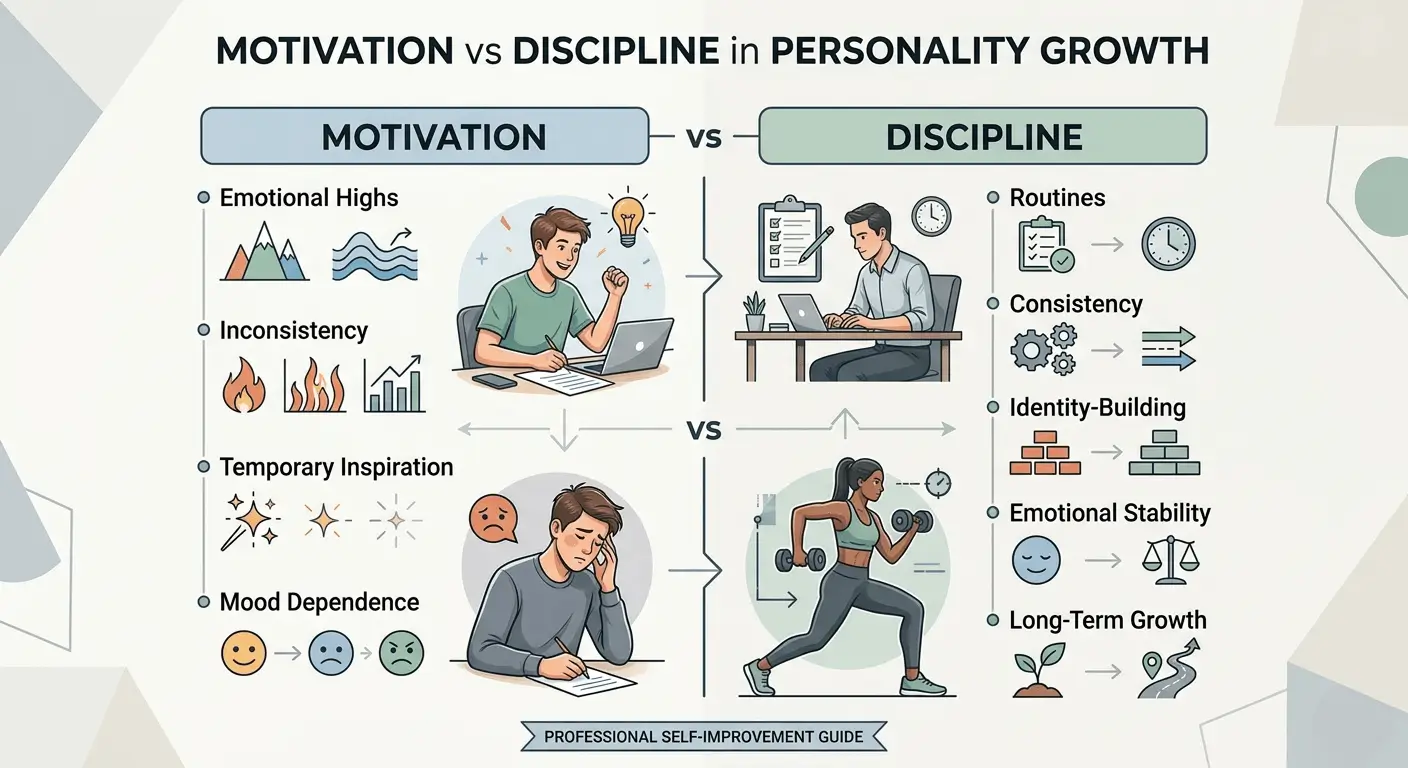
Confidence, emotional intelligence, communication, and self-respect all influence personality growth.
This is why learning how to build discipline without motivation becomes essential for personality growth, since consistent behavior—not emotional motivation—builds long-term identity.
Motivation vs Discipline in Personality Growth
| Motivation | Discipline |
|---|---|
| Temporary emotional state | Consistent behavior system |
| Depends on mood | Works even without motivation |
| Creates short bursts | Builds long-term identity |
| External inspiration | Internal standards |
Discipline creates repeated behaviors that eventually shape identity and personality.
Why Emotional Intelligence Makes People More Attractive
Emotional intelligence improves:
- Self-control
- Empathy
- Emotional regulation
- Reading social situations
- Calm communication
- Conflict management
People naturally trust individuals who communicate with emotional maturity and consistency.
Science-Backed Insight
Personality changes can occur gradually through repeated behavioral patterns and environmental exposure. Habits influence confidence, communication style, emotional reactions, and social comfort over time.
How to Build a Better Personality in Social Situations
People often remember how they feel around someone more than the exact words spoken. Charisma is usually emotional presence rather than extroversion.
Conversation Skills That Improve Personality
- Asking engaging questions
- Storytelling
- Humor without forcing it
- Maintaining eye contact
- Speaking clearly and calmly
- Practicing active listening
Common Social Mistakes
- Trying too hard to impress
- Interrupting constantly
- Talking only about yourself
- Pretending to know everything
- Seeking approval excessively
Strong personalities focus more on connection than performance.
Personality Development for Men and Women
Learning how to have a personality as a man or woman depends more on universal psychological principles than stereotypes.
Traits That Matter More Than Gender
- Emotional maturity
- Confidence
- Communication
- Integrity
- Humor
- Self-respect
Avoiding Fake Confidence
Confidence is grounded in emotional stability and self-respect. Arrogance often comes from insecurity and performance-based validation.
Authenticity is more sustainable than pretending to be dominant, emotionally perfect, or socially superior.
What Actually Works vs Common Personality Myths
| Myth | Reality |
|---|---|
| “You’re born with personality.” | Personality can develop through behavior and experiences. |
| “Being loud means being interesting.” | Presence and emotional intelligence matter more. |
| “Confidence comes first.” | Action usually builds confidence gradually. |
| “You need to be extroverted.” | Introverts can have highly compelling personalities. |
| “Fake it until you make it.” | Authentic growth works better long term. |
Common Obstacles That Prevent Personality Growth
Common obstacles include:
- Procrastination
- Overthinking
- Fear of failure
- Burnout
- Insecurity
- Inconsistency
Why People Struggle With Consistency
Many people struggle because of:
- Unrealistic expectations
- Comparing progress constantly
- Seeking instant transformation
- Lack of identity-based habits
How to Stay Consistent
- Focus on small behavioral changes
- Build routines instead of relying on motivation
- Practice social confidence gradually
- Track progress realistically
- Accept slow improvement
Consistency is usually more important than intensity.
Practical Personality Development Routine
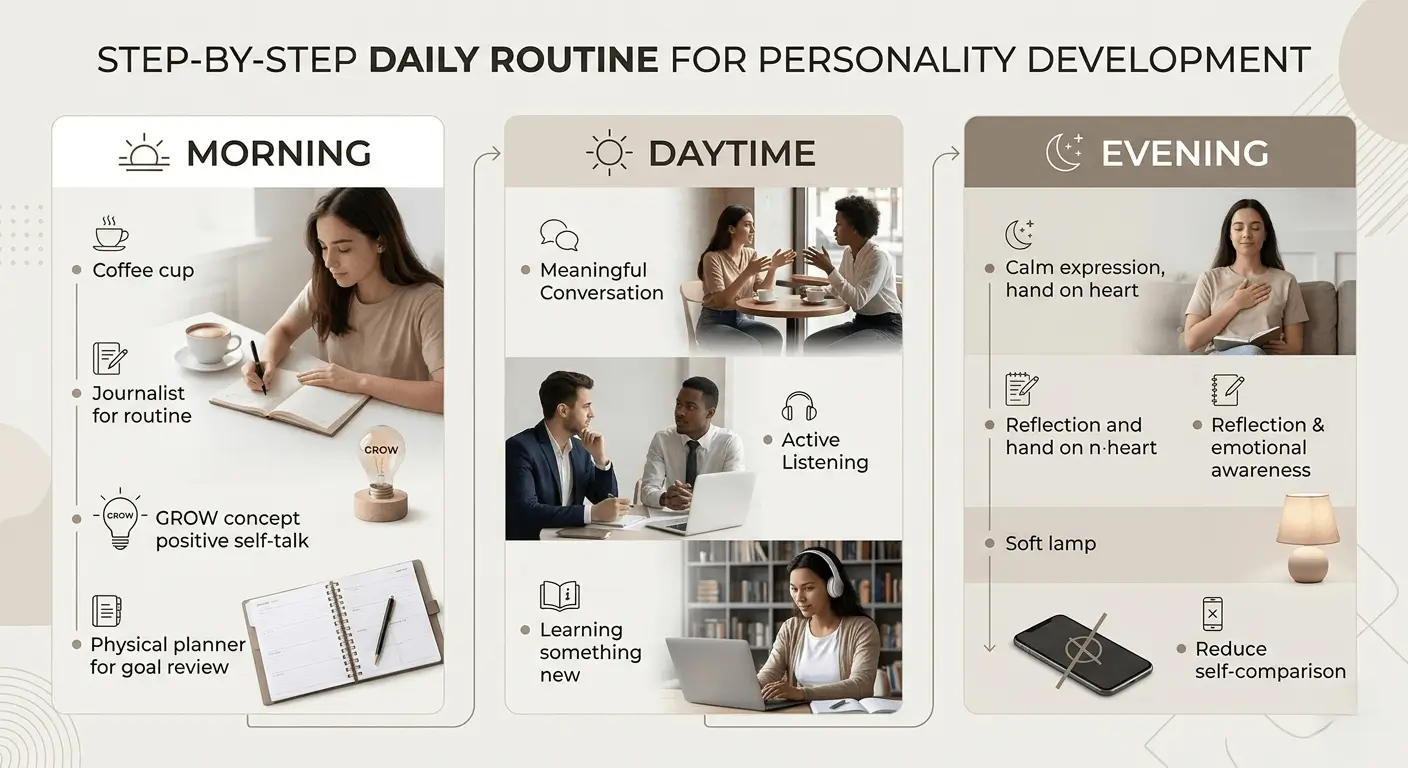
Example Daily Routine
Morning
- Journaling
- Positive self-talk
- Goal review
During the Day
- One meaningful conversation
- Practice active listening
- Learn something new
Evening
- Reflect on emotional reactions
- Evaluate communication habits
- Reduce negative self-comparison
Beginner vs Advanced Growth
| Beginner | Advanced |
|---|---|
| Basic confidence and communication habits | Leadership presence |
| Social comfort building | Emotional resilience |
| Simple conversation practice | Authentic charisma |
| Learning healthy boundaries | Strong emotional intelligence |
Conclusion
Personality is developed through consistent behavior, emotional growth, communication habits, and self-awareness. Strong and attractive personalities are usually authentic, emotionally intelligent, and grounded in confidence rather than performance.
Improving personality is not about becoming someone completely different. It is about expressing your authentic thoughts, humor, emotions, and values more confidently and consistently over time.
Gradual progress is more sustainable than instant transformation. Small daily habits often create the strongest long-term personality growth.
FAQs
Why do I feel like I don’t have a personality?
Many people suppress their authentic thoughts, interests, and emotions because of fear of judgment, low confidence, or people-pleasing habits.
Can you actually improve your personality?
Yes. Personality traits can develop over time through habits, emotional growth, communication skills, and repeated behaviors.
How do I develop a more attractive personality?
Focus on emotional intelligence, confidence, active listening, curiosity, authenticity, and healthy social habits.
What makes someone have a magnetic personality?
People with magnetic personalities often make others feel comfortable, understood, respected, and emotionally engaged.
How long does personality development take?
Personality growth is gradual and depends on consistent behavior changes, life experiences, and emotional self-awareness.
Why do I struggle with consistency in self-improvement?
Common reasons include unrealistic expectations, relying only on motivation, fear of failure, burnout, and lack of structured habits.
Is personality more important than appearance?
Long-term attraction and trust are often influenced more by personality traits like confidence, emotional stability, empathy, and communication.
Can introverts have strong personalities?
Yes. Strong personalities are not about being loud or extroverted. They are about authenticity, confidence, emotional intelligence, and presence.








One Response