

Introduction
Affirmations for peace: building inner calm, emotional stability, and mental clarity through daily mindset practice is a structured approach to reshaping thought patterns that influence stress, anxiety, and emotional reactivity. These affirmations work by replacing repetitive negative thinking loops with intentional, calming self-talk that supports mental balance. Over time, they help the brain shift from reactive survival-based responses to more grounded and stable emotional processing, improving clarity and resilience in daily life.
Quick Summary
- Affirmations for peace reduce stress-driven thinking patterns and support emotional balance
- They work by reinforcing calm mental pathways through repetition and awareness
- Daily practice improves emotional regulation and reduces overthinking loops
- Effectiveness increases when combined with breathing or mindfulness habits
- Long-term results depend on consistency, not intensity
What Affirmations for Peace Really Mean (and How They Work in the Mind)
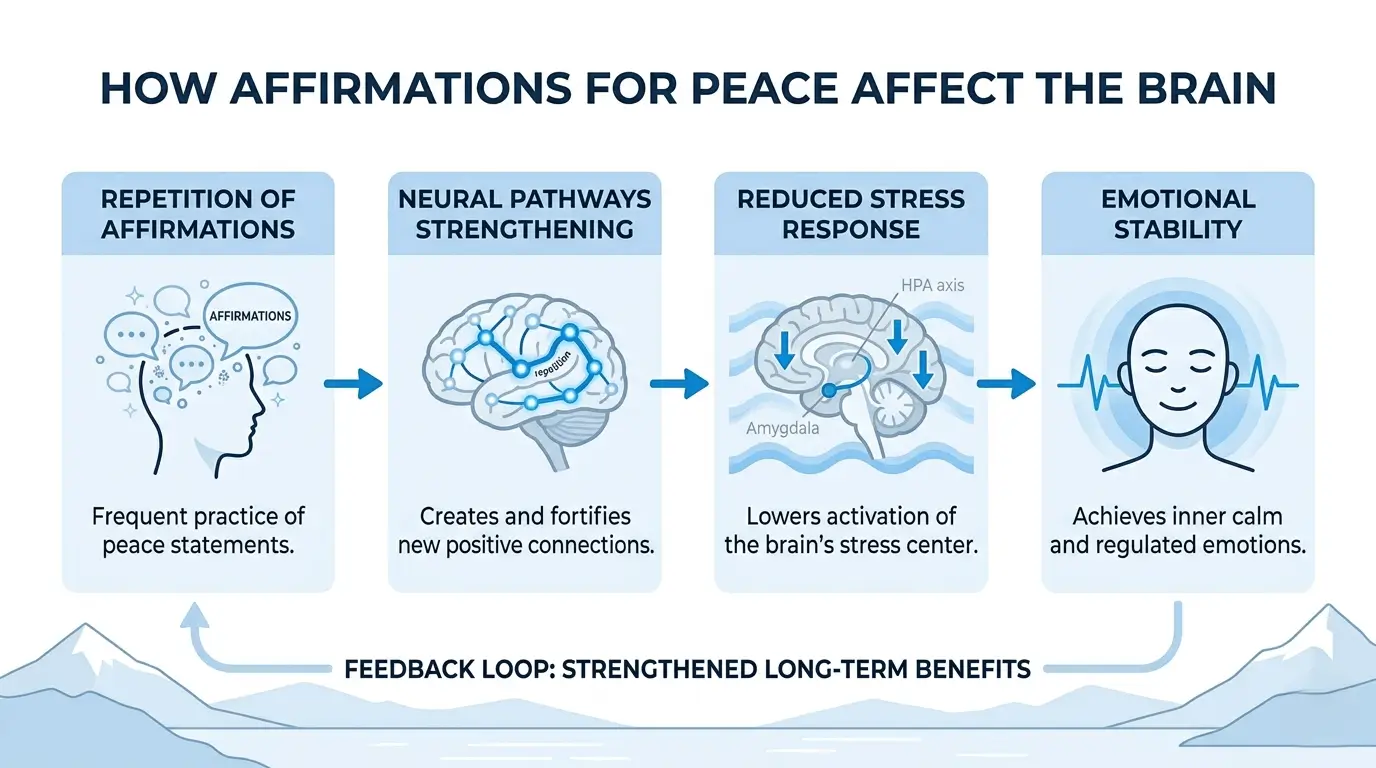
Affirmations for peace of mind are structured cognitive tools that influence how the brain interprets stress and emotional triggers. They operate through neuroplasticity, where repeated thoughts strengthen specific neural pathways.
When calming statements are repeated regularly, they gradually reduce the dominance of automatic stress responses.
- They interrupt negative thought cycles before they escalate
- They strengthen emotional regulation pathways in the brain
- They reduce mental reactivity to external stressors
- They create familiarity with calm and balanced thinking patterns
Over time, the mind begins to default toward stability instead of anxiety-driven interpretation.
Why People Struggle With Peace of Mind (Psychological Barriers)
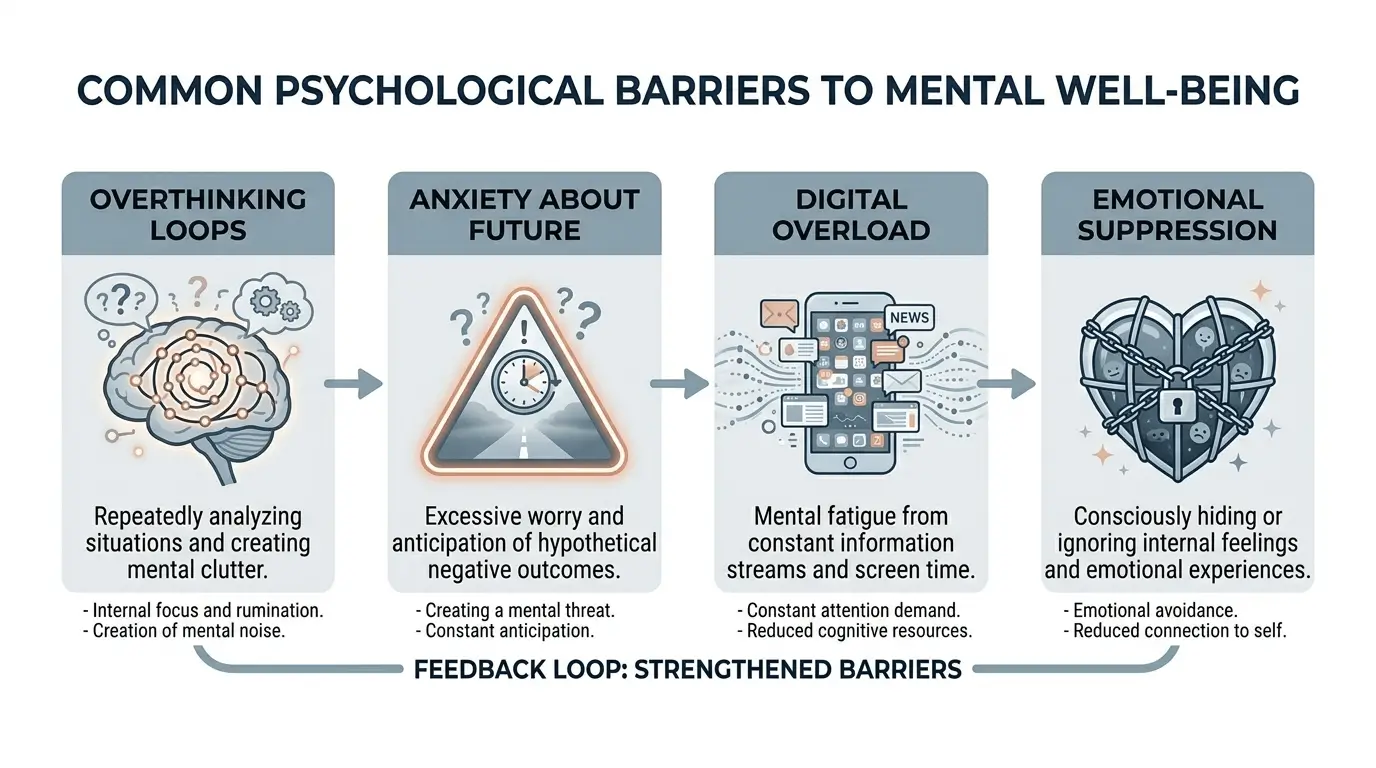
Most people struggle with peace because the brain is naturally wired for threat detection. This creates constant scanning for problems, even in safe environments.
Key psychological barriers include:
- Overthinking future outcomes and worst-case scenarios
- Emotional overload from constant information exposure
- Identifying too strongly with anxious thoughts
- Lack of emotional processing and reflection time
As a result, the nervous system remains in a semi-alert state, making relaxation difficult even without real danger.
How Affirmations for Peace Rewire Thought Patterns
Affirmations for peace and clarity work by gradually reshaping internal dialogue through repetition and emotional reinforcement.
Core mechanisms:
- Repetition strengthens neural connections linked to calm responses
- Positive phrasing interrupts fear-based automatic thinking
- Identity shift occurs: “I am anxious” becomes “I am learning calmness”
- Emotional regulation improves through consistent cognitive retraining
With time, the brain recognizes peaceful thinking as a familiar and safe pattern.
Types of Affirmations for Peace (Context-Based Categories)
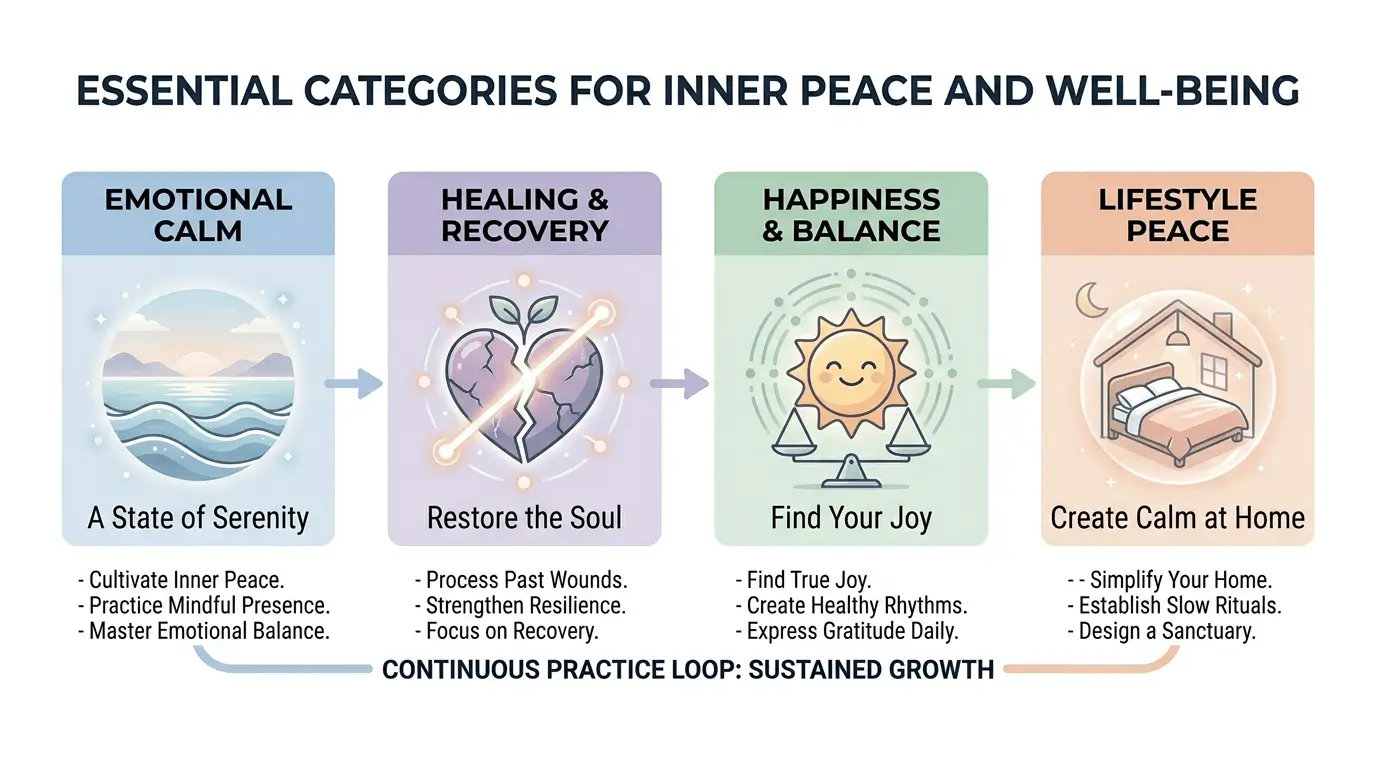
Emotional Calm & Stress Reduction
Focus: immediate grounding and emotional stabilization
Examples:
- Positive affirmations for peace of mind
- Affirmations for peace and calm
- Peaceful affirmations for anxiety
Healing and Emotional Recovery
Focus: recovery from emotional fatigue and stress cycles
Examples:
- Affirmations for peace and healing
- Affirmations for stress relief
- Affirmations for peaceful sleep
Happiness, Joy, and Emotional Balance
Focus: expanding emotional range beyond neutrality
Examples:
- Affirmations for peace and happiness
- Peace and love affirmations
- Calm joy-based affirmations
Environment and Lifestyle Peace
Focus: connecting calmness with surroundings and routines
Examples:
- Affirmations for peaceful home
- Morning affirmations for peace
- Night affirmations for peace
Morning vs Night Affirmations (Timing Matters in Behavior Change)
| Timing | Purpose | Effect on Mind |
|---|---|---|
| Morning affirmations for peace | Set emotional tone for the day | Builds resilience against stress triggers |
| Night affirmations for peace | Reduce mental activity before sleep | Helps reduce rumination and anxiety loops |
Morning affirmations prime cognitive focus, while night affirmations support nervous system downregulation.
How to Practice Affirmations for Maximum Effectiveness
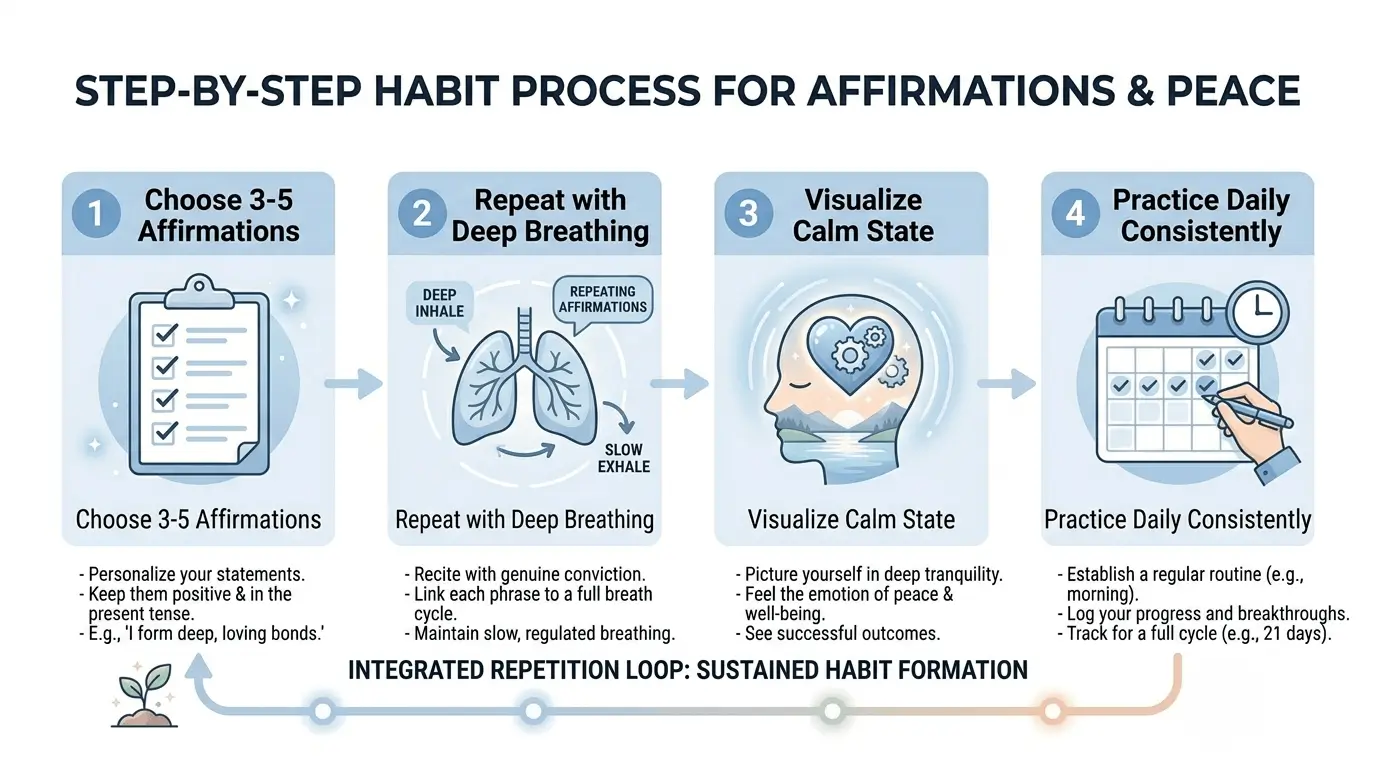
Effective affirmation practice depends on consistency and emotional engagement rather than repetition alone.
Steps:
- Select 3–5 simple and realistic affirmations
- Repeat slowly with controlled breathing
- Focus attention on meaning, not speed
- Practice daily at the same time for habit formation
Key principle: consistent practice rewires the mind more effectively than intense but irregular effort.
Common Mistakes That Reduce Effectiveness
Many people do not experience results because of incorrect usage rather than the method itself.
Mistakes:
- Repeating affirmations mechanically without awareness
- Using statements that feel unrealistic or emotionally disconnected
- Frequently changing affirmations without consistency
Fix:
- Use believable phrases like “I am learning to stay calm”
- Combine affirmations with breathing or grounding techniques
- Maintain consistency over several weeks
Science-Backed Insight: Why Affirmations Work (and When They Don’t)
Affirmations are supported by self-affirmation theory and cognitive psychology principles. They reduce defensive thinking patterns and improve emotional regulation when applied correctly.
They work best when:
- The statements feel personally meaningful
- Practice is consistent over time
- They are emotionally believable
They are less effective when:
- They strongly contradict existing beliefs
- They are used without behavioral support systems
Real-Life Application Examples
Affirmations for peace can be applied in daily emotional challenges:
- Before stressful situations: “I remain calm and centered under pressure.”
- During anxiety: “This feeling is temporary; I return to peace.”
- Before sleep: “My mind is quiet, and my body is safe to rest.”
These examples help interrupt emotional escalation and restore balance.
What Actually Creates Long-Term Peace (Beyond Affirmations)
Affirmations are most effective when combined with supportive lifestyle habits.
Supporting practices:
- Journaling to process emotional thoughts
- Reducing digital overstimulation and noise exposure
- Practicing mindful breathing exercises
- Engaging in physical movement for nervous system regulation
Long-term peace comes from a system of habits, not a single mental technique.
Conclusion
Affirmations for peace are a structured mental tool for reducing stress-based thinking, improving emotional stability, and building long-term mental clarity. When practiced consistently and realistically, they help retrain the mind toward calm awareness. However, their effectiveness increases significantly when combined with supportive habits like mindfulness, journaling, and nervous system regulation practices. True peace is not immediate—it is built through repeated mental and behavioral conditioning.
FAQs
Why do I struggle to feel peace even after affirmations?
Because deep thought patterns require consistent repetition and supportive lifestyle changes to shift.
How long do affirmations for peace take to work?
Most people notice small changes within a few weeks, but deeper emotional stability takes longer.
What if I don’t believe my affirmations?
Start with realistic statements like “I am learning to feel calm” instead of forced positivity.
Can affirmations help with anxiety?
Yes, but they are most effective when combined with breathing and grounding techniques.
Should I use morning or night affirmations for peace?
Both are effective—morning builds stability, night reduces mental overactivity.
What are the best affirmations for peace of mind?
Simple statements like “I am calm,” “I am safe,” and “My mind is at ease” work best due to clarity and repetition ease.










One Response