
Introduction
How to become best version of yourself is about intentionally improving your mindset, habits, and behaviors so you consistently act in alignment with your highest potential. It’s not about perfection—it’s about continuous growth, self-awareness, and making better choices over time.
This concept—often described as being the best version of yourself—combines mental clarity, emotional strength, physical well-being, and purposeful action.
QUICK SUMMARY
- Becoming the best version of yourself means improving your habits, mindset, and daily decisions.
- It requires consistency, not perfection, across mental, physical, and emotional areas.
- Self-awareness and identity-based habits are key drivers of long-term change.
- Sustainable growth comes from systems, not short bursts of motivation.
What Does “Best Version of Yourself” Really Mean?
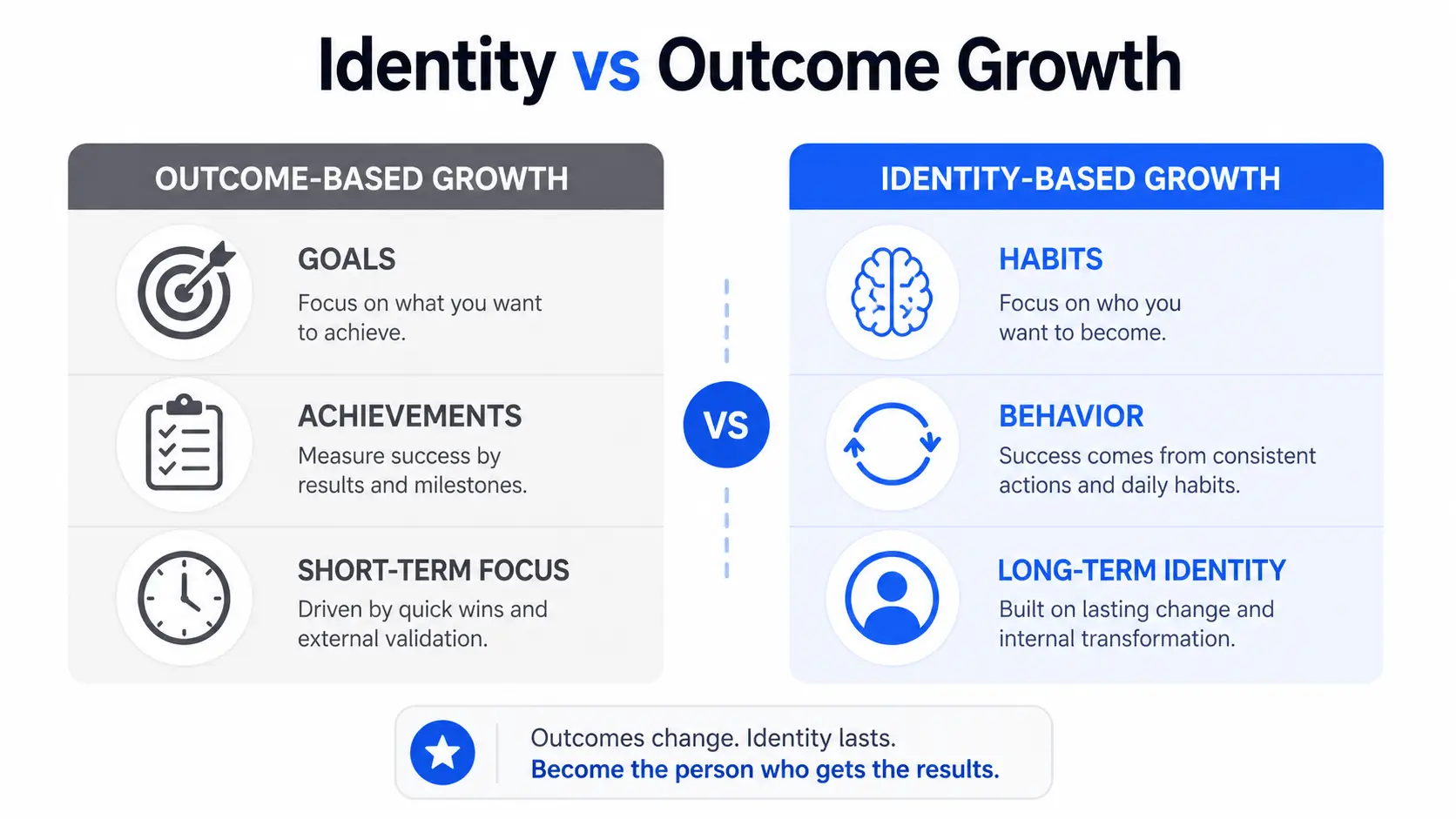
The best version of yourself means consistently acting in alignment with your values, goals, and long-term identity—not achieving perfection or comparing yourself to others.
In practical terms:
- A better version of myself focuses on progress, not flawlessness
- It is about alignment between values, actions, and goals
- It includes mental clarity, emotional resilience, and physical health
This concept is rooted in identity-based growth. Instead of focusing only on outcomes, you focus on who you are becoming through repeated behaviors. This reduces reliance on motivation and builds lasting change.
Why Most People Struggle to Become the Best Version of Themselves
Most people struggle because psychological and behavioral barriers prevent consistent action, even when they know what to do.
Key challenges include:
- Overthinking leads to inaction: Analysis paralysis delays execution
- Lack of identity clarity: Without a clear self-image, habits don’t stick
- Motivation fades without systems: Short-term effort cannot sustain long-term change
- Fear of failure prevents action: Avoidance replaces growth
Additionally, unrealistic expectations from social media create pressure for rapid success, leading to frustration and inconsistency.
How to Become the Best Version of Yourself (Step-by-Step Framework)
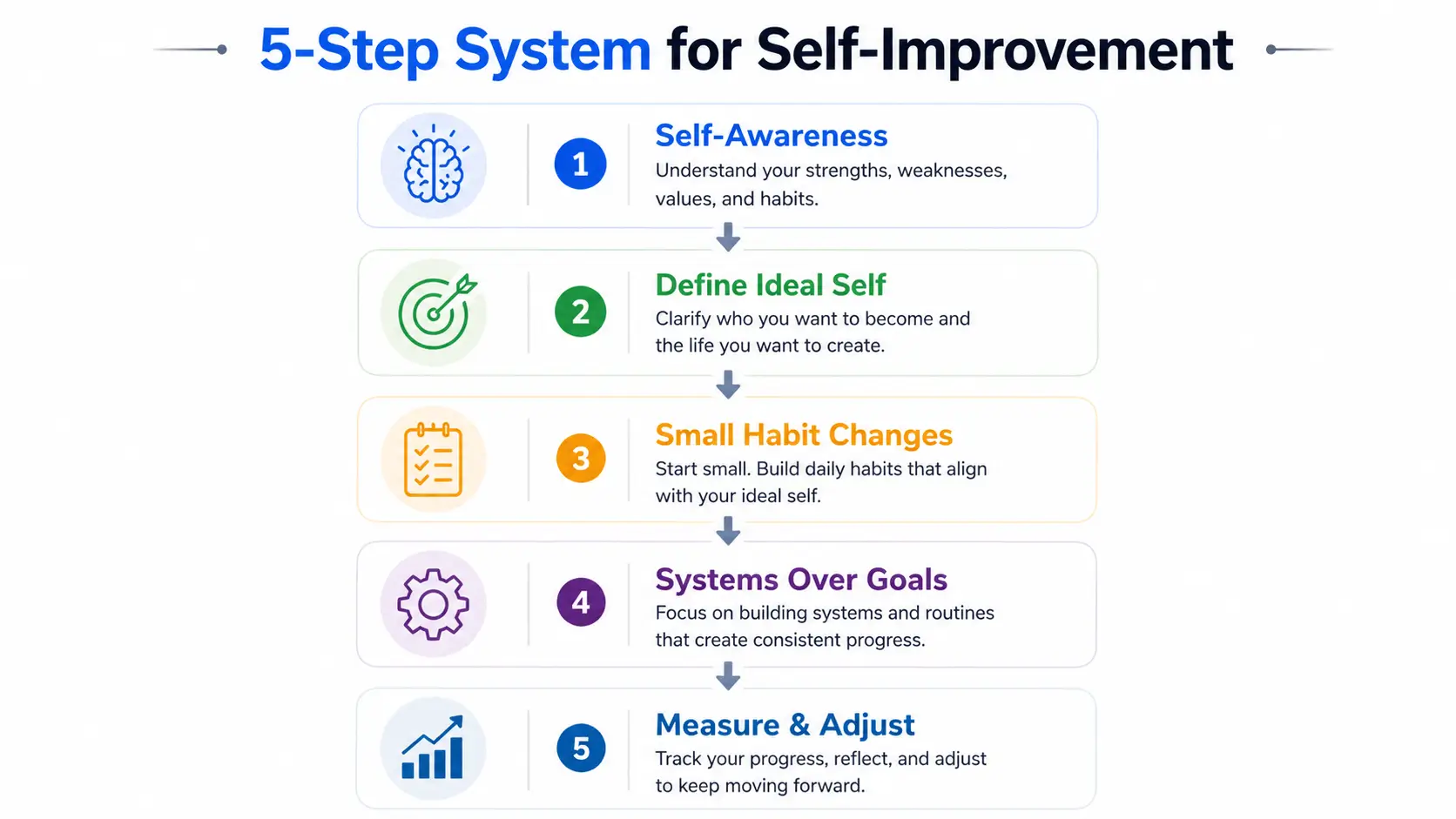
To become the best version of yourself, you need a structured system that connects mindset, habits, and environment into repeatable actions.
Step 1 — Build Self-Awareness
- Identify strengths, weaknesses, and behavioral patterns
- Track daily habits and emotional triggers
- Recognize what supports or blocks your growth
Self-awareness creates clarity, which reduces wasted effort.
Step 2 — Define Your Ideal Self
- Clearly define who your best version of yourself is
- Identify values, standards, and habits
- Set behavioral expectations, not just goals
This step provides direction. Without it, actions become random and inconsistent.
Step 3 — Focus on Small Habit Changes
- Start with 1–2 keystone habits
- Build consistency before increasing intensity
- Prioritize repeatability over perfection
Small habits reduce resistance and create momentum through compounding effects.
Step 4 — Create Systems, Not Just Goals
- Replace vague goals with structured routines
- Use habit stacking and environmental triggers
- Focus on daily execution instead of outcomes
Systems eliminate decision fatigue and improve consistency.
Step 5 — Measure and Adjust
- Perform weekly reflection
- Track progress instead of chasing perfection
- Adjust strategies based on results
Feedback loops ensure continuous improvement and prevent stagnation.
Mental Transformation — How to Be the Best Version of Yourself Mentally
To be the best version of yourself mentally, you must improve thought patterns, emotional regulation, and awareness.
Key strategies:
- Replace negative self-talk with constructive thinking patterns
- Practice mindfulness and reflection to improve clarity
- Develop emotional control under stress
Cognitive patterns directly influence behavior. When thinking improves, decisions improve, leading to better outcomes.
Physical Growth — How to Be the Best Version of Yourself Physically
To be the best version of yourself physically, focus on habits that support energy, discipline, and mental performance.
Key areas:
- Sleep, nutrition, and exercise improve focus and cognitive function
- Physical discipline strengthens overall self-discipline
- Energy management determines your ability to stay consistent
Physical health acts as the foundation for productivity and habit execution.
Building a Daily System to Become the Best Version of Yourself
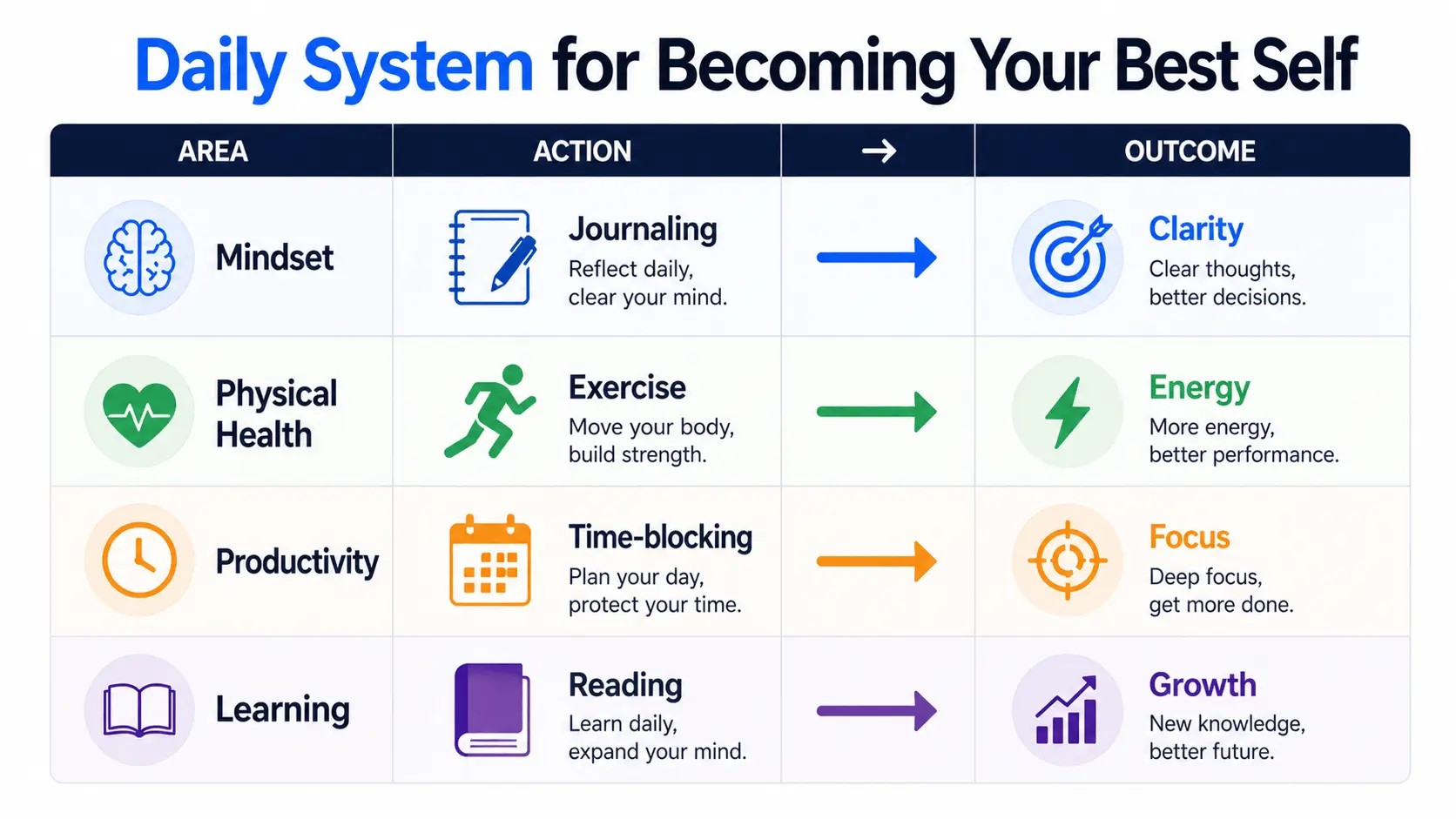
A system-based routine ensures consistency without relying on motivation.
| Area | Daily Habit Example | Outcome |
|---|---|---|
| Mindset | Journaling, reflection | Clarity & emotional control |
| Physical Health | Exercise, hydration | Energy & discipline |
| Productivity | Time-blocking tasks | Consistency & focus |
| Learning | Reading or skill-building | Growth & adaptability |
Systems create structure, which reduces friction and improves long-term adherence.
Motivation vs Discipline — What Actually Works?
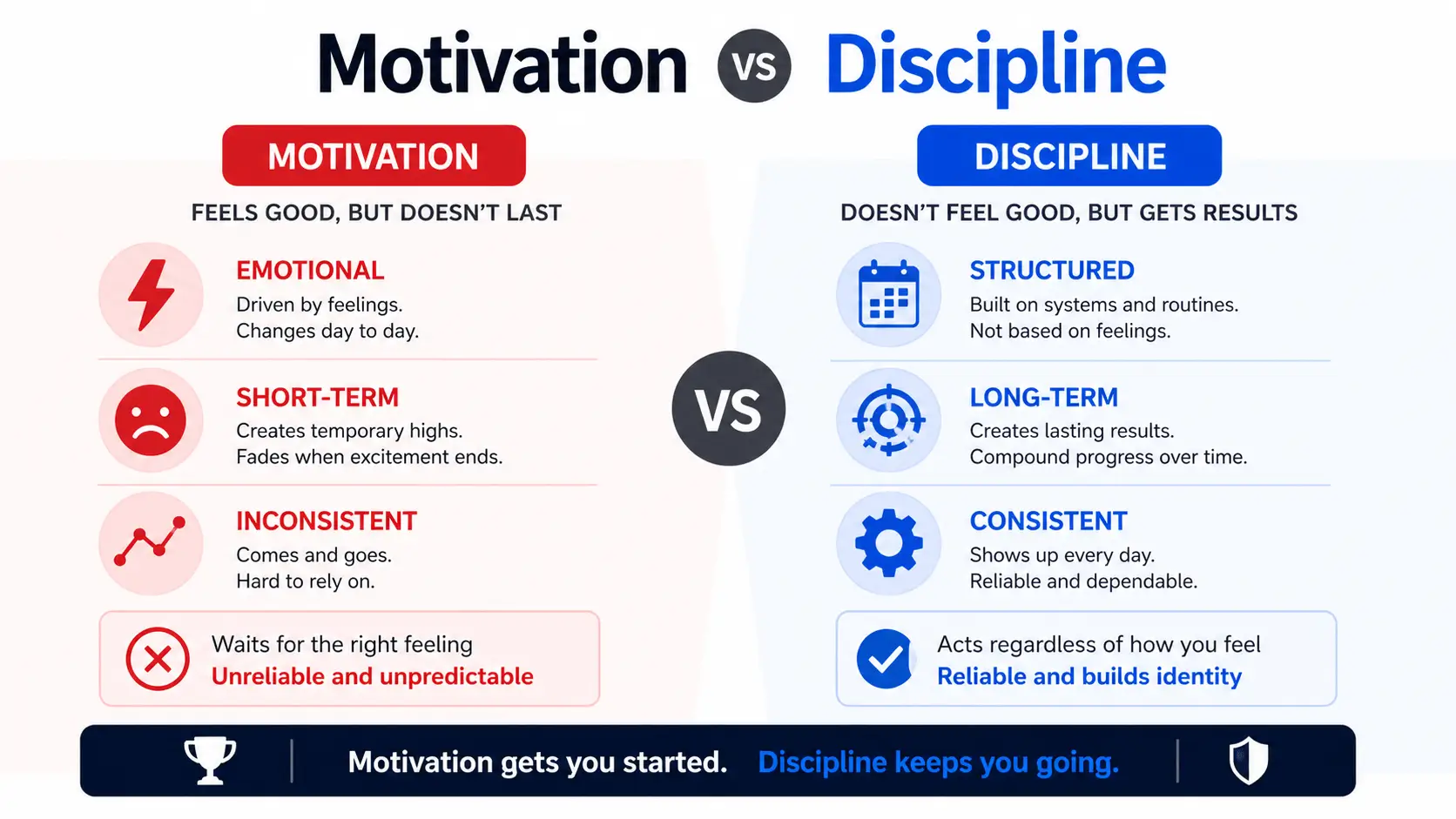
Discipline works better than motivation for long-term self-improvement because it creates consistent behavior regardless of emotional state.
| Motivation | Discipline |
|---|---|
| Short-term emotional drive | Long-term structured behavior |
| Unreliable | Consistent |
| Based on feelings | Based on systems |
| Leads to inconsistency | Builds identity |
Motivation may start action, but discipline sustains it.
Common Mistakes That Stop You From Becoming a Better Version of Yourself
Common behavioral mistakes include:
- Trying to change everything at once
- Relying only on motivation
- Comparing yourself to others
- Ignoring mental health
- Lack of patience
These mistakes increase burnout, reduce consistency, and disrupt habit formation.
How to Stay Consistent When Improving Yourself
Consistency improves when you reduce resistance and make habits easier to follow.
Key strategies:
- Reduce friction: simplify habits and remove obstacles
- Use environment design to support behavior
- Track progress visually for reinforcement
- Focus on identity: “I am becoming the best version of myself”
Consistency is a system outcome, not a personality trait.
Real-Life Application — Becoming the Best Version of Yourself in Different Situations
Self-improvement must adapt to real-life conditions:
- After a setback (e.g., breakup): rebuild routines and identity gradually
- Busy schedule: use micro-habits (5–10 minute actions)
- Low motivation: rely on pre-built systems instead of emotions
Flexibility ensures sustainability across different life phases.
What Actually Works vs Common Myths
Understanding the difference between myths and reality improves decision-making.
- Myth: You need constant motivation
Reality: Systems and habits drive consistency - Myth: Big changes create success
Reality: Small consistent actions compound over time
Practical strategies outperform idealized advice.
Long-Term Growth — Becoming the Best Version of Yourself Over Time
Long-term growth is driven by consistency and identity evolution, not short-term effort.
Key principles:
- Growth is nonlinear, with progress and setbacks
- Focus on years of consistency, not daily perfection
- Reinforce identity-based habits continuously
Sustained improvement comes from repetition, not intensity.
Conclusion
Becoming the best version of yourself is a continuous process of improving your mindset, habits, and daily actions. It’s not about perfection—it’s about progress, consistency, and alignment with your values.
If you focus on small habits, build systems, and develop self-awareness, you naturally evolve into a better version of yourself over time. The key is to act daily, even when motivation is low.
FAQs
1. Why do I struggle to become the best version of myself?
Because of lack of clarity, inconsistent habits, and relying too much on motivation instead of structured systems that support long-term behavior.
2. How long does it take to become the best version of yourself?
It is an ongoing process. Noticeable improvements can occur within weeks, but lasting transformation requires consistent effort over months and years.
3. How do I stay consistent with self-improvement?
Focus on small, manageable habits, reduce friction, and build daily routines that make consistency easier without depending on motivation.
4. What if I lose motivation halfway?
Loss of motivation is normal. Discipline and systems ensure you continue taking action even when motivation decreases.
5. Can I improve mentally and physically at the same time?
Yes. Combining mental and physical habits accelerates growth and creates more sustainable improvements across all areas of life.








6 Responses