

Introduction
Mantras examples are short, meaningful phrases that help shape your thoughts, behavior, and emotional responses. In self-improvement, a personal mantra acts as a mental cue that reinforces positive thinking patterns, supports habit formation, and improves focus.
Unlike vague motivation, mantras work because they repeatedly influence your internal dialogue—gradually changing how you think, act, and respond to challenges. Over time, this repetition creates stronger mental associations, making productive behaviors more automatic and consistent.
Quick Summary
- Mantras are short phrases that influence mindset and behavior through repetition
- Personal mantras help improve focus, motivation, and emotional control
- The effectiveness comes from consistency, not intensity
- The right mantra aligns with your goals, identity, and daily challenges
What Are Mantras and Why Do They Work?
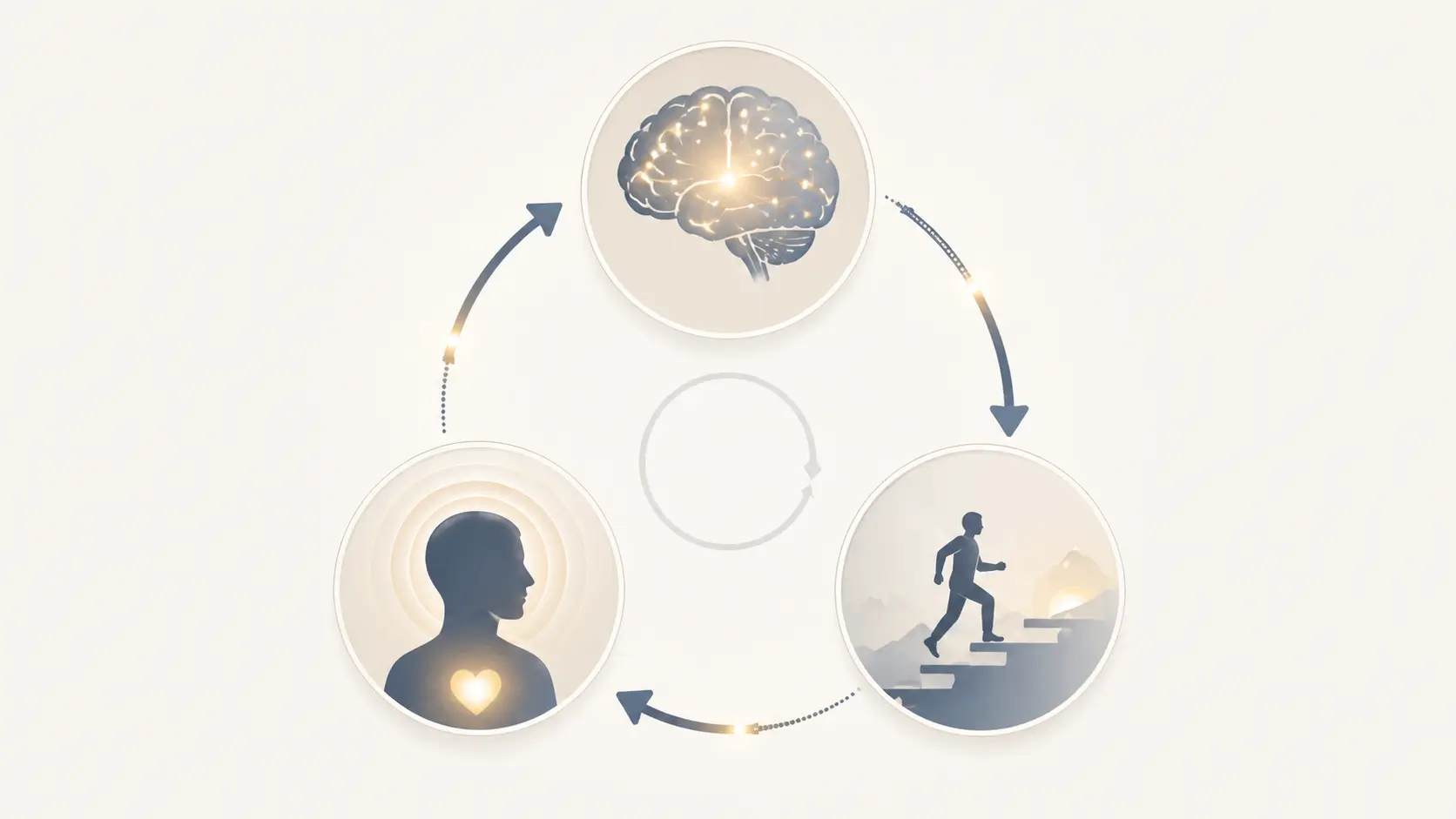
Mantras are short, repeated phrases used to guide thoughts and actions. They work by influencing how your brain processes information and reacts to situations.
The mechanism is simple:
- Repetition → Belief → Behavior
When you repeat a phrase consistently:
- It primes your brain to focus on specific actions (cognitive priming)
- It regulates emotions by reducing stress or increasing energy
- It reinforces identity, especially with “I am” statements
Your internal dialogue shapes your decisions. Mantras act as intentional inputs, replacing negative or unproductive thoughts with constructive ones.
Types of Mantras Examples for Different Life Areas

1. Positive Mantras Examples
- “I am capable of handling challenges”
- “I focus on what I can control”
2. Mantra Examples for Motivation
- “Action creates clarity”
- “I start before I feel ready”
3. Mantra Examples for Success
- “Consistency beats perfection”
- “I show up every day”
4. Mantra Examples for Students
- “I learn from mistakes”
- “Progress matters more than grades”
5. Mantra Examples for Work
- “I prioritize what truly matters”
- “Deep work creates real results”
Short Motivational Mantras for Daily Use
Short motivational mantras are effective because they are easy to remember and repeat consistently.
Examples:
- “Keep going”
- “One step at a time”
- “Done is better than perfect”
- “Stay consistent”
- “Focus now”
These act as quick mental resets during distractions, stress, or low energy.
25 Powerful Morning Mantras to Start Your Day
Morning mantras help prime your brain for action by setting intention early in the day. This reduces decision fatigue and improves focus.
- “Today, I take control of my actions”
- “I choose progress over perfection”
- “I am building discipline daily”
- “My effort matters”
- “I stay focused on what matters”
- “I act with clarity and purpose”
- “I control my mindset”
- “I am consistent”
- “I finish what I start”
- “I take action without hesitation”
- “I am improving every day”
- “I focus on solutions”
- “I embrace challenges”
- “I stay calm and focused”
- “I manage my time effectively”
- “I show up fully”
- “I trust the process”
- “I prioritize progress”
- “I take responsibility for my actions”
- “I stay disciplined”
- “I use my time wisely”
- “I stay committed to my goals”
- “I handle challenges with confidence”
- “I create momentum today”
- “I move forward no matter what”
How to Create a Personal Mantra That Actually Works
A personal mantra works best when it is tied to your identity and behavior.
Step-by-Step Framework
- Identify your biggest struggle (e.g., procrastination)
- Define the opposite behavior (e.g., taking action quickly)
- Turn it into a present-tense statement
- Keep it short and emotionally meaningful
Examples of Personal Mantras
- “I take action even when it’s uncomfortable”
- “I am becoming more disciplined every day”
Why People Fail to Use Mantras Effectively
Common Mistakes
- Using unrealistic or generic phrases
- Lack of repetition
- No emotional connection
- Expecting instant results
Why This Happens
- The brain resists change due to habit inertia
- No alignment with personal identity
- Inconsistent usage prevents reinforcement
Consistency, not intensity, determines effectiveness.
Motivation vs Discipline: What Mantras Actually Support

| Motivation | Discipline |
|---|---|
| Emotion-driven | Habit-driven |
| Temporary | Long-term |
| Unpredictable | Consistent |
| Needs external triggers | Built through repetition |
Insight:
Mantras are more effective when used to reinforce discipline, not just motivation. They create stable behavior patterns instead of temporary emotional boosts.
How to Use Mantras in Daily Life for Habit Building

Practical Implementation
Repeat your mantra during:
- Morning routines
- Before difficult tasks
- During stress or distraction
Habit Integration
- Pair mantra with existing habits (habit stacking)
- Use visual cues like notes or phone reminders
- Repeat with intention, not mindlessly
This turns mantras into automatic behavioral triggers.
Mental and Behavioral Benefits of Using Mantras
- Improves focus and reduces overthinking
- Strengthens emotional resilience
- Builds consistency and discipline
- Rewires negative thinking patterns
Cause-effect relationship:
- Repeated thoughts → consistent actions → long-term habits
Real-Life Examples: Beginner vs Advanced Use
Beginner
- Uses one simple mantra occasionally
- Focuses mainly on motivation
Advanced
- Uses multiple mantras tied to situations
- Reinforces identity and habits daily
The difference is consistency and system integration.
Common Problems and How Mantras Help Solve Them
Procrastination
- Why: Fear + overwhelm
- Fix: “Start small, start now”
Lack of Motivation
- Why: Emotional dependency
- Fix: “I act regardless of how I feel”
Inconsistency
- Why: No system
- Fix: “I show up daily”
Overthinking
- Why: Fear of failure
- Fix: “Clarity comes from action”
Burnout
- Why: Overexertion without recovery
- Fix: “Rest is part of progress”
Table: Mantra Types and Their Effects
| Mantra Type | Purpose | Example | Outcome |
|---|---|---|---|
| Positive | Shift mindset | “I am capable” | Confidence |
| Motivational | Trigger action | “Start now” | Productivity |
| Discipline-based | Build habits | “I show up daily” | Consistency |
| Emotional | Calm mind | “This will pass” | Stability |
Science-Backed Insight: Why Repetition Changes Behavior
Repetition strengthens neural pathways in the brain. The more a thought is repeated, the easier it becomes to access and act on.
- Thoughts influence actions
- Actions become habits
- Habits shape identity
Mantras act as cognitive anchors, making it easier to default to productive behaviors instead of reactive ones.
Conclusion
Mantras examples are more than just positive phrases—they are tools for reshaping your mindset, reinforcing discipline, and building consistent habits. The real power of a personal mantra lies in repetition, emotional connection, and alignment with your identity.
Instead of waiting for motivation, use mantras to guide your actions daily. Small phrases, repeated consistently, can lead to meaningful long-term change.
FAQs
1. Why do I struggle with consistency when using mantras?
Because consistency requires habit-building, not motivation. Without routine integration, mantras are easily forgotten.
2. How do I choose the right personal mantra?
Focus on your biggest struggle and create a short phrase that reinforces the behavior you want to build.
3. Can mantras really change behavior?
Yes, when repeated consistently, they influence thought patterns, which shape actions over time.
4. What if I lose motivation to use my mantra?
Use your mantra as a tool for discipline, not motivation. Repeat it especially when you don’t feel like it.
5. How often should I repeat a mantra?
Daily, ideally tied to routines like mornings, work sessions, or stressful moments.
6. Are short mantras more effective than long ones?
Yes, shorter mantras are easier to remember and repeat, making them more effective for habit reinforcement.










One Response