
Introduction
Women’s self improvement blogs are valuable online resources that help readers develop better habits, improve productivity, strengthen confidence, and support long-term personal growth. Unlike purely entertainment-focused content, these blogs combine practical advice, personal experiences, and evidence-based strategies to encourage meaningful change. Many women use self improvement blogs for women to learn from real-life challenges, discover productivity systems, improve emotional well-being, and build routines that support success. As women’s self improvement continues to gain attention, these resources provide accessible guidance that helps readers translate knowledge into action and create sustainable improvements across different areas of life.
Quick Summary
- Women’s self improvement blogs provide practical strategies for personal growth, productivity, confidence, and mindset development.
- They combine personal experiences with actionable advice that readers can apply in everyday life.
- The most effective blogs focus on sustainable habits, emotional resilience, and long-term self-improvement.
- Readers benefit most when they implement ideas consistently rather than seeking constant motivation.
- Long-term growth is driven by systems, habits, and self-awareness rather than short bursts of inspiration.
What Are Women’s Self Improvement Blogs?
Women’s self improvement blogs are digital platforms that share insights, strategies, and experiences related to personal development. Their purpose is to help readers improve habits, mindset, productivity, confidence, relationships, and overall well-being.
Unlike many general lifestyle blogs, women’s blogs often focus more deeply on behavior change and personal growth. Blogs about women frequently address challenges unique to balancing career goals, personal responsibilities, emotional health, and self-development. Many blogs by women provide practical guidance rooted in real-life experiences, making the content relatable and actionable.
Personal growth often begins with self-reflection. A quality women’s blog encourages readers to evaluate current behaviors, identify areas for improvement, and take intentional action toward meaningful goals.
Common Topics Covered in Self Improvement Blogs
Common topics include:
- Habit formation and routine building
- Productivity systems and time management
- Confidence and self-esteem development
- Emotional regulation and resilience
- Goal setting and achievement
- Career advancement and leadership
- Wellness, mindfulness, and mindset development
Why Women Turn to Self Improvement Content
Women often seek self-improvement content because they want to:
- Create greater fulfillment and purpose
- Improve confidence and self-belief
- Manage multiple responsibilities effectively
- Build healthier habits and routines
- Find practical solutions to everyday challenges
- Strengthen emotional resilience during stressful periods
How Women’s Self Improvement Blogs Support Personal Growth
Women’s self improvement blogs support growth by introducing new perspectives that influence thinking and behavior. Exposure to practical strategies can help readers recognize limiting beliefs, adopt more effective habits, and make better decisions.
Learning creates awareness. Awareness creates behavior change. Behavior change creates results. This cause-and-effect relationship explains why educational content can become a catalyst for personal development when paired with action.
Developing a Growth-Oriented Mindset
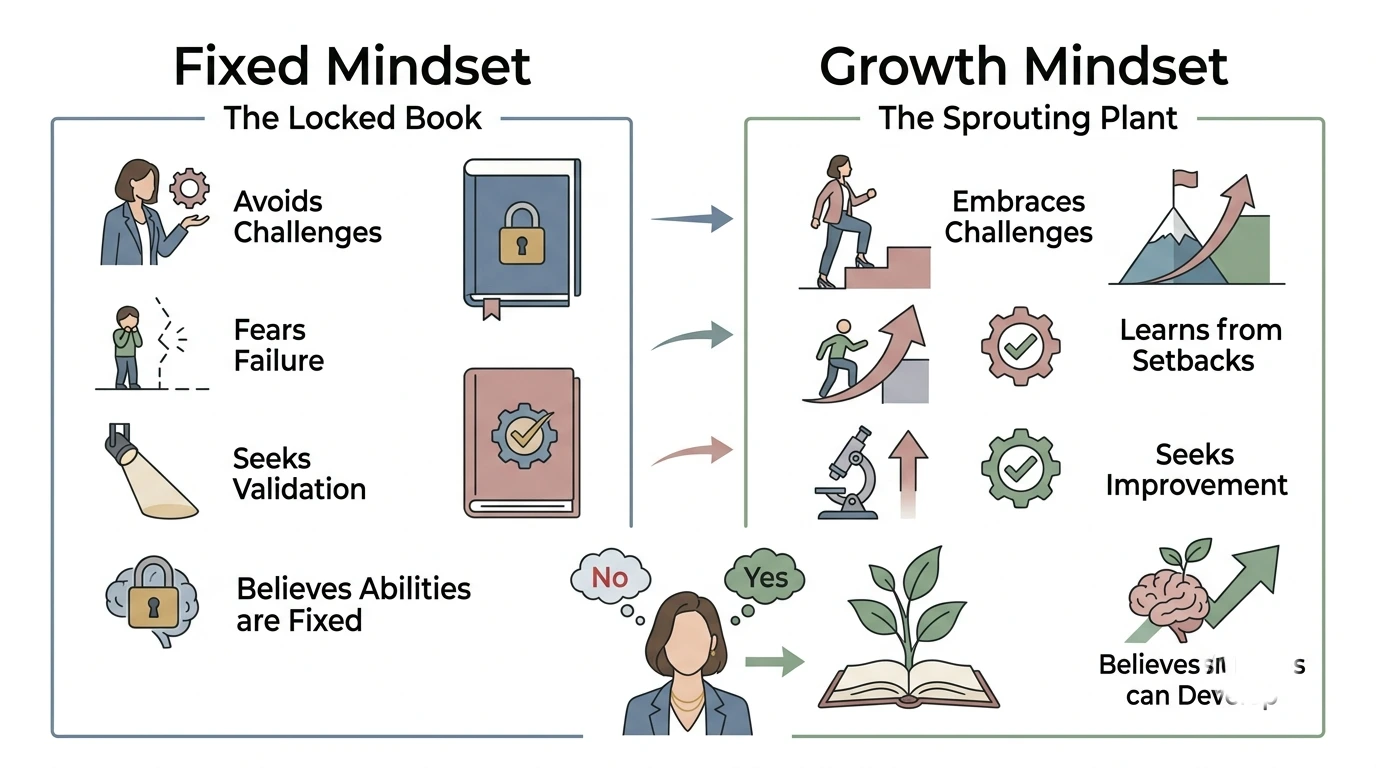
A growth mindset is the belief that skills and abilities can improve through effort and learning.
For readers who are just beginning their personal development journey, these positive mindset tips for beginners can help reinforce growth-oriented thinking patterns.
| Fixed Mindset | Growth Mindset |
|---|---|
| Abilities are fixed | Abilities can develop |
| Avoids challenges | Embraces challenges |
| Fears failure | Learns from failure |
| Seeks validation | Seeks improvement |
Women who adopt a growth-oriented mindset are more likely to persist through setbacks, develop confidence, and continue learning over time.
Turning Inspiration Into Action
Inspiration can initiate change, but action creates results.
Many readers consume inspirational content without implementing it. Sustainable growth occurs when ideas are translated into daily behaviors.
Action-based learning includes:
- Applying one lesson immediately
- Testing new habits
- Tracking progress
- Reflecting on outcomes
- Making adjustments based on experience
The Most Valuable Types of Self Improvement Content for Women
The most valuable content provides practical application rather than motivation alone. Effective blogs about inspiration help readers develop systems that support long-term growth.
Habit Building and Daily Routines
Habit-focused content often delivers the highest long-term value.
Common topics include:
- Morning routines
- Evening routines
- Habit stacking
- Time blocking
- Consistency strategies
Productivity and Time Management
Productivity-focused content helps readers:
- Prioritize effectively
- Reduce overwhelm
- Manage competing responsibilities
- Improve focus
- Increase efficiency
Confidence and Personal Development
Confidence-building content often addresses:
- Self-esteem improvement
- Identity shifts
- Personal boundaries
- Self-trust development
- Leadership skills
Mental and Emotional Well-Being
Inspirational blogs about life frequently emphasize:
- Stress management
- Emotional awareness
- Healthy coping strategies
- Mindfulness practices
- Resilience building
Why People Struggle With Self Improvement Despite Good Advice
Behavioral psychology suggests that knowing what to do is different from consistently doing it.
Lack of Consistency
Motivation naturally fluctuates. Systems create stability when motivation disappears.
Information Overload
Many people consume large amounts of self-improvement content but fail to implement any of it. Excessive information often leads to decision fatigue.
Fear of Failure and Perfectionism
Perfectionism creates unrealistic expectations that discourage action. Small imperfect progress is often more effective than waiting for perfect conditions.
Comparing Yourself to Others
Social comparison can undermine confidence and distract from personal goals. Growth becomes more sustainable when success is defined according to individual values.
Motivation vs Discipline in Personal Development
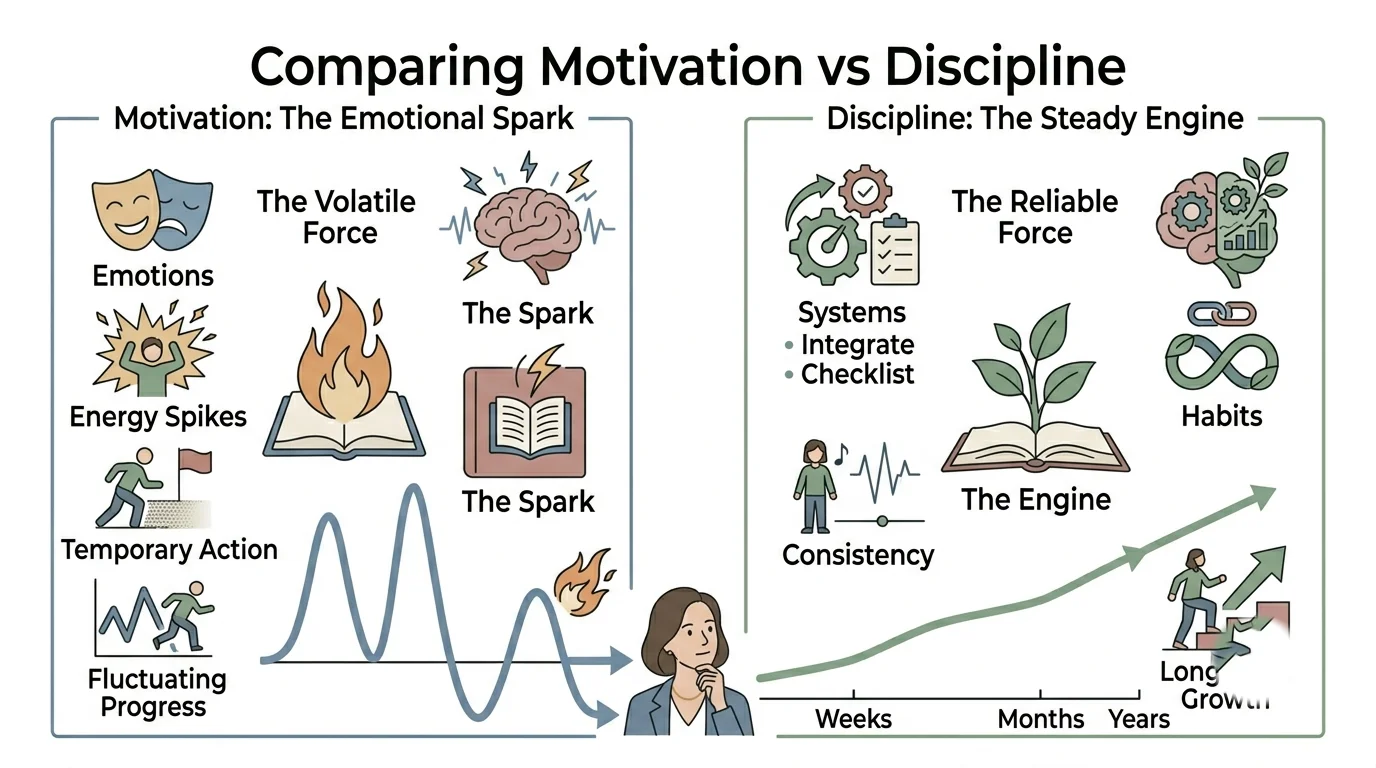
Motivation and discipline both play important roles, but discipline creates lasting results.
Readers who want a practical framework for staying consistent even when motivation fades can explore our guide on how to build discipline without motivation.
| Motivation | Discipline |
| Emotion-driven | System-driven |
| Temporary | Sustainable |
| Depends on mood | Depends on habits |
| Fluctuates daily | Creates consistency |
| Starts action | Maintains action |
Motivation helps initiate change. Discipline ensures that actions continue even when enthusiasm fades. Successful personal development relies more heavily on systems and routines than emotional states.
Consistency vs Intensity: What Actually Creates Long-Term Growth?
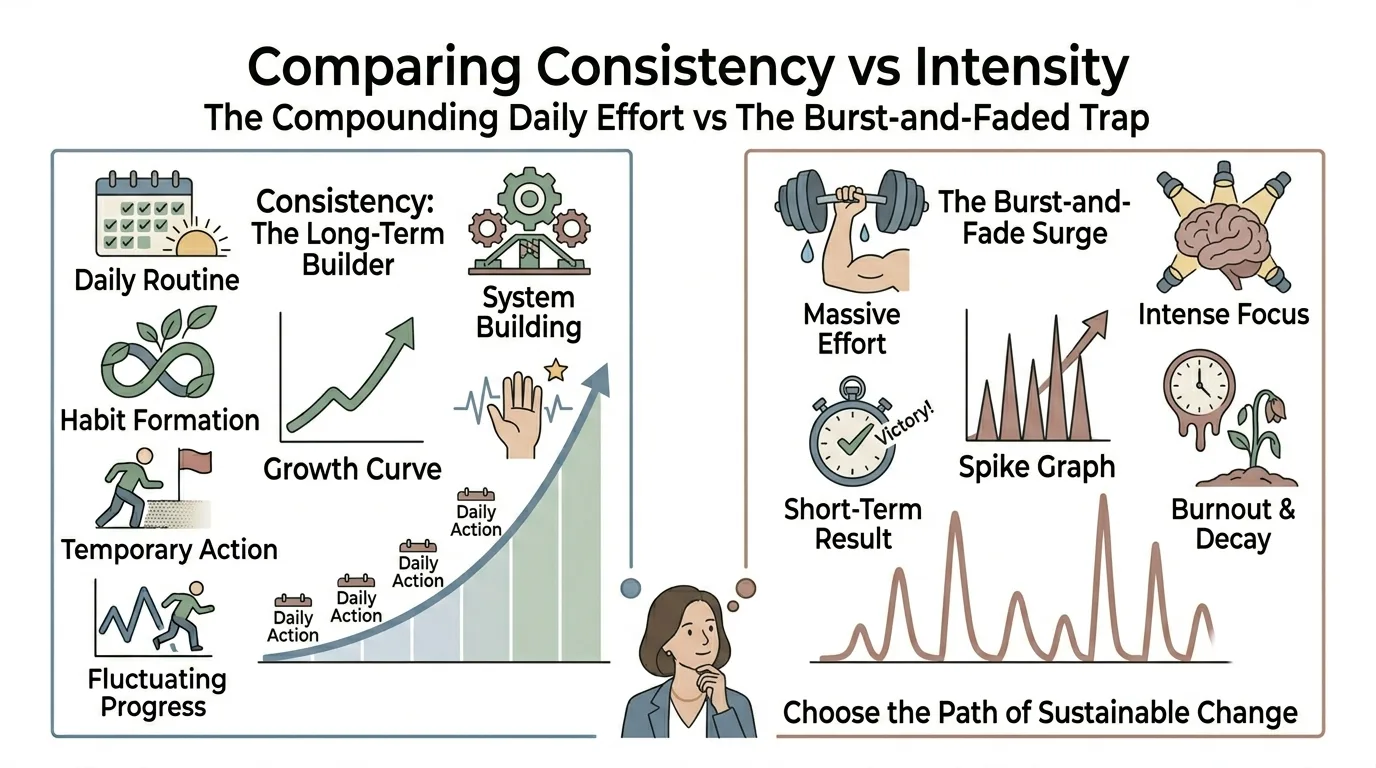
Consistency generally outperforms intensity because it is sustainable.
| Consistency | Intensity |
| Small daily actions | Large occasional effort |
| Sustainable | Often exhausting |
| Easier to maintain | Difficult to repeat |
| Builds habits | Relies on motivation |
| Produces compounding results | Produces temporary results |
Small daily actions reinforce neural pathways and strengthen habits over time. Sporadic bursts of effort often create short-term results but rarely produce lasting behavioral change.
Habit Frameworks Commonly Recommended in Women’s Self Improvement Blogs
Many self improvement blogs include a practical list of self improvement strategies that readers can implement immediately.
| Framework | Purpose | Example |
| Habit Stacking | Attach new habits to existing routines | Read after morning coffee |
| Identity-Based Habits | Focus on who you want to become | “I am a disciplined person” |
| Two-Minute Rule | Reduce resistance | Start with two minutes |
| Environment Design | Remove friction | Keep books visible |
| Progress Tracking | Reinforce consistency | Habit journal |
How to Build a Personal Growth Routine That Lasts
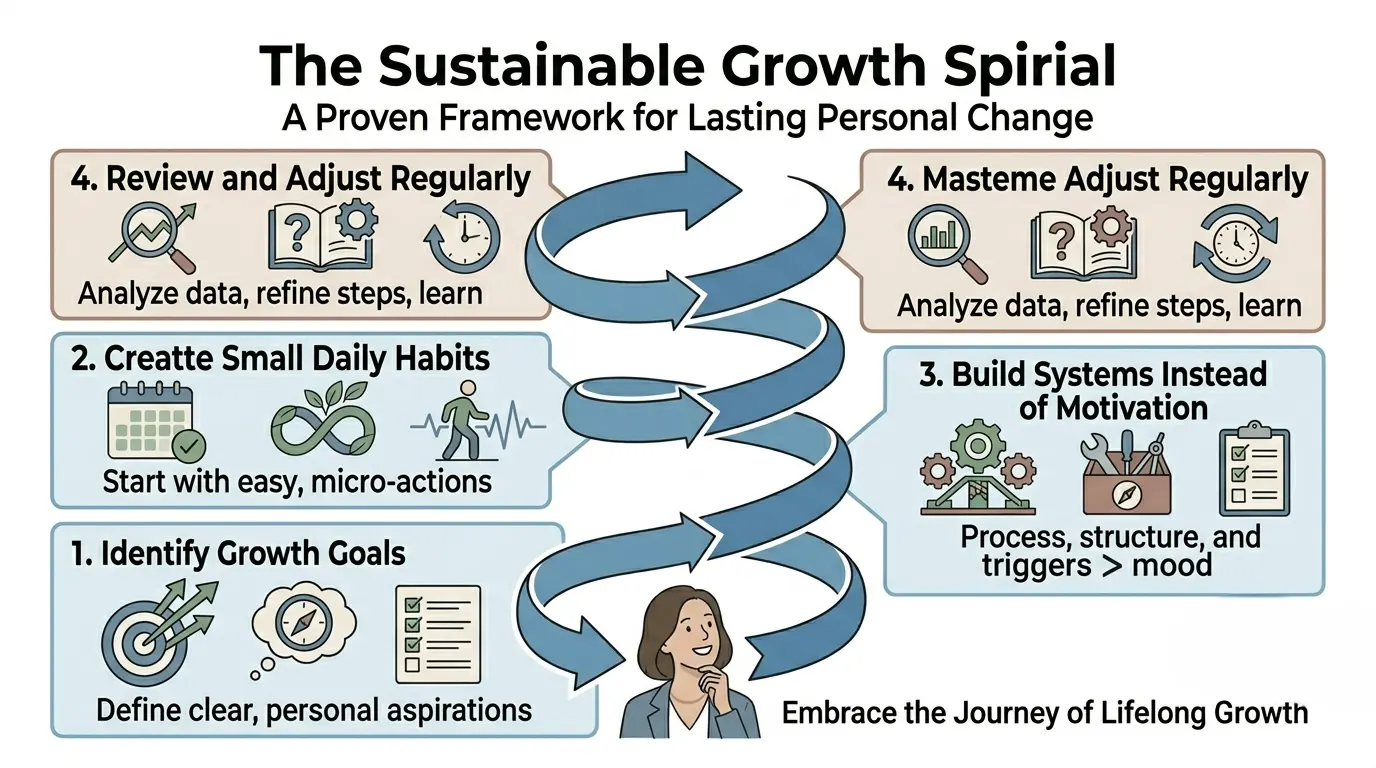
Step 1: Identify Your Growth Goals
Clarity creates direction. Focus on goals that align with your values and desired future identity.
Step 2: Create Small Daily Habits
Micro-habits increase consistency because they require minimal effort and resistance.
Step 3: Build Systems Instead of Relying on Motivation
Create routines, reminders, and environmental cues that automate positive behaviors.
Step 4: Review and Adjust Regularly
Weekly reflection helps identify what’s working, what isn’t, and where improvements can be made.
Regular reflection becomes more effective when paired with structured writing practices, which is why many people use techniques explained in our guide on how to journal for self-growth.
Personal Blogs About Life and Their Role in Self Improvement
Personal blogs about life often offer practical lessons through real-world experiences. Personal bloggers frequently share challenges, failures, successes, and learning processes that readers can adapt to their own circumstances.
Whether found in a personal blog, blogs about life, blogs of life, or popular personal blogs, relatable experiences often strengthen understanding and retention.
Why Personal Stories Create Stronger Learning
Personal experiences create:
- Relatability
- Emotional engagement
- Practical context
- Greater trust
Lessons Readers Can Apply to Their Own Lives
Readers benefit most when they:
- Extract key principles
- Adapt lessons to their situation
- Focus on implementation
- Measure progress over time
Self Improvement Blogs for Women vs Self Improvement Blogs for Men
While both categories share many principles, their emphasis may differ.
| Women’s Self Improvement Content | Men’s Self Improvement Content |
| Often emphasizes balance and well-being | Often emphasizes performance and achievement |
| Focuses on emotional growth | Focuses on productivity and optimization |
| Includes relationship dynamics | Includes competitiveness and self-mastery |
| Holistic development | Goal-centered development |
Both self improvement blogs for women and self improvement blogs for men ultimately encourage growth through habits, mindset, and consistent action.
Common Myths About Personal Development
Myth: Motivation Is Enough
Motivation initiates action but does not sustain it. Systems sustain behavior.
Myth: Success Requires Massive Change
Small improvements repeated consistently often outperform dramatic transformations.
Myth: Self Improvement Should Be Fast
Meaningful growth is gradual and cumulative.
Myth: More Information Creates Better Results
Implementation matters more than information consumption.
Myth: Failure Means You’re Not Improving
Failure provides feedback that supports learning and adaptation.
Practical Real-Life Examples of Self Improvement in Action
Beginner Example
A beginner starts reading ten pages each morning. The habit requires little effort and builds momentum.
Intermediate Example
An individual combines habit tracking, weekly planning, and time-blocking to improve productivity and consistency.
Advanced Example
A person adopts identity-based habits, viewing themselves as a lifelong learner who continuously improves systems, routines, and behaviors.
Best Self Improvement Websites and Blogs: What Makes Them Effective?
The best self improvement websites typically share several characteristics.
Evidence-Based Advice
Recommendations are grounded in psychology, behavior science, and practical research.
Actionable Frameworks
Readers receive clear steps rather than vague motivation.
Real-Life Experience
Lessons are supported by practical examples.
Consistent Educational Content
Regular content reinforces learning and growth.
Practical Implementation Guidance
The focus remains on execution rather than inspiration alone.
Overcoming the Most Common Self Improvement Challenges
Procrastination
Why It Happens
- Avoidance behavior
- Fear of discomfort
How to Fix It
- Reduce task size
- Use implementation cues
How to Prevent It
- Design supportive environments
- Schedule important habits
Lack of Motivation
Why It Happens
- Emotional fluctuation
How to Fix It
- Build systems
How to Prevent It
- Develop identity-based habits
Overthinking
Why It Happens
- Fear of mistakes
How to Fix It
- Take immediate action
How to Prevent It
- Use decision frameworks
Burnout and Overwhelm
Why It Happens
- Unrealistic expectations
How to Fix It
- Simplify commitments
- Prioritize recovery
How to Prevent It
- Build sustainable routines
Fear of Failure
Why It Happens
- Perfectionism
How to Fix It
- Reframe setbacks as feedback
How to Prevent It
- Practice growth mindset principles
Conclusion
Women’s self improvement blogs can be powerful tools for personal growth when readers move beyond inspiration and focus on consistent action. The most effective self-improvement strategies combine mindset shifts, sustainable habits, practical systems, and realistic expectations. Long-term success comes from building routines that support growth, learning from setbacks, and taking small actions consistently over time. Growth is rarely the result of motivation alone. It is the product of disciplined habits, self-awareness, and continuous improvement.
FAQs
What are women’s self improvement blogs?
Women’s self improvement blogs are online resources that provide advice, strategies, and experiences focused on personal growth, productivity, confidence, habits, and emotional well-being.
How can self improvement blogs help women achieve personal growth?
They provide practical frameworks, mindset shifts, and actionable strategies that help readers develop better habits, improve decision-making, and achieve meaningful goals.
Why do I struggle with consistency even when I’m motivated?
Motivation is temporary and fluctuates over time. Consistency is usually built through systems, routines, and habits rather than emotional enthusiasm.
What is the difference between motivation and discipline?
Motivation helps start an action, while discipline helps maintain it. Discipline creates consistency because it relies on systems instead of mood.
How do I build habits that actually last?
Start small, attach habits to existing routines, remove obstacles, track progress, and focus on consistency rather than perfection.
Are personal blogs about life useful for self improvement?
Yes. Personal blogs often provide relatable experiences and practical lessons that readers can adapt to their own situations and goals.
What should beginners focus on first in personal development?
Beginners should focus on one meaningful habit, establish consistency, and avoid trying to change too many behaviors simultaneously.
How can I stay disciplined when motivation disappears?
Create routines, use environmental cues, automate positive behaviors, and focus on identity-based habits rather than emotional states.
Why do many people fail to maintain self-improvement habits?
Common reasons include unrealistic expectations, information overload, lack of systems, perfectionism, and inconsistency.
What is the best way to create a sustainable personal growth routine?
Identify meaningful goals, start with small daily habits, build supportive systems, review progress regularly, and make gradual adjustments over time.









2 Responses