
Introduction
30 day challenges for self improvement are structured commitments designed to help individuals develop positive habits, strengthen discipline, and create sustainable personal growth through consistent daily action. Rather than pursuing vague goals, a 30-day challenge focuses on one specific behavior, making progress easier to measure and maintain. The limited timeframe reduces psychological resistance while providing enough repetition to establish meaningful routines. Whether the goal is better productivity, improved health, stronger focus, or enhanced self-confidence, a well-designed challenge creates momentum that often extends beyond the initial 30 days. This combination of structure, accountability, and consistency makes short-term challenges a powerful personal development tool.
A structured challenge becomes more effective when combined with a clear understanding of personal goals and the process of personal growth
Quick Summary
- A 30-day self-improvement challenge focuses on one habit, behavior, or skill for 30 consecutive days.
- The timeframe balances motivation with realistic habit-building.
- Challenges can improve mindset, productivity, health, discipline, and confidence.
- Consistency matters more than intensity.
- Small daily actions often lead to long-term personal growth.
What Are 30 Day Challenges for Self Improvement?
A 30-day self-improvement challenge is a structured commitment to perform a specific action every day for 30 days. The purpose is to build consistency, improve behavior, and develop habits through repetition.
Many people ask, what are some 30 day challenges or what are some good 30 day challenges. Common examples include daily exercise, journaling, reading, meditation, and reducing screen time.
The popularity of the 30-day format comes from its balance between commitment and manageability. It feels achievable while still being long enough to produce meaningful results.
Key benefits include:
- Clear commitment period
- Measurable progress
- Reduced decision fatigue
- Improved self-discipline
- Greater self-awareness
A well-designed 30 day challenge to change your life does not rely on dramatic transformations. Instead, it focuses on small actions that compound over time.
Why 30-Day Challenges Work for Personal Growth
30-day challenges work because they align with core behavioral psychology principles. Repeated behaviors strengthen neural pathways, making actions feel more automatic over time.
Challenges also leverage habit loops involving:
- Trigger
- Action
- Reward
When repeated consistently, this cycle reinforces behavior and increases the likelihood of long-term adoption.
The Psychology of Small Daily Wins
Small daily wins create positive feedback loops.
Each completed action provides evidence that progress is being made. This activates reward systems in the brain and increases motivation to continue.
Benefits include:
- Increased confidence
- Reduced overwhelm
- Improved focus
- Greater sense of accomplishment
Progress tracking further reinforces these effects by making improvement visible.
How Consistency Creates Lasting Change
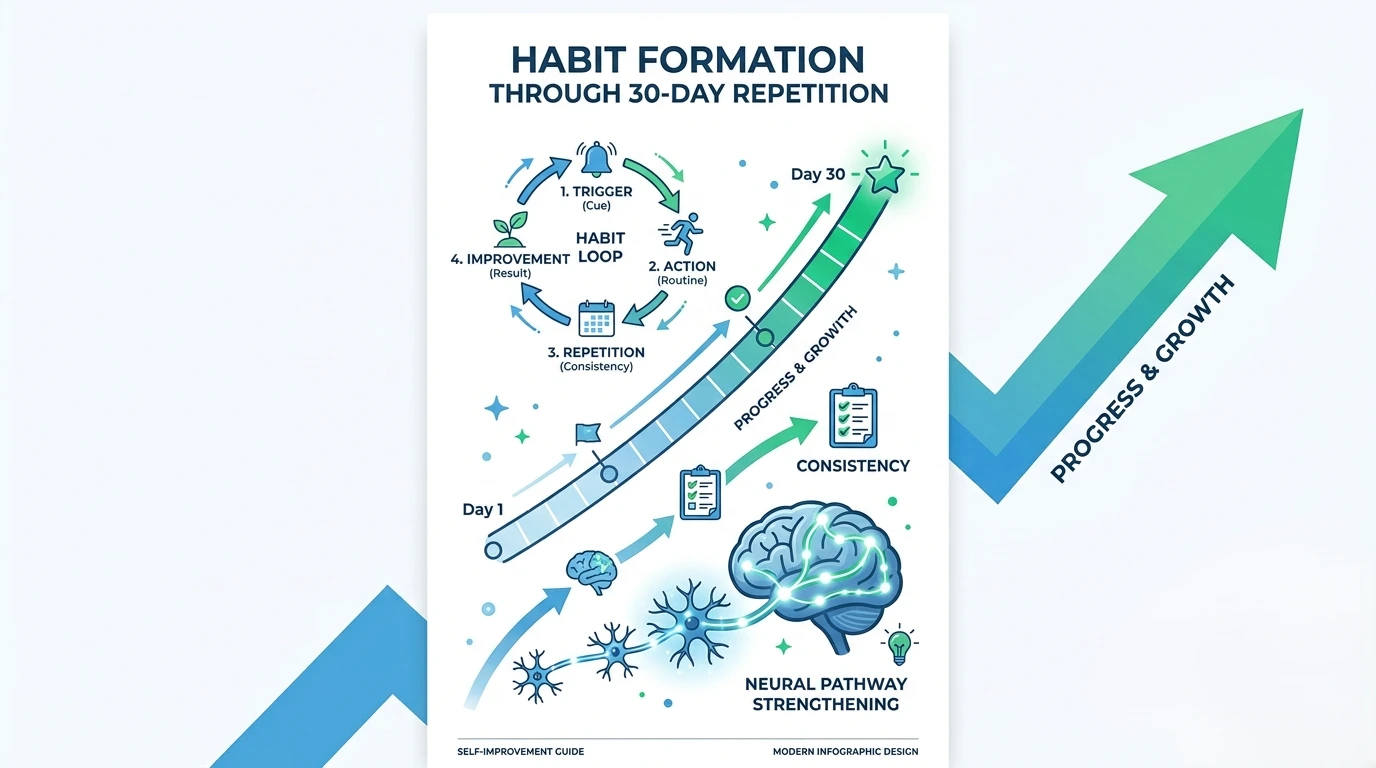
Consistency is the foundation of behavior change.
Building lasting habits requires more than short-term motivation; learning how to build good habits in 30 days can help create a repeatable system for behavioral change.
Repeated actions gradually become easier because they require less mental effort. Over time, individuals begin identifying themselves as the type of person who performs the behavior regularly.
Examples include:
- Reading 10 pages daily
- Walking 20 minutes every morning
- Writing for 15 minutes each day
- Practicing meditation consistently
Key insights:
- Progress becomes visible through repetition.
- Small actions are easier to sustain.
- Consistency reduces reliance on motivation.
- Success builds self-trust and confidence.
Best 30 Day Challenges for Self Improvement
The best 30 day challenges for self improvement align with personal goals and current lifestyle needs.
Mindset Challenges
Mindset challenges focus on improving thought patterns and emotional awareness.
Examples:
- Daily gratitude journaling
- Positive self-talk practice
- Reflection exercises
- Limiting negative thinking patterns
These habits can improve emotional resilience and self-awareness.
Productivity Challenges
Productivity challenges help individuals improve focus and time management.
Examples:
- Time blocking every day
- Planning tomorrow the night before
- Daily deep work sessions
- Eliminating distractions
These are excellent 30 day challenge ideas for self improvement for professionals and students.
Health and Wellness Challenges
Physical well-being supports mental performance and overall growth.
Examples:
- Daily walking challenge
- Drinking more water
- Improving sleep habits
- Daily stretching
Small improvements in health often create positive spillover effects across other areas of life.
Learning and Skill-Building Challenges
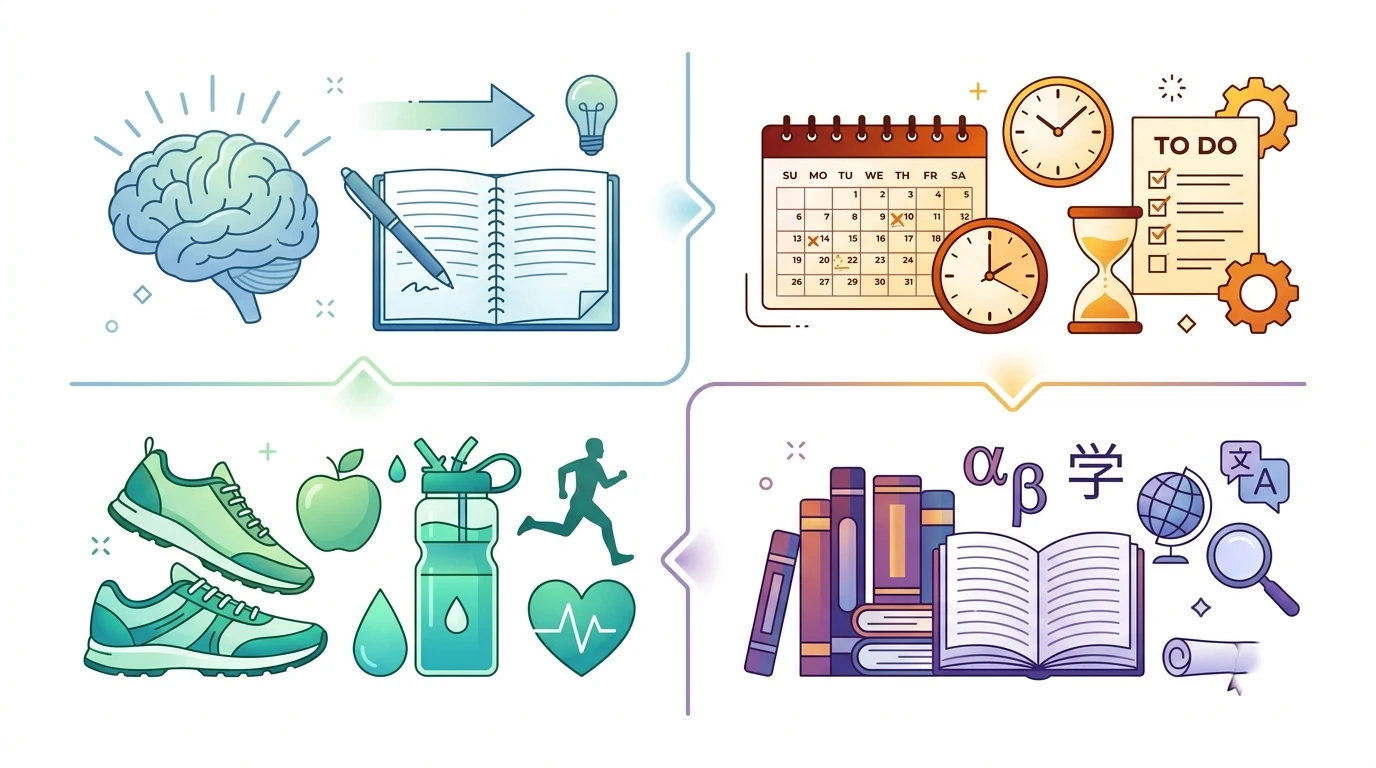
Learning challenges promote continuous improvement.
Examples:
- Reading daily
- Learning a new language
- Practicing writing
- Developing a professional skill
These self improvement challenge ideas support both personal and career growth.
30 Day Challenge Ideas for Different Life Stages
Personal development goals often vary depending on responsibilities, age, and lifestyle.
30 Day Challenge Ideas for Students
Effective 30 day challenge ideas for students include:
- Study for 30 focused minutes daily
- Complete assignments ahead of schedule
- Reduce social media usage
- Practice active recall learning
- Follow a consistent study routine
These habits improve academic productivity and reduce procrastination.
30 Day Challenge Ideas for Adults
Useful 30 day challenge ideas for adults include:
- Daily exercise
- Morning planning routine
- Weekly financial review
- Stress management practice
- Reading for personal development
Adults often benefit from challenges that improve work-life balance and long-term well-being.
30 Day Self Improvement Challenge for Men
A 30 day self improvement challenge for men may focus on:
- Strength training
- Leadership development
- Daily goal review
- Improved communication habits
- Confidence-building activities
The emphasis should remain on sustainable growth rather than extreme performance.
How to Choose the Right 30-Day Challenge
The best challenge aligns with your current goals and circumstances.
Follow these steps:
- Identify one improvement area.
- Define a measurable daily action.
- Keep the challenge realistic.
- Track progress daily.
- Review results weekly.
Common Selection Mistakes
- Choosing multiple goals simultaneously
- Making the challenge overly difficult
- Expecting immediate transformation
- Comparing progress with others
Simplicity increases the likelihood of success.
Motivation vs Discipline During a 30-Day Challenge
When motivation decreases, developing discipline becomes essential. Understanding how to build discipline without motivation helps people continue taking action even when enthusiasm fades.
Motivation helps initiate action, but discipline sustains it.
| Motivation | Discipline |
|---|---|
| Emotion-driven | System-driven |
| Fluctuates daily | Remains stable |
| Good for starting | Essential for finishing |
| Depends on mood | Depends on routine |
| Short-term energy | Long-term results |
Key Takeaway
Long-term success comes from discipline-supported systems rather than temporary motivation.
Consistency vs Intensity in Self Improvement
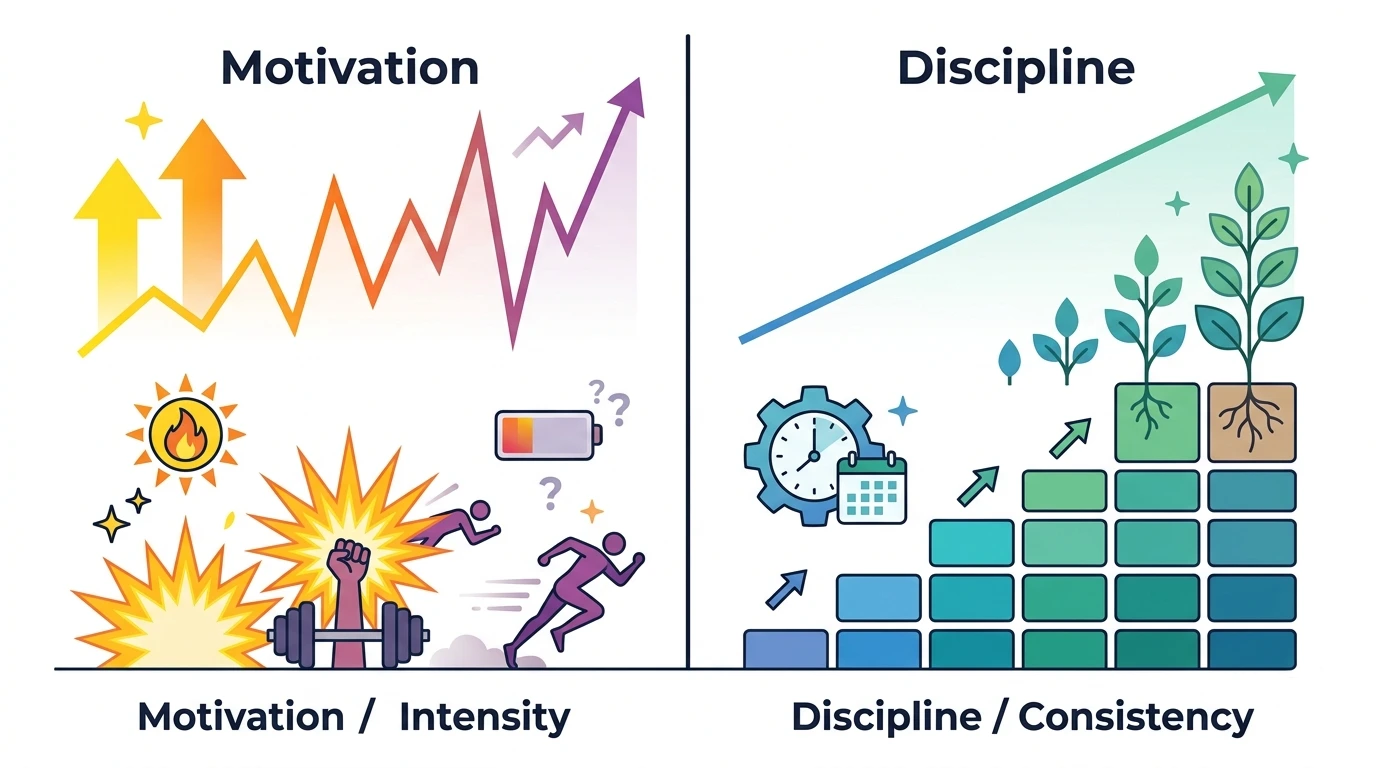
Many people assume bigger efforts produce better results. In reality, consistency is often more effective.
| Consistency | Intensity |
| Small daily actions | Large occasional efforts |
| Easier to maintain | Harder to sustain |
| Builds habits | Creates short bursts of progress |
| Lower burnout risk | Higher burnout risk |
| Better long-term results | Often temporary |
Sustainable growth usually comes from repeated action rather than occasional extremes.
Common Reasons People Fail 30-Day Challenges
Understanding common obstacles increases the likelihood of success.
Procrastination
Why It Happens
- Fear of discomfort
- Task avoidance
- Lack of clarity
How to Fix It
- Start with a 5-minute version
- Simplify the task
- Focus on action rather than perfection
Lack of Motivation
Why It Happens
- Results appear slowly
- Novelty wears off
How to Fix It
- Track progress visually
- Celebrate small wins
- Focus on process goals
Overthinking
Why It Happens
- Fear of mistakes
- Analysis paralysis
How to Fix It
- Take imperfect action
- Reduce complexity
Fear of Failure
Why It Happens
- Perfectionism
- Self-doubt
How to Fix It
- Measure consistency, not perfection
- Expect setbacks
Burnout and Overwhelm
Why It Happens
- Unrealistic expectations
- Too many simultaneous changes
How to Fix It
- Focus on one challenge
- Prioritize recovery and balance
Daily Small Improvements That Create Big Results
Daily actions create compound growth.
Examples of daily small improvements examples include:
- Reading 10 pages
- Walking 20 minutes
- Writing one journal entry
- Practicing meditation
- Learning one new concept
- Spending less time on social media
If you want to know how to challenge yourself everyday, focus on manageable actions that can be repeated consistently.
Small improvements accumulate into significant long-term outcomes.
Building a Sustainable Self-Improvement System Beyond 30 Days
The ultimate goal is not completing a challenge. The goal is creating lasting change.
Goals vs Systems
Goals define desired outcomes.
Systems define recurring actions.
Goals provide direction, but systems produce results.
For example:
- Goal: Read 20 books.
- System: Read 10 pages every day.
Systems increase consistency because they focus on behaviors rather than outcomes.
Creating a Personal Growth Routine
A sustainable routine may include:
- Daily habits
- Weekly reviews
- Habit tracking
- Continuous improvement cycles
The most successful individuals regularly evaluate and adjust their systems.
30-Day vs 90-Day Self Improvement Challenges
Both formats offer value depending on experience level and goals.
| 30-Day Challenge | 90-Day Challenge |
| Easier to start | Greater commitment |
| Faster feedback | Deeper transformation |
| Lower resistance | Stronger habit development |
| Ideal for beginners | Better for advanced goals |
| Quick momentum | Long-term behavioral change |
A 90 day self improvement challenge is often more effective for deeper lifestyle changes, while 30-day challenges are ideal for building momentum.
Sample 30-Day Self Improvement Challenge Framework
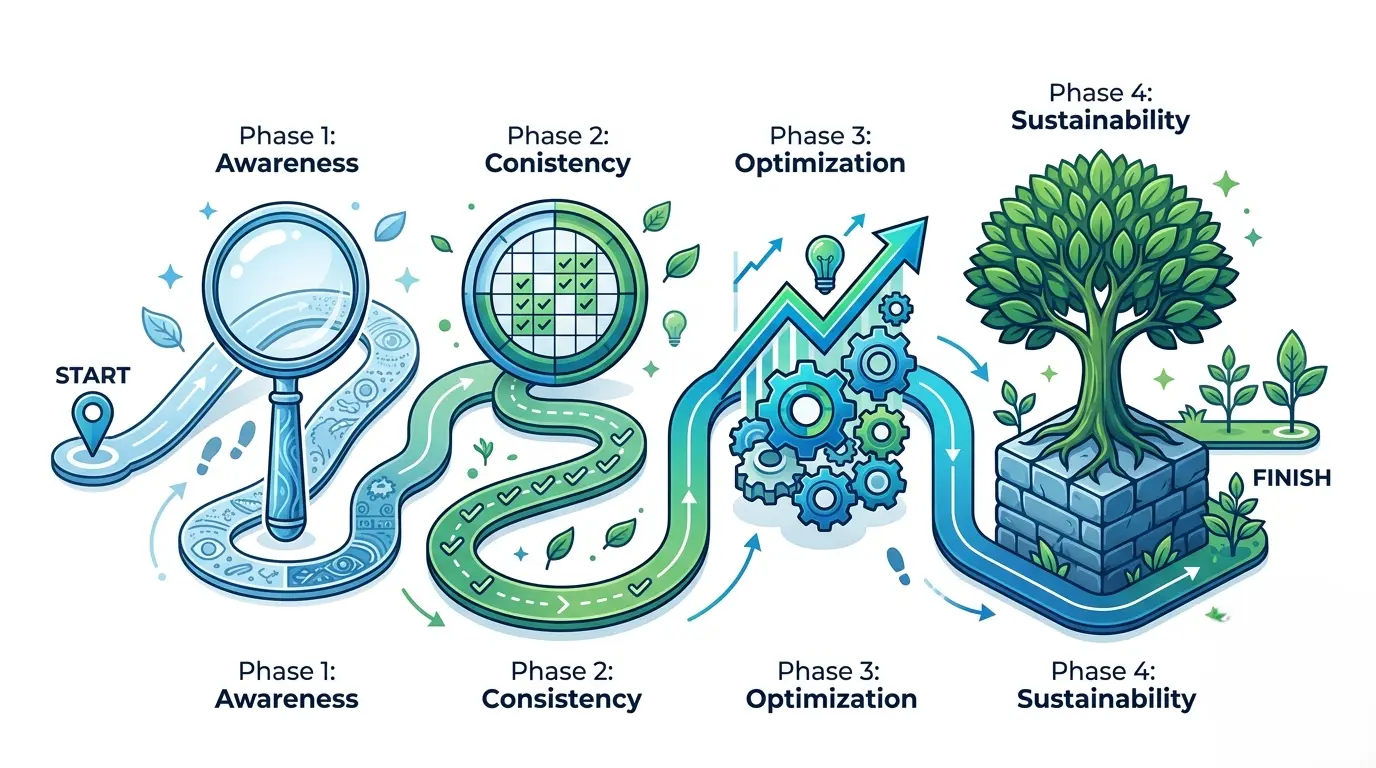
This framework provides a simple implementation strategy.
| Week | Focus | Objective |
| Week 1 | Awareness | Establish daily habit |
| Week 2 | Consistency | Reduce missed days |
| Week 3 | Optimization | Improve efficiency |
| Week 4 | Sustainability | Prepare for long-term continuation |
Action Steps
- Choose one habit.
- Set a daily trigger.
- Track completion.
- Review progress weekly.
- Continue beyond day 30 if beneficial.
Conclusion
30 day challenges for self improvement offer a practical and effective way to develop better habits, strengthen discipline, and create meaningful personal growth. Their effectiveness comes from structured consistency rather than dramatic change. By focusing on one behavior, reducing complexity, and prioritizing daily action, individuals can build momentum that extends beyond the challenge itself. The most successful participants understand that long-term improvement is not driven by motivation alone but by systems, routines, and consistent effort. A simple 30-day commitment can become the foundation for lasting positive change.
FAQs
What are some good 30 day challenges for self improvement?
Good challenges include daily reading, exercise, journaling, meditation, gratitude practice, improving sleep habits, and following a structured productivity routine.
Why do I struggle to stay consistent during a 30-day challenge?
Most people struggle because they rely on motivation, set unrealistic expectations, or try to change too many behaviors at once. Simpler systems generally improve consistency.
Can a 30-day challenge really change your life?
A 30-day challenge can create meaningful change by helping establish habits, strengthen discipline, and increase self-confidence through repeated action.
How do I stay disciplined when motivation disappears?
Build routines, track progress, reduce decision-making, and commit to completing small daily actions regardless of how you feel.
What should I do for self improvement if I don’t know where to start?
Start with one area that affects your daily life the most, such as sleep, exercise, focus, or mindset. Small improvements in these areas often create broader benefits.
Is a 30-day challenge better than a 90-day challenge?
For beginners, a 30-day challenge is often more approachable and easier to complete. A 90-day challenge is better suited for deeper behavioral transformation.
How can I challenge myself every day without feeling overwhelmed?
Focus on one small habit, maintain realistic expectations, and prioritize consistency over intensity. Sustainable progress comes from repeated action rather than large efforts.







One Response