

Introduction
A master mindset is a deliberate way of thinking focused on continuous improvement, self-awareness, resilience, disciplined decision-making, and long-term growth. The concept appears across personal development, leadership, education, sports, business, and performance psychology because it helps individuals adapt, learn, and improve over time. The master mindset meaning goes beyond talent or natural ability. It emphasizes intentional growth through practice, reflection, and persistence. Similar concepts such as a mastery mindset and mastermind mindset share overlapping principles, but a master mindset primarily focuses on personal development and sustained excellence. Most importantly, a master mindset is not a fixed personality trait—it is an ongoing practice that can be developed by anyone.
Quick Summary
- A master mindset combines self-awareness, growth, discipline, and adaptability.
- It helps people respond effectively to challenges, setbacks, and opportunities.
- Mastery is developed through consistent habits, reflection, and deliberate practice.
- The principles apply to personal growth, careers, leadership, learning, and performance.
- Long-term success depends more on mindset-driven behaviors than innate talent alone.
What Is a Master Mindset?
The Core Meaning of a Master Mindset
A master mindset is a mental framework centered on continuous learning, disciplined action, and long-term improvement. The master mindset meaning involves approaching life with curiosity, responsibility, and a commitment to developing skills over time.
Unlike talent-based thinking, which assumes abilities are largely fixed, a master mindset views improvement as possible through effort, feedback, and experience. Individuals with this mindset focus less on proving themselves and more on becoming better over time.
Why Mindset Influences Long-Term Success
Mindset influences success because beliefs shape actions, and actions shape outcomes. People who believe growth is possible are more likely to take constructive risks, persist through challenges, and learn from mistakes.
Research in behavioral psychology consistently shows that expectations, habits, and self-beliefs influence motivation and performance. When individuals adopt a master mindset, they are more likely to:
- Embrace learning opportunities
- Maintain persistence during setbacks
- Make disciplined decisions
- Adapt to changing circumstances
- Pursue long-term goals consistently
The Key Characteristics of a Master Mindset

Growth-Oriented Thinking
Growth-oriented thinking involves viewing challenges as opportunities for development rather than threats.The ability to embrace challenges and learn from mistakes closely aligns with the principles discussed in Why Is Growth Mindset Important, where growth is viewed as the foundation of long-term development.
Key principles include:
- Learning from mistakes
- Seeking feedback
- Embracing discomfort
- Viewing effort as part of progress
- Pursuing continuous improvement
As of 2026, experts increasingly emphasize adaptability as a critical component of growth-oriented thinking due to rapidly changing technologies and workplace demands.
Self-Discipline and Consistency
A master mindset depends heavily on self-discipline. Long-term achievement is often the result of repeated behaviors rather than occasional bursts of motivation.Many high performers rely on systems rather than feelings, which is why understanding How to Build Discipline Without Motivation can strengthen the consistency required for mindset mastery.
Important elements include:
- Establishing routines
- Prioritizing long-term goals
- Practicing delayed gratification
- Following through on commitments
- Maintaining consistency despite fluctuations in motivation
In our experience helping readers build better habits, consistency often matters more than intensity.
Resilience Under Pressure
Resilience is the ability to recover from setbacks, uncertainty, and adversity.
People with a master mindset:
- Regulate emotions effectively
- Adapt to changing circumstances
- Recover from failures more quickly
- Maintain perspective during challenges
- Focus on solutions rather than blame
Resilience does not eliminate stress. Instead, it improves a person’s ability to respond productively under pressure.
Self-Awareness and Reflection
Self-awareness allows individuals to recognize strengths, weaknesses, habits, and blind spots.
Reflection supports mastery by helping people:
- Evaluate decisions objectively
- Learn from experience
- Identify improvement opportunities
- Adjust strategies when necessary
Traits often seen in high-performing individuals:
- Accountability
- Curiosity
- Emotional intelligence
- Adaptability
- Humility
- Persistence
Behaviors that reinforce mastery:
- Regular self-assessment
- Seeking constructive feedback
- Tracking progress
- Reviewing lessons learned
Master Mindset vs Other Common Mindset Models

Master Mindset vs Fixed Mindset
A fixed mindset assumes abilities are largely unchangeable. A master mindset views growth as a continuous process driven by learning and effort.
Master Mindset vs Growth Mindset
Both concepts emphasize improvement through effort. However, a master mindset extends beyond growth by incorporating discipline, strategic thinking, resilience, and long-term excellence.
Master Mindset vs Mastermind Mindset
A mastermind mindset focuses on collective intelligence and collaboration. It emphasizes learning through groups, shared expertise, and strategic networking.
A master mindset focuses primarily on individual development while still valuing collaboration.
Master Mindset vs Mastery Mindset
A mastery mindset closely aligns with a master mindset. Both emphasize continuous development and skill refinement.
The primary distinction is that a mastery mindset often focuses specifically on becoming highly skilled in a particular area, while a master mindset applies broader principles across life domains.
| Mindset Type | Core Focus | View of Challenges | Long-Term Outcome |
|---|---|---|---|
| Fixed Mindset | Protecting ability | Threats to competence | Limited growth |
| Growth Mindset | Learning and improvement | Opportunities to learn | Expanded capabilities |
| Master Mindset | Continuous excellence | Development opportunities | Sustained performance |
| Mastermind Mindset | Collective intelligence | Shared problem-solving | Group innovation |
| Mastery Mindset | Skill development | Practice opportunities | Expert-level competence |
How a Master Mindset Is Developed
Building Productive Mental Habits
Mindsets are strengthened through repeated behaviors.Beginners often benefit from practical mental strategies, and these Positive Mindset Tips for Beginners can help reinforce daily habits that support long-term growth.
Daily habits that support mindset development include:
- Reading and learning
- Goal review
- Gratitude practices
- Intentional reflection
- Consistent action toward priorities
Habit formation research suggests that repetition and environmental design play significant roles in long-term behavioral change.
Learning Through Deliberate Practice
Deliberate practice involves focused effort aimed at improving specific skills.
Key elements include:
- Repetition
- Immediate feedback
- Progressive difficulty
- Continuous refinement
Your Daily Thrive recommends focusing on one improvement area at a time to prevent overwhelm and improve consistency.
Using Reflection to Accelerate Growth
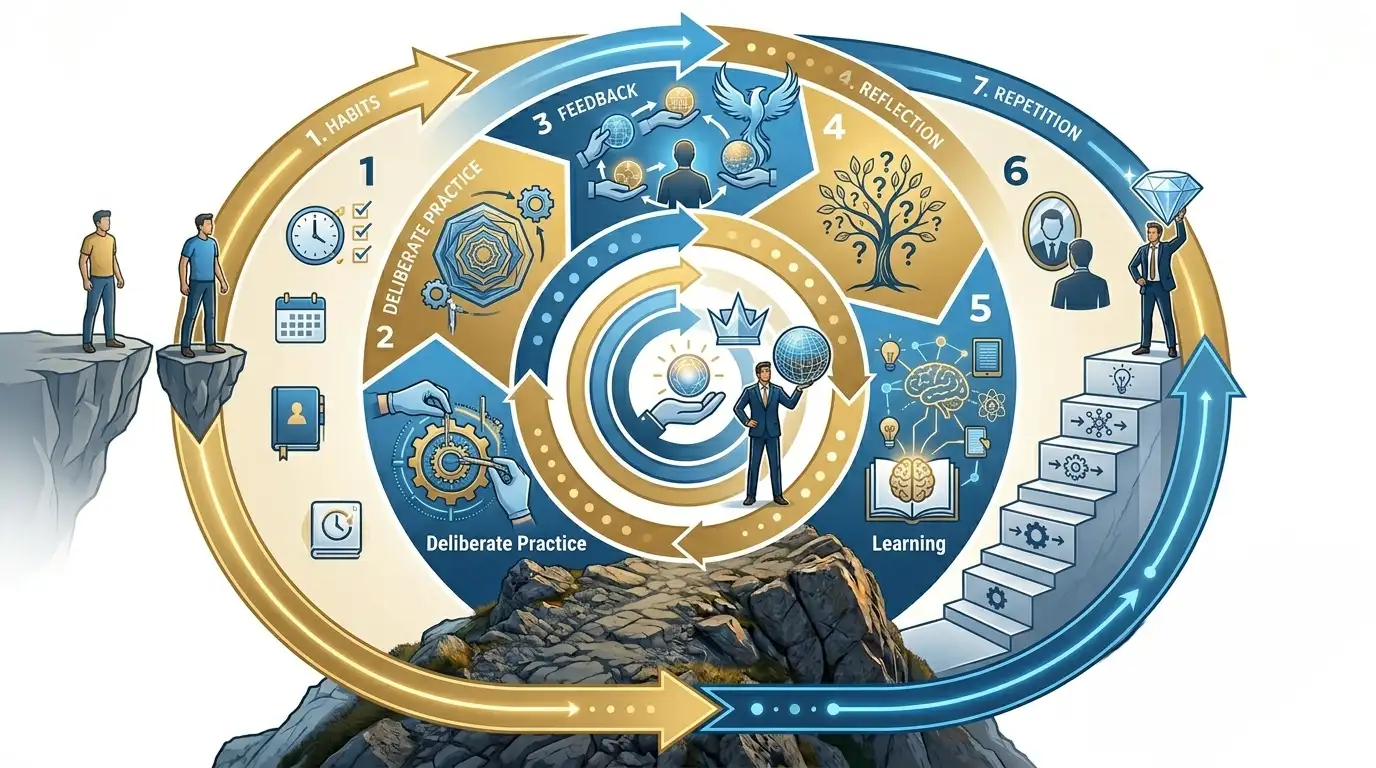
Reflection transforms experience into learning.
Common reflection tools include:
- Journaling
- Weekly reviews
- Performance evaluations
- Goal assessments
Daily mindset-building activities:
- Morning goal review
- End-of-day reflection
- Reading educational content
- Practicing gratitude
Weekly reflection exercises:
- Evaluate progress
- Review lessons learned
- Identify obstacles
- Set improvement goals
Practical Applications of a Master Mindset
Personal Development
A master mindset supports confidence, emotional intelligence, and personal growth by encouraging continuous learning and self-improvement.
Leadership and Team Performance
Effective leaders use a master mindset to foster accountability, communication, adaptability, and continuous improvement within teams.
Career Growth and Professional Development
Professionals with a master mindset remain adaptable in changing industries. They continuously develop new skills and embrace learning opportunities.
Education and Lifelong Learning
Students and lifelong learners benefit through improved motivation, persistence, and learning outcomes. A master mindset encourages curiosity and sustained engagement with knowledge.
Specialized Examples of a Master Mindset in Different Fields
The Chess Master Mindset
The chess master mindset emphasizes strategic thinking, pattern recognition, patience, and long-term planning. Chess masters learn to evaluate multiple possibilities before acting.
The Scrum Master Mindset
The scrum master mindset focuses on continuous improvement, servant leadership, collaboration, and adaptability. It encourages teams to learn and improve through iterative processes.
The Marketing Master Mindset
The marketing master mindset relies on customer understanding, experimentation, data analysis, and continuous optimization. Successful marketers adapt quickly based on evidence and feedback.
The Zen Master Mindset
The zen master mindset emphasizes awareness, presence, focus, and mindfulness. It balances achievement with acceptance and intentional living.
| Field | Mindset Focus | Key Skills | Common Challenges |
| Chess | Strategic thinking | Analysis, planning | Complexity |
| Scrum | Continuous improvement | Facilitation, adaptability | Team resistance |
| Marketing | Customer understanding | Testing, analytics | Market changes |
| Zen Practice | Awareness and focus | Mindfulness, discipline | Distraction |
Common Obstacles That Prevent Mindset Mastery
Fear of Failure
Fear of failure often develops from perfectionism, social pressure, or previous negative experiences.
Strategies include:
- Reframing failure as feedback
- Taking small risks
- Focusing on learning rather than outcomes
Negative Self-Talk
Negative self-talk can create limiting beliefs that reduce confidence and motivation.
Helpful reframing techniques include:
- Challenging assumptions
- Using evidence-based thinking
- Replacing absolutes with balanced perspectives
Lack of Consistency
Many people struggle not because they lack knowledge, but because they fail to maintain consistent action.
Solutions include:
- Simplifying routines
- Reducing friction
- Creating accountability systems
Perfectionism and Overthinking
Perfectionism often delays progress by creating unrealistic standards.
Action-oriented thinking focuses on:
- Progress over perfection
- Experimentation
- Continuous adjustment
Beginner Mistakes When Trying to Develop a Master Mindset
Common mistakes include:
- Expecting instant results
- Consuming information without implementation
- Ignoring constructive feedback
- Setting unrealistic goals
- Comparing progress to others
In our experience helping readers develop self-discipline, the biggest overlooked challenge is inconsistency between learning and action. Knowledge only becomes valuable when applied repeatedly.
Difficulty and Time Investment Required
Developing a master mindset requires moderate to significant effort depending on current habits and circumstances.
Factors influencing difficulty include:
- Existing beliefs
- Support systems
- Environment
- Daily routines
- Stress levels
- Personal responsibilities
Beginners often focus on simple habit-building, while advanced practitioners engage in deeper reflection, deliberate practice, and continuous refinement.
Results Timeline — How Long Does It Take to Develop a Master Mindset?
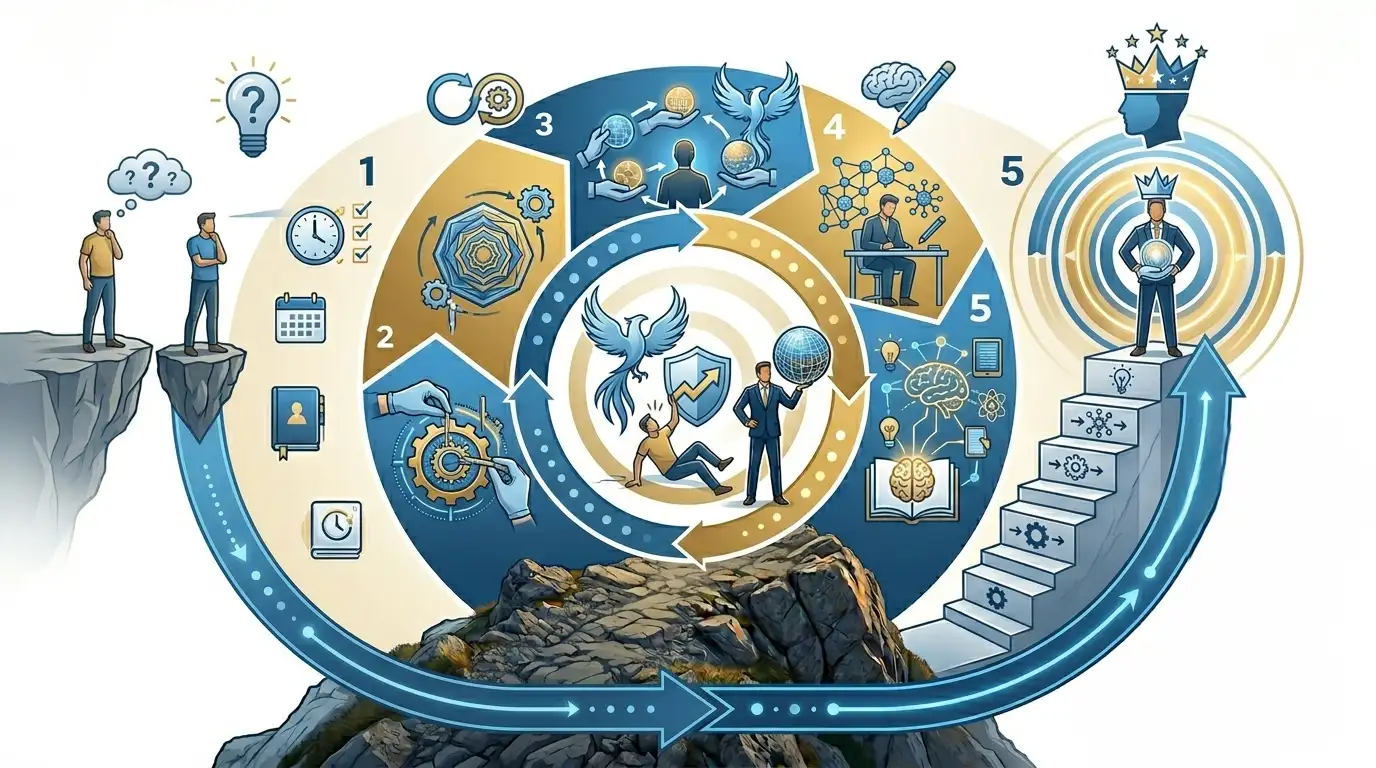
Mindset development occurs gradually through repeated experiences and behavioral reinforcement.
| Time Frame | Typical Changes | Expected Outcomes |
| 1–4 Weeks | Increased awareness | Better decision-making |
| 1–3 Months | Improved habits | Greater consistency |
| 3–12 Months | Stronger resilience | Enhanced performance |
| 1+ Years | Identity-level change | Sustainable mastery behaviors |
Progress may accelerate with coaching, accountability, deliberate practice, and supportive environments.
Practice Guide for Building a Master Mindset
Daily Practices
Daily actions create the foundation for long-term growth.
Examples include:
- Reflection journaling
- Goal review
- Reading educational material
- Focused skill practice
- Gratitude exercises
Weekly Practices
Weekly reviews help maintain alignment and identify improvement opportunities.
Recommended activities:
- Progress evaluation
- Feedback collection
- Skill development planning
- Habit tracking
Maintaining Motivation Over Time
Long-term motivation is supported through:
- Accountability partners
- Progress measurement
- Meaningful goals
- Recovery and rest periods
Your Daily Thrive recommends tracking process goals rather than relying solely on outcome goals to maintain motivation.
Adapting the Process to Different Lifestyles
Students
Focus on learning habits, study systems, and feedback.
Professionals
Prioritize skill development, adaptability, and career growth.
Entrepreneurs
Emphasize resilience, experimentation, and strategic thinking.
Busy Parents
Use micro-habits, realistic goals, and flexible routines to support consistent growth.
Frequently Misunderstood Ideas About Mindset Mastery
Mindset Is Not Positive Thinking Alone
A master mindset involves realistic optimism combined with action. Positive thinking without behavior change rarely produces meaningful results.
Mastery Does Not Mean Perfection
Mastery focuses on continuous growth rather than flawless performance. Even experts continue learning and refining their skills.
Success Requires Both Mindset and Skill
Mindset creates the foundation for growth, but competence still matters. Knowledge, expertise, execution, and deliberate practice remain essential for meaningful achievement.
Conclusion
A master mindset is a long-term approach to growth built on self-awareness, discipline, resilience, adaptability, and continuous learning. Unlike fixed views of ability, it emphasizes development through deliberate practice, reflection, and consistent action. Whether applied to personal development, leadership, education, careers, or performance, the same principles remain relevant: learn continuously, respond constructively to challenges, and focus on steady improvement. Mindset mastery is not achieved through quick fixes or motivation alone. It develops gradually through repeated behaviors, intentional learning, and a commitment to becoming better over time.
FAQs
What does a master mindset mean?
A master mindset is a growth-oriented way of thinking focused on continuous improvement, disciplined action, resilience, self-awareness, and long-term development.
How is a master mindset different from a growth mindset?
A growth mindset emphasizes learning through effort, while a master mindset expands on that foundation by incorporating discipline, strategic thinking, resilience, and sustained excellence.
Can anyone develop a master mindset?
Yes. Because mindset is shaped by habits, experiences, and beliefs, anyone can strengthen a master mindset through consistent practice and reflection.
What habits help build a master mindset faster?
Daily reflection, goal review, deliberate practice, learning routines, feedback seeking, and consistent habit tracking are among the most effective habits.
How long does it take to develop mindset mastery?
Initial changes can appear within weeks, while deeper behavioral and identity-level shifts often take months or years of consistent practice.
What are the biggest obstacles to developing a master mindset?
Fear of failure, negative self-talk, inconsistency, perfectionism, and unrealistic expectations are among the most common barriers.
Does a master mindset improve career performance?
Yes. A master mindset encourages learning agility, adaptability, resilience, and continuous skill development, all of which contribute to professional growth.
Can mindfulness practices support a master mindset?
Yes. Mindfulness improves self-awareness, emotional regulation, focus, and intentional decision-making, which are all important components of mindset mastery.