
Introduction
Fair fighting rules are structured communication guidelines that help people handle conflict in a respectful and emotionally safe way. Instead of reacting with blame, shouting, or withdrawal, these rules encourage calm expression, active listening, and problem-solving. Conflict is a normal part of all relationships, but without structure, it often escalates into misunderstanding and emotional distance.
These rules are commonly used in couples therapy, family communication, and relationship counseling to prevent arguments from becoming destructive. The main goal is not to avoid disagreement but to ensure that disagreement stays respectful, clear, and productive.
Quick Summary
- Fair fighting rules help manage conflict in a structured and respectful way
- They reduce blame, defensiveness, and emotional escalation
- They promote clear communication and active listening
- They improve emotional safety in relationships
- They are used in couples, families, and therapy-based communication models
Why Fair Fighting Rules Matter in Relationships
Fair fighting rules matter because unmanaged conflict often triggers emotional reactions that block rational thinking. When people feel attacked or unheard, they tend to respond with defensiveness, withdrawal, or escalation.
Empathy plays a central role in healthy communication, which is also explained in why empathy is important in relationships.
Conflict is not the real issue—unhealthy handling of conflict is. Over time, repeated negative interaction patterns weaken trust and emotional safety in relationships.
Common reasons people struggle with conflict include:
- Emotional reactivity during stress
- Learned behavior from childhood environments
- Fear of rejection or disconnection
- Lack of communication skills
Without structure, arguments tend to repeat the same cycle without resolution, leaving both sides frustrated and misunderstood.
Core Fair Fighting Rules (10–15 Essential Principles)
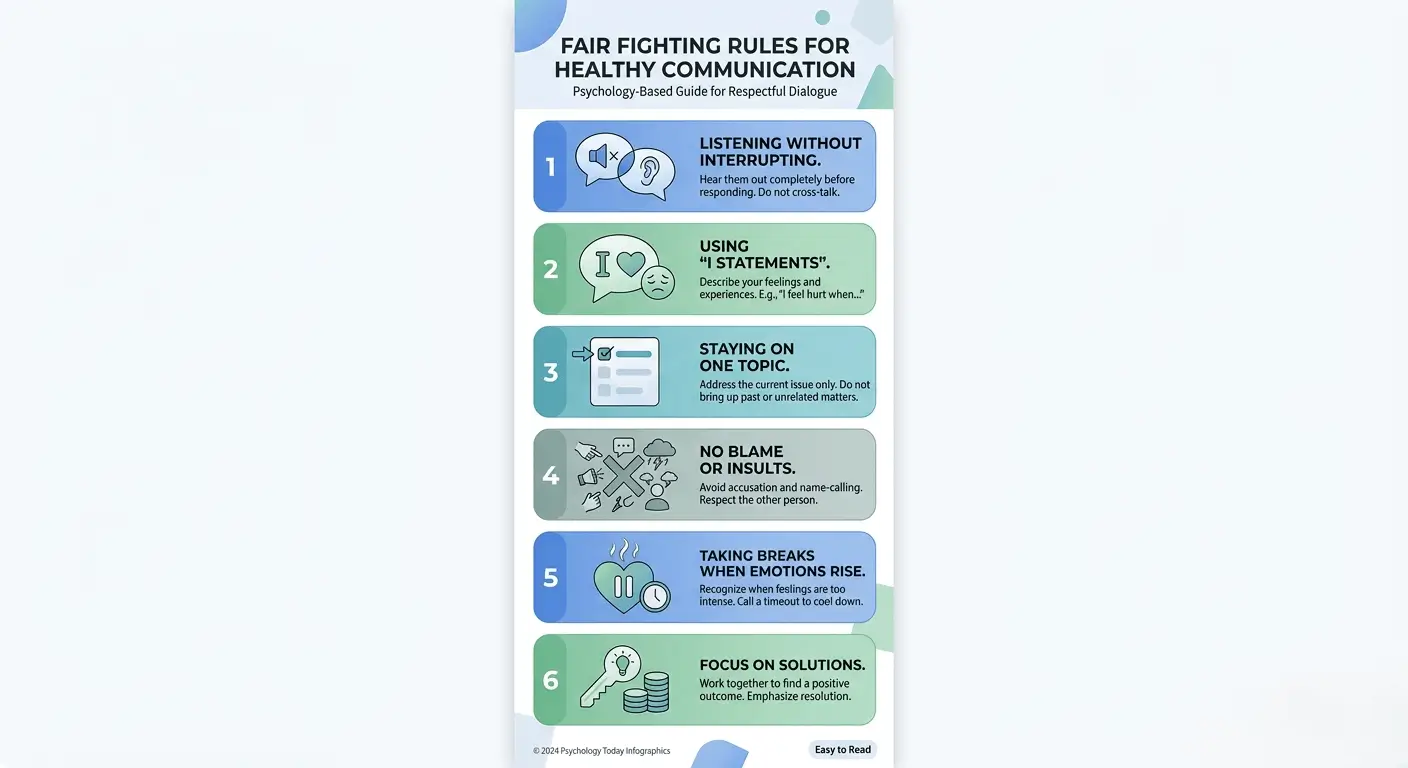
Fair fighting rules provide structure during disagreements to keep communication respectful and productive.
Key principles include:
- Focus on one issue at a time
- Avoid insults, sarcasm, or name-calling
- Do not bring up unrelated past issues
- Speak in a calm and steady tone
- Take breaks when emotions become overwhelming
- Listen without interrupting
- Separate the problem from the person
- Use “I statements” instead of blame
- Avoid extreme words like “always” and “never”
- Focus on solutions rather than winning
These rules help prevent emotional escalation and encourage cooperative problem-solving instead of conflict escalation.
The Power of “I Statements” in Fair Fighting
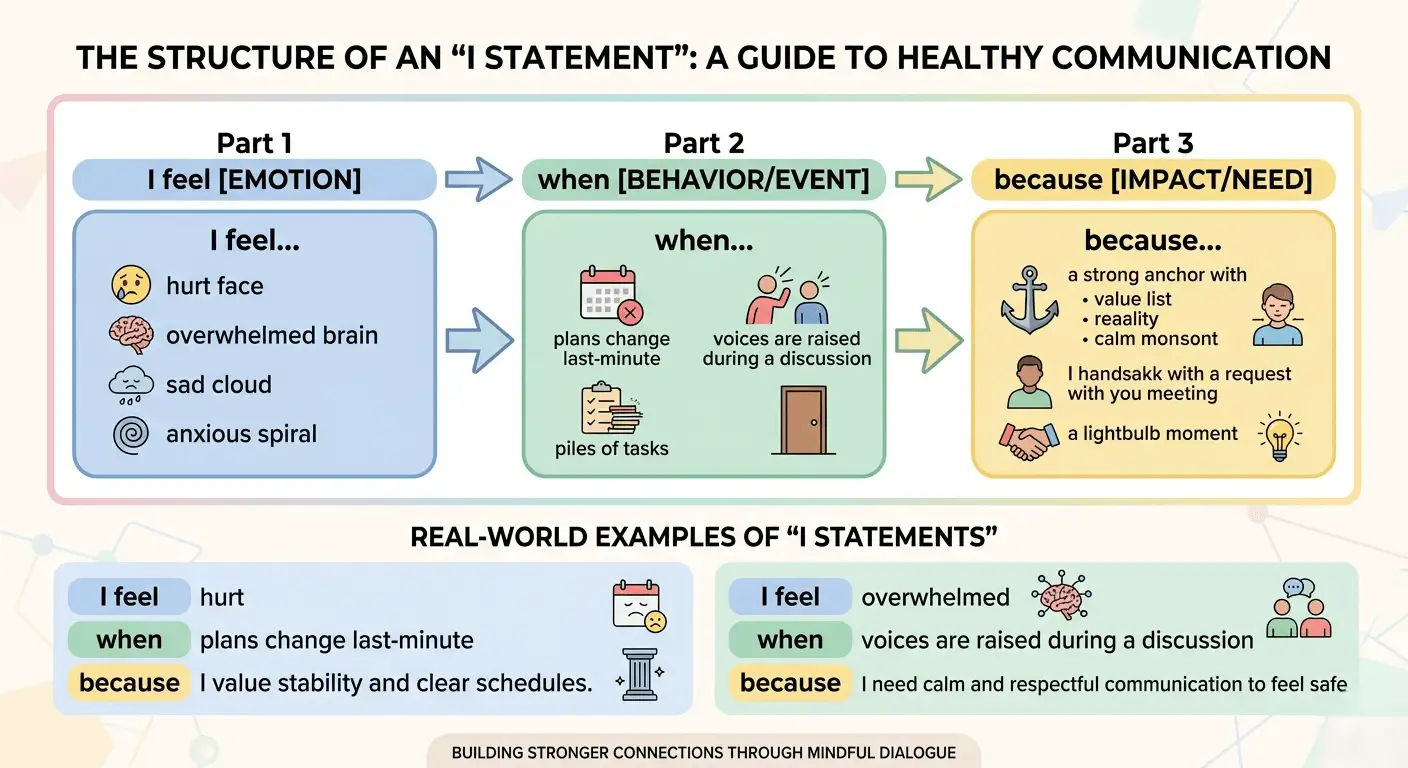
“I statements” are a communication method that allows individuals to express emotions without blaming the other person.
Structure:
“I feel ___ when ___ because ___”
Examples:
- “I feel frustrated when plans change suddenly because I value consistency.”
- “I feel overwhelmed when conversations become loud because I struggle to focus.”
I statements improve emotional awareness and reduce defensive reactions. Instead of triggering blame, they encourage understanding and empathy by focusing on personal experience rather than accusation.
Fair Fighting Rules for Couples vs Families
| Aspect | Couples | Families |
|---|---|---|
| Emotional intensity | High emotional sensitivity | Multi-person dynamics |
| Common triggers | Trust, attention, security | Boundaries, authority, respect |
| Conflict goal | Emotional connection | Structure and cooperation |
| Communication style | Vulnerability and empathy | Clarity and consistency |
While the core principles remain the same, application differs based on relationship structure and emotional dynamics.
Common Conflict Mistakes That Break Fair Fighting Rules
Many conflicts escalate due to predictable communication mistakes.
Common mistakes include:
- Interrupting the other person
- Using absolute language like “always” or “never”
- Bringing up unrelated past conflicts
- Silent treatment or emotional withdrawal
- Sarcasm or passive-aggressive remarks
These behaviors usually come from emotional overload and lack of communication awareness rather than intentional harm.
Step-by-Step Guide to Using Fair Fighting Rules
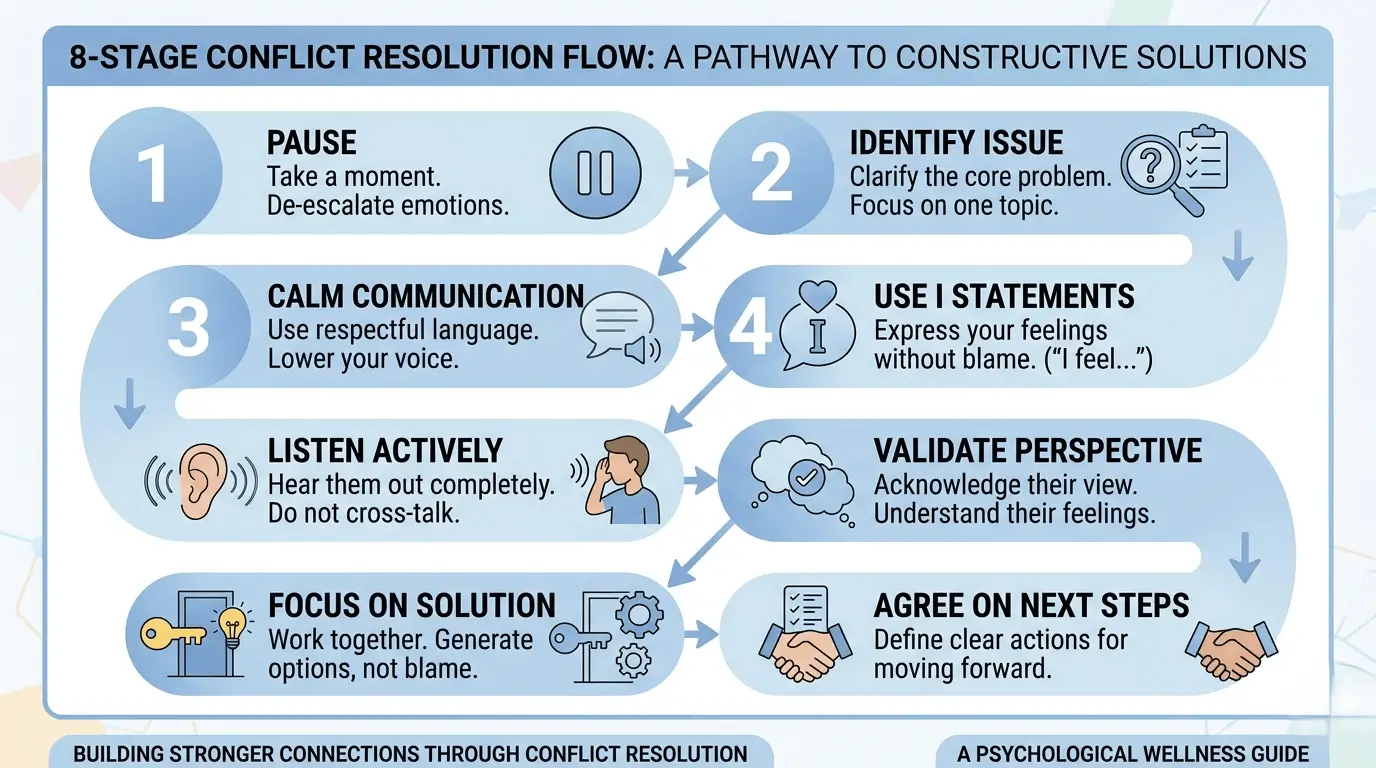
- Pause when emotions start rising
- Identify the real issue behind the argument
- Speak calmly without blaming language
- Use “I statements” to express feelings
- Listen fully without interruption
- Acknowledge the other person’s perspective
- Focus on solutions rather than blame
- Agree on next steps or compromises
This process helps slow down emotional reactions and allows more rational and constructive communication.
Healthy vs Unhealthy Conflict Patterns
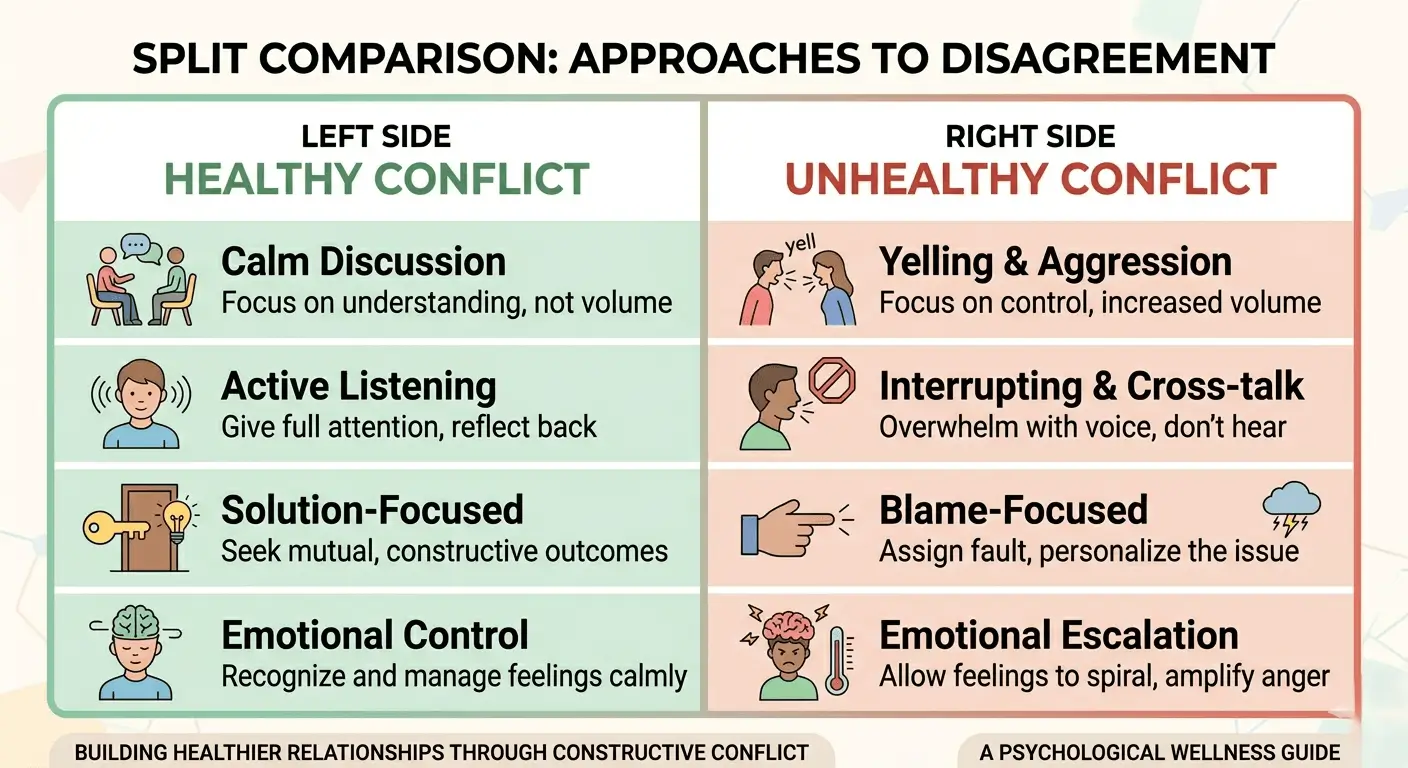
| Healthy Conflict | Unhealthy Conflict |
|---|---|
| Calm discussion | Yelling or shutdown |
| Focus on issue | Personal attacks |
| Active listening | Interrupting |
| Solution-oriented | Blame-focused |
| Emotional regulation | Emotional escalation |
Recognizing these patterns helps individuals become more aware of how they respond during disagreements.
Habit Building for Better Conflict Resolution
Fair fighting is a learned skill that improves through practice and repetition.
Reflection tools like journaling prompts for self growth can help identify emotional triggers after conflicts.
Practical habits:
- Practice “I statements” in everyday conversations
- Reflect after arguments on what triggered escalation
- Take short breaks during emotional intensity
- Reframe “winning” as understanding
- Identify recurring conflict patterns
Over time, consistent practice helps build emotional control and improves communication quality.
Psychological Barriers to Fair Fighting
Several internal factors can make fair fighting difficult:
- Ego protection and need to be right
- Emotional flooding during stress
- Fear of vulnerability or rejection
- Unresolved emotional experiences
These barriers often activate automatic defensive responses that interfere with healthy communication.
Communication breakdowns often appear alongside broader life disorganization, similar to challenges discussed in how do I get my life in order.
Common Myths About Fair Fighting Rules
- Myth: Healthy couples never argue
Reality: Healthy relationships still argue but handle conflict constructively - Myth: Avoiding conflict prevents problems
Reality: Avoidance often increases resentment - Myth: Winning arguments is important
Reality: Understanding and resolution matter more than winning
Conclusion
Fair fighting rules provide a structured way to handle conflict without damaging relationships. By using respectful communication, emotional awareness, and tools like “I statements,” people can turn disagreements into opportunities for understanding. The goal is not to eliminate conflict but to manage it in a healthy, constructive, and emotionally safe way that strengthens relationships over time.
FAQs
1. What are fair fighting rules in simple terms?
They are guidelines that help people handle disagreements respectfully without blame, insults, or emotional escalation.
2. Why do I struggle with fair fighting during arguments?
Most struggles come from emotional overwhelm, learned behavior patterns, or lack of communication skills.
3. How do I use I statements effectively?
Use the format “I feel ___ when ___ because ___” to express emotions without blaming others.
4. Can fair fighting rules improve relationships?
Yes, they improve communication, emotional safety, and long-term relationship stability.
5. What should I do when an argument gets too heated?
Pause the conversation, regulate emotions, and return when both people are calmer.
6. Are fair fighting rules different for couples and families?
The core principles are the same, but application varies depending on relationship dynamics.