Introduction
A dynamic mindset is the ability to adapt, learn, and respond effectively when circumstances change. It involves flexible thinking, continuous learning, and a willingness to adjust strategies rather than clinging to one fixed approach. If you’ve searched for the dynamic mindset meaning, you may have also wondered what is dynamic in a psychological sense, or wanted a clear dynamic meaning beyond the dictionary definition. In everyday use, to define dynamic is to describe something active, changing, and responsive rather than static. While often linked to growth-oriented thinking, a dynamic mindset applies across careers, relationships, education, and personal development. This article explains what it means, how it differs from related concepts, and how to build one intentionally.
Quick Summary
- A dynamic mindset is the ability to adapt, learn, and respond effectively to changing situations.
- People with a dynamic mindset embrace challenges, feedback, and continuous improvement.
- Dynamic thinking strengthens leadership, problem-solving, learning, and career growth.
- Developing a dynamic mindset requires intentional habits, reflection, and lifelong learning.
What Is a Dynamic Mindset?
A dynamic mindset is a way of thinking that prioritizes adaptability, ongoing learning, and responsiveness to new information over rigid, fixed patterns of thought. The dynamic mindset meaning centers on treating knowledge and ability as things that evolve, not as fixed traits.
Adaptability has become increasingly valuable because environments — workplaces, technologies, social norms — change faster than they used to. A fixed approach that worked five years ago may no longer apply, so the capacity to update one’s thinking has become a practical necessity rather than an optional trait.
It helps to distinguish mindset from personality. Personality refers to relatively stable patterns of behavior, emotion, and temperament (such as being introverted or extroverted). Mindset, by contrast, refers to the beliefs a person holds about ability, change, and effort. Someone can have a quiet, reserved personality and still hold a highly dynamic mindset, because mindset is about underlying beliefs rather than outward style.
What Does “Dynamic” Mean?
In everyday language, dynamic meaning refers to something characterized by constant activity, progress, or change, as opposed to something static or unchanging. The meaning of dynamic in English draws from physics, where it originally described forces that produce motion — but the term has broadened into common usage.
Context shifts the emphasis of the word:
- In psychology, dynamic describes flexible, evolving thought patterns.
- In business, it describes responsiveness to market conditions.
- In physics or engineering, it describes forces in motion.
Related terms include dynamicity meaning and dynamicity definition, both of which refer to the quality or state of being dynamic — that is, the degree to which something is capable of change, movement, or responsiveness.
How a Dynamic Mindset Differs from Fixed Thinking
Mental flexibility is the capacity to consider multiple approaches or perspectives rather than defaulting to one fixed solution. Fixed thinking treats abilities and outcomes as predetermined, while dynamic thinking treats them as adjustable based on effort, feedback, and new information. Much of this distinction traces back to foundational research on ability and effort — a good starting point is this collection of growth mindset quotes carol dweck whose work first popularized the fixed-vs-growth framework.
Openness to change means accepting that plans, beliefs, or strategies may need revision as circumstances shift. Learning-oriented thinking prioritizes gaining new skills and insights over protecting a fixed self-image, which is a defining contrast between dynamic and fixed approaches to challenges.
Core Characteristics of a Dynamic Mindset
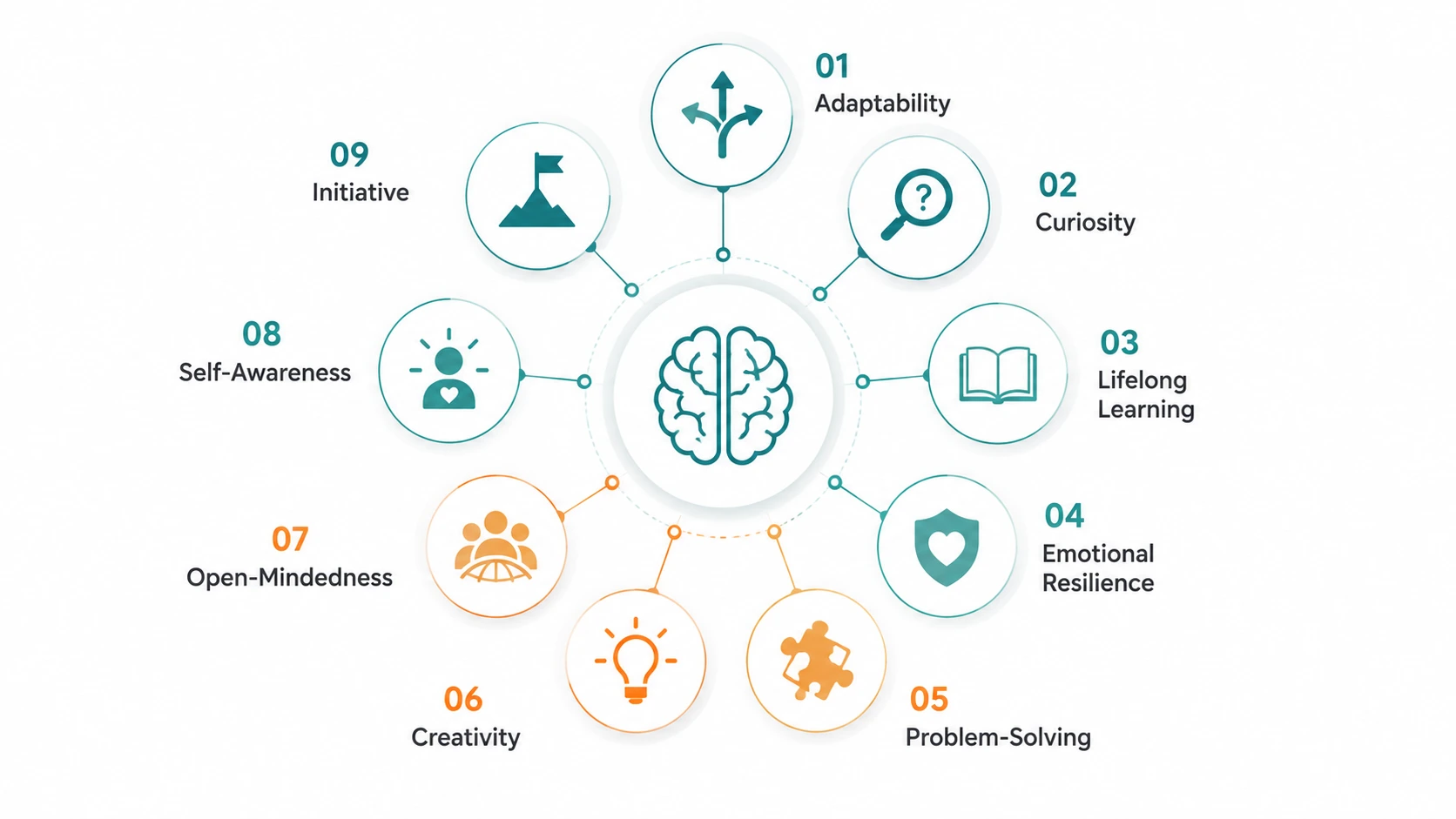
People with a dynamic mindset tend to share a recognizable set of qualities. These traits are sometimes described together as a dynamic growth mindset or dynamic learning mindset, since adaptability and learning orientation typically appear together.
- Adaptability — adjusting behavior or plans when situations change
- Curiosity — actively seeking new information and perspectives
- Lifelong learning — treating education as an ongoing process, not a finished stage
- Emotional resilience — recovering from setbacks without abandoning goals
- Problem-solving — approaching obstacles methodically rather than avoiding them
- Creativity — generating multiple possible solutions
- Open-mindedness — considering ideas that differ from one’s own
- Self-awareness — recognizing one’s own patterns, biases, and blind spots
- Initiative — acting on opportunities rather than waiting for instruction
Dynamic Mindset vs. Static Mindset
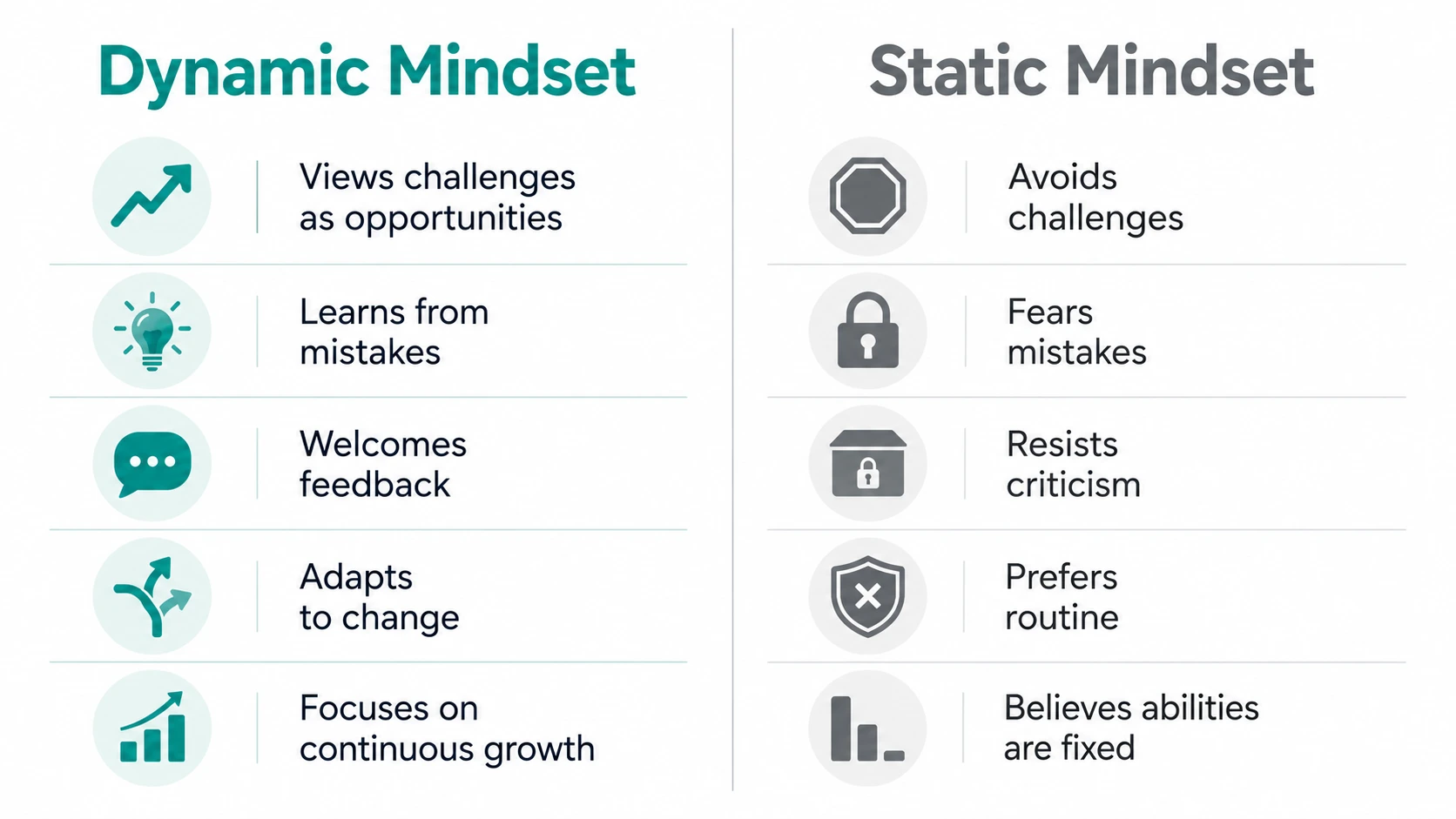
Comparing dynamic and static approaches to thinking highlights why adaptability matters in practice.
| Dynamic Mindset | Static Mindset |
|---|---|
| Views challenges as opportunities | Avoids challenges |
| Learns from mistakes | Fears failure |
| Welcomes feedback | Resists criticism |
| Adapts to change | Prefers routine |
| Continuous improvement | Fixed abilities |
This comparison of a static vs dynamic mindset shows that the core difference lies in how each approach treats change: as a resource to use, or as a threat to avoid.
Why a Dynamic Mindset Matters
A dynamic mindset produces measurable benefits across several areas of life.
Personal Growth
A dynamic mindset supports personal growth by building confidence through repeated exposure to new challenges. It strengthens adaptability by rewarding flexible responses over rigid ones, and it develops emotional intelligence by requiring self-reflection during setbacks.
Education and Learning
In education, a dynamic learning mindset correlates with better learning habits, since students who view ability as improvable tend to persist longer after difficulty. It also nurtures curiosity and accelerates skill development, because mistakes are treated as data rather than failure.
Career Development
Professionally, dynamic thinking supports innovation by encouraging experimentation with new approaches. It builds career resilience, helping individuals adjust after job changes, industry shifts, or new technologies, and it drives continuous improvement in performance over time.
Leadership
Leaders benefit from dynamic thinking because organizations rarely operate under static conditions. A dynamic mindset leadership style allows leaders to adjust strategy quickly, respond to team feedback, and model adaptability for the people they manage — which tends to increase team trust and resilience during periods of change.
Dynamic Mindset Examples in Everyday Life
Dynamic mindset examples appear in ordinary situations more often than people realize:
- A student who fails an exam adjusts study methods instead of assuming they “aren’t good at” the subject.
- An employee learning new software treats the learning curve as temporary rather than as evidence of incompetence.
- An entrepreneur whose product isn’t selling adjusts pricing, messaging, or target audience based on customer feedback.
- A manager facing a company reorganization revises team processes rather than resisting the new structure.
- A parent updates parenting strategies as a child grows, rather than applying the same approach at every age.
Dynamic Personality vs. Dynamic Mindset
Dynamic personality and dynamic mindset are related but distinct concepts. The dynamic personality meaning refers to an outward behavioral style — someone who is energetic, expressive, and engaging in social settings. A dynamic person, in this sense, stands out through presence and energy rather than through underlying beliefs about change and learning.
Characteristics of a Dynamic Personality
- Energetic
- Engaging
- Adaptable
- Confident
- Influential
Can Someone Have a Dynamic Personality Without a Dynamic Mindset?
Yes. A dynamic personality example might be a charismatic, high-energy public speaker who nonetheless resists feedback or avoids changing their approach — meaning their outward style is dynamic while their underlying beliefs about ability and change remain fixed. Conversely, a quiet, low-key individual can hold a strongly dynamic mindset, adapting and learning continuously without an outwardly energetic personality. The two traits often overlap but are not the same construct.
How to Develop a Dynamic Mindset
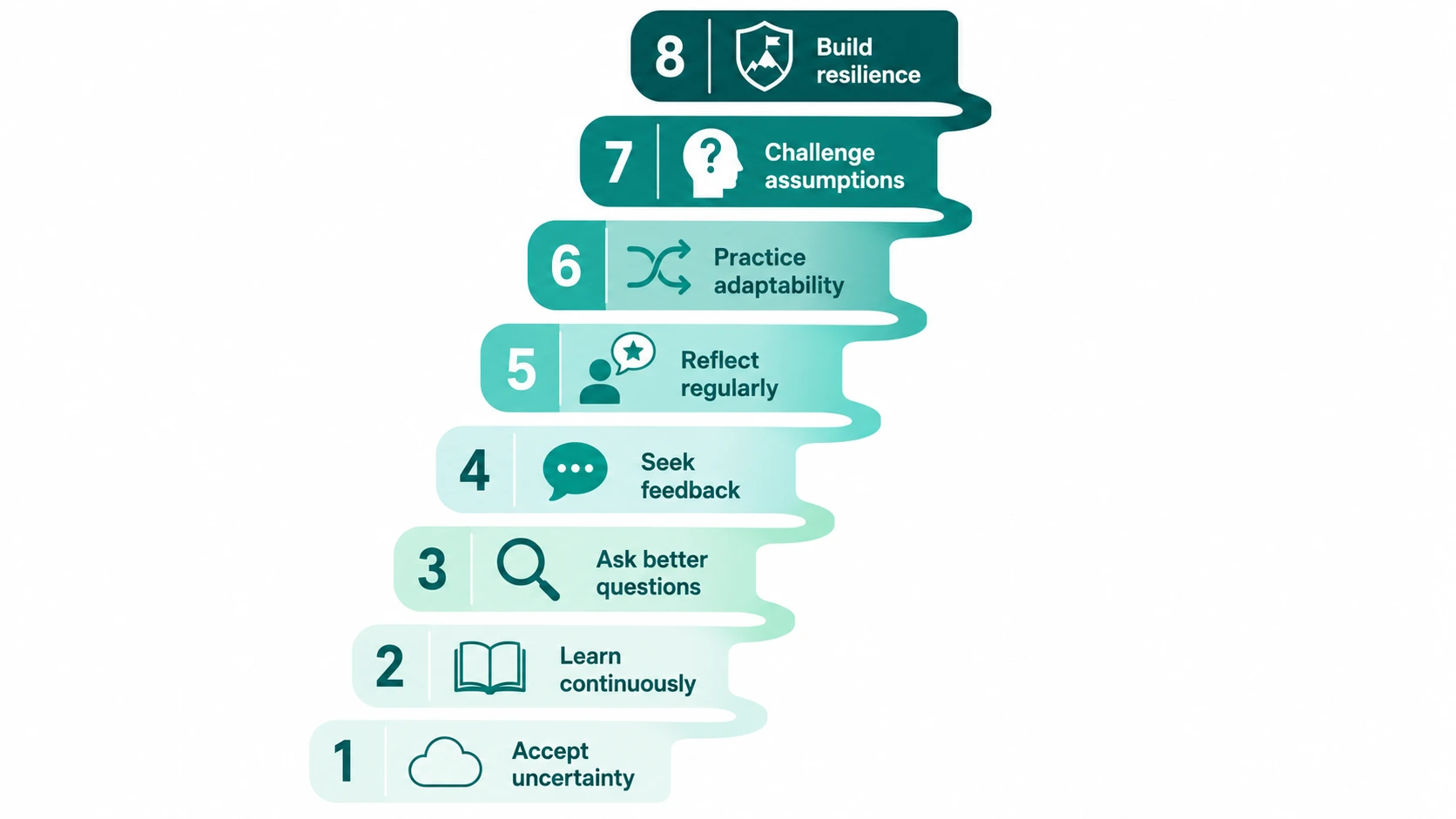
Building a dynamic growth mindset is a gradual, practice-based process rather than a single decision. Useful steps include: If you want structured exercises to practice these steps, this list of personal development activities offers hands-on ways to build each habit.
- Accept uncertainty — treat unclear situations as normal rather than threatening.
- Learn continuously — set aside regular time for acquiring new skills or information.
- Ask better questions — replace “why did this fail” with “what can this teach me.”
- Seek feedback — request input from others rather than waiting for it.
- Reflect regularly — review decisions and outcomes on a consistent schedule.
- Practice adaptability — deliberately vary routines or approaches in low-stakes situations.
- Challenge assumptions — question beliefs that haven’t been re-examined recently.
- Build resilience — develop coping strategies for setbacks before they occur.
In our experience helping readers build better habits, the steps that produce the fastest results are consistent feedback-seeking and scheduled reflection, since both create a steady stream of information to adapt to.
Common Challenges When Developing a Dynamic Mindset
Several obstacles commonly interfere with building a dynamic mindset. Each has a typical cause and a practical response.
- Fear of change — happens because uncertainty triggers a stress response; overcome it by starting with small, low-risk changes to build tolerance.
- Comfort zones — form because familiar routines require less mental effort; counter this by scheduling one new experience per week.
- Failure avoidance — often stems from associating mistakes with personal inadequacy; reframe failures as data points rather than verdicts on ability.
- Negative self-talk — reinforces fixed beliefs about ability; interrupt it by replacing absolute statements (“I can’t”) with process statements (“I haven’t yet”).
- Perfectionism — creates resistance to trying new approaches for fear of doing them imperfectly; set a “good enough to learn from” standard instead of a flawless one.
- Information overload — occurs when too many inputs create decision paralysis; limit learning to one focused source or skill at a time.
Preventing these patterns from recurring typically requires consistent, small-scale practice rather than large, infrequent efforts.
Common Beginner Mistakes
People new to building a dynamic mindset often run into avoidable errors:
- Confusing activity with adaptability — staying busy is not the same as adjusting strategy based on new information.
- Changing direction too often — genuine adaptability responds to evidence; constant, unanchored change usually signals a lack of follow-through rather than flexibility.
- Ignoring feedback — collecting feedback without acting on it defeats its purpose.
- Mistaking confidence for flexibility — being assertive is not the same as being open to revising one’s approach.
- Avoiding long-term learning — focusing only on short-term wins without building durable skills limits growth over time.
Practical Habits That Strengthen a Dynamic Mindset
Several habits reliably reinforce dynamic thinking over time:
- Daily reflection — briefly reviewing what worked and what didn’t each day
- Reading broadly — exposing yourself to ideas outside your usual field
- Continuous learning — dedicating regular time to a new skill or subject
- Experimentation — testing small variations in routines or approaches
- Journaling — recording decisions, outcomes, and lessons learned
- Feedback loops — building regular check-ins with mentors, peers, or colleagues
- Goal reviews — revisiting and adjusting goals on a set schedule
- Skill practice — deliberately practicing a skill rather than passively consuming information about it
Your Daily Thrive recommends pairing at least one reflective habit (such as journaling) with one active habit (such as skill practice), since reflection without action rarely produces meaningful change.
Dynamic Mindset in Different Contexts
Workplace
In professional settings, a dynamic mindset supports innovation, encourages collaboration across teams with different working styles, and strengthens leadership during periods of organizational change.
Education
In academic settings, dynamic thinking builds academic resilience after setbacks like poor grades or difficult coursework, and it supports lifelong learning habits that extend beyond formal schooling.
Entrepreneurship
For entrepreneurs, a dynamic mindset supports adapting to uncertainty — such as shifting markets or supply chains — and improves opportunity recognition, since flexible thinkers notice openings that rigid thinkers may overlook.
Personal Relationships
In relationships, dynamic thinking improves communication by encouraging active listening and perspective-taking. It strengthens empathy and supports healthier conflict resolution, since flexible thinkers are more willing to revise their position based on a partner’s input.
Frequently Confused Terms
Several related terms are frequently searched together, though they carry different meanings.
| Term | Meaning | Relation to Dynamic Mindset |
|---|---|---|
| Dynamic | Active and adaptable | Foundation concept |
| Dynamic Personality | Behavioral style | Different from mindset |
| Growth Mindset | Learning-focused belief | Closely related |
| Power Dynamic | Relationship structure | Different meaning |
| Dynamics | Patterns of interaction | Context-dependent |
For clarity, the meaning of power dynamic refers to how influence, control, or authority is distributed between people or groups — a concept from sociology and relationship studies that is unrelated to personal mindset, despite sharing the root word “dynamic.” When people search to define dynamic in this context, they are usually asking about interpersonal structure rather than personal adaptability.
Related Concepts and Synonyms
Words related to “dynamic” vary depending on context, since no single synonym captures every use of the term. In a psychological or personal-growth context, common alternatives include:
- Adaptable
- Flexible
- Progressive
- Responsive
- Energetic
- Agile
- Evolving
These terms overlap with synonyms of dynamic and synonyms for dynamic found in general usage, though each carries a slightly different emphasis — “agile” suggests speed of adjustment, while “evolving” suggests gradual, ongoing change. The same logic applies to dynamics synonyms, synonyms of dynamics, synonyms for dynamics, and dynamicness synonym searches: the best-fitting word depends on whether the context is behavioral, organizational, or physical.
Difficulty & Time Investment
Building a dynamic mindset is beginner-friendly in principle, since it relies on small daily choices rather than specialized skills. However, the learning curve varies by individual:
- Beginners typically start with one or two small habits, such as daily reflection or seeking feedback once a week.
- More advanced practice involves proactively creating discomfort — seeking unfamiliar challenges rather than waiting for change to happen.
- Personal factors such as existing stress levels, workplace flexibility, and support systems all influence how quickly progress occurs.
- Consistent, low-intensity practice tends to produce more durable results than occasional, high-intensity effort.
Results Timeline
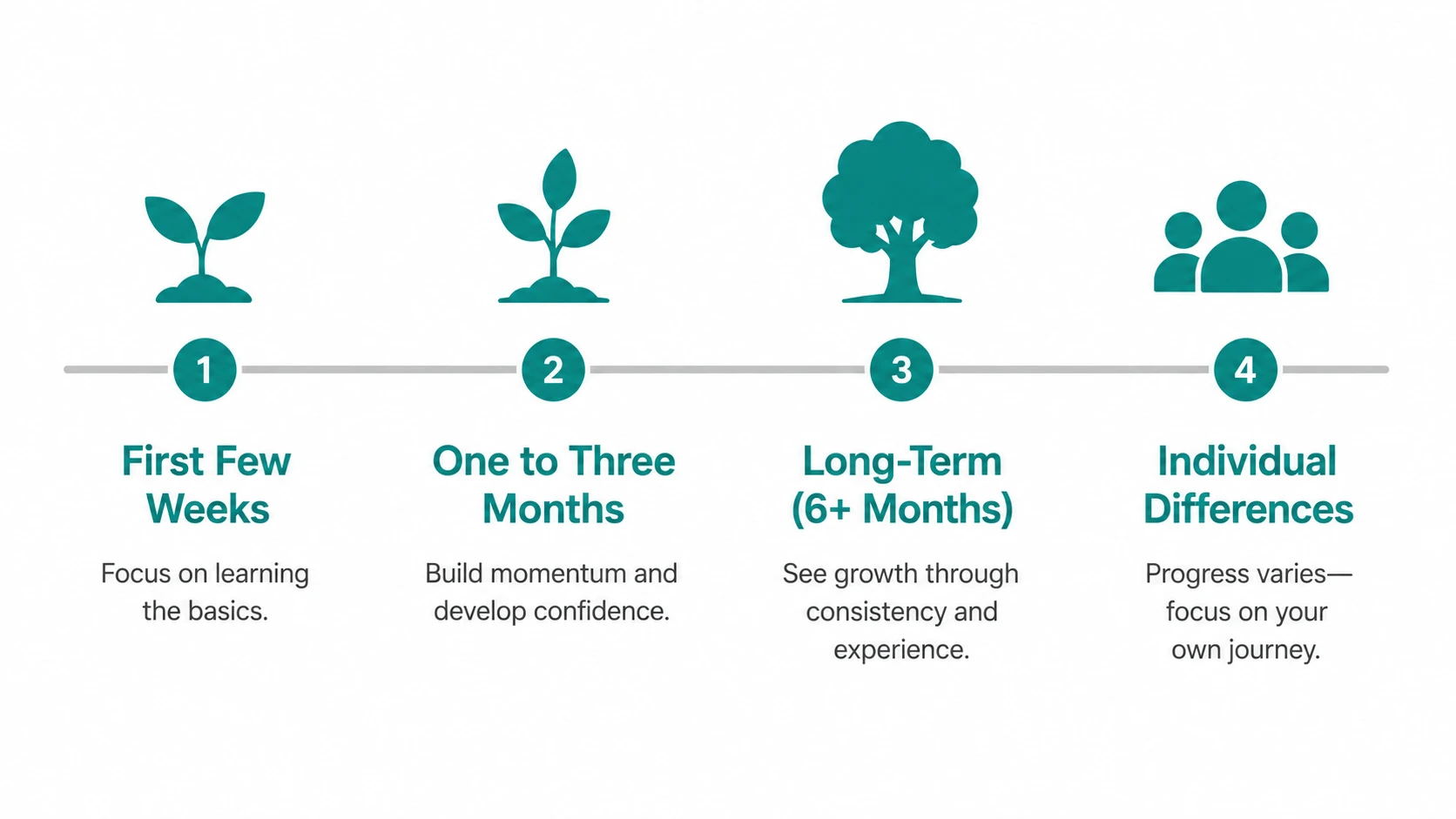
Progress in developing a dynamic mindset tends to follow a general pattern, though individual experiences vary:
- First few weeks: Increased awareness of fixed thought patterns; small shifts in how feedback is received.
- One to three months: Noticeable improvement in response to setbacks; habits like reflection or journaling become more consistent.
- Long-term development: Adaptability becomes a default response rather than a deliberate effort, typically after six months or more of consistent practice.
- Individual differences: Personality, environment, workplace culture, and existing stress levels all affect how quickly these shifts occur.
Practice Guide
Sustained development of a dynamic mindset relies on a structured, ongoing practice routine:
- Daily habits: Brief reflection, one small act of learning, and openness to at least one piece of feedback.
- Weekly reflection: A longer review of decisions, outcomes, and lessons from the past week.
- Tracking progress: A simple journal or log noting instances of adaptability or resistance to change.
- Accountability: A mentor, peer, or coach who checks in on progress periodically.
- Motivation: Reconnecting with personal reasons for wanting to build adaptability, especially during setbacks.
- Long-term sustainability: Adjusting the practice routine itself as life circumstances change, rather than following a fixed plan indefinitely.
- Lifestyle adaptations: Building flexibility into daily schedules so that new challenges can be absorbed without excessive disruption.
As of 2026, behavioral science research increasingly emphasizes small, consistent habit loops over large one-time efforts as the more reliable path to lasting mindset change.
Conclusion
A dynamic mindset is the capacity to adapt, learn, and respond effectively as circumstances change, distinguishing it from fixed thinking and from the related but separate concept of dynamic personality. Its core traits — adaptability, curiosity, resilience, and openness to feedback — support measurable benefits in education, careers, leadership, and personal relationships. Building this mindset requires consistent, practical habits: reflection, feedback-seeking, experimentation, and continuous learning, sustained over months rather than days. Readers who consistently apply these practices tend to see fixed patterns of thinking gradually replaced by a more adaptable, growth-oriented approach — the essence of a dynamic mindset.
Frequently Asked Questions
What is a dynamic mindset?
A dynamic mindset is the ability to adapt, learn, and respond effectively to changing situations, rather than relying on fixed patterns of thought or behavior. This overlaps closely with growth-oriented thinking — why is growth mindset important becomes clear once you see how both concepts treat ability as something that develops rather than something fixed.
How is a dynamic mindset different from a growth mindset?
A growth mindset specifically refers to the belief that abilities can be developed through effort, while a dynamic mindset more broadly includes adaptability, flexibility, and responsiveness across many types of change, not only skill development.
Can anyone develop a dynamic mindset?
Yes, a dynamic mindset can be developed by anyone through consistent practice, including reflection, feedback-seeking, and deliberate exposure to new challenges.
Why is a dynamic mindset important in leadership?
A dynamic mindset helps leaders adjust strategies quickly, respond to feedback, and guide teams through organizational change, which builds trust and resilience within the team.
What are some real-life examples of a dynamic mindset?
Examples include a student adjusting study habits after a setback, an employee learning new technology, and an entrepreneur changing strategy based on market feedback.
What traits define a dynamic personality?
A dynamic personality typically includes traits such as being energetic, engaging, adaptable, confident, and influential in social or professional settings.
Is a dynamic personality the same as being extroverted?
No, a dynamic personality overlaps with extroverted traits like energy and engagement, but it is a broader concept that doesn’t require extroversion, since introverted individuals can also display adaptable, confident, and influential behavior.
How long does it take to develop a dynamic mindset?
Initial shifts in awareness typically appear within a few weeks, noticeable behavioral changes often develop over one to three months, and adaptability becoming a default response usually takes six months or more of consistent practice.