
Introduction
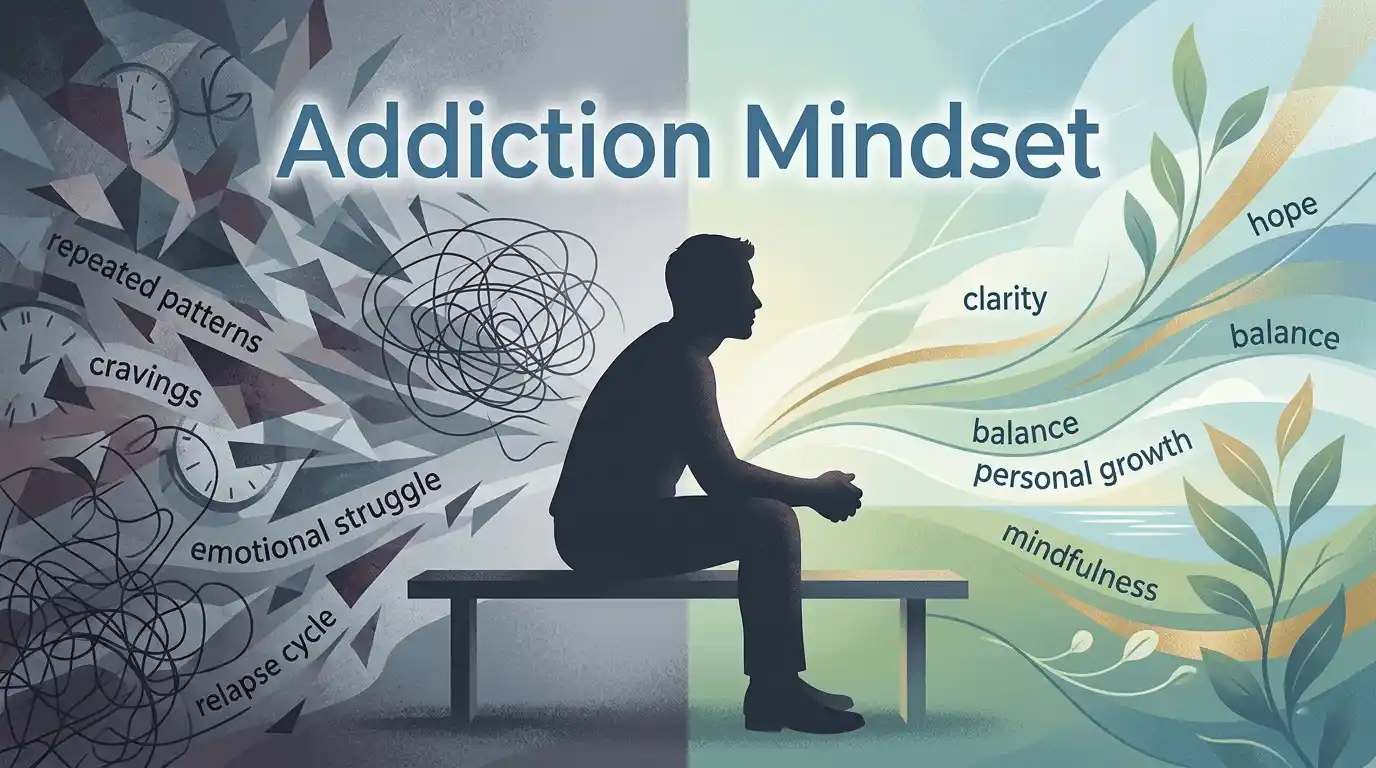
An addiction mindset refers to patterns of thinking, emotions, and behaviors that develop around addictive substances or activities. Understanding an addiction mindset helps explain why addiction is more than a habit or a lack of willpower. Addiction can influence decision-making, emotional regulation, motivation, and the way a person responds to stress or cravings. This article explains what addiction means, how addictive thinking develops, what causes addiction, and how recovery thinking can replace harmful patterns with healthier choices.
By Your Daily Thrive | Self-Improvement & Personal Growth Expert
Last Updated: June 2026
Quick Summary
- An addiction mindset involves repeated thought patterns shaped by cravings, habits, emotional needs, and learned behaviors.
- Addiction changes brain reward systems, decision-making processes, and responses to stress.
- Addictive thinking often focuses on immediate relief instead of long-term wellbeing.
- Recovery thinking develops through awareness, healthier coping skills, support, and consistent behavior change.
- Changing an addiction mindset is a gradual process supported by psychology, habit formation, and resilience-building practices.
What Is an Addiction Mindset?
An addiction mindset is a pattern of thoughts and behaviors influenced by addictive processes, cravings, emotional responses, and learned habits that make a person continue a harmful behavior despite negative consequences. It describes how addiction can shape perception, priorities, and choices rather than defining a person’s identity.
An addiction is a condition in which a person continues using a substance or engaging in a behavior despite experiencing harm or negative effects. When people ask “what is addiction” or “what an addiction means,” the answer involves a combination of brain changes, repeated behaviors, emotional reinforcement, and difficulty controlling urges.
The term addict mindset is sometimes used to describe thinking patterns associated with addiction, but it is important to avoid viewing it as a permanent personality trait. Addiction affects the brain and behavior, and these patterns can change through treatment, support, and sustained practice.
An addiction mindset may involve:
- Persistent cravings: Strong urges that feel difficult to control.
- Automatic thoughts around use: Thinking about a substance or behavior as a primary solution to stress, discomfort, or emotional pain.
- Minimizing consequences: Downplaying health, relationship, financial, or personal impacts.
- Seeking immediate relief: Choosing short-term comfort instead of long-term goals.
- Reduced awareness of patterns: Difficulty recognizing how thoughts and actions reinforce addiction.
Addiction itself refers to the broader condition, while an addiction mindset describes the thinking patterns that often develop alongside that condition.
How the Addiction Mindset Develops
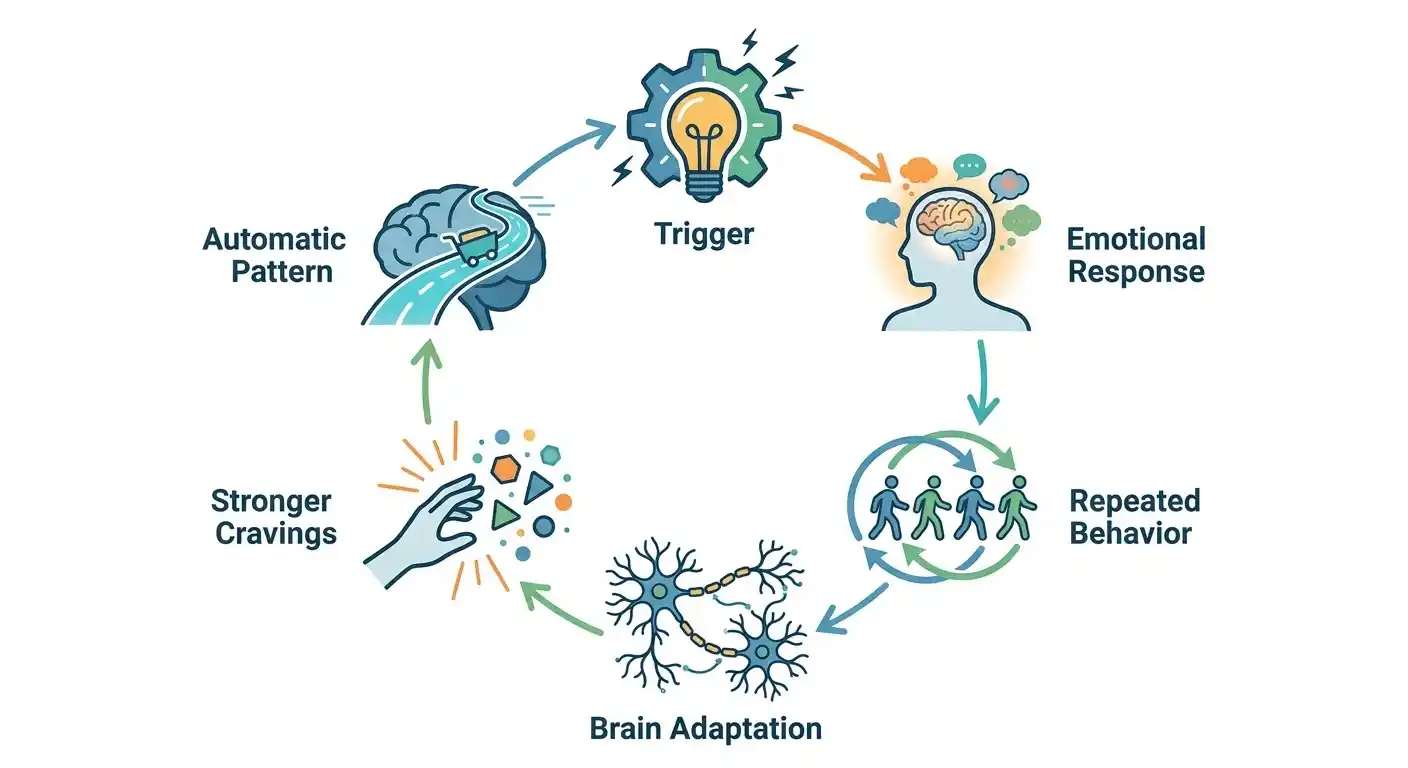
The addiction mindset develops through the interaction of repeated behavior, brain adaptation, emotional needs, and environmental learning. Repeated exposure to rewarding experiences can strengthen certain pathways in the brain, making the behavior feel automatic over time.
Addiction development is connected to several behavioral science concepts:
- Reward pathways: The brain learns to associate certain substances or behaviors with pleasure, relief, or emotional escape.
- Habit formation: Repeated actions become automatic responses triggered by specific situations.
- Emotional reinforcement: A behavior becomes stronger when it repeatedly reduces stress, anxiety, sadness, or discomfort.
- Environmental triggers: Places, people, emotions, or routines can activate cravings.
The process often follows a cycle:
- A person experiences stress, discomfort, or a desire for reward.
- An addictive behavior provides temporary relief or pleasure.
- The brain remembers that relief.
- Similar situations trigger stronger urges in the future.
- The behavior becomes increasingly automatic.
Your Daily Thrive recognizes that many behavior-change challenges involve understanding this cycle. In practice, people often make more progress when they focus not only on stopping a behavior but also on identifying the emotional and environmental patterns that maintain it.
The addiction mindset is closely related to:
- Habit formation: How repeated actions become automatic.
- Behavioral conditioning: How rewards and consequences influence future behavior.
- Resilience development: Building the ability to manage stress without returning to harmful patterns.
How the Mind of an Addict Changes During Addiction
The mind of an addict can change during addiction because repeated addictive behaviors influence attention, motivation, emotional responses, and decision-making. These changes are not signs of a person being weak; they reflect the effects of addiction on brain systems involved in reward, stress, and self-control.
Addiction can influence:
| Area affected | Common changes |
| Decision-making and impulse control | Increased difficulty delaying urges or considering long-term outcomes |
| Risk assessment | Greater tendency to underestimate harmful consequences |
| Emotional regulation | Increased reliance on addictive behavior to manage emotions |
| Motivation and priorities | More attention directed toward obtaining relief or reward |
| Perception of consequences | Reduced awareness of how behavior affects life |
The brain’s reward system plays a major role. Over time, addiction can make the addictive behavior feel unusually important compared with other goals. Activities that once provided meaning or satisfaction may become less motivating.
This does not mean the person permanently loses the ability to change. The brain remains adaptable through a process known as neuroplasticity, where learning and repeated experiences can create new patterns.
Common Thought Patterns Associated With an Addictive Mind
Common thought patterns associated with an addictive mind are ways of thinking that can maintain addictive behavior. These patterns often develop because the brain is trying to protect a familiar source of comfort, reward, or emotional relief.
Common examples include:
Denial or Minimization
A person may reduce the perceived seriousness of the problem by thinking:
- “It is not affecting me that much.”
- “I can stop whenever I want.”
- “Other people have worse problems.”
Awareness helps challenge these thoughts by comparing beliefs with actual outcomes.
Rationalizing Behavior
Rationalization occurs when someone creates explanations that justify continuing an addictive behavior.
Examples include:
- “I had a stressful day, so I deserve this.”
- “I will change after this one time.”
Recognizing these mental patterns creates space for healthier decisions.
All-or-Nothing Thinking
Some people believe change must be perfect:
- “If I make one mistake, recovery has failed.”
- “I cannot improve unless everything changes immediately.”
A recovery mindset replaces perfection with progress.
Focusing on Immediate Relief
Addiction often prioritizes short-term emotional comfort over future consequences. The brain focuses on reducing discomfort now rather than protecting long-term goals.
Feeling Unable to Change
Repeated struggles can create beliefs such as:
- “Nothing will work.”
- “This is just who I am.”
These beliefs can be challenged through small successes, support systems, and evidence of gradual improvement.
Awareness of addictive thought patterns is important because thoughts influence emotions, and emotions influence behavior. Cognitive approaches used in psychology, such as cognitive behavioral therapy (CBT), often focus on identifying and changing unhelpful thinking patterns.
Learning how to identify and replace unhelpful thinking patterns is an important part of behavior change. Understanding how to change your thoughts can help people develop healthier responses to challenges and triggers.
What Causes Addiction and the Development of an Addictive Mind?
Addiction is caused by a combination of biological, psychological, and environmental factors rather than a single cause. When people ask “what causes addictions” or “what causes addiction,” the answer involves genetics, brain chemistry, emotional experiences, stress, environment, and repeated exposure to rewarding behaviors.
Addiction risk may increase through interactions between:
- Biological vulnerability
- Emotional distress
- Stress exposure
- Trauma experiences
- Social environment
- Learned behaviors
No single factor guarantees addiction. Instead, addiction usually develops through multiple influences that interact over time.
Biological Factors That Influence Addiction
Biological factors influence addiction by affecting how the brain processes reward, motivation, stress, and impulse control.
Important biological influences include:
Genetics
Genetic differences can affect a person’s vulnerability to addiction. Some individuals may have a higher sensitivity to reward systems or stronger responses to certain substances.
Brain Reward Systems
Addictive substances and behaviors can activate reward pathways involving neurotransmitters such as dopamine. Over time, repeated activation can influence motivation and craving patterns.
Changes in Motivation Pathways
Addiction can shift priorities so that obtaining relief or reward becomes more important than other goals.
Stress Response Systems
Chronic stress can influence brain systems involved in emotional regulation and coping. High stress levels may increase vulnerability to using addictive behaviors as a form of relief.
Addiction is therefore not simply a matter of personal weakness or poor character. It involves complex interactions between biology, learning, environment, and psychological experiences.
Psychological and Emotional Causes of Addiction
Psychological and emotional factors can contribute to addiction by influencing how a person manages stress, pain, emotions, and difficult experiences. Addiction may develop when a behavior or substance becomes a repeated method for escaping discomfort or creating temporary emotional relief.
Common psychological and emotional contributors include:
- Stress: High levels of ongoing stress can increase the desire for quick relief.
- Trauma experiences: Difficult experiences may influence emotional regulation and coping patterns.
- Anxiety: Some people use addictive behaviors to temporarily reduce feelings of worry or tension.
- Depression: Low mood and reduced motivation may increase vulnerability to seeking external sources of relief.
- Emotional avoidance: Avoiding uncomfortable emotions can reinforce reliance on addictive behaviors.
Addiction does not develop because someone lacks discipline. Many people struggling with addiction are attempting to manage difficult internal experiences with coping strategies that have become harmful over time.
Understanding emotional causes helps shift the focus from judgment to problem-solving. Effective recovery often involves learning healthier ways to process emotions, manage stress, and build resilience.
Is Addiction a Coping Mechanism?
Yes, addiction can function as a short-term coping mechanism, but it often becomes harmful when the behavior creates additional problems or replaces healthier ways of managing emotions.
Addictive behaviors may temporarily provide:
- Emotional numbness
- Stress reduction
- Escape from painful thoughts
- Feelings of pleasure or comfort
- A sense of control
The problem is that short-term relief can strengthen the brain’s association between distress and addictive behavior. Over time, the person may feel increasingly dependent on the behavior to regulate emotions.
Healthier replacement coping strategies may include:
- Developing emotional awareness
- Practicing relaxation techniques
- Building supportive relationships
- Creating structured routines
- Engaging in physical activity
- Seeking professional support when needed
Your Daily Thrive recommends focusing on replacement behaviors rather than only removing unwanted habits. Long-term change becomes more sustainable when people develop new ways to meet the emotional needs that the addictive behavior previously addressed.
What Are the Stages of Addiction?
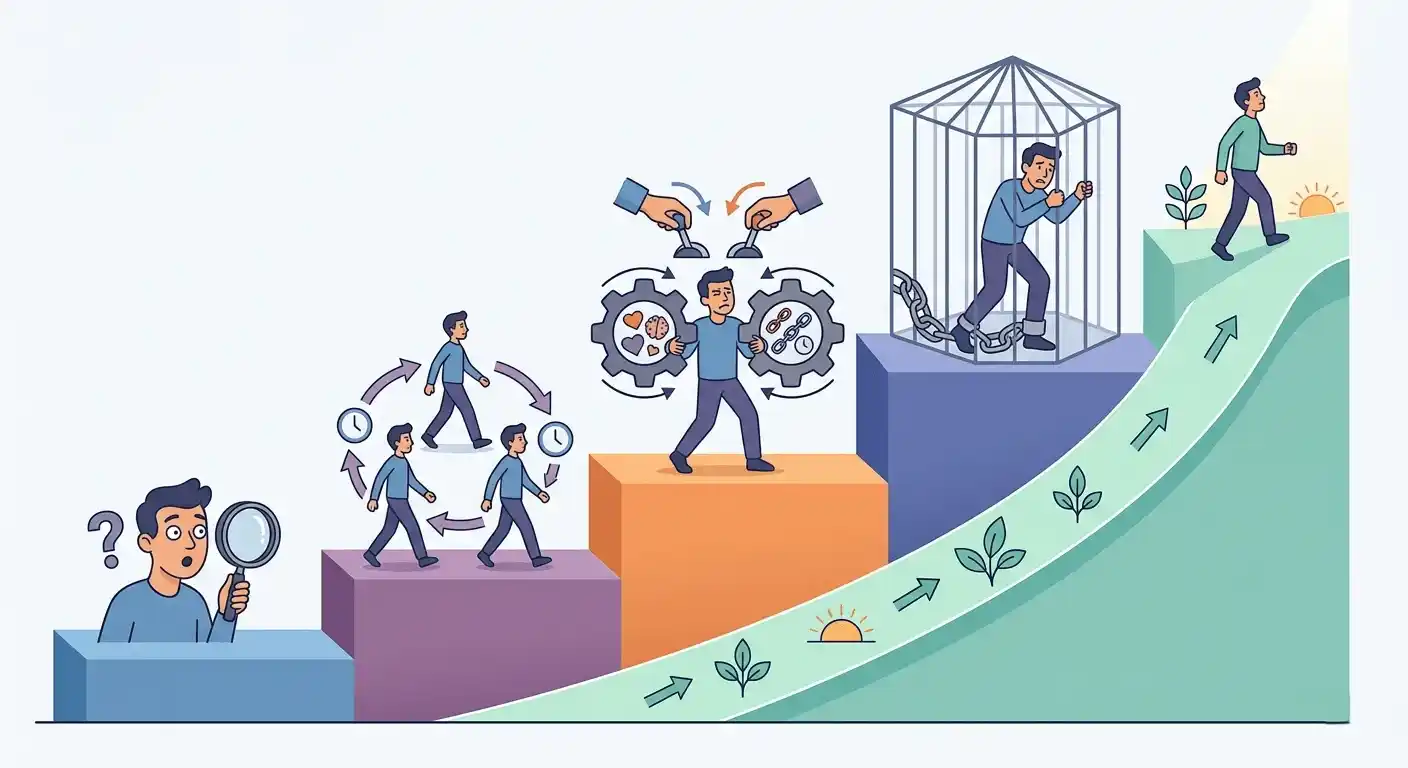
The stages of addiction describe the gradual progression from initial exposure to a pattern that becomes difficult to control. Addiction does not usually appear suddenly; it often develops through repeated behaviors, increasing reliance, and changes in motivation.
| Stage | Description | Common Characteristics |
| Early experimentation | Initial exposure or occasional behavior | Curiosity, pleasure seeking, social influence |
| Regular use or repetition | Behavior becomes more frequent | Increased reliance, stronger habits |
| Problematic use | Negative consequences begin appearing | Loss of control, conflicts, difficulty stopping |
| Dependence/addiction | Behavior becomes difficult to stop despite harm | Strong cravings, continued behavior despite consequences |
Early Experimentation
This stage involves first exposure or occasional engagement. The person may experience curiosity, enjoyment, or social pressure.
Not everyone who experiments develops addiction, but certain risk factors can increase vulnerability.
Regular Use or Repetition
The behavior becomes more frequent and begins forming stronger associations with reward or relief.
During this stage:
- Habits become stronger.
- Triggers become easier to recognize.
- The behavior may become part of daily routines.
Problematic Use
At this stage, negative effects become more noticeable. The person may experience:
- Relationship problems
- Reduced performance at work or school
- Health concerns
- Emotional distress
Despite these consequences, stopping may become difficult.
Dependence or Addiction
Addiction involves continued behavior despite significant harm. Strong cravings, changes in motivation, and difficulty controlling behavior become central features.
Why Understanding Addiction Stages Helps Recovery
Understanding addiction stages helps recovery because it allows people to recognize patterns before they become more severe. Early awareness supports earlier intervention and more effective behavior change.
Recognizing stages helps with:
- Awareness: Identifying harmful patterns sooner.
- Behavior change: Understanding what triggers repeated behaviors.
- Recovery planning: Creating realistic steps for improvement.
Recovery is not only about stopping a behavior. It involves changing the thoughts, routines, environments, and coping methods connected to addiction.
Addiction Mindset vs Recovery Thinking: Understanding the Difference
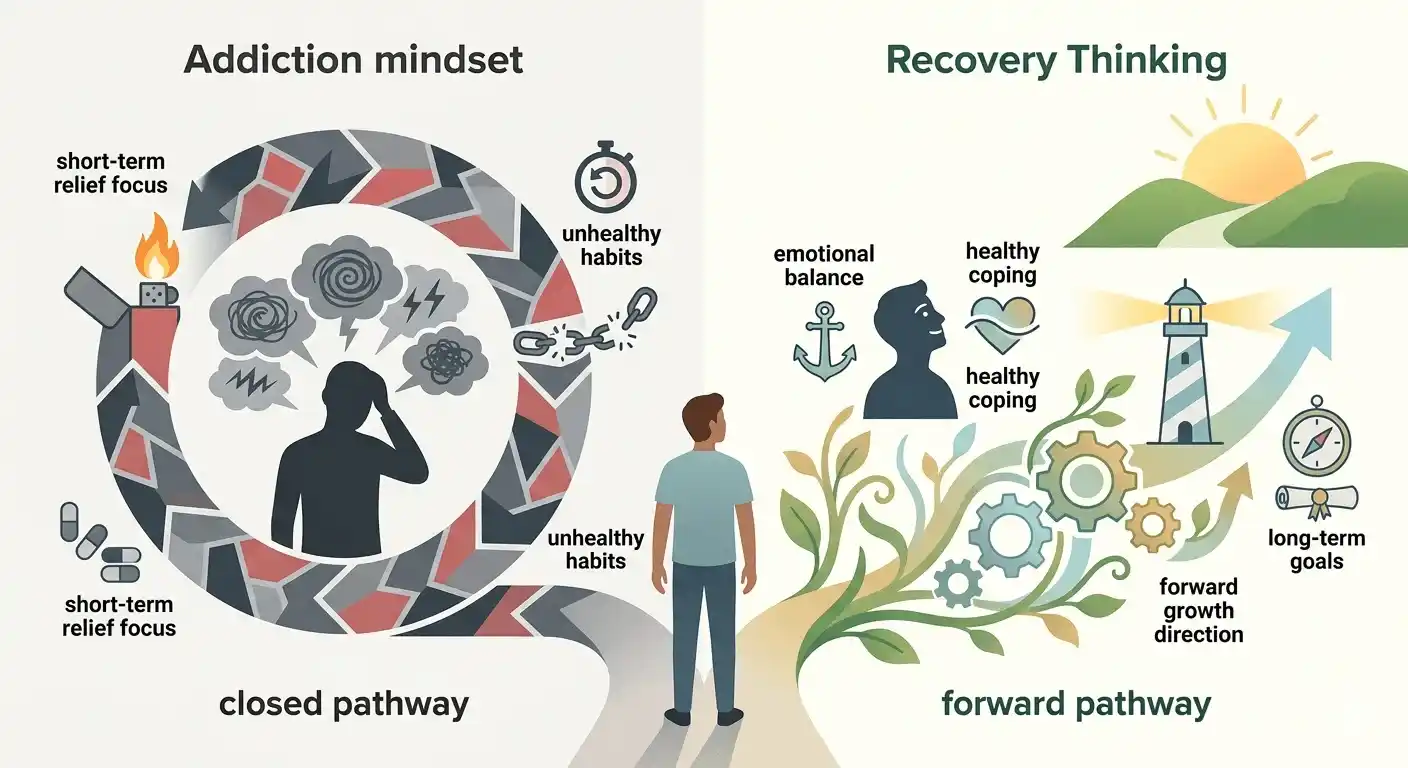
The difference between an addiction mindset and recovery thinking is that addiction mindset often focuses on immediate relief, while recovery thinking focuses on long-term wellbeing, growth, and healthier choices.
| Addiction Mindset | Recovery Thinking |
| Focuses on immediate relief | Focuses on long-term wellbeing |
| Avoids uncomfortable emotions | Learns healthier emotional responses |
| Sees change as impossible | Builds confidence through progress |
| Prioritizes addictive behavior | Prioritizes values and goals |
| Reacts automatically to triggers | Responds with awareness and planning |
The shift from an addiction mindset to recovery thinking does not happen through one decision alone. It develops through repeated actions, new habits, support, and self-awareness.
What Is Recovery Thinking?
Recovery thinking is a mindset focused on awareness, accountability, growth, and healthier choices. It involves recognizing patterns, accepting support, and developing skills that support long-term change.
This approach connects with the principles of a growth mindset, where individuals view change as a process of learning, adaptation, and improvement. Understanding why growth mindset is important can support long-term personal development during recovery.
Key elements of recovery thinking include:
Self-Reflection
Self-reflection helps individuals understand:
- What triggers harmful behaviors
- What emotions influence decisions
- What values they want to prioritize
Accepting Support
Recovery often improves when people use support systems such as:
- Trusted relationships
- Counseling
- Recovery communities
- Professional guidance
Building New Habits
Healthy routines replace old patterns by creating alternative sources of reward and stability.
Developing Resilience
Resilience involves learning how to handle challenges without returning to harmful coping methods.
As of 2026, behavioral science continues to emphasize personalized approaches to change because people differ in their triggers, environments, and recovery needs.
How to Shift From an Addiction Mindset to a Recovery Mindset
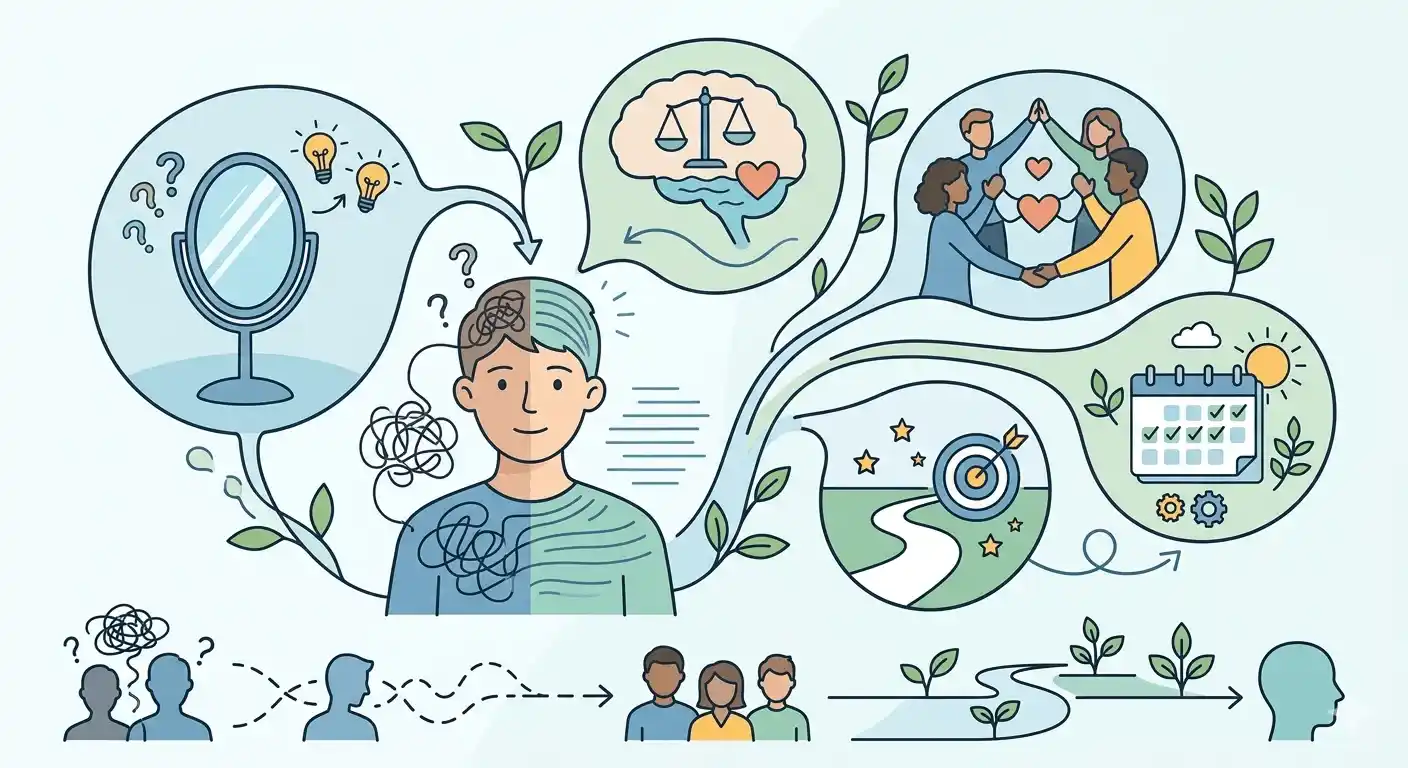
Changing an addiction mindset usually happens through consistent actions rather than a single moment of motivation. Recovery involves learning new responses to thoughts, emotions, triggers, and challenges.
Because motivation naturally changes over time, developing discipline and reliable routines can be more effective for maintaining long-term progress. Learning how to build discipline without motivation can help people stay committed during difficult periods.
Important approaches include:
Recognize Addictive Thought Patterns
The first step is identifying thoughts that maintain addiction, such as:
- “I need this to feel better.”
- “I cannot handle this without it.”
- “One more time will not matter.”
Awareness creates the opportunity to choose differently.
Identify Emotional Triggers
Triggers may include:
- Stress
- Loneliness
- Certain environments
- Specific relationships
- Difficult emotions
Understanding triggers allows people to prepare healthier responses.
Develop Healthier Coping Skills
Replacement strategies may include:
- Exercise
- Mindfulness practices
- Journaling
- Problem-solving skills
- Social connection
Build Supportive Relationships
Positive relationships provide accountability, encouragement, and emotional support.
Create Structured Routines
Daily structure can reduce exposure to triggers and create stability.
Helpful routines may include:
- Consistent sleep schedules
- Planned activities
- Healthy meals
- Goal-setting practices
Practice Self-Awareness
Self-awareness helps people notice changes in emotions, thoughts, and behaviors before patterns become automatic.
The Role of Habit Formation in Recovery
Habit formation plays an important role in recovery because repeated healthy actions can gradually replace old addictive patterns.
Building healthier routines requires consistency and repetition. Learning how to build good habits in 30 days can provide practical strategies for creating sustainable behavior changes.
Behavior change science suggests that habits are strengthened through:
- Repetition
- Consistent cues
- Meaningful rewards
- Environmental support
Healthy habits can improve:
- Productivity
- Goal achievement
- Emotional regulation
- Long-term behavior change
Common mistakes during habit change include:
- Trying to change everything at once
- Expecting immediate results
- Ignoring environmental triggers
- Focusing only on motivation instead of systems
A sustainable approach involves creating small, repeatable actions that support long-term goals.
Common Challenges That Keep People Stuck in an Addiction Mindset
Losing Motivation During Recovery
Loss of motivation is common because recovery often requires patience and emotional effort. Progress may feel slow, especially when changes are not immediately visible.
Understanding the reasons behind low motivation can help people create better strategies for change. Exploring why you may lack motivation can reveal emotional, behavioral, and environmental barriers affecting progress.
Why it happens:
- Slow progress
- Emotional challenges
- Unrealistic expectations
- Temporary setbacks
How to address it:
- Track small improvements.
- Create realistic goals.
- Maintain accountability.
- Focus on consistency rather than perfection.
Your Daily Thrive’s practical approach is to measure progress through daily behaviors rather than expecting instant transformation.
Negative Self-Beliefs and Shame
Negative self-beliefs can keep people stuck by creating feelings of hopelessness and discouragement.
Why shame develops:
- Past mistakes
- Social stigma
- Repeated setbacks
- Fear of judgment
Ways to improve:
- Practice self-compassion.
- Focus on progress rather than past failures.
- Separate identity from behavior.
A person’s actions and patterns can change; they do not define their entire identity.
Expecting Immediate Results
Recovery is usually gradual rather than instant. The brain, habits, and emotional responses often require time to adapt.
Recovery involves:
- Short-term adjustments
- Long-term mindset development
- Environmental changes
- Continued practice
Progress may vary depending on personal circumstances, support systems, and available resources.
Different Perspectives on Addiction Mindset and Recovery
Psychological Approach
The psychological approach focuses on:
- Thoughts
- Emotions
- Coping mechanisms
- Behavioral patterns
It examines how beliefs and emotional responses influence addictive behaviors.
Behavioral Approach
The behavioral approach focuses on:
- Habits
- Triggers
- Routines
- Reinforcement
It emphasizes changing environments and replacing harmful patterns.
Personal Growth Approach
The personal growth approach focuses on:
- Identity change
- Purpose
- Resilience
- Meaningful goals
It encourages individuals to build a life that supports healthier choices.
What Is the 3-3-3 Rule for Addiction?
The 3-3-3 rule for addiction refers to different recovery frameworks that use a structured approach involving three-part guidelines. The exact meaning can vary depending on the recovery context, and it is not a universal medical standard.
Some people use 3-3-3 concepts as reminders to organize coping strategies, manage cravings, or create short-term recovery goals.
Structured coping tools can support:
- Awareness of emotions
- Better impulse control
- Stress management
- Recovery planning
Any recovery framework should be considered alongside professional guidance and individual circumstances.
Frequently Asked Questions About Addiction Mindset
What is an addiction mindset?
An addiction mindset is a pattern of thoughts and behaviors influenced by cravings, coping patterns, learned responses, and addictive processes. It can affect decision-making and priorities but can change through recovery.
Is addiction a coping mechanism?
Addiction can act as a short-term coping strategy because it may temporarily reduce distress. However, it often creates greater problems over time and can replace healthier coping methods.
What causes addiction?
Addiction develops through a combination of biological, psychological, environmental, and behavioral factors, including genetics, stress, emotional experiences, and repeated behaviors.
What are the stages of addiction?
The stages of addiction typically progress from experimentation to regular use, problematic use, and dependence or addiction.
How does someone change an addiction mindset?
A person can change an addiction mindset through awareness, healthier coping skills, support systems, structured routines, and consistent behavior change.
What is the difference between an addict mindset and recovery thinking?
An addict mindset often focuses on immediate relief and automatic responses, while recovery thinking focuses on awareness, long-term goals, accountability, and healthier choices.
Can the addictive mind change over time?
Yes. Thought patterns and behaviors can change through learning, support, repeated practice, and neuroplasticity.
Conclusion: Understanding Addiction Mindset and Building Recovery Thinking
Understanding an addiction mindset helps explain why addiction changes thoughts, emotions, habits, and decision-making patterns. Addiction is not simply a lack of willpower; it involves biological processes, psychological factors, environmental influences, and learned behaviors.
Recovery thinking develops when individuals recognize addictive patterns, build healthier coping strategies, create supportive routines, and strengthen resilience. Changing an addiction mindset requires consistent actions and new experiences that gradually reshape habits and responses.
Recovery involves creating new patterns of thinking and behavior that support long-term wellbeing. By developing awareness, self-compassion, and healthier choices, people can move from addiction-focused thinking toward growth, stability, and recovery.