

Introduction
Mindset wellness is the practice of shaping thought patterns, beliefs, and emotional responses in ways that support overall mental, emotional, and physical health. It is not a single therapy, product, or destination — it is an ongoing combination of self-awareness, healthy habits, and emotional regulation. Thoughts and beliefs shape how a person interprets stress, sets goals, and responds to setbacks, which in turn affects sleep, relationships, and physical health. Mindset wellness draws on related ideas such as growth mindset, resilience, and mental wellness, but it specifically focuses on the ongoing relationship between how someone thinks and how well they function day to day.
Quick Summary
- Mindset wellness focuses on developing thought patterns and habits that support mental, emotional, and overall well-being.
- A healthy mindset can improve resilience, stress management, decision-making, and personal growth.
- Mindset wellness includes practices such as self-awareness, mindfulness, positive thinking, and emotional regulation.
- Sustainable mindset wellness develops through consistent habits rather than quick fixes.
What Is Mindset Wellness?
Mindset wellness is the ongoing practice of cultivating thought patterns, beliefs, and emotional habits that support long-term mental and physical health. It affects overall health because thoughts influence stress hormone levels, motivation, and the daily choices people make about sleep, food, and movement. Mindset wellness differs from simply “thinking positively” because it is not about forcing optimism or ignoring difficult emotions — it involves acknowledging challenges honestly while building the skills to respond to them constructively.
Core Components of Mindset Wellness
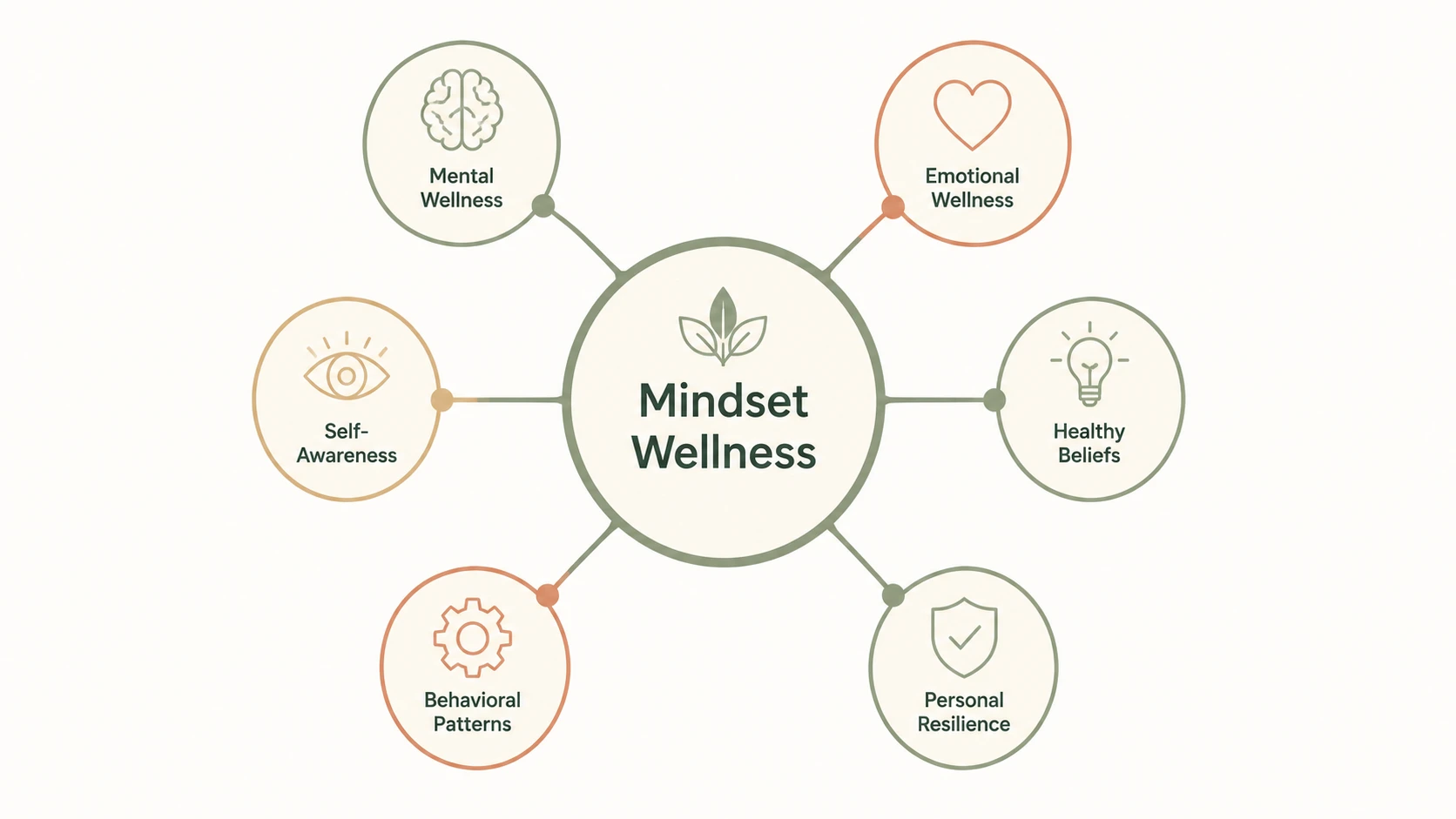
- Mental wellness — the capacity to think clearly, concentrate, and manage cognitive load
- Emotional wellness — the ability to recognize, process, and regulate emotions
- Self-awareness — understanding personal thought patterns, triggers, and tendencies
- Healthy beliefs — assumptions about oneself and the world that support growth rather than limit it
- Behavioral patterns — the habits and routines that reinforce or undermine wellness
- Personal resilience — the capacity to recover from setbacks and adapt to change
Why Mindset Wellness Matters
Mindset wellness matters because thought patterns directly shape how a person experiences daily life. A more adaptive mindset tends to reduce the intensity and duration of stress responses, since it changes how situations are interpreted before they trigger a physical stress reaction. Emotional health improves when people can name and process feelings instead of suppressing them, which lowers the risk of chronic tension and rumination. Productivity is affected because a mindset oriented toward learning rather than fear of failure supports sustained focus and follow-through. Relationships benefit when self-awareness reduces reactive communication and increases empathy. Physical health behaviors, including exercise consistency and eating patterns, are also shaped by mindset, since self-defeating beliefs often precede skipped workouts or poor food choices. Over time, these small effects compound into meaningful differences in long-term personal growth.
How Mindset Influences Overall Wellness
Mental health, emotional balance, and lifestyle habits are closely linked. A person’s mental state affects motivation for exercise, appetite regulation, and sleep quality, while sleep and nutrition in turn affect mood and cognitive clarity — creating a two-way relationship rather than a one-directional one. Social relationships also interact with mindset: supportive relationships tend to reinforce healthier thought patterns, while isolation or conflict can reinforce negative ones.
The Mind–Body Connection
Thoughts influence the body in measurable ways. Perceived stress raises cortisol and other stress hormones, which can affect energy levels, digestion, and sleep quality. A mindset focused on control and capability tends to support steadier motivation, while a mindset dominated by helplessness or worry can drain energy and reduce follow-through on daily choices such as meal preparation or physical activity.
Growth Mindset and Wellness
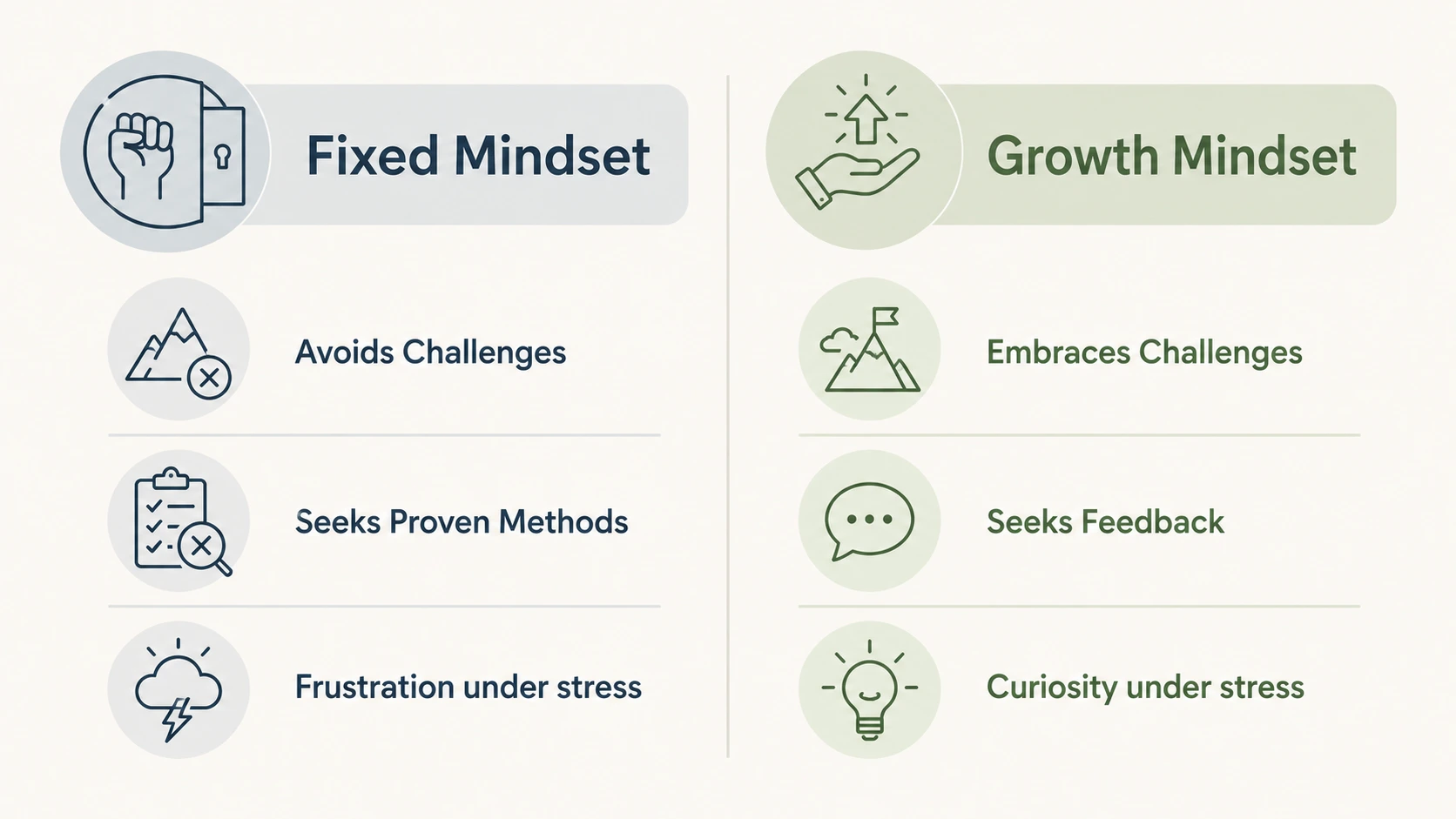
Growth mindset wellness refers to applying the psychological concept of a growth mindset — the belief that abilities and traits can be developed through effort — to personal well-being practices. A fixed mindset assumes traits like intelligence or emotional resilience are static, while a growth mindset treats them as skills that improve with practice. This distinction affects how people respond to setbacks: a growth-oriented approach treats failure as informative rather than final, which supports adaptability and long-term resilience. Understanding why growth mindset is important helps explain why this shift in perspective has such a measurable effect on long-term resilience.
Table: Fixed Mindset vs Growth Mindset
| Perspective | Response to Challenges | Learning Style | Emotional Response | Wellness Impact |
|---|---|---|---|---|
| Fixed Mindset | Avoids or gives up | Prefers proven methods | Frustration, discouragement | Lower resilience over time |
| Growth Mindset | Engages and adapts | Seeks feedback and iteration | Curiosity, patience | Higher resilience over time |
Essential Habits That Support Mindset Wellness
- Mindfulness — observing thoughts and sensations without judgment
- Journaling — processing emotions and tracking thought patterns
- Gratitude practice — shifting attention toward positive aspects of daily life
- Healthy routines — consistent sleep, meal, and activity schedules
- Goal setting — creating clear, achievable objectives
- Reflection — reviewing progress and adjusting approach
- Self-care — attending to physical and emotional needs
- Sleep habits — supporting cognitive and emotional regulation
- Physical activity — regulating stress hormones and improving mood For those looking to reinforce this shift daily, growth mindset affirmations can help translate the concept into a consistent practice.
Practical Ways to Improve Mindset Wellness
Build Self-Awareness
Self-awareness starts with noticing recurring thoughts and emotional triggers without immediately judging them. Simple practices such as brief daily check-ins or journaling can make patterns visible over time.
Challenge Limiting Beliefs
Limiting beliefs are assumptions that restrict growth, such as “I always fail at this.” Improvement involves identifying the belief, examining evidence for and against it, and replacing it with a more accurate, flexible statement.
Practice Emotional Regulation
Emotional regulation involves recognizing an emotional response, pausing before reacting, and choosing a constructive response. Breathing techniques and brief pauses before responding to stressors are common starting points.
Create Healthy Daily Habits
Small, repeatable habits — such as a consistent wake time or a short daily walk — reinforce mindset wellness more reliably than occasional large efforts.
Maintain Consistency
Consistency matters more than intensity. In our experience helping readers build better habits, small daily actions sustained over weeks tend to outperform sporadic bursts of motivation.
Common Challenges That Affect Mindset Wellness
Chronic stress develops when stressors are frequent and recovery time is limited; improvement involves building in regular recovery periods and identifying controllable versus uncontrollable stressors.
Negative thinking often stems from habitual thought patterns reinforced over time; it can improve through consistent awareness practices and gradually reframing automatic thoughts.
Burnout results from prolonged demand without adequate rest; prevention involves setting boundaries and scheduling recovery before exhaustion sets in.
Low confidence frequently comes from repeated setbacks without reflection on progress; tracking small wins can rebuild a more accurate self-assessment.
Anxiety can be intensified by uncertainty and catastrophic thinking; grounding techniques and structured problem-solving can reduce its intensity.
Lack of consistency usually stems from relying on motivation rather than routine; building habits into existing schedules improves follow-through.
Environmental influences, such as a high-stress workplace or unsupportive relationships, can undermine mindset wellness regardless of personal effort; where possible, adjusting the environment supports more sustainable change.
Common Beginner Mistakes
- Expecting overnight results — mindset change is gradual, not immediate
- Ignoring emotional health — focusing only on productivity while neglecting feelings
- Depending only on motivation — motivation fluctuates, while systems and routines endure
- Comparing progress — measuring against others rather than personal history
- Trying too many techniques at once — spreading effort too thin to build any single habit
- Skipping healthy routines — treating sleep, movement, and nutrition as separate from mindset work
Your Daily Thrive recommends starting with one or two practices and building consistency before adding more. Readers who struggle here often benefit from learning how to build discipline without motivation, since systems tend to outlast willpower.
Mindset Wellness Compared With Similar Concepts
Mindset wellness overlaps with several related concepts but is not identical to any of them.
| Concept | Primary Focus | Main Goal | Typical Practices | Best Use Cases |
|---|---|---|---|---|
| Mental Wellness | Cognitive functioning | Clear thinking, focus | Rest, stress management | General cognitive health |
| Emotional Wellness | Emotional regulation | Balanced emotional responses | Journaling, therapy | Processing feelings |
| Positive Thinking | Optimistic outlook | Reframing negative thoughts | Affirmations, reframing | Shifting perspective |
| Mindfulness | Present-moment awareness | Reducing reactivity | Meditation, breathing | Stress reduction |
| Self-Care | Physical/emotional maintenance | Preventing burnout | Rest, boundaries | Daily maintenance |
| Personal Development | Skill and character growth | Long-term growth | Learning, goal setting | Long-term life goals |
| Mindset Wellness | Integrated thought-behavior-emotion system | Sustainable overall well-being | Combination of the above | Ongoing, holistic improvement |
Can Professional Support Help?
Professional support can be a valuable addition to mindset wellness practices, particularly when challenges are persistent or significantly affect daily functioning. Therapy and counseling provide structured support from licensed mental health professionals and can address underlying patterns that self-directed practices may not fully resolve. Wellness coaching and mindset and wellness coach relationships focus more on goal-setting, accountability, and habit formation rather than clinical treatment. Wellness programs can offer structured environments for building consistent habits. Mindset therapy and wellness approaches combining professional guidance with self-directed practice may be appropriate when stress, anxiety, or negative thought patterns interfere with daily life, relationships, or physical health. A mental health professional can help determine which type of support best fits an individual’s needs.
Difficulty and Time Investment
Mindset wellness practices vary widely in difficulty. Beginner-friendly practices, such as brief daily gratitude notes or short mindfulness exercises, typically require five to ten minutes per day. More advanced practices, such as structured journaling or working with a coach or therapist, require greater time and consistency. Daily effort is generally modest but cumulative — small, regular actions compound into meaningful change over weeks and months. Individual differences, including existing stress levels, support systems, and prior experience with self-reflection, influence how quickly someone adapts to new practices. Long-term commitment matters more than initial intensity.
Results Timeline
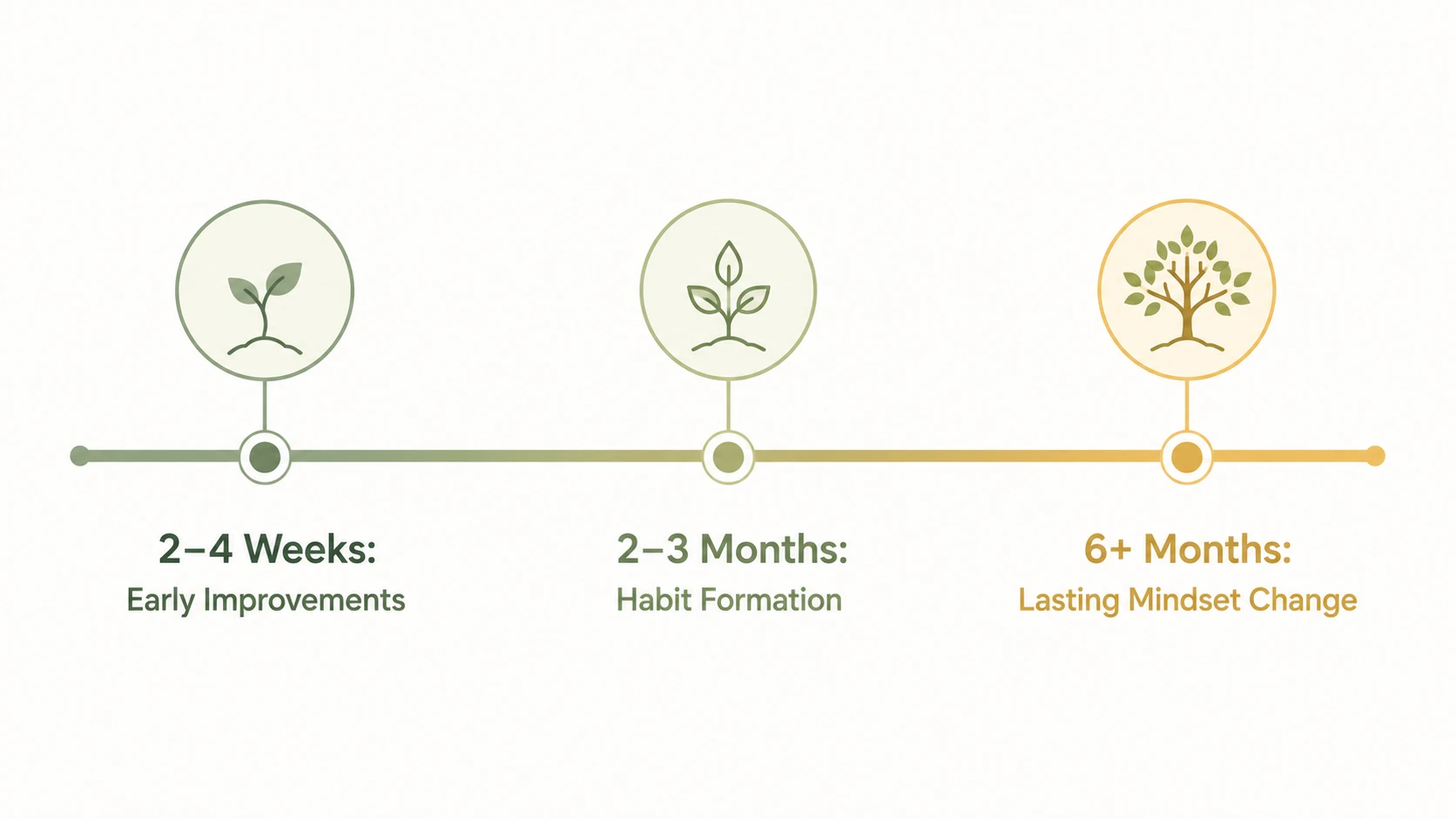
Early improvements, such as reduced reactivity to minor stressors or better sleep, often appear within two to four weeks of consistent practice. Medium-term habit formation, including more automatic use of emotional regulation techniques, typically develops over two to three months. Long-term mindset changes — such as a durable shift toward a growth-oriented outlook — generally take six months or longer of sustained practice. Progress is rarely linear; setbacks are a normal part of the process rather than a sign of failure.
Daily Practice Guide for Mindset Wellness
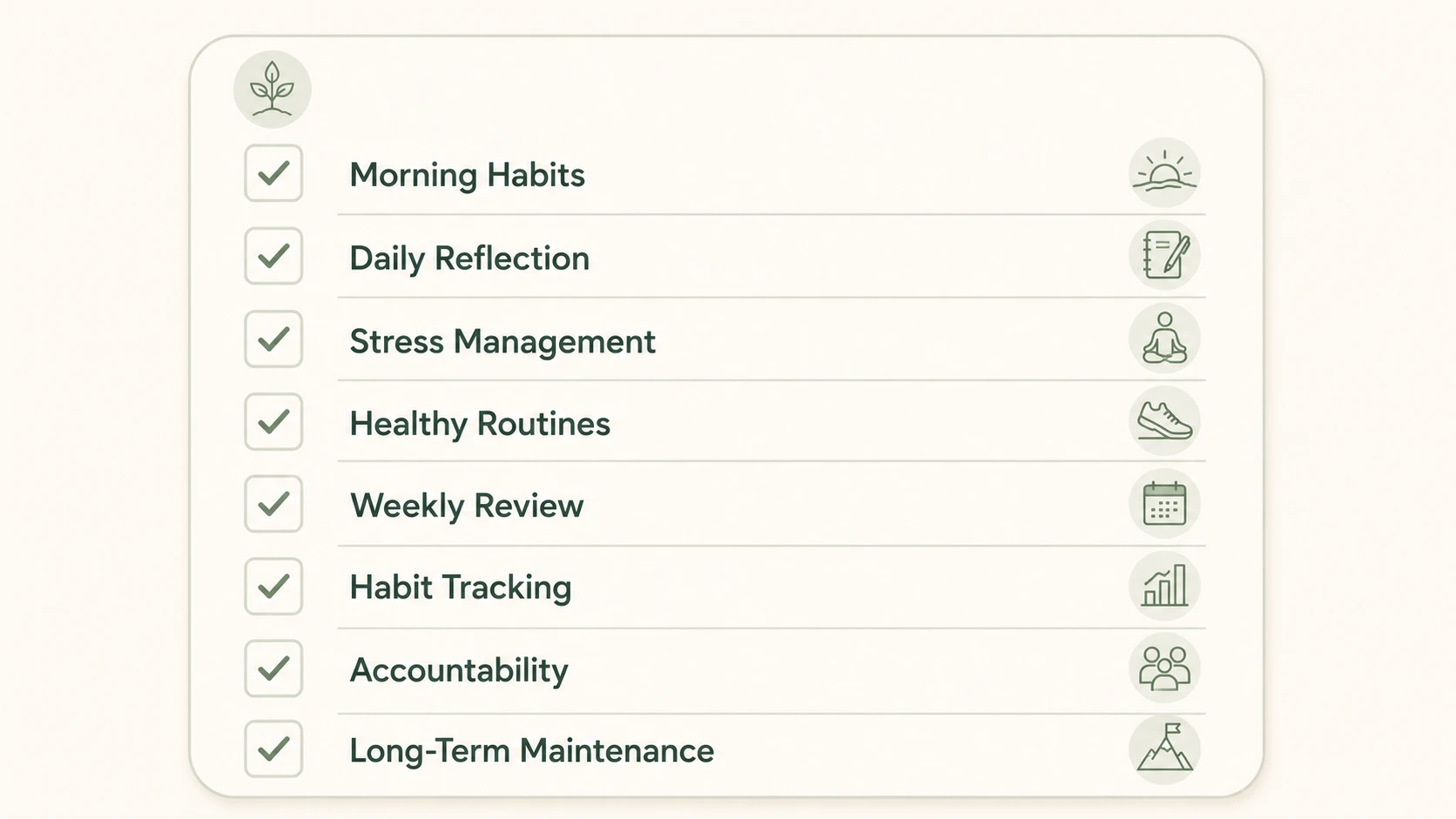
- Morning habits — a brief intention-setting moment or short reflection before starting the day
- Daily reflection — a short review of thoughts, emotions, and reactions
- Stress management — brief breathing exercises or short breaks during high-stress periods
- Healthy routines — consistent sleep, meal, and movement patterns
- Weekly review — assessing what worked and what needs adjustment
- Habit tracking — recording consistency to reinforce accountability
- Accountability — sharing goals with a trusted person or coach
- Long-term maintenance — periodically revisiting goals and adjusting practices as circumstances change
Frequently Overlooked Factors That Influence Mindset Wellness
Sleep quality directly affects emotional regulation and cognitive clarity, making it a foundational factor rather than a secondary one. Work environment shapes daily stress exposure and available recovery time. Family support provides either reinforcement or added strain depending on relationship dynamics. Digital habits, including screen time and social media use, can influence comparison, distraction, and sleep quality. Physical health conditions can directly affect mood and energy, influencing mindset independent of psychological effort. Life transitions, such as career changes or relocation, temporarily increase uncertainty and can disrupt established routines. Social relationships more broadly affect a sense of belonging and support, both of which influence resilience.
Conclusion
Mindset wellness refers to the ongoing practice of shaping thought patterns, beliefs, and emotional habits to support mental, emotional, and physical well-being. It matters because thoughts influence stress responses, motivation, relationships, and physical health behaviors in measurable ways. Core habits — including mindfulness, journaling, healthy routines, and emotional regulation — build the foundation for sustainable change, while awareness of common challenges and beginner mistakes helps avoid unnecessary setbacks. Long-term benefits include greater resilience, steadier emotional regulation, and improved decision-making. As with most meaningful personal growth, mindset wellness develops through consistent, realistic daily practice rather than quick fixes.
Frequently Asked Questions
What is mindset wellness? Mindset wellness is the ongoing practice of developing thought patterns, beliefs, and emotional habits that support mental, emotional, and physical well-being over time.
How does mindset wellness improve overall health? It improves overall health by reducing chronic stress responses, supporting better sleep and emotional regulation, and encouraging healthier daily behaviors like consistent exercise and nutrition.
What is the difference between mindset wellness and positive thinking? Mindset wellness involves a broader system of habits and emotional regulation, while positive thinking focuses specifically on reframing thoughts toward optimism, without necessarily addressing underlying behaviors or emotions.
Can mindset wellness reduce stress? Yes, mindset wellness can reduce stress by changing how situations are interpreted and by building emotional regulation skills that shorten the intensity and duration of stress responses.
How long does it take to improve mindset wellness? Early improvements often appear within two to four weeks, habit formation typically develops over two to three months, and durable mindset changes generally take six months or longer of consistent practice.
Is mindset wellness the same as mental wellness? No, mental wellness refers specifically to cognitive functioning and mental clarity, while mindset wellness is a broader concept that integrates thought patterns, emotional habits, and behavior across daily life.
What daily habits improve mindset wellness? Daily habits that support mindset wellness include mindfulness practice, journaling, gratitude reflection, consistent sleep routines, physical activity, and brief daily check-ins on thoughts and emotions.
When should someone seek professional support for mindset wellness? Professional support may be appropriate when stress, anxiety, or negative thought patterns persist despite self-directed efforts, or when they significantly interfere with daily functioning, relationships, or physical health.