

Introduction
Mindset nutrition is the study of how mental attitudes, beliefs, and thought patterns shape the way people choose, plan, and relate to food. Nutrition outcomes are not determined by food knowledge alone — psychology plays an equally important role in whether healthy habits actually stick. A person can understand macronutrients perfectly and still struggle with consistency if their underlying beliefs about food, willpower, or self-worth work against them. Developing a healthy nutrition mindset supports sustainable, long-term habits rather than short-term dieting cycles. This approach connects closely with broader wellness, fitness, and growth-mindset principles, treating eating behavior as a skill that can be learned and refined over time rather than a matter of pure discipline.
Quick Summary
- Mindset nutrition focuses on how thoughts, beliefs, and habits influence food choices.
- A healthy nutrition mindset encourages consistent, sustainable eating behaviors rather than restrictive diets.
- Growth-oriented thinking can improve motivation, resilience, and long-term wellness outcomes.
- Nutrition knowledge becomes more effective when combined with positive behavioral strategies.
What Is Mindset Nutrition?
Mindset nutrition is the practice of applying psychological principles — such as self-awareness, behavior change, and cognitive flexibility — to eating habits, rather than relying only on food rules or calorie counting. It treats healthy eating as an outcome of thought patterns, emotional regulation, and habit design, not just nutritional knowledge.
Unlike traditional diet plans that prescribe fixed rules (what to eat, how much, and when), mindset nutrition asks why a person eats the way they do and how their beliefs about food, body image, and self-discipline affect their choices. This distinction matters because diet plans often fail not from lack of information but from unaddressed thought patterns that undermine consistency.
Mindset nutrition and wellness are closely linked: a person’s relationship with food affects stress levels, sleep, and emotional regulation, all of which feed back into physical health. Similarly, mindset fitness and nutrition intersect, since exercise adherence and eating behavior are both governed by similar psychological drivers — motivation, identity, and habit formation.
Why Mindset Matters More Than Food Rules Alone
Behavioral psychology shows that food choices are rarely purely rational. Hunger, stress, mood, environment, and social context all influence decisions in the moment, often outweighing nutritional knowledge. Emotional influences — such as eating in response to boredom, anxiety, or celebration — can override intentions built on food rules alone.
Habit formation, rather than willpower, is generally a stronger predictor of long-term success. Willpower is a limited resource that fluctuates throughout the day, while habits become automatic once established, requiring far less mental effort. This is why sustainability depends more on designing supportive routines and mindset shifts than on relying on short bursts of motivation or restrictive rules.
How Mindset Influences Nutrition Choices
Nutrition choices are shaped by a combination of cognitive factors (beliefs, expectations, self-talk) and emotional factors (stress, mood, comfort-seeking). Internal influences include personal beliefs about food morality, past dieting experiences, and self-image. External influences include social pressure, marketing, food availability, and cultural norms around eating.
Because these factors interact constantly, two people with identical nutritional knowledge can have very different outcomes depending on their underlying mindset and environment.
Fixed Mindset vs Growth Mindset Around Nutrition
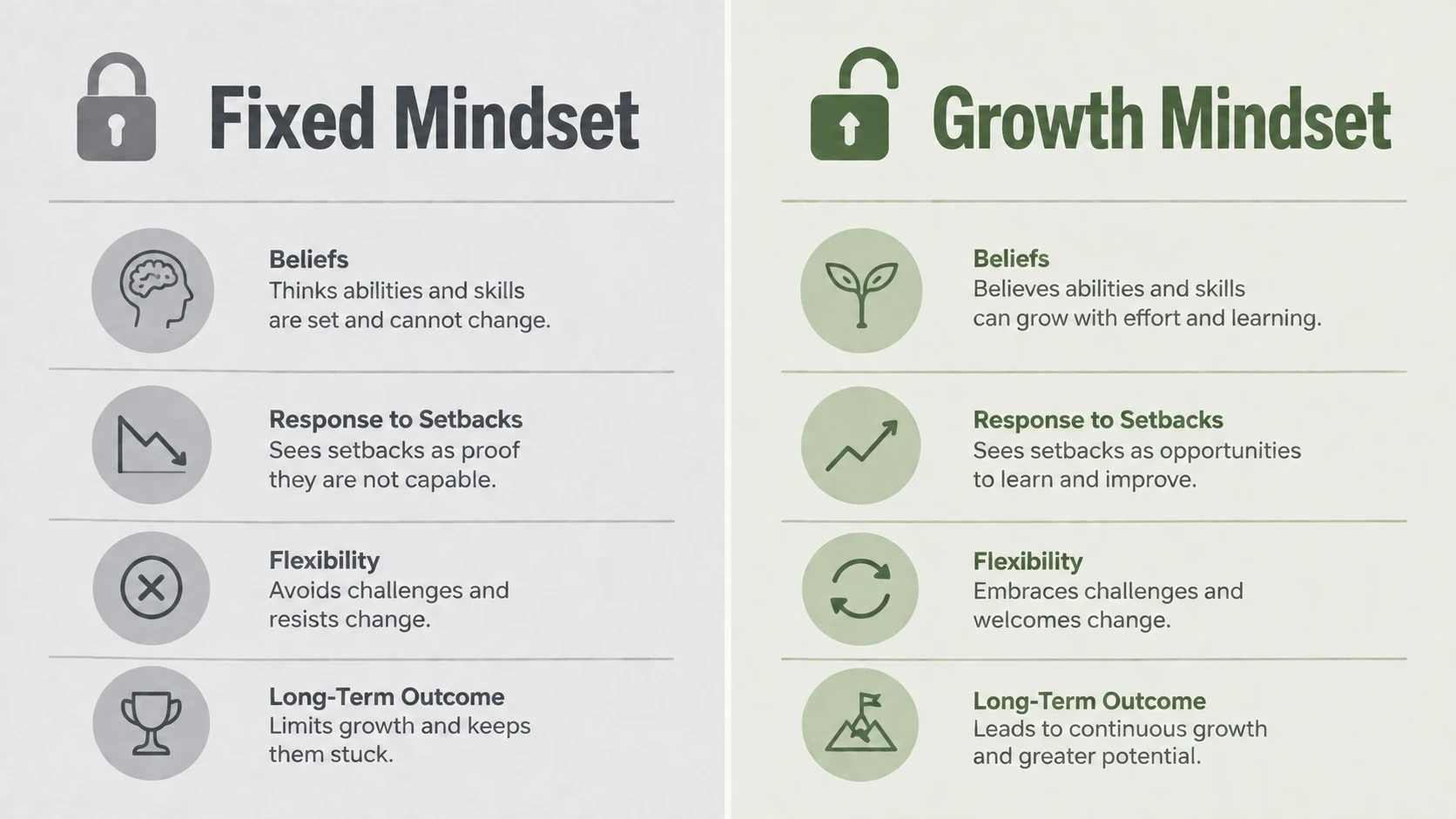
A fixed mindset around nutrition assumes that eating habits are static — “I’ve always struggled with food” or “I have no willpower” — which discourages experimentation and recovery after setbacks. A growth mindset, by contrast, treats eating habits as adaptable skills that improve with practice, feedback, and adjustment.
This concept connects to growth mindset precision nutrition, an approach that combines individualized nutritional strategy with the belief that habits can be refined over time through small, measurable adjustments rather than rigid, one-size-fits-all rules.
Common Beliefs That Shape Eating Habits
Several recurring belief patterns influence eating behavior:
- Good vs. bad foods — labeling foods morally rather than nutritionally, which can increase guilt and binge-restrict cycles.
- Perfectionism — expecting flawless adherence to a plan, which often leads to abandoning it after a single lapse.
- All-or-nothing thinking — viewing any deviation as total failure rather than a normal part of a flexible routine.
- Emotional eating patterns — using food primarily to manage feelings rather than hunger.
The Core Principles of a Healthy Nutrition Mindset
A healthy nutrition mindset rests on foundational behaviors that support consistency over time rather than short-term intensity.
Self-Awareness
Recognizing hunger cues, emotional triggers, and thought patterns around food is the starting point for meaningful change. Without self-awareness, habit changes tend to be reactive rather than intentional.
Consistency Over Perfection
Sustainable results come from repeated, moderate effort rather than occasional extreme discipline. Consistency accounts for realistic variability in daily life, including busy schedules, travel, and social events.
Flexible Eating Habits
Rigid rules tend to break down under stress or disruption. Flexible approaches allow adjustments — such as swapping meals or adapting portions — without triggering a sense of failure.
Long-Term Lifestyle Thinking
Framing nutrition as a lifelong practice, rather than a temporary intervention, shifts focus from quick results to durable habits.
- Practical mindset shift: replacing “I failed today” with “I’ll make my next choice a good one.”
- Everyday habit example: preparing a simple go-to meal for busy days instead of skipping meals entirely.
- Sustainable decision-making: choosing an 80% consistent approach over a 100%-or-nothing standard.
The Five Key Nutrition Mindsets That Support Healthy Living
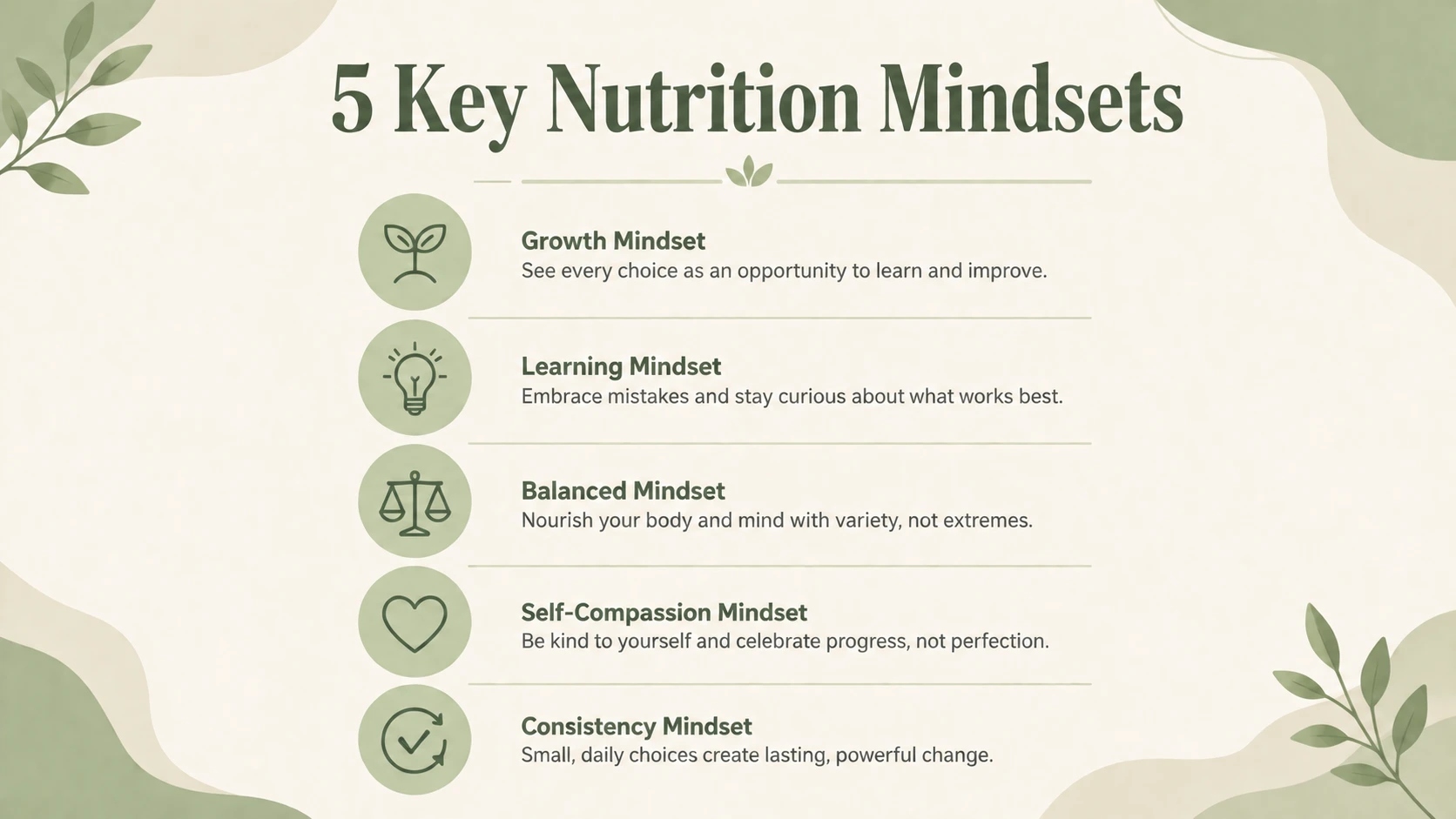
The 5 key nutrition mindsets provide a practical framework for evaluating and improving one’s relationship with food:
- Growth mindset — believing habits and skills can improve with effort and practice.
- Learning mindset — treating setbacks as data rather than failure.
- Balanced mindset — avoiding extremes of restriction or indulgence.
- Self-compassion mindset — responding to lapses with understanding rather than harsh self-criticism.
- Consistency mindset — prioritizing regular, moderate action over sporadic intensity.
Mindset Nutrition and Wellness: Building Sustainable Healthy Habits
Nutrition does not function in isolation — it contributes to overall wellness by interacting with sleep, stress, mood, and physical activity. Mindset nutrition and wellness are connected because psychological stress can alter appetite regulation and food preferences, while poor nutrition can, in turn, affect mood and energy. Lifestyle integration — adjusting nutrition alongside sleep, movement, and stress management — tends to produce more durable results than isolated diet changes.
Nutrition and Mental Well-Being
Diet quality has been associated with mood regulation and cognitive function. A mindset that reduces food-related guilt and anxiety can lower overall stress, which supports both mental and physical health outcomes.
Nutrition and Physical Fitness
Mindset fitness and nutrition work together: consistent eating habits support energy availability for exercise, recovery, and performance. Athletes and casual exercisers alike benefit from a flexible, sustainable approach rather than restrictive eating patterns that are difficult to maintain alongside training demands.
The Role of Coaching in Developing a Nutrition Mindset
Nutrition coaching is a structured, educational process that helps individuals identify unhelpful beliefs, build sustainable habits, and stay accountable to their goals. A mindset nutrition coaching approach typically blends behavioral strategies with nutritional education, rather than simply prescribing a meal plan.
A women’s fitness nutrition and mindset coach, for example, may focus on habit-building strategies tailored to specific life stages, training goals, or hormonal considerations, combining practical nutrition guidance with psychological support. More broadly, a mindset nutritionist emphasizes the “why” behind eating behavior as much as the “what,” helping clients build lasting change rather than temporary compliance.
When Professional Guidance May Be Helpful
Professional support can be particularly useful for:
- Habit change — breaking long-standing patterns that resist self-directed effort.
- Accountability — maintaining consistency through regular check-ins.
- Goal setting — establishing realistic, measurable targets.
- Personalized nutrition education — adapting general principles to individual needs and circumstances.
Nutrition Mindset Approaches Compared
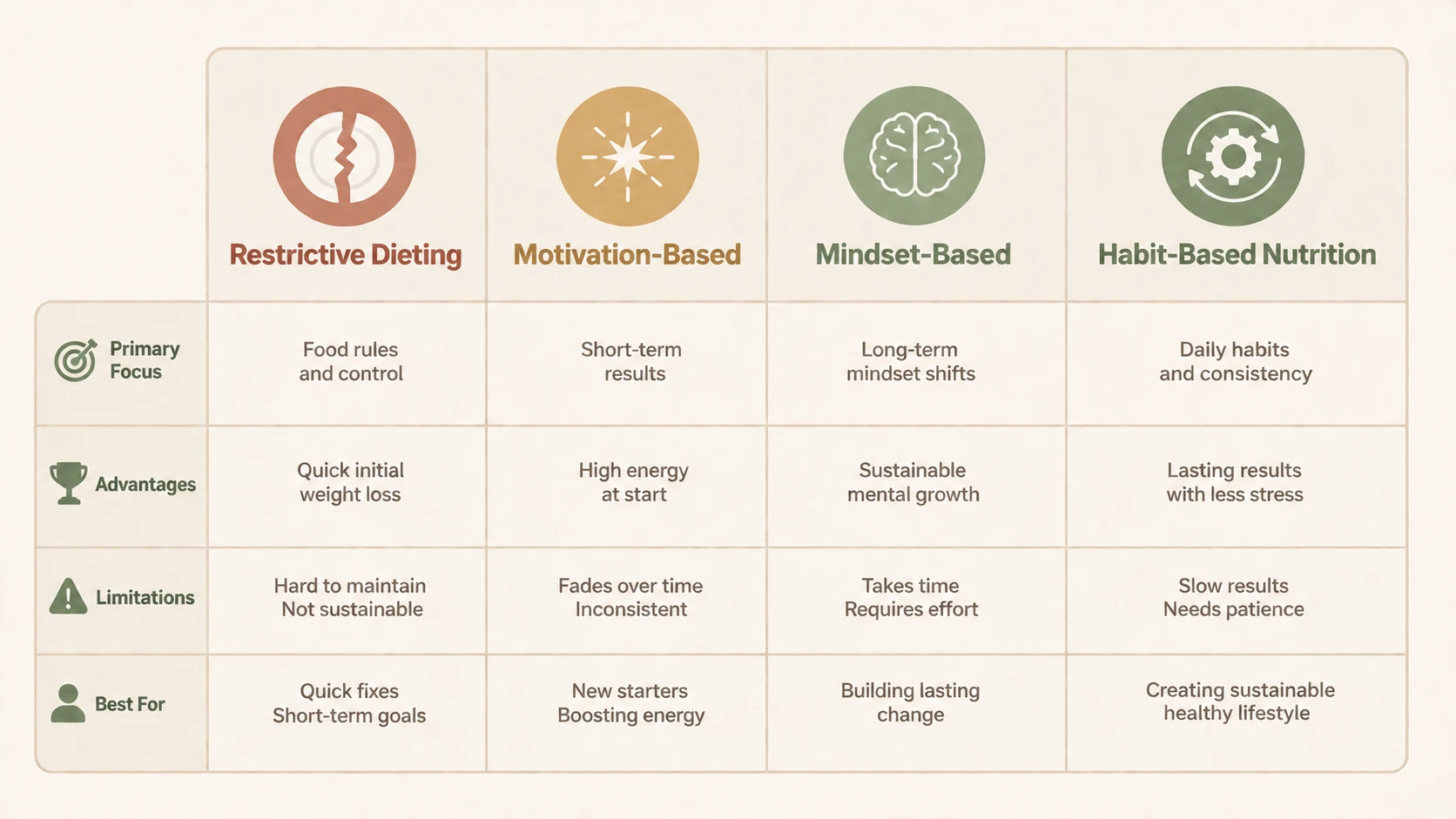
Different philosophies exist for improving eating habits, each with distinct strengths and trade-offs.
Restrictive Dieting vs Mindset-Based Nutrition
Restrictive dieting relies on strict rules and elimination, often producing fast but temporary results. Mindset-based nutrition focuses on gradual behavior change and psychological flexibility, generally producing slower but more durable outcomes.
Motivation-Based vs Habit-Based Nutrition
Motivation-based approaches depend on maintaining high emotional drive, which naturally fluctuates. Habit-based approaches rely on routine and environmental design, making consistency less dependent on daily willpower.
Short-Term Results vs Long-Term Lifestyle Change
Short-term approaches prioritize rapid visible results, often through aggressive restriction. Long-term lifestyle change prioritizes habits that can be maintained indefinitely, even if initial results are more gradual.
| Approach | Primary Focus | Advantages | Limitations | Best For |
|---|---|---|---|---|
| Restrictive Dieting | Strict food rules | Fast initial results | Difficult to sustain; high relapse risk | Short-term, structured goals |
| Motivation-Based Nutrition | Emotional drive | Strong initial momentum | Inconsistent long-term adherence | Kickstarting new habits |
| Mindset-Based Nutrition | Beliefs and behavior | Sustainable, adaptable | Slower visible results | Long-term lifestyle change |
| Habit-Based Nutrition | Routine and environment | Consistent, low willpower demand | Requires initial setup effort | Building lasting daily patterns |
How to Develop a Healthier Nutrition Mindset
Building a healthier nutrition mindset is a gradual process that benefits from a structured approach: For a more structured approach to building consistency, see our guide on how to build good habits in 30 days.
- Identify current beliefs about food, body image, and discipline.
- Set realistic, specific, and measurable goals.
- Practice mindful eating by paying attention to hunger and fullness cues.
- Build supportive routines, such as regular meal timing.
- Track progress using simple, low-effort methods.
- Adjust expectations based on real-life circumstances rather than ideal conditions.
- Celebrate consistency, not just outcomes.
Common Mistakes That Prevent Nutrition Success
Certain recurring mistakes undermine otherwise well-intentioned efforts.
Expecting Immediate Results
Many people abandon new habits when results don’t appear within days. Correction: set expectations around weeks and months, not days, and track behavioral consistency rather than only outcomes.
Chasing Perfect Diets
Searching for the “perfect” plan often leads to constant switching and frustration. Correction: choose a reasonably sound approach and focus on adherence rather than optimization.
Ignoring Emotional Triggers
Unaddressed emotional eating patterns tend to resurface repeatedly. Correction: identify specific triggers and develop alternative coping strategies unrelated to food.
Relying Only on Motivation
Motivation is inconsistent by nature. Correction: build habits and environmental supports that function even when motivation is low. If low drive is a recurring issue beyond food, our article on why do i lack motivation breaks down the underlying causes.
Comparing Yourself to Others
Progress comparisons can distort realistic expectations and reduce self-compassion. Correction: track personal progress against one’s own baseline rather than external benchmarks.
Practical Tips for Maintaining a Healthy Nutrition Mindset
Everyday strategies support long-term consistency:
- Meal planning — reduces decision fatigue and last-minute unhealthy choices.
- Habit stacking — attaching new nutrition habits to existing routines.
- Journaling — increases self-awareness around eating patterns and triggers.
- Mindful eating — slowing down to notice hunger, fullness, and satisfaction.
- Sleep and stress management — supports appetite regulation and decision-making.
- Social support — accountability from friends, family, or coaches improves adherence.
- Flexible routines — allow adaptation without derailing overall progress. Habit stacking — attaching new nutrition habits to existing routines (see small habits that changed my life for real examples).
Difficulty & Time Investment
For beginners, mindset nutrition is generally low in physical difficulty but requires consistent mental engagement, particularly around self-awareness and habit tracking. Typical daily effort involves brief planning and reflection rather than intensive time commitment.
Beginner-friendly variations focus on one or two habit changes at a time, while more advanced practice may involve deeper behavioral analysis and structured coaching. Personal factors — such as schedule flexibility, stress levels, and prior dieting history — influence how much effort consistency requires for a given individual.
Results Timeline
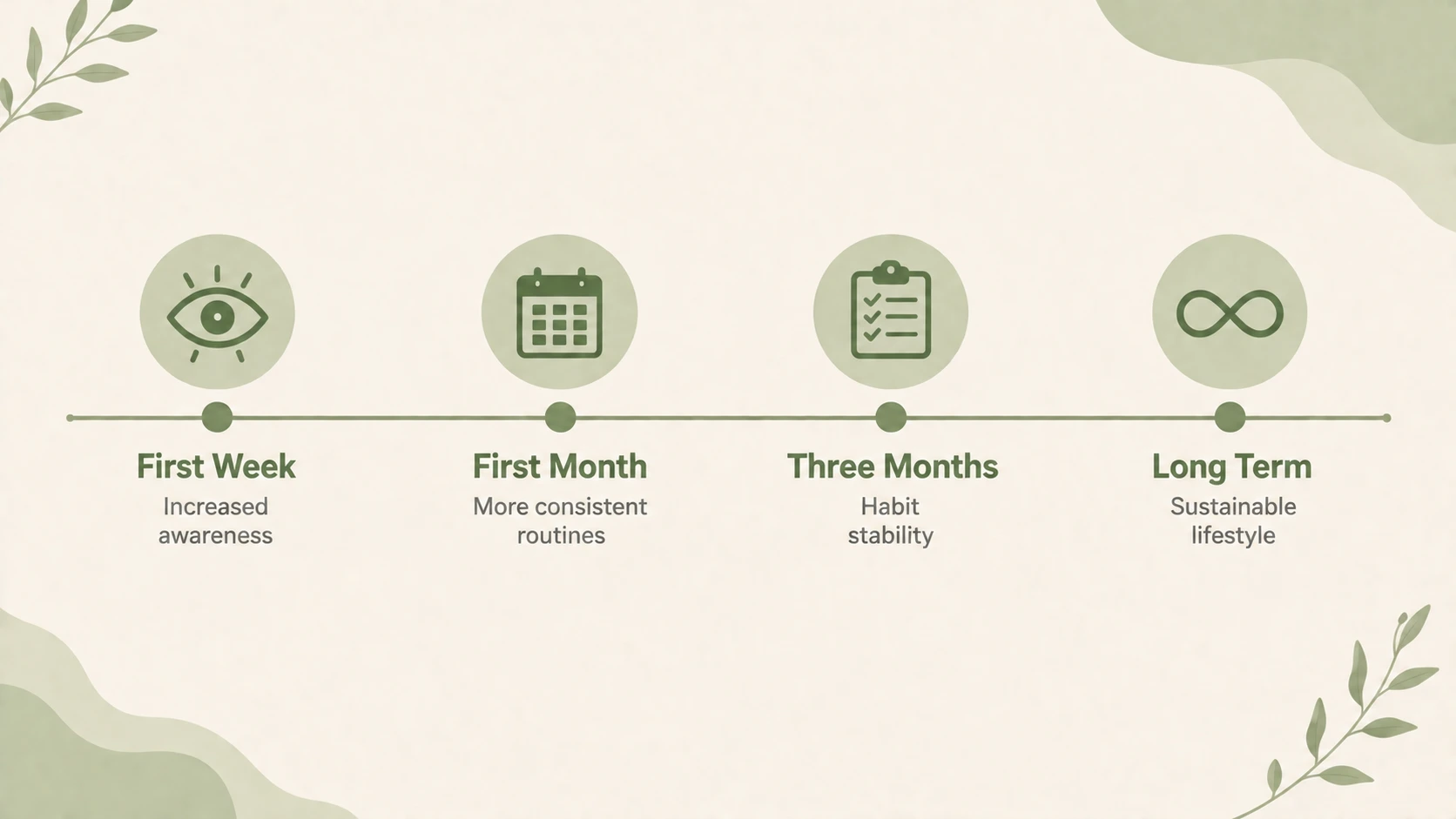
Results from mindset nutrition typically unfold gradually, with behavioral improvements appearing before major physical changes.
| Time Frame | Likely Changes |
|---|---|
| First Week | Increased awareness of eating patterns and triggers |
| First Month | More consistent routines; reduced all-or-nothing thinking |
| Three Months | Noticeable habit stability; improved emotional regulation around food |
| Long Term | Sustainable lifestyle integration; reduced reliance on willpower alone |
Individual progress varies based on starting habits, stress levels, support systems, and consistency of practice.
Practice Guide for Long-Term Success
Long-term success depends on structured, repeatable practices rather than short bursts of effort.
- Daily routine suggestions: brief morning or evening reflection on eating patterns and planning for upcoming meals.
- Weekly reflection habits: reviewing what worked, what didn’t, and adjusting accordingly.
- Accountability methods: check-ins with a coach, friend, or tracking app.
- Tracking progress: simple logs of habits rather than only outcomes like weight.
- Adapting routines: adjusting strategies for travel, illness, or busy periods rather than abandoning them entirely.
- Maintaining motivation: reconnecting periodically with personal reasons for pursuing healthier habits.
Beginner Questions and Situational Considerations
Is mindset more important than nutrition knowledge? Both matter, but mindset often determines whether nutritional knowledge is applied consistently over time.
Can mindset improve consistency? Yes. A flexible, self-compassionate mindset reduces all-or-nothing patterns that commonly derail consistency.
Does age affect nutrition habits? Life stage can influence metabolism, schedules, and priorities, which may require adapting strategies rather than changing core principles.
How does stress influence eating decisions? Stress can increase cravings for high-calorie foods and reduce impulse control, making stress management an important part of nutrition mindset work.
What differs for beginners versus experienced individuals? Beginners typically benefit from focusing on one habit at a time, while experienced individuals may focus on refining existing routines and addressing subtler behavioral patterns.
Conclusion
Mindset nutrition reframes healthy eating as a psychological skill as much as a nutritional one. Sustainable results depend less on finding a perfect diet and more on developing self-awareness, consistency, flexibility, and self-compassion around food choices. By applying the five key nutrition mindsets — growth, learning, balance, self-compassion, and consistency — individuals can build eating habits that adapt to real life rather than break down under it. In our experience helping readers build better habits, the shift from short-term dieting to long-term mindset work is what most reliably supports lasting wellness. Ultimately, mindset nutrition supports lasting change by prioritizing sustainable behavior over short-term dieting outcomes.
Frequently Asked Questions
What does mindset nutrition mean?
Mindset nutrition refers to the relationship between thoughts, beliefs, and eating behaviors, focusing on how psychological patterns influence food choices and long-term habit consistency.
How does mindset affect eating habits?
Mindset shapes eating habits by influencing motivation, emotional responses to food, and how individuals interpret setbacks, which determines whether healthy behaviors are maintained over time.
What is the difference between a fixed and growth mindset in nutrition?
A fixed mindset views eating habits as unchangeable, while a growth mindset treats them as skills that can be developed and improved through practice and adjustment.
Can nutrition coaching help improve eating habits?
Yes. Nutrition coaching can support habit change, accountability, and personalized education, helping individuals apply nutritional knowledge more consistently.
How long does it take to build healthier nutrition habits?
Behavioral improvements often begin within the first few weeks, with more stable habits typically forming over one to three months and continuing to strengthen long term.
What are the five key nutrition mindsets?
The five key nutrition mindsets are growth mindset, learning mindset, balanced mindset, self-compassion mindset, and consistency mindset.
Is mindset nutrition useful for fitness goals?
Yes. Mindset nutrition supports fitness goals by promoting consistent eating habits, adequate energy availability, and sustainable routines that align with training demands.